Prague Food Scene: A Home Exchanger's Guide to Czech Culinary Treasures

SwappaHome Editorial Team
Home Exchange & Slow Travel Editorial
Discover Prague's food scene through a home exchange lens—from svíčková at local hospodas to farmers markets and hidden wine bars that tourists never find.
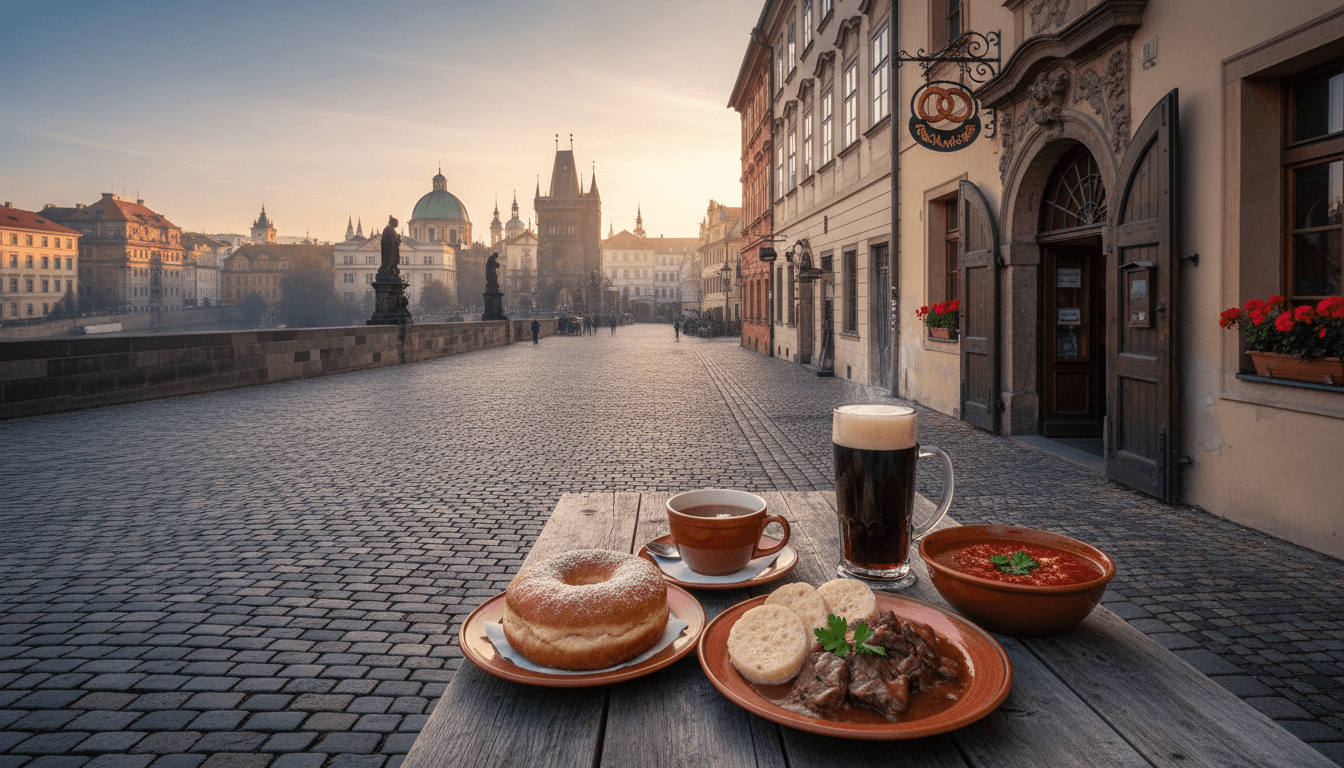
The smell of roasting pork knuckle drifts through Malá Strana's cobblestone streets as church bells echo off Baroque facades. A tram rattles past Café Savoy, where locals have been eating trdelník and drinking Turkish coffee since 1893. This is the Prague food scene most visitors miss—the one that unfolds slowly, over weeks rather than days, when you're living in a neighborhood rather than passing through it.
 Morning light filtering through a Prague apartment kitchen window, with a wooden cutting board holdi
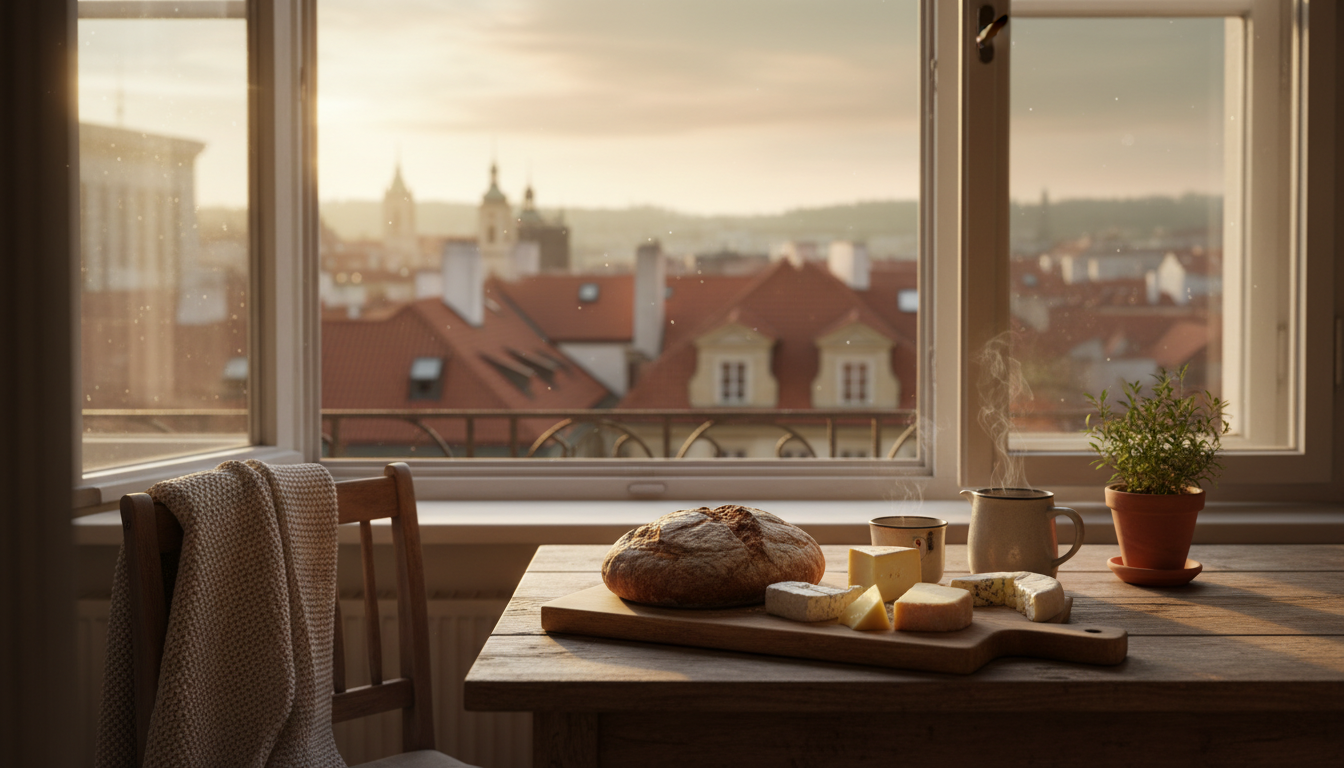
Home exchange travelers in Prague discover something hotel guests rarely experience: the rhythm of a city that still eats seasonally, shops at neighborhood markets, and treats the evening meal as a social ritual rather than a tourist transaction. The Prague food scene rewards patience. It reveals itself in the hospoda around the corner from your borrowed flat, in the wine bar your host recommended, in the farmers market that only happens on Saturday mornings in Jiřího z Poděbrad square.
What follows maps the culinary landscape of a city that's quietly become one of Central Europe's most interesting food destinations—and explains why staying in someone's home transforms how you eat here.
Why Home Exchange Transforms Your Prague Food Experience
The difference between eating in Prague as a tourist and eating as a temporary local comes down to infrastructure. Hotel guests have a minibar and a concierge who recommends the same five restaurants to everyone. Home exchange travelers have a full kitchen, a refrigerator, a neighborhood grocer who starts recognizing them, and—crucially—insider tips from their host.
SwappaHome community members who've exchanged in Prague consistently mention the same revelation: having a kitchen changes everything. Not because you'll cook every meal (though you might want to after visiting a Czech farmers market), but because it shifts your relationship with food from consumption to participation.
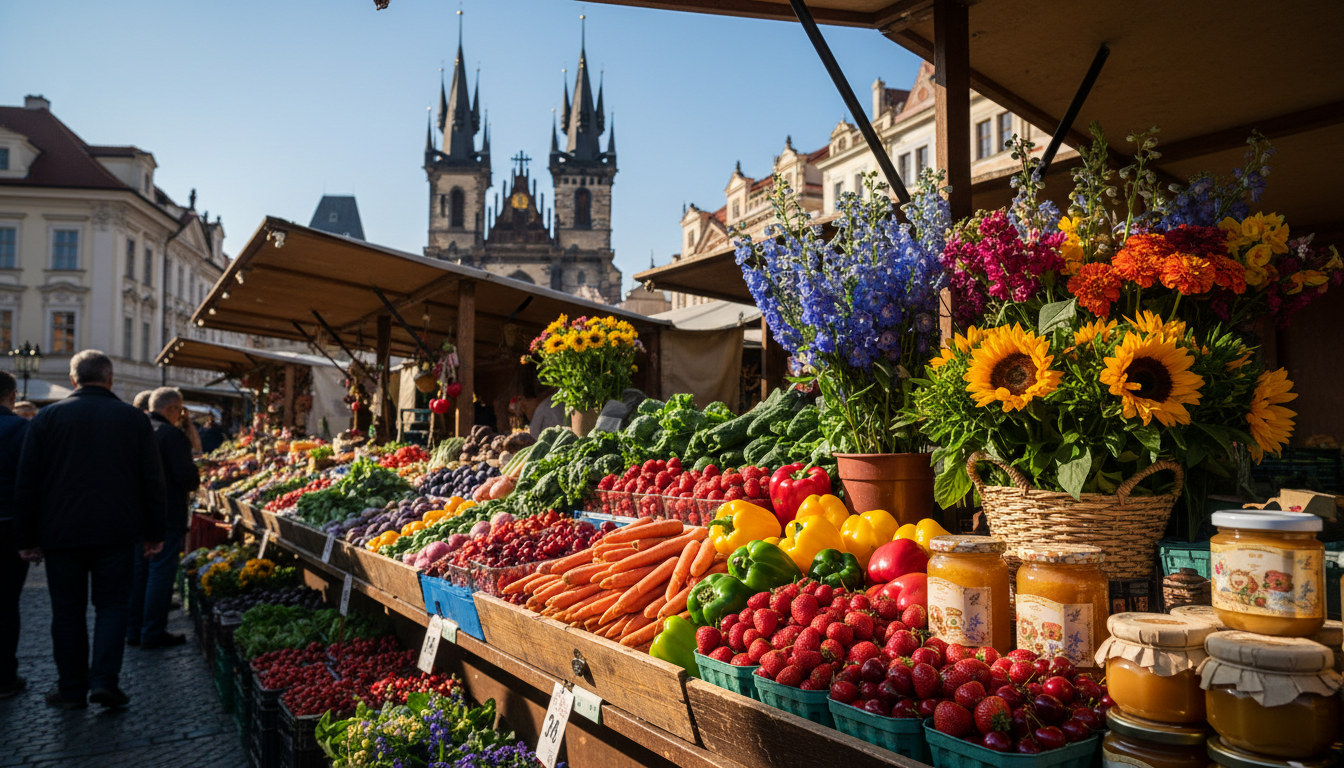
You buy ingredients at Havelská Market, the oldest open-air market in Prague, operating since 1232. You pick up fresh trdelník dough from a bakery in Vinohrady and bake it yourself. You discover that Czech supermarkets like Albert and Billa stock ingredients—fresh horseradish root, poppy seeds by the kilo, proper Czech mustard—that turn a simple dinner into an education.
The economics matter too. Prague restaurant prices have climbed steadily, with main courses at mid-range spots now running 280–450 CZK ($12–19 USD). A home-cooked meal using market ingredients costs a fraction of that. Over a two-week stay, the savings compound—and the experiences multiply.
 Havelsk Market stalls overflowing with seasonal produce, honey jars, and fresh flowers, with Gothic
The Neighborhoods: Where to Base Your Prague Food Adventure
Prague's food geography matters more than most cities. Each neighborhood has its own culinary personality, and where you stay determines what you'll eat.
Vinohrady: The Foodie's First Choice
Vinohrady consistently ranks as Prague's most desirable neighborhood for food-focused travelers. The area around Náměstí Míru and Jiřího z Poděbrad squares concentrates an unusual density of quality restaurants, wine bars, and specialty food shops within walking distance.
The Saturday farmers market at Jiřího z Poděbrad is the city's best—local cheese makers from Moravian farms, organic vegetables, fresh pasta, artisan bread. Arrive before 10 AM; the good stuff sells out. Typical prices: a wedge of aged Niva blue cheese runs 80–120 CZK ($3.50–5 USD), a loaf of sourdough 65–90 CZK ($2.80–4 USD).
Vinohrady's restaurant scene skews contemporary without abandoning tradition. Eska, technically in neighboring Karlín, pioneered Prague's farm-to-table movement and remains essential. Closer to home, Vinohradský Parlament serves updated Czech classics in a space that feels like your well-traveled friend's living room.
Žižkov: Authentic and Affordable
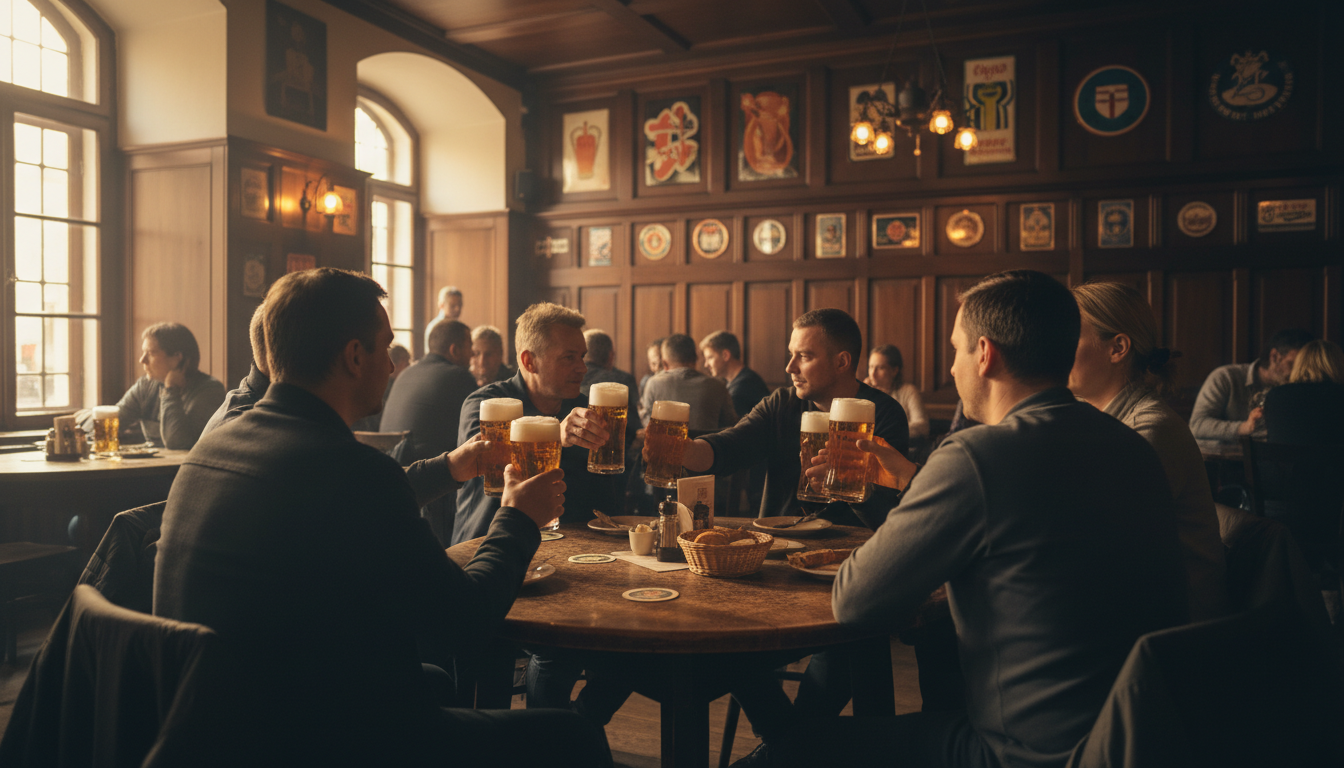
Žižkov is where young Praguers eat when they're not impressing anyone. The neighborhood's density of traditional hospodas (pub-restaurants) per square kilometer rivals anywhere in the country. These aren't tourist traps—they're working-class institutions serving svíčková and vepřo-knedlo-zelo to regulars who've been coming for decades.
U Sadu on Škroupovo náměstí exemplifies the genre: unpretentious, cheap, and excellent. A full meal with beer rarely exceeds 200 CZK ($8.50 USD). Here's the catch—menus are in Czech, English is limited, and the vibe can feel impenetrable to outsiders. Having a local host who can brief you on etiquette, or better yet join you for a meal, transforms the experience entirely.
Malá Strana and Hradčany: Historic but Navigable
The castle district and Lesser Town are tourist-heavy, but residents here have their own spots. Café Savoy on Vítězná is worth the hype—the Art Nouveau interior dates to 1893, and the weekend brunch remains a Prague institution. Expect to pay 350–500 CZK ($15–21 USD) for a full breakfast.
For everyday eating, locals in Malá Strana rely on Cukrkávalimonáda, a café-bakery on Lázeňská that does exceptional Czech pastries. The koláče (fruit-filled pastries) here cost 45–65 CZK ($2–3 USD) and justify the slight detour from the Charles Bridge crowds.
 Interior of a traditional Prague hospoda with dark wood paneling, vintage beer signs, and locals gat
Czech Cuisine Essentials: What to Eat in Prague
Czech food has a reputation problem. Decades of dismissive travel writing reduced it to "heavy" and "meat-and-dumplings," ignoring the sophistication of a cuisine that evolved over centuries at the crossroads of Germanic, Slavic, and Austro-Hungarian influences.
The Prague food scene is actively reclaiming this heritage. Young chefs are revisiting traditional recipes with modern techniques, sourcing from small farms, and proving that Czech cuisine deserves the same respect as French or Italian.
The Classics, Done Right
Svíčková na smetaně remains the definitive Czech dish: beef sirloin in a creamy vegetable sauce, served with bread dumplings and a dollop of cranberry compote. The sauce—made from carrots, parsnip, celeriac, and onions, slow-cooked and blended—takes hours to prepare properly. At Café Imperial, a stunning Art Deco space on Na Poříčí, svíčková runs 345 CZK ($15 USD) and demonstrates why this dish is worth seeking out.
Vepřo-knedlo-zelo—roast pork, dumplings, and sauerkraut—is the Sunday lunch of Czech childhoods. The pork should be crispy-skinned and falling apart; the dumplings (knedlíky) should be pillowy and slightly sour; the sauerkraut should balance the richness. U Fleků, Prague's oldest brewery-restaurant operating since 1499, serves a reliable version, though the tourist crowds and 165 CZK ($7 USD) dark beer can overwhelm the experience.
Kulajda is the sleeper hit: a creamy soup of potatoes, dill, and poached egg, soured with vinegar and enriched with cream. It's lighter than it sounds, vegetarian-friendly, and available at most hospodas for 85–120 CZK ($3.60–5 USD). Perfect for a cold Prague evening.
Beyond the Classics
Prague's contemporary restaurant scene has exploded in the past decade. Field, a Michelin-starred restaurant in the Old Town, offers tasting menus starting at 2,900 CZK ($125 USD) that showcase Czech ingredients through a modernist lens. La Degustation Bohême Bourgeoise takes a similar approach with an explicitly historical focus—dishes inspired by 19th-century Czech cookbooks, reimagined with contemporary technique.
For something more accessible, Kantýna on Politických vězňů operates as a butcher shop and restaurant in one. The meat comes from small Czech farms; the preparation is simple and excellent. A lunch plate runs 220–320 CZK ($9.50–14 USD).
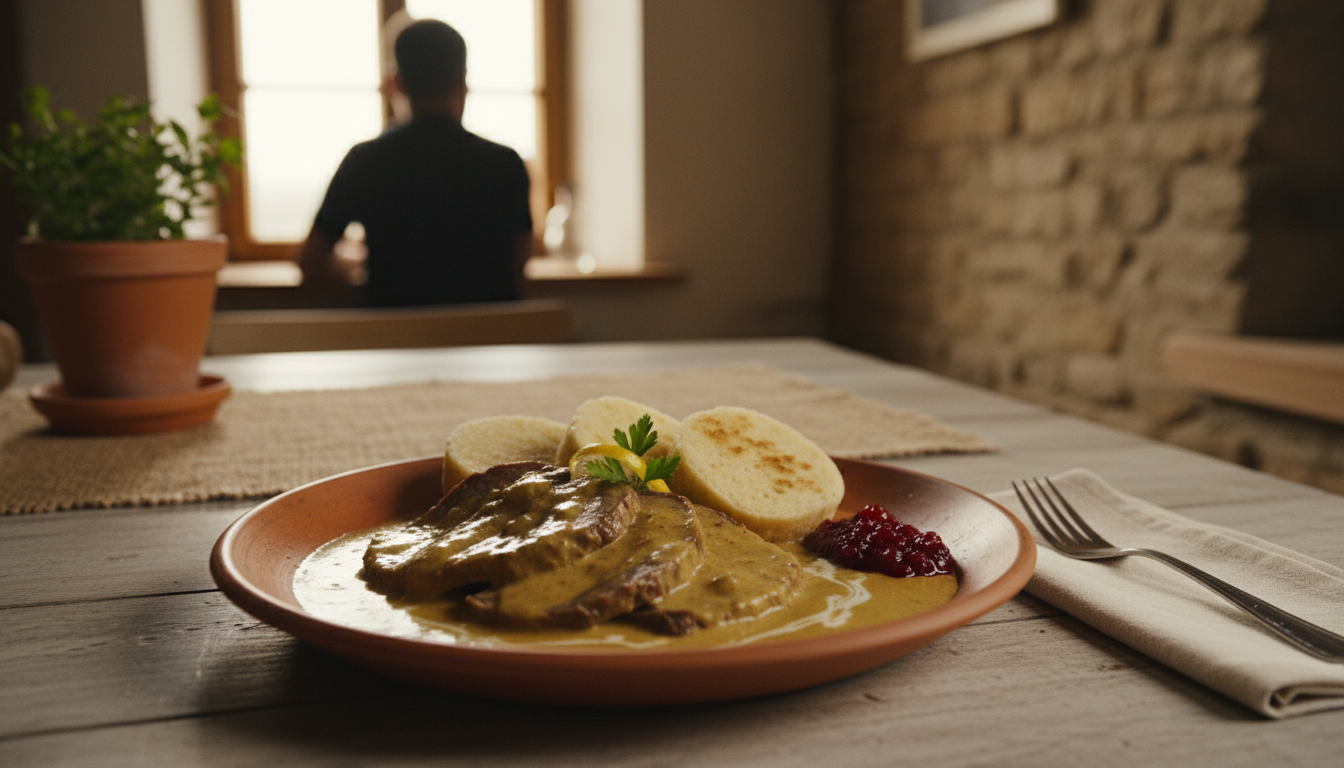 A beautifully plated svkov na smetan with bread dumplings, cranberry compote, and cream sauce swirl,
The Market Circuit: Shopping Like a Prague Local
Home exchange travelers have an advantage that hotel guests don't: a reason to shop for groceries. Prague's market scene rewards this.
Daily and Weekly Markets
Havelská Market (Havelské tržiště) operates daily in the Old Town, making it accessible but also tourist-facing. Come early on weekday mornings for the best selection and most authentic atmosphere. Seasonal produce, dried mushrooms, honey, and Czech garlic braids make excellent cooking ingredients or gifts.
Jiřího z Poděbrad Farmers Market (Saturdays, 8 AM–2 PM) is the city's premier farmers market. Vendors here must grow or produce what they sell—no resellers allowed. The cheese selection alone justifies the visit: look for olomoucké tvarůžky, a pungent aged cheese that's an acquired taste and a Czech obsession.
Náplavka Farmers Market (Saturdays, 8 AM–2 PM) runs along the Vltava riverbank near Palackého náměstí. The setting is spectacular—Prague Castle visible across the water—and the vendors skew young and innovative. Coffee roasters, craft bakers, and natural wine sellers mix with traditional farmers.
Specialty Food Shops
Culinaria on Skořepka is a small delicatessen stocking Czech artisan products: oils, vinegars, preserves, and prepared foods. Prices are premium but quality is exceptional.
Sisters Bistro (Dlouhá 39) specializes in open-faced sandwiches called chlebíčky—a Czech tradition that's been elevated here to an art form. Individual sandwiches run 55–85 CZK ($2.40–3.60 USD), and they pack beautifully for a picnic.
Vinograf operates as both a wine bar and shop, with the city's best selection of Moravian wines. Staff speak English and can guide you toward bottles that showcase what Czech wine has become—a long way from the bulk production of the communist era.
Prague's Coffee and Café Culture
Prague's café culture predates Starbucks by about four centuries. The city's grand cafés—Café Louvre, Café Slavia, Café Imperial—were intellectual salons where Kafka wrote, Einstein lectured, and Czech nationalism fermented over cups of Turkish coffee.
Today's Prague food scene includes a thriving specialty coffee movement layered onto this historic foundation.
Historic Cafés Worth Your Time
Café Louvre (Národní 22) opened in 1902 and still operates the billiard hall where Kafka and Max Brod played. The coffee is decent, the pastries are good, and the atmosphere is irreplaceable. Expect to pay 120–180 CZK ($5–8 USD) for coffee and cake.
Grand Café Orient occupies the first floor of the House of the Black Madonna, a Cubist masterpiece from 1912. The café recreates its original Cubist interior—even the furniture is angular. It's a museum piece you can drink coffee in.
Café Savoy deserves a second mention for its pastry case. The větrník—a Czech cream puff with caramel glaze—is definitive here.
Third-Wave Coffee Spots
Můj šálek kávy ("My Cup of Coffee") on Křižíkova pioneered Prague's specialty coffee movement. The beans are roasted in-house; the baristas take their craft seriously. Espresso runs 65 CZK ($2.80 USD).
EMA Espresso Bar (Na Florenci 3) caters to the Karlín creative class with excellent coffee and a minimalist aesthetic. The flat white here—90 CZK ($3.85 USD)—rivals anything in Melbourne or London.
Kavárna co hledá jméno ("The Café Looking for a Name") in Letná is as quirky as its name suggests. Local roasters, homemade cakes, and a neighborhood vibe that rewards repeat visits.
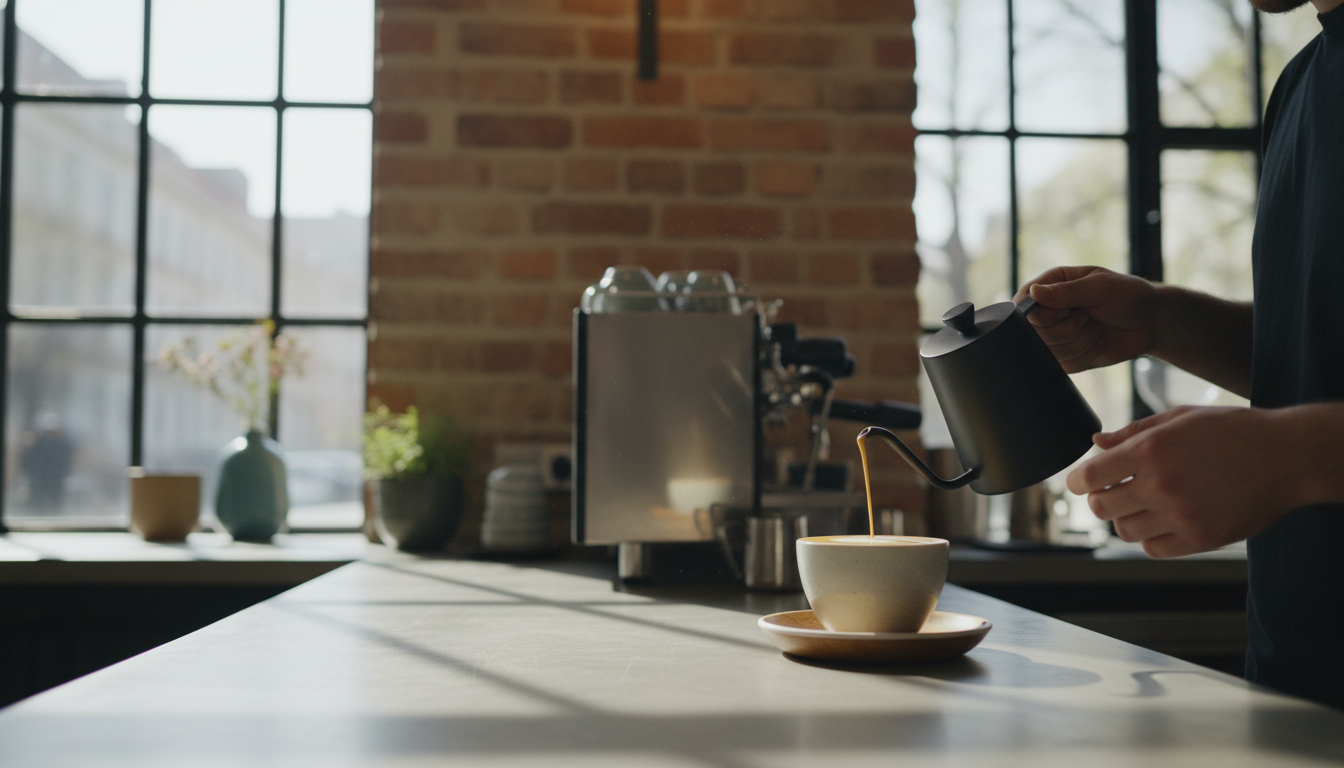 A specialty coffee being poured in a Prague third-wave caf, with exposed brick walls and natural lig
Czech Beer Culture: Beyond the Pilsner
Czech beer culture is not optional. The country drinks more beer per capita than any nation on Earth—roughly 140 liters per person annually. Prague is the epicenter.
The good news: Czech beer is exceptional and remarkably cheap. The complicated news: navigating the scene requires some orientation.
Understanding Czech Beer
Czech beer is categorized by degree (stupně), which measures original gravity—essentially, how much sugar was in the wort before fermentation. A 10° beer is lighter (around 4% ABV); a 12° is standard (around 5% ABV); anything higher gets progressively stronger.
The dominant style is Czech pale lager (světlý ležák), of which Pilsner Urquell is the global ambassador. But Prague's craft scene has expanded dramatically, and dark lagers (tmavé), amber lagers (polotmavé), and even IPAs now appear on tap at forward-thinking pubs.
Essential Prague Beer Experiences
Lokál (multiple locations, the original on Dlouhá) serves Pilsner Urquell in tank-fresh condition—unpasteurized, delivered directly from the brewery in special tanks. The difference from bottled beer is startling. A half-liter costs 59 CZK ($2.50 USD).
U Zlatého Tygra ("The Golden Tiger") on Husova is a legendary hospoda where Václav Havel brought Bill Clinton in 1994. The Pilsner is excellent; the atmosphere is no-frills and authentically Czech. Expect to share a table with strangers.
Pivovarský dům (Ječná 16) brews on-site and experiments with styles you won't find elsewhere: coffee beer, banana beer, nettle beer. It's a good introduction to Czech brewing creativity.
BeerGeek Bar (Vinohradská 62) represents Prague's craft beer movement, with 32 taps featuring Czech microbreweries and international guests. Prices run higher—90–140 CZK ($3.85–6 USD) per pour—but the selection justifies it.
Beer Etiquette for Home Exchangers
A few notes that hosts often share with their guests:
- Table service is standard. Wait to be seated; don't order at the bar.
- Your server will keep bringing beers until you place your coaster on top of your glass.
- Tipping is simple: round up to the nearest 10 CZK or add 10% for good service.
- "Na zdraví" (nah ZDRAH-vee) means "cheers"—make eye contact when you clink glasses.
Wine in Prague: The Moravian Revelation
Czech wine flies under the international radar, which works in your favor. Moravian wines—from the southeastern region bordering Austria—have improved dramatically over the past two decades, and Prague is the best place to explore them.
Wine Bars for Exploration
Vinograf (Senovážné náměstí 23) is the city's definitive wine bar, with 600+ Czech and Moravian wines available by the glass or bottle. The staff are knowledgeable and patient with beginners. Expect to pay 90–180 CZK ($3.85–7.70 USD) per glass.
Bokovka (Dlouhá 37) focuses on natural and biodynamic wines, including excellent Czech options. The space is intimate; reservations help.
Vinárna U Sudu (Vodičkova 10) is an underground labyrinth of interconnected cellars, each room with its own atmosphere. The wine list is extensive, prices are reasonable (glasses from 75 CZK / $3.20 USD), and the experience is uniquely Prague.
Grape Varieties to Know
Grüner Veltliner (called Veltlínské zelené in Czech) is the white grape that performs best here—crisp, peppery, and food-friendly.
Pálava is a Czech crossing that produces aromatic, off-dry whites with notes of apricot and honey. It's unique to this region.
Frankovka (Blaufränkisch) is the red to seek—medium-bodied, with cherry fruit and spice. Czech examples are lighter than Austrian versions, often served slightly chilled.
Practical Tips: Eating Well in Prague
Timing Your Meals
Czech meal timing differs from Western European patterns:
- Breakfast (snídaně): Light—bread, cheese, cold cuts, coffee. Most cafés open by 8 AM.
- Lunch (oběd): The main meal, traditionally. Many restaurants offer "denní menu" (daily menu) from 11 AM–2 PM with significant discounts—often 120–180 CZK ($5–7.70 USD) for a full meal.
- Dinner (večeře): Lighter than lunch in traditional practice, though restaurants serve full meals. Kitchens often close by 10 PM.
Navigating Menus and Ordering
Czech menus at traditional restaurants follow a standard structure:
- Předkrmy (appetizers)
- Polévky (soups)
- Hlavní jídla (main courses)
- Přílohy (side dishes)—often ordered separately
- Dezerty (desserts)
Useful phrases:
- "Jedno pivo, prosím" (YED-no PEE-vo, PRO-seem) = One beer, please
- "Účet, prosím" (OO-chet, PRO-seem) = The bill, please
- "Děkuji" (DYEH-koo-yih) = Thank you
Budget Expectations
Prague food costs vary dramatically by venue type:
- Hospoda lunch: 120–200 CZK ($5–8.50 USD)
- Mid-range restaurant dinner: 350–600 CZK ($15–26 USD)
- Fine dining tasting menu: 1,800–3,500 CZK ($77–150 USD)
- Coffee and pastry: 120–180 CZK ($5–7.70 USD)
- Beer (half-liter): 45–90 CZK ($1.90–3.85 USD)
- Wine (glass): 75–180 CZK ($3.20–7.70 USD)
Home exchange travelers typically report spending 40–60% less on food than hotel guests, primarily because kitchen access reduces restaurant dependency.
Making the Most of Your Host's Knowledge
We've seen this come up often in the SwappaHome community: host recommendations transform a Prague food experience. Before your exchange, consider asking your host about:
- Their favorite neighborhood restaurant (the one they actually eat at)
- The best bakery within walking distance
- Where they buy groceries—and what to look for
- Any food markets happening during your stay
- Restaurants that require reservations
Many hosts leave detailed notes about local food spots. These insider recommendations—the hospoda with the best svíčková, the wine bar that's never crowded, the bakery that sells out by 10 AM—are the real value of home exchange travel.
Seasonal Considerations for Prague Food Travel
Prague's food scene shifts with the seasons more than you might expect.
Spring (March–May): Wild garlic appears in markets and on menus. Asparagus season peaks in May. Outdoor markets return.
Summer (June–August): Berry season—Czech strawberries, raspberries, and blueberries are exceptional. Beer gardens open along the Vltava. Náplavka market is at its best.
Autumn (September–November): Mushroom season transforms menus—Czechs are obsessive foragers. New wine (burčák) appears briefly in September. Game dishes return to restaurant menus.
Winter (December–February): Christmas markets dominate December, with trdelník, svařák (mulled wine), and klobása (sausage) everywhere. January and February are quiet but excellent for restaurant reservations.
Frequently Asked Questions
What is the best area to stay in Prague for food lovers?
Vinohrady consistently ranks as Prague's top neighborhood for food-focused travelers. The area concentrates excellent restaurants, the city's best farmers market (Saturdays at Jiřího z Poděbrad), specialty food shops, and wine bars within walking distance. Home exchanges in Vinohrady put you in the heart of Prague's contemporary food scene while remaining residential and authentic.
How much should I budget for food in Prague per day?
Budget travelers with kitchen access can eat well on 400–600 CZK ($17–26 USD) daily, mixing market purchases with occasional restaurant meals. Mid-range food budgets run 800–1,200 CZK ($34–51 USD) daily for restaurant lunches and dinners. Fine dining adds significantly—expect 1,500–3,000 CZK ($64–128 USD) for a tasting menu experience.
Is Prague good for vegetarian or vegan travelers?
Prague's vegetarian and vegan scene has expanded dramatically. Traditional Czech cuisine is meat-heavy, but contemporary restaurants increasingly offer plant-based options. Dedicated vegetarian spots like Lehká Hlava and Maitrea serve creative meat-free Czech cuisine. Markets provide excellent produce for home cooking. Specify "bez masa" (without meat) when ordering at traditional restaurants.
What Czech foods should I try first in Prague?
Start with svíčková na smetaně (beef in cream sauce with dumplings)—it's the national dish and showcases Czech cuisine at its best. Follow with kulajda soup, trdelník pastry, and a properly poured Pilsner Urquell. For adventurous eaters, olomoucké tvarůžky cheese offers a pungent introduction to Czech dairy traditions.
When is the best time to visit Prague for food experiences?
Autumn (September–November) offers the richest Prague food experience: mushroom season fills markets and menus, new wine appears briefly, and summer crowds thin while weather remains pleasant. Spring (April–May) brings farmers markets back to life and asparagus season. Avoid mid-December through early January when many restaurants close or operate on holiday schedules.

Published by
SwappaHome
SwappaHome Editorial Team
Home Exchange & Slow Travel Editorial
The SwappaHome Editorial Team brings together travel research, home-exchange community insights, and platform data to produce practical guides for first-time and experienced home swappers. Every article cites real platforms, current market rates, and verifiable city-level facts so readers can make informed decisions without guessing.
Ready to try home swapping?
Join SwappaHome and start traveling by exchanging homes. Get 7 free credits when you sign up!
Related articles

Bachelor and Bachelorette Parties in Singapore: The Complete Home Swap Group Guide for 2026
Planning a bachelor or bachelorette party in Singapore? Discover how home swapping lets groups of 6-12 stay together in luxury condos, saving thousands while partying in Marina Bay.
Cycling in Lisbon: 7 Home Swap Bike Tour Itineraries for Every Rider
Discover the best cycling routes in Lisbon with these home swap bike tour itineraries—from waterfront paths to hilltop adventures, all starting from your borrowed home.
Graduation Trip to Barcelona: How Home Swapping Gives New Graduates the Ultimate Celebration
Planning a graduation trip to Barcelona? Discover how home swapping lets new graduates explore Spain's most vibrant city without the hostel crowds or hotel costs.