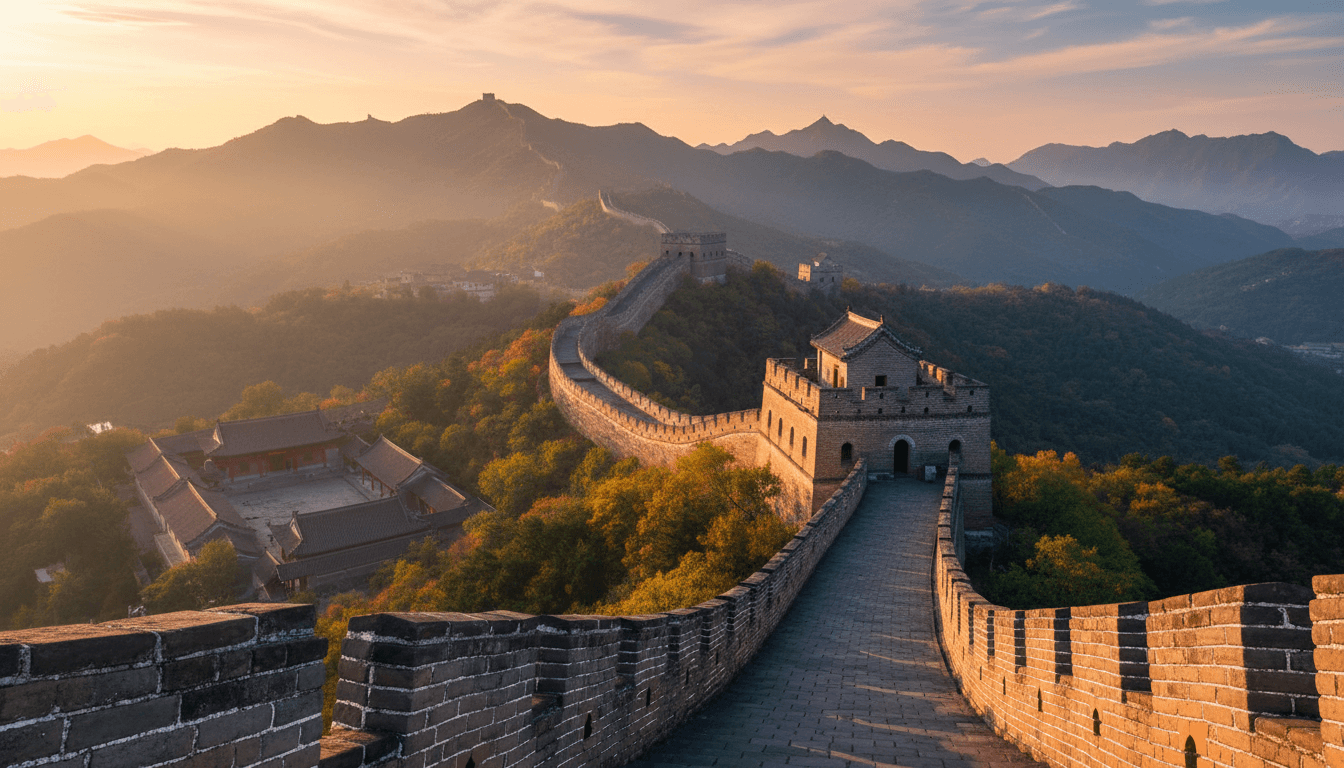
Romantic Home Swap in Beijing: The Ultimate Couples' Getaway Guide for 2024
Maya Chen
Travel Writer & Home Exchange Expert
Discover how a romantic home swap in Beijing transforms your couples' getaway—from hutong hideaways to Forbidden City sunsets. Real tips from 7 years of swapping.
The moment I knew Beijing would become one of my favorite cities for couples happened at 6 AM on a random Tuesday. My partner and I were staying in a traditional courtyard home in the Dongcheng district—a romantic home swap in Beijing that cost us nothing but a week of hosting a lovely retired couple from Shanghai at our San Francisco apartment. We'd woken up absurdly early thanks to jet lag, and instead of fighting it, we wandered out into the hutong alleyways. An elderly man was practicing tai chi in the gray morning light. A woman arranged chrysanthemums outside her door. The smell of jianbing—those crispy savory crepes—drifted from a cart around the corner.
My partner squeezed my hand. "This," he said, "is not something you get from a hotel."
He was right. Seven years into my home swapping journey, I've learned that Beijing offers something rare for couples: a city where ancient romance and modern love stories collide in the most unexpected ways. A romantic home swap in Beijing isn't just about free accommodation—though saving $200-400 per night on hotels certainly doesn't hurt. It's about waking up in a neighborhood, not a tourist zone. Having a kitchen where you can attempt dumplings together at midnight. Finding the Beijing that locals actually fall in love in.
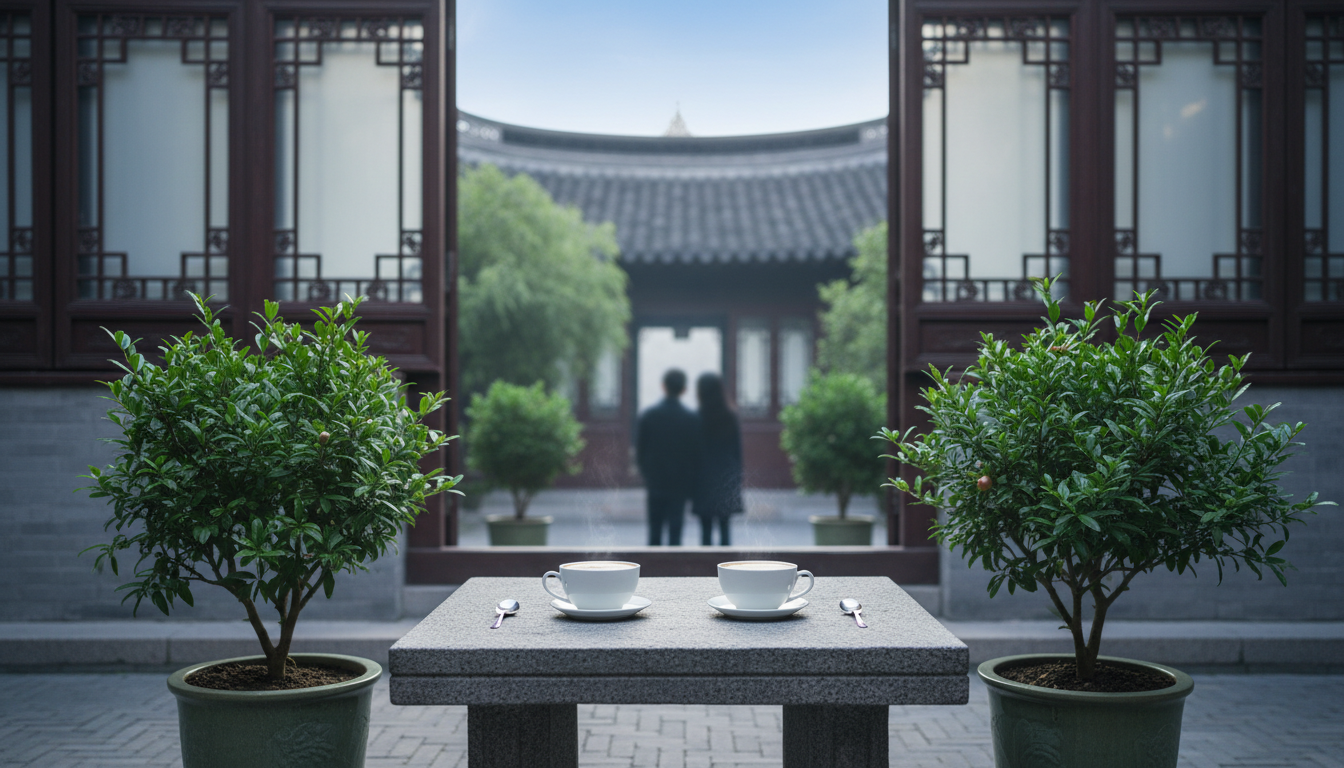 Morning light filtering through a traditional Beijing courtyard home siheyuan, with wooden lattice w
Why a Romantic Home Swap in Beijing Beats Traditional Accommodation
Look, Beijing hotels are fine. The Park Hyatt has those floor-to-ceiling windows. The Opposite House has that minimalist cool. But after staying in both during work trips, I can tell you—waking up in a characterless room, no matter how expensive, doesn't create memories.
What creates memories is having a home.
When you do a home swap for couples in Beijing, you're getting space to actually relax. Hotel rooms here average 30-35 square meters. The last home swap we did? A 90-square-meter apartment in Sanlitun with a balcony where we drank wine and watched the city lights come alive. Try doing that in a Marriott.
You're getting a kitchen for those intimate moments too. Some of my favorite memories with my partner involve cooking together—and in Beijing, that meant attempting zhajiangmian (noodles with soybean paste) using a recipe our host left us. We failed spectacularly the first time. Nailed it the second. That's a story. Room service? Not a story.
And then there's the neighborhood immersion. Hotels cluster in business districts or tourist areas. Home swaps scatter you across real Beijing—the Beijing where couples actually live, argue, make up, and build lives together.
The math works out too. A decent boutique hotel runs $180-300 USD per night. Luxury? $400-600. Over a week-long couples' trip, you're looking at $1,260-4,200. With SwappaHome's credit system, you spend 1 credit per night regardless of the home's market value. Those 10 free credits you get when joining? That's 10 nights in Beijing. Ten nights in someone's gorgeous hutong courtyard or sleek CBD apartment. Ten nights to fall deeper in love with each other and the city.
Best Beijing Neighborhoods for a Couples' Home Exchange
Not all Beijing neighborhoods are created equal for romance. After multiple trips and some trial and error—okay, mostly trial and error—here's where I'd steer you.
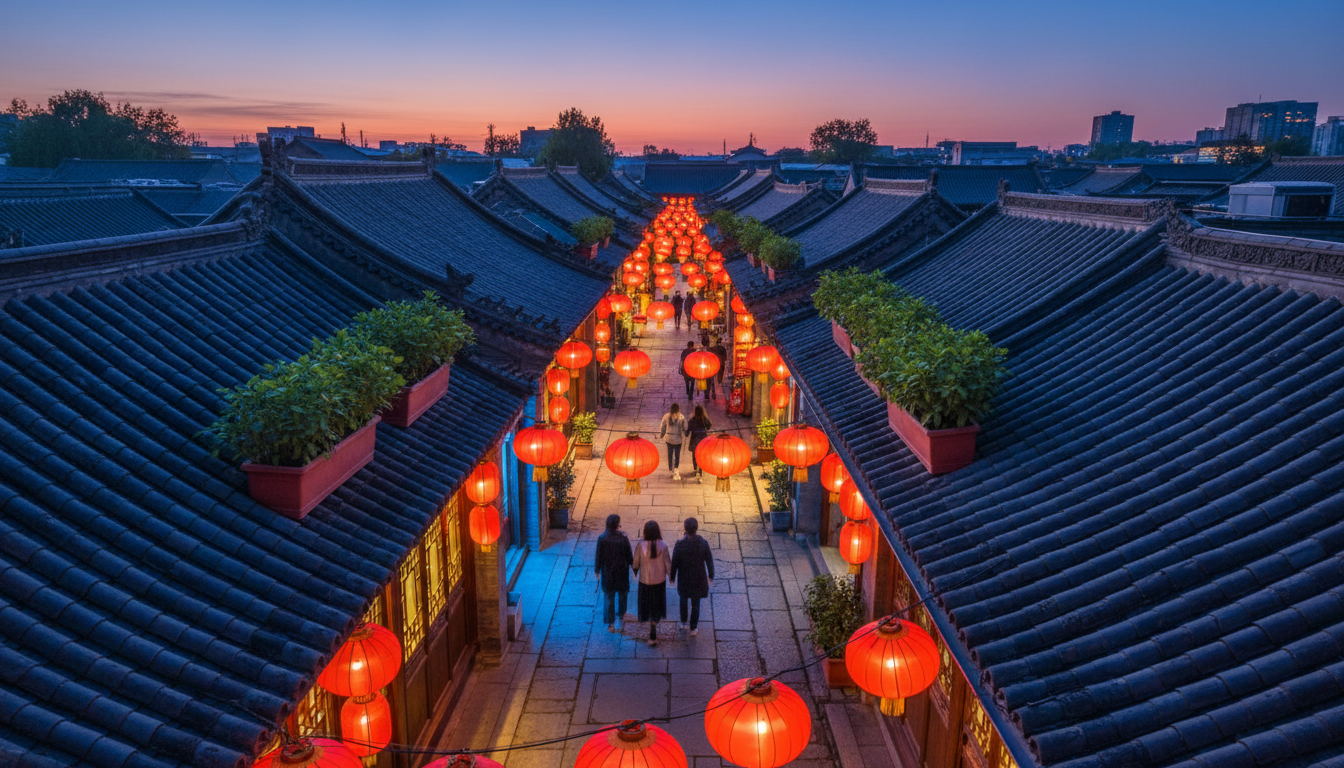 Aerial twilight view of Beijings Nanluoguxiang hutong area, showing traditional gray-tiled rooftops,
Dongcheng District: Hutong Romance at Its Finest
If this is your first Beijing home swap as a couple, Dongcheng is where I'd point you. This district has the highest concentration of preserved hutongs—those narrow alleyways lined with traditional courtyard homes—and it's walking distance to the Forbidden City, Jingshan Park, and some of the city's best date-night restaurants.
The vibe here is old Beijing with just enough modern convenience. You'll find converted siheyuan (courtyard homes) on SwappaHome that have been renovated with heated floors, modern bathrooms, and espresso machines, but still have that ancient wooden beam ceiling and courtyard where you can sip morning coffee in your pajamas.
What couples love is the intimacy of hutong life. Your neighbors will nod at you. The fruit seller will start recognizing you by day three. There's a sense of being part of something rather than just passing through.
Real talk though—some hutong homes have shared bathroom facilities or limited hot water. Always check the listing details. The ones I recommend have private, modern bathrooms. They exist, they're just worth confirming.
A boutique hutong hotel in this area (like Orchid Hotel) runs $150-250/night. A home swap? Still just 1 credit.
Sanlitun: Modern Love in Beijing's Trendiest District
Sanlitun is where young Beijing goes on dates. It's sleek, international, and packed with rooftop bars, designer boutiques, and restaurants ranging from molecular gastronomy to the city's best tacos. If you and your partner want craft cocktails at 11 PM and brunch at noon, this is your neighborhood.
Home swaps here tend to be modern apartments—floor-to-ceiling windows, open-plan kitchens, skyline views. Less traditional charm, more contemporary comfort.
Couples love the nightlife, the people-watching, and the fact that you can stumble home from a wine bar at midnight instead of hunting for a taxi.
I should mention—Sanlitun can feel less "authentically Beijing" to some travelers. If you want ancient China, look elsewhere. If you want the Beijing where young professionals fall in love over Japanese whisky, this is it.
Gulou (Drum Tower) Area: The Sweet Spot
Honestly? If I had to pick one neighborhood for a romantic Beijing home swap, it might be Gulou. It threads the needle between Dongcheng's traditional charm and Sanlitun's modern energy. You get hutongs AND craft beer bars. Ancient drum towers AND vinyl record shops. It's where Beijing's creative class hangs out, and there's a bohemian, artistic energy that feels inherently romantic.
Couples love the live music scene, the hidden speakeasies, the mix of Chinese and international restaurants. You can watch sunset from the ancient Drum Tower and then walk five minutes to a jazz club.
One thing to know—it's popular, which means some hutong homes here can feel a bit touristy. Look for listings on quieter side alleys rather than main drags like Nanluoguxiang.
How to Find Your Perfect Romantic Home Swap in Beijing
Alright, let's get practical.
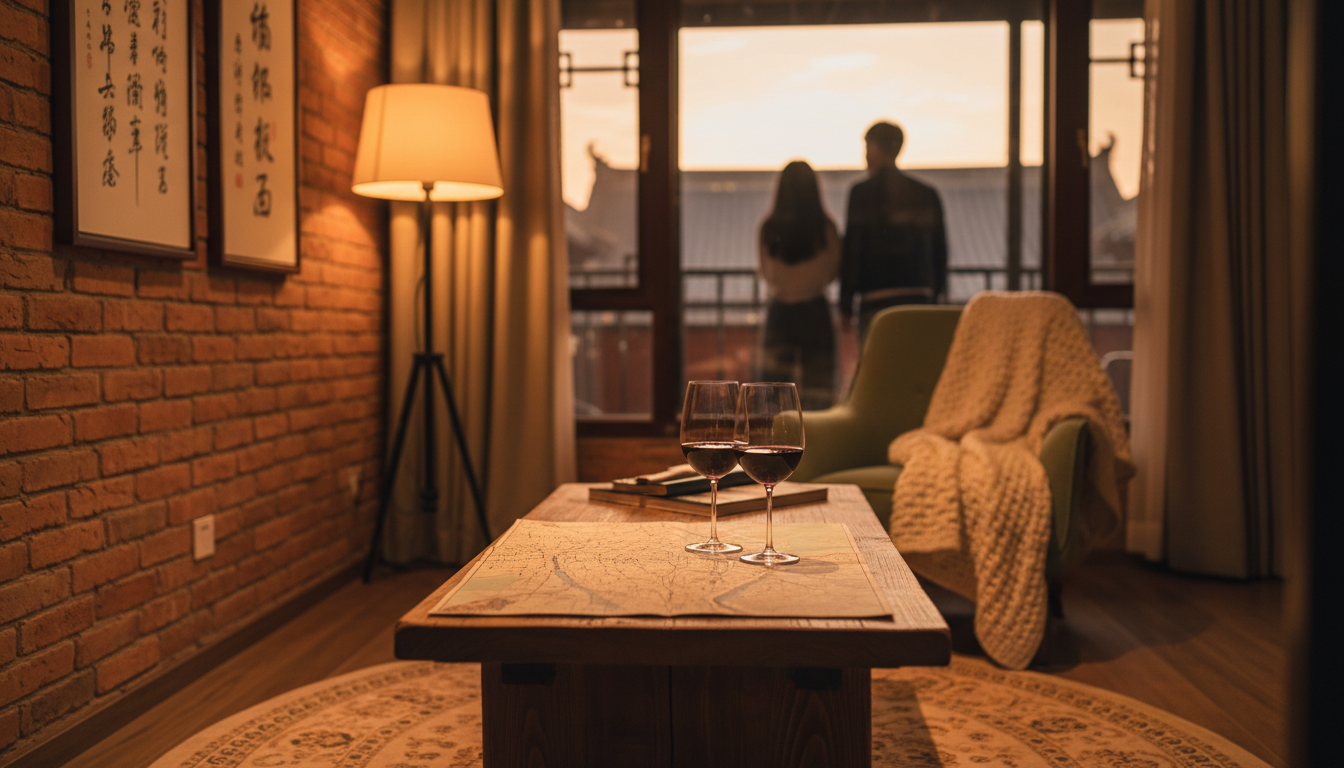 Cozy interior of a renovated Beijing apartment showing a couples travel setuptwo wine glasses on a c
Start Your Search 2-3 Months Early
Beijing's best homes—especially the photogenic hutong courtyards—get booked. I learned this the hard way when I tried to plan a last-minute anniversary trip and ended up with slim pickings. For peak seasons (October's Golden Week, Chinese New Year, cherry blossom season in April), start even earlier.
On SwappaHome, filter by Beijing and sort by reviews. Homes with 10+ positive reviews have proven track records. Read what other couples said—did they mention the neighborhood being walkable? The bed being comfortable? These details matter for romance.
Communicate Your "Couple Vibe" to Hosts
When you reach out to potential hosts, be specific about what kind of trip you're planning. I always mention that we're a couple looking for a romantic getaway.
Why? Because hosts often go above and beyond with recommendations.
One host in Beijing left us a handwritten list of her favorite date spots—including a speakeasy that required a password (you had to order in Mandarin, which we fumbled through hilariously) and a dumpling place that only locals knew about. Another left a bottle of local wine and rose petals on the bed. You don't get that energy when you book anonymously.
Look for These Amenities
For a couples' trip specifically, I've learned to prioritize a comfortable bed (sounds obvious, but check photos and reviews), a bathtub (after a day of walking Beijing's sprawling sights, trust me), a balcony or courtyard for private outdoor space—romance multiplier right there—a kitchen for those intimate cooking-together moments, and blackout curtains because Beijing mornings are bright and jet lag is real.
The Verification Factor
SwappaHome offers member verification, and I always filter for verified hosts when planning romantic trips. It's not that unverified members are problematic—it's just one less thing to wonder about. When you're planning something special with your partner, you want peace of mind.
Also—get your own travel insurance. I know, I know, not romantic. But SwappaHome connects you with hosts; they're not responsible for damages or issues that might arise. A basic travel insurance policy (around $50-100 for a week) covers you if something goes sideways. Then you can relax and focus on each other.
Romantic Experiences to Plan Around Your Beijing Home Swap
Here's where I get to share the good stuff.
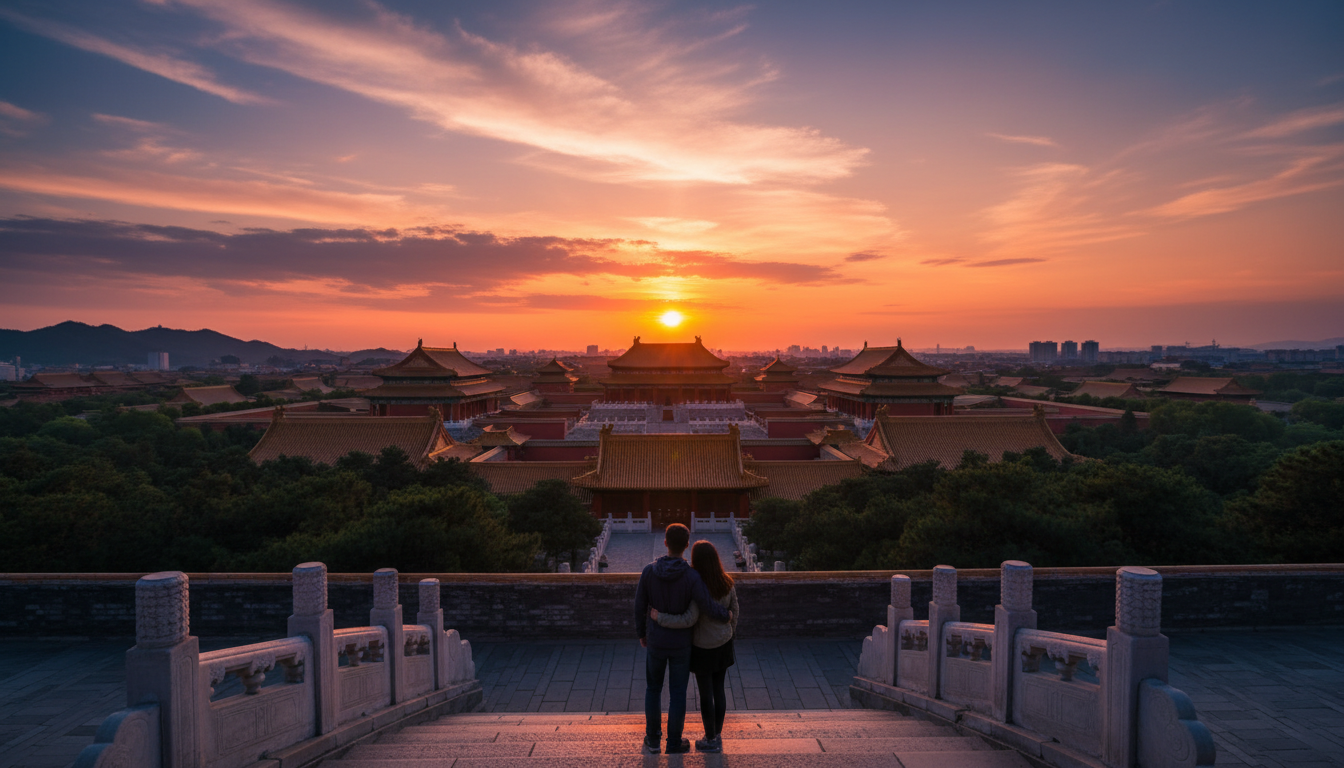 Couple silhouetted against sunset at Jingshan Park, with the golden rooftops of the Forbidden City s
Sunrise at the Temple of Heaven
I'm not a morning person. My partner knows this. But he convinced me to set an alarm for 5:30 AM on our third day in Beijing, and I'm still grateful.
The Temple of Heaven opens at 6 AM, and in those early hours, it transforms into Beijing's living room. Elderly couples practice ballroom dancing on the stone pathways. Groups do synchronized tai chi. Musicians play erhu under ancient cypress trees. The temple itself—that iconic blue-roofed circular building—glows in the morning light.
We walked through holding hands, stopping to watch a couple in their 70s waltz to a portable speaker playing Chinese oldies. "That'll be us," my partner said.
Reader, I almost cried.
The park entrance fee is ¥15 ($2 USD) for the grounds only, ¥34 ($5 USD) for full access including the temple buildings. Go early, bring coffee from your home swap kitchen, and stay for the people-watching.
Sunset from Jingshan Park
If Temple of Heaven is for mornings, Jingshan Park is for evenings. This artificial hill sits directly behind the Forbidden City, and from the pavilion at the top, you get the most iconic view in Beijing: the entire Forbidden City spread below you, its golden rooftops catching the last light.
We brought a bottle of wine (technically not allowed, but we were discreet) and watched the sky turn from blue to gold to pink to purple. The Forbidden City below us shifted through a dozen shades of amber. When the lights of modern Beijing started twinkling in the distance, it felt like watching 600 years of history meet the present.
Entry is ¥2 ($0.30 USD). Get there by 5 PM in summer, 4 PM in winter to claim a good spot. The pavilion gets crowded at peak sunset—arrive early and stake out the western edge for the best angle.
A Private Dumpling-Making Class
This was my partner's anniversary gift to me, and it remains one of my favorite travel experiences ever.
We booked a private cooking class through a local host (ask your SwappaHome host for recommendations—they always know someone) in a hutong kitchen. For three hours, a grandmother named Wang Ayi taught us to make three types of dumplings: pork and chive, lamb and cumin, and vegetarian mushroom. She spoke almost no English. We spoke almost no Mandarin.
It didn't matter.
We communicated through flour-dusted hands and laughter and the universal language of food. At the end, we sat in her courtyard and ate our creations with homemade chili oil and vinegar. She brought out photos of her grandchildren. We showed her photos of our cat. It was perfect.
Private cooking classes run ¥400-800 ($55-110 USD) per couple. Worth every yuan. Book through local platforms like Airbnb Experiences or ask your home swap host—many know home cooks who offer informal lessons.
The Great Wall, But Make It Romantic
Yes, you have to do the Great Wall. No, you don't have to do it the crowded, touristy way.
Skip Badaling (the most accessible and most mobbed section). Instead, head to Mutianyu or—if you're feeling adventurous—Jinshanling. Mutianyu is about 90 minutes from central Beijing and has a cable car option if you want to save energy. Jinshanling is further (2.5 hours) but dramatically less crowded and more photogenic.
We went to Jinshanling on a misty October morning. For long stretches, we were completely alone on the wall. Just us, the ancient stones, and mountains disappearing into clouds. We found a watchtower, sat on the cold stone floor, and shared a thermos of tea we'd brought from our home swap.
No photo will ever capture how that felt.
But we took them anyway.
Hire a private driver through your host or a platform like Didi (China's Uber). Round-trip to Jinshanling runs about ¥800-1000 ($110-140 USD) for the car, not per person. Entry to Jinshanling is ¥65 ($9 USD). Go on a weekday if possible.
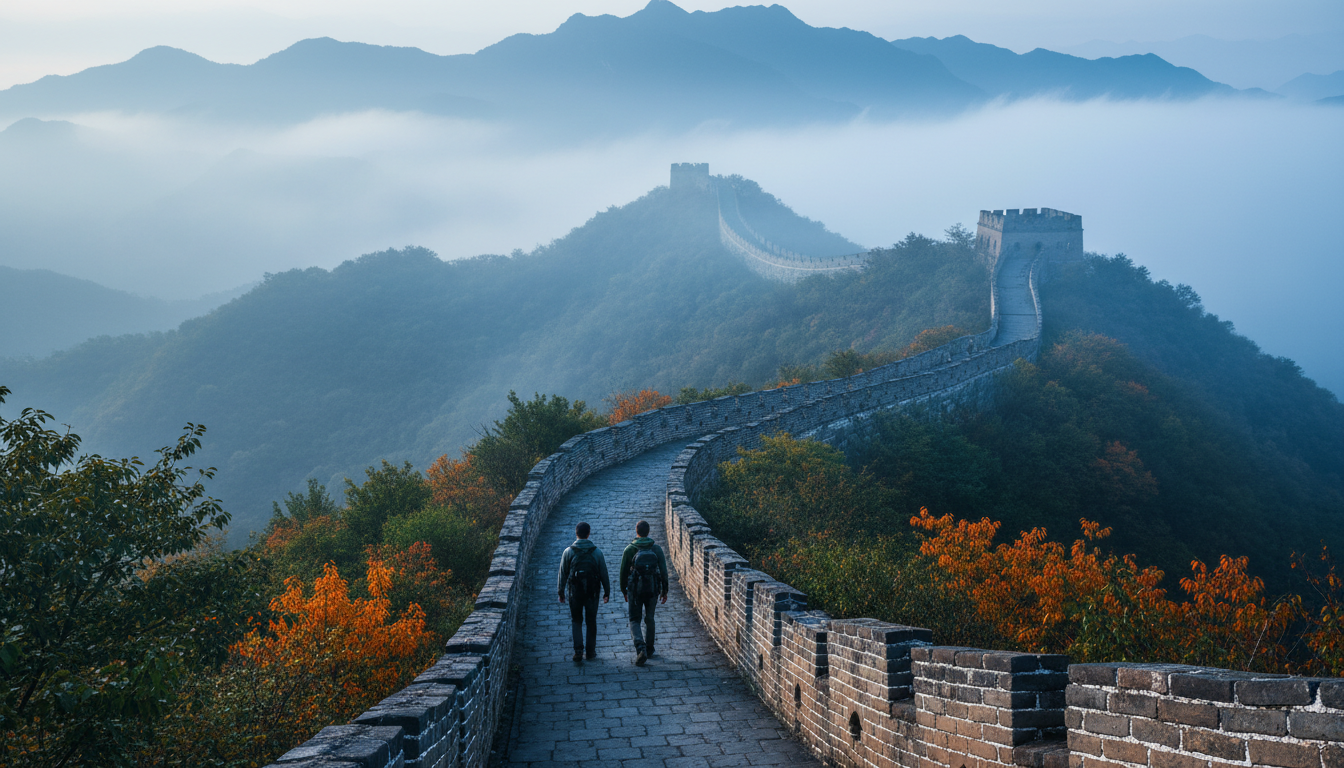 Couple walking along a misty, uncrowded section of the Great Wall at Jinshanling, wild vegetation gr
Date Night in Sanlitun
Even if you're not staying in Sanlitun, spend one evening there. Start with cocktails at Janes + Hooch (a speakeasy-style bar with incredible drinks, around ¥80-120/$11-17 per cocktail), then dinner at Transit (Sichuan food elevated to fine dining, about ¥400-600/$55-85 per person), and end at a rooftop bar watching Beijing's skyline.
Or go casual—street food at the Sanlitun SOHO complex, bubble tea from Heytea, and people-watching on the pedestrian streets. Beijing's young couples are out in force on weekend nights, and there's something lovely about being part of that energy.
What to Expect from Your Beijing Home Swap Host
Here's something I've learned about Chinese hospitality: it tends toward generous. Almost embarrassingly generous.
Every Beijing host I've had through SwappaHome has left detailed welcome guides—not just the basics, but restaurant recommendations with specific dish orders, transit tips, and often small gifts. One left us a box of mooncakes. Another left her personal phone number in case we needed anything.
The flip side? Chinese hosts often appreciate a gift in return. It's not required, but it's culturally thoughtful. I usually bring something small from San Francisco—local chocolate, nice coffee beans, or a photo book of California. When we leave, I always write a handwritten thank-you note in addition to the SwappaHome review.
Communication style can be different too. Some hosts are very responsive; others reply once with everything you need and then go quiet. Don't take silence personally—it's often just a different communication norm. If you have questions, ask them all at once rather than sending multiple messages.
Practical Tips for Couples Planning a Beijing Home Exchange
Let me rapid-fire some things I wish I'd known.
Visa situation: Most Western passports need a visa for China. Apply at least 3-4 weeks before your trip. It's not hard, just bureaucratic. A 10-year tourist visa costs around $140 USD for Americans.
VPN necessity: China blocks Google, Instagram, WhatsApp, and most Western social media. Download a VPN before you arrive (ExpressVPN and NordVPN work well). This is non-negotiable if you want to stay connected or even just use Google Maps.
Cash vs. mobile payment: Beijing runs on WeChat Pay and Alipay, but tourists can't easily set these up. Carry cash (yuan) for markets and small vendors. Major restaurants and shops take international credit cards.
Translation app: Download Pleco (for Chinese dictionary) and Google Translate (with offline Chinese downloaded). They'll save you constantly.
Best time for couples: Late September through early November offers perfect weather—clear skies, comfortable temperatures (15-25°C/60-77°F), and autumn colors. Spring (April-May) is also lovely but can be dusty. Avoid July-August (hot and humid) and major Chinese holidays (absolutely packed).
Getting around: Beijing's subway is extensive, cheap (¥3-7 per ride), and easy to navigate. Didi works like Uber but requires a Chinese phone number—your host might help you set it up. Taxis are plentiful but drivers rarely speak English; have your destination written in Chinese characters.
Making Your Home Swap Experience Romantic
Here's my final thought on this—a home swap is just a framework. What makes it romantic is what you do with it.
Use the kitchen to make breakfast together. Use the living room for a movie night with Chinese snacks from the corner store. Use the neighborhood to develop inside jokes ("our coffee shop," "that weird statue we keep passing"). Use the freedom of not paying $300/night to splurge on that fancy dinner you'd otherwise skip.
My partner and I have done romantic trips in luxury hotels. They were nice. But the trips I remember—the ones that actually deepened our relationship—were the ones where we lived somewhere. Where we had a routine, even if just for a week. Where we navigated a foreign grocery store together and laughed at our mistakes and felt like a team.
That's what a romantic home swap in Beijing offers. Not just a place to stay, but a place to be together.
SwappaHome makes it easy to find that place. The platform's credit system means you're not stressing about accommodation costs—you host when you can, you travel when you want, and it all balances out. The community aspect means you're connecting with real people, not booking through an algorithm.
If you're planning a couples' getaway to Beijing, I genuinely can't recommend home swapping highly enough. Find a courtyard home in the hutongs. Wake up to the sound of bicycle bells and neighbors chatting. Make coffee in someone else's kitchen and drink it in someone else's courtyard.
Then go fall in love with Beijing.
And maybe fall a little more in love with each other while you're at it.
Frequently Asked Questions
Is a home swap in Beijing safe for couples?
Yes, home swapping in Beijing is safe when you use a trusted platform like SwappaHome with verified members and reviews. Beijing itself is one of the safest major cities in the world for tourists. Always communicate through the platform, read previous guest reviews, and consider getting your own travel insurance for extra peace of mind.
How much can couples save with a Beijing home exchange vs hotels?
Couples typically save $1,200-3,000 on a week-long Beijing trip through home swapping. Mid-range Beijing hotels average $180-300/night, while luxury options run $400-600/night. With SwappaHome, you spend 1 credit per night regardless of the home's value—and new members start with 10 free credits.
What's the best neighborhood in Beijing for a romantic home swap?
The Dongcheng district, particularly the hutong areas near the Drum Tower (Gulou), offers the most romantic setting for couples. You'll find traditional courtyard homes, walkable streets with cafes and bars, and proximity to major attractions like the Forbidden City. Sanlitun suits couples who prefer modern nightlife and dining.
When is the best time for a couples' trip to Beijing?
Late September through early November offers ideal conditions: comfortable temperatures (15-25°C/60-77°F), clear skies, and beautiful autumn foliage. April-May is also pleasant but can be dusty. Avoid Chinese national holidays (October 1-7, Chinese New Year) when the city is extremely crowded.
Do I need to speak Mandarin for a Beijing home swap?
No, but basic preparation helps. Download translation apps (Pleco, Google Translate with offline Chinese), have your home swap address written in Chinese characters, and learn a few polite phrases. Most SwappaHome hosts in Beijing communicate in English, and they often leave detailed guides to help you navigate.
40+
Swaps
25
Countries
7
Years
About Maya Chen
Travel Writer & Home Exchange Expert
Maya is a travel writer with over 7 years of experience in the home swapping world. Originally from Vancouver and now based in San Francisco, she has completed more than 40 home exchanges across 25 countries. Her passion for "slow" and authentic travel led her to discover that true luxury lies in living like a local, not a tourist.
Ready to try home swapping?
Join SwappaHome and start traveling by exchanging homes. Get 10 free credits when you sign up!
Related articles

Lyon Home Exchange: Your Complete Guide to France's Hidden Gem for Home Swapping
Discover why Lyon home exchange is booming among savvy travelers. From Croix-Rousse to Presqu'île, find the best neighborhoods and insider tips for your swap.

Zurich Bucket List: 47 Unforgettable Experiences to Enjoy During Your Home Swap
Discover the ultimate Zurich bucket list for home swappers—from secret swimming spots to fondue rituals locals actually do. Save thousands while living like a true Zürcher.
Dublin Home Exchange Utilities Guide: WiFi, Heating & Everything Your Guests Need
Master Dublin home exchange utilities—from dodgy WiFi fixes to heating quirks. Practical tips from 7 years of swapping homes across Ireland.