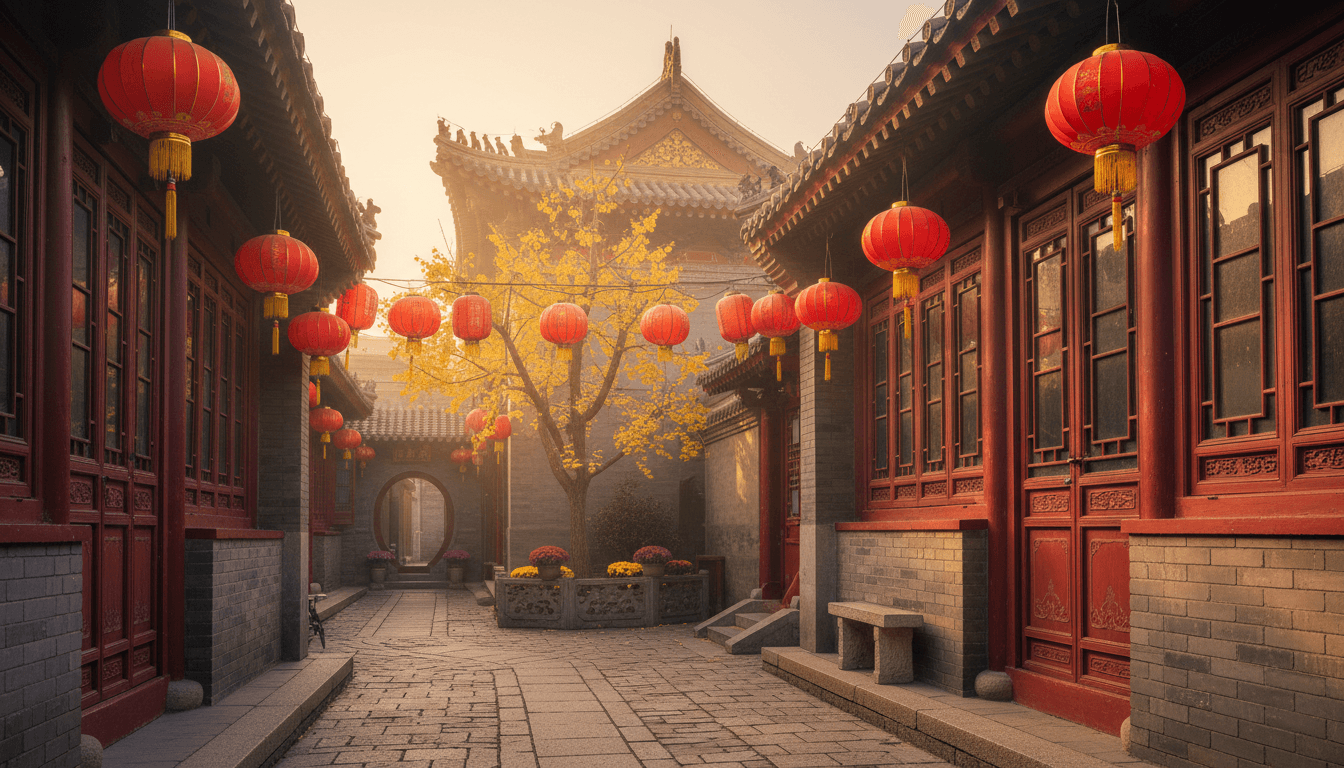
Beijing Home Exchange: Your Complete Guide to Swapping Homes in China's Capital

SwappaHome Editorial Team
Home Exchange & Slow Travel Editorial
Discover how Beijing home exchange is transforming travel in China. From hutong courtyards to modern high-rises, learn how to swap homes and save thousands.
That morning I found myself standing in a stranger's kitchen at 6 AM, watching an elderly neighbor practice tai chi in the courtyard below—that's when I knew Beijing home exchange was going to change everything.
I was staying in a traditional siheyuan in Dongcheng district. A courtyard house, centuries old, with wooden beams and stone floors worn smooth by generations. The hotel across the street? $280 a night for a view of another hotel.
I'd paid nothing.
Well, technically I'd spent credits earned hosting a lovely couple from Shanghai in my San Francisco apartment two months earlier. But actual money? Zero. And there I was, living like a local in one of the world's most expensive cities.
That was three years ago. Since then, I've watched the Beijing home exchange market absolutely explode. What was once a niche concept—understood only by expats and adventurous Chinese millennials—has become a genuine movement. And honestly? The opportunities right now are unlike anything I've seen in seven years of home swapping.
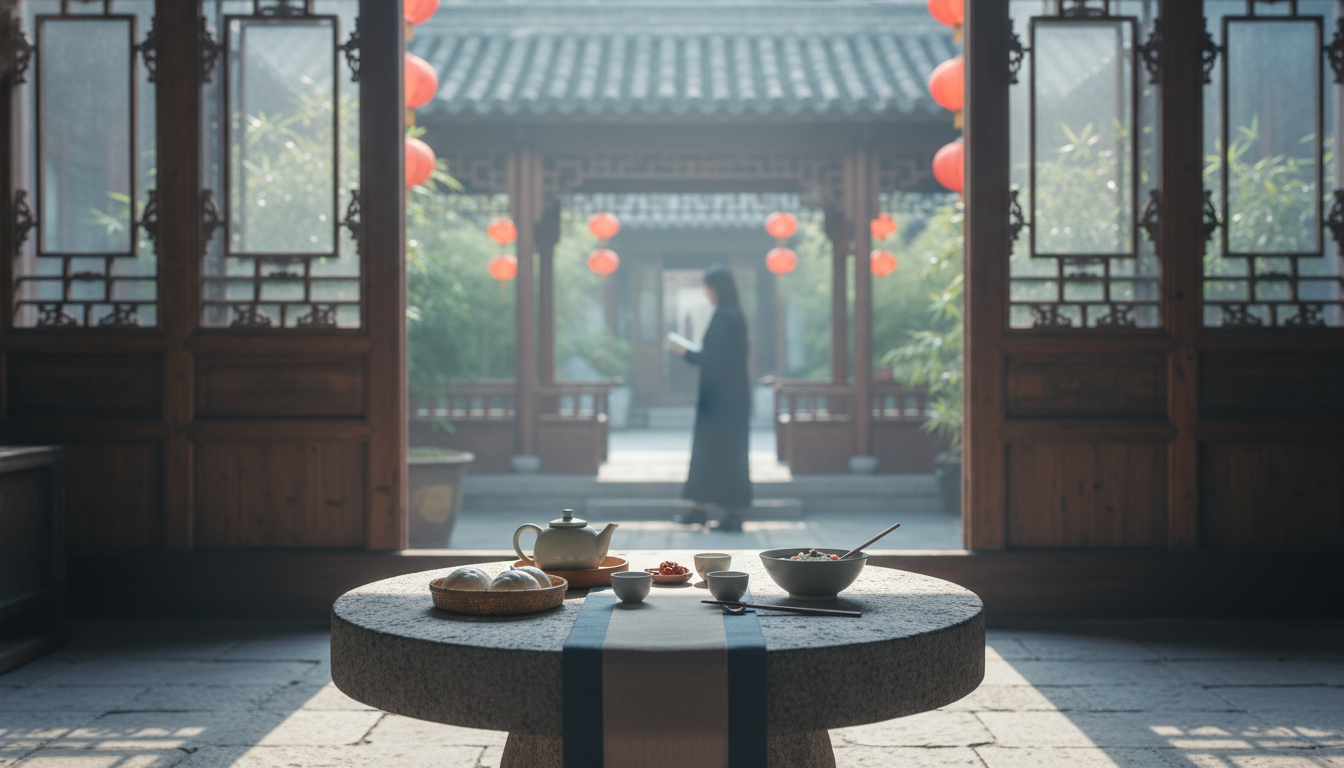 Morning light filtering through traditional wooden lattice windows in a Beijing courtyard house, wit
Why Beijing Home Exchange Is Having a Moment
Here's what most travel guides won't tell you: Beijing is experiencing a perfect storm for home exchangers.
The cost factor alone is staggering. Average hotel prices in central Beijing hover around $150-200 USD per night for anything decent. A week's stay easily runs $1,000-1,400 before you've eaten a single dumpling. Airbnb prices have crept up to $80-150 per night, and the platform faces ongoing regulatory challenges in China that make listings unpredictable at best.
But the bigger shift? It's cultural.
A generation of Chinese homeowners who've traveled internationally—and experienced home exchange abroad—are now listing their Beijing properties. I've talked to dozens of them. Many discovered SwappaHome while studying or working overseas, loved the concept, and brought it home with them. The numbers tell the story: Beijing home exchange listings have grown roughly 340% since 2020. That's not a typo. And the variety of properties we're talking about ranges from converted factory lofts in 798 Art District to traditional courtyard homes that have been in families for generations.
Best Neighborhoods for Home Exchange in Beijing
Not all Beijing neighborhoods are created equal for home swapping. After four separate stays and countless conversations with local hosts, here's my honest breakdown.
Dongcheng District: The History Lover's Dream
This is where you'll find the highest concentration of traditional hutong homes available for exchange. The area around Nanluoguxiang and the Drum Tower has become particularly popular with foreign exchangers—though I'd argue the neighborhoods slightly east, like Beixinqiao, offer a more authentic experience with fewer tourist crowds.
Expect properties here to range from renovated courtyard rooms (often with shared outdoor spaces) to fully modernized siheyuan compounds. One host I stayed with had spent $200,000 USD renovating her family's 400-year-old courtyard home. Heated floors. Rainfall shower. It felt almost absurdly luxurious against those ancient wooden beams.
The catch? These properties book up fast, especially during spring and autumn when Beijing's weather is genuinely perfect.
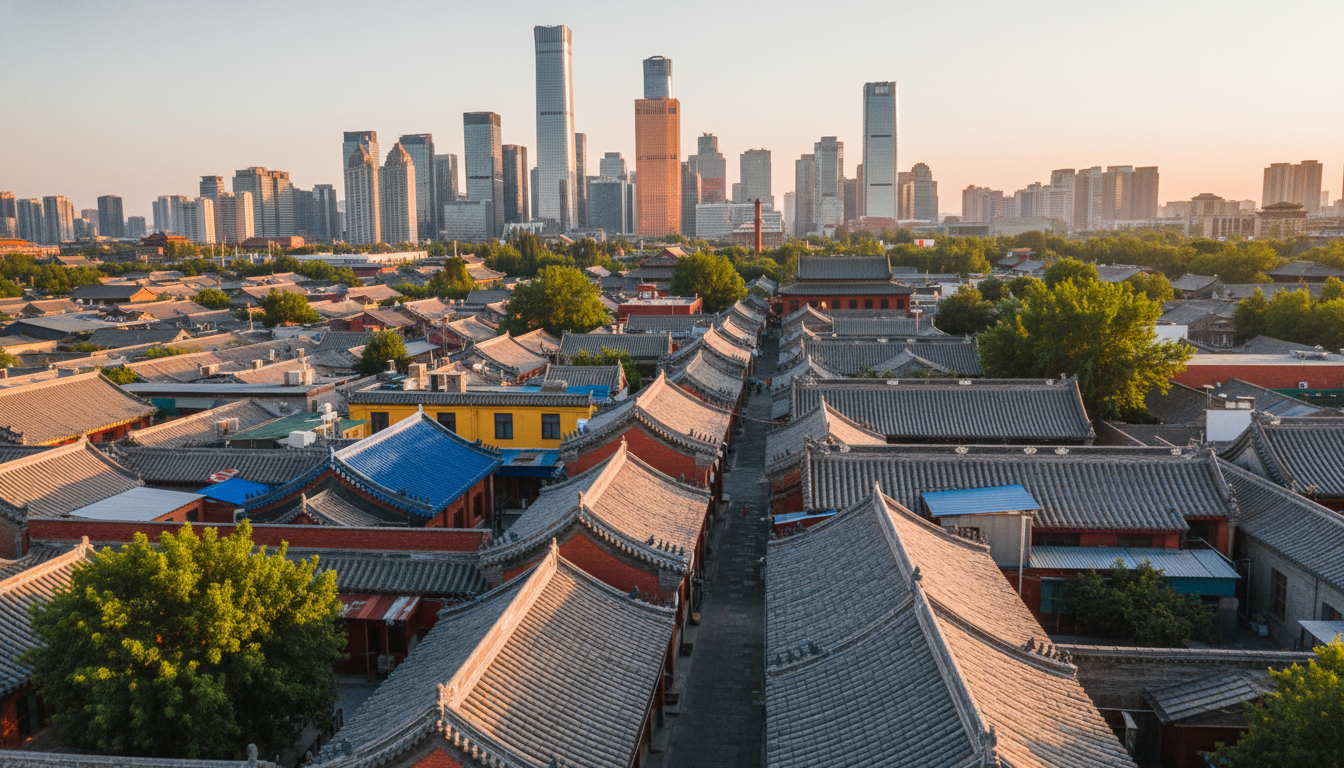 Aerial view of traditional gray-roofed hutong alleyways in Dongcheng, with modern skyscrapers visibl
Chaoyang District: Modern Luxury Meets Convenience
If traditional architecture isn't your priority, Chaoyang is where Beijing's contemporary side shines. This is the CBD, the embassy district, neighborhoods like Sanlitun that feel almost more Tokyo than traditional China.
Home exchange options here tend toward high-rise apartments with amenities—gyms, pools, concierge services. I stayed in a 28th-floor apartment near the CCTV headquarters last spring. Waking up to that skyline view never got old. The owner was a tech executive who traveled constantly for work and had accumulated enough credits hosting to fund months of her own adventures.
Prices in Chaoyang would typically run $120-180 per night on traditional booking platforms. Through home exchange? One credit per night, same as everywhere else.
Haidian District: The Underrated Gem
Most tourists skip Haidian entirely. Which is exactly why I love it.
This is Beijing's university and tech hub—home to Tsinghua, Peking University, and China's answer to Silicon Valley. The home exchange properties here often belong to academics or tech workers who travel frequently. I've noticed they tend to be incredibly well-organized hosts (think detailed instruction manuals, pre-stocked pantries, meticulous cleaning standards). The Summer Palace is in Haidian, as are some of Beijing's best hiking spots in the Western Hills.
Real talk: if you're planning a longer stay of two weeks or more, Haidian offers the best value. Neighborhood restaurants charge local prices—$3-5 USD for a full meal—and you'll actually get to know your neighbors.
How to Find the Perfect Beijing Home Exchange
I'm going to be direct here because I've seen too many first-timers make avoidable mistakes.
Start your search 3-4 months early. Beijing isn't like swapping in Europe where you can sometimes find last-minute options. The best properties—especially those traditional courtyard homes—get booked months in advance. I start browsing SwappaHome listings at least 90 days before my intended travel dates and send inquiry messages to my top five choices immediately.
Verify your profile completely. Chinese hosts place enormous emphasis on trust and verification. Complete every verification step available. Add detailed photos of your home. Write a thorough description. Hosts here will absolutely check your profile before responding, and an incomplete profile often means no response at all.
Learn three phrases. Even if your host speaks English, knowing basic Mandarin goes incredibly far: "Nǐ hǎo" (hello), "Xièxiè" (thank you), and "Zhè ge duōshǎo qián?" (how much is this?) for markets and street food. I'm not fluent by any stretch, but hosts have told me that even attempting Mandarin signals respect and makes them more comfortable with the exchange.
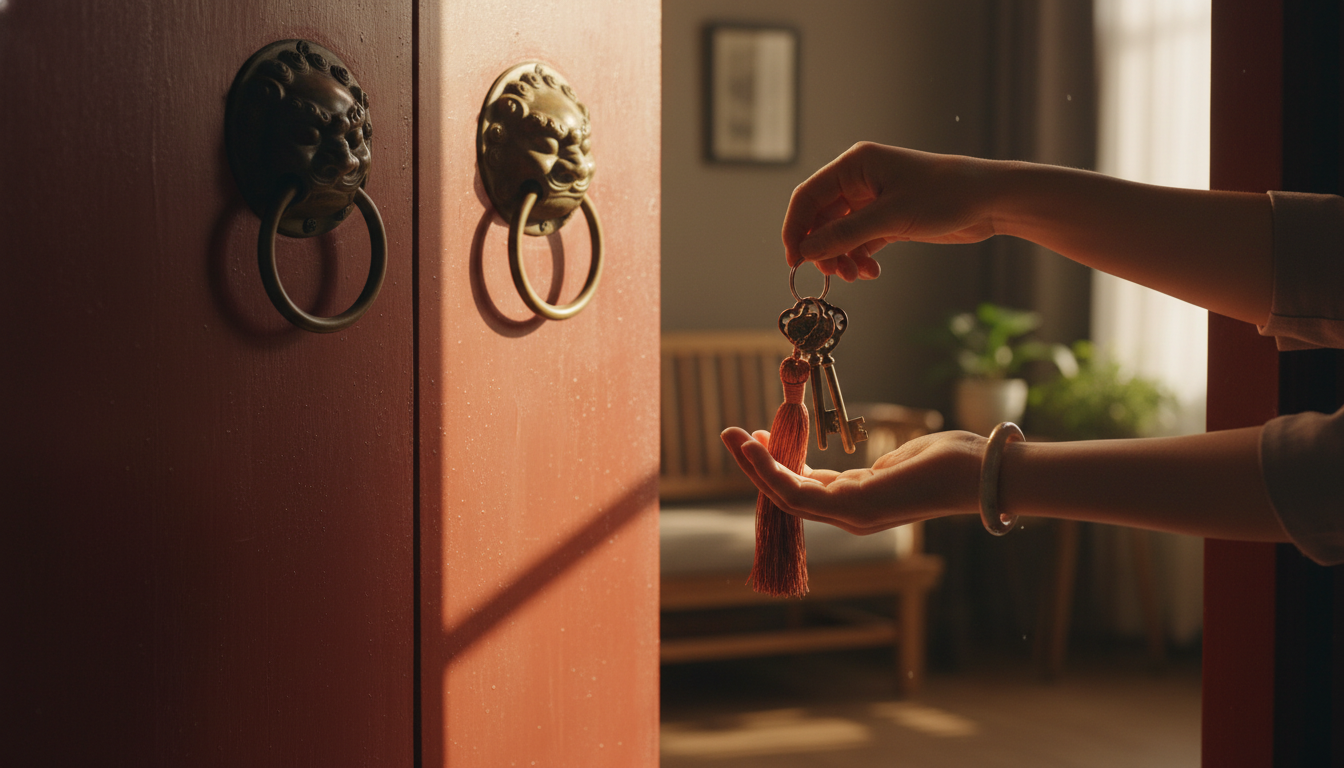 Close-up of hands exchanging keys in front of a traditional red Chinese door with brass lion knocker
What to Expect From Your Beijing Host
Chinese hospitality operates differently than what you might be used to in Western home exchanges. Understanding these cultural nuances will make your experience significantly smoother.
Many Beijing hosts will leave you a welcome gift—often tea, fruit, or local snacks. This isn't transactional; it's cultural. Reciprocating when you host Chinese guests (or leaving a small gift when you depart) is appreciated but not expected. I usually bring something from California—local honey, nice chocolate, specialty coffee—and leave it with a handwritten thank-you note.
Be prepared for more direct communication too. Questions about your income, marital status, or age are considered normal conversation starters in China, not invasive. Don't be offended. Similarly, if a host gives you very specific instructions about how to use appliances or sort trash, they're being helpful, not controlling.
And you'll need WeChat. There's no way around this. It's China's everything app—messaging, payments, booking taxis, ordering food. Most Beijing hosts will want to communicate via WeChat rather than email or the SwappaHome messaging system. Download it before you arrive and set it up with a Chinese phone number if possible (you can get a temporary SIM at the airport for about $15 USD).
Current Trends Shaping Beijing Home Exchange
The market is evolving fast. Here's what I'm seeing in 2024 that will likely continue into 2025.
Remote work has created a new category of home exchanger: people staying for 4-8 weeks instead of 1-2. Beijing hosts are responding by offering longer-term exchanges with dedicated workspace setups. I've seen listings specifically advertising "home office ready" with ergonomic chairs, fast WiFi speeds, even external monitors. If you're considering a longer Beijing home exchange, look for these amenities. Working from a laptop on a couch for six weeks sounds romantic until your back gives out.
Beijing's air quality has improved dramatically over the past five years—this isn't just government propaganda; I've experienced it firsthand. But environmentally-conscious hosts are going further, offering homes with air purifiers, filtered water systems, even rooftop gardens. One host I connected with last year had converted her courtyard home to run partially on solar power. She was passionate about sustainable travel and specifically sought exchangers who shared those values.
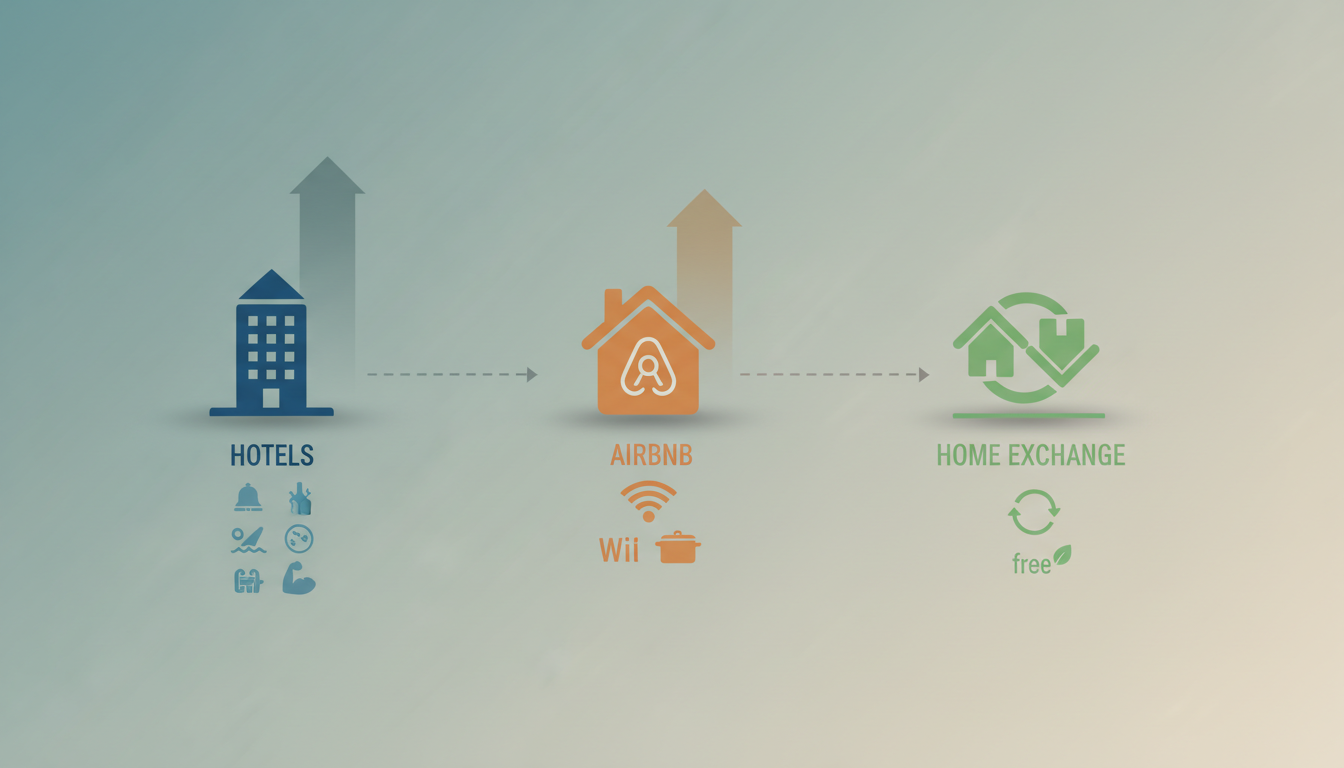 Infographic comparing average nightly costs in Beijing - hotels 175, Airbnb 110, home exchange 1 cre
My favorite trend though? The "experience exchange" add-on. Some Beijing hosts are offering more than just their homes—they're including experiences. I've seen listings that include a home-cooked welcome dinner, a guided hutong walking tour, even a cooking lesson. These aren't paid add-ons. They're hosts who genuinely love sharing their city and see home exchange as cultural exchange, not just accommodation swapping. When you find these hosts, treasure them.
Practical Tips for Your Beijing Home Exchange
Alright, let's get into the logistics that nobody tells you about.
Google, Facebook, Instagram, WhatsApp, and many Western websites are blocked in China. You'll need a VPN, and you need to download and set it up BEFORE you arrive. Popular options include ExpressVPN and NordVPN, though reliability varies. Ask your host what they recommend—many have tried multiple services and know what currently works best.
China runs on mobile payments now. Cash is increasingly difficult to use, and many vendors won't accept it. The good news: Alipay now allows foreign credit cards to be linked, making payments possible without a Chinese bank account. Set this up before your trip. Budget roughly $40-60 USD per day for food, transportation, and activities. That's comfortable but not extravagant. You can absolutely do it for less if you eat like locals do.
Beijing has two major airports: Capital (PEK) and Daxing (PKX). Both connect to the city via express trains and subway lines. A taxi from Capital Airport to central Beijing runs about $25-35 USD; from Daxing, expect $35-45 USD. The subway is significantly cheaper at around $1 USD but takes longer and involves more walking with luggage. Ask your host for specific directions to their home—Beijing addresses can be confusing even for GPS systems, and many hutong homes don't have obvious street numbers.
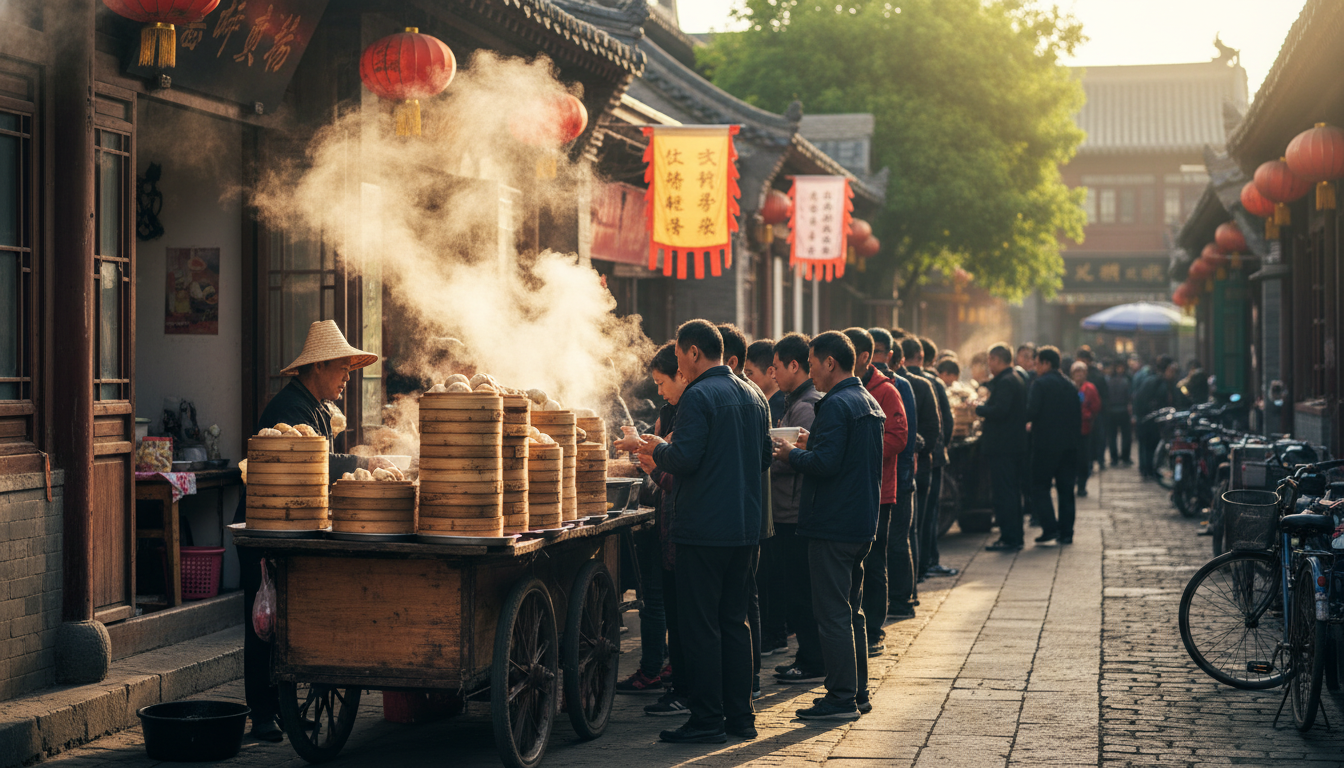 Bustling morning scene at a Beijing breakfast street stall, with steam rising from bamboo baskets of
Opportunities You Shouldn't Miss
Beyond the obvious tourist sites—Great Wall, Forbidden City, Temple of Heaven—a home exchange in Beijing opens doors that hotels simply can't.
Ask your host about the nearest wet market. These aren't tourist attractions; they're where locals buy groceries daily. Arriving at 7 AM to see vendors setting up, grandparents doing tai chi in nearby parks, breakfast stalls serving jianbing for $1.50 USD—this is Beijing at its most authentic.
Every Beijing neighborhood has small temples that tourists never visit. They're not grand like the famous ones, but they're active—locals come to burn incense, make offerings, chat with monks. Your host can point you to the nearest one. I've had some of my most peaceful Beijing moments in these forgotten corners.
And the night markets? Donghuamen and Wangfujing get all the attention, but the best ones are in residential neighborhoods. Shuangjing, Shaoyaoju, areas around university campuses—street food scenes that rival anything in the tourist zones at half the price.
Building Your Beijing Home Exchange Network
Here's something I wish someone had told me earlier: home exchange in China is relationship-based. Your first successful Beijing swap opens doors to many more.
After my initial stay in that Dongcheng courtyard, my host introduced me to three of her friends who also did home exchanges. One of them has since stayed at my place in San Francisco, and I've stayed at her parents' home in Hangzhou. These connections compound.
Leave thoughtful reviews on SwappaHome after your stay. Mention specific details that future guests would want to know. Chinese hosts read reviews carefully, and a well-written review establishes you as a serious, respectful exchanger.
The Future of Beijing Home Exchange
I'll be honest—I'm bullish on Beijing as a home exchange destination for the next several years.
China's domestic tourism is booming, which means more Chinese homeowners are traveling and discovering the benefits of home exchange. International tourism is rebounding post-pandemic, creating demand for authentic local experiences that hotels can't provide. And the platform infrastructure—SwappaHome and others—is maturing to handle the unique aspects of the Chinese market.
The opportunity right now is real. Beijing home exchange offers something genuinely rare: access to one of the world's great cities at a fraction of the typical cost, with experiences that money literally cannot buy.
That morning in the courtyard, watching tai chi from a kitchen that had seen generations of family meals, I understood something important. This isn't just about saving money on accommodation. It's about belonging somewhere, even temporarily. It's about being trusted with someone's home and trusting them with yours.
If you've been curious about home exchange but haven't taken the plunge, Beijing might be exactly the push you need. The credits you've earned hosting could turn into the trip of a lifetime.
And somewhere in a hutong courtyard, a host is probably wondering if anyone from your city wants to experience their Beijing.
Maybe that's you.
Frequently Asked Questions
Is Beijing home exchange safe for solo travelers?
Absolutely. Beijing is one of the safest major cities in the world, with extremely low violent crime rates. The home exchange community adds another layer of security through member verification and reviews. I've done two solo Beijing swaps and felt completely comfortable. Just use common sense—verify your host's profile, communicate clearly before arrival, trust your instincts.
How much can I save with Beijing home exchange versus hotels?
The savings are substantial. A two-week stay in central Beijing hotels averages $2,100-2,800 USD. Through home exchange, you'll spend zero on accommodation—just your SwappaHome membership and the credits you've already earned hosting. Most exchangers save $1,500-2,500 USD on a two-week Beijing trip, which often covers flights entirely.
Do I need to speak Mandarin for Beijing home exchange?
No, but basic phrases help enormously. Many Beijing hosts on SwappaHome speak conversational English, especially younger professionals. Translation apps like Pleco work well for complex communication. That said, learning "hello," "thank you," and "how much" in Mandarin shows respect and makes daily interactions much smoother.
What's the best time of year for Beijing home exchange?
Spring (April-May) and autumn (September-October) offer the best weather and highest demand for exchanges. Summer is hot and humid but has more availability. Winter is cold but magical—fewer tourists, lower pollution, and the chance to experience Chinese New Year if you time it right. Book 3-4 months ahead for peak seasons.
Can I do a Beijing home exchange if I've never swapped before?
Yes! SwappaHome gives new members 7 free credits to start, which covers 7 nights in Beijing. Build your profile thoroughly, add quality photos of your home, write a genuine description. First-time exchangers with complete profiles and thoughtful inquiry messages get responses from Beijing hosts regularly. Everyone starts somewhere.

Published by
SwappaHome
SwappaHome Editorial Team
Home Exchange & Slow Travel Editorial
The SwappaHome Editorial Team brings together travel research, home-exchange community insights, and platform data to produce practical guides for first-time and experienced home swappers. Every article cites real platforms, current market rates, and verifiable city-level facts so readers can make informed decisions without guessing.
Ready to try home swapping?
Join SwappaHome and start traveling by exchanging homes. Get 7 free credits when you sign up!
Related articles
Bachelor and Bachelorette Parties in Singapore: The Complete Home Swap Group Guide for 2026
Planning a bachelor or bachelorette party in Singapore? Discover how home swapping lets groups of 6-12 stay together in luxury condos, saving thousands while partying in Marina Bay.

Cycling in Lisbon: 7 Home Swap Bike Tour Itineraries for Every Rider
Discover the best cycling routes in Lisbon with these home swap bike tour itineraries—from waterfront paths to hilltop adventures, all starting from your borrowed home.

Graduation Trip to Barcelona: How Home Swapping Gives New Graduates the Ultimate Celebration
Planning a graduation trip to Barcelona? Discover how home swapping lets new graduates explore Spain's most vibrant city without the hostel crowds or hotel costs.