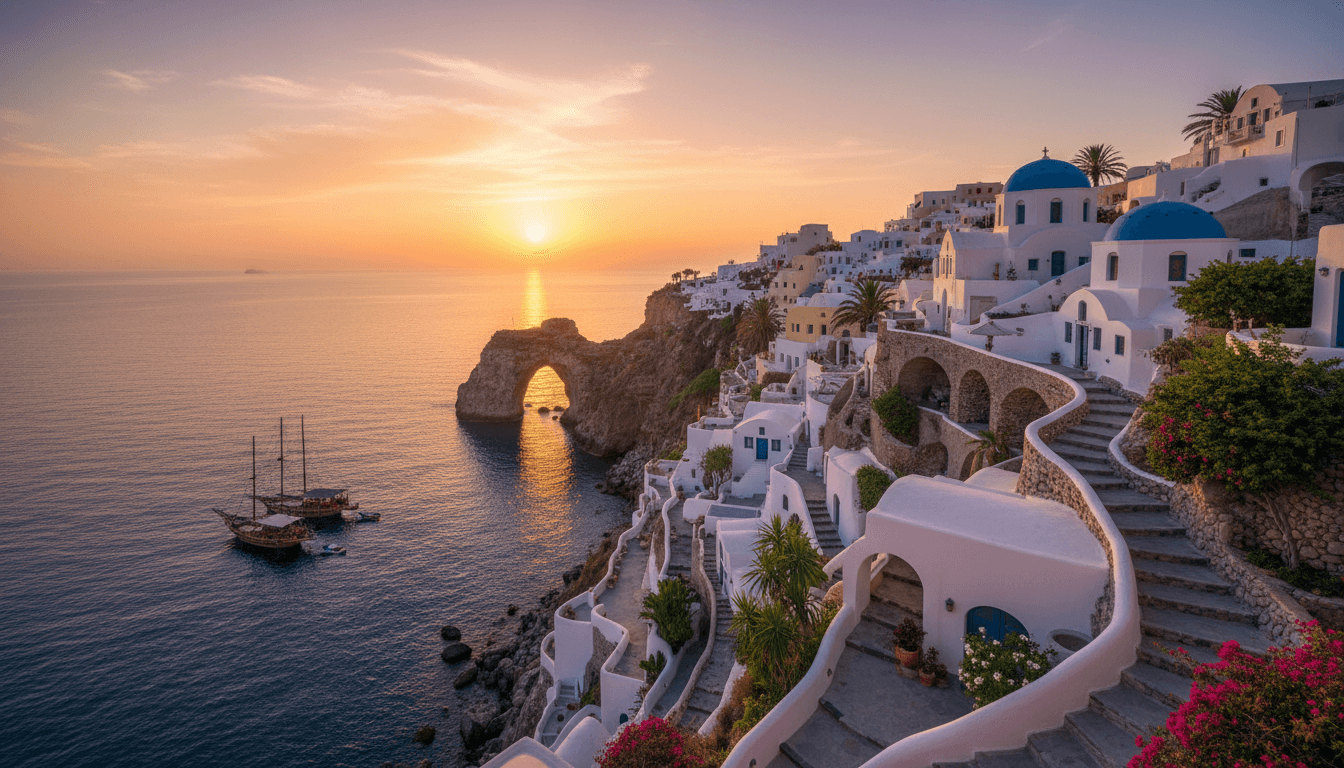
Solo Travel with Home Exchange: Your Complete Guide to Safe Adventures Anywhere
Maya Chen
Travel Writer & Home Exchange Expert
Discover how solo travel with home exchange offers safer, more authentic adventures. Real tips from 40+ swaps across 25 countries.
I was standing in a stranger's kitchen in Copenhagen at 2 AM, jet-lagged and starving, when something shifted in how I think about travel. The fridge was stocked with local cheese. A handwritten note explained which bakery opened earliest. And somehow, I felt safer than I ever had in any hotel.
That was my third solo trip using home exchange. Honestly? I've never looked back.
Solo travel with home exchange isn't just about saving money—though you'll definitely do that. It's about landing somewhere new and immediately having a neighborhood. A local coffee spot. A sense of belonging. When you're traveling alone, that foundation makes everything feel less intimidating and more like an adventure.
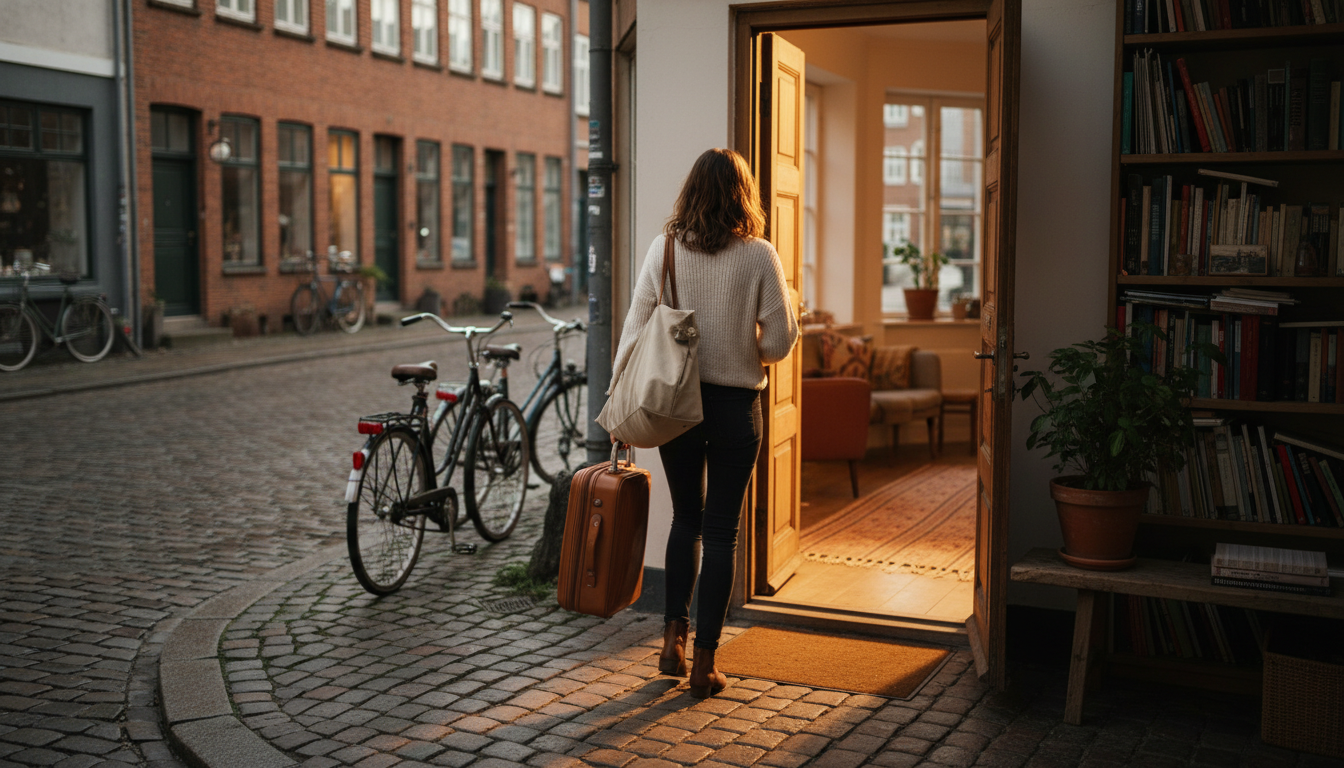 Woman arriving at a charming Copenhagen apartment doorway with luggage, warm interior light spilling
Why Solo Travelers Are Choosing Home Exchange Over Hotels
Here's something I didn't expect when I started home swapping seven years ago: I'd actually feel safer staying in someone's home than in a hotel. Counterintuitive, right?
But think about it.
In a hotel, you're anonymous. The front desk doesn't know if you come home at night. Nobody notices if something seems off. You're a room number, not a person.
With home exchange, you're staying in a verified member's actual home. They've shared their real identity, their reviews are visible, and—this is the part I love—they often connect you with their neighbors. My host in Lisbon told her downstairs neighbor Maria to "keep an eye out for the American girl." Maria brought me pastéis de nata on my second day and insisted on walking me to the metro station the first time I went out.
That kind of organic safety net? It doesn't exist when you book a random Airbnb or hotel room.
The numbers back this up too. Solo travelers now make up nearly 25% of home exchange users on platforms like SwappaHome, and that percentage keeps climbing. We're not just budget-conscious—we're smart about wanting authentic experiences without sacrificing security.
How Home Exchange Works for Solo Travelers (The Credit System Explained)
If you're new to this whole concept, let me break it down.
Traditional home swapping meant you had to find someone who wanted to visit your city at the exact same time you wanted to visit theirs. As a solo traveler with a small apartment in San Francisco, I found this nearly impossible. Everyone wanted my city, but never when I was free to travel.
Then I discovered platforms using credit systems. Everything clicked.
On SwappaHome, it works like this: you earn 1 credit for every night you host someone in your home. Then you spend 1 credit for every night you stay somewhere else. Simple. No complicated negotiations, no schedule matching, no stress.
New members start with 10 free credits—that's 10 nights of accommodation anywhere in the world, right out of the gate. For a solo traveler, that could mean a week in Tokyo plus a long weekend in Barcelona before you've even hosted anyone.
The beauty for solo travelers? Your small studio apartment earns the same credits as a four-bedroom house. One credit per night, period. So that cozy one-bedroom you're worried is "too small" to offer? It's earning you stays in Tuscan villas and Parisian lofts.
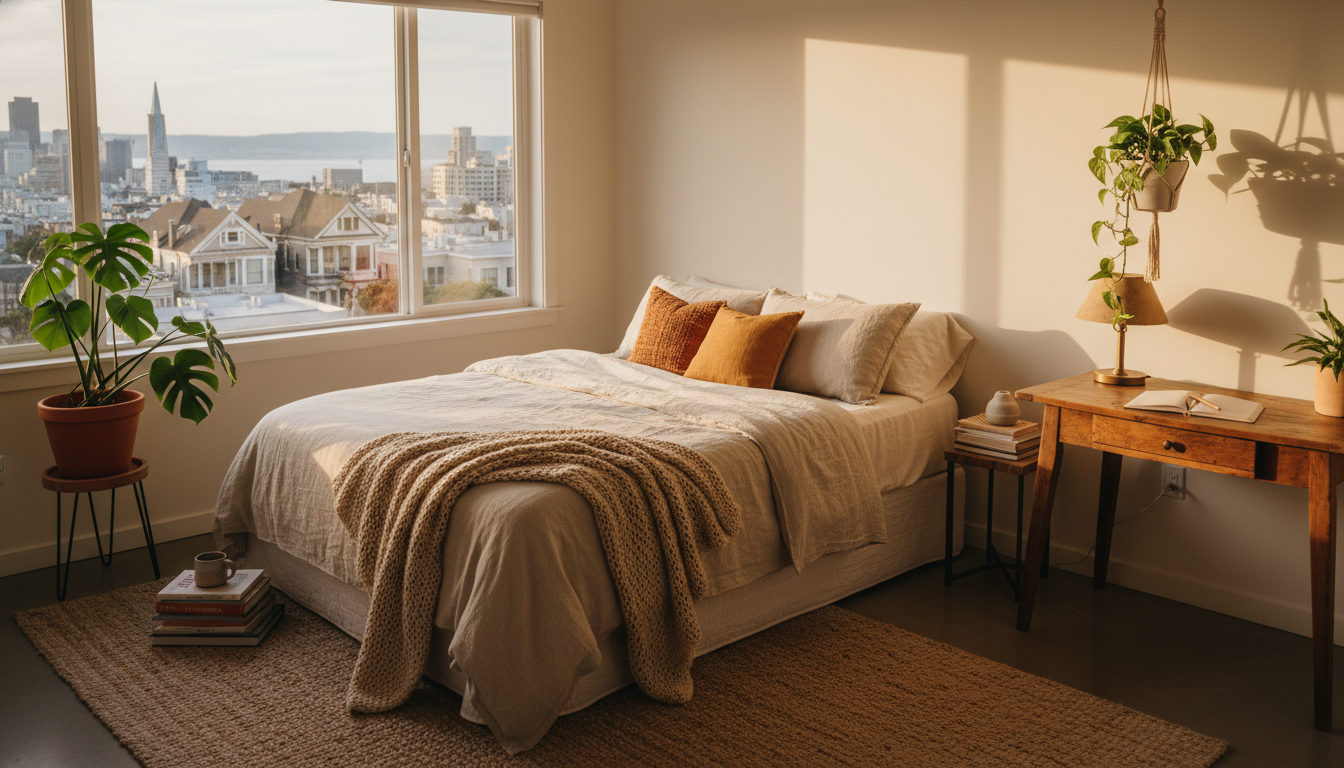 Cozy studio apartment in San Francisco with city view, showing a neatly made bed, small workspace, a
Choosing Safe Destinations for Solo Home Exchange Travel
Not all destinations feel equally comfortable when you're traveling alone. I've learned this through experience—some cities wrap around you like a warm blanket, while others require more vigilance.
My top picks for solo home exchange travel, based on my own experiences and conversations with dozens of other solo swappers:
Lisbon, Portugal – Walkable, affordable, and Portuguese grandmothers will adopt you whether you want them to or not. I stayed in Alfama for three weeks and left with four new "aunties" who still message me on WhatsApp. Average daily spending: $45-60 USD for food and activities.
Copenhagen, Denmark – Possibly the safest city I've ever visited. I walked home at 3 AM multiple times without a second thought. The bike culture means you can explore independently without relying on public transport late at night. Budget around $70-90 USD daily—yes, it's pricey, but you're saving hundreds on accommodation.
Kyoto, Japan – The perfect blend of accessible and adventurous. English signage is good, crime is virtually nonexistent, and the home exchange community there is incredibly welcoming. My host left me a 12-page guide to her neighborhood, including which konbini had the best onigiri.
Melbourne, Australia – English-speaking, diverse, and with a home exchange community that's genuinely excited to host solo travelers. The laneway coffee culture means you're never far from a safe, well-lit spot to regroup.
Porto, Portugal – Smaller and more manageable than Lisbon, with the same warmth. I spent $35-50 USD daily and never felt unsafe, even wandering the Ribeira district after sunset.
I've also done solo home exchanges in places that required more awareness—Mexico City, Johannesburg, Naples. These trips were incredible, but I prepared differently. Which brings me to...
Safety Strategies Every Solo Home Exchanger Should Know
Real talk: no travel is 100% risk-free. But solo home exchange, done thoughtfully, stacks the odds heavily in your favor.
Before You Book
Read reviews obsessively. Not just the star ratings—the actual words. Look for mentions of communication style, neighborhood safety, and how responsive the host was. On SwappaHome, members review each other after every exchange, so you're getting real feedback from real travelers.
Check if the member has completed identity verification. This isn't foolproof, but it adds a layer of accountability.
Use the messaging system to have a real conversation before committing. I always ask: "What's the neighborhood like at night?" and "Are there any areas nearby I should avoid?" How they answer tells me a lot.
The Neighborhood Deep-Dive
Once you've narrowed down a listing, research the specific neighborhood like your safety depends on it—because it kind of does.
Google Street View is your friend. "Walk" the route from the nearest metro or bus stop to the apartment. Is it well-lit? Are there businesses open in the evening? Does it feel residential or isolated?
Search "[neighborhood name] + safety" and "[neighborhood name] + solo female travel" (even if you're not female—these forums tend to have the most detailed safety info). Reddit's r/solotravel is gold for this.
Look up the address on crime mapping sites if available. Many major cities have these.
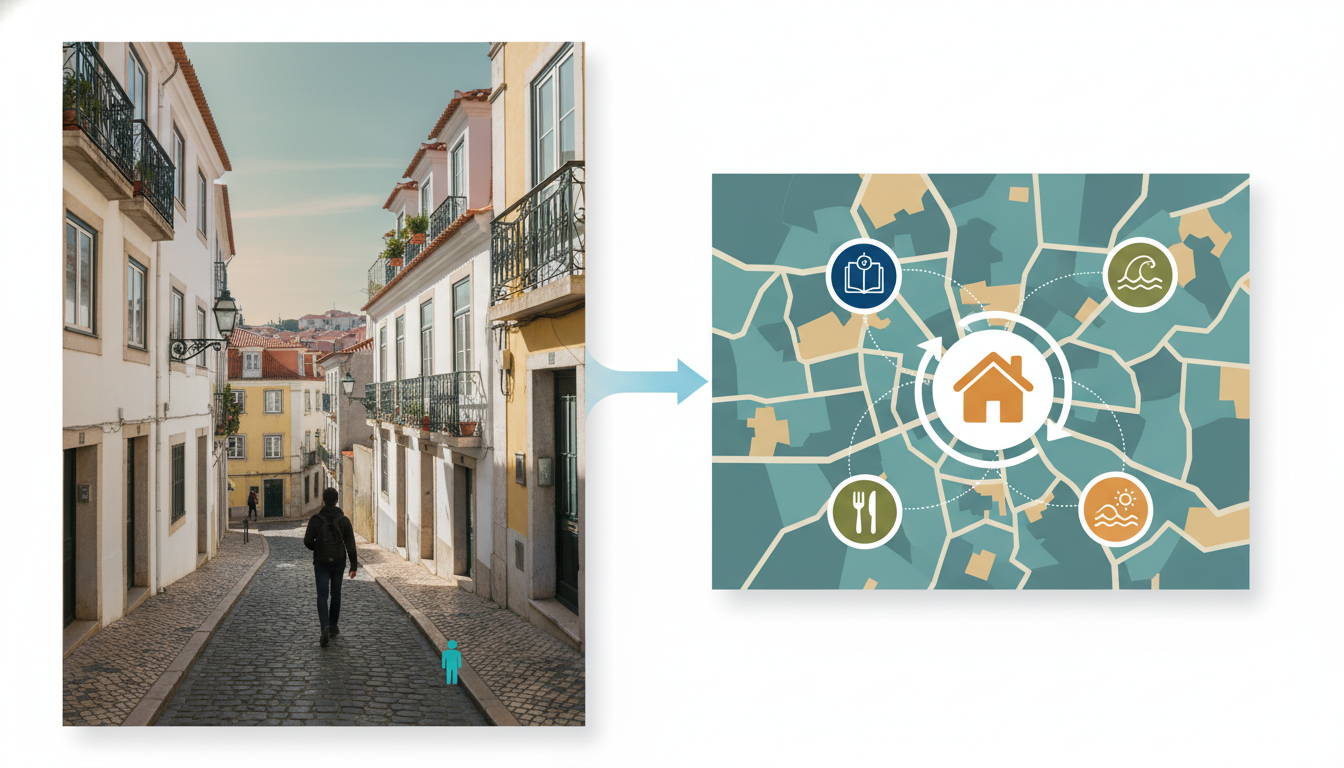 Split-screen showing Google Street View of a charming residential street in Lisbons Alfama district
Setting Up Your Safety Net
This is where home exchange really shines for solo travelers, but you need to be proactive about it.
Ask your host if they'd be willing to introduce you—even virtually—to a neighbor or nearby friend. Most are happy to do this. Having one local contact who knows you're there alone is invaluable.
Share your full itinerary with someone back home. I use a shared Google doc that I update in real-time. My sister can see where I'm staying, my host's contact info, and my daily plans.
Download offline maps before you arrive. Get the local emergency number saved in your phone. Know where the nearest hospital and embassy are.
Consider getting your own travel insurance that covers accommodation issues. SwappaHome connects members but doesn't provide insurance coverage, so if peace of mind matters to you (and it should), a good travel insurance policy is worth the $30-50 for a two-week trip.
Making the Most of Solo Home Exchange: Beyond Just a Place to Sleep
The magic of home exchange for solo travelers isn't just about safety or savings—it's about depth.
When I stayed in that barn conversion in Tuscany (still my favorite swap ever), my host had left me her library card, her favorite hiking routes marked on a paper map, and a standing invitation to her neighbor's Sunday lunch. I spent a month there, and by week two, the village butcher was saving me the good prosciutto.
You don't get that from a hotel. You barely get that from a year-long apartment lease.
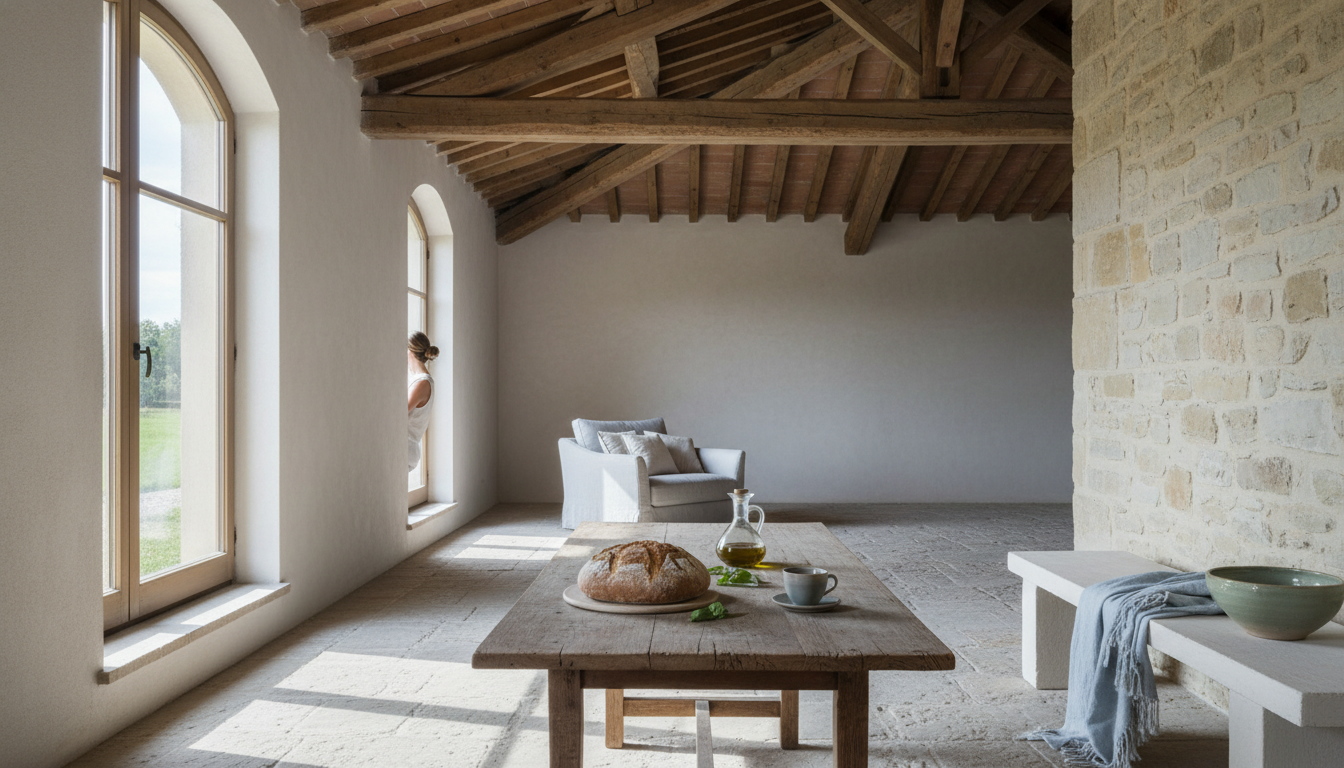 Rustic Tuscan barn interior converted to living space, exposed wooden beams, morning light streaming
Create a Hosting Profile That Attracts Great Matches
As a solo traveler, your profile is your first impression. Make it count.
Be specific about your travel style. I mention that I'm quiet, respectful of spaces, and tend to be out exploring during the day. This attracts hosts who appreciate low-key guests.
Include a clear, friendly photo of yourself. Not a group shot, not a landscape—your face, smiling, looking like someone you'd want in your home.
Mention your home exchange experience if you have it, or your approach if you're new. Something like: "I treat every home I stay in like I'd want someone to treat mine" goes a long way.
The Art of Being a Great Solo Guest
This matters more than you might think. The home exchange community is built on mutual respect and reputation. Being a stellar guest means better options for your future travels.
Leave the space cleaner than you found it. Not just tidy—actually clean. I always do a final wipe-down of the kitchen and bathroom.
Replace what you use. Finished the olive oil? Buy a new bottle. Used the last of the coffee? Restock it.
Write a thoughtful review. Mention specific things you appreciated. This helps future travelers and builds your reputation in the community.
Send a thank-you message after you leave. It takes two minutes and creates genuine connection.
Real Talk: What Could Go Wrong (And How to Handle It)
I'd be doing you a disservice if I pretended home exchange was always perfect. In 40+ swaps, I've had maybe three that were genuinely disappointing and one that was a minor disaster.
The disaster: I arrived at an apartment in Naples to find it hadn't been cleaned, the AC was broken in August, and the host was unresponsive. I spent my first night in a nearby hotel ($85 USD, ouch) and eventually got things sorted, but it was stressful.
What I learned: Always have a backup plan for your first night. I now keep enough in my travel budget for an emergency hotel stay. I also message hosts 48 hours before arrival to confirm everything is ready.
Other potential issues and solutions:
The home doesn't match the photos. This is rare if you're choosing verified members with good reviews, but it happens. Document everything with photos when you arrive. If it's seriously misrepresented, contact the host immediately and be direct about your concerns.
You feel unsafe in the neighborhood. Trust your gut. If something feels wrong, it's okay to leave. Your safety is worth more than the credits you spent. This is another reason to have travel insurance—some policies cover "trip interruption" if you need to change plans.
Something breaks or goes wrong in the home. Communicate immediately and honestly. Most hosts are understanding—things happen. The key is transparency. Don't try to hide a broken wine glass; just tell them and offer to replace it.
A personal conflict with the host. Keep all communication on the platform's messaging system. This creates a record and keeps things professional. If a host is being inappropriate or making you uncomfortable, trust your instincts and prioritize your wellbeing.
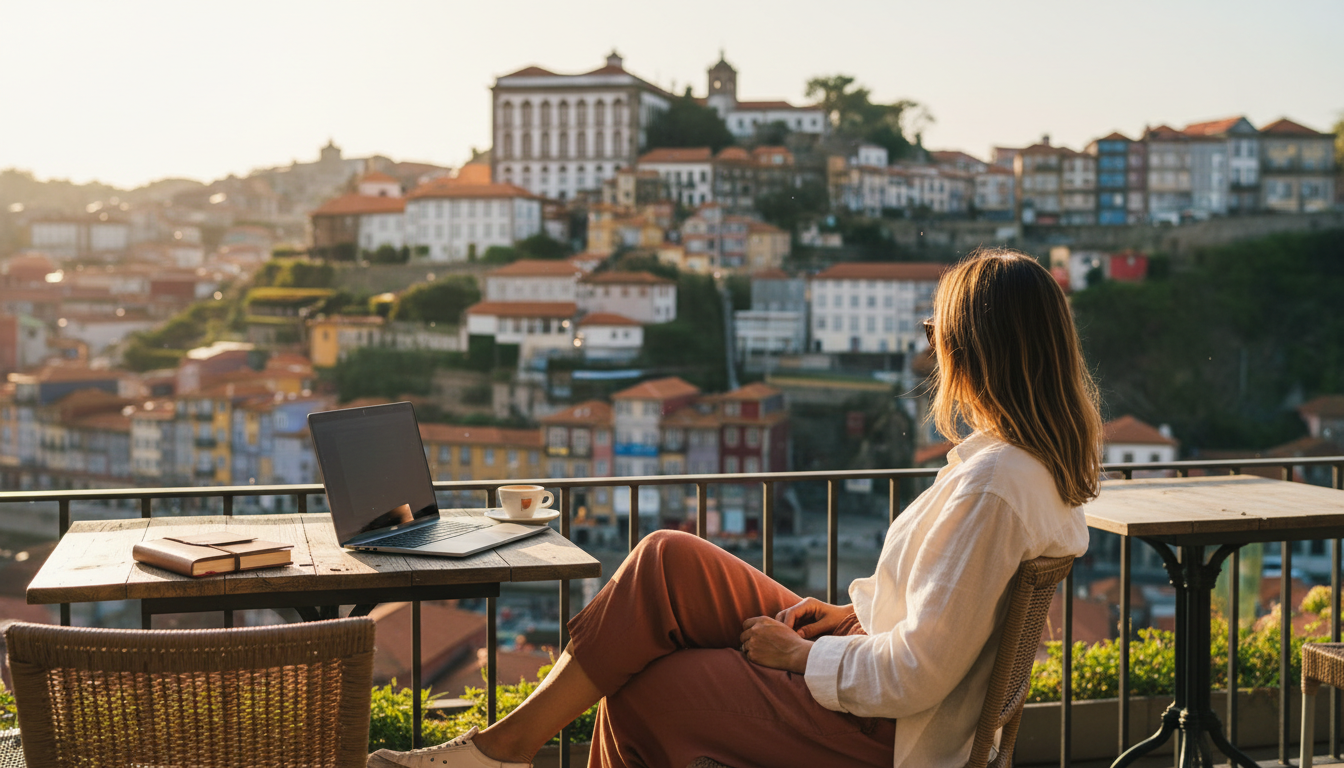 Solo traveler sitting at a sunny caf terrace in Porto, laptop open, looking relaxed and confident, c
Building Your Solo Home Exchange Confidence: Start Small
If you're nervous about your first solo home exchange—good. That means you're taking it seriously.
My advice: start with a destination that feels manageable. Somewhere English is widely spoken, the culture isn't too unfamiliar, and you have a rough idea of what to expect.
Your first swap doesn't need to be a month in rural Japan. Try a long weekend in a city you've always wanted to visit. Get comfortable with the rhythm of arriving at someone's home, figuring out their coffee maker, navigating their neighborhood.
Once you've done two or three successful exchanges, you'll feel ready for more adventurous destinations. That's when solo home exchange really opens up—when you have the confidence to say yes to opportunities that would have terrified you before.
I remember the first time I accepted a swap in a non-English-speaking country where I didn't know the language. It was Barcelona, and I was genuinely scared. But my host had left instructions in English, the neighbors were patient with my terrible Spanish, and by day three I was ordering café con leche like I'd lived there for years.
That trip changed how I saw myself as a traveler. I wasn't just someone who visited places—I was someone who could live anywhere, even temporarily, even alone.
The Community Aspect: You're Never Really Alone
Here's something that surprised me about solo home exchange: the community.
When you're part of a platform like SwappaHome, you're not just booking accommodation. You're joining a network of like-minded travelers who genuinely want to help each other have great experiences.
I've had hosts connect me with other members in their city for coffee. I've gotten restaurant recommendations from someone I hosted two years ago who happened to see I was visiting their hometown. The connections compound over time.
For solo travelers, this matters. You're building a web of people around the world who know you, who've read your reviews, who might message you when they see you're visiting their neighborhood.
It's not a replacement for traveling with friends or family. But it's something different—a kind of distributed community that makes the world feel smaller and more navigable.
Your First Steps: Getting Started with Solo Home Exchange
Ready to try this? Here's what I'd do if I were starting from scratch.
Sign up for SwappaHome and claim your 10 free credits. That's 10 nights of accommodation waiting for you.
Create a profile that reflects who you really are. Upload good photos of your space—natural light, multiple angles, honest representation.
Browse listings in a destination you've been dreaming about. Filter by reviews, look at the neighborhoods, start imagining yourself there.
Reach out to 2-3 hosts whose places speak to you. Ask questions. Get a feel for their communication style.
Book your first exchange somewhere that excites you but doesn't overwhelm you.
Then go. Experience it. Come back and tell me about it.
Solo travel with home exchange has given me some of the most meaningful trips of my life. Not because the accommodations were fancy (though some were), but because I arrived in new places already connected to someone, already part of a neighborhood, already a little bit home.
That's worth more than any hotel concierge could ever offer.
Frequently Asked Questions
Is solo travel with home exchange safe for women?
Yes, with proper precautions. Solo female travelers make up a significant portion of home exchange users. The key is researching hosts thoroughly, reading reviews from other solo travelers, choosing verified members, and trusting your instincts about neighborhoods and communication. Many women report feeling safer in a residential home than anonymous hotels.
How much money can I save with home exchange versus hotels?
Substantially. In major cities like Paris, London, or Tokyo, hotels average $150-300 USD per night. With home exchange, you're paying $0 for accommodation after earning credits by hosting. A two-week trip could save you $2,000-4,000 on lodging alone, making solo travel significantly more accessible.
Do I need a big home to participate in home exchange as a solo traveler?
Absolutely not. On SwappaHome's credit system, a studio apartment earns the same 1 credit per night as a mansion. Many solo travelers and couples specifically seek smaller, cozy spaces. Your one-bedroom apartment is just as valuable in the exchange economy as any larger property.
What happens if something goes wrong during my solo home exchange?
Communicate immediately with your host through the platform's messaging system. Document any issues with photos. For serious problems, have a backup accommodation budget and travel insurance that covers trip interruptions. Most issues are resolved through direct communication—the home exchange community values reputation highly.
Can I do home exchange if I rent my apartment?
This depends on your lease agreement. Many renters successfully participate in home exchange with landlord permission. Check your lease for subletting clauses, discuss with your landlord, and be transparent. Some landlords appreciate that home exchange involves verified community members rather than anonymous short-term renters.
40+
Swaps
25
Countries
7
Years
About Maya Chen
Travel Writer & Home Exchange Expert
Maya is a travel writer with over 7 years of experience in the home swapping world. Originally from Vancouver and now based in San Francisco, she has completed more than 40 home exchanges across 25 countries. Her passion for "slow" and authentic travel led her to discover that true luxury lies in living like a local, not a tourist.
Ready to try home swapping?
Join SwappaHome and start traveling by exchanging homes. Get 10 free credits when you sign up!
Related articles

Lyon Home Exchange: Your Complete Guide to France's Hidden Gem for Home Swapping
Discover why Lyon home exchange is booming among savvy travelers. From Croix-Rousse to Presqu'île, find the best neighborhoods and insider tips for your swap.

Zurich Bucket List: 47 Unforgettable Experiences to Enjoy During Your Home Swap
Discover the ultimate Zurich bucket list for home swappers—from secret swimming spots to fondue rituals locals actually do. Save thousands while living like a true Zürcher.
Dublin Home Exchange Utilities Guide: WiFi, Heating & Everything Your Guests Need
Master Dublin home exchange utilities—from dodgy WiFi fixes to heating quirks. Practical tips from 7 years of swapping homes across Ireland.