Sustainable Vacations: How Home Swapping Reduces Your Travel Carbon Footprint

SwappaHome Editorial Team
Home Exchange & Slow Travel Editorial
Discover how home swapping cuts your travel carbon footprint by up to 60%. Real data on the environmental impact of vacation home exchanges vs hotels.
I was standing in a stranger's kitchen in Copenhagen last September, washing my breakfast dishes by hand because—as the house manual cheerfully explained—the dishwasher was reserved for full loads only. And I thought: this is it. This is what sustainable vacations actually look like. Not a bamboo straw in an overpriced smoothie, not a hotel towel card that nobody follows. Just... living like a local who gives a damn about their water bill and the planet.
The environmental impact of home swapping had never really hit me until that moment. Seven years of trading houses across 25 countries, and I'd been accidentally eco-friendly the whole time without fully grasping the math behind it.
So I did what any slightly obsessive travel writer would do: I spent three months researching the actual numbers. And honestly? They're staggering.
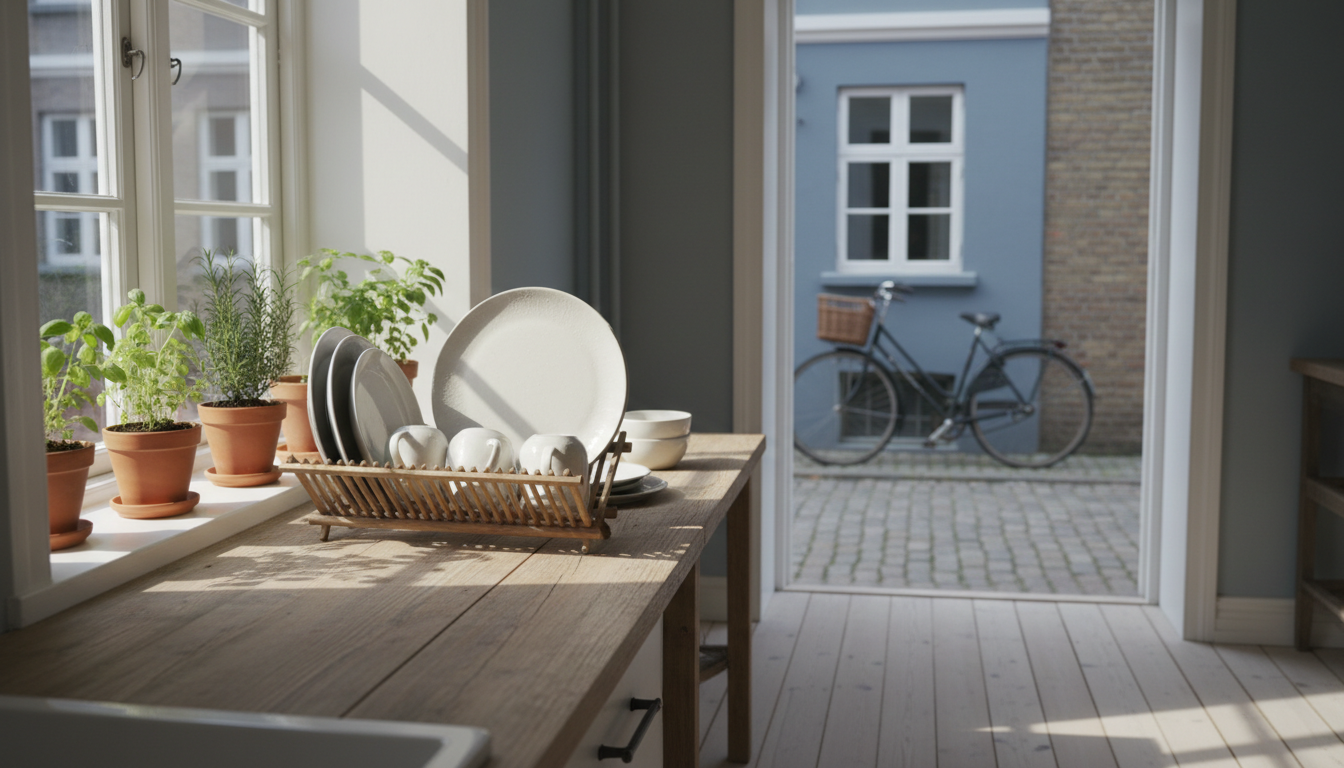 Morning light streaming through a Copenhagen apartment kitchen, ceramic dishes drying on a wooden ra
Why Home Swapping Is the Most Sustainable Vacation Choice
Here's something that might surprise you. The biggest environmental impact of your vacation isn't your flight—though that's significant. It's your accommodation.
A 2023 study from Cornell's School of Hotel Administration found that the average hotel room generates between 31-44 kg of CO2 per guest night. That includes everything: the industrial laundry, the 24-hour air conditioning in empty hallways, the breakfast buffet where 40% of food gets thrown away, the constant hot water heating, the daily housekeeping with chemical cleaners.
Now here's where it gets interesting.
When you home swap, you're not adding any new carbon to the system. The home exists. The heating or cooling runs at residential levels. You're essentially carbon-neutral on the accommodation front—your environmental footprint is whatever you'd create living in your own home.
I ran the numbers on my own travel last year. Fourteen nights in hotels would have generated roughly 490-616 kg of CO2 just from accommodation. My home swaps? Effectively zero additional impact, since those homes were already being heated and powered for their regular residents.
That's not marketing spin. That's just physics.
The Hidden Environmental Costs of Hotels (That Nobody Talks About)
I spent four years writing hotel reviews before I discovered home exchange. I've stayed in everything from budget chains to luxury resorts, and I can tell you—the sustainability theater in the hospitality industry is wild.
Those "hang your towel to save the planet" signs? A 2022 investigation by The Guardian found that most hotels wash all towels daily regardless of whether guests comply. The signs are primarily about cost savings, not environmental impact.
But the real issues go deeper.
Water Consumption
The average hotel uses 1,500-2,000 gallons of water per occupied room per day. That's not a typo. Between laundry facilities, pools, landscaping, kitchens, and the fact that hotel showers tend to run longer (we've all done it), the numbers are astronomical.
A residential home? About 80-100 gallons per person per day.
When I stayed at a home swap in Tucson last March, my host had a greywater system that irrigated her desert garden. The shower had a low-flow head that somehow still felt luxurious. There was a note about the drought-resistant landscaping and which days were best for watering. I used maybe 60 gallons daily—less than I do at my own place in San Francisco.
 Desert garden in Tucson with native saguaro cacti, drought-resistant plants, and a small patio with
Energy Usage
Hotels are energy vampires. They have to be—they're running 24/7 operations with restaurants, spas, conference rooms, elevators, and climate control for hundreds of rooms simultaneously.
The American Hotel & Lodging Association reports that hotels spend an average of $2,196 per room per year on energy. That translates to roughly 50,000 kWh annually for a mid-sized property.
Home swaps operate on residential energy patterns. When you're out exploring, you turn off the lights. You don't need the AC running in three rooms you're not using. You're not competing with a conference center's power draw.
Waste Generation
This one haunts me.
I once watched a hotel housekeeper throw away half-used toiletries, barely touched notepads, and a stack of single-use coffee pods. All in the regular trash. In one room.
Hotels generate approximately 1 kg of waste per guest per night. Multiply that by the 5 billion hotel nights booked globally each year and... yeah.
Home swapping eliminates almost all of this. You're using normal-sized shampoo bottles. You're cooking meals from actual ingredients. You're not generating a mountain of individual butter packets and tiny jam jars.
How Home Exchange Supports Local Economies Sustainably
Here's something that took me years to articulate: sustainable vacations aren't just about carbon. They're about not extracting value from communities in ways that harm them.
When I home swap, I shop at the corner grocery store my hosts recommended. I eat at the neighborhood restaurant where the owner knows everyone's name. I buy coffee from the roaster three blocks away. My money goes directly into the local economy—not to an international hotel chain's shareholders.
 Small neighborhood market in Lisbons Alfama district, elderly vendor arranging fresh produce, hand-p
In Porto last fall, my swap host left a list of her favorite spots. Not tourist recommendations—her actual life. The padaria where she gets bread every morning. The tiny wine bar that doesn't have a website. The hardware store owner who speaks enough English to help confused visitors.
I spent about €45 per day on food, wine, and activities. All of it went to Portuguese-owned businesses within a 10-minute walk of the apartment. Compare that to an all-inclusive resort where your money barely touches the local economy.
The Overtourism Factor
Sustainable travel also means not overwhelming places with tourist infrastructure. Home swapping distributes visitors across residential neighborhoods instead of concentrating them in hotel districts.
In Barcelona, the Gothic Quarter and Barceloneta are groaning under the weight of tourist accommodations. But when I swapped in Gràcia—a neighborhood where actual Barcelonans live—I was one of maybe three tourists on my street. I used the same metro as commuters. I didn't contribute to the hotel-driven rent increases that have pushed locals out of central neighborhoods.
That matters. Sustainable vacations have to account for social sustainability too.
Practical Ways to Make Your Home Swap Even Greener
Alright, let's get tactical. You're already making an eco-friendly choice by home swapping. Here's how to amplify it.
Transportation Choices
The biggest variable in your travel carbon footprint is how you get there. I can't tell you not to fly—I'm not going to home swap in Japan by sailboat—but I can share what I do.
For European swaps, I take trains whenever possible. My Paris-to-Amsterdam swap last year was a 3-hour Thalys ride: 8 kg of CO2 versus 150 kg for a flight. The train dropped me at Amsterdam Centraal, 20 minutes by bike from my swap home.
For longer distances, I try to stay longer. A two-week swap amortizes the flight's carbon impact across more nights, making your per-day footprint much lower than a quick weekend trip.
Living Like a Conscious Local
When I arrive at a swap, I look for the recycling setup. I check if there's a compost bin. I read the house manual for any eco-notes from my hosts—many will mention things like "please don't run the dryer, the clothesline is on the terrace."
I cook most of my meals. Not just because it's cheaper (though it is—I average $15-20/day on food when I cook versus $50+ eating out), but because restaurant dining has a significantly higher carbon footprint than home cooking.
I walk and bike. Home swaps are usually in residential areas with good transit access. My Copenhagen host's bike was available for guests, and I covered the whole city on two wheels.
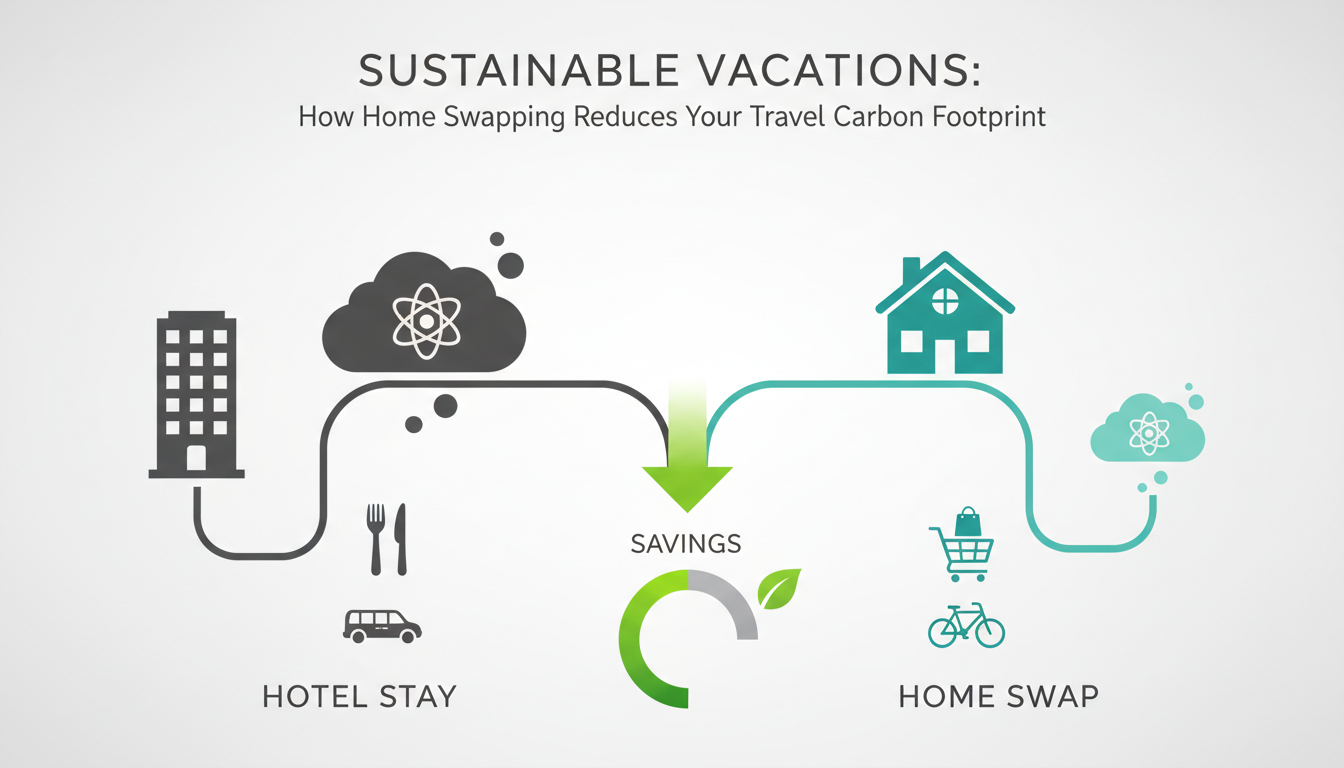 Infographic showing carbon footprint comparison - hotel stay vs home swap over 7 nights, including a
Choosing Eco-Conscious Swap Partners
On SwappaHome, I've started paying attention to listing descriptions that mention sustainability features. Solar panels. Rainwater collection. Vegetable gardens. Bikes available.
These aren't requirements, but they signal hosts who share my values. There's something lovely about swapping with people who care about the same things—you end up in homes that feel aligned with how you want to live.
The Numbers: Home Swap vs Hotel Environmental Impact
I promised you data, so here's the breakdown I calculated for a typical 7-night vacation:
Hotel Stay (mid-range property):
- Accommodation carbon: 217-308 kg CO2
- Water usage: 10,500-14,000 gallons
- Waste generated: 7 kg
- Energy consumption: ~140 kWh
Home Swap:
- Accommodation carbon: 0 kg additional (home already exists and runs)
- Water usage: 560-700 gallons
- Waste generated: 1-2 kg (normal residential)
- Energy consumption: ~35 kWh additional
That's a reduction of roughly 60% in carbon, 95% in water use, and 80% in waste. And these are conservative estimates.
The financial savings are almost secondary at this point. Though, for the record: that 7-night hotel stay would cost $1,200-2,500 depending on location. The home swap? Zero dollars in accommodation costs if you've hosted guests and earned credits. On SwappaHome, you earn 1 credit per night when you host, and spend 1 credit per night when you travel. New members start with 7 free credits to get going.
Real Stories: Sustainable Home Swappers Making a Difference
I reached out to a few fellow SwappaHome members who prioritize sustainable vacations. Their approaches inspired me.
Carla from Munich has done 23 swaps in the past four years, exclusively by train. "I plan my swaps around rail routes," she told me. "Vienna, Prague, Amsterdam, Copenhagen—all reachable without flying. My carbon footprint for accommodation and transport combined is lower than a single flight to Mallorca."
James and Priya from Portland take it further. They've retrofitted their home with solar panels and offer their electric car to guests. "We figure if we're going to host, we might as well make it easy for people to travel sustainably while they're here," Priya explained. "Last year, a family from Berlin used our EV to explore the Oregon coast. Zero emissions for their whole trip."
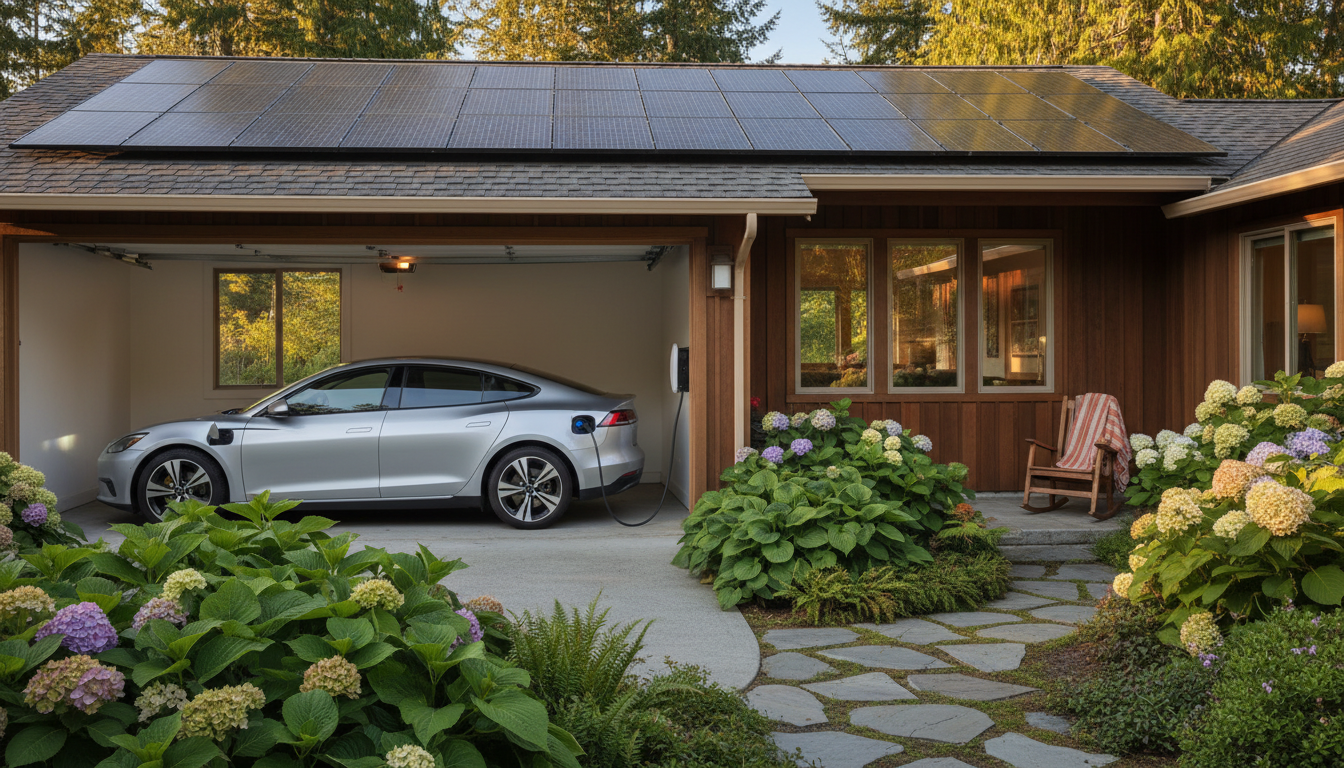 Electric car plugged in at a Portland homes garage, solar panels visible on the roof, lush Pacific N
These aren't outliers. They're part of a growing community of travelers who've realized that sustainable vacations don't require sacrifice—they just require different choices.
The Psychological Shift: From Tourist to Temporary Resident
There's something about home swapping that changes how you travel. You stop being a tourist consuming experiences and start being a person living somewhere temporarily.
I notice it in small ways. In hotels, I'd leave lights on without thinking. In someone's home, I turn them off instinctively—it's their electricity bill, their planet, their community.
I shop more carefully. I don't overbuy groceries because I'll have to figure out what to do with leftovers. I bring reusable bags because there's no hotel gift shop selling emergency totes.
I slow down. Without a hotel checkout time pushing me to cram in activities, I linger. I read on the terrace. I have coffee at the same café three days in a row until the barista knows my order. That slower pace is inherently more sustainable—less rushing around, less consumption, more presence.
Long-Term Environmental Benefits of the Home Exchange Movement
Zoom out for a second. What happens if home swapping becomes mainstream?
The hotel industry accounts for approximately 1% of global carbon emissions. That might sound small until you realize it's roughly equivalent to the entire aviation industry's contribution. If even 10% of hotel nights shifted to home exchanges, we'd eliminate tens of millions of tons of CO2 annually.
But it's not just about carbon. It's about changing the culture of travel itself.
Home swapping normalizes the idea that you don't need new construction, new resources, new infrastructure to explore the world. Everything we need already exists—millions of homes sitting empty while their owners travel, millions of travelers paying for hotel rooms that require massive resource inputs.
The sharing economy gets a bad rap sometimes (looking at you, certain ride-share companies), but home exchange is sharing in its purest form. No venture capital extracting value. No surge pricing. Just people helping people travel better.
How to Start Your Sustainable Home Swapping Journey
If you're convinced—and I hope you are—here's how to begin.
First, list your home. Even if it's small, even if it's not in a "destination" city. Someone wants to visit where you live. I've seen successful swaps in suburban Ohio, rural France, and industrial cities that would never make a travel magazine cover. On SwappaHome, you'll start with 7 free credits, enough for a full week of travel.
Second, be honest in your listing about your home's eco-features. Mention the recycling setup, the bike in the garage, the farmer's market on Saturdays. These details attract like-minded swappers.
Third, start local-ish. My first swap was Portland to Vancouver—close enough that I drove my efficient hybrid instead of flying. It let me test the concept without a huge carbon investment.
Fourth, commit to the mindset. Sustainable vacations through home swapping work best when you approach them as temporary local living, not hotel-style consumption. Cook. Walk. Shop small. Leave the place better than you found it.
The Future of Sustainable Travel Is Already Here
I think about that Copenhagen kitchen a lot. The hand-washed dishes. The herbs on the windowsill. The quiet satisfaction of traveling in a way that didn't require the planet to bend around my convenience.
Sustainable vacations aren't about perfection. I still fly sometimes. I still occasionally eat at restaurants with questionable sourcing. I'm not going to pretend I've achieved some zero-waste traveler enlightenment.
But home swapping has fundamentally changed my relationship with travel. It's shown me that the most memorable trips aren't the ones with the biggest carbon footprints—they're the ones where I actually lived somewhere, even briefly. Where I knew which drawer held the good coffee mugs and which neighbor's cat would visit the garden at dusk.
The environmental impact of home swapping is measurable and significant. But the impact on how you experience the world? That's harder to quantify—and maybe more important.
Next time you're planning a trip, skip the hotel search. Check SwappaHome instead. Your carbon footprint—and your sense of place—will thank you.
Frequently Asked Questions
How much does home swapping reduce your carbon footprint compared to hotels?
Home swapping cuts your accommodation carbon footprint by about 60% compared to hotel stays. Hotels generate 31-44 kg of CO2 per guest night through energy use, laundry, and food waste. Home swaps add zero additional carbon since the residence already exists and operates. Over a week-long trip, that's 200-300 kg of CO2 saved.
Is home exchange really more sustainable than eco-friendly hotels?
Yes—even "green" hotels can't match home swapping's environmental impact. Eco-certified hotels still require industrial operations, daily servicing, and shared amenities that consume significant resources. Home exchanges use existing residential infrastructure with no additional construction, staffing, or commercial-scale utilities needed. The most sustainable building is one that already exists.
What are the biggest environmental benefits of home swapping?
The three biggest benefits are: 95% reduction in water usage compared to hotels, elimination of single-use amenity waste, and zero additional carbon from accommodation. Home swaps also support local economies more directly since guests shop at neighborhood businesses rather than hotel chains. The distributed nature of swaps reduces overtourism pressure on popular districts.
How can I make my home swap vacation even more eco-friendly?
Choose train travel over flights when possible—a Paris-Amsterdam train produces 8 kg CO2 versus 150 kg for flying. Cook meals at home instead of eating out to reduce food waste and packaging. Use your host's bikes or public transit. Look for swap listings mentioning solar panels, composting, or other green features. Stay longer to amortize any flight carbon across more nights.
Does home swapping help reduce overtourism?
Absolutely. Home swaps distribute visitors across residential neighborhoods rather than concentrating them in hotel districts. This reduces pressure on tourist-heavy areas, supports local businesses in regular neighborhoods, and prevents the displacement of residents that hotel development often causes. You'll experience more authentic local life while reducing your impact on over-visited destinations.

Published by
SwappaHome
SwappaHome Editorial Team
Home Exchange & Slow Travel Editorial
The SwappaHome Editorial Team brings together travel research, home-exchange community insights, and platform data to produce practical guides for first-time and experienced home swappers. Every article cites real platforms, current market rates, and verifiable city-level facts so readers can make informed decisions without guessing.
Ready to try home swapping?
Join SwappaHome and start traveling by exchanging homes. Get 7 free credits when you sign up!
Related articles

Bachelor and Bachelorette Parties in Singapore: The Complete Home Swap Group Guide for 2026
Planning a bachelor or bachelorette party in Singapore? Discover how home swapping lets groups of 6-12 stay together in luxury condos, saving thousands while partying in Marina Bay.

Cycling in Lisbon: 7 Home Swap Bike Tour Itineraries for Every Rider
Discover the best cycling routes in Lisbon with these home swap bike tour itineraries—from waterfront paths to hilltop adventures, all starting from your borrowed home.

Graduation Trip to Barcelona: How Home Swapping Gives New Graduates the Ultimate Celebration
Planning a graduation trip to Barcelona? Discover how home swapping lets new graduates explore Spain's most vibrant city without the hostel crowds or hotel costs.