Tokyo with Kids: Why Home Exchange is Perfect for Family Travel in Japan

SwappaHome Editorial Team
Home Exchange & Slow Travel Editorial
Discover why home exchange in Tokyo makes family travel easier, cheaper, and more authentic. Real tips from a travel writer who's done it.
My daughter had a complete meltdown in a 200-square-foot Tokyo hotel room at 3 AM. Jet lag, no space to move, and the kind of thin walls that made me paranoid about every whimper. That trip taught me something crucial: Tokyo with kids requires a different approach than Tokyo as a couple. And honestly? Home exchange in Tokyo changed everything about how my family travels to Japan.
I'd been swapping homes for years before I had kids, but it wasn't until my daughter turned four that I truly understood why home exchange is perfect for families visiting Tokyo. It's not just about saving money—though we saved roughly $4,200 on our last three-week trip. It's about having a washing machine at 2 AM when someone has an accident. It's about a kitchen where you can make familiar foods when your kid refuses to eat anything "weird." It's about space to breathe in one of the world's most densely packed cities.
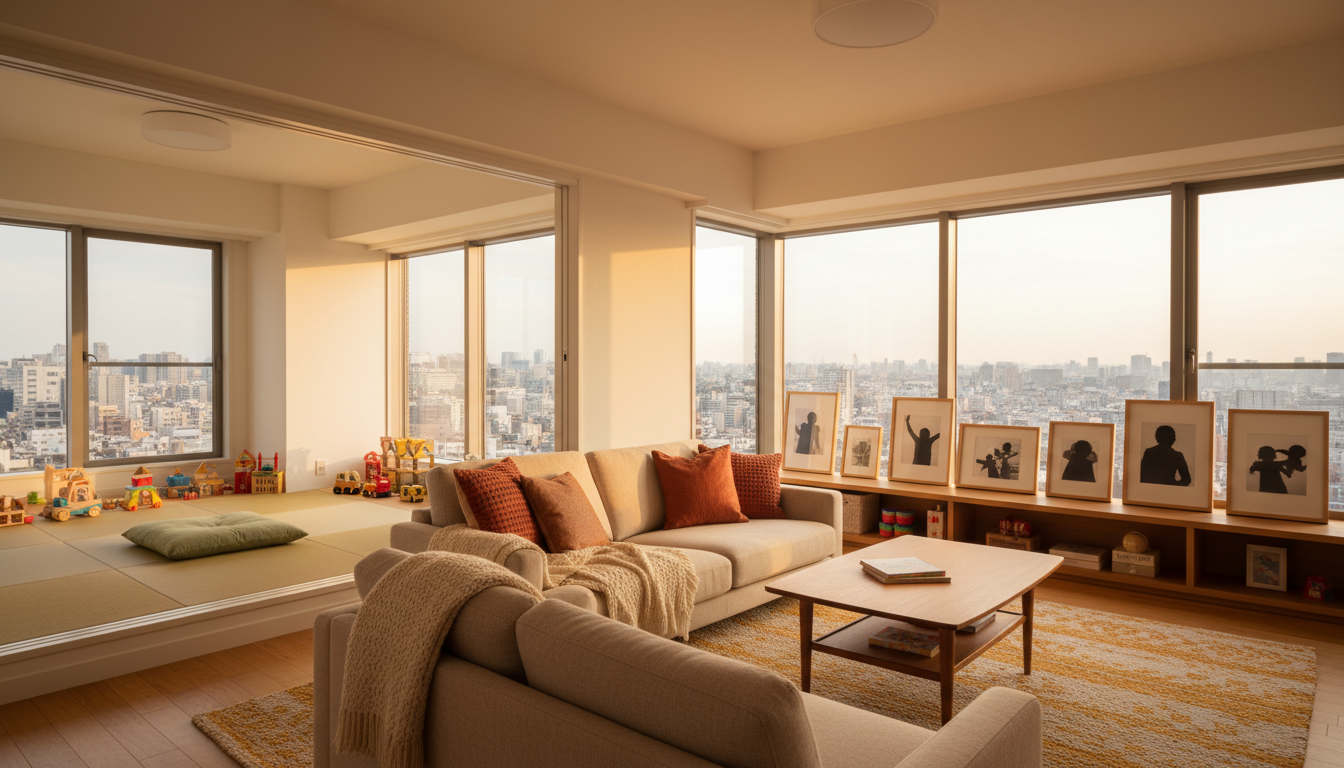 spacious Tokyo apartment living room with tatami corner, large windows showing city view, toys visib
Why Home Exchange in Tokyo Works Better Than Hotels for Families
So here's the thing about Tokyo hotels that nobody warns you about: they're tiny. I mean, really tiny. The average hotel room in central Tokyo runs about 150-200 square feet. That's fine for two adults who spend all day sightseeing and collapse into bed at night. But kids? Kids need floor space. They need room to have feelings. They need somewhere to play when the jet lag hits and they're wide awake at 4 AM while you desperately need sleep.
The first time we did a home exchange in Tokyo, we stayed in a family's three-bedroom apartment in Setagaya. Nine hundred square feet—not huge by American standards, but absolutely palatial compared to what we'd have gotten at a hotel for the same price (which is to say, free, minus the SwappaHome membership).
The family who lived there had two kids around my daughter's age. They left us their toys, their books, their collection of Studio Ghibli DVDs. My daughter still talks about "the Totoro house" three years later.
The Real Cost Difference (It's Significant)
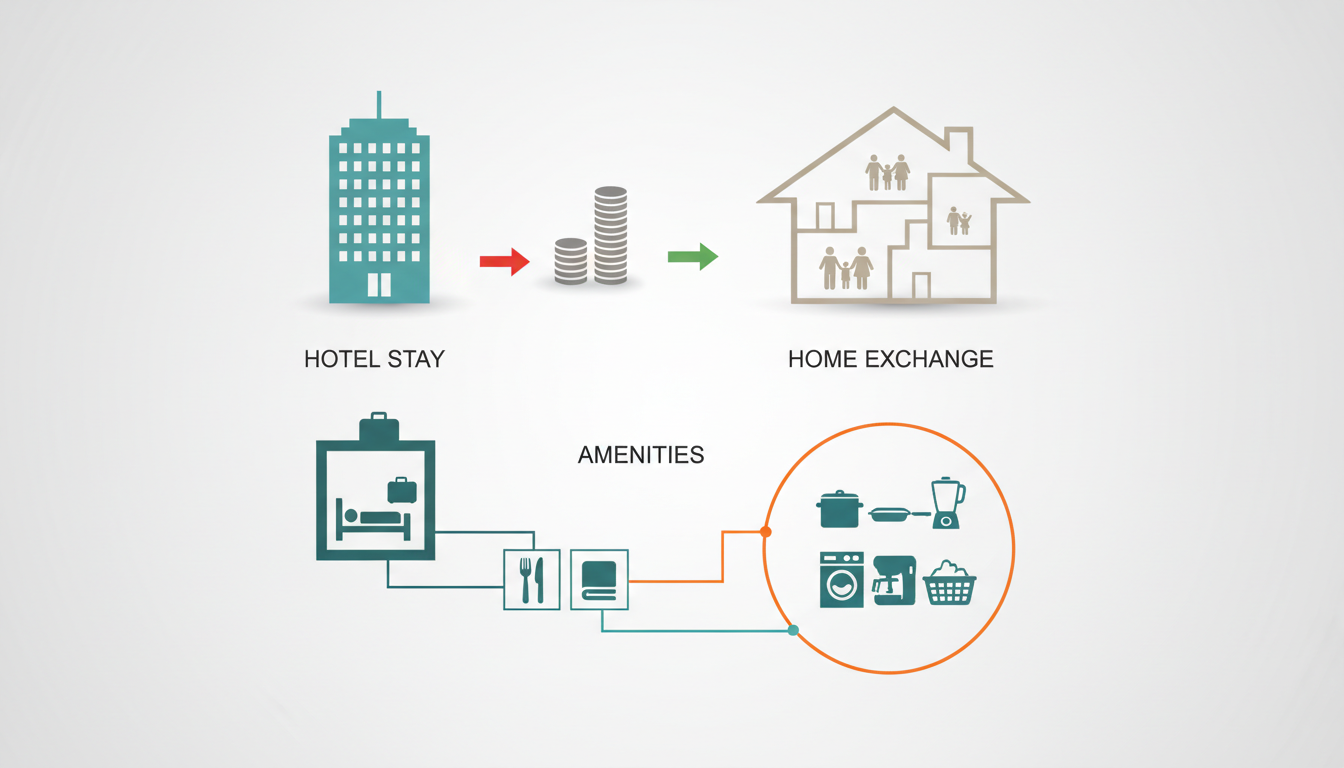
Let me break this down because I'm a numbers person when it comes to travel budgets. A family-friendly hotel in a decent Tokyo neighborhood—something with enough space for two adults and a child or two—runs about $250-400 per night. I'm not talking luxury here. I'm talking Holiday Inn level, maybe a business hotel with a "family room."
For a two-week trip? That's $3,500 to $5,600 just for accommodation.
With home exchange through SwappaHome, you're looking at your membership fee and... that's it. The credit system means you earn credits by hosting guests at your home, then spend those credits to stay in someone else's place. Every night costs exactly one credit, whether you're staying in a studio in Shibuya or a house in the suburbs. For families, this math is life-changing.
But honestly, the money isn't even the main reason I recommend home exchange in Tokyo for families. It's everything else.
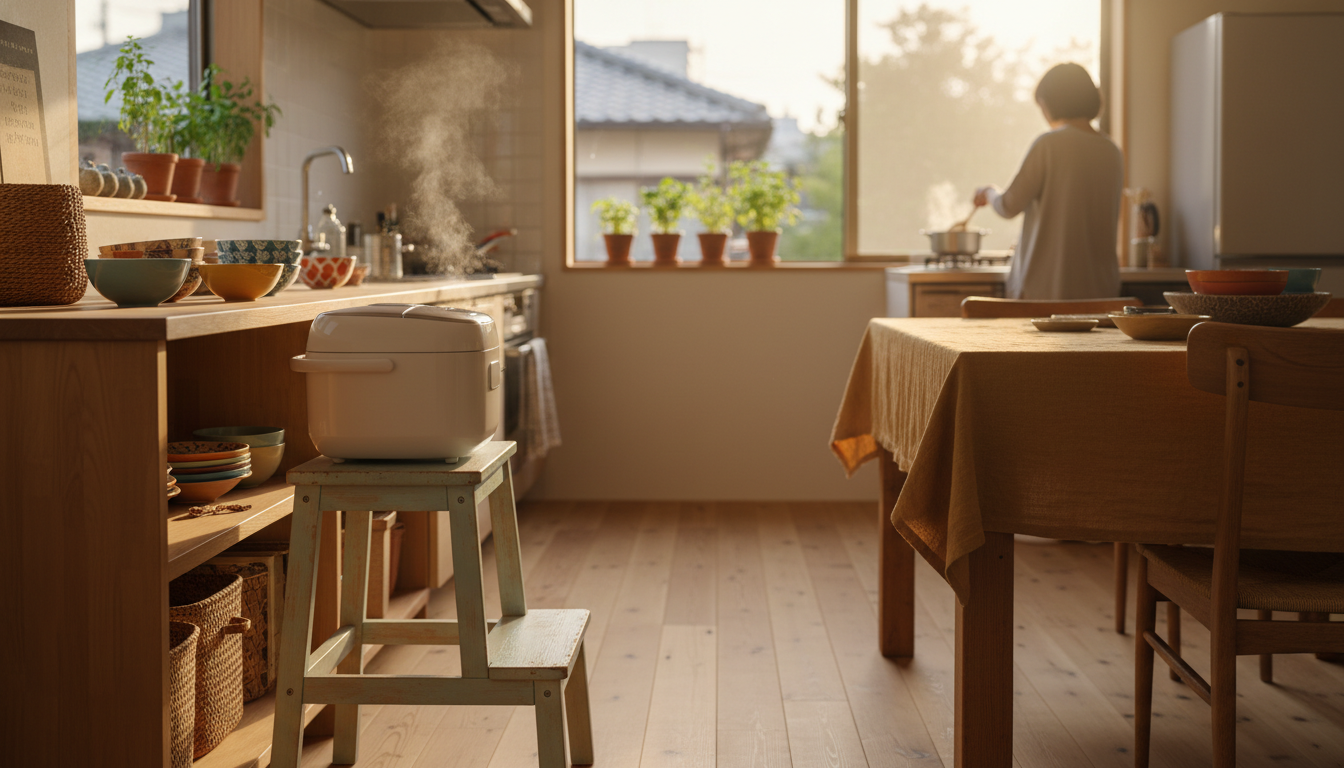 Japanese kitchen with rice cooker, childs step stool, colorful dishes, and a window with small herb
Finding Family-Friendly Home Exchanges in Tokyo: Best Neighborhoods
Not all Tokyo neighborhoods are created equal when you're traveling with kids. I've stayed in six different areas across multiple trips, and I have strong opinions about what works.
Setagaya: My Top Pick for Families
Setagaya is where Tokyo families actually live. It's residential, green, and has this village-within-a-city vibe that makes it perfect for kids. The Shimokitazawa area has pedestrian streets, vintage shops, and ice cream places that my daughter still asks about. Sangenjaya has incredible food and a more local feel.
What I love about Setagaya for home exchange: the homes are bigger. You're more likely to find a proper house or a spacious apartment because families actually live here long-term. The trade-off is you're 15-20 minutes from central Tokyo by train, but honestly? With kids, you're not doing the 6 AM to midnight sightseeing marathons anyway.
Meguro and Nakameguro: Stylish but Practical
Nakameguro has that perfect balance—trendy enough to feel exciting, residential enough to have actual grocery stores and parks. The Meguro River area is stunning during cherry blossom season, and there are cafes everywhere with space for strollers.
Home exchanges here tend to be in newer apartment buildings. Smaller than Setagaya houses, but often with modern amenities that make life with kids easier—good laundry facilities, newer kitchens, sometimes even dishwashers (rare in Tokyo!).
Kichijoji: If You Want Green Space
Inokashira Park is here, which is basically Tokyo's Central Park equivalent. There's a zoo, paddle boats, and the Ghibli Museum nearby (book tickets months in advance—I cannot stress this enough). Kichijoji has a covered shopping street where kids can wander safely, and the food scene is excellent.
The downside: it's further out, about 20-25 minutes to Shibuya. But if your kids need outdoor time to stay sane—and mine absolutely does—it's worth it.
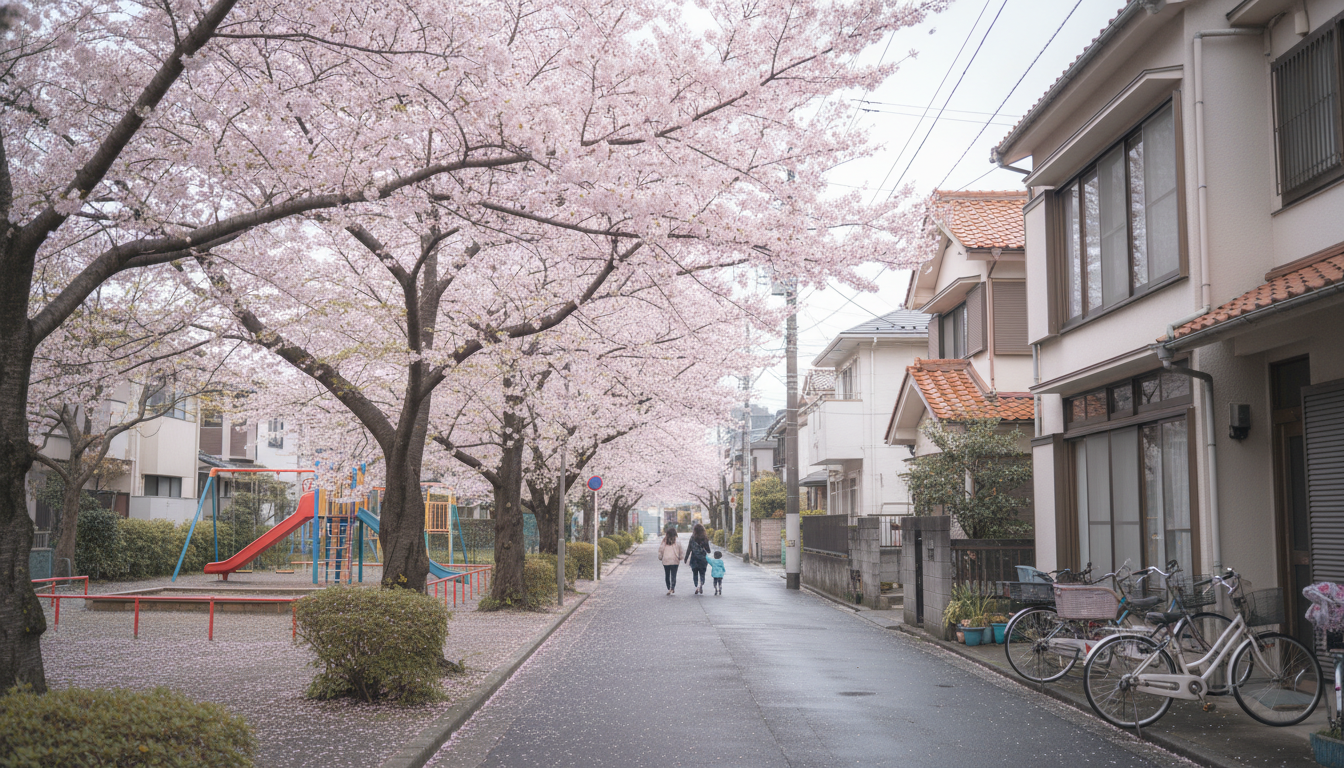 tree-lined residential Tokyo street in spring with cherry blossoms, a small playground visible, bicy
What to Look for in a Tokyo Home Exchange When Traveling with Kids
After multiple family swaps in Tokyo, I've developed a checklist. Not everything is essential, but these things make a massive difference.
The Non-Negotiables
A washing machine. I cannot overstate this. Kids are messy, Tokyo is humid, and you don't want to spend your vacation hunting for a laundromat. Most Japanese homes have washing machines, but confirm before booking.
A bathtub matters more than you'd think. Japanese baths are deeper than Western ones, and the soaking culture is genuinely wonderful for tired kids (and parents). Many apartments have incredible bathroom setups with separate shower and soaking areas.
Air conditioning and heating—Tokyo summers are brutal. We're talking 95°F with 80% humidity. Winters aren't as bad but can get cold. Make sure the home has climate control that works.
The Nice-to-Haves
Kids' stuff can be a game-changer. When a family lists their home on SwappaHome, they often mention if they have children and what ages. A home with existing toys, books, and kid-friendly dishes makes packing so much lighter.
A genkan (entryway) with space for stroller storage is worth asking about. Tokyo apartments often have these built-in entryways, but size varies. If you're bringing a stroller, ask about storage space.
Proximity to a konbini (convenience store)—this sounds silly, but 7-Elevens and Family Marts in Japan are incredible. Fresh onigiri, drinkable yogurt, emergency diapers at 2 AM. Having one within a 5-minute walk is genuinely useful with kids.
Questions to Ask Your Host Family
Before confirming a home exchange in Tokyo, I always ask: What's the nearest playground, and how far is it? Is there a grocery store within walking distance? How far is the nearest train station, and is it stroller-accessible? What kid-friendly restaurants would you recommend nearby? And—this one's important—what's the noise situation? Will neighbors complain if kids are loud in the morning?
Most Japanese hosts are incredibly helpful and will give you detailed answers. The families I've exchanged with have left us handwritten guides to their neighborhoods, complete with their kids' favorite spots.
 infographic showing comparison between hotel stay vs home exchange for a 2-week Tokyo family tripcos
Making the Most of Your Tokyo Home Exchange with Kids
Staying in a real Tokyo home isn't just about having more space—it's about experiencing the city differently.
Embrace the Neighborhood Life
One of my favorite memories from our Setagaya swap was discovering the local shotengai (shopping street) two blocks from our apartment. There was a taiyaki stand where my daughter became obsessed with the fish-shaped cakes filled with sweet potato cream. A tiny stationery shop where she picked out erasers shaped like sushi. A greengrocer who gave her a free mikan (mandarin orange) every time we walked by.
None of this would have happened if we'd stayed in Shinjuku. We would have seen the famous stuff, sure, but we wouldn't have felt what it's like to actually live in Tokyo.
Use the Kitchen Strategically
I'm not saying cook every meal—Tokyo's food is too good to miss. But having a kitchen means you can do breakfast at home (Japanese convenience store pastries, fruit, yogurt), pack snacks for the day, and have a backup plan when your kid decides they're "not hungry" at the restaurant but starving an hour later.
Depachika (department store basement food halls) become your best friend. You can buy incredible prepared foods—bento boxes, salads, grilled fish, fresh sushi—and bring them home to eat. It's cheaper than restaurants, you can mix and match to please picky eaters, and you can eat at your own pace.
Build in Rest Days
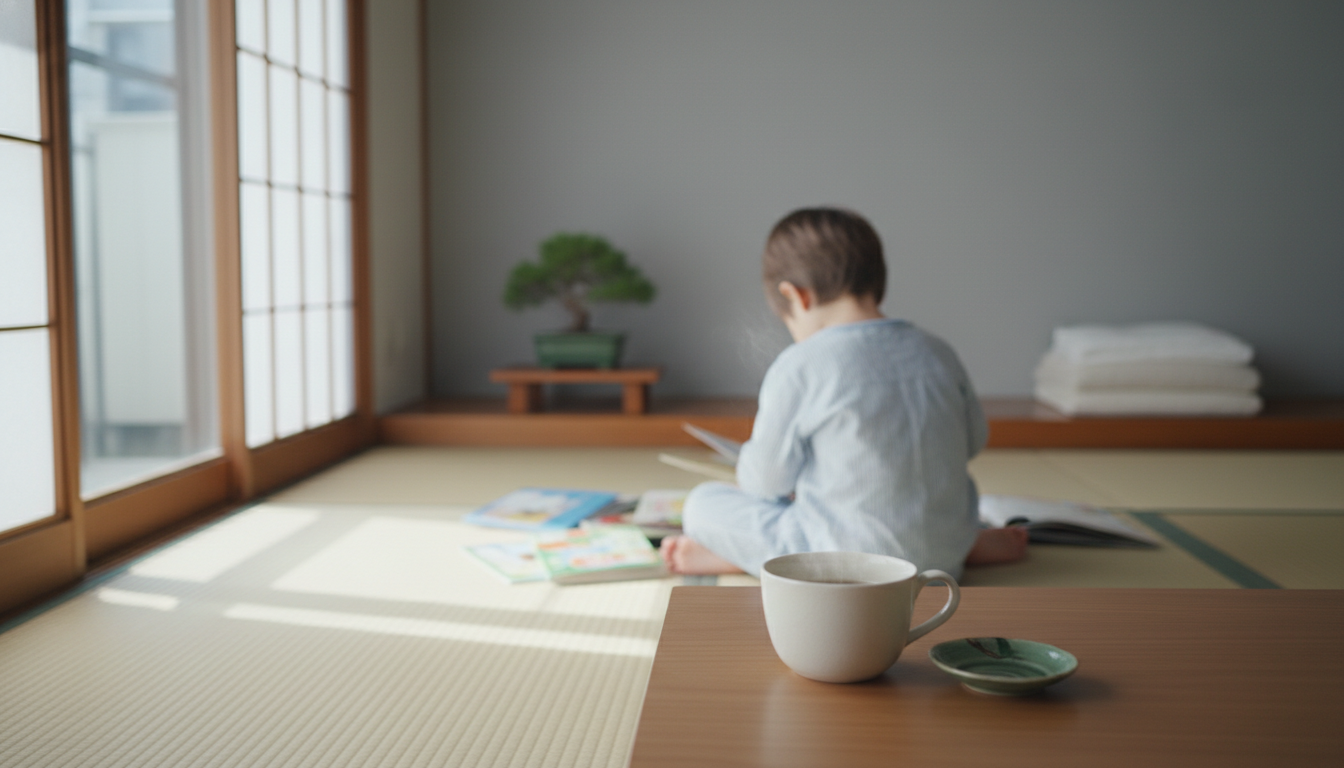
This is crucial for Tokyo with kids, and a home exchange makes it actually enjoyable. When you're paying $300 a night for a hotel, there's pressure to maximize every moment. When you're staying for free in a comfortable home, you can have a slow morning. Watch Japanese TV with your kids. Let them play with the toys left by the host family. Do laundry. Recharge.
Our best Tokyo days often started at 11 AM after a lazy morning. We'd do one or two things, have an early dinner, and be home by 7. The pace felt sustainable instead of exhausting.
 morning scene in a Tokyo apartmentsunlight streaming through shoji screens, a child in pajamas looki
Practical Tips for Tokyo Home Exchange Success with Your Family
After several family swaps in Tokyo, I've learned some things the hard way so you don't have to.
Before You Go
Start your SwappaHome search early—like, six months early if you're traveling during cherry blossom season (late March to early April) or autumn leaves (November). Family-friendly homes in good neighborhoods get booked quickly.
Message potential hosts and be upfront about your kids' ages. Japanese hosts appreciate honesty, and most are incredibly accommodating once they know what to expect. I always mention that my daughter is generally quiet but might have early mornings due to jet lag.
Ask about the bed situation too. Japanese homes often use futons that get stored during the day, which is actually great for kids—more floor space to play. But if you need a crib or toddler bed, ask if the family has one or can recommend a rental service.
When You Arrive
Take photos of everything when you arrive. This protects both you and your host. I do a quick video walkthrough showing the condition of the home, focusing on any existing wear or damage.
Locate the nearest hospital and pharmacy immediately. I know this sounds paranoid, but kids get sick at the worst times. In Tokyo, pharmacies (yakkyoku) are everywhere, and many have English-speaking staff. Hospitals can be trickier—I keep the address of a nearby international clinic saved in my phone.
Figure out the garbage system on day one. Japan has specific sorting requirements—burnable, non-burnable, recyclables, PET bottles. Your host should leave instructions, but if not, ask. Getting this wrong is considered very rude.
Being a Good Guest (Especially Important with Kids)
The review system on SwappaHome is everything. Your reputation follows you, and Japanese hosts often have high standards.
Leave the home cleaner than you found it—this is Japanese hospitality culture, and guests should leave minimal burden for their hosts. Replace anything you use up. Finished the cooking oil? Buy a new bottle. Used the last of the laundry detergent? Replace it. Be mindful of noise too. Japanese apartments often have thin walls, and neighbors notice. We instituted a "quiet feet" rule after 8 PM and kept TV volume low.
And write a thank-you note. This isn't required, but it's so appreciated. I always leave a small gift too—something from our home city that the host family's kids might enjoy.
Why I Keep Choosing Home Exchange for Tokyo Family Trips
I could afford hotels now. My travel writing career has grown, and we have more flexibility than we did during that disastrous first trip with the hotel meltdown. But I keep choosing home exchange in Tokyo, and it's not just about the money anymore.
It's about the connection. The family whose home we stayed in last year? We've become actual friends. They visited San Francisco six months later and stayed at our place. Our daughters FaceTime occasionally, showing each other their toys in a mix of English and Japanese that somehow works.
It's about the authenticity. My daughter knows what a real Tokyo kitchen looks like. She's eaten breakfast at a family's table, played with Japanese toys, watched Japanese kids' shows. She has a sense of daily life in Tokyo that no hotel could provide.
And it's about the sustainability of it—not just environmentally (though that matters too), but the sustainability of family travel itself. When trips don't break the bank, we can take more of them. When accommodations feel like home, kids adjust better. When we're not exhausted from cramped spaces, we actually enjoy ourselves.
Tokyo can be overwhelming. It's huge, it's crowded, it's sensory overload in the best way. But coming "home" to a quiet apartment in a residential neighborhood, making tea in a familiar kitchen, letting your kid decompress in a space that feels safe—that's what makes Tokyo with kids not just possible, but genuinely wonderful.
If you're considering your first home exchange in Tokyo with your family, I'd say go for it. Join SwappaHome, start browsing family homes in neighborhoods like Setagaya or Meguro, and message a few hosts. The community is welcoming, the savings are real, and the experience is incomparable to anything a hotel can offer.
Your kids might not remember the fancy hotel. But they'll remember the house with the Totoro DVDs.
Frequently Asked Questions
Is home exchange in Tokyo safe for families with young children?
Home exchange in Tokyo is generally very safe for families. Japan has extremely low crime rates, and the SwappaHome verification and review system helps ensure you're connecting with trustworthy hosts. I'd recommend reading reviews carefully, messaging hosts beforehand, and considering your own travel insurance for extra peace of mind. Most families find Japanese hosts exceptionally welcoming and their homes well-maintained.
How much money can families save with home exchange in Tokyo compared to hotels?
Families typically save $200-400 per night compared to family-friendly Tokyo hotels. For a two-week trip, that's $2,800 to $5,600 in savings. With SwappaHome's credit system, you pay only your membership fee—every night costs one credit regardless of the home's size or location. The savings are especially significant for longer stays, which are ideal for adjusting to jet lag with kids.
What age children are best suited for Tokyo home exchange trips?
Tokyo home exchange works well for children of all ages, but I find it especially valuable for kids ages 2-10. Toddlers benefit from the extra space and familiar kitchen for preparing foods they'll actually eat. School-age children can engage more with the cultural experience of staying in a real Japanese home. Babies need more gear, so ask hosts about cribs and baby equipment availability.
How far in advance should I book a Tokyo home exchange for my family?
Book your Tokyo home exchange 4-6 months in advance for most travel dates. For peak seasons like cherry blossom season (late March-early April) or autumn foliage (November), start searching 6-8 months ahead. Family-friendly homes in desirable neighborhoods like Setagaya and Meguro get requested quickly, so early planning gives you the best selection.
Do Tokyo home exchange hosts provide items for children like high chairs and toys?
Many Tokyo families on SwappaHome have children and leave toys, books, and kid-friendly items available for guests. When searching, filter for family homes and message hosts directly to ask about specific items like high chairs, cribs, or strollers. Japanese hosts are typically very helpful and may borrow items from neighbors or recommend local rental services for anything they don't have.

Published by
SwappaHome
SwappaHome Editorial Team
Home Exchange & Slow Travel Editorial
The SwappaHome Editorial Team brings together travel research, home-exchange community insights, and platform data to produce practical guides for first-time and experienced home swappers. Every article cites real platforms, current market rates, and verifiable city-level facts so readers can make informed decisions without guessing.
Ready to try home swapping?
Join SwappaHome and start traveling by exchanging homes. Get 7 free credits when you sign up!
Related articles
Bachelor and Bachelorette Parties in Singapore: The Complete Home Swap Group Guide for 2026
Planning a bachelor or bachelorette party in Singapore? Discover how home swapping lets groups of 6-12 stay together in luxury condos, saving thousands while partying in Marina Bay.
Cycling in Lisbon: 7 Home Swap Bike Tour Itineraries for Every Rider
Discover the best cycling routes in Lisbon with these home swap bike tour itineraries—from waterfront paths to hilltop adventures, all starting from your borrowed home.

Graduation Trip to Barcelona: How Home Swapping Gives New Graduates the Ultimate Celebration
Planning a graduation trip to Barcelona? Discover how home swapping lets new graduates explore Spain's most vibrant city without the hostel crowds or hotel costs.