
Trip to go: How to plan a smooth, memorable vacation from start to finish

SwappaHome Editorial Team
Home Exchange & Slow Travel Editorial
Key Takeaways A memorable trip to go begins with a clear purpose and a plan that can bend without breaking. Think through your priorities, costs, logistics,…
Key Takeaways
A memorable trip to go begins with a clear purpose and a plan that can bend without breaking. Think through your priorities, costs, logistics, and comfort before you start filling every hour.
- Choose a destination that fits your interests, energy, budget, and available time.
- Build a budget that includes everyday spending, fees, exchange rates, and a reserve.
- Select travel dates after comparing weather, crowds, prices, and entry requirements.
- Group nearby activities together while protecting time for rest and discovery.
- Confirm documents, bookings, connectivity, payments, and emergency contacts before leaving.
Define your trip to go goals and travel style
Before comparing flights or scrolling through hotel photos, decide what you want the vacation to feel like. A quiet coastal break requires a different plan from a museum-heavy city trip or an active family adventure. When the purpose is clear, smaller decisions become easier and the itinerary feels more personal.
Choose the right destination for your priorities
Start with a short list of what matters most: nature, food, history, nightlife, relaxation, or time with family. Then compare destinations against that list rather than choosing only by popularity. A city guide such as destination planning inspiration can help you notice neighborhood character and practical details that broad travel lists often miss.
Think about the kind of setting that supports your goal. A compact historic city may suit travelers who want to walk between landmarks, while a rural destination may be better for privacy and open space. The right choice is the one that makes your preferred activities easy to reach without turning every day into a commute.
Set expectations for pace, comfort, and activities
Be honest about how much movement feels enjoyable. Some travelers like an early start and a full schedule; others would rather spend a morning at a café and make only one major plan each day. Neither approach is more correct, but mismatched expectations can make a shared vacation tiring.
Choose a comfort level before booking. Decide whether a private bathroom, a kitchen, an elevator, air conditioning, or walkable access to restaurants is essential. Comfort shapes the whole trip, so treating it as an afterthought can create costs and frustration later.
Decide whether to travel solo, as a couple, or in a group
The size of your party affects almost every part of planning, from room layouts to meal decisions and transportation. Solo travelers may value central locations and simple connections, while couples often prioritize privacy and a slower rhythm. Groups need agreement on shared expenses, personal time, and how decisions will be made.
Have a candid conversation before anyone pays a deposit. Talk about the budget range, must-do activities, sleep schedules, and how much unstructured time each person wants. A simple shared document can prevent small assumptions from becoming major disagreements on the road.
Match the trip length to your available time
A short vacation should not imitate a long one. For a three-day break, choose one area and a few meaningful experiences; for a two-week journey, you can add a second base or a slower regional route. Include arrival and departure time when calculating how many usable days you truly have.
Allow for recovery after a long flight, especially when time zones are involved. A realistic trip to go plan may appear less ambitious on paper, but it usually leaves you with better memories than a packed schedule that is impossible to enjoy.
Build a realistic trip budget
A useful budget is not a prediction of every dollar; it is a framework for making trade-offs. Begin with the expenses you must pay, then estimate the flexible categories that grow or shrink with your choices. Keep the numbers visible as your plans develop so a cheaper flight does not quietly lead to a more expensive overall vacation.
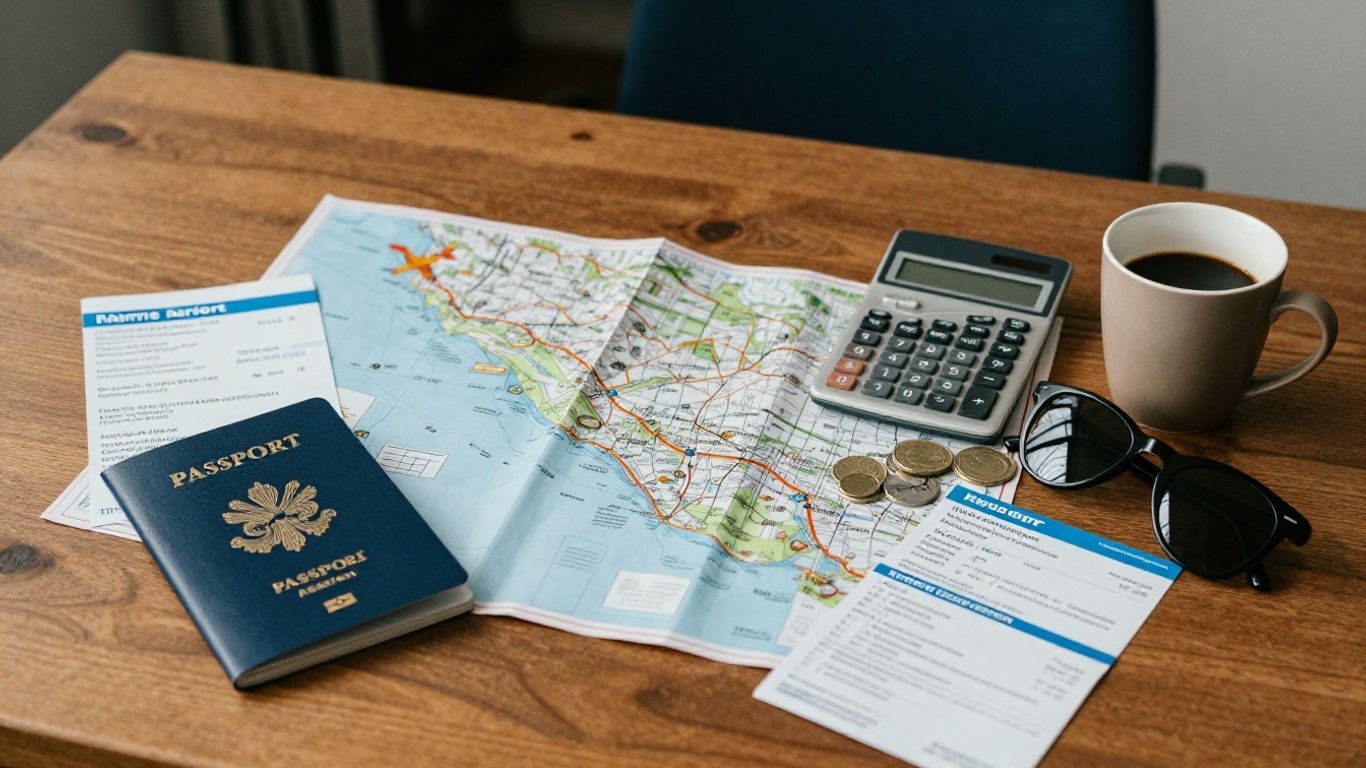 Traveler reviewing a vacation budget map
Estimate transportation and accommodation costs
Price the complete journey, not just the headline fare. Include transfers, baggage, seat selection, parking, fuel, and transportation between your accommodation and the airport or station. For lodging, compare the total stay cost rather than the nightly figure alone.
Accommodation can be one of the largest variables in a budget. If you are open to alternatives, budget-friendly home exchange ideas may offer useful ways to think about reducing lodging costs while preserving money for activities and meals.
Plan for meals, activities, and local transportation
Give each day a practical spending allowance, then adjust it for the destination. A trip with restaurant lunches, paid attractions, and taxis needs a different daily estimate from one built around markets, walking, and free public spaces. Research a few representative prices before settling on a number.
A simple category list can keep the estimate grounded:
- Breakfast, lunch, dinner, snacks, and drinks
- Museum tickets, tours, shows, and outdoor activities
- Buses, trains, rideshares, taxis, or fuel
- Tips, small purchases, and occasional treats
After making the list, check it against your planned pace. If the estimate feels too high, change the structure of the trip rather than pretending the costs will disappear; one slower day can be more valuable than several rushed, expensive ones.
Account for taxes, fees, and currency exchange
Advertised prices may not include local taxes, service charges, resort fees, cleaning costs, or booking fees. Currency conversion can also add friction when a card issuer applies a foreign transaction fee or an ATM charges for withdrawals. Leave room for these details before deciding that an option fits your limit.
Use one currency for your working budget and record the exchange rate and date used. You do not need perfect precision at the planning stage, but you do need a buffer so normal fluctuations do not affect essentials.
Create an emergency fund for unexpected expenses
Set aside money that is not assigned to a meal, ticket, or souvenir. It can cover a replacement charger, an unexpected night near an airport, a medical visit, a missed connection, or a change in transport. Keep part of it accessible through a separate card or payment method.
The size of the reserve depends on the destination, trip length, and your existing insurance. What matters most is deciding on it before departure, when the money is still available and the choice does not feel like a crisis.
Choose the best destination and travel dates
Destination and timing work together. A place that is perfect in shoulder season may be hot, wet, closed, or unusually crowded at another time of year. Compare practical conditions as carefully as you compare photographs, and make sure the route is reasonable for the number of days you have.
Compare weather, seasons, and crowd levels
Look beyond average temperatures. Rain patterns, daylight hours, wildfire risk, seasonal closures, and local holidays can all change the experience. Shoulder seasons often offer a useful balance, but only if the attractions and transportation you want are operating.
Crowds also affect the pace of a vacation. A popular destination may be worth visiting during a busy period, but you can soften the impact by staying outside the busiest center, starting early, or reserving timed entry where available.
Research entry requirements and travel advisories
Check passport validity rules, visa requirements, permitted stay lengths, vaccination guidance, and customs restrictions through official sources. Requirements can vary by nationality, transit point, and purpose of travel, so avoid relying on an old social media post or a friend’s experience.
For travelers who need assistance with documentation, visa services describe Trip-to-Go’s documented UAE tourist and resident visa services and global visa services for travel, work, and study. Treat any application as a separate task with its own timeline, and keep copies of approvals and supporting documents.
Consider flight routes and transportation connections
A low fare is not necessarily a low-cost or convenient journey. Compare layover length, airport changes, arrival times, ground transport, and the likelihood of needing a hotel between connections. A slightly more expensive direct route can be worthwhile when it protects a short vacation from avoidable fatigue.
Sketch the first and last legs of the trip before booking the middle. Confirm how you will reach your accommodation after arrival and how early you need to leave on departure day. Those two transitions often determine whether the trip starts and ends calmly.
Balance popular attractions with local experiences
Choose a few well-known sights that genuinely matter to you, then leave room for ordinary experiences nearby. A neighborhood market, local park, small gallery, or unhurried meal can give a destination texture that a sequence of major attractions cannot.
Local recommendations are especially useful when they match your interests rather than simply being hidden. Local travel guides can provide neighborhood context and practical ideas for experiencing a place at a more natural pace.
Create a flexible travel itinerary
An itinerary should answer the day’s basic questions without controlling every minute. It needs enough structure to protect reservations and reduce decision fatigue, but enough space for weather, energy, conversation, and chance discoveries. Build around areas and priorities instead of trying to collect every possible attraction.
Organize must-see attractions by location
Put destinations on a map and group nearby stops together. This saves transport time and makes it easier to notice cafés, viewpoints, shops, or parks along the way. Give each day a central theme or neighborhood, then choose only the activities that fit comfortably within it.
When planning a more involved journey, Trip-to-Go offers documented destination management and customized itineraries. Those services are described as covering itinerary planning and travel arrangements, but your own plan should still reflect your actual energy, budget, and interests.
Leave room for rest and spontaneous plans
A blank afternoon is not wasted time. It may become the moment you return to a favorite street, recover from a late evening, or accept an invitation you could not have scheduled in advance. Plan one anchor activity for many days and let the surrounding hours remain open.
Build in small pauses between demanding experiences. Even ten quiet minutes to check directions, drink water, or sit down can prevent a day from becoming a stressful race between appointments.
Reserve experiences that sell out in advance
Book only the experiences that are genuinely difficult to replace, such as timed museum entry, limited-capacity tours, popular performances, or long-distance rail seats. Read the terms before paying and check the local time zone when booking online.
Keep confirmation numbers in one place, with the address, start time, meeting instructions, and cancellation deadline. The rest of the itinerary can remain loose around these fixed points, which creates a helpful balance between certainty and freedom.
Prepare backup options for weather or closures
For every outdoor centerpiece, identify an indoor alternative. Also note a second restaurant, another route, and a low-effort activity for days when everyone is tired. These options do not need their own detailed schedule; a short list in your phone is enough.
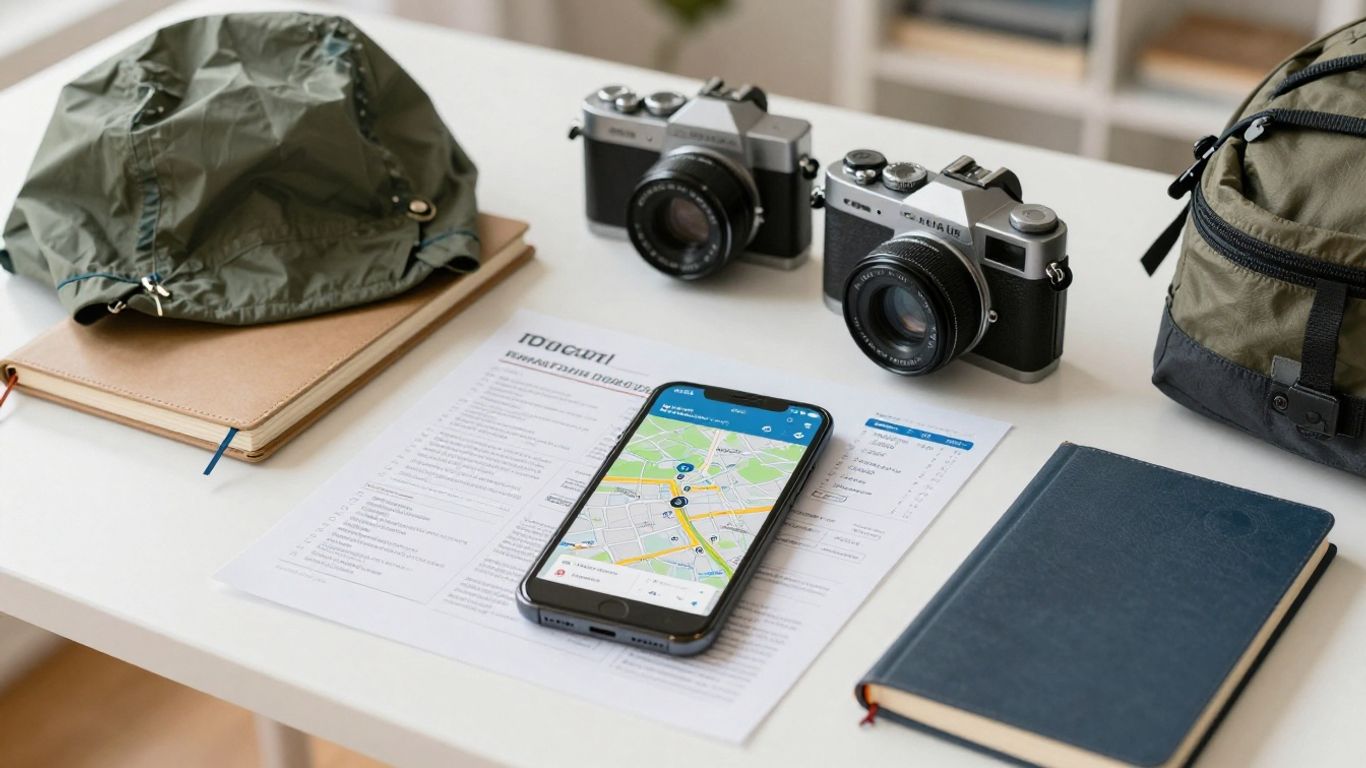 Flexible vacation itinerary beside travel essentials
If plans change, choose the replacement based on location and energy rather than trying to preserve the original order. A weather delay can become a pleasant change of rhythm when the backup plan is nearby and easy to reach.
Book transportation and accommodations wisely
Booking is where your broad plan becomes a set of commitments. Compare the full value of each option, including time, convenience, location, and the conditions attached to the price. A bargain that requires several awkward transfers or has no practical cancellation option may not be a bargain for your particular trip.
Compare flights, trains, buses, and rental cars
Consider the door-to-door journey instead of the vehicle alone. Trains may offer central stations and fewer security steps, while a rental car can be useful for rural areas but expensive in a dense city. Buses may be economical on certain routes, though the longer travel time needs to fit your schedule.
Write down the total price and travel duration for each realistic option. Include luggage, fuel, tolls, parking, station transfers, and the value of your time. This makes the comparison clearer than sorting only by the first number shown.
Evaluate hotels, vacation rentals, and hostels
Match the accommodation type to how you will actually use it. A hotel may suit a short city break, a rental can help with laundry and meals, and a hostel may provide a social setting for independent travelers. Location, security, noise, accessibility, and sleeping arrangements matter as much as style.
Read recent reviews for recurring practical details rather than isolated complaints. Look for comments about transit access, cleanliness, check-in, street noise, and whether the photos accurately reflect the space.
Check cancellation policies and included amenities
Review the rules before entering payment details. Note whether cancellation is free, whether a deposit is refundable, and what happens if you need to change dates. Confirm what is included: breakfast, Wi-Fi, linens, baggage storage, parking, resort charges, or kitchen access.
Save a screenshot or PDF of the terms attached to the booking. Policies can be difficult to reconstruct later, especially when several reservations use different deadlines and conditions.
Confirm booking details before departure
A week or two before leaving, review every reservation from the original confirmation rather than memory. Check names, dates, addresses, check-in instructions, transport numbers, and any required identification. Contact the provider if something is unclear while there is still time to fix it.
Create a compact travel sheet with the essentials and an offline copy on your phone. This small step is especially helpful when arriving tired, without reliable data, or in a place where the local language is unfamiliar.
Prepare for a smooth trip to go
The final preparation stage should reduce decisions, not create a new wave of them. Pack from the itinerary, organize documents in layers, and test the tools you expect to use. A calm departure usually comes from a few ordinary checks completed early.
Pack according to the destination and itinerary
Look at the actual forecast and planned activities before choosing clothes. Include comfortable walking shoes, weather protection, medication, chargers, and one outfit suitable for any dressier occasion you have booked. Packing fewer versatile pieces often makes moving between locations easier.
Keep essential medication, documents, valuables, and one change of clothes in your carry-on when possible. If checked baggage is delayed, having these basics can turn a major inconvenience into a manageable one.
Organize passports, visas, insurance, and confirmations
Make a digital folder and an offline folder for passports, visas, insurance details, booking confirmations, prescriptions, and emergency numbers. Check that names and dates match across documents. Tell yourself where each item is stored before you leave, rather than searching for it at the airport.
Paper copies can still help if a phone battery fails or a connection is unavailable. Store them separately from the originals, and avoid leaving all critical documents in one bag.
Plan mobile connectivity and payment methods
Decide whether you will use international roaming, an eSIM, a local SIM, or Wi-Fi only. Download maps, translation tools, transport apps, and reservation details before departure. Test your payment cards and notify your bank if that is required.
Carry at least two payment methods and a small amount of local currency when practical. Keep them in separate places, and learn how to access your bank if a card is lost or blocked.
Share essential plans with a trusted contact
Give someone at home your broad itinerary, accommodation details, transport information, and a way to reach you. You do not need to report every change, but agree on when you will check in and what they should do if they cannot reach you.
A trusted contact can also hold copies of important documents or help coordinate support during an emergency. Once these arrangements are in place, you can focus less on contingency planning and more on being present during the trip.
Conclusion
A smooth trip to go is built through thoughtful choices rather than an overloaded schedule. Define what you want, budget honestly, choose timing that suits the destination, and leave enough flexibility for real life. With documents, bookings, and practical details organized before departure, the vacation has room to feel spontaneous without becoming chaotic.
Frequently Asked Questions
How far in advance should I plan a vacation?
Start when you know your preferred dates and budget, especially for international travel or peak seasons. Earlier planning gives you more choices, while a shorter lead time can work for flexible travelers and less busy destinations.
How much flexibility should an itinerary include?
Keep essential reservations fixed and leave open space around them. One major activity per day, or a small cluster in the same area, is often enough to provide structure without making the trip exhausting.
What is the most commonly forgotten travel expense?
Travelers often overlook transfers, baggage, taxes, tips, local transportation, and foreign transaction fees. Reviewing the journey from home to accommodation and back again helps reveal these smaller costs.
Should I book every activity before leaving?
No. Reserve experiences with limited availability, then leave ordinary sightseeing, meals, and neighborhood walks flexible. This lets you adjust to weather, energy, and recommendations from locals.
How can I make group travel less stressful?
Agree on the budget, key activities, sleeping arrangements, and personal-time expectations before booking. A shared itinerary and a clear method for dividing expenses can prevent repeated negotiations during the vacation.
What documents should I keep accessible?
Carry your passport, required visa or authorization, insurance information, booking confirmations, prescriptions, and emergency contacts. Keep digital and offline copies, while storing originals securely.
What should I do if my plans change during the trip?
Pause and identify what is time-sensitive, what can be refunded, and what can simply be moved. Use your backup options, contact providers promptly, and protect rest so one disruption does not affect the entire journey.

Published by
SwappaHome
SwappaHome Editorial Team
Home Exchange & Slow Travel Editorial
The SwappaHome Editorial Team brings together travel research, home-exchange community insights, and platform data to produce practical guides for first-time and experienced home swappers. Every article cites real platforms, current market rates, and verifiable city-level facts so readers can make informed decisions without guessing.
Ready to try home swapping?
Join SwappaHome and start traveling by exchanging homes. Get 7 free credits when you sign up!