
Top vacation destinations 2025 USA: 10 unforgettable places to visit

SwappaHome Editorial Team
Home Exchange & Slow Travel Editorial
Key Takeaways These ten destinations cover bustling cities, dramatic parks, tropical shores, and deeply rooted food cultures. The best choice depends on the…
Key Takeaways
These ten destinations cover bustling cities, dramatic parks, tropical shores, and deeply rooted food cultures. The best choice depends on the season, your pace, and the kind of memories you want to bring home.
- New York City and Nashville deliver big-city energy through different musical and cultural traditions.
- Orlando works especially well for families seeking theme parks, water attractions, and easy entertainment.
- Yellowstone, the Grand Canyon, and Glacier National Park offer three very different western landscapes.
- Maui, San Diego, and New Orleans each pair distinctive scenery with a strong local sense of place.
- Flexible planning, shoulder-season timing, and a comfortable home base can make a trip feel much more relaxed.
1. New York City, New York
New York City remains one of the top vacation destinations 2025 USA travelers can choose when they want variety in a compact, energetic setting. A single day might move from a quiet morning in Central Park to a museum afternoon and a late dinner in Queens. The city is busy, sometimes expensive, and rarely dull.
First-time visitors often gravitate toward the classic sights: the Statue of Liberty, Times Square, the Empire State Building, and the museums along Fifth Avenue. Yet the city becomes more rewarding when you leave room for ordinary pleasures, such as browsing a neighborhood bakery, walking the High Line, or lingering over coffee in a brownstone-lined street. Brooklyn, Harlem, and the Lower East Side each offer a different rhythm.
A useful way to shape a New York trip is to group activities by neighborhood rather than crossing town repeatedly. The subway makes exploration possible, but a little restraint leaves more time for the city’s smaller moments. Travelers who prefer a residential base can also browse neighborhood home exchanges for a more local style of stay.
2. Orlando, Florida
Orlando is built for easy, high-energy vacations, especially when a group wants several kinds of entertainment without long journeys between them. The major theme parks are the obvious draw, but the region also offers water parks, shopping, golf, gardens, and a growing dining scene. Families can fill a week here without repeating the same kind of day.
The trick is to plan around recovery as much as excitement. Alternate demanding park days with a slower morning, a pool afternoon, or a meal away from the busiest corridors. Comfortable shoes, early starts, and advance reservations can make a noticeable difference, while a rental car is useful when the itinerary reaches beyond the main resort areas.
 Colorful Orlando park skyline at sunset
For families staying longer, a home with a kitchen and separate sleeping areas can make the trip feel less like a logistical marathon. SwappaHome offers family-friendly home exchanges in the United States with spacious homes, full kitchens, and kid-welcoming neighborhoods, giving travelers another kind of home base to consider.
3. Yellowstone National Park, Wyoming, Montana, and Idaho
Yellowstone feels almost impossibly varied: steaming basins, open valleys, deep canyons, waterfalls, and forests all unfold within one enormous protected landscape. It is one of the top vacation destinations 2025 USA visitors should consider when the main goal is time outdoors rather than a packed urban itinerary. The scale rewards patience.
Old Faithful and the Grand Prismatic Spring deserve their fame, but the park’s quieter appeal often appears on a roadside pullout or a short trail. Bison may slow traffic, elk gather in meadows, and dawn can bring a stillness that disappears by midday. Visitors should keep a safe distance from wildlife and check current road and trail conditions before setting out.
A thoughtful itinerary usually focuses on one region at a time. The park is too large for casual back-and-forth driving, and weather can change quickly even in summer. Staying nearby, carrying water and layers, and allowing extra time for wildlife jams will make the experience calmer and more memorable.
4. Maui, Hawaii
Maui combines beaches, volcanic scenery, winding coastal roads, and a pace that encourages travelers to stop rushing. The island suits both an active trip and a restorative one, depending on how much of the day is devoted to swimming, hiking, or simply watching the light change over the water. Its beauty is generous, but its ecosystems and communities deserve care.
The Road to Hana is best approached as a full-day journey rather than a checklist of stops. Waterfalls, lush vegetation, and ocean overlooks appear along the route, yet the drive itself requires patience and attention. Haleakalā offers a completely different environment, with high-elevation volcanic terrain and striking views that call for warm layers even when the coast is hot.
Beach time can be as simple as choosing a morning with gentle conditions and leaving the shore cleaner than you found it. Respect posted closures, stay on marked trails, and avoid turning every quiet community into a photo stop. For travelers who want to experience island life from a residential base, Honolulu home exchange ideas can also provide inspiration, even though Maui and Honolulu are distinct destinations.
5. San Diego, California
San Diego has an unusually easy vacation rhythm: mild weather, long beaches, distinctive neighborhoods, and enough cultural attractions to fill a rainy or unusually cool afternoon. La Jolla, Balboa Park, and the waterfront each present a different face of the city. It is relaxed without being sleepy.
Spend a morning near the ocean, then shift inland for museums, gardens, or a leisurely meal. Balboa Park alone can occupy several hours, especially for visitors who enjoy moving between art, architecture, and green space. Neighborhoods such as North Park and Barrio Logan add strong food, art, and community character beyond the standard resort itinerary.
A compact set of priorities helps keep the trip from becoming a series of freeway transfers. These are good anchors for a first visit:
- Walk or cycle a stretch of the Embarcadero.
- Set aside unhurried time for Balboa Park.
- Watch the sunset from a beach or coastal overlook.
- Explore one neighborhood for dinner rather than chasing every recommendation.
That balance leaves room for spontaneity, which is part of San Diego’s appeal. Instead of treating the city as a collection of attractions, choose a few areas and let the day develop around them.
6. New Orleans, Louisiana
New Orleans is a destination of sound, scent, architecture, and memory. Jazz pours from small clubs, streetcars slide past grand houses, and meals can become the central event of an evening. The French Quarter is essential, but the city’s personality extends through the Garden District, Tremé, Bywater, and other neighborhoods.
Come for the music and stay for the food: gumbo, po’boys, red beans and rice, beignets, and seafood each tell part of the city’s story. A walking tour can add context to the buildings and traditions, while a visit to the Backstreet Cultural Museum area or a neighborhood bar can make the city feel less staged. Listen closely; New Orleans has many overlapping histories.
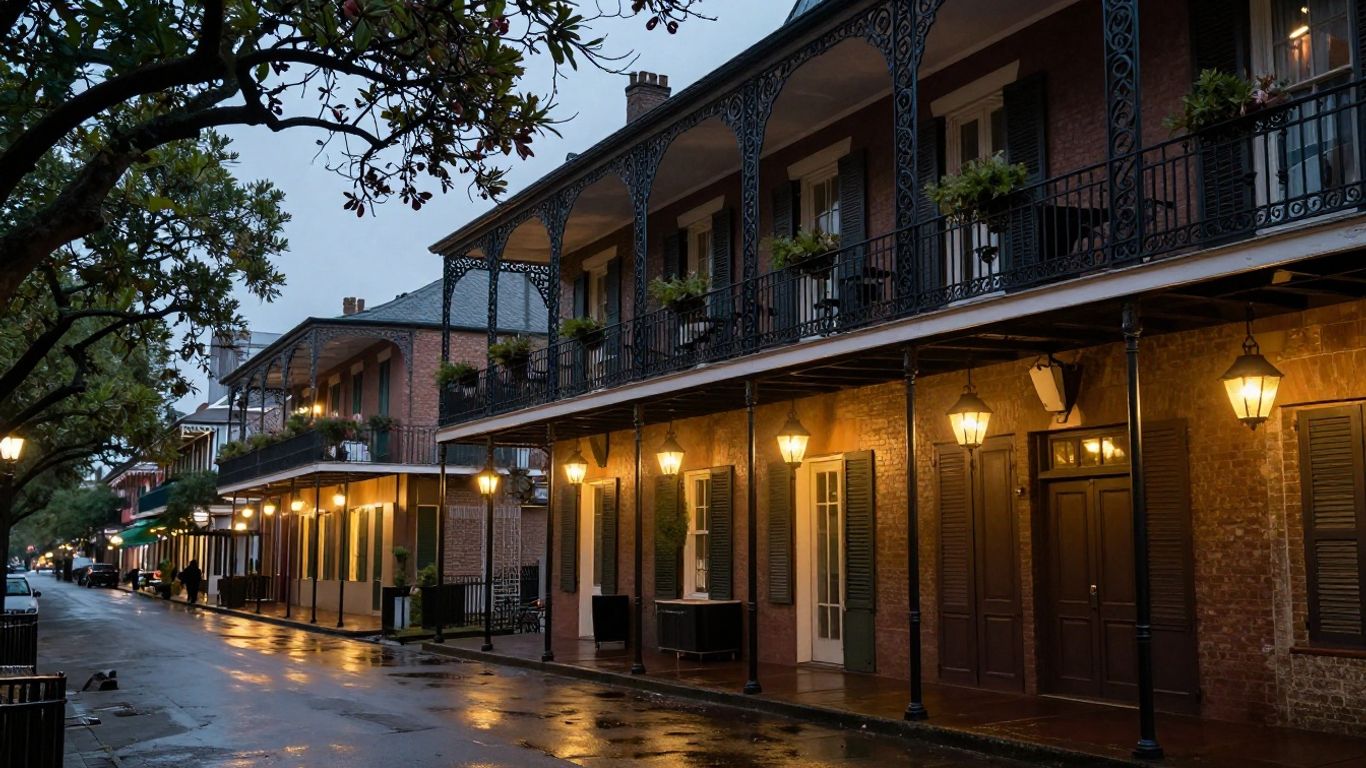 New Orleans balconies glowing above evening streets
Plan around heat and humidity, particularly in summer, and give yourself time between reservations. A late afternoon break often makes it easier to enjoy live music after dark. Travelers who want to explore regional flavors from a real kitchen can find American culinary travel ideas that complement the city’s food-centered character.
7. Grand Canyon National Park, Arizona
The Grand Canyon is so familiar in photographs that the first in-person view can still feel startling. Layers of red, orange, and violet rock drop away from the rim, while the immense distance makes hikers and rivers look almost unreal. It is a place where one overlook is rarely enough.
The South Rim is open year-round and offers the broadest range of services, viewpoints, and trails. The North Rim is quieter and higher, though access is seasonal and conditions can be more limited. Rim walks are approachable, but descending into the canyon is a serious undertaking; the return climb is harder than the walk down.
Sunrise and sunset bring changing color, but midday light reveals the canyon’s depth and geology in another way. Carry water, protect yourself from the sun, and never underestimate the difference between rim temperatures and inner-canyon heat. The most satisfying visit leaves space for stillness rather than trying to collect every viewpoint.
8. Nashville, Tennessee
Nashville has earned its reputation as a music city, but its appeal goes beyond the bright lights of Broadway. Songwriting rooms, historic venues, independent coffee shops, museums, and neighborhood restaurants create a fuller picture of the place. The city feels particularly rewarding when visitors listen to local musicians outside the most crowded strip.
The Country Music Hall of Fame and Museum offers useful context before an evening of live performances. The Ryman Auditorium carries its own atmosphere, while neighborhoods such as East Nashville and 12South invite slower wandering. Hot chicken, barbecue, biscuits, and modern Southern cooking give the city a strong culinary identity as well.
Nashville is spread out, so choose lodging with your evening plans in mind. Rideshares can be practical around nightlife, and daytime walks are more pleasant when temperatures are moderate. A good weekend combines one major show with smaller venues, a long meal, and a little time to notice how the city keeps reinventing its musical traditions.
9. Washington, D.C.
Washington, D.C. is unusually generous to visitors who enjoy museums, public spaces, and history. The National Mall links major monuments and institutions, but the city is more than a ceremonial center. Georgetown, Capitol Hill, Shaw, and the Wharf each bring their own architecture, restaurants, and daily energy.
Many Smithsonian museums offer free admission, though timed entry may be useful for especially popular locations. The National Museum of African American History and Culture, the National Air and Space Museum, and the National Museum of American History can each demand several hours. Choose one or two rather than attempting to absorb the whole Mall in a single afternoon.
Spring brings famous cherry blossoms, while autumn offers comfortable walking weather and changing foliage. Public transit and walking work well in central areas, but distances can be deceptive on a map. Leave room for a neighborhood meal after the monuments; that transition from national history to local life is one of the city’s pleasures.
10. Glacier National Park, Montana
Glacier National Park pairs sharp mountain ridges with turquoise lakes, dense forests, and wildlife-rich valleys. The Going-to-the-Sun Road is its celebrated spine, crossing high terrain with dramatic views and access to several trailheads. Even travelers who only make short walks can find immense scenery close to the road.
Summer is the busiest season and the period when the high country is most accessible, but conditions can shift quickly. Check road openings, shuttle information, and trail updates before driving into the park. Longer hikes require preparation for sun, wind, sudden weather, and encounters with wildlife.
Lake McDonald, Many Glacier, and the Logan Pass area each feel distinct, so a longer stay pays off. Early mornings bring quieter trails and softer light, while evenings can turn the peaks pink and gold. Glacier is best enjoyed at a measured pace, with fewer ambitious plans and more time simply looking outward.
Conclusion
From city blocks and music halls to volcanic islands and vast protected lands, these ten destinations show how much variety one country can hold. Choose the setting that matches your energy, plan around the season, and leave enough unstructured time for the unexpected moments that often become the trip’s favorite memories.
Frequently Asked Questions
Which destination is best for a first U.S. vacation?
New York City is a strong first choice because it offers museums, landmarks, food, neighborhoods, entertainment, and public transportation in one destination. Travelers seeking nature may prefer a national park instead.
What is the best destination for families?
Orlando is the most straightforward family pick because its entertainment options are extensive and easy to organize. San Diego is another good option for families who want beaches, parks, museums, and a milder pace.
When should I visit Yellowstone?
Summer generally provides the broadest access to roads and facilities, but it also brings larger crowds. Late spring and early fall can feel quieter, though weather and access are less predictable.
How many days do I need for Maui?
Five to seven days gives many visitors enough time for beaches, a scenic drive, inland scenery, and slower unplanned mornings. A shorter stay can work if you focus on one part of the island.
Is the Grand Canyon suitable for casual hikers?
Yes. Rim viewpoints and sections of the Rim Trail are accessible to many visitors, while hikes into the canyon require much more preparation. Always account for heat, elevation, water, and the strenuous return climb.
Which destination is best for food and music?
New Orleans is an excellent choice for live music and regional cuisine, while Nashville is especially strong for songwriting and country music. Both reward visitors who explore beyond the busiest tourist streets.
How can I make a national park trip more comfortable?
Reserve lodging early, check official conditions, carry layers and water, and build flexibility into each day. Staying close to an entrance and starting activities early can reduce driving and crowd-related fatigue.

Published by
SwappaHome
SwappaHome Editorial Team
Home Exchange & Slow Travel Editorial
The SwappaHome Editorial Team brings together travel research, home-exchange community insights, and platform data to produce practical guides for first-time and experienced home swappers. Every article cites real platforms, current market rates, and verifiable city-level facts so readers can make informed decisions without guessing.
Ready to try home swapping?
Join SwappaHome and start traveling by exchanging homes. Get 7 free credits when you sign up!