
Vacation in Christmas: How to Plan a Memorable Holiday Getaway

SwappaHome Editorial Team
Home Exchange & Slow Travel Editorial
Key Takeaways A memorable vacation in christmas is less about fitting in every attraction and more about choosing a setting that suits the people traveling…
Key Takeaways
A memorable vacation in christmas is less about fitting in every attraction and more about choosing a setting that suits the people traveling with you. Plan the practical details early, then leave enough breathing room for the holiday to feel like a holiday.
- Choose a destination that matches your group’s energy, interests, and comfort with winter weather.
- Set a complete budget that includes seasonal transportation, meals, activities, and unexpected costs.
- Compare travel dates carefully, since the days around Christmas bring different prices and opening hours.
- Reserve lodging, meals, tours, and Christmas Day essentials before popular options disappear.
- Keep the itinerary flexible so shared traditions and quiet moments have room to happen.
Choose the right destination for your Christmas vacation
The right destination gives the trip its rhythm. Some travelers want sunshine and long walks by the water, while others picture snowy trails, crowded markets, or a resort where nearly every detail is close at hand. Start by discussing what everyone hopes to feel during the holiday, rather than choosing a place simply because it looks beautiful in photographs.
A useful way to compare possibilities is to consider the weather, the travel time, the availability of Christmas Day services, and the kind of togetherness each setting encourages. Seasonal destination guides, such as these seasonal travel guides, can also help you think beyond the most obvious cities and resorts.
Warm-weather beach escapes
A beach Christmas can be wonderfully simple: a relaxed breakfast, a swim, and a sunset walk instead of a packed schedule of winter attractions. Warm-weather destinations work especially well for travelers who want outdoor time and easy days, but check whether restaurants, shops, and excursions operate normally over the holiday itself. A quiet coastal town may offer more rest than a major resort area, while a larger destination usually provides more dining and entertainment choices.
Pack for sun as well as cooler evenings, and do not assume that every beach destination feels tropical in December. Water temperatures, wind, and short daylight hours can change the experience considerably. If beach time is the main reason for the trip, choose lodging with convenient access rather than relying on a long daily transfer.
Snowy mountain and ski destinations
Mountain towns create an instantly festive atmosphere, particularly when the plan includes skiing, snowboarding, sledding, or scenic walks through fresh snow. They can also be demanding: equipment rentals, lessons, lift access, and weather-related travel delays all add planning and cost. Beginners may enjoy a destination with several non-ski activities nearby, rather than a resort built almost entirely around advanced slopes.
Reserve lessons and rentals early, especially if children are traveling. It is also wise to plan at least one indoor afternoon, since a mountain vacation can become tiring when every day depends on ideal conditions. A fireplace, a village café, or a simple board game can be as memorable as a day on the hill.
Festive cities with Christmas markets
A city break suits travelers who enjoy lights, music, museums, seasonal food, and the feeling of being among other people celebrating. Christmas markets and holiday performances often have limited dates and hours, so check calendars before booking flights. Look for a neighborhood where you can walk to several attractions and return easily when the weather turns cold.
Cities also make it easier for different generations to pursue separate interests for a few hours. One person might visit a museum while another shops for gifts or rests at the hotel. If local traditions matter to your group, read about them beforehand and approach them with curiosity rather than expecting every place to celebrate in the same way.
Family-friendly resort destinations
Resorts can simplify a family getaway by concentrating pools, meals, entertainment, and activities in one place. That convenience is valuable when grandparents, young children, or travelers with different mobility needs are part of the group. Before committing, look closely at room layouts, children’s programming, dining hours, and what is actually included in the rate.
A resort should still match your family’s preferred pace. Some are lively from morning until late evening, while others are designed for quiet relaxation. For families comparing destinations, guides to family home exchange opportunities can also prompt useful questions about kitchens, space, neighborhoods, and the advantages of living more locally.
Set a realistic Christmas vacation budget
Christmas travel can become expensive through a series of small additions rather than one dramatic purchase. Airfare, lodging, meals, transfers, tickets, tips, gifts, and last-minute conveniences all deserve a place in the first draft of the budget. Build it before choosing the destination, because a beautiful plan is much easier to enjoy when nobody is quietly worrying about the bill.
Separate fixed costs from flexible ones. Flights and accommodation may be difficult to change, while restaurant choices, paid attractions, and shopping can often be adjusted. Add a reserve for delays, weather changes, and the occasional treat; a little financial breathing room protects the mood of the trip.
 Family reviewing a Christmas travel budget
Transportation and seasonal price changes
Transportation prices often rise around school breaks and the busiest departure days. Compare nearby airports, rail stations, and arrival times, but do not choose a connection that creates a costly or exhausting transfer. A slightly more expensive direct route can be the better value when it avoids an extra hotel night, rental car day, or missed activity.
For driving trips, include fuel, tolls, parking, winter equipment, and possible overnight stops. For flights, consider baggage fees and the cost of getting from the airport to the lodging. The headline fare is only one part of the transportation total.
Accommodation, meals, and holiday activities
Accommodation is usually the largest line item, but the cheapest room is not automatically the most economical choice. A room with a kitchenette may reduce restaurant spending, while a central location may eliminate repeated taxi fares. Ask whether cleaning fees, resort fees, parking, Wi-Fi, and holiday surcharges are included.
Meals deserve a day-by-day estimate rather than a single guess. Include breakfast, snacks, drinks, special dinners, and the possibility that a popular restaurant requires a set Christmas menu. Activities should be divided into must-do experiences and optional extras so the group can make decisions without renegotiating the entire budget.
All-inclusive packages versus independent travel
An all-inclusive package can make costs easier to predict when it genuinely covers the meals, activities, and services your group wants. Independent travel offers more control and may suit travelers who prefer local restaurants, flexible days, or a mix of free and paid attractions. Read the inclusions carefully: airport transfers, premium meals, equipment, holiday events, and gratuities may sit outside the advertised price.
The best comparison is not package price versus room price. Add the likely cost of food, transportation, entertainment, and convenience under each option, then consider how much planning time each requires. A package may be worth more to a group that values simplicity, while a rental or hotel can be better for travelers who enjoy making choices as they go.
Ways to save during the Christmas travel season
Savings usually come from changing one or two major assumptions, not from cutting every small pleasure. Consider traveling a few days outside the most expensive dates, staying slightly beyond the main tourist center, or choosing a destination with free seasonal activities. Home exchange resources can offer another angle; some guides describe how swapping can reduce accommodation costs while providing more living space.
A short list of practical savings ideas can keep the process manageable:
- Compare the total trip cost, not only the nightly room rate.
- Use a kitchen for selected breakfasts, lunches, or leftovers.
- Reserve refundable options when plans or weather may change.
- Choose one or two paid highlights instead of filling every day with tickets.
These choices do not require a joyless trip. They simply direct money toward the experiences your group will remember most, while leaving room for a spontaneous café stop or an unexpected local event.
Decide when to travel and how long to stay
Timing shapes both the cost and the emotional pace of a Christmas getaway. Traveling before the holiday may offer more open businesses and lower rates, while staying through Christmas can create a deeper sense of place but requires more advance planning. A trip after Christmas may be calmer and still feel festive, especially in cities that keep decorations and markets running into the new year.
Think about school calendars, work commitments, weather patterns, and the number of transitions your group can comfortably handle. A shorter trip with fewer transfers is often more restorative than a longer itinerary that spends half its time in airports or on highways.
Traveling before, during, or after Christmas
The days before Christmas can be ideal for markets, concerts, and shopping, since many attractions are still operating on regular or extended schedules. Christmas Eve and Christmas Day are quieter in some places and nearly shut down in others. If being away on December 25 is central to the plan, confirm restaurant bookings, transportation, and emergency services before you pay a deposit.
Traveling after Christmas may bring better availability and a slower pace. It can also work well for groups who want to celebrate at home first and then take a break. There is no universally best window; the right one depends on whether your priority is tradition, affordability, or access to attractions.
Recommended trip lengths for different destinations
A long weekend can be enough for a nearby city with a concentrated center and a direct journey. Beach destinations and mountain resorts often justify five to seven nights, since the travel day is substantial and the first day may be spent settling in. A multi-city European or cross-country trip usually needs more time than travelers initially expect.
Try to count arrival and departure days honestly. They may contain beautiful moments, but they rarely offer a full day of sightseeing. If the trip includes young children or older relatives, add an extra night rather than assuming everyone will enjoy a rapid pace.
Managing peak-season crowds and closures
Popular attractions may require timed entry, while smaller businesses may close early for family celebrations. Make a shortlist of what must be booked and what can remain spontaneous. Check official holiday calendars close to departure, because seasonal hours can change after an itinerary is written.
Crowds are not always a problem, but they become one when every day has a fixed appointment. Visit the busiest attraction early, leave space around major events, and identify quieter alternatives nearby. A small park, neighborhood bakery, or scenic walk can rescue a day when the headline attraction is full.
Building flexibility into your schedule
Flexibility is not the same as having no plan. It means identifying the essentials while protecting time for weather, fatigue, delays, and discoveries. One unscheduled morning after a late celebration can improve the entire trip.
Keep confirmations, addresses, and cancellation policies in one accessible place. If traveling with a group, agree in advance that people may occasionally split up without anyone feeling they have failed at togetherness. The most successful Christmas itineraries usually have structure around the edges and openness in the middle.
Plan your Christmas vacation itinerary
A strong itinerary balances seasonal highlights with ordinary pleasures. Start with the experiences that define the destination, then add meals, transportation, and pauses around them. This avoids the common mistake of treating every open hour as an invitation to book something.
Build each day around one main anchor. A morning market, a snowy excursion, or a family dinner can give the day shape without dictating every minute. For broader inspiration, a collection of holiday travel planning ideas can help you compare different styles of getaway before you settle on a route.
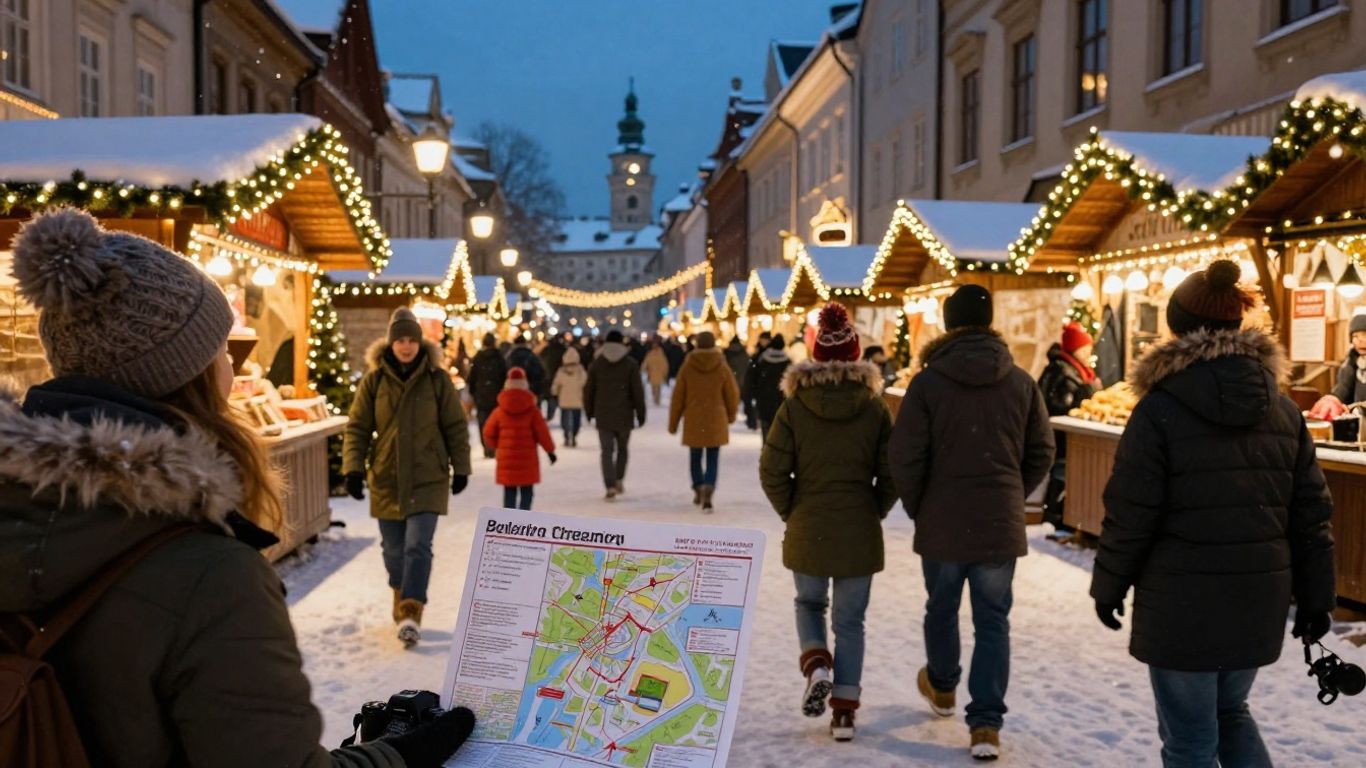 Snowy Christmas itinerary with lights and landmarks
Seasonal attractions and local events
Holiday markets, light displays, concerts, theater productions, and religious or cultural events often provide the atmosphere travelers hope to find. Look for the official event schedule and confirm whether tickets, reservations, or special transportation are required. Some experiences are best enjoyed at a set time, while others can be visited whenever the group has energy.
Do not overlook local food traditions. A bakery, market stall, or neighborhood restaurant may offer a more personal memory than a large attraction. If a local celebration is open to visitors, learn the basic etiquette and leave room to observe rather than rushing from one photo opportunity to the next.
Outdoor activities and winter experiences
Outdoor plans should reflect the actual conditions, not an imagined postcard. In a cold destination, consider snowshoeing, skating, sledding, scenic rail travel, or a short guided walk alongside skiing. In a warm destination, add beach time, nature trails, cycling, or a boat trip while keeping heat and sun exposure in mind.
Plan a nearby indoor alternative for every weather-dependent highlight. This does not mean expecting the activity to fail; it means giving the day a second shape if conditions change. The backup might become a favorite part of the trip precisely because it feels unplanned.
Family traditions and cultural celebrations
Travel does not have to erase familiar traditions. Bring one small ritual from home, such as reading a favorite story, making a particular breakfast, or exchanging handwritten notes. Then add something that belongs to the destination, whether that is a local dessert, a community event, or a new song everyone learns together.
Be mindful that holiday customs differ. Ask questions, follow local guidance, and avoid treating another community’s celebration as a backdrop. Respectful participation makes a cultural experience warmer for everyone involved.
Rest days and unplanned time
Rest belongs on the itinerary before anyone feels they need it. A slow breakfast, a swim, a nap, or time in a rental home can reset the group after a busy market or long journey. Children often need this pause even when adults are eager to see one more sight.
Leave at least a little space for recommendations from hosts, hotel staff, or people you meet locally. A flexible afternoon may lead to the best meal or view of the trip. More activity is not always more memory; sometimes a quiet conversation becomes the detail people recall years later.
Book accommodations and holiday essentials
Accommodation affects far more than where you sleep. It determines how easily the group moves, whether meals are manageable, and how comfortable everyone feels during downtime. Book early for Christmas, but do not rush past the practical questions simply because a property has attractive photographs.
Read recent policies about cancellations, check-in, heating or cooling, parking, and holiday closures. If several households are traveling together, clarify room assignments and shared spaces before arrival. A little precision at the booking stage prevents awkward decisions during the holiday.
Hotels, vacation rentals, and resorts
Hotels offer services, reception support, and predictable daily housekeeping, while vacation rentals may provide kitchens, laundry, and room for longer stays. Resorts can simplify activities and meals, but their location and schedule may shape the trip more than expected. Choose according to the group’s daily habits rather than the property category alone.
For a rental, confirm the number of beds, bathrooms, stairs, accessibility details, heating, cooking equipment, and nearby grocery options. For a hotel, ask about connecting rooms, breakfast hours, extra beds, and Christmas Day service. The goal is not perfection; it is avoiding surprises that would be difficult to solve after arrival.
Choosing a convenient and festive location
A central location can make it easier to return for warm clothes, naps, or forgotten items. A quieter neighborhood may offer more space and a stronger sense of local life, but it could require longer evening journeys. Map the places you expect to visit and compare actual travel times rather than relying on a destination’s general reputation.
Atmosphere matters, too. A lively market square may feel magical to some travelers and noisy to others. Discuss whether the group wants to wake up among decorations and activity or retreat to a calmer setting after sightseeing.
Confirming Christmas Day services and amenities
Never assume that a hotel restaurant, grocery store, transit line, or attraction will operate normally on December 25. Ask directly about meal reservations, room service, housekeeping, front-desk coverage, and nearby medical care. If the lodging has a kitchen, confirm that basic cookware and a working refrigerator are available.
Make a small Christmas Day plan even if the aim is to be spontaneous. Knowing where breakfast will come from and how the group can get around removes pressure. After those essentials are settled, the rest of the day can unfold naturally.
Booking tours, restaurants, and special events
Reserve the experiences that have limited capacity, especially popular dinners, guided excursions, concerts, and equipment rentals. Keep confirmation numbers and meeting points together, and check the cancellation terms for every booking. For a large group, ask whether the provider can seat or organize everyone together before assuming it will be easy on arrival.
Avoid turning reservations into a chain with no gap between them. Travel time, coat checks, queues, and a delayed meal all take longer during the holidays. A little space between commitments keeps the itinerary enjoyable rather than brittle.
Prepare for weather, transportation, and travel disruptions
Christmas travel rewards practical preparation. Weather can change a beach plan, close a mountain road, delay a flight, or make a short walk surprisingly difficult. Check conditions close to departure and make decisions based on the forecast rather than on what the destination usually feels like in December.
Share the essential plan with everyone traveling. Each person should know where the lodging is, how to contact the group, and what to do if a phone battery dies or a connection is missed. Preparation is quiet work, but it gives the holiday a calmer foundation.
Packing for warm and cold destinations
Pack in layers whenever temperatures may shift between daytime, evening, and indoor spaces. Cold-weather travelers need waterproof footwear, warm socks, gloves, and clothing that can handle time outside, while warm-weather travelers should still bring a light layer and comfortable shoes. Medicines, chargers, travel documents, and one change of clothes belong in carry-on luggage when possible.
Avoid packing every possible activity. Rent bulky equipment when practical, and check whether the lodging provides hair dryers, towels, cribs, or beach gear. A lighter bag makes transfers easier and leaves space for anything brought home.
Winter driving and public transportation
Winter driving requires more time and more patience than a map may suggest. Check road conditions, confirm whether a rental vehicle has suitable tires or chains, and avoid planning a late arrival on an unfamiliar mountain road. Keep water, snacks, warm clothing, a charged phone, and a basic emergency kit accessible.
Public transportation may run on reduced holiday schedules. Download routes for offline use and identify a backup option before leaving the lodging. If the group includes children or people with limited mobility, check the distance between platforms, stops, and entrances rather than assuming every connection will be easy.
Delays, cancellations, and travel insurance
Build a buffer around flights, trains, and important reservations. If a delayed arrival would cause you to miss a prepaid dinner or tour, contact the provider as soon as possible and ask about alternatives. Keep receipts for eligible expenses and know which party to contact for each part of the journey.
Travel insurance can be useful when it matches the risks of the trip, but read the policy rather than treating it as a blanket promise. Pay attention to covered causes, exclusions, documentation requirements, medical limits, and cancellation deadlines. A policy is only helpful when the traveler understands what it actually says.
Health, safety, and emergency planning
Carry regular medications in their original packaging and keep a list of prescriptions or relevant medical information. Identify the local emergency number, the nearest clinic, and the way to reach the lodging after hours. Travelers with allergies or dietary needs should learn a few clear phrases in the local language or carry a written explanation.
Use ordinary precautions with valuables, unfamiliar roads, alcohol, and extreme weather. Children should know the lodging address and what to do if separated from the group. These measures are simple, but they help everyone relax because the basic response is already decided.
Make the trip memorable for everyone
A memorable Christmas getaway is rarely the one with the most expensive room or the longest list of attractions. It is the trip where people feel considered. That may mean giving a teenager an hour alone, choosing a restaurant that accommodates dietary needs, or letting grandparents skip an excursion without guilt.
Before leaving, ask each traveler for one priority and one thing they would rather avoid. This small conversation reveals the shape of a good compromise. It also makes it easier to protect the moments that matter most to different people.
Balancing different travel preferences
Groups often contain early risers, late sleepers, shoppers, adventurers, and people who mainly want to rest. Do not force every person into the same activity every day. A shared breakfast or evening meal can provide connection while the middle of the day remains more flexible.
Agree on a few non-negotiables, then let smaller choices stay open. The traveler who skips a morning tour may return happier and more present for the main celebration. Flexibility is a form of kindness in group travel.
Creating meaningful holiday traditions
A trip becomes personal when it includes a repeatable ritual. You might choose a special walk after dinner, collect one small local ornament, take a group photograph in the same style each year, or write down the funniest moment before bed. The tradition should be easy enough to continue rather than another task to manage.
Invite every traveler to contribute. One person might choose the music, another the dessert, and another the location for a family toast. Shared ownership makes the holiday feel less like an itinerary created by one organizer.
Managing gifts, decorations, and luggage
Travelers do not need to recreate the entire holiday at the destination. Choose compact gifts, wrap them after arrival if necessary, and consider experiences or consumables that do not need to be carried home. A small string of lights, a favorite ornament, or a familiar tablecloth can create a sense of home without filling a suitcase.
If gifts must travel, protect fragile items and distribute weight across bags. Leave room for return travel, especially if the destination has distinctive food, crafts, or clothing. The simplest decoration is often enough when the people and place already provide the atmosphere.
Capturing memories without overscheduling
Take photographs, but do not turn every meaningful moment into a production. Choose a few natural occasions for group pictures and let the rest of the day stay unrecorded. Keep a short shared note of meals, jokes, weather, and unexpected discoveries; those details often disappear faster than landmark photos.
At the end of each day, ask what everyone enjoyed most. The answers may surprise you. A missed train, a long conversation over cocoa, or a quiet view from the rental balcony can become the story that outlasts the carefully planned highlight.
Conclusion
Planning a vacation in christmas means making room for both logistics and feeling. Choose a destination that suits your group, budget honestly, reserve the essentials, and leave enough flexibility for the holiday to unfold at a human pace. When the plan supports the people rather than competing with them, even a simple getaway can become a tradition worth repeating.
Frequently Asked Questions
What is the best destination for a Christmas vacation?
The best destination depends on whether you want warm weather, snow, city celebrations, outdoor adventure, or a low-effort resort stay. Compare climate, travel time, holiday opening hours, and the interests of everyone in the group.
Is it cheaper to travel before or after Christmas?
Traveling just before or after the busiest Christmas dates can sometimes offer better availability and lower prices, though the difference varies by destination. Compare the complete trip cost, including lodging, transportation, meals, and activities.
How long should a Christmas vacation last?
A nearby city may work well for a long weekend, while a beach, mountain, or multi-stop trip usually benefits from five nights or more. Include arrival and departure time honestly when deciding whether the itinerary is long enough.
Should I book Christmas activities in advance?
Book limited-capacity experiences such as popular dinners, concerts, tours, lessons, and equipment rentals early. Leave flexible space around those reservations so delays, weather, and rest do not create unnecessary pressure.
What should I pack for a winter Christmas vacation?
Pack warm layers, waterproof footwear, gloves, medications, chargers, travel documents, and clothing suitable for wet conditions. A compact emergency kit and one change of clothes in carry-on luggage can also be useful.
How can I make a family Christmas trip enjoyable for different ages?
Give each traveler a chance to name one priority, allow occasional split-up time, and avoid scheduling every hour. Shared meals and one or two group highlights can create connection without requiring everyone to enjoy the same activities.
What should I do if Christmas travel plans are disrupted?
Keep confirmations and contact details accessible, allow buffers around important bookings, and check cancellation policies before departure. If a disruption occurs, contact transportation providers and activity operators promptly while keeping a practical backup plan ready.

Published by
SwappaHome
SwappaHome Editorial Team
Home Exchange & Slow Travel Editorial
The SwappaHome Editorial Team brings together travel research, home-exchange community insights, and platform data to produce practical guides for first-time and experienced home swappers. Every article cites real platforms, current market rates, and verifiable city-level facts so readers can make informed decisions without guessing.
Ready to try home swapping?
Join SwappaHome and start traveling by exchanging homes. Get 7 free credits when you sign up!