What to Do in Madrid: The Ultimate Home Exchange Activity Guide for 2024
Maya Chen
Travel Writer & Home Exchange Expert
Discover what to do in Madrid like a local with this home exchange activity guide. From secret tapas bars to neighborhood gems, here's your insider roadmap.
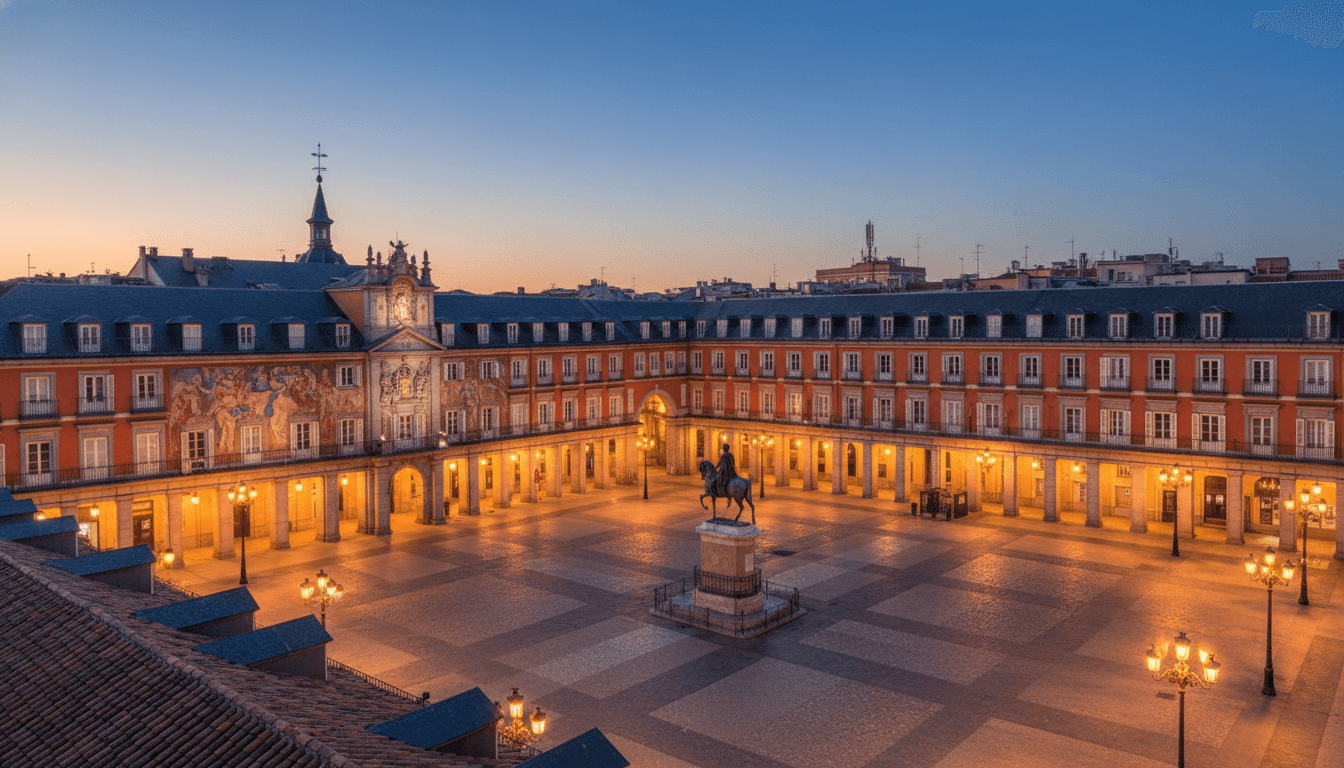
I was standing in the middle of Plaza Mayor at 11 PM on a Tuesday, watching a group of abuelas teach their grandkids to dance sevillanas under the streetlights, when it hit me—I'd been doing Madrid all wrong on my previous visits. Hotels in the center had kept me trapped in a tourist bubble. Nice, sure, but about as authentically Spanish as a frozen paella from Trader Joe's.
That home swap in Malasaña changed everything about what to do in Madrid for me. And honestly? I've been borderline evangelical about it ever since.
If you're wondering what to do in Madrid beyond the usual Prado-and-sangria checklist, you're in the right place. This isn't your standard guidebook rundown. After four separate home exchanges in this city over the past five years—each in a different neighborhood—I've built the kind of Madrid knowledge that usually takes years of living somewhere. The kind where you know which bakery has the best napolitanas (Horno San Onofre, don't @ me), which metro exits to avoid during rush hour, and why you should never, ever try to eat dinner before 9 PM.
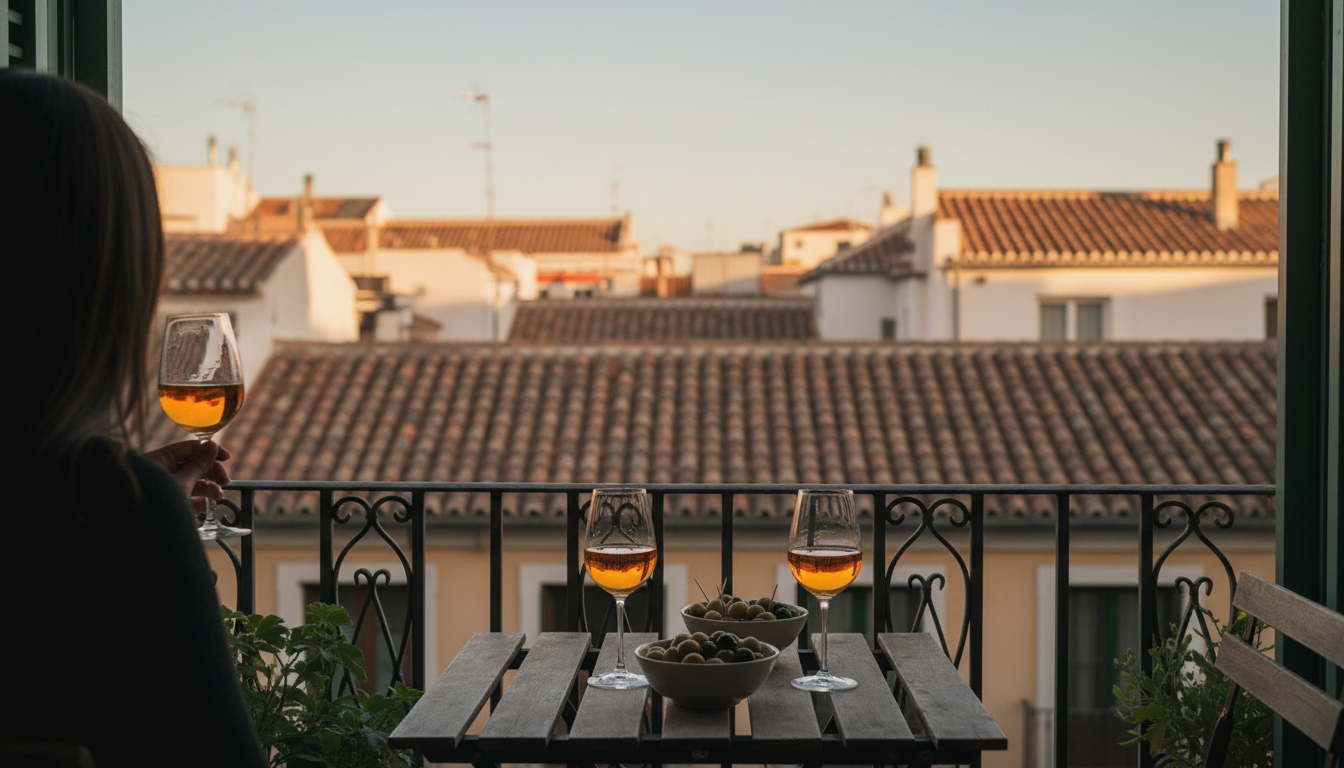 Golden hour light spilling across the terracotta rooftops of Madrids La Latina neighborhood, viewed
Why Madrid Hits Different When You're Home Swapping
I've done Madrid both ways. The hotel version involves a lot of walking back to some central location that's convenient but characterless, eating at restaurants that have English menus displayed outside (red flag), and feeling like you're watching the city through glass.
Home exchange Madrid? Completely different animal.
My first swap here was a third-floor walk-up in Lavapiés, this gloriously chaotic multicultural neighborhood where my downstairs neighbor was a retired flamenco guitarist named Paco. He invited me for coffee on day two. By day four, I knew everyone at the corner frutería and had a standing reservation at a tapas bar that didn't appear on any map. The apartment cost me 7 credits for a week on SwappaHome—versus the €150-200/night ($165-220) I'd have dropped on a decent hotel.
But here's what really matters: having a home base in a real neighborhood fundamentally changes what you do in Madrid. You grocery shop at Mercado de San Fernando instead of eating every meal out. You discover that your street has a Sunday morning flea market. You learn that the best churros aren't at Chocolatería San Ginés (sorry, it's true) but at the place around the corner from wherever you're staying that's been there since 1962.
What to Do in Madrid: Neighborhood-by-Neighborhood Breakdown
Madrid isn't one city—it's like fifteen villages that happen to share a metro system. Where you stay shapes everything. Here's my honest take on each area and what makes them worth your time.
Malasaña: For the Creatively Restless
This is where I always tell first-timers to look for home swaps if they want to understand modern Madrid. Malasaña was the epicenter of La Movida Madrileña—that wild post-Franco cultural explosion in the '80s—and it still carries that rebellious, artsy DNA.
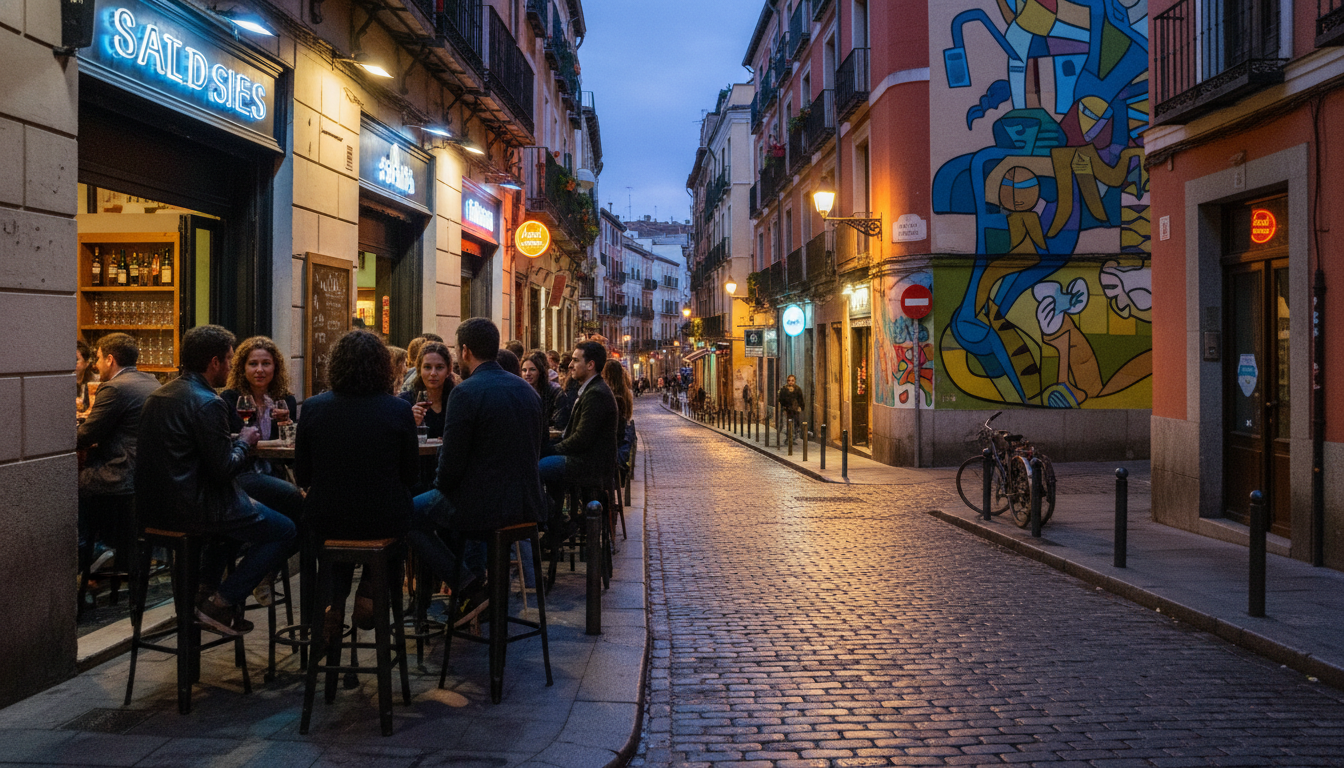 Narrow cobblestone street in Malasaa at dusk, vintage shops with neon signs, young people sitting ou
What to do here:
Morning ritual: Start at Toma Café (Calle de la Palma 49) for genuinely excellent third-wave coffee—around €3.50 ($3.85). Then wander down to Plaza del Dos de Mayo, grab a bench, and watch the neighborhood wake up. Dogs everywhere. So many dogs.
Afternoon wandering: The vintage shopping on Calle Velarde is dangerous for your wallet. Magpie Vintage has pieces you won't find anywhere else—I found a 1970s Spanish leather jacket there for €45 ($50) that I still wear constantly. Pop into La Vía Láctea (Velarde 18) even if it's just to see the interior—it's a legendary bar covered floor-to-ceiling in rock memorabilia.
Evening requirements: Vermouth hour is sacred. Casa Camacho (Calle San Andrés 4) has been serving vermut de grifo (vermouth on tap) since 1928. It's €2.50 ($2.75) for a glass, comes with a free tapa, and the vibe is pure old Madrid. Follow it with dinner at La Carmencita (Calle de la Libertad 16)—book ahead, get the croquetas.
La Latina: Sunday Is the Only Day That Matters
Okay, that's a slight exaggeration. But La Latina's Sunday rastro (flea market) is genuinely one of the best things to do in Madrid, and staying in the neighborhood means you can be there at 9 AM before the crowds descend.
The rastro sprawls from Puerta de Toledo down through a maze of streets, selling everything from antique cameras to questionable leather goods to genuine treasures if you dig. My strategy: arrive early, do a full sweep without buying anything, get breakfast at El Capricho Extremeño (Calle de Carlos Arniches 30) for migas extremeñas—around €9 ($10)—then go back for the things you actually want with a full stomach and clearer head.
Post-rastro, La Latina transforms into one giant outdoor party. Calle Cava Baja is wall-to-wall tapas bars, and the move is to hop between three or four rather than committing to one. Start at Txirimiri for Basque pintxos (€2-4 each), move to Casa Lucas for patatas bravas (€6), end wherever the crowd takes you.
Lavapiés: The Neighborhood That Rewards Curiosity
Lavapiés is complicated, which is exactly why I love it. It's Madrid's most diverse neighborhood—you'll hear Mandarin, Arabic, Bengali, and Spanish all within one block. It's gentrifying (there's a craft cocktail bar now, which feels like a harbinger), but it still has that rough-around-the-edges energy that's increasingly rare in European capitals.
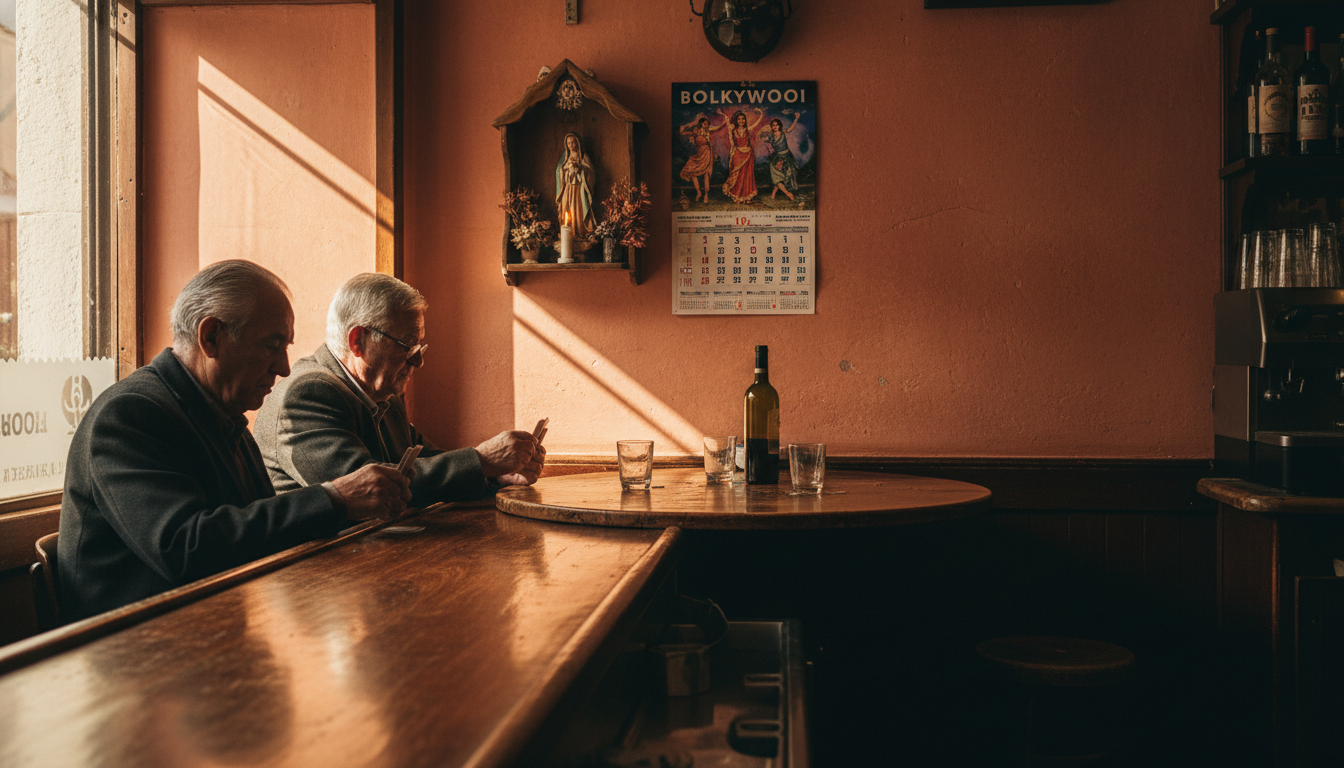 Interior of a traditional Lavapis bar with worn wooden counter, elderly Spanish men playing cards, B
What to do here:
For art people: La Casa Encendida (Ronda de Valencia 2) is a free cultural center with rotating exhibitions, a rooftop terrace, and genuinely interesting programming. The Reina Sofía museum is a 10-minute walk—see Guernica, obviously, but also spend time in the contemporary wings.
For food adventurers: This is where Madrid's immigrant communities have created something beautiful. Badila (Calle del Ave María 30) does Senegalese food that'll rewire your brain—try the mafé. Tribuetxe has Basque pintxos that rival San Sebastián. The Indian restaurants on Calle Lavapiés are hit-or-miss, but Shapla is consistently good.
For night owls: The tablaos (flamenco venues) here are more authentic and less expensive than the tourist-oriented ones near Sol. Casa Patas is the famous one, but I prefer Cardamomo—smaller, more intense, and tickets run €35-45 ($38-50) including a drink.
Chamberí: When You Want to Live Like a Madrileño
Chamberí doesn't appear in most guidebooks, which is precisely the point. This is where actual Madrid families live—the kind of neighborhood where the pharmacist knows everyone's name and the same families have been buying bread from the same bakery for three generations.
I did a two-week home swap here last November, and it fundamentally changed how I think about travel. My days had a rhythm: morning coffee at the bar downstairs (café con leche: €1.80/$2), work from the apartment until lunch, then a long midday break exploring the neighborhood. The Mercado de Vallehermoso became my happy place—not renovated and trendy like some Madrid markets, just a working neighborhood market where you can get incredible cheese, fresh fish, and prepared foods.
Chamberí's secret weapon is the Anden 0 museum—a gorgeously preserved ghost metro station from 1919 that you can visit for free (book online). It's one of those Madrid experiences that feels like discovering a hidden room in a house you thought you knew.
What to Do in Madrid: The Experiences That Actually Matter
Beyond neighborhoods, there are certain Madrid experiences that I'd call essential—but not in the "you haven't really been to Madrid unless..." gatekeeping way. More like: these things will make you fall in love with the city.
The Art Triangle (But Make It Strategic)
Yes, you should see the Prado. Yes, you should see the Reina Sofía. Yes, you should see the Thyssen-Bornemisza. But doing all three in one day is a recipe for museum fatigue and hating Velázquez, which would be a tragedy.
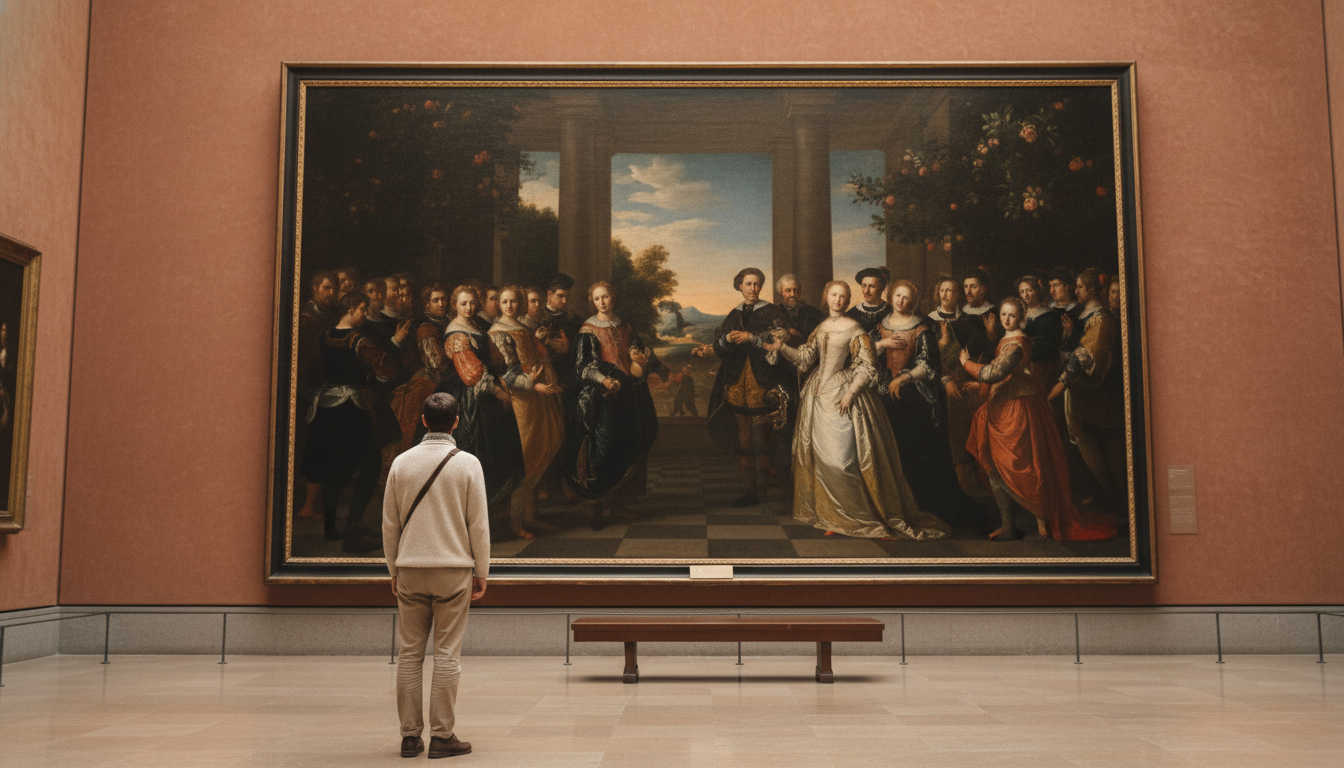 Visitor standing alone in front of Las Meninas at the Prado Museum, early morning light, the paintin
My approach: one museum per day, first thing in the morning, for no more than two hours. The Prado opens at 10 AM—be there at 9:45. Head straight for Velázquez (Las Meninas, obviously, but also his portraits of Felipe IV), then Goya's Black Paintings, then Bosch's Garden of Earthly Delights. That's your two hours. Leave before you're tired.
Reina Sofía is free after 7 PM on weekdays and all day Sunday—use this. Guernica is on the second floor, and there's usually a crowd, but if you go late on a Wednesday evening, it's almost meditative.
The Thyssen is the one I'd skip if pressed for time, but if you love Impressionism, it has a better collection than the other two.
Parks That Aren't Retiro
Retiro is beautiful, and you should go—rent a rowboat on the lake (€6/$6.60 for 45 minutes), see the Crystal Palace, watch the Sunday drum circles near the Fallen Angel statue. But Madrid has other green spaces that feel less like a tourist attraction and more like actual city life.
Casa de Campo is massive—five times the size of Central Park—and has an actual forest, a lake, a cable car, and far fewer people. Take the Teleférico from Paseo del Pintor Rosales for views that'll make you understand why people live here.
Madrid Río, the park built along the Manzanares River, is where Madrileños actually hang out on weekends. Rent bikes, find the urban beaches (yes, really), stop at one of the chiringuitos (outdoor bars) for a clara (beer with lemon soda, €3/$3.30).
The Food Experiences Worth Your Time
I could write 5,000 words just on eating in Madrid, but here's the distilled version of what to do in Madrid if food matters to you:
For markets: Mercado de San Miguel is pretty but overpriced and touristy. Instead, try Mercado de San Antón in Chueca (rooftop terrace with views) or Mercado de Antón Martín in Lavapiés (more local, great for lunch).
For a proper sit-down meal: Sobrino de Botín claims to be the world's oldest restaurant (since 1725). It's touristy, sure, but the cochinillo asado (roast suckling pig, around €28/$31) is legitimately incredible, and the cave-like interior is worth seeing once. Book weeks ahead.
For tapas done right: Forget the places with photos on the menu. Casa Toni (Calle de la Cruz 14) does maybe three things—tortilla, croquetas, patatas bravas—but does them perfectly. Cash only, no seats, eaten standing at the bar. This is the way.
For late-night necessity: After midnight, Madrid's chocolate con churros culture kicks in. Yes, San Ginés is the famous one (and fine, honestly), but Chocolatería Valor on Calle del Postigo de San Martín is less chaotic and arguably better. A ración of churros with thick hot chocolate runs about €5 ($5.50).
 Close-up of crispy churros being dipped into thick Spanish hot chocolate, steam rising, traditional
Day Trips That Make Madrid Even Better
One massive advantage of staying in a home exchange: you have a base. You can leave your stuff, take a day trip, and come back to your own space rather than lugging everything around.
Toledo: The Obvious One (For Good Reason)
30 minutes by high-speed train (€13/$14 each way from Atocha), and you're in a medieval city that feels like a film set. The cathedral is jaw-dropping. The views from the Mirador del Valle across the river are better than any photo you've seen. Go on a weekday, avoid summer, and give yourself a full day.
Segovia: For the Aqueduct and the Pig
The Roman aqueduct is 2,000 years old and held together by nothing but gravity and engineering genius. That alone is worth the 30-minute train ride (€12/$13). But Segovia is also famous for cochinillo—Mesón de Cándido has been serving it since 1786. The whole town is UNESCO-listed and walkable in half a day.
Ávila: Walls and Quiet
If you want to walk the most complete medieval walls in Europe, Ávila is your place. It's smaller and quieter than Toledo or Segovia, which can be a relief. The train takes about 90 minutes (€10/$11), and you can see everything in an afternoon.
Practical Stuff for Your Madrid Home Exchange
A few things I've learned from multiple Madrid swaps:
Timing matters: Madrid is hot in July and August—like, stay-inside-until-8-PM hot. September through November and April through June are ideal. Christmas in Madrid is magical (the lights on Gran Vía are spectacular), but book your home exchange early.
The siesta is real: Many smaller shops close from 2-5 PM. Plan accordingly. This is actually great because it forces you to slow down, have a long lunch, maybe nap. Embrace it.
Spanish schedules: Lunch is 2-4 PM. Dinner is 9-11 PM (or later). If you try to eat dinner at 7 PM, you'll find empty restaurants and confused waiters. Adjust your body clock.
Getting around: The metro is excellent, cheap (€1.50-2 per ride), and runs until 1:30 AM. But honestly? Madrid is incredibly walkable. I rarely take transit except to go to specific neighborhoods.
Money stuff: Spain is very card-friendly, but traditional tapas bars and markets often prefer cash. Keep €50-100 on hand. Tipping isn't expected the way it is in the US—rounding up or leaving small change is sufficient.
Making the Most of Your Home Exchange Stay
Here's what I always do when I arrive at a Madrid home exchange:
Day one: Resist the urge to see everything. Walk your immediate neighborhood. Find the nearest grocery store, the best-looking café, the park where people walk their dogs. Introduce yourself to the building's portero if there is one—they know everything.
Ask your host: Before you arrive, message your SwappaHome host for their personal recommendations. The best tips I've gotten in Madrid have come from hosts—one told me about a hidden rooftop bar in Malasaña that I never would have found otherwise.
Live the rhythm: The magic of home exchange travel is that you can live like a local, not just visit like a tourist. Sleep in sometimes. Cook dinner at home one night. Read a book in the plaza. You don't have to justify your trip by checking off attractions.
The Madrid Moment That Stays With Me
I want to end with a story, because it captures something about what to do in Madrid that no list of attractions can.
It was my third swap in the city, a small apartment in Chamberí. I'd been there a week. One evening, I was sitting in the plaza below my building—Plaza de Olavide, this circular space lined with terrace bars—drinking a vermouth and reading. An older woman at the next table struck up a conversation. Her name was Carmen. She'd lived in the neighborhood for 60 years.
We talked for two hours. She told me about Madrid under Franco, about the neighborhood before gentrification, about her grandchildren who now live in Berlin. She insisted on paying for my vermouth. When I protested, she said something I think about constantly: "You're our guest. When you stay in someone's home, you become part of the neighborhood."
That's the thing about home exchange travel that hotel stays can never replicate. You're not passing through. For a week or two, you belong somewhere.
Madrid is a city that rewards that kind of staying. It reveals itself slowly, in late-night conversations and morning market runs and the particular way the light hits the buildings at sunset. You can't rush it. You shouldn't try.
So here's my honest advice if you're planning a Madrid trip: find a home exchange through SwappaHome, pick a neighborhood that speaks to you, and then let the city happen. The best Madrid experiences aren't on any list. They're waiting in the plaza below your temporary home, in the bar around the corner, in the conversations you'll have when someone realizes you're not just another tourist passing through.
You're a neighbor. Even if it's just for a week.
Frequently Asked Questions
What are the best things to do in Madrid for first-time visitors?
First-timers should focus on the Prado Museum (arrive at opening for smaller crowds), tapas hopping in La Latina, walking through Retiro Park, and experiencing the late-night dining culture. Stay in Malasaña or La Latina for the most walkable, neighborhood-feel experience. Budget around €50-80 ($55-88) per day for food and activities.
How many days do you need to explore Madrid properly?
Five to seven days is ideal for what to do in Madrid without rushing. This allows time for the major museums, neighborhood exploration, day trips to Toledo or Segovia, and the slow-paced lifestyle that makes Madrid special. With a home exchange, you can stretch this to two weeks and truly live like a local.
Is Madrid safe for solo travelers and home exchangers?
Madrid is very safe for solo travelers, including those doing home exchanges. The city has low violent crime rates, and neighborhoods like Chamberí, Malasaña, and Salamanca are particularly secure. Standard precautions apply: watch for pickpockets in tourist areas and metro stations, and stay aware in less-traveled areas late at night.
What is the best neighborhood to stay in Madrid for local experiences?
For authentic local experiences, Malasaña offers the best mix of culture, dining, and walkability. Chamberí provides a quieter, more residential feel perfect for longer home exchange stays. La Latina is ideal if you're visiting for the Sunday rastro market. Avoid staying right on Gran Vía or Puerta del Sol—too touristy and noisy.
How much money do I need per day in Madrid?
With a home exchange eliminating accommodation costs, budget €40-60 ($44-66) daily for a comfortable Madrid experience: €15-20 for lunch, €25-35 for dinner with drinks, €5-10 for coffee and snacks, plus museum entries (€12-15 each, though many have free hours). Cooking some meals at your exchange home can reduce this significantly.
40+
Swaps
25
Countries
7
Years
About Maya Chen
Travel Writer & Home Exchange Expert
Maya is a travel writer with over 7 years of experience in the home swapping world. Originally from Vancouver and now based in San Francisco, she has completed more than 40 home exchanges across 25 countries. Her passion for "slow" and authentic travel led her to discover that true luxury lies in living like a local, not a tourist.
Ready to try home swapping?
Join SwappaHome and start traveling by exchanging homes. Get 10 free credits when you sign up!
Related articles
Lyon Home Exchange: Your Complete Guide to France's Hidden Gem for Home Swapping
Discover why Lyon home exchange is booming among savvy travelers. From Croix-Rousse to Presqu'île, find the best neighborhoods and insider tips for your swap.

Zurich Bucket List: 47 Unforgettable Experiences to Enjoy During Your Home Swap
Discover the ultimate Zurich bucket list for home swappers—from secret swimming spots to fondue rituals locals actually do. Save thousands while living like a true Zürcher.
Dublin Home Exchange Utilities Guide: WiFi, Heating & Everything Your Guests Need
Master Dublin home exchange utilities—from dodgy WiFi fixes to heating quirks. Practical tips from 7 years of swapping homes across Ireland.