What to Do in Turin: The Complete Home Exchange Activity Guide for 2024

SwappaHome Editorial Team
Home Exchange & Slow Travel Editorial
Discover what to do in Turin through a local's lens. From hidden chocolate shops to aperitivo spots, this home exchange guide reveals the real Torino.
I'd been in Turin for exactly three hours when I realized I'd made a terrible mistake. Not coming here—that was the best decision I'd made all year. The mistake was booking only five nights.
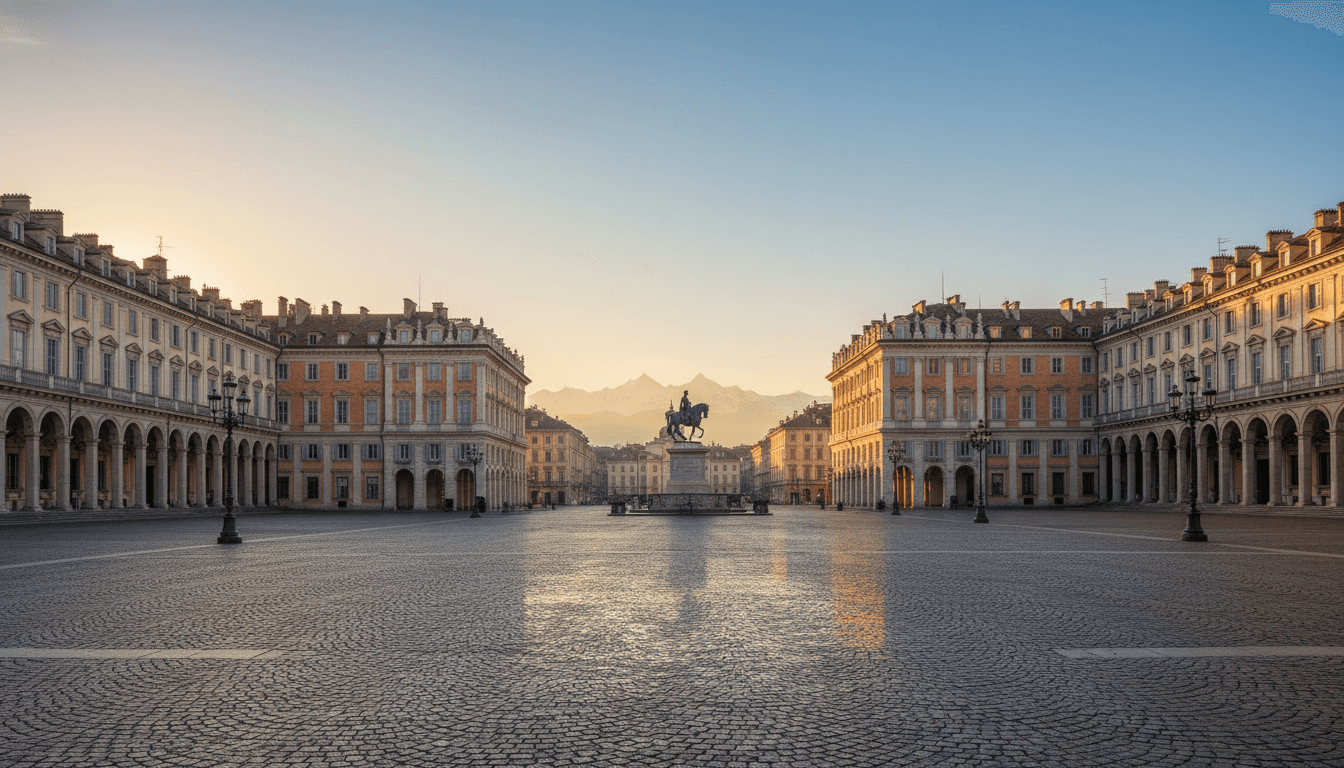
I was standing in Piazza San Carlo, watching the late afternoon light turn the baroque facades this impossible shade of amber-gold, and a woman next to me was feeding pigeons while arguing passionately into her phone about—I think—whether her nephew should study engineering or philosophy. A violinist had set up near the twin churches. Someone was roasting chestnuts. And I thought: this is what everyone means when they say Italy, but nobody thinks to come here.
If you're wondering what to do in Turin during a home exchange, you're already ahead of most travelers. This city doesn't make the usual Italy bucket lists, which is precisely why it should top yours. I've done home swaps in Rome, Florence, and Milan, and honestly? Turin surprised me more than all of them combined.
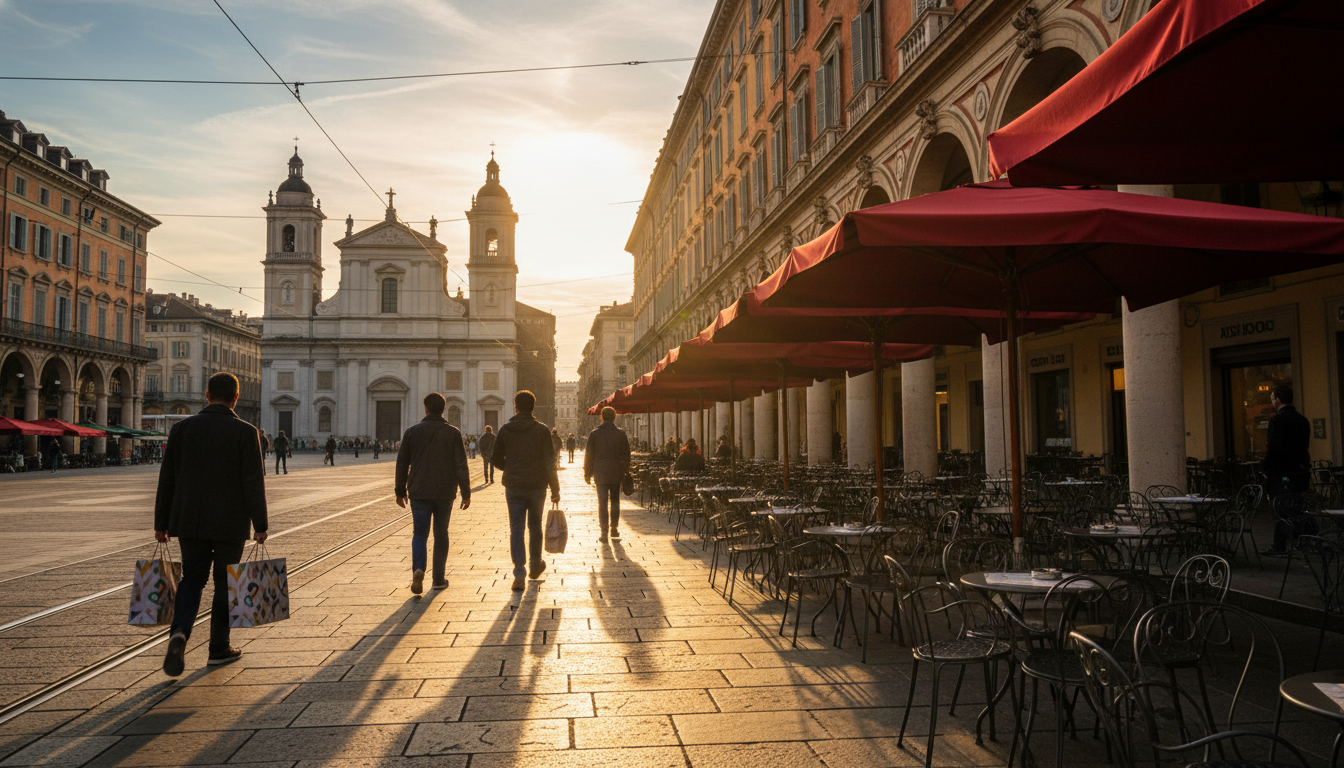 Piazza San Carlo at golden hour with elegant porticoes, outdoor caf tables with red umbrellas, and l
Why Turin is Perfect for Home Exchange Travel
Here's the thing about Turin that most travel guides won't tell you: it's a city designed for living, not just visiting. The porticoed sidewalks stretch for 18 kilometers—yes, eighteen—which means you can walk everywhere in any weather without getting rained on or sunburned. The aperitivo culture is legendary. The coffee is arguably Italy's best (I said what I said, Neapolitans). And the rent prices mean your home swap hosts actually live in stunning apartments with high ceilings and original frescoes, not cramped tourist-zone studios.
My host during that first Turin swap was Giulia, a university professor who'd inherited her grandmother's apartment in the Quadrilatero Romano. Three bedrooms, original terrazzo floors, a balcony overlooking a medieval tower. In exchange, she stayed at my place in San Francisco for two weeks while attending a conference. We both came out ahead—that's the magic of home exchange.
When you're staying in a real neighborhood, you experience what to do in Turin the way Torinese do. You learn which bakery has the best tramezzini (Mulassano, established 1907, don't argue with me). You figure out that Sunday mornings mean Porta Palazzo market. You discover that the best gelato isn't in the center but in a residential area where tourists never wander.
Exploring Turin's Historic Center: Where to Start
Turin's centro storico is compact enough to walk but dense enough to spend days exploring. Start at Piazza Castello—not because it's the most charming square (it isn't, honestly, it's a bit chaotic), but because it orients you. The Royal Palace sits on one side, the Palazzo Madama anchors the center, and from here, every major neighborhood radiates outward.
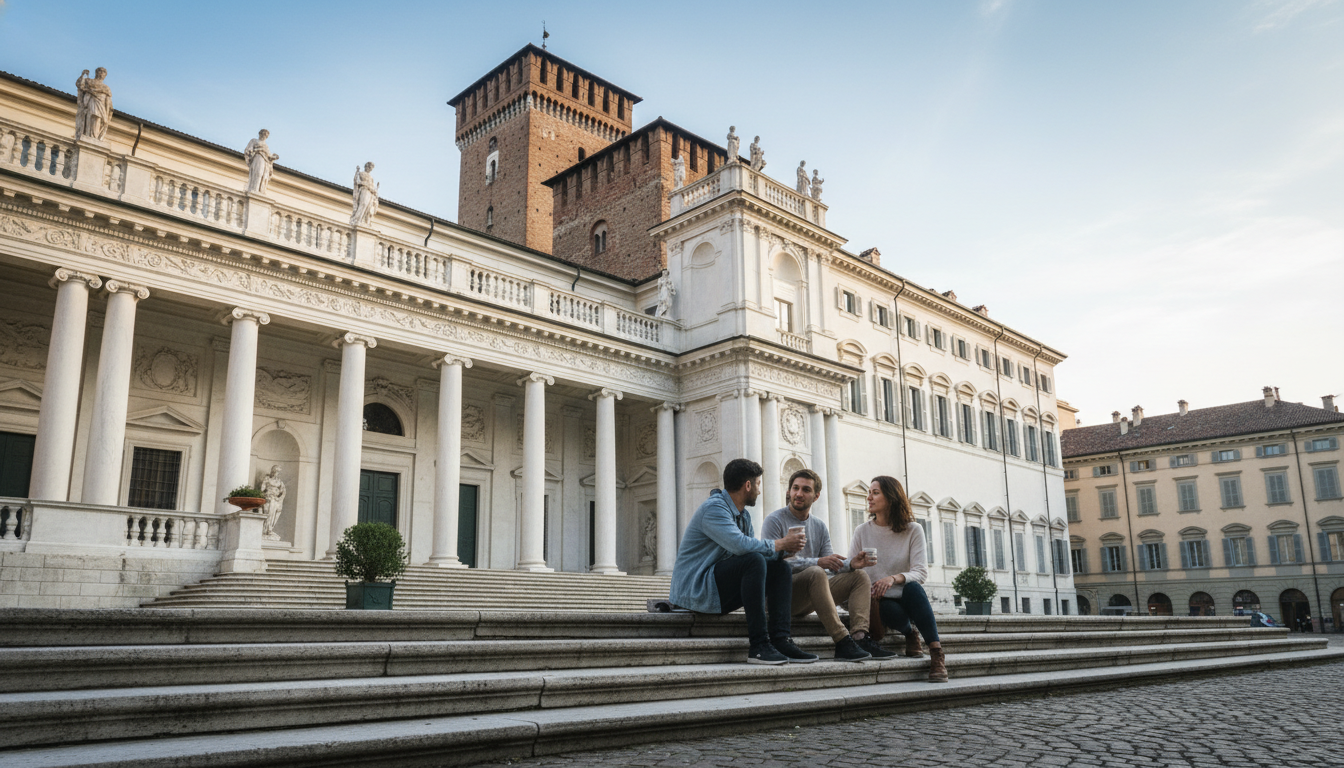 Palazzo Madamas ornate baroque facade with the medieval castle tower visible behind it, tourists sit
The Palazzo Madama itself is worth half a day. It's this wild architectural mashup—a Roman gate foundation, medieval towers, and a baroque facade designed by the same architect who did Versailles' Hall of Mirrors. The civic art museum inside has an underrated collection of decorative arts, but I'll be honest: I spent most of my time just wandering the rooms, imagining what it felt like to be a Savoy duchess throwing parties here in 1720.
From Piazza Castello, walk down Via Po toward the river. This is peak Turin: elegant porticoes, historic cafés with velvet interiors, university students arguing about Gramsci over espresso. Stop at Caffè Fiorio (Via Po 8)—Cavour used to plot Italian unification here, and the hot chocolate hasn't changed much since. Expect to pay around €5-6 ($5.50-6.50 USD) for a proper cioccolata calda, which arrives thick enough to stand a spoon in.
The Quadrilatero Romano: Turin's Oldest Neighborhood
If your home exchange lands you in the Quadrilatero Romano, congratulations—you've hit the jackpot. This is Turin's Roman-era grid, now stuffed with wine bars, vintage shops, and restaurants that locals actually frequent. The streets are narrow and medieval-feeling, a sharp contrast to the grand boulevards elsewhere.
Wander without a map. Seriously. You'll stumble onto Piazza della Consolata, where the church has one of the most over-the-top baroque interiors I've ever seen (and I've seen a lot). The square outside has a café called Al Bicerin, famous for its namesake drink—a layered concoction of espresso, chocolate, and cream that's been served here since 1763. It's €7 ($7.70 USD) and worth every cent.
For dinner in the Quadrilatero, try Tre Galline (Via Bellezia 37). It's been open since 1575, making it one of Italy's oldest restaurants. The agnolotti del plin—tiny pinched pasta parcels in butter and sage—are what Piedmontese cuisine is all about. Budget around €35-45 ($38-50 USD) per person with wine.
What to Do in Turin for Food and Wine Lovers
I need to be direct with you: if you don't care about food, Turin might not be your city. This place is obsessed with eating well. Piedmont produces more DOC wines than any other Italian region. The Slow Food movement started 30 minutes away in Bra. Nutella was invented here. Turin takes food so seriously that there's a university dedicated entirely to gastronomic sciences.
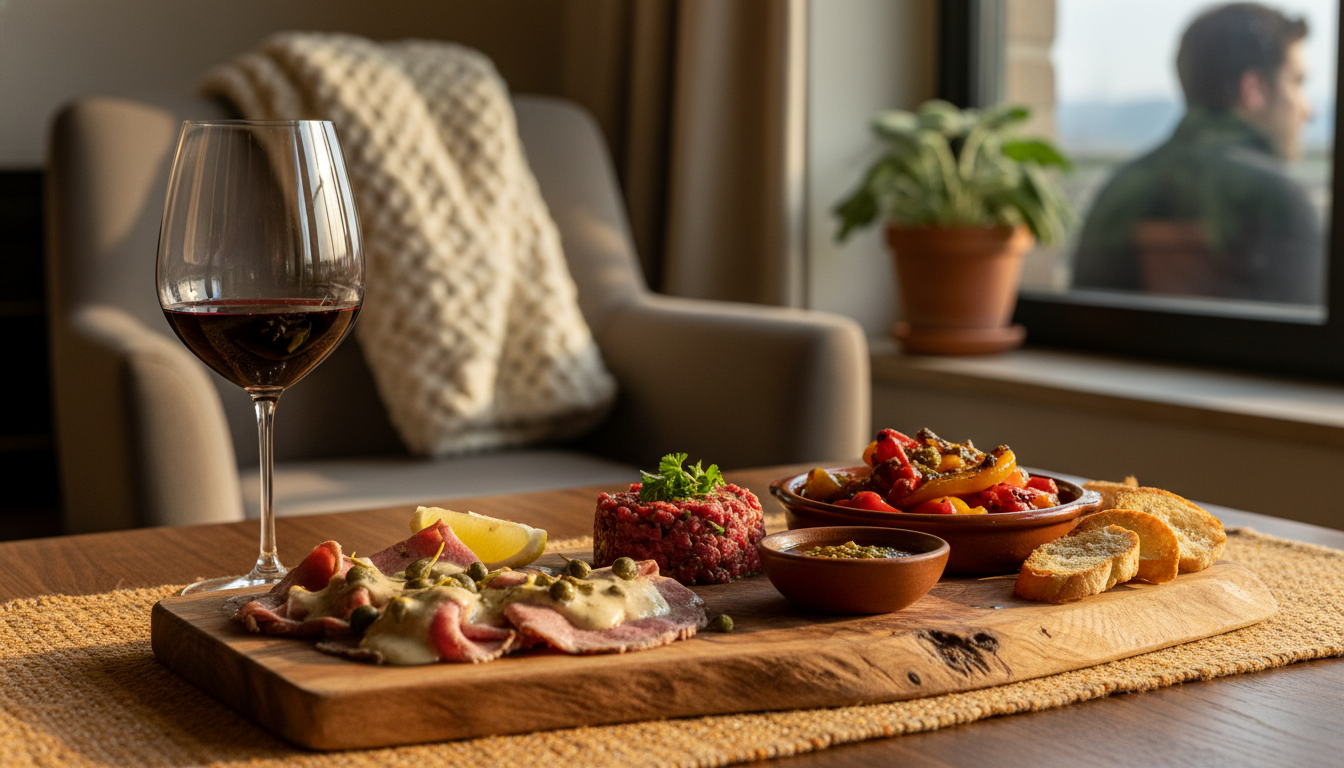 A wooden board with various Piedmontese antipasti including vitello tonnato, carne cruda, and pepper
The Aperitivo Ritual
Aperitivo in Turin isn't like aperitivo in Milan, where it's basically an excuse for an all-you-can-eat buffet. Here, it's more refined—a Vermouth (invented in Turin, by the way) or a spritz, accompanied by small snacks, consumed slowly while the evening light fades. The ritual matters more than the quantity.
My favorite aperitivo spot is Caffè Elena (Piazza Vittorio Veneto 5), right on the massive piazza overlooking the Po River. Order a Punt e Mes—a bitter Vermouth that tastes like Turin in a glass—and watch the passeggiata unfold. People-watching here is elite-level. Drinks run €6-8 ($6.60-8.80 USD).
For something more modern, head to Edit (Via Cigna 96) in the Aurora neighborhood. It's a food hall in a former industrial space, with multiple vendors and a rooftop terrace. Less traditional, but the energy is great, especially on summer evenings.
Markets and Food Shopping
Porta Palazzo market operates every morning except Sunday (though Sunday has a flea market instead). It's Europe's largest open-air market, and it's gloriously chaotic. Produce vendors shout prices, butchers display whole rabbits, and the covered fish market smells exactly like you'd expect. Go hungry. Buy cheese from the latteria stalls—a hunk of young Castelmagno will cost maybe €8-10 ($8.80-11 USD) and change your understanding of what cheese can be.
If Porta Palazzo feels overwhelming, try Mercato Centrale (within the same complex but indoors). It's more curated—think Eataly before Eataly existed. You can eat there too: porchetta sandwiches, fresh pasta, excellent pizza by the slice.
For a quieter food shopping experience, the Crocetta neighborhood has a lovely covered market. It's where professors and professionals shop, less touristy, with vendors who've been there for generations.
Turin's Museums: Beyond the Egyptian Collection
Yes, Turin has the world's second-largest Egyptian museum after Cairo. Yes, you should go—the Museo Egizio (Via Accademia delle Scienze 6) is genuinely spectacular, with a recent renovation that transformed how the collection is displayed. Budget 2-3 hours and €18 ($20 USD) for entry.
But here's what I actually want to tell you about: the museums tourists skip.
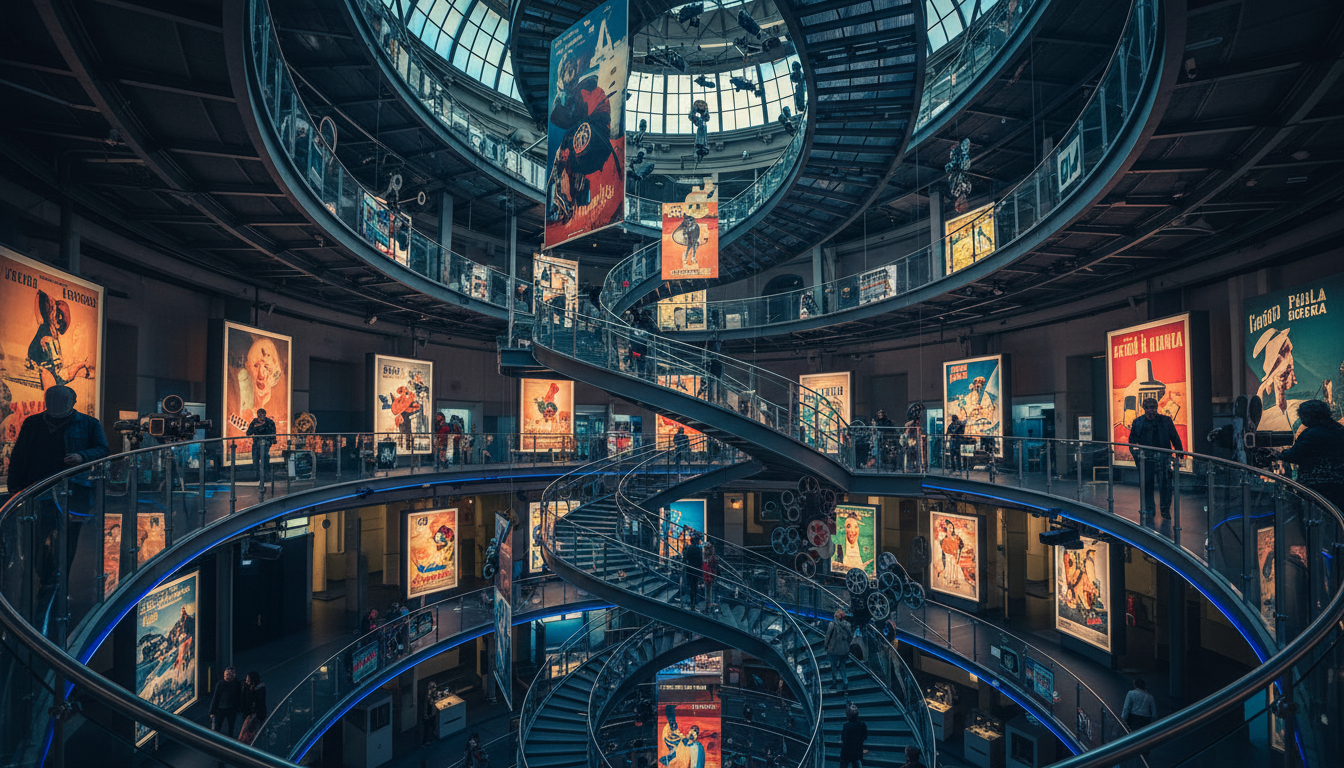 Interior of the Museo Nazionale del Cinema inside the Mole Antonelliana, showing the spiral ramp asc
Museo Nazionale del Cinema
Housed inside the Mole Antonelliana—that spire you see in every Turin photo—this cinema museum is genuinely delightful. It's not just artifacts behind glass; it's immersive, weird, and playful. You can lie on lounge chairs and watch film clips projected on screens above you. The collection spans magic lanterns to Fellini to Hollywood blockbusters. Take the panoramic elevator to the top (€15/$16.50 USD combined ticket) for views that extend to the Alps on clear days.
GAM and Contemporary Art
Turin has a serious contemporary art scene that flies under the radar. The GAM (Galleria Civica d'Arte Moderna e Contemporanea) holds Italy's oldest modern art collection, with works from Modigliani to Arte Povera. It's €10 ($11 USD) and rarely crowded.
Even better: the Fondazione Sandretto Re Rebaudengo (Via Modane 16), a private contemporary art foundation in a former industrial building. The exhibitions rotate and tend toward challenging, thought-provoking work. Free admission on Thursdays.
The Royal Residences
Turin was the Savoy dynasty's capital, and they left behind a constellation of palaces now collectively a UNESCO World Heritage Site. The Palazzo Reale in the center is grand but predictable. What surprised me was Palazzina di Caccia di Stupinigi, about 10 kilometers outside the city—a hunting lodge so extravagant it makes Versailles look restrained. The rococo interiors are staggering. Take bus 41 from the center; entry is €12 ($13.20 USD).
Outdoor Activities and Day Trips from Turin
One of the best things about a Turin home exchange is the access to nature. The Alps are right there—on clear days, you can see Monte Rosa from the city center. The hills surrounding Turin are dotted with vineyards. The Po River offers riverside walks and cycling paths.
Parco del Valentino and the Po River
The Parco del Valentino stretches along the Po and is where Torinese go to run, picnic, and escape. The Borgo Medievale—a reconstructed medieval village built for an 1884 exhibition—sits within the park and is surprisingly charming, not kitschy at all. Rent a bike (€10-15/$11-16.50 USD for a full day from various rental shops) and ride along the river toward the Sassi neighborhood, where rowing clubs practice and the city feels far away.
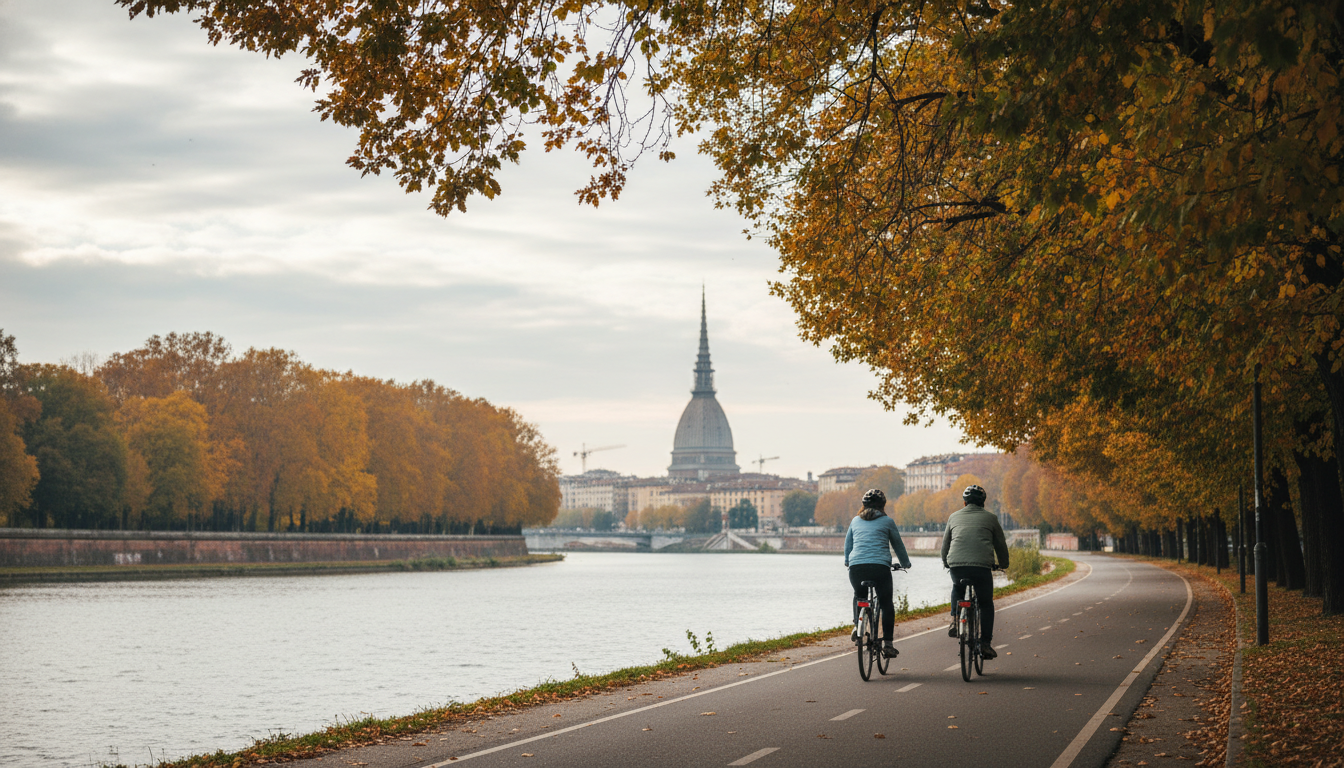 Cyclists on the Po River path with the Parco del Valentinos trees in autumn colors, the Mole Antonel
Superga and the Basilica
Take the historic rack railway (Sassi-Superga tramway, €9/$10 USD round trip) up to the Basilica di Superga, which sits on a hilltop overlooking the city. The views are extraordinary—Turin spread out below, the Po winding through, the entire Alpine arc on the horizon. The basilica itself is impressive baroque, but honestly, the journey up and the panorama are the main attractions. There's a café at the top for a well-earned coffee.
Wine Country Day Trips
The Langhe wine region—home to Barolo, Barbaresco, and some of Italy's most celebrated wines—is about an hour south of Turin. If you have a car (or rent one for the day, around €50-70/$55-77 USD), you can spend a day winding through vineyard-covered hills, stopping in villages like Barolo, La Morra, and Barbaresco.
Without a car, book a small-group tour (expect €100-150/$110-165 USD per person including tastings and lunch) or take the train to Alba and explore on foot. Alba is gorgeous—medieval towers, truffle shops, excellent restaurants. The truffle market in October and November is legendary.
Practical Tips for Your Turin Home Exchange
After multiple home swaps in this city, here's what I wish someone had told me:
Getting Around: Turin's public transport is excellent—trams, buses, and a metro line. A day pass costs €5 ($5.50 USD). But honestly, you'll walk most places. The porticoes make it pleasant even in rain or summer heat.
Best Neighborhoods for Home Exchange: The Quadrilatero Romano and Centro offer the most walkable locations. San Salvario is younger, artier, with great nightlife. Crocetta is residential and quiet, favored by families and academics. Cit Turin has beautiful Liberty-style architecture and feels distinctly local.
When to Visit: May-June and September-October are ideal. July-August can be hot (35°C/95°F) and many locals flee to the mountains. November-February are cold but atmospheric, with fewer tourists and Christmas markets in December.
Language: English is less widely spoken here than in Rome or Florence. Learn a few Italian phrases—it goes a long way. Torinese appreciate the effort.
Budget: Turin is significantly cheaper than Milan or Florence. A good dinner with wine runs €30-50 ($33-55 USD) per person. Coffee is €1-1.50 ($1.10-1.65 USD). Museum entry averages €10-15 ($11-16.50 USD). Your biggest expense will be the flight—your home exchange handles accommodation.
Hidden Gems: What to Do in Turin Off the Tourist Trail
I'm going to share a few spots that even some Torinese don't know about.
Cimitero Monumentale: I know, a cemetery sounds morbid. But this one is essentially an open-air sculpture museum, with elaborate 19th-century tombs that rival any gallery. It's free, peaceful, and genuinely beautiful in a melancholic way.
Eataly's Original Location: The global food emporium started right here in Turin (Via Nizza 230). It's in a former Vermouth factory, and while it's become a bit corporate, the original location still has a certain magic. Go for the cooking classes or just to wander.
The Automobile Museum: Even if you don't care about cars, the MAUTO (Museo dell'Automobile) is architecturally stunning and tells the story of Turin as an industrial powerhouse. Fiat was born here, after all. Entry is €15 ($16.50 USD).
Lingotto: Speaking of Fiat, their former factory in the Lingotto neighborhood has been transformed into a shopping center, hotel, and event space. The rooftop test track—where they used to test cars—is still there. You can access it through the Pinacoteca Agnelli art gallery (€10/$11 USD), which has works by Matisse, Canaletto, and Canova.
Making the Most of Home Exchange in Turin
Staying in someone's actual home changes everything about how you experience a city. You have a kitchen, which means you can shop at Porta Palazzo and cook dinner with fresh porcini and that Castelmagno cheese you bought. You have a neighborhood café where the barista starts to recognize you. You have a local's perspective—your host's recommendations, their favorite wine bar, the shortcut through the courtyard that saves ten minutes.
SwappaHome makes this kind of travel possible without the astronomical costs of Turin's boutique hotels (which, lovely as they are, run €150-300/$165-330 USD per night). The credit system is beautifully simple: host guests at your place, earn credits, use those credits to stay anywhere in the network. One credit per night, always. No complicated pricing tiers or seasonal surcharges.
I've found that Turin hosts tend to be particularly generous with their recommendations. Maybe it's because the city doesn't get as many tourists, so they're genuinely excited to share it. My host Giulia left me a handwritten guide to her neighborhood—which butcher, which bakery, where to get her favorite aperitivo. That guide was worth more than any guidebook I've ever bought.
Final Thoughts
Turin doesn't try to seduce you the way Florence does, or overwhelm you like Rome. It's a city that reveals itself slowly, in the quality of a morning espresso, in the way the light hits the porticoes at 5 PM, in the unexpected discovery of a perfect little wine bar on a street you wandered down by accident.
I've been back three times since that first home exchange. Each time, I find something new—a neighborhood I hadn't explored, a restaurant someone mentioned, a viewpoint I'd missed. That's the thing about Turin: it rewards return visits. It rewards staying long enough to feel like you live there, even temporarily.
If you're considering a home exchange in Italy and want to skip the crowds, the inflated prices, and the feeling of being processed through a tourist machine—consider Turin. It's the Italy that Italians love, the one that hasn't been packaged for Instagram, the one that still feels like a discovery.
And when you find yourself standing in Piazza San Carlo at golden hour, watching the city do its evening ritual, you'll understand exactly what I mean.
Frequently Asked Questions
What is the best time of year to visit Turin?
May through June and September through October hit the sweet spot—pleasant temperatures hovering between 18-25°C (64-77°F) and mercifully thin crowds. August? Skip it. Half the city empties out for vacation and you'll find "chiuso per ferie" signs on your favorite restaurants. Winter brings Christmas markets and easy access to Alpine ski slopes, but pack layers—it gets properly cold.
How many days do you need to explore Turin properly?
Four to five days gives you breathing room for the major sights, serious eating, and at least one day trip to wine country or the foothills. But honestly, a full week is better. That's when you stop rushing and start living there—morning routines at the same café, evening aperitivo becoming habit, the city revealing its quieter corners.
Is Turin expensive compared to other Italian cities?
Not even close. You'll spend 20-30% less than Rome, Florence, or Milan on basically everything. Dinner with wine? €30-50 ($33-55 USD). Museums? €10-15 ($11-16.50 USD). A perfect espresso at the bar? Just €1-1.50 ($1.10-1.65 USD). Your wallet will thank you.
What food is Turin famous for?
Where do I start? Chocolate—gianduja and Nutella were both born here. Piedmontese classics like agnolotti del plin (tiny pinched pasta pillows), vitello tonnato, and bagna cauda with winter vegetables. Turin also invented Vermouth, and the surrounding region produces Barolo and Barbaresco wines. Oh, and there's literally a university here devoted to food science. These people don't mess around.
Can you visit Turin without speaking Italian?
You can manage, sure. But Turin isn't as tourist-oriented as the big-name cities, so basic Italian helps enormously. Younger staff in restaurants and hotels usually speak some English, but your neighborhood barista or market vendor might not. Learn greetings, numbers, and how to order food—locals genuinely appreciate the effort, and it opens doors that stay closed to the phrase-book-free.

Published by
SwappaHome
SwappaHome Editorial Team
Home Exchange & Slow Travel Editorial
The SwappaHome Editorial Team brings together travel research, home-exchange community insights, and platform data to produce practical guides for first-time and experienced home swappers. Every article cites real platforms, current market rates, and verifiable city-level facts so readers can make informed decisions without guessing.
Ready to try home swapping?
Join SwappaHome and start traveling by exchanging homes. Get 7 free credits when you sign up!
Related articles
Bachelor and Bachelorette Parties in Singapore: The Complete Home Swap Group Guide for 2026
Planning a bachelor or bachelorette party in Singapore? Discover how home swapping lets groups of 6-12 stay together in luxury condos, saving thousands while partying in Marina Bay.
Cycling in Lisbon: 7 Home Swap Bike Tour Itineraries for Every Rider
Discover the best cycling routes in Lisbon with these home swap bike tour itineraries—from waterfront paths to hilltop adventures, all starting from your borrowed home.
Graduation Trip to Barcelona: How Home Swapping Gives New Graduates the Ultimate Celebration
Planning a graduation trip to Barcelona? Discover how home swapping lets new graduates explore Spain's most vibrant city without the hostel crowds or hotel costs.