
Why Millennials Are Choosing Home Swaps Over Hotels

SwappaHome Editorial Team
Home Exchange & Slow Travel Editorial
I've watched the way people my age travel change completely over the last ten years, and nothing captures it better than this: more and more of us would rather hand our house keys to a stranger than...
I've watched the way people my age travel change completely over the last ten years, and nothing captures it better than this: more and more of us would rather hand our house keys to a stranger than book a hotel room. Sounds a little crazy when you say it out loud. But if you look at the numbers, home swaps are quietly becoming a normal thing for travelers roughly between 28 and 43, who are trading apartments, houses, and yes, even boats, with people who value the same stuff they do. Authenticity. Affordability. The freedom to not be locked into a nightly rate.
And I don't think this is a fad that'll blow over once everyone has kids and settles down. It feels more structural than that, like a genuine shift in how a whole generation thinks about what a vacation even is.
So let's get into why it's happening, what it means for the travel industry, and how platforms like Swappahome are pouring fuel on the whole thing.
Table of Contents
- What Are Home Swaps and How Do They Work?
- What's Driving Millennial Travel Trends Toward Home Swaps?
- How Much Money Do Home Swaps Actually Save Compared to Hotels?
- Home Swaps vs. Hotels: A Side-by-Side Comparison
- The Role of Remote Work and Digital Nomadism
- Trust, Safety, and the Technology Behind Modern Home Swapping
- What This Means for the Future of the Hospitality Industry
- Frequently Asked Questions
What Are Home Swaps and How Do They Work?
A home swap is basically an arrangement where two or more people trade access to their homes for a set stretch of time, and usually no money changes hands for the stay itself. So one family might spend two weeks in a Lisbon apartment while the folks who live in Lisbon crash at that family's place in Austin, Texas. All of it gets coordinated through an exchange platform that verifies who everyone is, keeps the calendars straight, and handles the back-and-forth communication.
There are a few flavors of this. The most straightforward is the simultaneous swap, where both parties trade at the exact same time (cheap and simple). Then there's the non-simultaneous version, which runs on points or credits. You host someone, you earn credits, and later you cash those credits in to stay somewhere else, even if the person you're staying with never sets foot in your home. And finally there's hospitality exchange, where one member just hosts another without expecting a return trip anytime soon. Swappahome and platforms like it tend to support several of these, which is nice because your travel goals and your schedule are rarely the same from one trip to the next.
Why do the mechanics matter? Because they explain a big chunk of the appeal. Home swaps break travel free from that pay-per-night model that's basically defined lodging for a century. You're not handing cash to a corporation every night. You're bartering something you already own, your home, for access to somebody else's. Once you frame it that way, the whole thing starts to make a lot of sense.
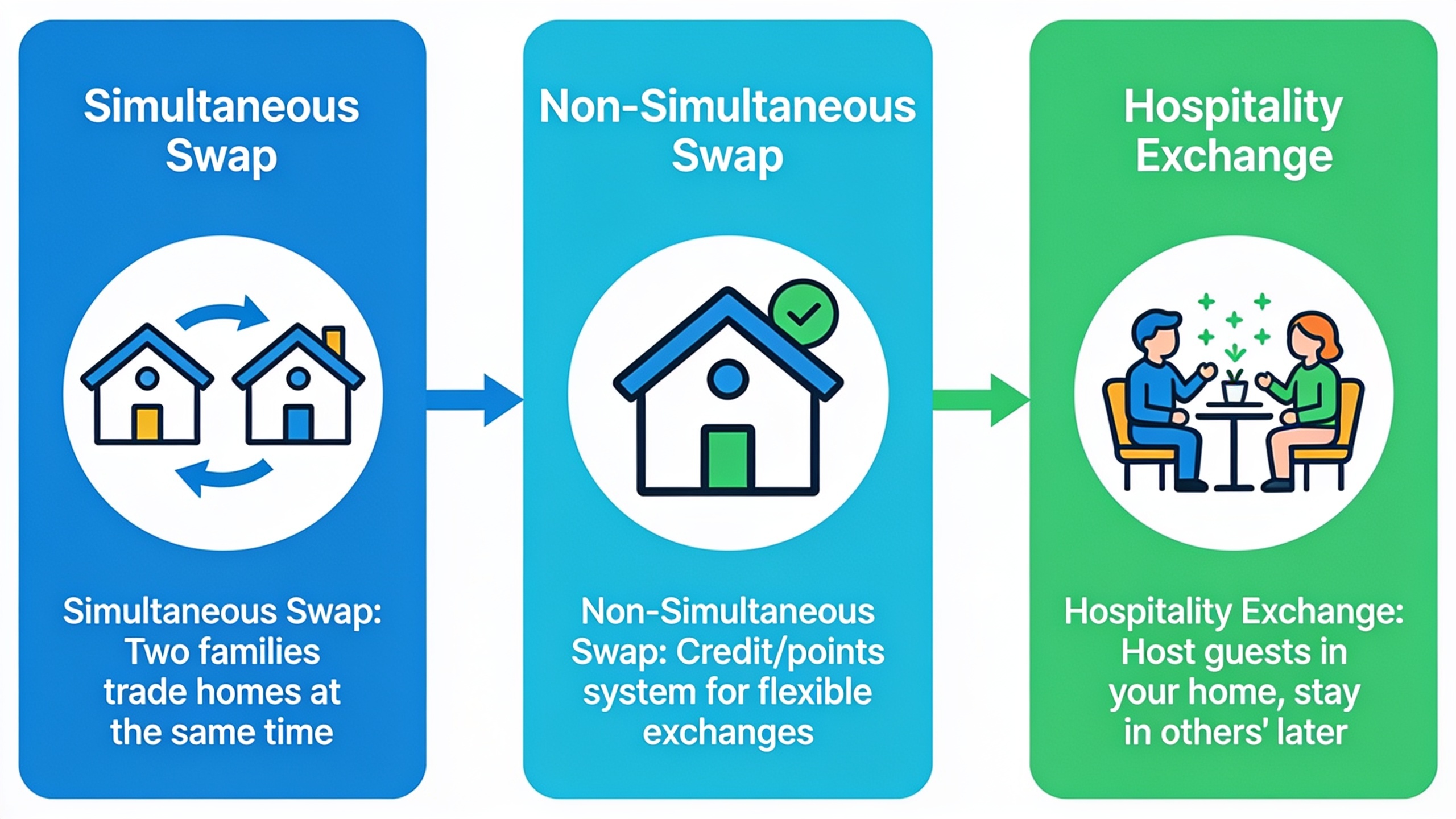 Infographic showing three types of home swaps: simultaneous exchange, points-based non-simultaneous swap, and hospitality exchange models
What's Driving Millennial Travel Trends Toward Home Swaps?
Millennials are picking home swaps over hotels mostly for three reasons: it's cheaper, it feels more real, and there's a deep skepticism toward the traditional hospitality machine. And these three things feed each other. Together they've created a travel preference that looks genuinely different from how Boomers or even Gen X traveled in their thirties and forties.
The Money Situation (Because It Always Comes Back to Money)
Here's some context that matters. Millennials came of age right into the 2008 crash, then spent the following years watching wages flatten while housing and education costs kept climbing. The Federal Reserve's Survey of Consumer Finances shows median household net worth for younger cohorts recovering more slowly than for older generations, which is a polite way of saying our travel budgets have to stretch further. A home swap wipes out the single biggest recurring cost of any trip, the lodging, and frees that money up for the stuff people actually remember. On a two-week trip you're talking hundreds, sometimes thousands, of dollars that get redirected toward restaurants, tours, and just living in a place instead of sleeping in it.
We Want It to Feel Real
Millennials have told researchers over and over that they want travel that feels personal instead of shrink-wrapped. And there's just something about staying in someone's actual home, with their books on the shelf, their neighborhood coffee spot around the corner, their weird-but-lovable furniture, that a chain hotel room can't touch. Honestly, this is why so many swap guests end up geeking out over design details during their stays. I've heard of people falling for a host's living room setup so hard they went home and bookmarked shops like Oak Castle Furniture hunting for solid oak pieces like the ones they admired abroad. That kind of happy accident just doesn't happen in a room with nightstands bolted to the wall.
The Distrust of Hotel Pricing Games
And then there's the pricing thing. Younger travelers tend to smell a rat when it comes to opaque hotel pricing, those resort fees and mystery add-ons that quietly inflate whatever rate lured you in. Swapping mostly sidesteps all of that, because it's an exchange, not a fee-loaded transaction. For a generation that grew up comparison-shopping everything online, that transparency lands hard. We have zero patience for pricing games.
How Much Money Do Home Swaps Actually Save Compared to Hotels?
Home swaps knock out the biggest line item in almost any travel budget, lodging, which usually eats up around a third of total trip spending according to U.S. Travel Association estimates on typical vacation expenditure breakdowns. For a family of four traveling ten nights, that alone can mean thousands of dollars saved versus booking a couple of hotel rooms or one big suite.
But the savings go deeper than the nightly rate. A full kitchen means you're not eating out three meals a day. In-unit laundry means you pack lighter and skip the highway robbery that is hotel laundry service. Some swaps even come with access to a car, which quietly deletes your rental bill. Add all that up and a lot of swappers report their overall trip cost drops somewhere between 40% and 60% compared to an equivalent hotel-based trip. Your mileage will vary, obviously, depending on where and when you go.
Now, I don't want to oversell it. Home swapping isn't literally free. Most platforms charge an annual membership fee, you've still got to get yourself to and from the place, and there are usually reasonable expectations around utilities or leaving a nice thank-you gesture for your host. But even after all that, the net savings against hotel stays are still big. That's a huge part of why home swap popularity keeps climbing among people who actually watch what they spend.
Home Swaps vs. Hotels: A Side-by-Side Comparison
The differences run way past price, though. Here's how the two stack up across the stuff travelers actually care about.
| Factor | Home Swap | Traditional Hotel |
|---|---|---|
| Average lodging cost | Often limited to membership fees and minor host expenses | Nightly rate plus taxes, resort fees, and parking |
| Space | Full home, often 2-4+ bedrooms with kitchen and living areas | Single room, typically 300-450 sq ft |
| Kitchen access | Yes, in nearly all cases | Rare, except suites or extended-stay brands |
| Local authenticity | High — real neighborhoods, local tips from hosts | Lower — often in tourist-heavy commercial zones |
| Flexibility of length | Highly flexible, ideal for extended stays | Flexible but costly for long stays |
| Booking predictability | Requires more coordination and lead time | Instant booking, standardized service |
| Amenities | Varies by home (yard, pool, workspace) | Standardized (pool, gym, room service) |
| Best suited for | Families, remote workers, extended trips, budget travelers | Short stays, business travel, last-minute trips |
Look at that and it's pretty obvious where each one wins. Swaps run away with it for longer trips and family travel. Hotels still have the edge when you need a quick, no-strings-attached stay and convenience beats everything else.
The Role of Remote Work and Digital Nomadism
Remote work poured gasoline on all of this, and the reason is simple: it killed the two-week vacation ceiling that used to box in most travel. Once you can work from anywhere with a laptop and decent Wi-Fi, a "trip" can balloon from a long weekend into a month. And a hotel room? It stops making any kind of sense, financially or otherwise, once you're staying that long.
If you're working from the road you need a real workspace, reliable internet, and a kitchen to actually live your day-to-day life. A swapped home hands you all of that far more easily than a hotel ever will. That's exactly why remote workers have become one of the fastest-growing groups in the swap community. If you want to see how deep this goes, the piece on how digital nomads are using home swaps to travel for free walks through real people who chain together back-to-back swaps and travel for months while barely paying a dime for lodging.
This also bleeds into a bigger rethink about where and how we live. Some long-term swappers get so cozy in a host's neighborhood that they start investing in little upgrades to "their" temporary space, whether that's arranging a fresh coat of paint through a service like Call Painting Pros before settling in for a few months, or just treating the place with the same care they'd give their own home. That line between guest and resident getting blurry? That's one of the more fascinating cultural shifts tied to all this. Travel's stopped being about visiting somewhere. It's starting to mean temporarily living there.
Trust, Safety, and the Technology Behind Modern Home Swapping
The trust problem, the thing that used to make this whole idea feel a little reckless, has basically been solved. Home swap platforms now lean on identity verification, reviews, insurance options, and secure messaging to make trading homes with a stranger feel about as safe as booking a hotel. And honestly, this is probably the single biggest reason swaps have gone from a fringe hobby to a mainstream travel category over the past few years.
Verification usually means government ID checks, phone and email confirmation, and sometimes address verification tied to property records. Reviews work a lot like hotel reviews, except they tend to carry more weight, because they reflect a two-way relationship rather than a one-sided guest experience. You reviewed them, they reviewed you. A lot of platforms also toss in optional home protection plans or damage guarantees, which tackles the exact fear most first-timers bring up.
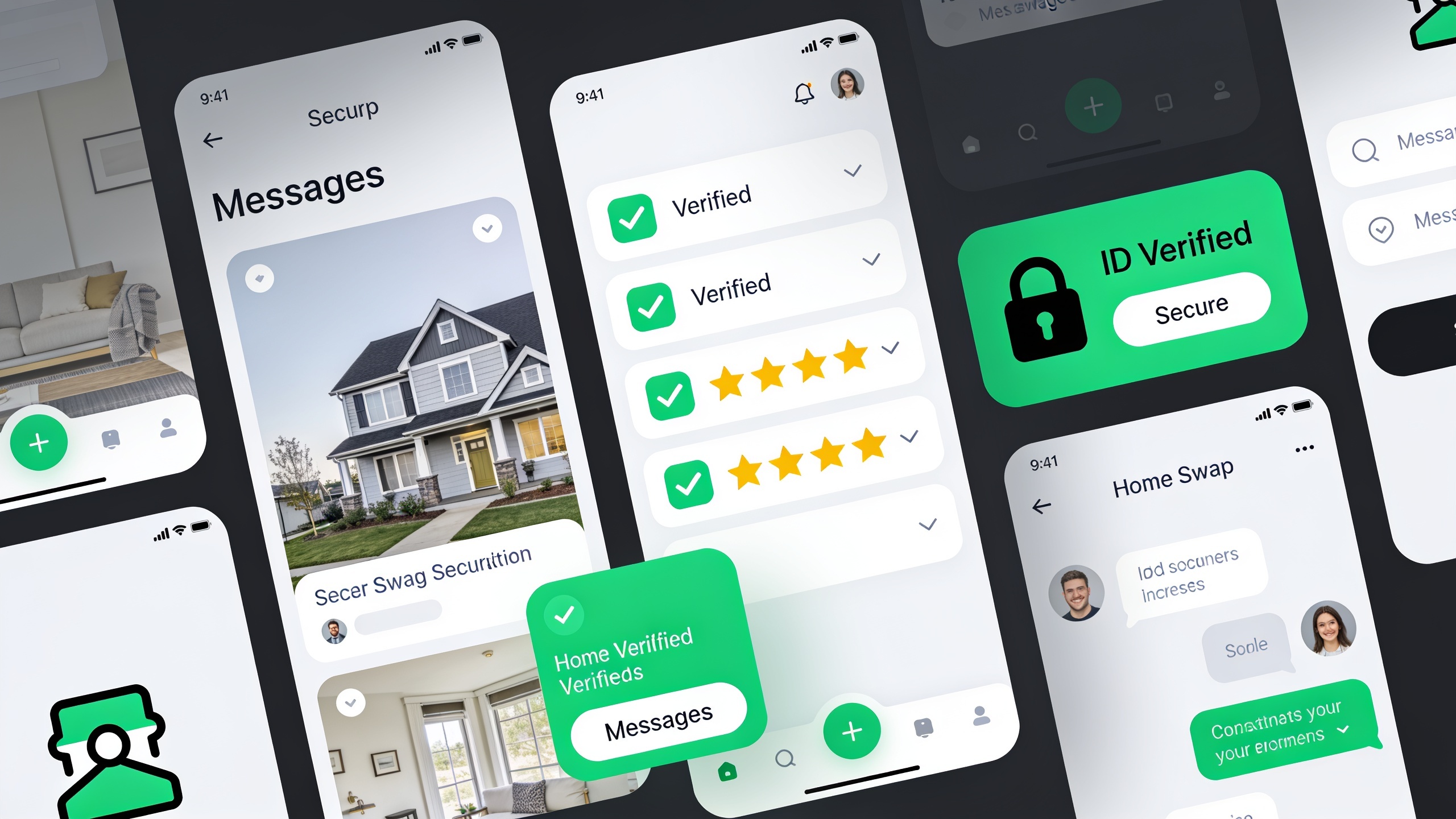 Home swap platform security features including verified badges, two-way reviews, ID verification, and secure messaging interface
The communication tools have gotten seriously good too. In-app messaging, video calls for virtual home tours, detailed house manuals sent over before you land, all of it chips away at the uncertainty. Hosts love leaving notes with local recommendations, and some really go the extra mile. I've seen hosts share where they get their skincare or wellness fix if they happen to live near a destination clinic like Idun Aesthetics, basically handing guests an insider's to-do list that no tourist map is going to give you.
And underneath all of it, the infrastructure has matured. Matching algorithms, calendar syncing, dispute resolution. Home swapping now feels a lot closer to a proper peer-to-peer marketplace than some informal favor between friends. It mirrors what's happened across the sharing economy generally, and it's a big reason a whole generation now treats swapping as a legit, reliable option instead of a gamble.
What This Means for the Future of the Hospitality Industry
So where's this all headed? I'd bet on a lasting diversification of the lodging market, not some trend that quietly dies once millennials have kids or hit their forties. Hotels aren't going anywhere. But they are staring down a permanent shift in how a huge slice of travelers decide where to stay, especially for trips longer than a week or ones that involve families and remote work.
Some hotel groups have clearly noticed. They've been expanding extended-stay brands, bolting kitchenettes into rooms, and leaning into "residential" design that fakes the home-like feel people are chasing elsewhere. Which is a quiet admission, if you ask me, that the swap model spotted something the standard hotel room was missing all along. If you want the wider view of how this is reshaping the whole industry, not just our habits but the way hospitality brands are scrambling to respond, the piece on how home swapping is changing the future of travel digs into where the accommodation market's likely headed over the next decade.
There's a tech angle here worth flagging too. Just as travel platforms had to get smarter about matching, trust, and discovery, the rest of the digital economy is riding the same automation wave. Marketing tools like RobinRank, which automates SEO content and backlink strategies, are a good example of the pattern: technology increasingly handles the trust-building, matching, and visibility work that used to eat up hours of manual effort. That's exactly what makes peer-to-peer models like home swapping easier to scale and, just as importantly, easier for new people to stumble onto in the first place.
And as younger folks age into bigger incomes and bigger families, I'd wager swapping only gets more entrenched, not less. Especially once Gen Z, who were raised even more thoroughly on sharing-economy apps, hit their prime travel years carrying almost no assumptions about what "normal" lodging is supposed to look like.
Frequently Asked Questions
Is home swapping actually safe if I'm traveling solo, not with a family? Yep. Solo travelers use these platforms all the time, and the safety features (ID verification, reviews, secure in-app messaging) work the same no matter how many people are in your group. A lot of solo swappers actually go looking for hospitality exchanges, where the host stays in the home during your visit, for the extra comfort and the built-in local connection.
Do I have to own my home to do a swap? No. Most platforms welcome renters, as long as you've got your landlord's blessing or your lease allows short-term guests while you're away. And several platforms offer non-reciprocal or points-based options, so you don't strictly have to put your own place on the table for every single exchange.
How far ahead should I be planning this? For popular spots and peak season, plan three to six months out, kind of like booking flights early to lock in decent fares. Off-peak trips or more flexible destinations can sometimes come together with just a few weeks' notice, particularly if you've already got a solid review history behind you.
What if something gets broken while I'm swapping? Most reputable platforms offer optional protection plans or guarantees that cover accidental damage, and swapping clear house rules before you arrive goes a long way toward setting expectations. The advice everyone gives is to communicate the second something goes wrong, because being upfront tends to smooth over most situations between swap partners pretty amicably.
Are swaps only worth it for long trips, or can I use them for a weekend? Sure, the biggest savings show up on longer trips, but plenty of members swap for weekend getaways too, especially in nearby cities where a simple, low-stakes trade just makes sense. Shorter swaps are also a great way for newcomers to rack up some trust and reviews before diving into a bigger, more involved exchange.
Home swapping has gone from fringe curiosity to a genuine pillar of how millennials plan travel, and it got there on a mix of cold financial reality, a real hunger for authentic experiences, and technology that finally makes trusting a stranger with your house feel, well, reasonable. As more people figure out that a vacation can mean living somewhere instead of just passing through it, the platforms built around this idea are going to keep growing right alongside the generation that made it a thing.

Published by
SwappaHome
SwappaHome Editorial Team
Home Exchange & Slow Travel Editorial
The SwappaHome Editorial Team brings together travel research, home-exchange community insights, and platform data to produce practical guides for first-time and experienced home swappers. Every article cites real platforms, current market rates, and verifiable city-level facts so readers can make informed decisions without guessing.
Ready to try home swapping?
Join SwappaHome and start traveling by exchanging homes. Get 7 free credits when you sign up!