
Your Guide to the Greece Digital Nomad Visa: Requirements and Benefits

SwappaHome Editorial Team
Home Exchange & Slow Travel Editorial
Here are the most important things to remember about the Greece digital nomad visa: Key Takeaways You need to prove you earn enough money from outside Greece…
Here are the most important things to remember about the Greece digital nomad visa:
Key Takeaways
- You need to prove you earn enough money from outside Greece to support yourself.
- Gather all your documents, like your passport, proof of income, and health insurance, before applying.
- The visa allows you to live and work remotely in Greece for a set period, with options to renew.
- Be prepared for the cost of living, which can vary depending on the city you choose.
- The visa is a great way to experience Greek culture and lifestyle while working.
Understanding the Greece Digital Nomad Visa
So, you're thinking about packing your bags and working from Greece? That's awesome! The Greece Digital Nomad Visa is a relatively new thing, and it's designed specifically for folks like us who can work from anywhere. It basically lets you live in Greece for an extended period while you're employed by a company outside of Greece, or if you're a freelancer with clients abroad. It's a pretty sweet deal if you've been dreaming of Mediterranean sunsets and ancient ruins as your daily backdrop.
Eligibility Criteria for Applicants
To even be considered for this visa, you've got to meet a few key requirements. It's not super complicated, but you definitely need to pay attention to the details. First off, you can't be from an EU or EEA country; this visa is for non-EU/EEA citizens. You also need to prove that you're earning enough money to support yourself without needing to work for a Greek employer. This is a big one, and we'll get into the specifics of the money part later, but think of it as showing you're financially independent.
- Not an EU/EEA citizen: This is a hard rule. If you hold citizenship from one of these countries, you don't need this specific visa to live and work in Greece.
- Remote employment: You must be working remotely for a company or clients located outside of Greece. You can't take a job with a Greek company on this visa.
- Financial stability: You need to demonstrate a consistent income that meets a certain threshold. This shows you won't be a burden on the Greek economy.
- Clean criminal record: Like most visa applications, you'll need to provide proof that you don't have any serious criminal convictions.
Key Benefits of the Greek Digital Nomad Visa
Why Greece, though? Well, besides the obvious beauty and history, there are some real perks to this visa. For starters, it allows you to stay in Greece for a longer stretch than a typical tourist visa, giving you time to actually settle in and explore. You get to experience life like a local, not just a tourist passing through. Plus, it opens up the possibility of living in a country that's part of the European Union, which has its own set of advantages.
- Long-term stay: This visa allows you to stay for up to a year initially, with options to renew. It's not just a short trip; it's a chance to really live there.
- Access to Schengen Area: As Greece is part of the Schengen Area, this visa can allow you to travel to other participating countries without needing separate visas, though you should always check the latest regulations.
- Cultural immersion: Living in Greece means experiencing its unique culture, food, and lifestyle firsthand. You can shop at local markets and learn the rhythm of daily life.
- Potential for residency: While not guaranteed, this visa can be a stepping stone towards longer-term residency options if you decide Greece is the place for you.
Navigating the Application Process
Okay, so the application process itself. It can seem a bit daunting, but breaking it down makes it manageable. Generally, you'll apply from your home country at a Greek consulate or embassy. You'll need to gather a bunch of documents, fill out forms, and likely attend an interview. The good news is that applications can sometimes be processed quite quickly, potentially within 10 days in some cases, which is pretty fast for a visa. It's all about being prepared and organized.
- Gather your documents: This is the most time-consuming part. Make sure you have everything from your passport to proof of income and accommodation.
- Submit your application: You'll typically do this at the Greek consulate or embassy in your country of residence.
- Attend an interview: Be ready to answer questions about your work, your finances, and your intentions for staying in Greece.
- Wait for approval: Processing times can vary, but some applicants have reported quick turnaround times.
The digital nomad visa is a fantastic opportunity for remote workers looking to experience life in Greece. It's designed to be straightforward, but thorough preparation is key to a smooth application. Think of it as your official ticket to working from paradise.
It's important to remember that rules and requirements can change, so always check the official Greek government or consulate website for the most up-to-date information before you start your application. You can find more details about the Greece Digital Nomad Visa on official government resources.
Financial Requirements for the Visa
Okay, let's talk about the money side of things for the Greece Digital Nomad Visa. This is a big one, and honestly, it's where a lot of people get stuck. You need to show you've got enough cash coming in to support yourself while you're living the dream in Greece. It's not just about having a job; it's about proving you're financially stable enough not to be a burden on the Greek system.
Minimum Income Thresholds
So, how much do you actually need to be earning? The Greek government has set a minimum income requirement. You'll need to demonstrate a net monthly income of at least €3,500. This amount is what you need to earn after taxes. If you plan on bringing your spouse or partner with you, that amount goes up. For each dependent, you'll need an additional €200 per month. It's important to have this income consistently, not just a one-off payment.
Here's a quick breakdown:
- Single Applicant: €3,500 net per month
- Applicant with Spouse/Partner: €3,500 + €200 = €3,700 net per month
- Applicant with Spouse/Partner and One Child: €3,500 + €200 + €200 = €3,900 net per month
Proof of Financial Stability
Showing you meet the income threshold is one thing, but you also need to prove you've got the financial chops to back it up. This usually involves providing bank statements. They'll want to see a history of consistent income and savings. Think of it as showing them you're not just living paycheck to paycheck, but that you have a cushion. They typically want to see statements covering the last six months, sometimes even longer. This helps them get a real picture of your financial situation. It's a good idea to have your statements translated into English or Greek if they aren't already.
Understanding Tax Implications
This is where things can get a little tricky, and it's definitely worth looking into. While Greece has a digital nomad visa, it doesn't automatically mean you're exempt from taxes there. You'll need to figure out your tax obligations in Greece. This often depends on how long you stay and if you establish tax residency. It's a good idea to consult with a tax professional who specializes in international or Greek tax law. They can help you understand double taxation treaties and how to avoid paying taxes twice on the same income. Plus, knowing the tax rules upfront can help you budget better for your life in Greece. You can find more information on Greek tax laws if you want to dig deeper.
The financial requirements are there to ensure you can live comfortably without needing local assistance. It's about demonstrating self-sufficiency and a stable income stream from your remote work. Don't underestimate the importance of clear, well-documented proof of your finances.
Required Documentation for Your Application
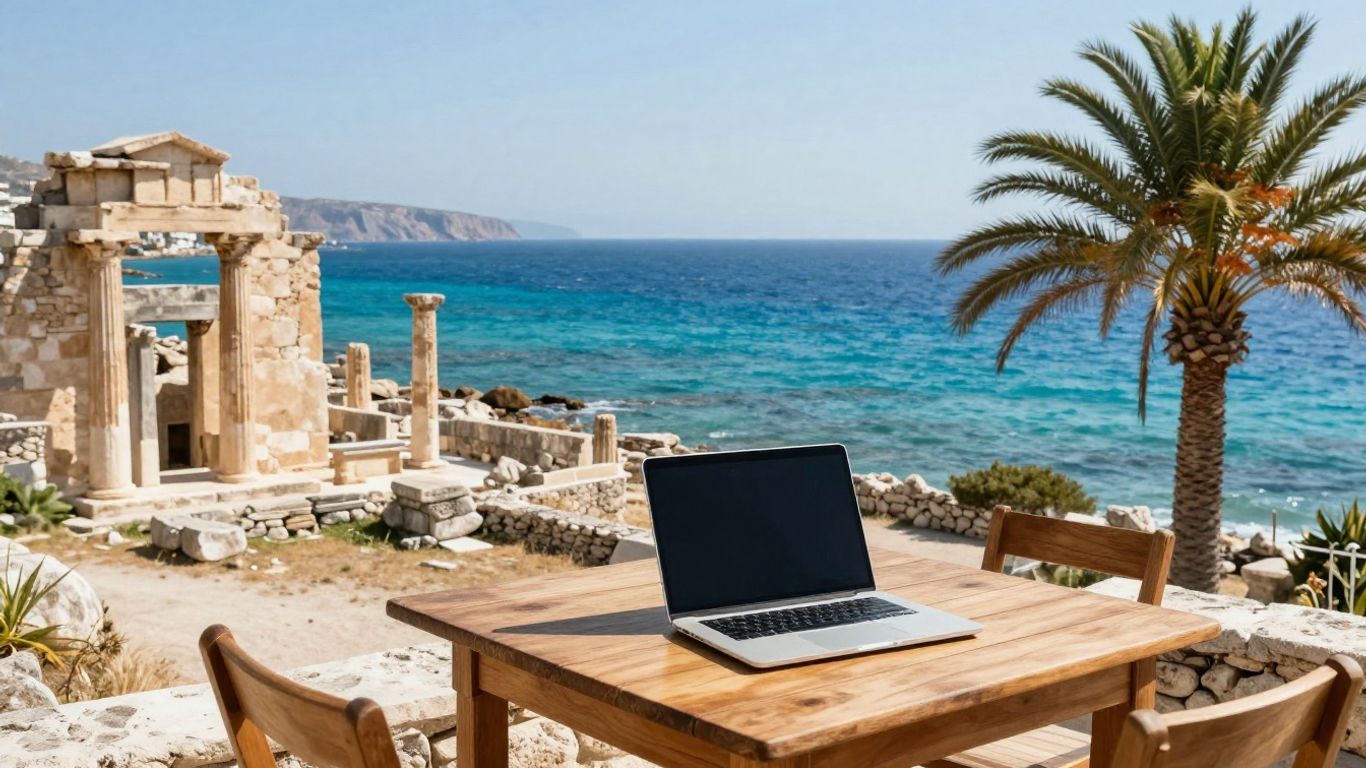 Digital nomad working remotely in Greece with laptop and sea view.
Alright, let's talk about the paperwork. Getting your Greek digital nomad visa sorted means gathering a few key documents. It might seem like a lot, but breaking it down makes it manageable. The goal is to show you're a legitimate remote worker with the means to support yourself and a plan to stay in Greece.
Passport and Visa Photos
First up, your passport. It needs to be valid for at least three months beyond your intended stay in Greece and have at least two blank pages. You'll also need recent passport-sized photos. Make sure they meet the specific requirements for Greek visa applications – usually, this means a plain white background and a neutral expression. It's always a good idea to check the latest photo specifications with the Greek consulate or embassy you're applying through, as these can sometimes change.
Proof of Accommodation in Greece
This is where you show you've got a place to stay. You can provide a rental agreement for an apartment or a hotel booking confirmation. If you're planning on a longer stay and want to save money, you might consider something like a home exchange. Platforms exist where you can swap homes with locals, which can be a really authentic way to live like a Greek resident and often comes with reliable WiFi and dedicated workspaces, perfect for digital nomads. You can find options for places all over Greece, from bustling cities to quieter islands. Explore home exchange options for your Greek adventure.
Health Insurance Coverage
This is non-negotiable. You absolutely need to have comprehensive travel or health insurance that covers you for your entire stay in Greece. It should include medical expenses and repatriation. This isn't just a bureaucratic hurdle; it's about your well-being. You don't want to be caught out if something unexpected happens. Make sure the policy clearly states it's valid in all Schengen Area countries.
It's wise to get copies of all your documents, both digital and physical. Keep them separate from the originals. This way, if something gets lost or stolen, you won't be left completely stranded.
Here's a quick checklist to keep you on track:
- Valid Passport: With at least six months validity and blank pages.
- Passport Photos: Meeting specific visa photo requirements.
- Proof of Income: Showing you meet the minimum financial threshold.
- Accommodation: Rental contract, hotel booking, or similar.
- Health Insurance: Valid for the duration of your stay in Greece.
- Employment Proof: Contract or letter from your employer/clients.
- Criminal Record Check: From your country of residence.
- Application Form: Completed and signed.
Life as a Digital Nomad in Greece
So, you've got the Greece digital nomad visa sorted. Awesome! Now, what's it actually like to live and work there? It's pretty different from just visiting, you know? You get to feel the real pulse of the place.
Cost of Living in Greek Cities
Let's talk money. Greece is generally more affordable than a lot of Western Europe, which is a big plus. Athens, the capital, will naturally be a bit pricier, but still manageable. Smaller towns and islands? You can really stretch your euros there. Think about your daily habits – eating out, transportation, groceries. It all adds up, but compared to, say, London or Paris, you'll likely find your money goes further.
Here's a rough idea, but remember these are just estimates:
| City | Monthly Rent (1-bed apt) | Utilities (approx.) | Groceries (monthly) | Public Transport (monthly) |
|---|---|---|---|---|
| Athens | €500 - €800 | €100 - €150 | €250 - €350 | €30 |
| Thessaloniki | €400 - €650 | €90 - €130 | €230 - €320 | €25 |
| Crete (Chania) | €350 - €550 | €80 - €120 | €200 - €300 | €20 |
Internet Reliability and Co-working Spaces
This is super important for us nomads, right? Major cities in Greece have decent internet, especially if you're looking at apartments that have been updated. Fiber optic is becoming more common, but it's always a good idea to double-check the specifics with your landlord or accommodation provider. Mobile data is pretty solid across the country too, so having a local SIM card with a hotspot can be a lifesaver if your main connection hiccups.
If you need a dedicated workspace or just a change of scenery, you'll find co-working spaces popping up, particularly in Athens and Thessaloniki. They're often great spots to meet other remote workers and get a feel for the local scene. Some places even offer day passes, so you can try them out.
Cultural Immersion and Lifestyle
This is where Greece really shines. Forget the tourist traps; living here means you get to experience the real rhythm of Greek life. It's about those slow mornings with coffee at a local kafeneio, learning which bakery has the best bougatsa, and understanding that dinner usually doesn't even start until late. Embracing this slower pace is key to truly enjoying your time here.
When you're not working, Greece offers an incredible lifestyle. Think about exploring ancient ruins one weekend and lounging on a stunning beach the next. The food is amazing, the people are generally warm and welcoming, and there's a sense of community that's hard to find elsewhere. You might even find yourself using a home exchange to explore different regions and really live like a local, rather than just passing through.
The best times to really soak in Greece are usually late spring and early autumn. May through June, and then September into October, offer beautiful weather without the intense summer heat or the massive crowds. The light is just gorgeous then, and the sea is still warm enough for a dip. Winters are mild, especially in the cities, and you get a much more authentic feel for daily life.
Getting settled into the local way of life takes a little effort, but it's so rewarding. Learning a few basic Greek phrases goes a long way, and don't be afraid to strike up conversations at the local market or taverna. It's these small interactions that make a big difference in feeling truly at home.
Visa Duration and Renewal Policies
So, you've got your digital nomad visa for Greece, and you're probably wondering how long you can actually stay and what happens when that time is up. It's a pretty straightforward process, but it's good to know the details so you don't have any surprises.
Initial Visa Validity Period
When you first get your digital nomad visa, it's typically valid for one year. This gives you a solid amount of time to settle in, explore, and really get a feel for life in Greece. Think of it as your trial period – a whole year to decide if this is the place you want to put down deeper roots, or at least, extend your stay.
Renewal Procedures and Requirements
If you're loving Greece and want to stick around longer, you'll need to renew your visa. The good news is that Greece makes it possible to extend your stay. After your initial year, you can apply to renew your residency permit, which can allow you to stay for up to five years in total, including that first year on the digital nomad visa. This means you can potentially stay in Greece for an extended period beyond the initial visa. The exact requirements for renewal can change, so it's always best to check with the Greek immigration authorities closer to your renewal date. Generally, you'll need to prove you still meet the financial requirements and that you have ongoing accommodation and health insurance.
Transitioning to Permanent Residency
While the digital nomad visa is fantastic for a year or even longer with renewals, you might be thinking about the long game. After a certain period of legal residency in Greece, you may become eligible to apply for permanent residency. This is a whole different ballgame, offering a more settled status. The path to permanent residency usually involves demonstrating continuous legal residence, integration into Greek society, and often, a stronger financial standing than what's required for the initial digital nomad visa. It's a process that takes time and planning, but it's definitely an option for those who fall in love with the Greek lifestyle and want to make it a permanent home.
It's wise to keep all your documentation organized throughout your stay. Having copies of your visa, proof of income, and accommodation details readily available will make any renewal or residency application process much smoother. Think of it as keeping your travel ducks in a row!
Here's a quick look at the general timeline:
- Year 1: Initial Digital Nomad Visa (12 months)
- Year 1 onwards: Renewal of residency permit (potentially up to 4 more years, totaling 5 years)
- After sufficient legal residency: Eligibility for Permanent Residency application
Remember, rules can shift, so staying informed through official channels is key to a successful long-term stay in Greece. If you're considering a longer stay, looking into options like home exchange for extended stays could be a smart way to manage accommodation costs [e34a].
Maximizing Your Greek Experience
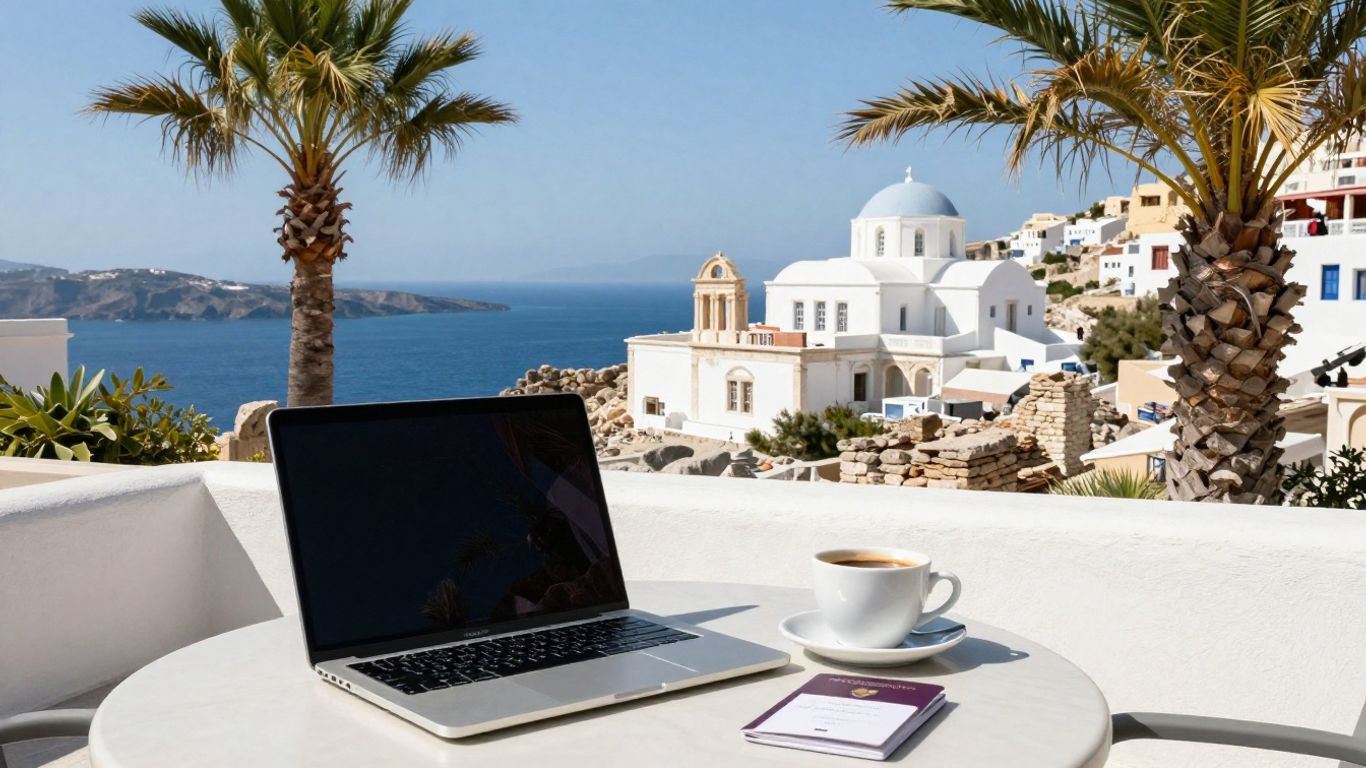 Digital nomad working remotely in Greece with laptop and sea view.
So, you've got the digital nomad visa for Greece, and now it's time to really make the most of it. It's not just about getting work done; it's about living the Greek life, right? This visa is your ticket to experiencing the country beyond the usual tourist spots. Think about it – you have the chance to really settle in, understand the local vibe, and maybe even pick up a few Greek phrases.
Exploring Greece's Islands and Mainland
Greece is way more than just Athens and Santorini, though those are pretty amazing too. The mainland has these incredible historical sites and mountain villages that most tourists never see. Then there are the islands, each with its own personality. You could spend months hopping between them and still not see everything. Consider planning your travels around different seasons to catch unique local festivals or just enjoy the quieter, off-season charm. For instance, visiting Crete in the spring means wildflowers everywhere, while the Peloponnese in autumn offers harvest festivals and perfect hiking weather. Don't just stick to the famous spots; venture out to places like Epirus for its dramatic landscapes or the Dodecanese islands for a different island feel.
Integrating into Local Communities
This is where the real magic happens. Instead of just being a visitor, try to become part of the community, even if it's just for a little while. Find a local cafe where you can become a regular, shop at the neighborhood markets, and maybe even join a local club or volunteer group if you have the time. Learning a few basic Greek phrases goes a long way – people really appreciate the effort. It opens doors to conversations and experiences you wouldn't get otherwise. Think about using a home exchange service; it's a great way to live in a real neighborhood and get insider tips from your host, making your stay feel much more authentic than a hotel ever could. This kind of travel really lets you connect.
Leveraging the Visa for Long-Term Stays
Your digital nomad visa isn't just a temporary pass; it's a foundation for a longer Greek adventure. Think about how you can use this time to explore different regions, perhaps even spending a few months in one place and then moving to another. This allows for a deeper dive into the culture and lifestyle. You might find yourself drawn to the slower pace of island life for a summer and then the vibrant energy of Thessaloniki for the winter. Planning your stays strategically can help you avoid peak tourist seasons and costs, making your experience more affordable and enjoyable. It's all about embracing the rhythm of Greece and making it your own.
The beauty of having a digital nomad visa is the flexibility it offers. You can truly live like a local, not just a tourist passing through. This means discovering hidden tavernas, understanding the local siesta culture, and appreciating the unhurried pace of life that makes Greece so special.
Conclusion
So, you're thinking about trading your usual workspace for the sunny shores of Greece? The Greece digital nomad visa makes that dream a real possibility. It's a pathway to experiencing the rich culture, beautiful landscapes, and laid-back lifestyle of Greece while keeping your remote job. While the application process requires careful preparation, understanding the requirements, gathering the right documents, and knowing what to expect financially will set you up for success. Greece offers a unique blend of ancient history and modern living, making it an exciting destination for any digital nomad looking for a change of scenery. Get ready to explore ancient ruins, swim in crystal-clear waters, and enjoy delicious food – all as part of your new work-life balance.
Frequently Asked Questions
Who can apply for the Greece digital nomad visa?
Basically, if you work for a company or run your own business outside of Greece, and you can do your job using just your computer and the internet, you might be able to apply. You just need to show that you make enough money to live comfortably in Greece without needing a job there.
How much money do I need to earn to qualify?
You'll need to show you earn at least 3,500 Euros each month after taxes. This amount is what helps the Greek government know you can support yourself while you're there and won't be a burden on their system.
What documents are most important for my application?
You'll need things like your passport, proof of your income (like pay stubs or tax returns), a letter from your employer saying you work remotely, and proof of health insurance that covers you in Greece. Sometimes, you'll also need to show where you plan to live.
Can I work for a Greek company with this visa?
No, this visa is specifically for people who work for companies or clients located outside of Greece. It's designed for remote workers who are bringing their foreign income into the country, not for taking jobs from locals.
How long does the visa last and can I stay longer?
The visa is usually given for one year at first. After that, you can apply to renew it. If you want to stay even longer, you might be able to apply for a different type of residency permit later on.
Is it easy to find a place to live and good internet in Greece?
Yes, many cities in Greece have good internet, especially in bigger towns and tourist areas. You can find apartments or rooms to rent, and there are also co-working spaces available if you need a dedicated spot to work. Just be sure to check the internet speed where you plan to stay.

Published by
SwappaHome
SwappaHome Editorial Team
Home Exchange & Slow Travel Editorial
The SwappaHome Editorial Team brings together travel research, home-exchange community insights, and platform data to produce practical guides for first-time and experienced home swappers. Every article cites real platforms, current market rates, and verifiable city-level facts so readers can make informed decisions without guessing.
Ready to try home swapping?
Join SwappaHome and start traveling by exchanging homes. Get 7 free credits when you sign up!