
Your Guide to the Korea Digital Nomad Visa: Requirements and Application Process

SwappaHome Editorial Team
Home Exchange & Slow Travel Editorial
Before jumping into your application, here’s a quick rundown of what matters most about the Korea digital nomad visa. Key Takeaways You need to prove a steady…
Before jumping into your application, here’s a quick rundown of what matters most about the Korea digital nomad visa.
Key Takeaways
- You need to prove a steady income to qualify for the Korea digital nomad visa.
- The visa usually lasts one year but can be renewed if you still meet the requirements.
- Health insurance is required before you arrive in South Korea.
- Prepare all paperwork, including proof of work and financial documents, before applying.
- Living in South Korea as a digital nomad means reliable WiFi and plenty of coworking spaces.
Understanding the Korea Digital Nomad Visa
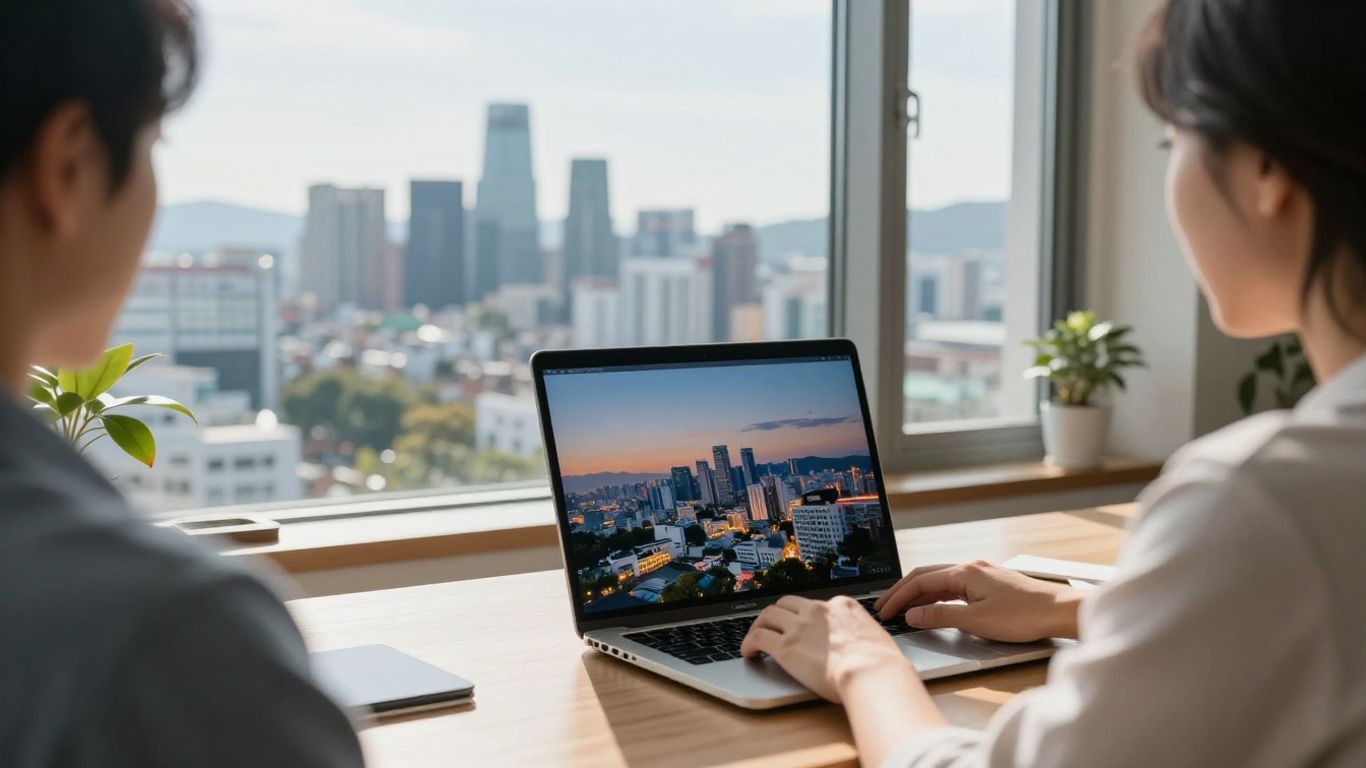 Digital nomad working with Seoul skyline view.
So, you're thinking about working remotely from South Korea? That's awesome! The Korea Digital Nomad Visa, officially known as the H-10 visa, is designed specifically for folks like us who want to live and work online from this vibrant country. It's a relatively new option, so understanding its ins and outs is key to making your dream a reality.
Eligibility Criteria for Applicants
To even be considered for this visa, you've got to meet a few basic requirements. It's not super complicated, but you definitely need to pay attention to the details.
- Age: You generally need to be between 18 and 34 years old. This is a big one, so if you're outside this range, this specific visa might not be for you.
- Nationality: It's primarily for citizens of countries with which South Korea has a working holiday agreement. This includes places like Australia, Canada, New Zealand, and several European nations. Always double-check if your country is on the official list.
- Purpose of Visit: You need to prove that your main reason for being in Korea is to experience the culture and have a holiday, with the ability to work to fund your stay. It's not for people looking to take up long-term employment with a Korean company.
- Financial Means: You'll need to show you have enough money to support yourself. This is super important so they know you won't be a burden on the state.
- Health: A clean bill of health is usually required, often meaning a recent medical examination and sometimes a tuberculosis test.
- Criminal Record: A clear criminal record is a must.
Key Benefits of the Visa
Why go through the trouble of getting this visa? Well, there are some pretty sweet perks.
- Cultural Immersion: This visa is all about experiencing Korean culture firsthand. You get to live like a local, try all the amazing food, and explore beyond the usual tourist spots. It’s a fantastic way to really get to know the country.
- Work Flexibility: While you can't take up permanent jobs, you can work for employers outside of Korea or take on short-term jobs within Korea to help fund your adventures. This gives you the freedom to earn while you explore.
- Extended Stay: Compared to a typical tourist visa, this one allows for a much longer stay, giving you ample time to really settle in and explore.
Visa Duration and Renewal Options
When you get approved for the H-10 visa, it's typically valid for one year. This visa is generally not renewable, meaning once your year is up, you'll need to leave South Korea and apply for a new visa if you wish to return. Some sources mention possibilities for extension under specific circumstances, but it's best to assume it's a one-year, non-renewable permit. Always check the latest regulations with the Korean embassy or consulate in your home country, as rules can change.
It's important to remember that this visa is designed for a temporary experience. If you're looking for a long-term work or residency solution, you'll need to explore different visa categories. But for an immersive year of work and travel, the H-10 visa is a fantastic gateway.
Navigating the Application Process
So, you've decided South Korea is your next digital nomad destination. Awesome! Now comes the part where we get down to business: actually applying for the visa. It might seem a bit daunting, but breaking it down makes it totally manageable. Think of it like packing for a big trip – you just need a good checklist and a plan.
Required Documentation Checklist
Getting your paperwork in order is the first big step. You'll need to gather a few key documents to show the immigration officials that you're a legitimate remote worker and won't be a burden on the system. Having everything ready beforehand will save you a ton of stress.
Here's a general list of what you'll likely need:
- Completed Visa Application Form: You can usually download this from the official website of the South Korean embassy or consulate in your country.
- Valid Passport: Make sure it has at least six months of validity remaining and plenty of blank pages.
- Passport-Sized Photographs: Recent ones, usually meeting specific size and background requirements.
- Proof of Employment: This could be a letter from your employer stating your position, salary, and that you work remotely. If you're self-employed, you'll need business registration documents and client contracts.
- Proof of Income: Bank statements showing a consistent income over a specific period (often the last 6-12 months). This is to prove you can support yourself.
- Business Registration (if applicable): If you're a freelancer or business owner.
- Criminal Record Certificate: Some applicants might need this, depending on the consulate.
- Proof of Accommodation in South Korea: This could be a hotel booking or a lease agreement. If you're planning on using a home exchange, you'd need to show proof of that arrangement, like a confirmed booking through a platform that facilitates these kinds of stays, such as Swappahome.
Step-by-Step Application Guide
Once you have your documents, it's time to put them all together and submit them. The exact process can vary slightly depending on where you're applying from, but here's a general roadmap:
- Confirm Specific Requirements: Always check the official website of the South Korean embassy or consulate in your country. They will have the most up-to-date and precise list of documents and procedures.
- Gather All Documents: Collect everything from the checklist. Make copies of everything, too – it's always good to have backups.
- Fill Out the Application Form: Be thorough and honest. Any mistakes or missing information could cause delays.
- Schedule an Appointment (if required): Some consulates require you to book an appointment to submit your application in person.
- Submit Your Application: This is usually done in person at the embassy or consulate, though some may allow mail-in applications.
- Attend an Interview (if requested): You might be called in for a brief interview to clarify any details.
- Pay the Visa Fee: There will be a fee associated with the visa application.
- Wait for Processing: Processing times can vary, so be patient.
The South Korean government is keen on attracting skilled remote workers, and the digital nomad visa is a big part of that initiative. They want to make it as straightforward as possible for qualified individuals to come and contribute to the economy while enjoying the country. Just be sure to follow their guidelines precisely.
Where to Submit Your Application
Generally, you'll submit your application to the South Korean embassy or consulate that has jurisdiction over your place of residence. This means you need to find the specific South Korean diplomatic mission serving your country or region. It's not usually possible to apply once you're already in South Korea on a tourist visa, so plan ahead. You can find a list of diplomatic missions on the Ministry of Foreign Affairs website for South Korea.
Remember, thorough preparation is key. Double-checking all your documents and understanding the process will make your journey to becoming a digital nomad in South Korea much smoother.
Financial Requirements for Nomads
 Digital nomad working in a Seoul cafe with laptop and passport.
Okay, let's talk about the money side of things for the Korea Digital Nomad Visa. This isn't just about having enough cash for your daily coffee; it's about proving to the Korean government that you can support yourself without needing to work for a Korean company or rely on public funds. They want to see a solid financial foundation.
Minimum Income Thresholds
The big number here is your income. You need to show you've been earning a decent amount consistently. For the digital nomad visa, the requirement is an annual income of ₩88.1 million, which is roughly $66,000 USD as of mid-2026. This isn't a one-time thing; it's based on your income over the past year. They're looking at your earnings from remote work for companies outside of South Korea.
Proof of Financial Stability
So, how do you actually prove this? You'll need to gather official documents. Think bank statements for the last six months to a year, showing regular income deposits. Pay stubs or employment contracts from your foreign employer are also key. If you're a freelancer or business owner, you'll need tax returns and possibly invoices or contracts that demonstrate your income stream. It’s all about showing a consistent and reliable source of funds.
Understanding Associated Fees
Beyond the income requirement, there are other costs to consider. You'll have the visa application fee itself, which varies depending on where you apply. Then there are costs for document translation and notarization if needed. Don't forget travel insurance – it's mandatory and can add a few hundred dollars depending on your coverage. Plus, you'll need to factor in the cost of living in South Korea, which can vary a lot depending on the city you choose. It's wise to have a buffer for unexpected expenses, too. Planning ahead for these costs can save you a lot of stress down the line.
Remember, these financial requirements are there to ensure you can comfortably live and work in South Korea without becoming a burden. Having a clear picture of your finances and gathering all the necessary proof beforehand will make the application process much smoother. It's also a good idea to look into cost-effective accommodation options to make your money stretch further once you arrive.
Essential Preparations Before Arrival
Okay, so you've got the visa sorted and you're actually going to South Korea! That's awesome. But before you start packing those shorts and dreaming of kimchi, there are a few practical things you really need to sort out. It’s not the most exciting part, I know, but trust me, getting these sorted beforehand makes everything so much smoother when you land.
Securing Health Insurance Coverage
This is a big one. You absolutely need to have health insurance that covers you while you're in South Korea. Your visa application might even require proof of this. Don't just assume your home country's insurance will cover you abroad – it usually doesn't for extended stays. You'll want a policy that covers medical emergencies, hospital stays, and ideally, any pre-existing conditions you might have. It’s worth shopping around to find a plan that fits your needs and budget. Some digital nomad-specific insurance plans are pretty good and designed for people like us.
Finding Suitable Accommodation
While you might be tempted to just wing it and find a place when you get there, it’s a much better idea to have at least your first week or two sorted. This takes a huge amount of stress off your shoulders right away. You can look at short-term rentals, guesthouses, or even hostels if you're on a tighter budget initially. Some people even use home exchange platforms for longer stays, which can be a really cost-effective way to live like a local. Just make sure whatever you book has reliable internet – that’s non-negotiable for us, right?
Setting Up Local Banking and Communication
Getting a local SIM card or a portable Wi-Fi egg is usually pretty straightforward at the airport or in the city. Having a local number makes everything easier, from setting up bank accounts to just getting around. Speaking of banks, you'll probably want to open a local account if you plan on staying for a while. This makes paying bills and getting paid much simpler. You'll need your visa and passport for this, so keep those handy. It might seem like a lot of admin, but getting these basics sorted means you can actually relax and enjoy Korea once you're there.
Remember, being prepared doesn't mean having every single detail planned out. It means having the foundational elements in place so you can be flexible and spontaneous when opportunities arise. Think of it as setting yourself up for success, not locking yourself into a rigid schedule.
Life as a Digital Nomad in South Korea
So, you've got the visa, you've packed your bags, and now you're actually in South Korea. What's it like living and working here as a digital nomad? It's a pretty unique experience, that's for sure. You've got this amazing blend of super-modern cities and really peaceful, traditional spots, all within easy reach.
Exploring South Korea's Cities
Each city has its own vibe. Seoul, obviously, is the big one – think bustling streets, incredible food everywhere you turn, and endless shopping. But don't sleep on other places. Busan offers a coastal feel with beaches and a more relaxed pace, while places like Jeonju are famous for their traditional Hanok villages and delicious food. It's easy to hop between them too, thanks to the KTX high-speed train system. You can literally have breakfast in Seoul and be exploring the streets of Busan by lunchtime.
Workspaces and Connectivity
Finding a good spot to actually get work done is usually pretty straightforward. Cafes are everywhere, and many have decent Wi-Fi. Some are super quiet and perfect for focusing, while others are lively hubs where you can feel the city's energy. If you need something more dedicated, there are co-working spaces popping up in major cities. Honestly, the internet speed in South Korea is generally fantastic, so you shouldn't have too many issues with connectivity, whether you're in a big city or a smaller town. It's one of the most connected countries in the world, after all.
The ease of getting around and the reliable infrastructure really make it simple to focus on your work while still being able to explore. You're not constantly battling bad Wi-Fi or long travel times between places you want to see.
Cultural Immersion and Lifestyle
Living here means diving into a culture that's both ancient and cutting-edge. You'll find yourself surrounded by K-pop and the latest tech, but also by centuries-old temples and traditions. The food scene alone is worth the trip – from street food stalls to fancy restaurants, there's always something new to try. Plus, the public transport is efficient and affordable, making it easy to get out and experience different parts of the country. It's a lifestyle that balances productivity with a lot of opportunities for discovery. If you're looking for a place that offers both a solid work environment and a rich cultural tapestry, South Korea is definitely worth considering. You might even find yourself looking into home exchange opportunities to make longer stays even more affordable and authentic.
Visa Considerations and Next Steps
So, you've got your digital nomad visa sorted and you're ready to pack your bags for South Korea. That's awesome! But before you book that flight, let's chat about a few things to make sure your transition is as smooth as possible and your stay is everything you hoped for. It's all about being prepared and knowing what to expect.
Common Pitfalls to Avoid
It's easy to get caught up in the excitement and overlook some details. One common mistake is not having a confirmed Korean address before applying. The visa application requires this, so make sure you've sorted out your accommodation situation. Another thing to watch out for is the validity of your supporting documents. Certificates like proof of employment need to be recent, usually issued within the last three months. Double-check these dates! Also, be aware of the visa's limitations. This visa is for temporary stays and doesn't automatically grant you the right to work for a Korean company. You're there to work remotely for your existing clients or employer.
Maximizing Your Stay
To really make the most of your time in South Korea, think beyond just work. Plan some weekend trips to explore different regions. Maybe you'll find a favorite city outside of Seoul, like Busan with its beaches or Jeonju for its traditional culture. Consider how you'll handle accommodation long-term. While hotels are an option, exploring alternatives like home swapping could be a way to save money and live more like a local. This can also provide you with a more stable workspace and a better feel for the community. Remember to check out resources on cost-effective accommodation to help stretch your budget further.
Transitioning After Your Visa Expires
What happens when your digital nomad visa is nearing its end? It's wise to start thinking about this a few months in advance. You'll need to decide if you want to apply for an extension, if that's even possible with your specific visa type, or if you'll be heading to your next destination. If you're considering staying longer in Korea, research other visa options that might be available to you, though this often involves leaving the country and applying anew. If you're moving on, start looking into your next adventure. Planning your departure, including any necessary administrative tasks like closing local bank accounts or settling bills, is just as important as planning your arrival. For those looking to continue their travels affordably, understanding how home swapping networks work can be a game-changer for future trips.
Conclusion
If you’re thinking about working remotely from South Korea, the Korea digital nomad visa makes it possible. The process takes some planning, but it’s not too hard if you stay organized. Make sure you meet the income rules, get your paperwork in order, and double-check all the requirements before sending anything in. Once you’re set up, you’ll get to enjoy South Korea’s mix of modern cities, fast internet, and unique culture. It’s a great way to see the country while still keeping up with your remote job. Just remember to check for updates, as visa rules can change. Good luck with your application!
Frequently Asked Questions
Who can apply for the Korea digital nomad visa?
Anyone who works remotely for a company outside Korea and meets the income requirements can apply.
How much money do I need to make for this visa?
You need to show proof of a steady income, usually above a set minimum. Check the latest amount before applying.
Do I need health insurance for this visa?
Yes, you must have health insurance that covers you while you’re in South Korea.
How long does the visa last?
The visa is usually good for one year. You can apply to renew it if you still qualify.
Can I bring my family with me?
Yes, some family members can join you, but you’ll need to show extra paperwork and meet more rules.
Where do I apply for the Korea digital nomad visa?
You usually apply at a Korean embassy or consulate in your home country. Always check their website for the latest details.

Published by
SwappaHome
SwappaHome Editorial Team
Home Exchange & Slow Travel Editorial
The SwappaHome Editorial Team brings together travel research, home-exchange community insights, and platform data to produce practical guides for first-time and experienced home swappers. Every article cites real platforms, current market rates, and verifiable city-level facts so readers can make informed decisions without guessing.
Ready to try home swapping?
Join SwappaHome and start traveling by exchanging homes. Get 7 free credits when you sign up!