
10 best vacations spots USA travelers should visit in 2026

SwappaHome Editorial Team
Home Exchange & Slow Travel Editorial
Key Takeaways The best vacations spots usa travelers choose in 2026 will depend on the kind of trip they want: big-city energy, open-road scenery, family fun,…
Key Takeaways
The best vacations spots usa travelers choose in 2026 will depend on the kind of trip they want: big-city energy, open-road scenery, family fun, or quiet time outdoors.
- New York and New Orleans bring especially strong food, music, and cultural experiences.
- Orlando works well for families who want several types of entertainment in one trip.
- Yellowstone, the Grand Canyon, and Acadia offer memorable landscapes and outdoor adventure.
- Maui and San Diego pair beaches with distinctive local scenery and an easygoing pace.
- Washington, D.C., and Nashville reward travelers who enjoy history, museums, music, and neighborhoods.
1. New York City, New York
New York City remains one of the easiest places in the country to build a vacation around personal interests. A single day might move from a quiet breakfast in a neighborhood café to a museum, a park, a Broadway performance, and a late dinner without ever feeling repetitive. The city is busy and expensive in places, but its sheer variety makes it a reliable choice for a first visit or a return trip.
The best way to experience it is to leave some room between major attractions. Walk through a few blocks of Manhattan, spend time in Brooklyn, or choose a park bench over another scheduled stop. Neighborhoods give the city its texture, from brownstones and bodegas to galleries, food halls, and small music venues. A New York home exchange can also put visitors closer to the everyday rhythm of local streets rather than keeping the entire trip centered on hotel corridors.
Timing changes the mood considerably. Spring brings green parks and longer afternoons, while autumn is particularly pleasant for walking and exploring. Summer has more outdoor events but also heavier crowds, and winter can be brisk even when the city feels at its most theatrical. For travelers who enjoy spontaneity, New York may be the most flexible destination on this list.
2. Orlando, Florida
Orlando is often treated as a theme-park destination alone, but it is better understood as a broad vacation base. Families can combine major attractions with water parks, sports, gardens, shopping, and relaxed meals that suit different ages. The city is built for trips where everyone wants something slightly different, which is a useful quality when traveling with children or a larger group.
 Family enjoying Orlando theme park evening
A practical Orlando itinerary alternates high-energy days with slower ones. Plan the attractions that require the most stamina early, then leave space for a pool afternoon or an unhurried dinner. Nearby natural areas and smaller communities can offer a change of pace when the bright spectacle begins to blur together. A home with a kitchen and laundry may be particularly convenient for families, and family home exchange options can help travelers think beyond a standard room setup.
Orlando is warm for much of the year, though rain can arrive suddenly in summer. Winter and early spring are popular because the weather is comfortable, so advance planning matters during school breaks. Whatever the season, the strongest trips usually balance scheduled highlights with enough downtime to keep the whole family in good spirits.
3. Yellowstone National Park, Wyoming
Yellowstone feels larger than a conventional vacation destination. Its geysers, hot springs, forests, lakes, and broad valleys create a trip that is shaped as much by driving and weather as by individual viewpoints. The park rewards patience: a bend in the road can reveal a bison herd, an elk, or a sudden sweep of mountains and sky.
The geothermal areas deserve time rather than a quick photograph. Boardwalks lead visitors through landscapes that look almost unreal, while overlooks around the Grand Canyon of the Yellowstone offer a different kind of drama. Wildlife is most compelling when observed from a safe distance, with binoculars and a willingness to wait. Roads, services, and trail conditions vary by season, so a realistic route is more valuable than an ambitious checklist.
Summer offers the broadest access but can be crowded around the most famous sites. Shoulder seasons may feel quieter, though some facilities and roads operate on reduced schedules. Bring layers, water, and food for stretches between developed areas. Yellowstone is a destination for travelers who like the day to remain a little open-ended.
4. Grand Canyon, Arizona
The Grand Canyon is one of those places that can make a short stop feel significant. From the rim, layers of red, orange, and violet rock extend across an immense distance, changing color as the sun moves. The scale is difficult to absorb all at once, which is why an unhurried visit often leaves a stronger impression than a rushed drive-through.
Sunrise and sunset are popular for good reason, but quieter midday walks can be just as rewarding when the light reveals different details in the rock. Visitors should treat the canyon as a demanding environment, especially when hiking below the rim. Downhill feels easier than the return climb, and heat can become serious even when the air at the top seems pleasant. Good footwear, water, and conservative planning matter here.
The South Rim is open year-round and offers broad visitor access, while the North Rim has a shorter operating season. A few days allow travelers to combine overlooks with a longer trail or a scenic drive. The Grand Canyon suits both careful planners and photographers who simply want time to stand still and watch the landscape change.
5. Maui, Hawaii
Maui brings together beaches, volcanic terrain, green valleys, and small communities in a way that supports many different vacation styles. Some visitors come for long mornings near the water, while others want road trips, snorkeling, hiking, or a sunrise above the clouds. The island’s appeal is not just its scenery but the ease of shifting from a beach day to a mountain or rainforest experience.
A good Maui trip leaves room for weather and traffic, especially on winding routes. The road to Hana is better approached as a full-day journey than as a hurried attraction, with attention to pullouts and local conditions. Ocean activities depend on seasonal surf and wind, and visitors should follow local guidance rather than assuming every beach is suitable for swimming. Respect for the land and communities makes the experience better for everyone.
The dry western and southern areas can feel very different from the lush eastern side. Couples looking for a slower stay may appreciate a romantic home exchange, while active travelers might prefer a base that makes early starts simple. Maui is at its best when the schedule is light enough for an unexpected lookout, a local meal, or an extra hour by the water.
6. San Diego, California
San Diego is an appealing choice for travelers who want coastal scenery without giving up museums, neighborhoods, and good food. Its beaches have distinct personalities, from broad stretches suited to long walks to smaller coves framed by cliffs. The weather is generally inviting, but the city’s character comes from more than sunshine: it has gardens, historic districts, craft traditions, and a strong connection to the Pacific.
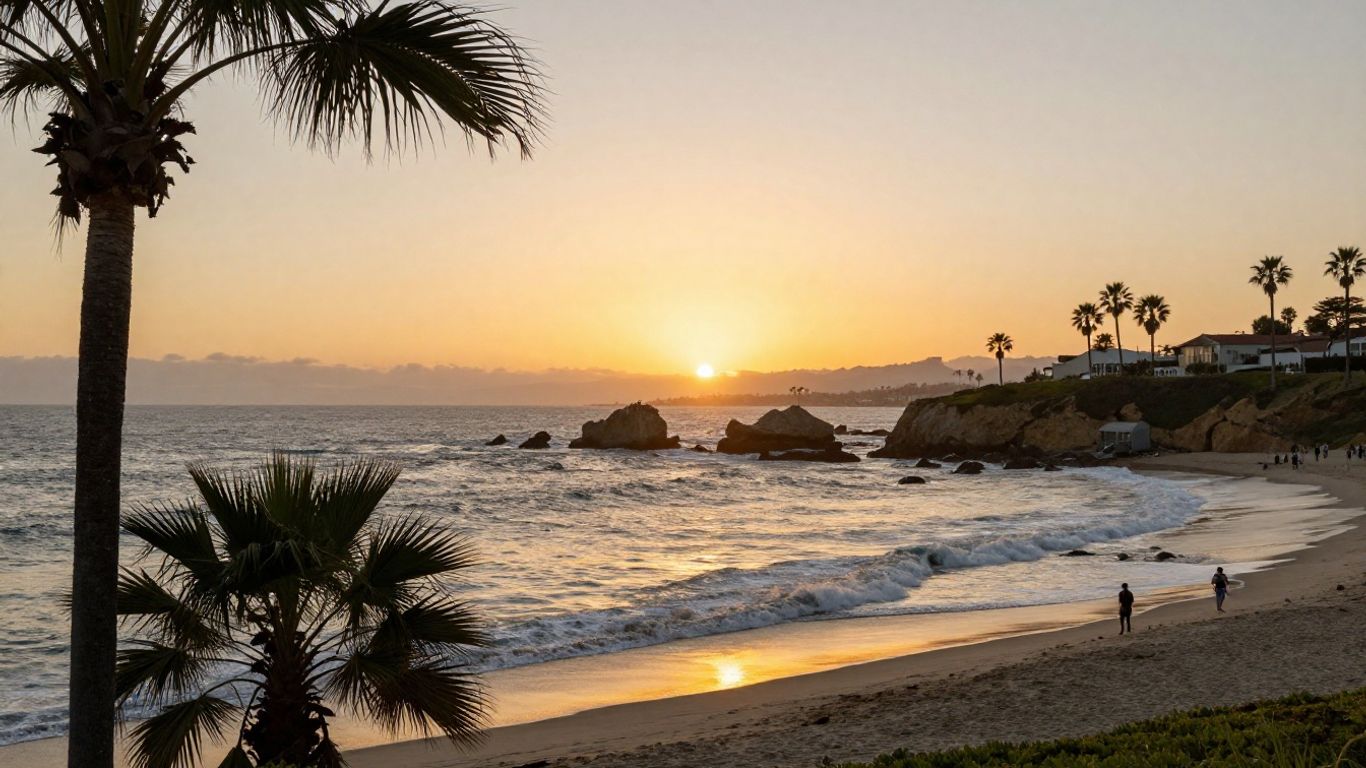 San Diego coastline with palm trees at sunset
Balboa Park can anchor a full day, especially for visitors who enjoy architecture, gardens, and cultural institutions. Elsewhere, neighborhoods such as Little Italy and North Park offer places to eat and wander, while La Jolla adds rocky shoreline and marine views. A simple plan works well: choose one inland activity, one coastal stretch, and one meal worth traveling for instead of trying to cover the entire county.
San Diego also makes a comfortable base for a longer Southern California journey. Summer beach weather attracts crowds, while spring and fall can bring a calmer pace. Travelers who want a local residential feel can explore solo travel home exchange, which is described as curated options in walkable neighborhoods and real homes rather than hotels.
7. New Orleans, Louisiana
New Orleans is best experienced through its atmosphere as much as its landmarks. Music spills from clubs and bars, historic buildings frame lively streets, and meals can become the centerpiece of an entire evening. The French Quarter is famous, but the city becomes more layered when visitors also spend time in neighborhoods such as the Garden District, Tremé, and Bywater.
Food deserves a flexible itinerary. Gumbo, po’boys, beignets, seafood, and modern interpretations of local cooking all belong in the conversation, but there is no need to turn every meal into a formal event. Live music is similarly varied, from brass bands and jazz to neighborhood venues where the room matters as much as the set list. Walking tours, streetcars, and river views add useful pauses between richer experiences.
Heat and humidity can shape the day, particularly in summer, so early mornings and slower afternoons are sensible. Festival periods bring extra energy and extra demand, while other months may make it easier to settle into the city’s ordinary rhythms. New Orleans is a strong choice for travelers who want their vacation to feel expressive, social, and a little unpredictable.
8. Washington, D.C.
Washington, D.C., makes an excellent trip for curious travelers because its major attractions are unusually concentrated. The National Mall connects monuments, memorials, and museums, while neighborhoods beyond it offer restaurants, bookstores, markets, and a more local pace. It is possible to spend a full day with American history and then end the evening in a lively dining district.
The city rewards grouping activities by area rather than crossing back and forth. A museum day can be followed by an evening walk near the waterfront, and the cherry blossoms bring a memorable seasonal atmosphere when they appear. Many museums have no general admission charge, though special exhibitions and timed-entry rules can vary. Checking current arrangements before leaving home helps protect valuable sightseeing time.
Here is a simple way to compare the city’s main travel strengths when shaping an itinerary:
| Experience | Good fit for | Best planning approach |
|---|---|---|
| National Mall | First-time visitors | Group nearby monuments and museums |
| Smithsonian museums | Curious, rainy-day travelers | Choose one or two rather than rushing |
| Neighborhood dining | Repeat visitors and food lovers | Reserve selectively and explore on foot |
| Cherry blossom season | Photographers and spring travelers | Expect crowds and flexible timing |
The table points to D.C.’s main advantage: variety without long transfers. Give each area enough attention to feel its character, and the trip becomes less like a race through institutions and more like a series of connected walks.
9. Nashville, Tennessee
Nashville has a strong musical identity, but a good visit is not limited to one famous street. Live performances happen in rooms of many sizes, and the city’s creative energy reaches into restaurants, record shops, galleries, and neighborhood bars. Travelers can enjoy the recognizable attractions while still finding quieter corners with their own sound.
The Grand Ole Opry and Country Music Hall of Fame appeal to visitors who want a clear introduction to the city’s musical history. For a more casual evening, choose a venue based on the kind of performance you want rather than simply following the busiest crowd. Nashville’s food scene is broad enough to support several styles of trip, from a quick hot chicken lunch to a long dinner with regional ingredients and inventive cocktails.
Spring and fall are comfortable seasons for walking and patios, though major events can fill accommodations quickly. The city is spread out, so allow time for rides between neighborhoods and avoid packing too many distant stops into one day. Nashville works especially well for friends, couples, and solo travelers who enjoy a social evening followed by an easy morning.
10. Acadia National Park, Maine
Acadia National Park combines rugged coastline, forested trails, ponds, and mountain viewpoints in a relatively compact setting. That variety makes it one of the most rewarding vacations spots usa travelers can choose when they want scenery without committing to a remote wilderness expedition. The nearby coastal communities add seafood, galleries, and places to slow down after a day outside.
The park is beautiful in every season, though each one changes the experience. Summer brings long daylight and broad access, autumn adds vivid foliage, and cooler shoulder-season days may feel more peaceful. Coastal weather can turn quickly, so layers and sensible footwear are worth packing even for a modest walk. Sunrise at Cadillac Mountain is memorable, but other overlooks and trails can provide equally satisfying views with less pressure.
Before setting out, visitors should check current access rules, trail conditions, and any timed reservations that may apply. A short list of priorities is usually better than trying to see every corner in one day. Consider these practical habits for a smoother visit:
- Start early for popular roads, trailheads, and viewpoints.
- Carry water and snacks instead of relying on every stop being open.
- Mix a coastal walk with a forest or pond trail.
- Leave time for Bar Harbor or another nearby community.
These choices keep the park from becoming a hurried sequence of photographs. Acadia is most memorable when travelers notice the changing light, the sound of the water, and the small transitions between mountain and shore.
Conclusion
From energetic cities and music-filled neighborhoods to immense parks and island shores, these ten destinations offer very different ways to travel across the United States in 2026. Choose the place that matches your pace, leave a little room for discovery, and build the itinerary around experiences you will genuinely remember.
Frequently Asked Questions
What is the best vacation destination in the USA for 2026?
There is no single best choice for every traveler. New York suits culture and city energy, Orlando suits family entertainment, and the national parks suit travelers who want dramatic scenery and time outdoors.
Which destination is best for a family vacation?
Orlando is a natural choice because it combines major attractions with pools, dining, shopping, and other activities. Families should still schedule rest days so the trip does not become exhausting.
What is a good USA destination for outdoor adventure?
Yellowstone, the Grand Canyon, and Acadia all offer memorable outdoor experiences, but they differ in climate and difficulty. Check seasonal access, weather, trail conditions, and your own comfort level before planning hikes.
When is the best time to visit New York City?
Spring and autumn are often comfortable for walking and sightseeing. Summer has more outdoor programming, while winter can offer a festive atmosphere if you are prepared for cold weather.
How many days should a Grand Canyon trip take?
Two or three days allow time for several viewpoints, a scenic drive, and possibly a carefully planned hike. A longer stay gives travelers more flexibility around sunrise, sunset, weather, and crowds.
Which destinations are good for a food-focused vacation?
New Orleans and New York City are especially strong choices because both offer deep culinary traditions and wide variety. Nashville and San Diego also provide plenty of regional specialties and creative dining.
What should travelers consider when planning a national park vacation?
Review seasonal closures, reservations, driving distances, weather, trail difficulty, and access to food or water. National parks often look compact on a map but take longer to explore than expected.

Published by
SwappaHome
SwappaHome Editorial Team
Home Exchange & Slow Travel Editorial
The SwappaHome Editorial Team brings together travel research, home-exchange community insights, and platform data to produce practical guides for first-time and experienced home swappers. Every article cites real platforms, current market rates, and verifiable city-level facts so readers can make informed decisions without guessing.
Ready to try home swapping?
Join SwappaHome and start traveling by exchanging homes. Get 7 free credits when you sign up!