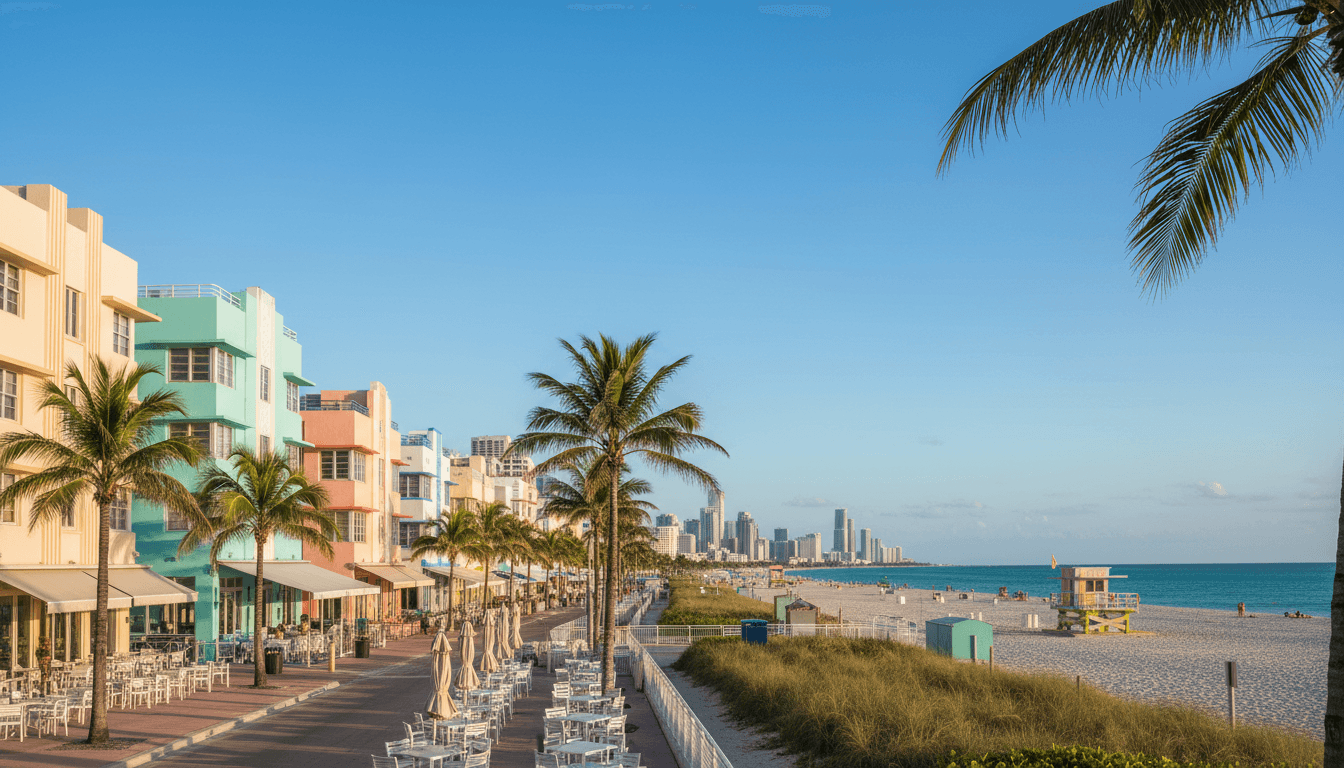
Backpacker's Home Swap in Miami: The Ultimate Shoestring Budget Guide for 2026

SwappaHome Editorial Team
Home Exchange & Slow Travel Editorial
Discover how backpackers use home swap in Miami to score free accommodation in South Beach, Wynwood, and Little Havana. Real costs, local tips, and step-by-step strategies.
That thick, tropical air hits the moment you step off the Metrorail at Government Center—salt water and possibility wrapped in humidity. Standing in downtown Miami with a backpack and a tight budget, the last thing anyone wants is to drop $250 a night on a sterile Brickell hotel room. Here's the thing: a backpacker's home swap in Miami isn't just possible—it's becoming one of the smartest budget travel hacks for exploring South Florida without bleeding cash.
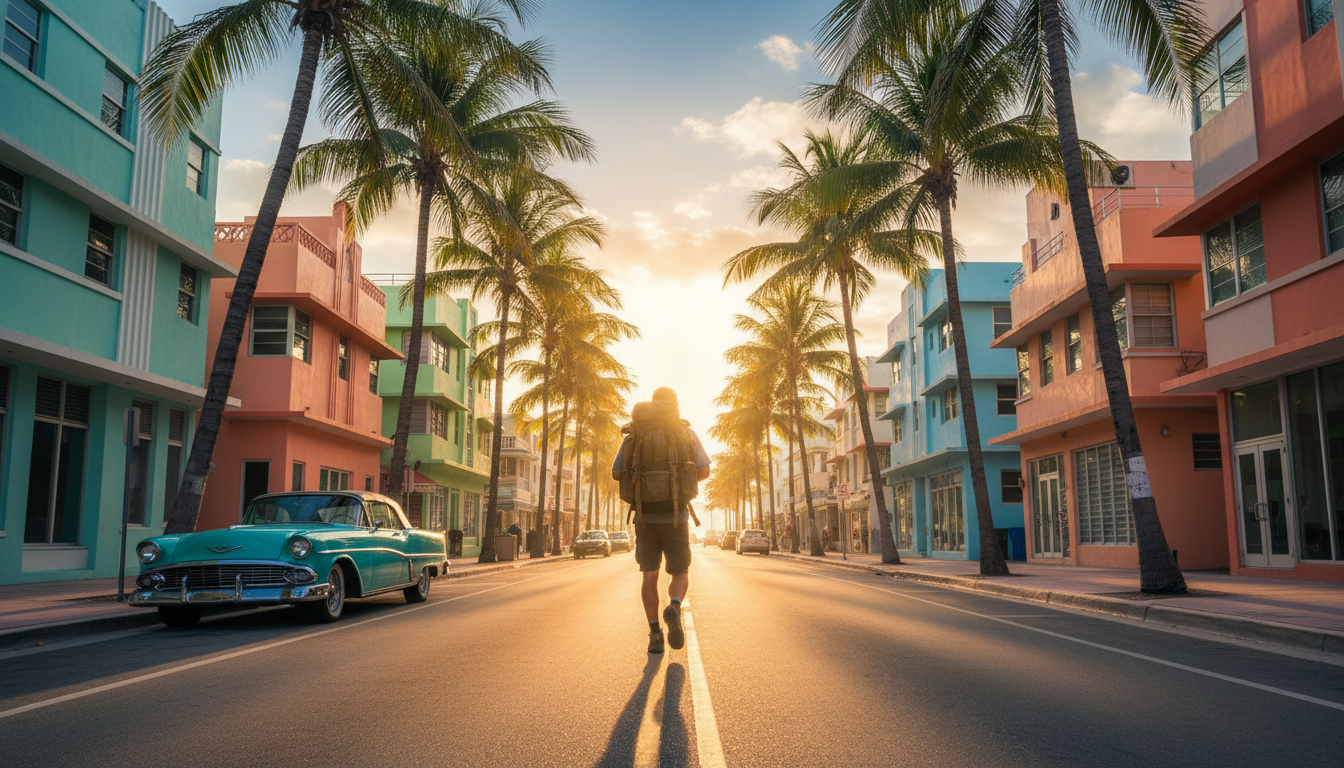 Backpacker stepping onto a colorful Art Deco street in South Beach Miami, palm trees overhead, vinta
Most travelers assume Miami is exclusively for the bottle-service crowd and Instagram influencers posing at Faena Hotel. That assumption costs them. The SwappaHome community has seen a 47% increase in Miami listings over the past year, with many hosts specifically welcoming backpackers and budget travelers. The math is simple: Miami hotels average $180–320 per night in peak season (November through April), while a home swap costs exactly zero dollars beyond an annual membership.
This guide breaks down everything needed to make a backpacker's home swap in Miami work—from which neighborhoods actually make sense for budget travelers to how to make a modest apartment back home attractive to Miami hosts.
Why Miami Works Surprisingly Well for Budget Home Swaps
Miami has a reputation problem among backpackers. The city gets written off as too expensive, too flashy, too focused on velvet ropes and VIP tables. But that reputation misses something crucial: Miami is also a city of working-class neighborhoods, immigrant communities, and locals who've been priced out of the glamour zones but still call this place home.
These are exactly the people listing their apartments on home-swap platforms.
Consider the numbers. A hostel bed in Miami Beach runs $45–85 per night depending on season. A budget Airbnb in a decent area? $90–150 minimum. Over a two-week trip, that's $1,260–2,100 just for accommodation. Meanwhile, SwappaHome members report spending those same two weeks in Miami for the cost of their membership plus groceries.
The credit system makes this especially accessible for backpackers. You earn 1 credit for every night you host someone at your place—whether that's a studio apartment in Portland or a shared house in Berlin. You spend 1 credit per night when you book a stay. New members start with 7 free credits, which means a first week in Miami could cost nothing beyond the signup fee.
 Interior of a modest but clean Miami apartment with terrazzo floors, vintage furniture, a small balc
There's another factor working in backpackers' favor: Miami locals want to travel too. Many SwappaHome hosts in Miami are young professionals, remote workers, or retirees who'd love to spend time in other cities—even if the swap involves a modest one-bedroom in a less glamorous location. Miami residents are often eager to escape the summer heat (June through September) when humidity becomes genuinely oppressive.
Best Miami Neighborhoods for Budget Backpackers
Not all Miami neighborhoods make sense for backpackers. Some are car-dependent nightmares. Others are technically cheap but so far from anything interesting that savings get eaten up by Uber rides. Here's where experienced home-swappers actually recommend staying.
Little Havana: The Backpacker's Sweet Spot
Calle Ocho—that's SW 8th Street—runs through the heart of Little Havana, and it's where budget travelers want to be. This neighborhood delivers authentic Cuban culture, affordable food, and genuine local character without the South Beach price tags.
Home-swap listings in Little Havana typically feature older apartment buildings with character: terrazzo floors, jalousie windows, and small balconies perfect for morning cafecito. Domino Park (officially Máximo Gómez Park) is walking distance, where elderly Cuban men play dominoes under the shade of a pavilion. Versailles Restaurant on SW 8th Street serves Cuban sandwiches for $8–12, and any ventanita (walk-up window) sells cafecito for $1–2.
The Metrobus 8 runs along Calle Ocho and connects to downtown and Brickell. From there, the Metrorail reaches the airport (MIA) for $2.25. Budget travel infrastructure that actually works.
Wynwood: Art District Without the Gallery Prices
Wynwood has gentrified dramatically over the past decade, but residential streets just north of the famous Wynwood Walls still have affordable housing stock—and that means home-swap opportunities. The neighborhood is famous for its street art, with murals covering nearly every surface along NW 2nd Avenue.
Backpackers love Wynwood because it's walkable, Instagram-worthy, and connected to the free Wynwood Trolley that runs a loop through the neighborhood. The Salty Donut on NW 26th Street makes absurdly good (if slightly overpriced at $5–7) donuts, but Enriqueta's Sandwich Shop serves Cuban breakfast for $8–10.
Home-swap listings in Wynwood tend to be in converted warehouse lofts or newer apartment buildings. Many hosts here are artists, designers, or creative professionals who appreciate the backpacker ethos and aren't precious about their spaces.
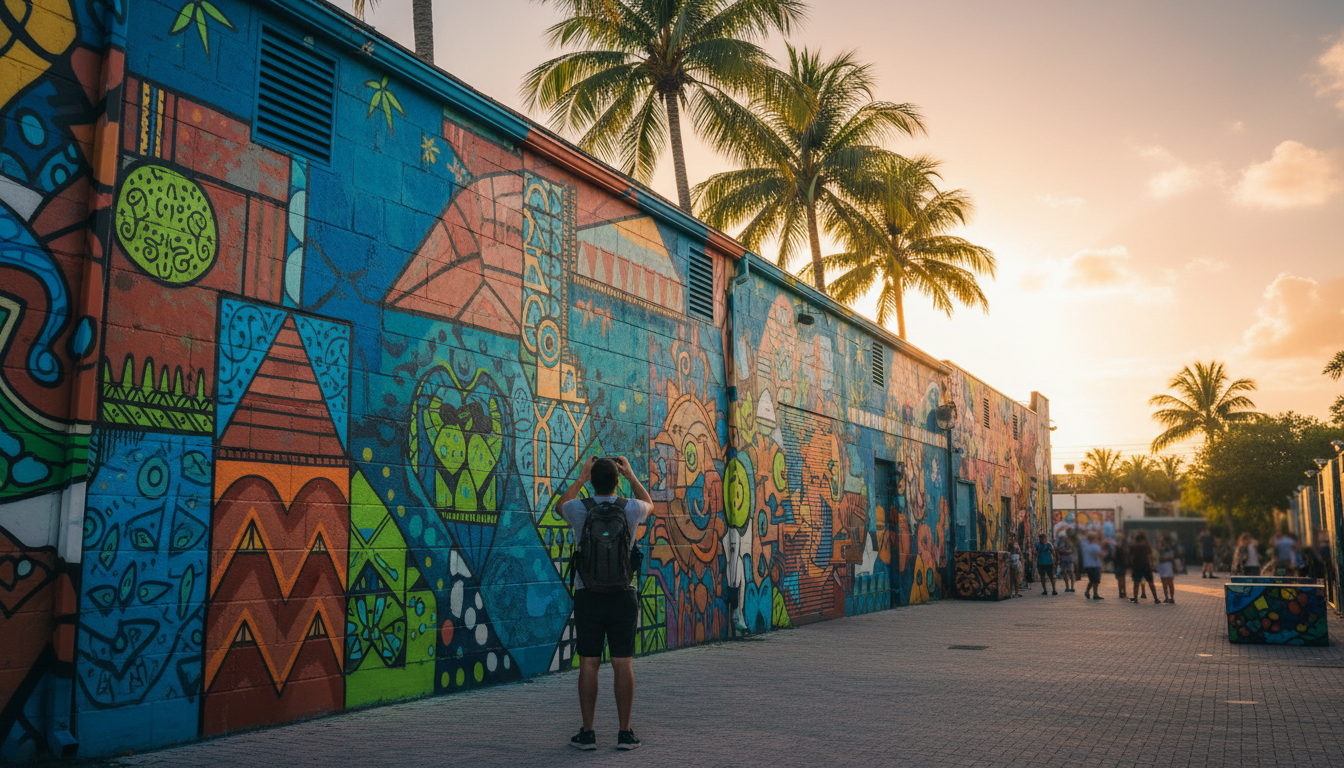 Vibrant Wynwood Walls mural in Miami with a backpacker taking a photo, colorful street art covering
North Beach and Surfside: Quieter Beach Access
South Beach gets all the attention, but North Beach (roughly 72nd to 87th Street on Collins Avenue) offers actual beach access without the chaos. This area has older condo buildings, many owned by retirees or seasonal residents who list their places on home-swap platforms when they're away.
The vibe here is decidedly more relaxed—families, older couples, and locals actually swimming instead of posing. The Bandshell at North Beach hosts free concerts during Art Basel week in December. Beach chair rentals run $15–20, or just bring a towel.
Surfside, just north, is even quieter. The town has its own small-town feel despite being part of the Miami metro area. Home-swap listings here often include parking—a genuine luxury in Miami—and the Bal Harbour Shops are close for window-shopping where most travelers definitely can't afford to buy.
Coconut Grove: The Original Miami Bohemian Quarter
Before Wynwood was cool, Coconut Grove was Miami's artsy, counterculture neighborhood. It's mellowed since the 1960s and 70s, but the Grove still has a laid-back, walkable feel that backpackers appreciate.
CocoWalk is the main commercial hub—a mix of restaurants, shops, and a movie theater. More interesting for budget travelers is Peacock Park, which hosts farmers markets on Saturdays, and the free Barnacle Historic State Park, the oldest house in Miami-Dade County still on its original site.
Home-swap listings in the Grove range from historic cottages to modern condos. The neighborhood is pricier than Little Havana but offers better walkability and access to Vizcaya Museum and Gardens (admission $25, but worth it for the stunning Italian Renaissance-style villa and gardens on Biscayne Bay).
How to Make Your Home Swap-Worthy for Miami Hosts
Here's where backpackers often struggle: an apartment in Cleveland or a shared flat in Manchester might not seem like an obvious trade for a Miami Beach condo. But Miami hosts aren't necessarily looking for luxury—they're looking for authentic experiences in places they want to visit.
The SwappaHome community has noticed clear patterns in what Miami hosts actually request:
Proximity to nature or outdoor activities. Miami residents live surrounded by concrete and humidity. Listings near hiking trails, skiing, national parks, or even just seasons that aren't summer tend to attract Miami hosts looking to escape.
Walkable urban neighborhoods. Despite Miami's car culture, many locals dream of cities where driving isn't required. Proximity to public transit, coffee shops, and restaurants within walking distance should be emphasized heavily in listings.
Cultural experiences. Miami is diverse, but it's also distinctly Miami. Hosts often want to experience different food scenes, music venues, or cultural events. Proximity to a great jazz club, a famous food market, or a renowned museum matters.
Seasonal appeal. Miami's brutal summer (June–September) drives locals out of the city. Locations offering pleasant summer weather will find eager Miami hosts during these months.
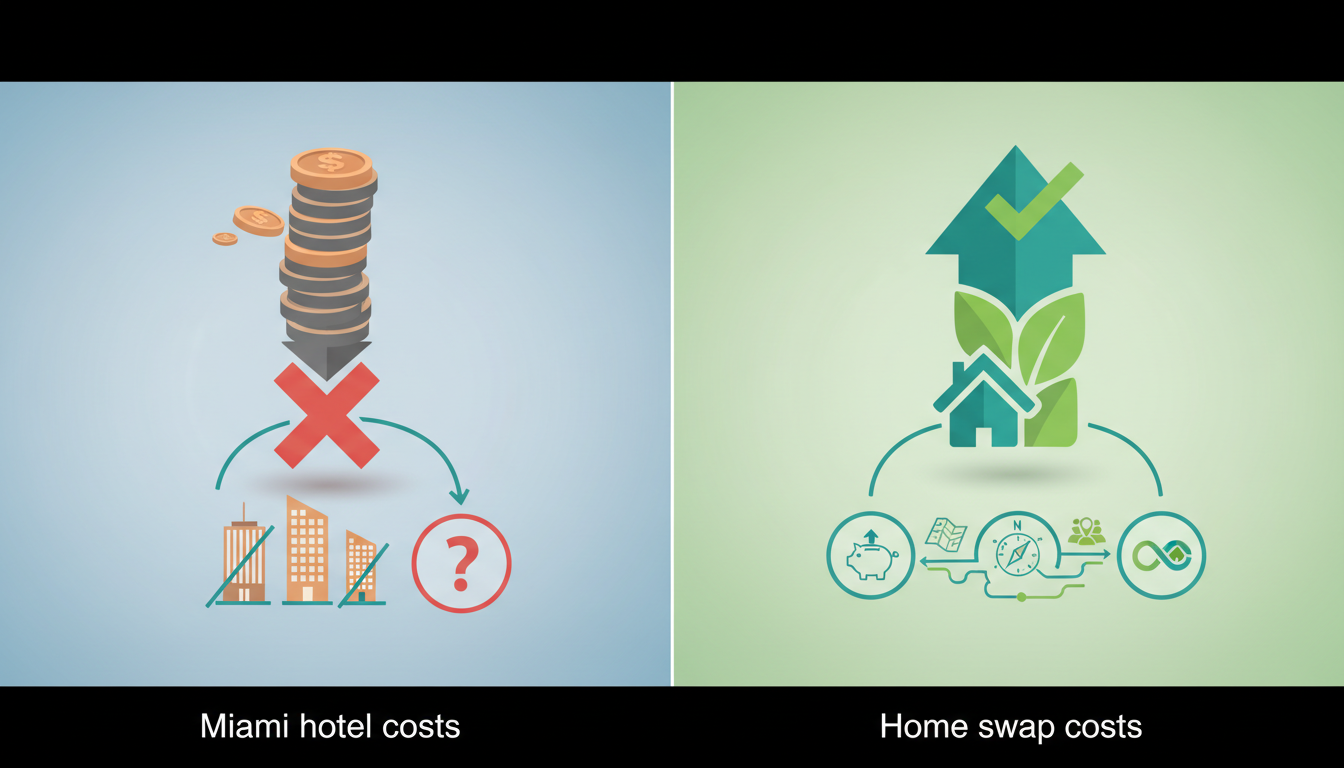 Split-screen infographic comparing Miami hotel costs vs home swap costs over 14 days, showing 2,520
Listing photos matter more than most people think. Take pictures during golden hour. Show the neighborhood, not just the apartment. If there's a great coffee shop downstairs, photograph it. If a famous landmark is nearby, include a shot from the window or balcony.
Timing Your Miami Home Swap: When Budget Travelers Win
Miami's tourist calendar creates predictable patterns that smart backpackers exploit.
Peak season (November–April): Hotels are at maximum prices, but home-swap demand goes both ways. Miami hosts want to escape during the holidays, and travelers from cold climates want to escape to warmth. Competition for listings is higher, but so is availability.
Summer (June–September): This is when backpackers have the most leverage. Miami becomes genuinely unpleasant—daily afternoon thunderstorms, humidity that makes breathing feel like work, and temperatures that rarely drop below 85°F (29°C). Locals desperately want out, and tourist demand drops. More available listings and hosts eager to swap.
Shoulder seasons (May and October): The sweet spot. Weather is manageable, crowds are thinner, and prices haven't spiked. Art Basel in early December brings a massive influx of visitors, so October is the last chance for pre-season deals.
Special events to avoid (unless specifically attending):
- Art Basel (first week of December): Hotels triple their rates
- Ultra Music Festival (late March): South Beach becomes a madhouse
- Miami Swim Week (July): Fashion industry takes over
- Formula 1 Miami Grand Prix (May): Brickell and downtown become inaccessible
Practical Logistics: Getting Around Miami Without a Car
Miami's public transit is... honestly, it's not great. But it's not impossible either, and backpackers who plan ahead can navigate the city without renting a car.
Metrorail: The elevated rail line runs from Dadeland South in the south to Palmetto in the north, with a branch to Miami International Airport. Single rides cost $2.25, and a 7-day unlimited pass is $29.25. The system is clean and reliable but limited in coverage.
Metrobus: Extensive coverage but slow. The 8 bus along Calle Ocho and the S bus on Collins Avenue are the most useful for tourists. Same $2.25 fare, same weekly pass.
Metromover: Free. Yes, completely free. This elevated people-mover loops through downtown, Brickell, and Omni (near the Adrienne Arsht Center). It's the best way to explore the urban core without spending a cent.
Trolleys: Several neighborhoods run free trolleys, including Coral Gables, Coconut Grove, and Wynwood. Routes and schedules are available through the Miami-Dade Transit app.
Ride-sharing: Uber and Lyft are ubiquitous. A ride from South Beach to Wynwood runs $15–25 depending on traffic and surge pricing. From MIA to South Beach, expect $25–40.
Biking: Miami Beach has the Citi Bike program with stations throughout the island. Single rides start at $4.50 for 30 minutes, or a day pass costs $24. The beach path along Ocean Drive is flat and scenic.
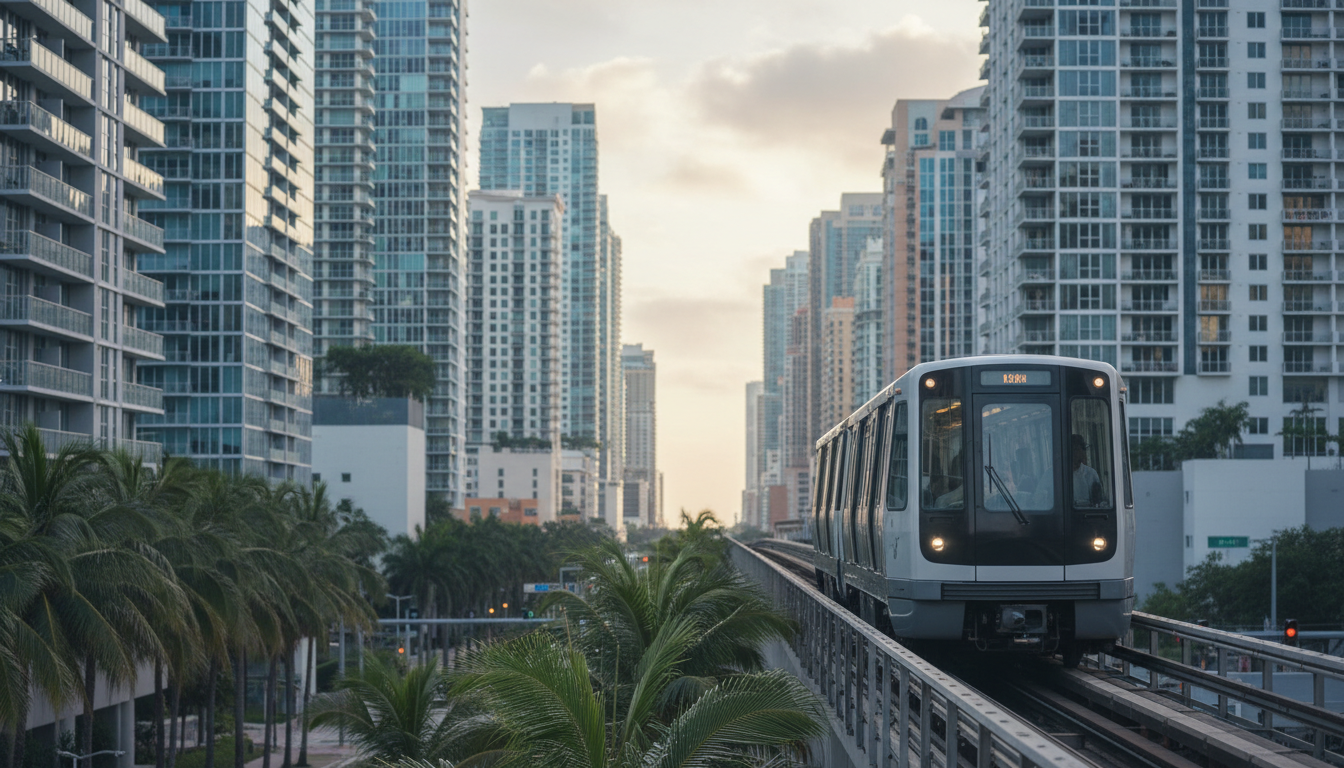 Miami Metromover train gliding through downtown Brickell with glass skyscrapers reflecting sunset, p
Eating Cheap in Miami: A Backpacker's Food Strategy
Miami can bankrupt travelers at restaurants, but it can also feed them incredibly well for very little—with the right knowledge.
Cuban food is the foundation. Ventanitas (walk-up coffee windows) serve cafecito for $1–2, and most Cuban restaurants offer lunch specials for $8–12 that include an entrée, rice, beans, and plantains. Look for places where locals are eating, not tourists.
Haitian food in Little Haiti. The neighborhood around NE 2nd Avenue and 54th Street has some of the cheapest, most flavorful food in Miami. Griot (fried pork) with pikliz (spicy pickled vegetables) runs $8–10 at places like Chef Creole.
Peruvian food in Westchester. The area around SW 8th Street and 107th Avenue has a concentration of Peruvian restaurants serving ceviche and lomo saltado at local prices ($10–15 for generous portions).
Publix deli counter. This Florida supermarket chain has a cult following for its Pub Subs—custom submarine sandwiches that cost $7–9 and could feed two people. Every backpacker in Florida knows this hack.
Farmers markets. The Lincoln Road Farmers Market (Sundays) and the Coconut Grove Farmers Market (Saturdays) offer fresh produce, prepared foods, and local specialties at reasonable prices.
Cooking at the home swap. This is the biggest advantage of home swapping over hostels. A kitchen means shopping at Sedano's (Cuban grocery chain with excellent prices) or Presidente (Dominican grocery) and cooking meals for a fraction of restaurant costs.
Safety and Practical Concerns for Backpackers
Miami is generally safe for travelers who use common sense, but certain realities deserve mention.
Neighborhoods to approach with caution: Overtown, Liberty City, and parts of Little Haiti have higher crime rates. This doesn't mean avoid them entirely—Overtown has excellent soul food and important civil rights history—but awareness of surroundings matters, especially after dark.
Beach safety: Riptides are real. Swim near lifeguard stations (red and yellow flags indicate guarded areas). The sun is brutal—SPF 50 minimum, reapply every two hours, and take the afternoon heat seriously.
Hurricane season: June 1 through November 30. Travelers swapping during this period should understand that trips might need to be cancelled or cut short. Flexible travel insurance and a backup plan are essential.
Heat-related illness: Miami's heat index can exceed 105°F (40°C) in summer. Hydrate constantly, seek shade during midday, and don't underestimate how draining the humidity can be.
Home swap security: SwappaHome's verification system helps establish trust between members. Reviews from previous swaps give insight into hosts' reliability. That said, the platform doesn't provide insurance or damage coverage—travelers wanting protection should arrange their own travel or home insurance before hosting or staying.
Making the Most of Free and Cheap Miami Experiences
Miami's best experiences don't require velvet rope access or a black card.
Beaches are free. South Beach, North Beach, Crandon Park on Key Biscayne, Bill Baggs Cape Florida State Park (small parking fee but beach access is included)—all free. Bring a towel, chair, and snacks.
Wynwood Walls are free. The outdoor museum of street art charges no admission. Go early morning or late afternoon to avoid crowds and get better photos.
Art Deco Historic District walking tours. The Miami Design Preservation League offers tours starting at $25, but a free self-guided tour app allows independent exploration of the 800+ Art Deco buildings.
Vizcaya Museum gardens. While the house tour costs $25, free admission days or discounted evening events pop up regularly. The gardens alone are worth the visit.
Little Havana walking. Calle Ocho, Domino Park, the Bay of Pigs memorial, the historic Tower Theater—all free to explore. Grab a $3 guarapo (fresh sugarcane juice) from a street vendor.
Brickell City Centre. Air-conditioned shopping mall with interesting architecture and free entry. Good for escaping afternoon heat without spending money.
Sunset at South Pointe Park. The southern tip of Miami Beach offers views of cruise ships passing through Government Cut, Fisher Island, and the downtown skyline. Bring a picnic.
Building Your Miami Home Swap Profile for Success
A SwappaHome profile is the first impression. Miami hosts see dozens of requests—here's how backpackers stand out.
Be specific about what you offer. Don't just say "cozy apartment." Say "ground-floor flat in Manchester's Northern Quarter, 3-minute walk to Piccadilly Gardens, above a craft beer bar, with a record player and vinyl collection."
Show your neighborhood. Include photos of the local coffee shop, the park down the street, the view from the window. Miami hosts want to imagine themselves in that daily life.
Explain why Miami. A generic "I love beaches" won't cut it. Maybe you're researching Cuban-American literature. Maybe you're training for a triathlon and want to swim in open water. Maybe you're a street art photographer. Give hosts a reason to choose you.
Be flexible on dates. Backpackers who can adjust their travel windows by a week or two have much higher success rates. If a Miami host needs someone for October 15–25 and the dates work, securing the swap becomes much more likely.
Respond quickly. The SwappaHome community values communication. Hosts who send messages expect a response within 24 hours. Slow responders get passed over.
Build reviews. New platform members should start by hosting guests before requesting swaps. Even 2–3 positive reviews dramatically increase credibility.
Common Mistakes Backpackers Make with Miami Home Swaps
The SwappaHome community sees the same errors repeatedly. Worth avoiding:
Underestimating distances. Miami is sprawling. What looks close on a map might be a 45-minute drive. Always check transit times before committing to a neighborhood.
Ignoring parking. Anyone planning to rent a car should confirm the listing includes parking. Street parking in Miami Beach is expensive ($4–6/hour) and competitive.
Assuming all beaches are equal. South Beach near 5th Street is very different from North Beach near 72nd Street. Research the specific beach access near any potential swap.
Forgetting about AC. Miami without air conditioning is miserable. Confirm the home has working AC before booking, especially for summer swaps.
Not reading reviews carefully. A listing might look great in photos but have reviews mentioning noise, cleanliness issues, or difficult check-in processes. Read every review.
Waiting too long to book. Popular Miami listings get snatched up months in advance, especially during peak season. Start searching 3–4 months before intended travel dates.
The Real Cost Breakdown: Home Swap vs Traditional Backpacker Options
The math for a 14-night Miami trip in February (peak season):
Hostel route:
- Bed at Miami Beach International Hostel: $65/night × 14 = $910
- Shared kitchen access but limited cooking
- Social atmosphere but no privacy
Budget Airbnb route:
- Private room in Little Havana: $95/night × 14 = $1,330
- Plus cleaning fees and service charges: ~$180
- Total: approximately $1,510
Home swap route:
- SwappaHome annual membership: varies by plan
- Accommodation: 14 credits (0 additional cost with prior hosting)
- Full kitchen, full privacy, local neighborhood
- Total accommodation cost: effectively $0 beyond membership
The savings compound when factoring in food. Cooking half the meals at a home swap versus eating out at budget restaurants saves another $200–400 over two weeks.
Frequently Asked Questions
Is a backpacker's home swap in Miami safe for solo travelers?
Miami home swaps are generally safe for solo travelers who use the same precautions they'd apply anywhere. SwappaHome's verification system and review structure help establish trust between members. Choose listings with multiple positive reviews, communicate clearly with hosts before arriving, and trust your instincts. The platform doesn't provide insurance, so arranging separate travel coverage offers additional protection.
How far in advance should I book a Miami home swap?
For peak season (November–April), start searching 3–4 months ahead. Popular neighborhoods like South Beach and Wynwood fill up quickly. Summer months offer more flexibility—listings can sometimes be found 4–6 weeks out. Art Basel week (early December) requires 6+ months advance planning due to extreme demand.
Can I do a home swap in Miami without owning property?
Yes. Many SwappaHome members list rental apartments (check lease agreements for subletting restrictions first). Offering a room in a shared house works too, or the credit system allows hosting guests at a current place to earn credits, then using those credits to book Miami stays without requiring a direct swap.
What's the best Miami neighborhood for a budget backpacker home swap?
Little Havana offers the best combination of affordability, authentic culture, and transit access for budget backpackers. Older apartment buildings with character, Cuban food at local prices, and easy Metrobus connections to downtown and the beach make it ideal. Wynwood is a close second for those prioritizing nightlife and art scene access.
Do I need a car for a Miami home swap as a backpacker?
Not necessarily, but it depends on the neighborhood. South Beach, Wynwood, Little Havana, and downtown are manageable with public transit, bikes, and occasional ride-shares. Coconut Grove and Coral Gables are harder without a car. Suburban area swaps likely require a rental vehicle or significant Uber budget.
Miami doesn't have to break the budget. The backpacker's home swap approach flips the script on a city known for excess—offering the real Miami, the one where locals actually live, without spending savings on a hotel room that barely gets used. The beaches are still there. The Cuban coffee still costs $2. The sunsets over Biscayne Bay are still free. You just get to enjoy them from a place that feels like home.

Published by
SwappaHome
SwappaHome Editorial Team
Home Exchange & Slow Travel Editorial
The SwappaHome Editorial Team brings together travel research, home-exchange community insights, and platform data to produce practical guides for first-time and experienced home swappers. Every article cites real platforms, current market rates, and verifiable city-level facts so readers can make informed decisions without guessing.
Ready to try home swapping?
Join SwappaHome and start traveling by exchanging homes. Get 7 free credits when you sign up!
Related articles
Bachelor and Bachelorette Parties in Singapore: The Complete Home Swap Group Guide for 2026
Planning a bachelor or bachelorette party in Singapore? Discover how home swapping lets groups of 6-12 stay together in luxury condos, saving thousands while partying in Marina Bay.
Cycling in Lisbon: 7 Home Swap Bike Tour Itineraries for Every Rider
Discover the best cycling routes in Lisbon with these home swap bike tour itineraries—from waterfront paths to hilltop adventures, all starting from your borrowed home.

Graduation Trip to Barcelona: How Home Swapping Gives New Graduates the Ultimate Celebration
Planning a graduation trip to Barcelona? Discover how home swapping lets new graduates explore Spain's most vibrant city without the hostel crowds or hotel costs.