Christmas in Kyoto: Your Complete Guide to Holiday Home Swapping in Japan's Ancient Capital

SwappaHome Editorial Team
Home Exchange & Slow Travel Editorial
Discover how to spend Christmas in Kyoto through home swapping. From illuminated temples to cozy machiya stays, experience Japan's magical winter season.
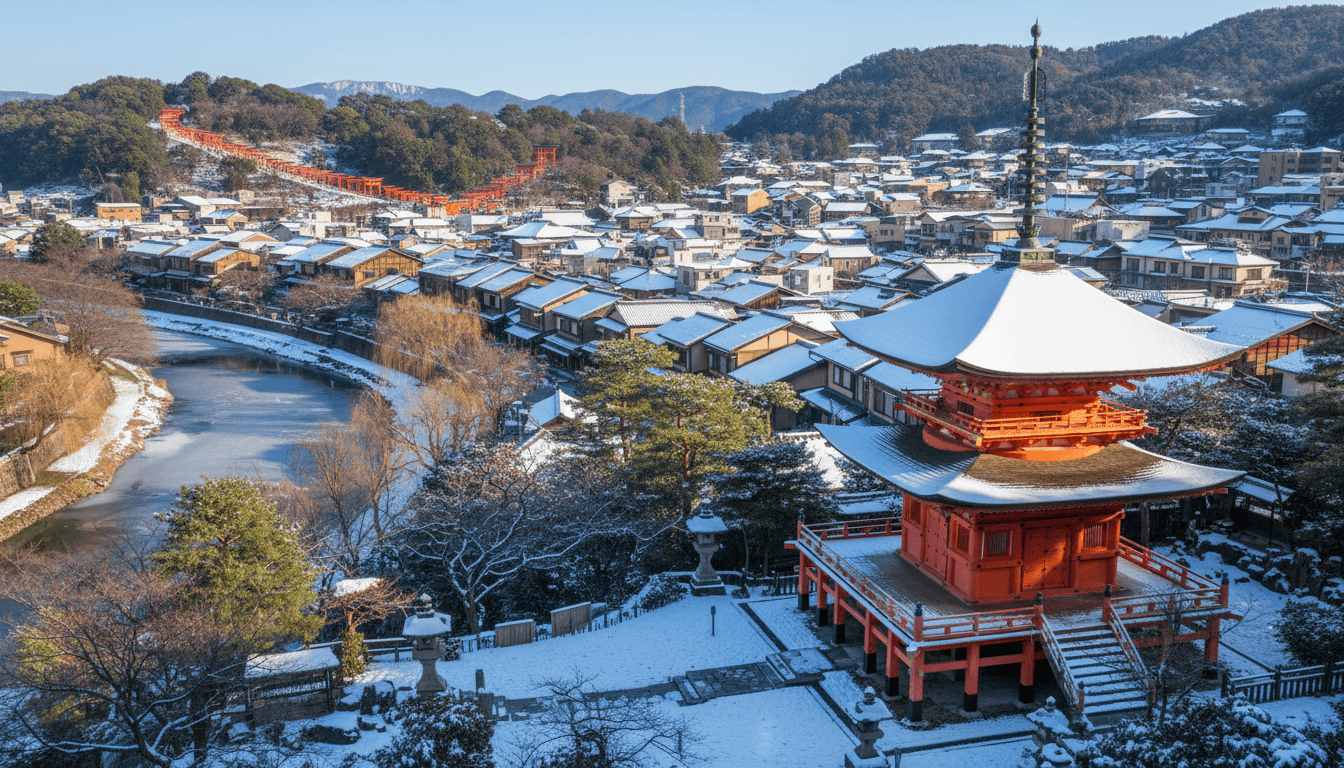
The temple bell at Kiyomizu-dera had just rung out across the snow-dusted hills when I realized I'd made the best travel decision of my life. December 23rd. I was standing on that famous wooden stage, watching Kyoto transform into something straight out of a woodblock print—soft whites, deep greens, and that particular winter light that makes everything look like a memory you haven't made yet.
Christmas in Kyoto wasn't something I'd ever considered until a home swap opportunity landed in my inbox. And honestly? It changed how I think about the holidays entirely.
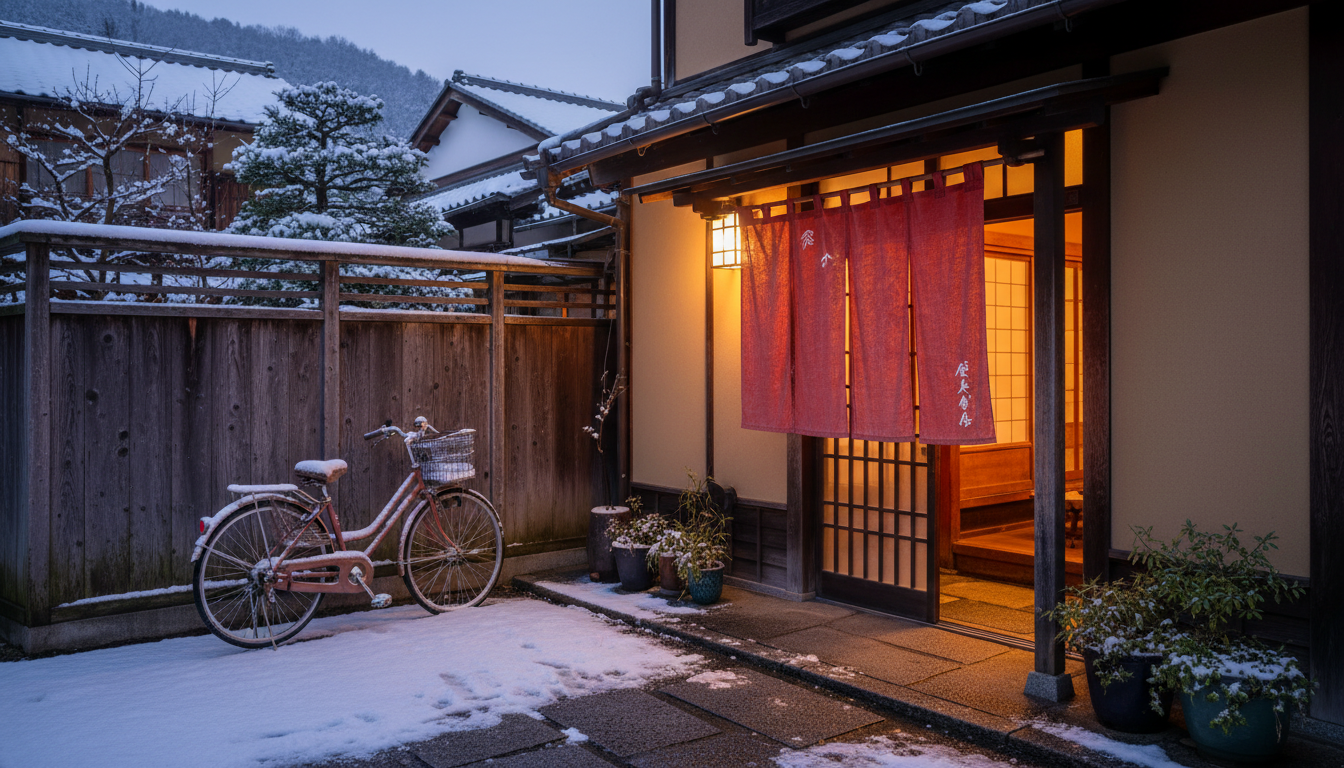
Spending Christmas here through home swapping opened up a Japan I never would have found in a hotel. I'm talking about waking up in a 100-year-old machiya townhouse, padding across tatami mats to make coffee in a kitchen stocked with local tea, having a neighbor wave at me like I belonged there. Because for those two weeks, I kind of did.
 Snow-dusted traditional Kyoto machiya townhouse at dusk, warm light glowing from shoji screens, a si
Why Christmas in Kyoto Hits Different
Here's what nobody tells you about Japan during Christmas: it's not really a holiday there. December 25th is a regular working day. No national celebration, no family gatherings around a turkey, no obligation to do anything at all.
And weirdly, that's exactly what makes it magical.
Kyoto in December exists in this beautiful contradiction. The city embraces Christmas aesthetics—twinkling lights along Shijo-dori, elaborate department store displays, Christmas cake in every bakery window—without any of the pressure. You get the sparkle without the stress. The illuminations without the in-laws.
For me, escaping my usual holiday chaos for this quieter version felt revolutionary. No gift exchanges to coordinate. No family dinners to navigate. Just me, a borrowed home in Higashiyama, and permission to experience Christmas however I wanted.
Temperature-wise, late December hovers around 40-45°F (4-7°C). Cold enough for that cozy winter feeling, rarely harsh. Snow is possible but not guaranteed—when it does fall, even locals stop to photograph the white-capped temples. I got lucky with a light dusting on Christmas Eve, and I still have the photos to prove I wasn't dreaming.
Finding Your Perfect Kyoto Home Swap for the Holidays
Real talk: Kyoto during Christmas week is competitive. Not as insane as cherry blossom season, but you're not the only one who's figured out this is a special time to visit. I started looking for my swap in early September, and even then, the best machiya listings were getting snapped up fast.
The key is understanding what you're actually looking for.
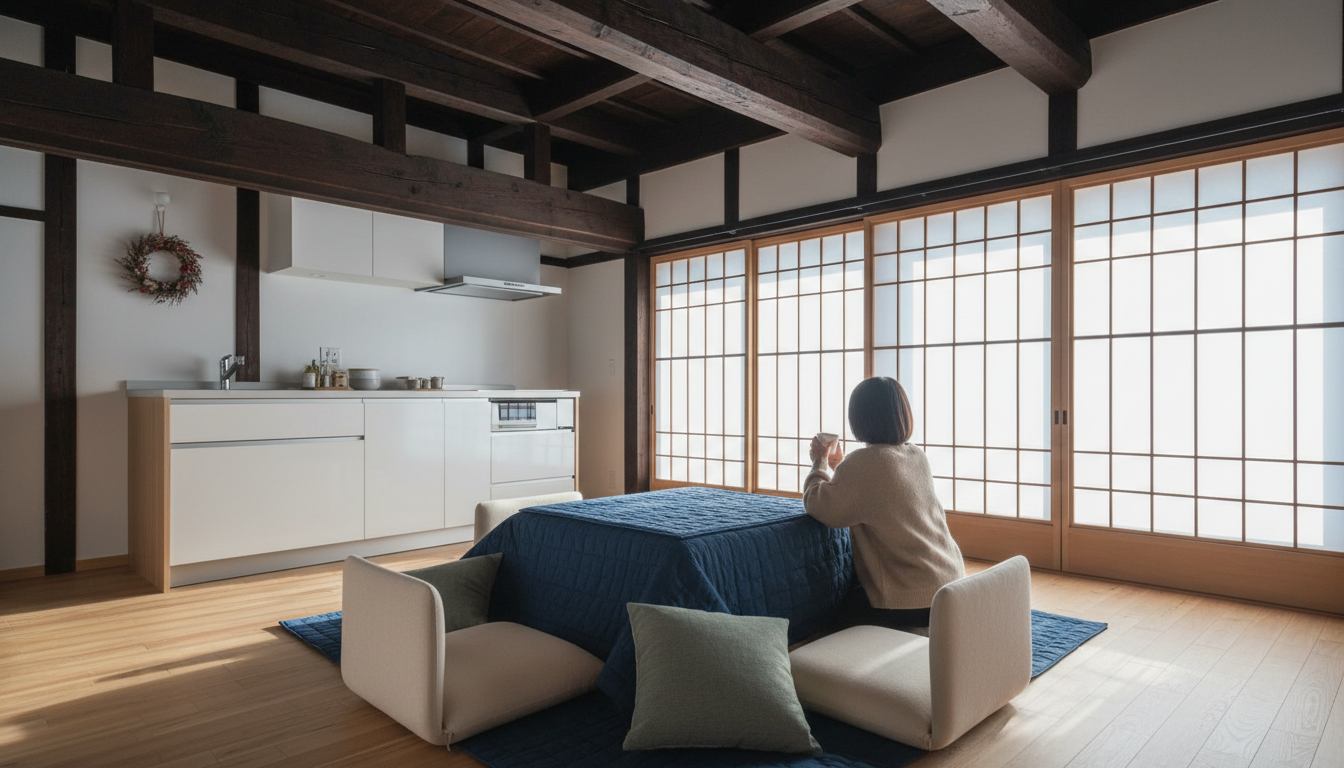
Traditional Machiya Townhouses are Kyoto's signature architecture—narrow wooden houses, usually two stories, with a long layout stretching back from the street. They're stunning. They're also often cold. Traditional machiya weren't built with central heating in mind, so you'll be relying on kerosene heaters, kotatsu tables (heated blankets over a low table—absolutely life-changing), and possibly an AC unit doing double duty. My machiya in Higashiyama had a modern bathroom retrofit but original everything else. I wore wool socks to bed every night. Worth it? Absolutely. But know what you're signing up for. These range from compact 400 square feet to surprisingly spacious 1,200+ square feet for renovated ones.
Modern Apartments prioritize warmth and convenience. Newer places in areas like Karasuma or near Kyoto Station offer reliable heating, western-style beds, full kitchens. They lack the atmospheric charm but make up for it in comfort. A friend did her Christmas swap in a 15th-floor apartment with heated floors and a view of the city lights. Different vibe, equally valid.
Suburban Houses in areas like Arashiyama or Fushimi tend to be larger, sometimes with small gardens. Great if you want space to spread out or you're traveling with family. The trade-off is more commuting, but Kyoto's bus and train system handles it easily.
 Interior of renovated machiya with exposed wooden beams, modern kitchen insert, kotatsu table in the
The Neighborhoods: Where to Base Yourself
Higashiyama is where I stayed, and I'm biased—it's perfect for a first Kyoto visit. Walking distance to Kiyomizu-dera, Gion, countless smaller temples. The streets themselves are the attraction: stone-paved lanes, traditional shopfronts, the occasional geiko (Kyoto's term for geisha) hurrying to an appointment. December means fewer tourists than autumn, so you might actually get those atmospheric photos without strangers in every frame.
Gion—the famous geisha district. Staying here puts you in the heart of Kyoto's most photogenic neighborhood, but homes are rare and tend to be smaller. If you find one, grab it. Waking up in Gion and walking to Yasaka Shrine before the day-trippers arrive? Something special.
Nishijin, the old weaving district northwest of the Imperial Palace, is where I'd stay on a return trip. More residential, authentically local, with fantastic small restaurants and craft shops. You'll see traditional workshops still operating, smell the wood from furniture makers, hear looms clicking. Machiya here are often larger and better-priced because fewer tourists know to look.
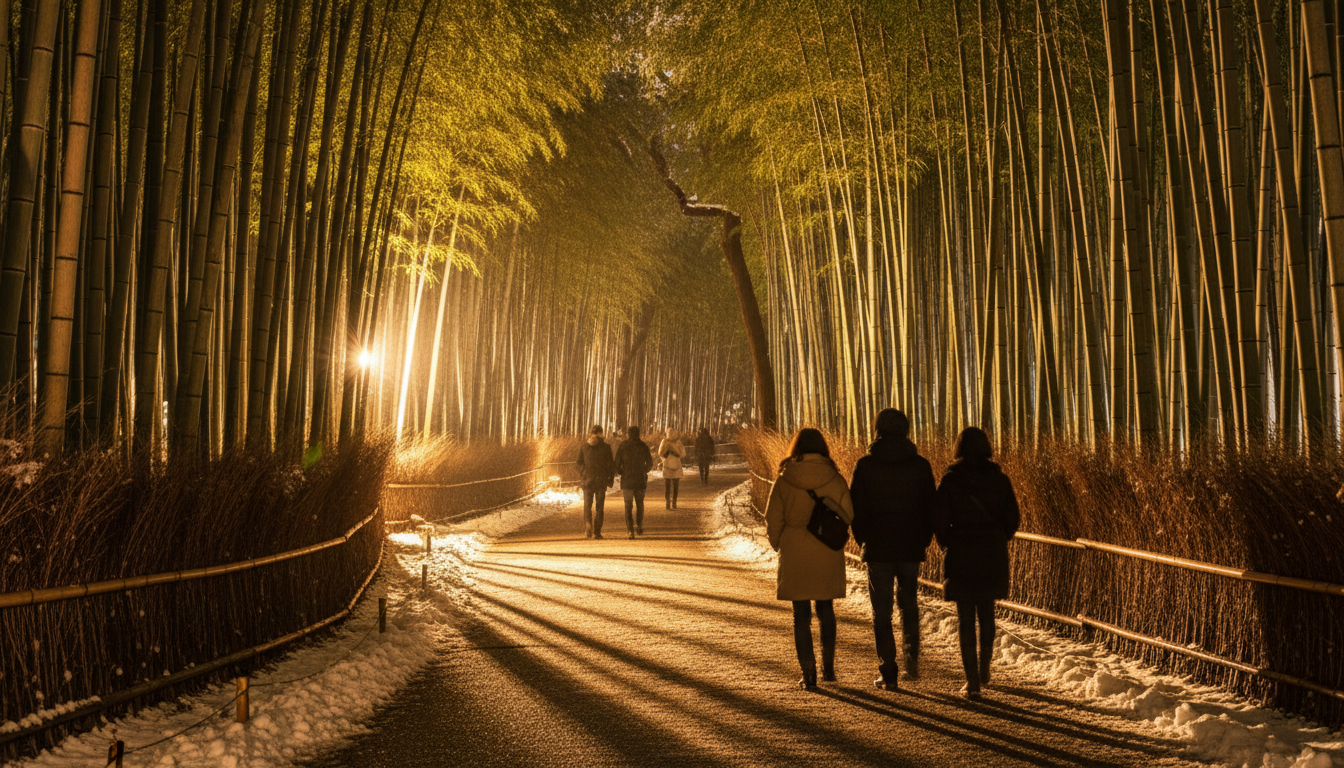
Arashiyama—the bamboo grove area, about 25 minutes from central Kyoto. In December, the famous Hanatoro illumination festival lights up the bamboo and surrounding temples. Genuinely breathtaking. Staying here means you can experience it at night without rushing for the last train back.
Planning Your Swap: Timing and Strategy
Start your search 3-4 months ahead for Christmas dates. On SwappaHome, I filtered for Kyoto and set my dates for December 20-January 3 (I wanted to catch New Year's too—more on that later). Then I did something that felt counterintuitive but worked brilliantly: I reached out to hosts who weren't showing availability for my exact dates.
Here's the thing—many Kyoto homeowners don't think to list December because they assume no one wants to visit then. A friendly message explaining why you're interested in a winter swap, and offering your own home during their preferred travel time, can open doors that weren't technically open.
My swap came together because I messaged a retired professor whose listing showed spring availability only. Turns out, she'd always wanted to spend Christmas in San Francisco. We matched perfectly: she got two weeks in my Marina District apartment, I got her grandmother's machiya in Higashiyama. The credit system made it simple—I'd hosted enough guests earlier in the year to cover my stay, and she was thrilled to earn credits for a future trip.
 Kyotos Hanatoro illumination festival in Arashiyama, bamboo grove lit with soft warm lights, a few v
What to Ask Your Host Before You Go
Japanese homes come with specific etiquette. Ask about these things proactively:
Heating systems—how do they work? Where's the kerosene? Is there a kotatsu, and how do you use it safely?
Garbage sorting—Japan takes recycling seriously. Kyoto has specific days for burnables, plastics, bottles, and more. Get the schedule and the rules. Messing this up is a genuine faux pas.
Shoes—you know to remove them at the door, but ask about slippers for different areas. Many traditional homes have separate toilet slippers.
Bathing—if there's a traditional ofuro (deep soaking tub), there's a ritual. You wash outside the tub, rinse completely, then soak. The water stays clean for multiple uses.
Neighborhood introductions—some hosts will introduce you to neighbors or local shopkeepers. This is a gift. Accept it. My host's neighbor brought me homemade tsukemono (pickles) on my third day because she'd heard an American was staying next door.
Experiencing Christmas in Kyoto: What to Actually Do
Here's where home swapping transforms your trip from tourist to temporary local. With a kitchen, a neighborhood, and no hotel checkout time, you can experience Kyoto's December rhythm rather than just hitting attractions.
Christmas Eve and Day
Christmas Eve in Japan is, unexpectedly, a romantic holiday—more like Valentine's Day than a family celebration. Couples dress up, exchange gifts, eat Christmas cake (a light sponge cake with strawberries and whipped cream, sold everywhere in December). If you're traveling with a partner, lean into it: make a reservation at a nice restaurant, stroll the illuminated streets, embrace the date-night energy.
For the rest of us, Christmas Eve is perfect for temple visits. While Japanese families aren't gathering for religious observance, many temples hold special evening events. Chion-in, the headquarters of Jodo Buddhism, has its massive sanmon gate illuminated and sometimes hosts bell-ringing ceremonies.
Christmas Day itself? The city operates normally, which is actually wonderful. Shops are open. Temples welcome visitors. You can have a completely regular Kyoto day—or create your own celebration.
I bought a Christmas cake from a bakery in Gion (about ¥2,500/$17 for a small one), picked up some good sake, and had a solo feast in my machiya while snow fell outside. It remains one of my favorite Christmas memories.
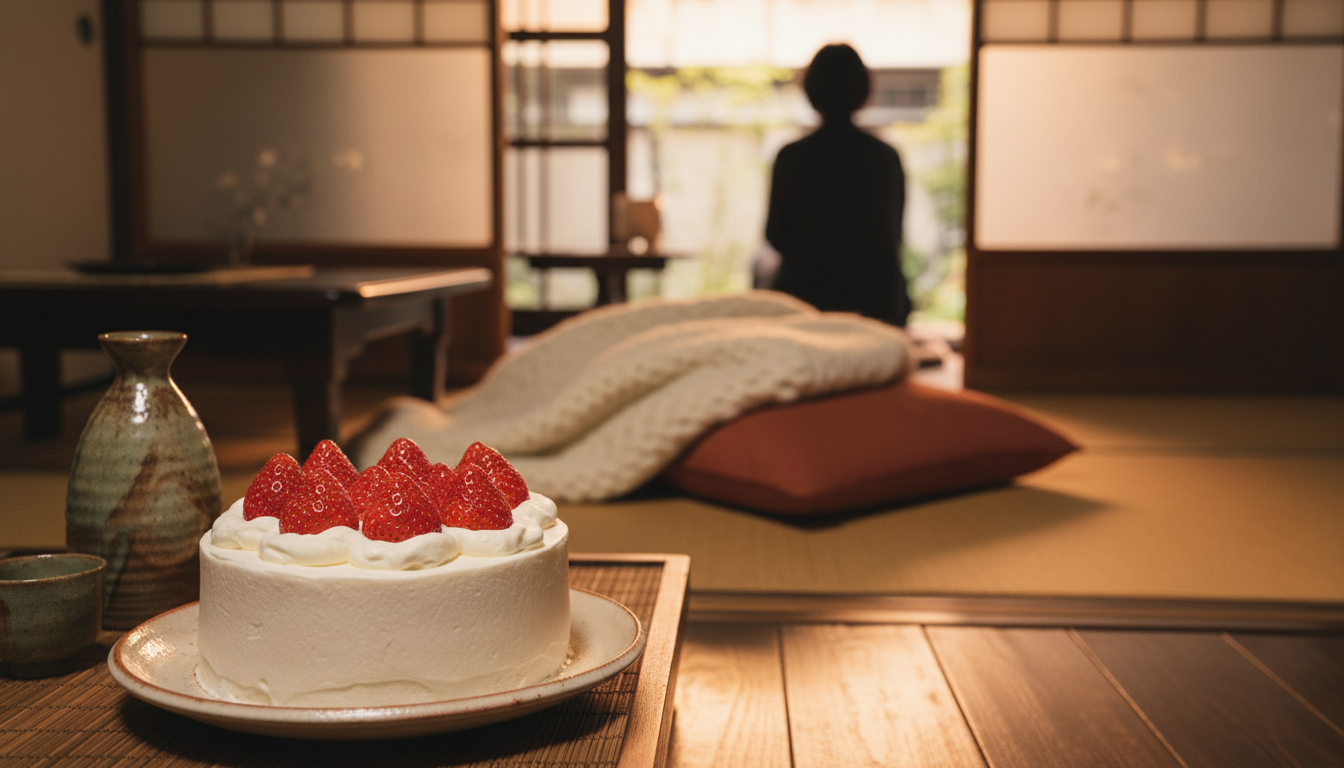 Japanese Christmas cake white sponge with strawberries on a ceramic plate, sake bottle and cup besid
Temple and Shrine Visits in Winter
Kyoto has over 2,000 temples and shrines. In December, you'll share them with far fewer visitors than peak seasons.
Kinkaku-ji (Golden Pavilion)—yes, it's famous. Yes, it's worth it, especially if snow falls. The gold leaf against white snow is iconic for a reason. Go early morning (opens at 9 AM) to beat tour groups. Entry: ¥500 ($3.50).
Fushimi Inari—the thousand torii gates. In December, crowds thin significantly, especially at dawn or dusk. The full hike up Mount Inari takes 2-3 hours and rewards you with city views and near-solitude at the top. Free entry.
Daitoku-ji—a Zen temple complex in northern Kyoto that most tourists skip. Multiple sub-temples with exquisite gardens, some with special winter openings. I spent an entire afternoon here and saw maybe twenty other people. Entry varies by sub-temple, typically ¥400-600 ($2.75-$4).
Nanzen-ji—another Zen complex with a massive sanmon gate you can climb for views. The aqueduct running through the grounds photographs beautifully in winter light. Entry: free for grounds, ¥600 ($4) for gate.
The Illuminations
Kyoto's winter illumination events run through late December. Arashiyama Hanatoro (usually December 8-17) lights up the bamboo grove and surrounding area with thousands of lanterns—go on a weekday evening if possible. Rohm Illumination (November-December 25) is a corporate campus near Kyoto Station that goes all-out with light displays. Surprisingly beautiful and very local, families and couples everywhere. Kyoto Station Building itself has a massive Christmas tree and light show on the grand staircase, worth a visit even if you're not catching a train. All free.
Extending into New Year's: Hatsumode and Osechi
If you can stretch your Kyoto home swap into early January, do it. New Year's (Shogatsu) is Japan's most important holiday, and experiencing it in Kyoto is extraordinary.
The city empties on December 31st as many residents visit family elsewhere. Then, starting at midnight, temples ring their bells 108 times (joya no kane) to symbolize the 108 earthly desires in Buddhist belief. You can attend these ceremonies at major temples—Chion-in's bell is famous, requiring 17 monks to ring it.
Hatsumode, the first shrine visit of the year, brings crowds to major shrines on January 1-3. Fushimi Inari and Yasaka Shrine are packed but festive. Smaller neighborhood shrines offer a more intimate experience.
Osechi ryori, the traditional New Year's food, comes in beautiful lacquered boxes with dozens of symbolic dishes. Department stores sell them, but they're expensive (¥15,000-50,000/$100-350 for a good one). My host left me a note about a neighborhood shop that sold smaller portions—I assembled my own mini-osechi for about ¥3,000 ($20) and felt very accomplished.
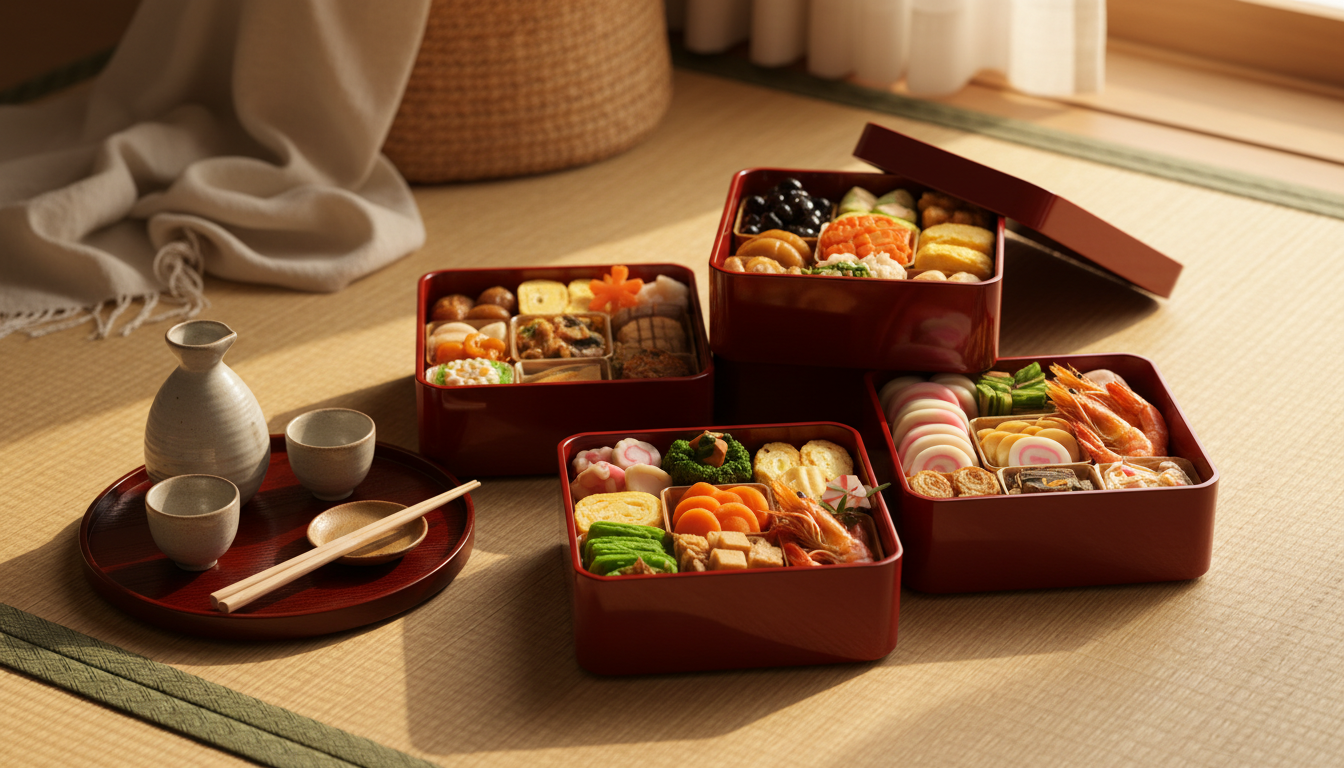 Traditional osechi ryori New Years food in lacquered jubako boxes, colorful arrangement of symbolic
Practical Matters: Living Like a Local
Getting Around
Kyoto's bus system is comprehensive but can be slow. The subway is limited but useful for north-south travel. I relied heavily on walking and occasional taxis (starting fare around ¥500/$3.50). If your home swap includes a bicycle, use it—Kyoto is flat and very bikeable, even in winter.
Consider a bus day pass (¥700/$4.75) if you're hitting multiple distant sites. Otherwise, pay per ride (¥230/$1.60 flat fare within the city).
Eating
With a kitchen, you can shop at local markets and cook some meals—a huge money saver and a genuine cultural experience. Nishiki Market (the "Kitchen of Kyoto") is touristy but still functional for ingredients. Smaller neighborhood supermarkets like Fresco or Life offer everything you need at normal prices.
Winter means hot pot season. Yudofu (tofu hot pot) is a Kyoto specialty—try it near Nanzen-ji, where several restaurants specialize in it (expect ¥2,500-4,000/$17-27 per person). Ramen is everywhere and perfect for cold days (¥800-1,200/$5.50-8). Department store basement food halls (depachika) offer incredible prepared foods for reasonable prices.
Staying Warm
I cannot stress this enough: bring layers. Japanese homes are heated room-by-room, not centrally. You'll be warm in the living area, cold in hallways, possibly chilly in bed. Pack thermal base layers, wool socks (multiple pairs), a light down jacket for indoors, and hand warmers (sold everywhere in Japan, called "kairo").
The flip side: heated toilet seats are common and genuinely life-changing. You'll miss them when you leave.
Money and Connectivity
Japan is still more cash-based than you'd expect. Convenience stores (7-Eleven, Lawson, Family Mart) have ATMs that accept foreign cards. Get a Suica or ICOCA card for transit—you can also use it at convenience stores and some restaurants.
Rent a pocket WiFi or get a Japanese SIM card. Your host might have pocket WiFi you can borrow—ask. Connectivity makes everything easier, from navigation to translation apps.
The Home Swap Advantage: What Hotels Can't Give You
I keep coming back to this: my Christmas in Kyoto worked because I wasn't in a hotel. Hotels are fine. Convenient. But they're also expensive (Kyoto hotels in December run $150-400/night for anything decent), generic, and isolating.
My machiya cost me credits I'd already earned hosting guests in San Francisco. Zero dollars for accommodation. More importantly, I had a neighborhood. The convenience store clerk started recognizing me. The woman at the tofu shop gave me an extra piece on my third visit. My host's neighbor invited me over for tea.
These aren't things you can buy. They're things that happen when you stay somewhere long enough to become, temporarily, part of its fabric.
SwappaHome made the logistics simple. I found my host through the platform, we messaged back and forth to confirm details, and the credit system meant no awkward money conversations. She trusted me with her grandmother's house; I trusted her with my apartment. The mutual investment creates a different kind of care than a hotel transaction ever could.
A Note on Responsibility
Home swapping requires trust on both sides. I always recommend getting your own travel insurance that covers accommodation—not because problems are common, but because peace of mind matters. Communicate clearly with your host about expectations. Leave the home better than you found it. This isn't a hotel where someone else handles everything; you're a guest in someone's actual life.
Making It Happen: Your Kyoto Christmas Home Swap Checklist
Start 3-4 months before December. Search SwappaHome for Kyoto listings, filtering by your dates. Message hosts directly—even those without December availability—explaining your interest. Be flexible on exact neighborhoods; your perfect machiya might be in an area you hadn't considered.
Prepare your own listing to be swap-ready. Good photos, detailed descriptions, responsiveness to inquiries make you attractive to potential hosts. Remember: they're trusting you with their home too.
Once matched, communicate extensively. Ask about heating, garbage, local tips. Share your interests so your host can make recommendations. Exchange emergency contacts and practical information.
Book flights and plan activities, but leave room for spontaneity. The best moments of my Kyoto Christmas—stumbling onto a tiny shrine festival, finding a hidden café, watching snow fall from my machiya window—weren't planned at all.
The Lasting Magic
I came home from that Christmas changed in small ways I'm still discovering. I drink more tea now. I take off my shoes at the door, even when I don't need to. I think about the rhythm of a place—its sounds, its silences, its particular quality of light—in ways I didn't before.
This is what home swapping offers that no hotel can: the chance to actually live somewhere, even briefly. To wake up in a space shaped by someone else's daily life and let it shape yours, just a little.
Kyoto at Christmas isn't the obvious choice. There's no Hallmark movie version of it, no guaranteed snow, no cultural obligation to celebrate. But maybe that's exactly why it works. You get to define what the holiday means in a place that's already defined by centuries of meaning.
My machiya host sent me a message on December 25th—a photo of fog rolling through the Golden Gate from my apartment window. "Merry Christmas from your home," she wrote.
And for those two weeks, both places felt true.
Ready to plan your own Kyoto Christmas? SwappaHome connects you with hosts worldwide—including plenty in Japan who'd love to experience your hometown while you experience theirs. Start building credits now, and by next December, you could be watching snow fall on temple rooftops from your own borrowed machiya.
Frequently Asked Questions
Is Christmas in Kyoto worth visiting?
Absolutely. While Christmas isn't a national holiday in Japan, Kyoto offers beautiful winter illuminations, fewer tourists than peak seasons, and a unique atmosphere. December temperatures are mild (40-45°F), temples are peaceful, and you can experience the city's authentic winter rhythm without holiday crowds. Home swapping makes it affordable and immersive.
How much does a Kyoto home swap cost compared to hotels?
Hotels in Kyoto during December range from $150-400 per night for quality accommodations. A two-week stay could cost $2,100-5,600. With SwappaHome's credit system, you pay zero dollars for accommodation—just use credits earned from hosting guests at your own home. New members receive 7 free credits to start.
What is the best neighborhood for a Kyoto home swap?
Higashiyama offers the most traditional experience with walkable access to major temples and Gion. Nishijin provides authentic local atmosphere with larger machiya homes. Arashiyama suits those wanting bamboo grove access and the Hanatoro illumination festival. Each neighborhood offers different advantages depending on your priorities.
Are traditional machiya houses cold in winter?
Yes, machiya lack central heating and rely on kerosene heaters, kotatsu tables, and space heaters. Pack thermal layers, wool socks, and expect to dress warmly indoors. The atmospheric charm of staying in a 100-year-old townhouse outweighs the chill for most travelers, but modern apartments offer warmer alternatives if comfort is priority.
Can I experience Japanese New Year traditions through a home swap?
Extending your Kyoto home swap through January 1-3 lets you experience hatsumode (first shrine visit), temple bell ceremonies at midnight, and osechi ryori (New Year's food). This is Japan's most important holiday, and staying in a local home provides authentic access to traditions that hotels can't offer.

Published by
SwappaHome
SwappaHome Editorial Team
Home Exchange & Slow Travel Editorial
The SwappaHome Editorial Team brings together travel research, home-exchange community insights, and platform data to produce practical guides for first-time and experienced home swappers. Every article cites real platforms, current market rates, and verifiable city-level facts so readers can make informed decisions without guessing.
Ready to try home swapping?
Join SwappaHome and start traveling by exchanging homes. Get 7 free credits when you sign up!
Related articles
Bachelor and Bachelorette Parties in Singapore: The Complete Home Swap Group Guide for 2026
Planning a bachelor or bachelorette party in Singapore? Discover how home swapping lets groups of 6-12 stay together in luxury condos, saving thousands while partying in Marina Bay.
Cycling in Lisbon: 7 Home Swap Bike Tour Itineraries for Every Rider
Discover the best cycling routes in Lisbon with these home swap bike tour itineraries—from waterfront paths to hilltop adventures, all starting from your borrowed home.

Graduation Trip to Barcelona: How Home Swapping Gives New Graduates the Ultimate Celebration
Planning a graduation trip to Barcelona? Discover how home swapping lets new graduates explore Spain's most vibrant city without the hostel crowds or hotel costs.