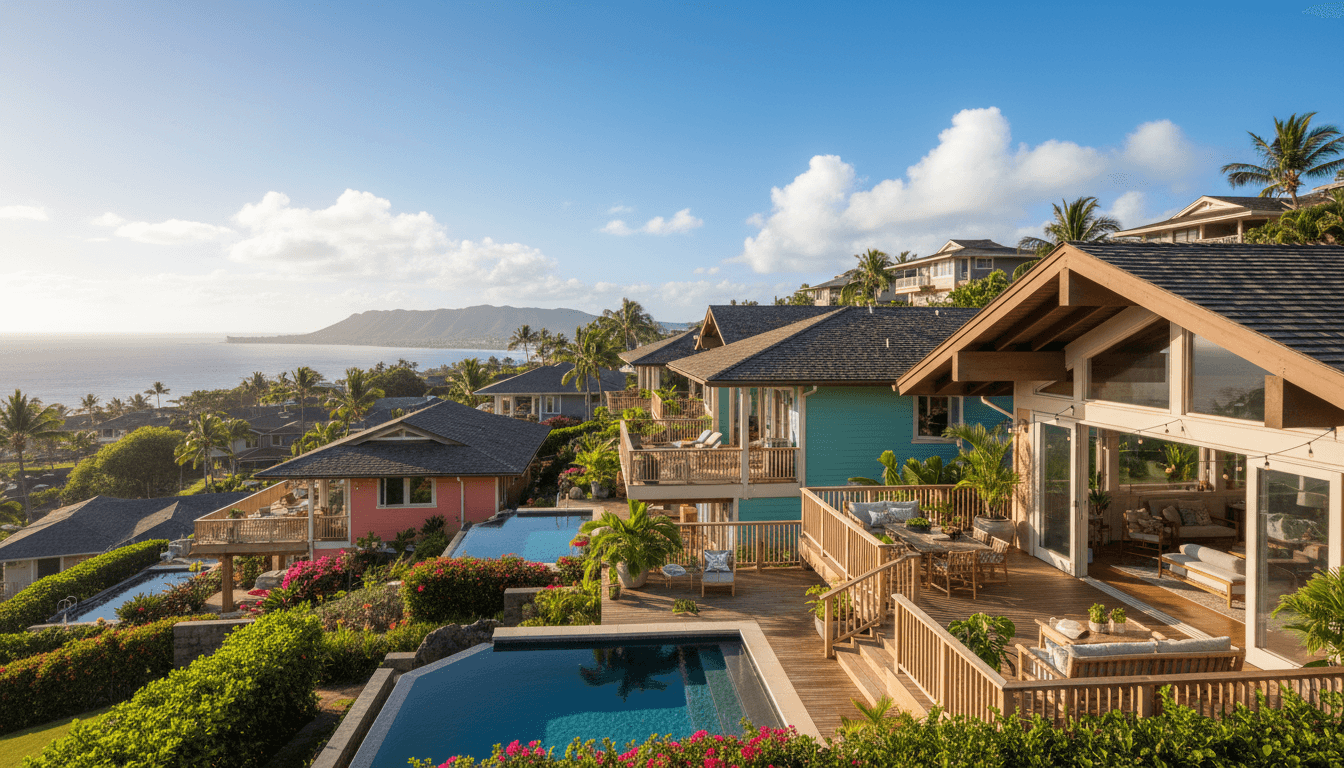
Winter in Honolulu Home Exchange: Your Guide to Cozy Hawaiian Escapes

SwappaHome Editorial Team
Home Exchange & Slow Travel Editorial
Escape the cold with a winter home exchange in Honolulu. Discover the best neighborhoods, insider tips, and how to score a cozy Hawaiian retreat without the resort prices.
I stumbled into my first Honolulu home exchange three winters ago, and honestly? It ruined expensive hotel vacations for me forever.
Not the Waikiki-resort-buffet version of Hawaii—I mean the real Honolulu. Waking up to roosters crowing in Manoa Valley. Drinking coffee on a lanai while rain patters on ti leaves. A 1950s cottage in Kaimuki with jalousie windows, a mango tree dropping fruit onto the roof, and a neighbor who brought over malasadas "just because."
Try getting that at a Marriott.
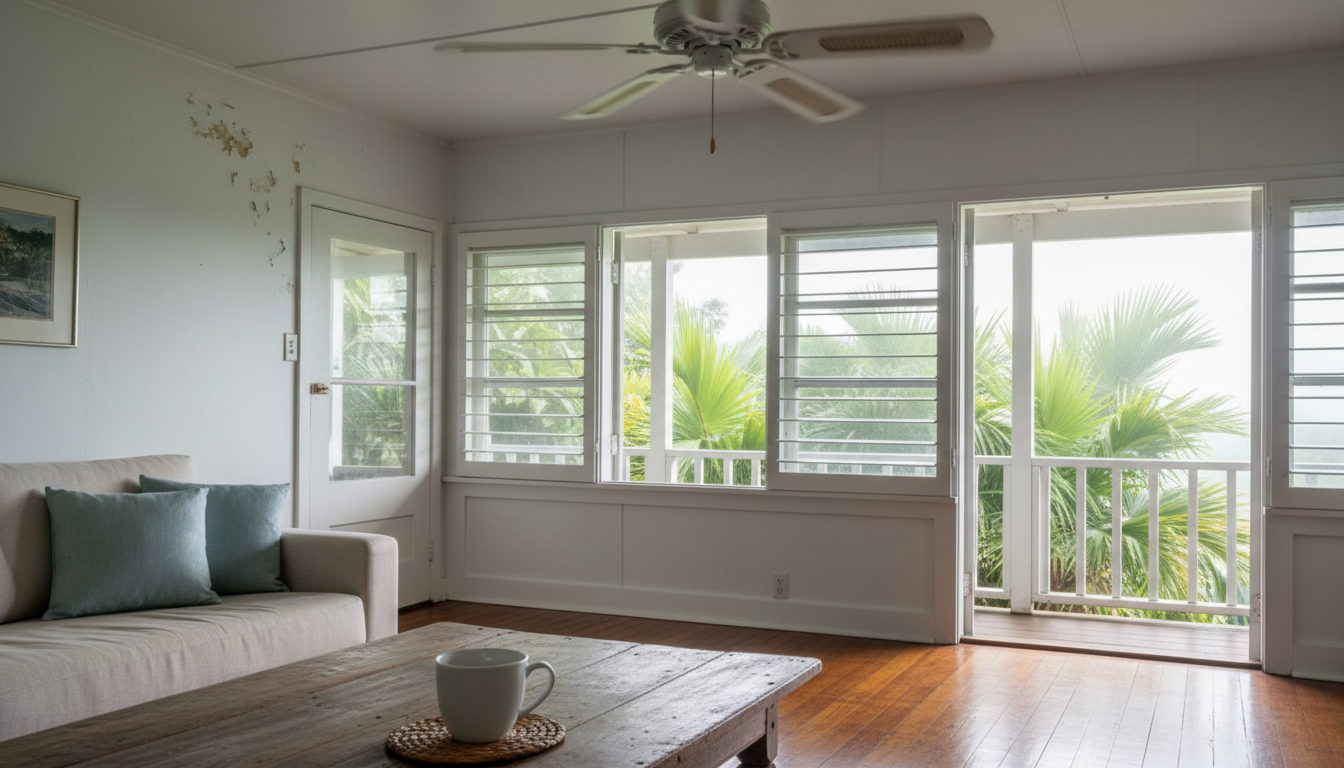 Morning light streaming through jalousie windows into a vintage Hawaiian cottage, coffee cup on a wo
Why This Combination Works So Ridiculously Well
So here's the thing about winter home exchanges in Honolulu—it's not just about dodging snow. It's about landing somewhere that feels lived-in, warm in ways that go beyond the 78°F afternoon air.
The economics are almost embarrassingly good. Peak season hotel rates run $280 to $600+ per night for something decent. A two-week escape? You're looking at $4,000 to $8,400 just for a place to sleep. Meanwhile, through SwappaHome's credit system, you're spending credits you earned by hosting travelers at your own place. One credit per night, whether you're staying in a Kalihi studio or a three-bedroom in Hawaii Kai.
But here's what nobody talks about: Hawaiian locals actually want to leave during winter.
I know, I know—why would anyone flee paradise? Turns out, plenty of Oahu residents dream of white Christmases, skiing in Colorado, or visiting family on the mainland. December through February is prime time for Hawaiian homeowners to list their places. Supply goes up. Your options multiply.
And the weather? Honolulu's winter isn't the postcard-perfect endless sunshine you might imagine. It's the rainy season—occasional showers, dramatic clouds over the Ko'olaus, and crucially, fewer tourists. The beaches aren't packed. The hiking trails are lush. Those afternoon rain showers last maybe twenty minutes before the sun breaks through again. It's moody and gorgeous in a way that summer Honolulu just isn't.
Best Neighborhoods for Winter Home Exchanges
Not all Honolulu neighborhoods work equally well for home swapping, and winter changes the equation.
Kaimuki: The Sweet Spot
This is where I did my first Hawaiian exchange, and I'm biased, but hear me out.
Kaimuki sits on the slopes of Diamond Head—far enough from Waikiki to feel residential, close enough (15-minute drive, 25-minute bus) to hit the beach whenever you want. The neighborhood has this incredible collection of local restaurants. Mud Hen Water for modern Hawaiian. Koko Head Cafe for brunch that'll wreck you for mainland breakfast forever. 12th Ave Grill for date night.
Winter in Kaimuki means you'll actually get parking at these places. The summer crowds thin out. You can walk Waialae Avenue in the evening and feel like you belong there.
Home exchange listings here tend to be older plantation-style houses or mid-century cottages. Most have lanais, some have pools, almost all have that distinctly Hawaiian indoor-outdoor living thing going on. Comparable rental value runs $2,200-3,500/month—which puts the home swap savings in perspective.
 Quiet tree-lined street in Kaimuki at golden hour, vintage cars parked along the curb, small restaur
Manoa Valley: For the Nature Lovers
Manoa is where Honolulu gets genuinely tropical. This valley neighborhood backs up against the Ko'olau Mountains, catches more rain than anywhere else on the island, and has this perpetually green, almost Jurassic vibe. The famous Manoa Falls hike starts here—1.6 miles through bamboo forest ending at a 150-foot waterfall.
Winter means more rain, which means the waterfalls are actually flowing. (Summer can leave them disappointing.) It also means cooler temperatures—65-70°F at night, which feels downright chilly by Hawaiian standards. Perfect sleeping weather if you're escaping a frozen Midwest.
The housing stock leans toward larger family homes. The University of Hawaii is nearby, so you'll find professors and researchers listing their places when they travel for winter conferences. These tend to be well-maintained, book-filled, character-rich places.
Kailua: Beach Town Without the Chaos
Technically this is on the windward side, not Honolulu proper, but it's only 25 minutes over the Pali Highway. Kailua Beach consistently ranks among the best in the US, and in winter, you might actually find a parking spot.
The town has this upscale-but-chill beach community vibe. Farmers markets, boutique shops, excellent coffee at Morning Brew or Island Snow (where Obama gets his shave ice). Housing here is pricier—$3,500-5,000/month rental value—so the home exchange savings are substantial.
Winter brings the trade winds, which means Kailua can be breezy. Pack a light layer. But those same winds keep the air fresh and the temperatures perfect.
Kapahulu: The Underrated Gem
Wedged between Waikiki and Diamond Head, Kapahulu is where locals go for food. Rainbow Drive-In for plate lunches ($10-12). Leonard's for hot malasadas ($1.50 each). Ono Seafood for poke bowls ($15-18) that'll make you question every poke you've ever eaten on the mainland.
The neighborhood is more urban, less polished than Kaimuki. Home exchanges here are often apartments or smaller homes—perfect if you want walkability and don't need a car for daily life. Winter means the surf shops aren't overrun, and you can actually get a table at Side Street Inn without a two-hour wait.
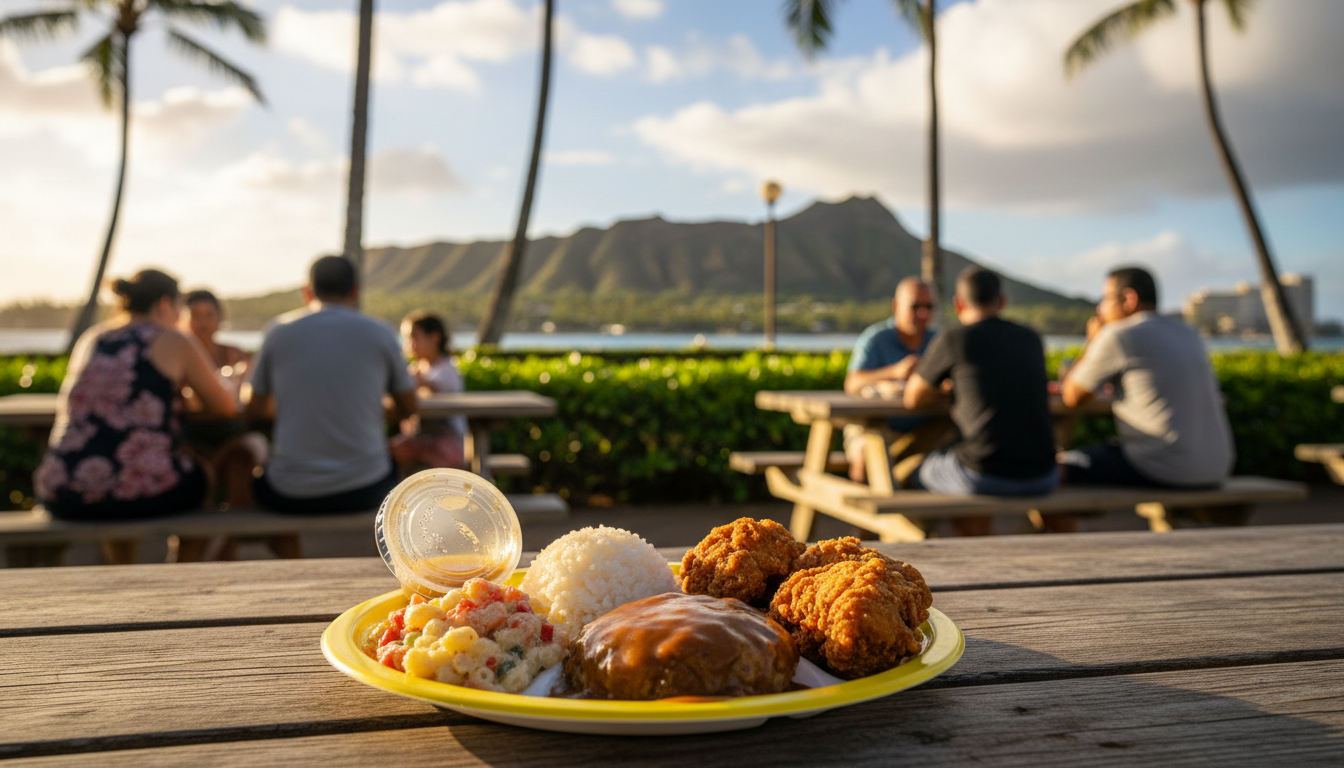 Colorful plate lunch from Rainbow Drive-In on a picnic table, Diamond Head visible in the distance,
How to Find the Perfect Exchange
Alright, practical stuff.
Start early—three to four months before your intended dates. Hawaiian listings get snapped up fast, especially for December and January. I've seen perfect Kaimuki cottages disappear within days of being posted. Set up alerts on SwappaHome for Honolulu and check daily during your planning phase.
Be flexible on exact dates if you can. Shifting your trip by even a few days can open up options that were otherwise booked. Hawaiian homeowners often have specific travel windows—maybe they're visiting family for Christmas week, or they have a conference in early February. Your flexibility is leverage.
Read listings carefully for winter-specific details. Does the home have air conditioning? (Less crucial in winter, but still nice for midday.) Ceiling fans? What's the parking situation? Older Hawaiian homes sometimes have quirks—outdoor showers, no dishwashers, window units instead of central AC. Not dealbreakers, but you want to know.
Look at photos with a critical eye. That gorgeous lanai shot—which direction does it face? West-facing means stunning sunsets but brutal afternoon heat. North-facing stays cooler. The greenery tells you about the microclimate too. Lush and tropical usually means more rain.
When you message potential hosts, mention why you're specifically interested in winter. Hawaiian homeowners appreciate guests who understand the seasonal rhythms. Saying "I love that winter means fewer crowds and greener trails" signals that you get it.
What to Expect from Your Host
Hawaiian hospitality is real, and it shows up in home exchanges in specific ways.
Most Hawaiian hosts I've encountered leave incredibly detailed welcome guides—restaurant recommendations organized by neighborhood, beach guides with parking notes, hiking trail suggestions with difficulty ratings. One host left me a hand-drawn map of her favorite sunset spots. Another stocked the fridge with local fruit from her backyard trees. Lilikoi. Apple bananas. Starfruit.
The flip side: Hawaiian hosts often have specific asks. Shoes off at the door is nearly universal. Some homes have water catchment systems requiring mindful usage. If there's a yard, you might be asked to water certain plants. Trash and recycling works differently than the mainland—learn the schedule.
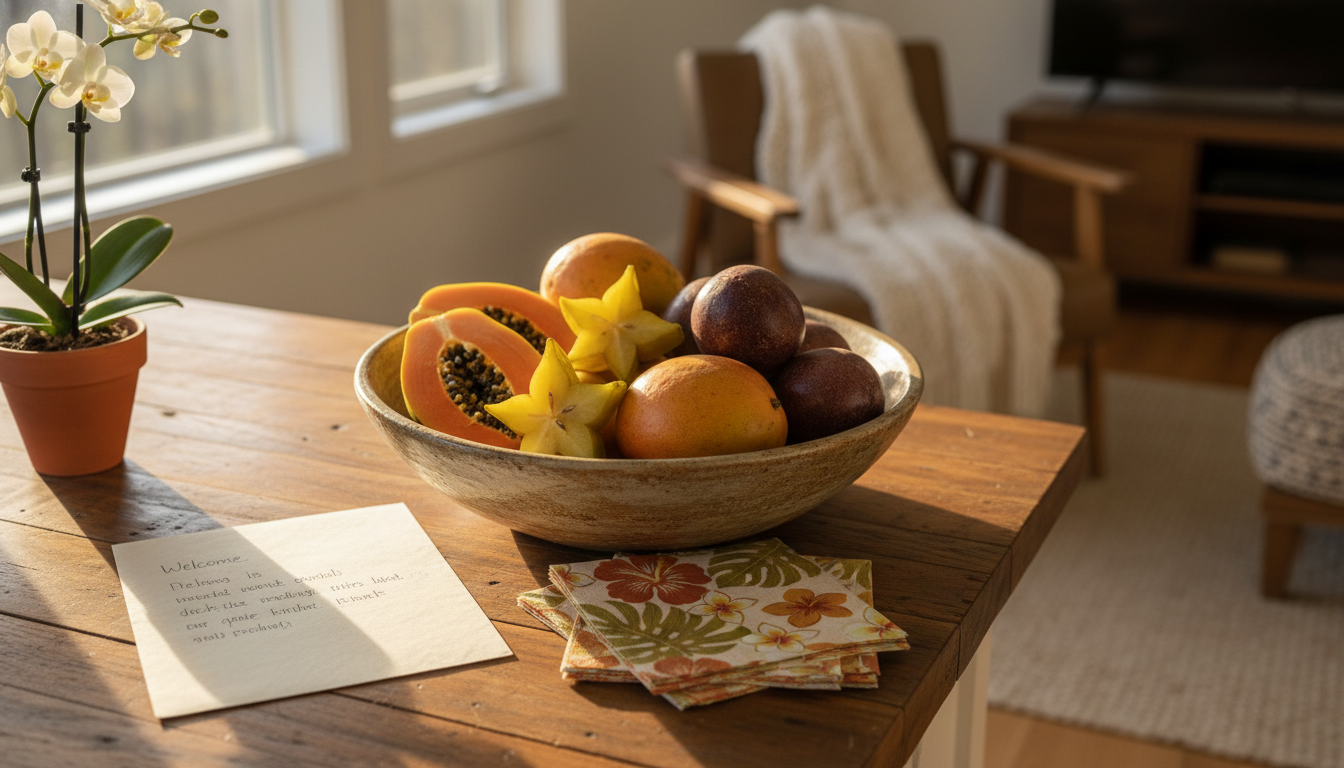 Handwritten welcome note on a kitchen counter next to a bowl of tropical fruit, Hawaiian print napki
Winter Activities Off the Tourist Radar
Here's where having a home base instead of a hotel room changes everything.
Farmers markets become your weekly ritual. The Saturday market at KCC is the big one—arrive by 8 AM or resign yourself to parking chaos. But the smaller markets are where it's at: Wednesday in Kailua, Thursday in Kaimuki. Fresh ahi for $18/pound, local honey, homemade mochi. You'll cook dinner in your exchange home with ingredients you can't get anywhere else.
Winter is whale season. Humpbacks migrate to Hawaiian waters from December through April, and you can often spot them from shore. Diamond Head lookout, Makapu'u Point, even just sitting on a Kailua beach—keep your eyes on the horizon. No expensive boat tour required, though those are spectacular if you want to splurge ($80-150 per person).
The hiking is prime. Manoa Falls, obviously, but also Makapu'u Lighthouse Trail (easy, stunning coastal views), Koko Head Stairs (brutal but rewarding), and Lanikai Pillbox (sunrise hike with views of the Mokulua Islands). Winter mornings are cooler, the trails are less crowded, and the vegetation is impossibly green.
Rainy day backup plans matter. The Bishop Museum is genuinely excellent—world-class Pacific Islander cultural exhibits in a gorgeous historic building ($26.95 adults). The Honolulu Museum of Art has a surprisingly strong collection and a lovely courtyard café. Or just embrace it: grab a book, make coffee, sit on your lanai and watch the rain. That's the home exchange advantage. You're not paying $400/night to sit in a hotel room.
The Practical Stuff
Let me give you real numbers.
Flights from the mainland to Honolulu in winter run $350-600 roundtrip from West Coast cities, $500-800 from the East Coast. Book six to eight weeks out for the best prices. Southwest flies there now, which has pushed prices down.
You'll probably want a car, especially outside Waikiki. Rentals average $45-75/day for a basic sedan. Pro tip: book through Costco Travel if you're a member—consistently better rates. Some home exchange hosts include a car, which is incredible when it happens. Always ask.
Groceries are expensive. Like, genuinely shocking if you're used to mainland prices. Expect 30-50% more for basics. Milk runs $7-8/gallon. A dozen eggs: $5-6. The trade-off is access to incredible local produce that doesn't exist elsewhere. Budget $400-500 for two weeks of groceries for two people, assuming you're cooking most meals.
The home exchange itself, through SwappaHome's credit system, costs one credit per night. If you've hosted guests at your own place, you've earned those credits already. New members start with 7 free credits—enough for a solid week-plus Hawaiian escape.
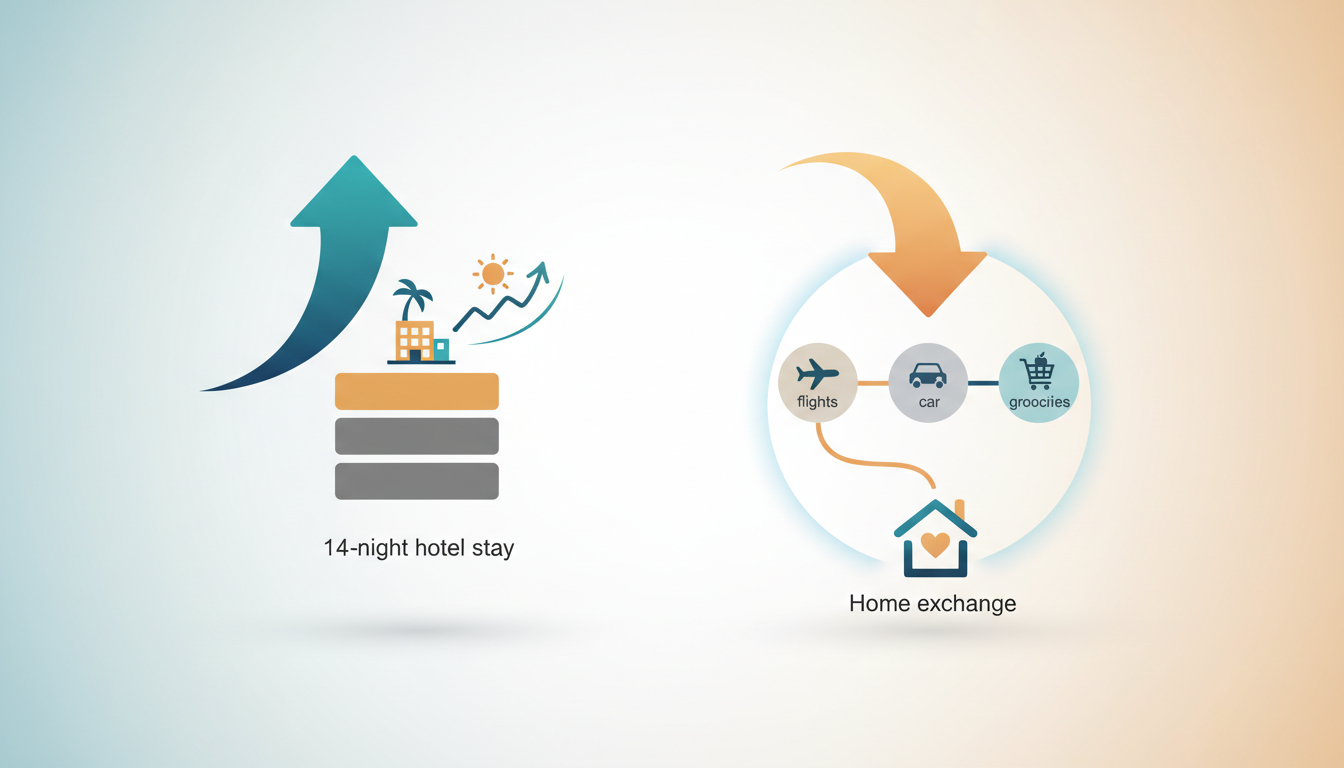 Infographic showing cost comparison 14-night hotel stay 4,200-8,400 vs home exchange costs flights
Making Your Home Attractive for Hawaiian Swappers
Remember, this is an exchange. Hawaiian homeowners need to want your place too.
If you're in a cold-weather city, lean into it. Seriously. That snowy Vermont cabin? That Chicago apartment with views of the frozen lake? That's exotic to someone who's never experienced a real winter. Highlight what makes your location special in its own season.
Be specific about winter amenities. Heated floors, a fireplace, proximity to skiing, cozy blankets, a well-stocked kitchen for making soup—these details matter to someone trading tropical warmth for your climate.
Your photos should show your place in its best light, but be honest about conditions. If your neighborhood is gray and slushy in January, show that alongside the cozy interior shots. Hawaiian travelers appreciate knowing what they're getting into.
Timing Your Trip
Not all winter weeks are equal.
Christmas through New Year's is peak everything. Prices spike, crowds materialize, locals get stressed. If you can avoid December 20 - January 5, do it. The trade-off: this is when many Hawaiian homeowners want to travel, so inventory can be higher.
Mid-January through February is the sweet spot. Holiday crowds have dispersed, kids are back in school, but the weather is still classic Hawaiian winter—warm days, occasional showers, whale sightings. This is when I did my Kaimuki exchange, and the pace felt perfect.
March starts transitioning toward spring break chaos. The first two weeks can still be mellow, but by mid-March, you're competing with college students and families on vacation.
What I Wish I'd Known
A few things nobody told me:
Bring reef-safe sunscreen. It's the law now, and regular sunscreen damages the coral. Sun Bum and Raw Elements are widely available, or just buy it when you land.
The spam thing is real. Spam musubi is everywhere, and it's actually delicious. Don't knock it until you've had one from 7-Eleven at 7 AM after a sunrise hike.
Time zone adjustment hits different. Hawaii is 2-3 hours behind the West Coast, 5-6 behind the East Coast, and doesn't observe daylight saving time. You'll wake up early for the first few days. Use it—sunrise is spectacular, and the beaches are empty before 8 AM.
Respect the 'āina (land). This isn't tourist-brochure stuff. Hawaiian culture has a deep relationship with the environment. Stay on marked trails, don't take lava rocks or sand, leave places cleaner than you found them.
The pace is slower. "Hawaiian time" is real. Things take longer, people are less rushed, and that's the point. If you're coming from a high-stress mainland winter, this adjustment is part of the gift.
Making the Most of It
After three Hawaiian exchanges—Kaimuki twice, Kailua once—here's what I've learned:
Cook at least half your meals. The kitchen is one of the biggest advantages of home exchange. Hit the farmers market, buy fresh fish, make poke bowls at home. You'll eat better than most restaurants and save hundreds.
Talk to the neighbors. That neighbor who brought me malasadas? She also told me about a secret beach access point and warned me about the parking enforcement schedule on our street.
Leave your exchange home better than you found it. Clean thoroughly, replace anything you used up, maybe leave a small gift. Good reviews lead to more exchange opportunities.
Take at least one day to do absolutely nothing. Sit on the lanai. Read a book. Listen to the birds. Watch the clouds move over the mountains. This is what you came for.
Your Next Steps
If you're serious about this, here's what I'd do this week:
Get your SwappaHome profile polished. Good photos, detailed descriptions, clear availability. Hawaiian homeowners are browsing just like you are.
Start searching Honolulu listings now, even if your trip is months away. Get a feel for what's available, what neighborhoods appeal to you, what you're seeing.
Reach out to a few promising listings. Don't wait for the perfect one—make connections, start conversations. The home exchange community is built on relationships.
And honestly? Just commit to going. I've talked to so many people who dream about Hawaiian winters but never pull the trigger. The logistics are simpler than you think. The experience is better than you imagine.
That first morning—coffee on a lanai, rain pattering on ti leaves, roosters crowing somewhere in the valley—you'll wonder why you waited so long.
See you in Honolulu.
Frequently Asked Questions
Is home exchange in Honolulu safe for first-timers?
Yes. SwappaHome's verification system and review ratings help you find trustworthy hosts. Hawaiian home exchange hosts tend to be experienced and welcoming—many have been swapping for years. Start by messaging hosts with strong review histories and communicate clearly about expectations before confirming.
How much can I save compared to hotels?
A lot. Two-week winter hotel stays run $4,000-8,400 at mid-range to nice properties. With home exchange, you're using credits earned from hosting—no nightly fees. Factor in flights ($400-700), car rental ($630-1,050), and groceries ($400-500), and your total is roughly $1,500-2,500 versus $5,000-10,000 for the hotel equivalent.
What's the best month for a winter Honolulu exchange?
Mid-January through February. Holiday crowds have left, prices stabilize, whale watching peaks, and trails are lush from seasonal rain. Avoid December 20 - January 5 unless you specifically want holiday festivities.
Do I need a car?
Depends on your neighborhood. Waikiki and Kapahulu are walkable with good bus access. Kaimuki, Manoa, and especially Kailua really benefit from having wheels for beach hopping, hiking access, and grocery runs. Budget $45-75/day for rentals, or ask your host if they include vehicle access.
What should I bring?
Light layers for cooler evenings (65-70°F), reef-safe sunscreen, comfortable walking shoes for hiking, and a light rain jacket for afternoon showers. Skip heavy winter gear entirely. Bring an empty bag for farmers market finds and local snacks to take home.

Published by
SwappaHome
SwappaHome Editorial Team
Home Exchange & Slow Travel Editorial
The SwappaHome Editorial Team brings together travel research, home-exchange community insights, and platform data to produce practical guides for first-time and experienced home swappers. Every article cites real platforms, current market rates, and verifiable city-level facts so readers can make informed decisions without guessing.
Ready to try home swapping?
Join SwappaHome and start traveling by exchanging homes. Get 7 free credits when you sign up!
Related articles
Bachelor and Bachelorette Parties in Singapore: The Complete Home Swap Group Guide for 2026
Planning a bachelor or bachelorette party in Singapore? Discover how home swapping lets groups of 6-12 stay together in luxury condos, saving thousands while partying in Marina Bay.
Cycling in Lisbon: 7 Home Swap Bike Tour Itineraries for Every Rider
Discover the best cycling routes in Lisbon with these home swap bike tour itineraries—from waterfront paths to hilltop adventures, all starting from your borrowed home.

Graduation Trip to Barcelona: How Home Swapping Gives New Graduates the Ultimate Celebration
Planning a graduation trip to Barcelona? Discover how home swapping lets new graduates explore Spain's most vibrant city without the hostel crowds or hotel costs.