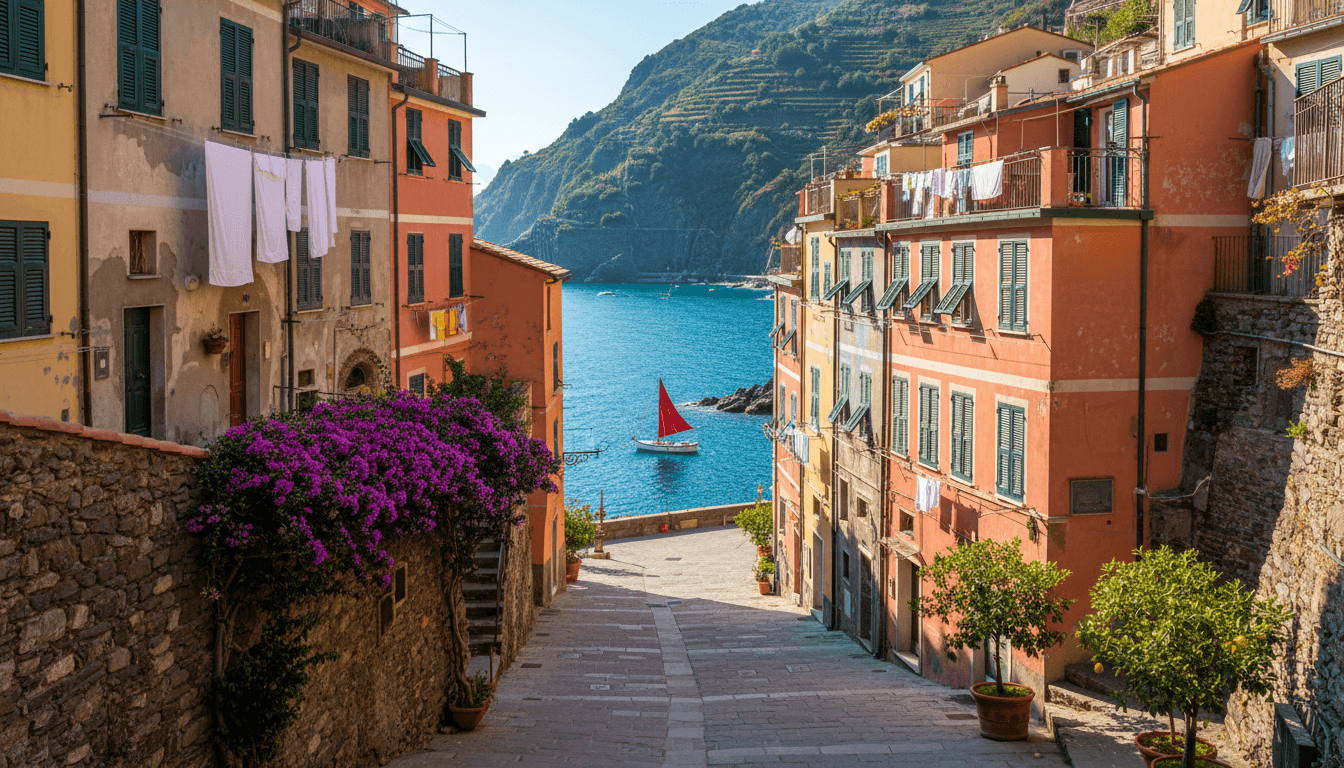
Cinque Terre for Couples: Intimate Home Exchange Experiences Along Italy's Romantic Coast

SwappaHome Editorial Team
Home Exchange & Slow Travel Editorial
Discover why home exchange in Cinque Terre beats crowded hotels for couples seeking authentic Italian romance—from cliffside apartments to local secrets.
The moment I knew we'd made the right choice? 6:47 AM on a Tuesday in Manarola. We were standing on a terrace barely big enough for two chairs and a lemon tree, watching fishing boats head out while the rest of the village slept. No hotel breakfast buffet to rush to. No checkout time looming. Just us, two espressos made in someone else's moka pot, and the kind of quiet that only exists when you're living somewhere instead of visiting it.
Here's the thing about Cinque Terre for couples: everyone talks about the hiking trails and the colorful houses, but nobody mentions how hard it is to actually be there together. The villages are tiny. The hotels are expensive. And in peak season, you're sharing every sunset with approximately 400 other people trying to get the same Instagram shot.
Unless you do what we did—and what I've now done three more times—which is skip the hotels entirely and find a home exchange in Cinque Terre instead.
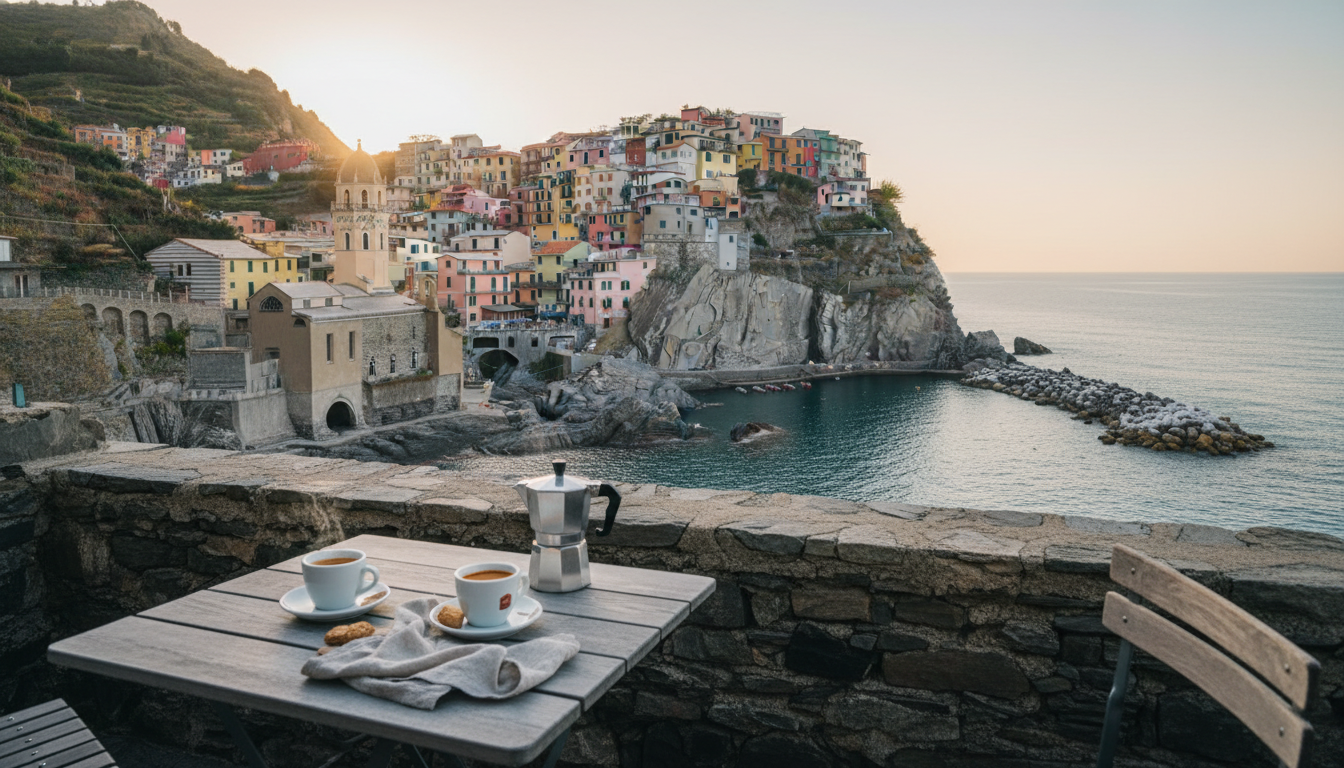 Early morning view from a small terrace in Manarola, espresso cups on a weathered wooden table, past
Why Home Exchange in Cinque Terre Changes Everything for Couples
I'll be honest with you: Cinque Terre wasn't designed for tourists. These five villages—Monterosso, Vernazza, Corniglia, Manarola, and Riomaggiore—were built by fishermen and farmers who needed to cling to cliffs because that's where the land was. The streets are narrow because nobody expected cars. The buildings are small because families didn't need much space.
This creates a problem for couples seeking romance.
Most hotels here fall into two categories: either you're paying €350-500/night ($380-540) for a room with a view, or you're in a cramped space above a restaurant where you can hear every conversation until midnight. Not exactly the intimate getaway you had in mind.
Home exchange flips this equation entirely. When you stay in a local's apartment, you get the terrace they've been perfecting for twenty years. You get the kitchen where they make pesto with basil from their neighbor's garden. You get the bedroom positioned to catch the morning light over the Mediterranean. These aren't amenities someone designed for tourists—they're the accumulated wisdom of actually living in one of the world's most dramatic landscapes.
And the math? A typical week in Cinque Terre during shoulder season (May or September) costs couples around €2,100-3,500 ($2,270-3,780) for a decent hotel room. Through home exchange, you're looking at zero accommodation costs—just your SwappaHome credits. That's money you can spend on a private boat tour, a cooking class in someone's home, or approximately 47 glasses of Sciacchetrà wine. I'm not judging.
The Best Villages for Couples Seeking Home Exchange in Cinque Terre
Not all five villages offer the same experience, and choosing the right one matters more when you're staying in someone's home versus a generic hotel room. Here's what I've learned from multiple trips:
Manarola: The Sweet Spot for First-Timers
If you've never done a home swap in Cinque Terre before, start here. Manarola has the most residential feel of the five villages—locals actually live here year-round, which means more home exchange opportunities and neighbors who are used to seeing new faces.
The village sits in a natural amphitheater facing the sea. Most apartments have at least a partial view, and the famous Nessun Dorma terrace bar is a 3-minute walk from anywhere. What I love about Manarola for couples: it's central enough to reach all the other villages easily, but quiet enough that you can hear the waves at night.
Quick tip: Look for apartments in the upper village (toward the church) if you want sunset views. Lower village places are closer to the swimming rocks but can get noisy during the day.
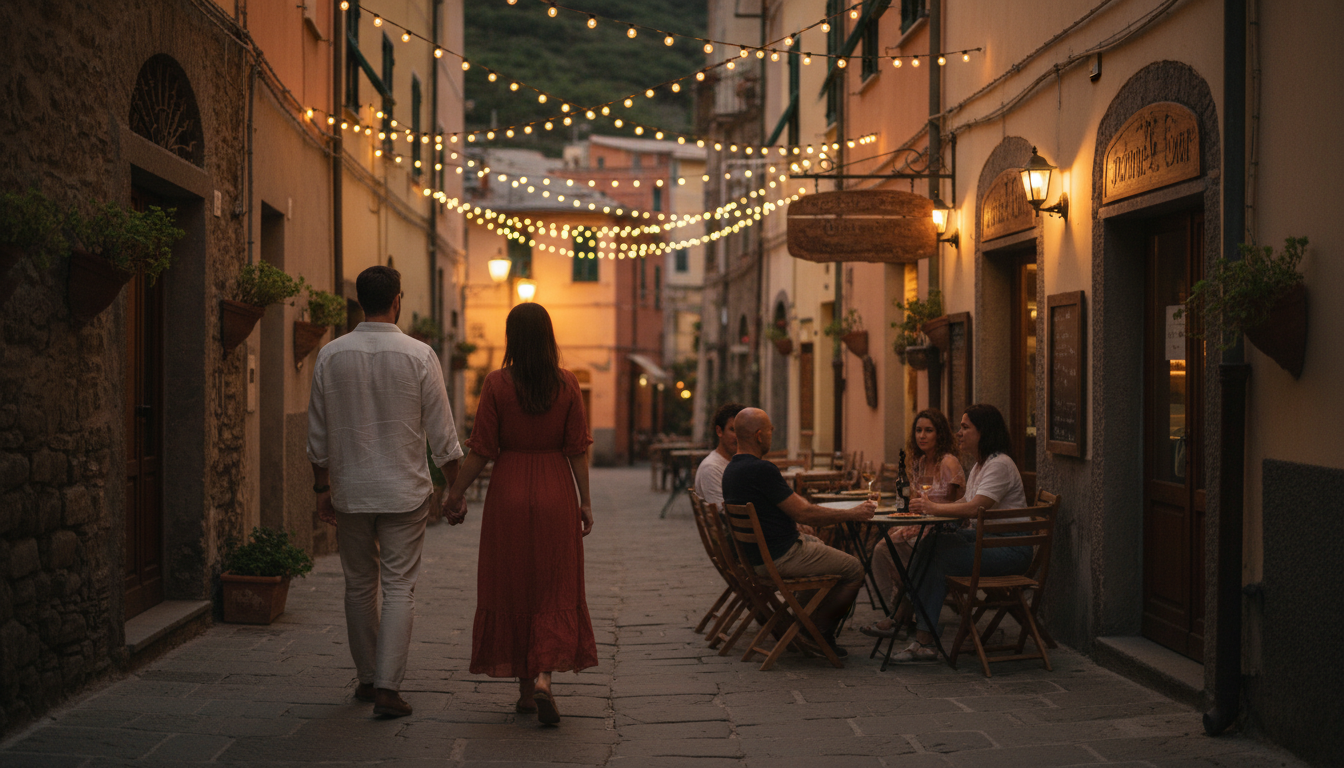 Couple walking hand-in-hand through Manarolas narrow main street at dusk, string lights overhead, lo
Vernazza: For Couples Who Want Piazza Life
Vernazza is the only village with a real piazza—a small harbor square where locals gather, kids play soccer, and you can watch boats come and go. If your idea of romance includes people-watching over aperitivo, this is your spot.
The trade-off? Vernazza is the most touristy of the five villages. During the day (roughly 10 AM to 6 PM), the main street becomes a slow-moving river of day-trippers. But here's the secret—stay in someone's home, and you experience the Vernazza that exists before and after the crowds.
I once swapped with a retired couple who had a tiny two-room apartment above the church. Their terrace looked directly down on the piazza. We'd have breakfast watching the square wake up, disappear to hike or explore other villages during peak hours, then return for that golden hour when the day-trippers leave and Vernazza becomes a village again. Magic.
Corniglia: The Introvert's Paradise
Corniglia is different. It's the only village not at sea level—you climb 382 steps (or take a shuttle bus) to reach it. There's no harbor, no beach, no boat access. Most tourists skip it entirely.
This makes it perfect for couples who want to disappear.
The apartments here tend to be larger and less expensive (when renting) because demand is lower. Through home exchange, you'll find locals who genuinely love living away from the crowds and have created homes that reflect that—gardens, terraces with vineyard views, kitchens designed for actual cooking rather than reheating takeout.
My friend Sarah did a two-week swap in Corniglia with her husband and said it was the most restorative trip they'd taken in a decade. "We'd wake up, make breakfast, read on the terrace until we felt like moving. Some days we didn't leave the village at all. It felt like we were borrowing someone's life, not just their apartment."
Monterosso: When You Want Beach Days
Monterosso is the largest village and the only one with a real beach. If lying on sand together is part of your romantic vision, this is your base. The old town has charm; the new town has convenience.
Fair warning though: Monterosso feels the least "Cinque Terre" of the five villages. It's more developed, more resort-like, more... normal. Some couples love this. Others feel like they've traveled all this way for something that could be any Italian beach town.
For home exchange here, focus on the old town (Monterosso Vecchio). The apartments are more characterful, and you're closer to the train station that connects all five villages.
Riomaggiore: Dramatic but Demanding
Riomaggiore has the most dramatic setting—buildings stacked vertically up a steep ravine, with the famous Via dell'Amore (Lovers' Walk) starting from its harbor. It's gorgeous. It's also challenging.
The streets are essentially stairs. If you're staying in someone's home here, ask specifically about the climb. Some apartments require 150+ steps from the train station. Romantic? Maybe. With luggage? Definitely not.
That said, I've stayed in a Riomaggiore apartment that was worth every step—a converted fisherman's storage room with a window directly over the water. We fell asleep to waves hitting rocks below us. For the right couple, that's priceless.
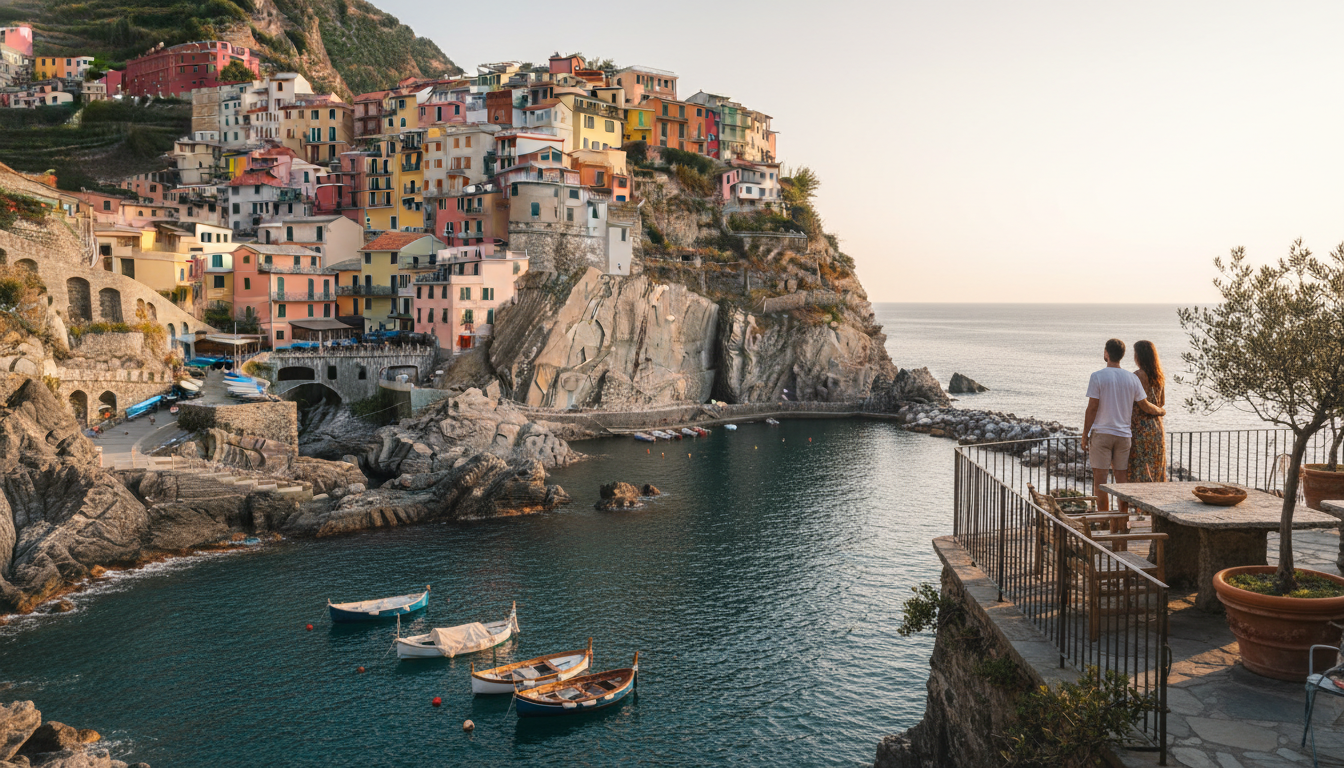 Riomaggiore at sunset, buildings in pinkorangeyellow stacked up the hillside, small boats in the har
How to Find the Perfect Cinque Terre Home Exchange for Your Trip
Searching for a home swap in a specific destination requires some strategy. Cinque Terre is popular but small—there are maybe 4,000 permanent residents across all five villages combined. That means inventory is limited, and the best places get requested early.
Start your search 4-6 months before your trip. Yes, really. The couples who score the apartments with the terraces and the views are the ones planning ahead.
When browsing listings on SwappaHome, here's what to look for:
Location specifics. "Manarola" is not enough. You want to know: How many steps from the train station? Which direction does the terrace face? Is it in the upper or lower village?
Kitchen situation. A proper kitchen transforms your Cinque Terre experience. You can buy fresh focaccia from the bakery, anchovies from the fishermen, pesto from the local shop, and have meals on your terrace instead of fighting for restaurant reservations.
Outdoor space. Even a tiny balcony matters here. The whole point of Cinque Terre is the views—make sure you can enjoy them without leaving home.
Honest photos. Look for pictures that show the less glamorous angles too. If every photo is a perfect sunset shot, ask for more realistic images of the bedroom, bathroom, and kitchen.
When you reach out to potential hosts, be specific about what you're looking for. Mention that you're a couple seeking a romantic trip. Ask about their favorite local spots. The best home exchanges start with genuine connection—these are people sharing their actual homes, not property managers renting units.
What Couples Should Know Before Their Cinque Terre Home Swap
A few things I wish someone had told me before my first home exchange in this region:
The train is your best friend. All five villages are connected by a train that runs every 10-20 minutes. A Cinque Terre Card (€18.20/$20 for one day, €33/$36 for two days) gives you unlimited train travel plus trail access. Don't even think about renting a car—there's nowhere to park, and the roads are terrifying.
Groceries require planning. Each village has a small alimentari (grocery shop), but selection is limited and prices are high. If you want to cook seriously, stop at the Coop supermarket in La Spezia on your way in. Stock up on pasta, wine, olive oil, and anything else you'll need for the week.
Restaurants book up fast. The villages are small, the restaurants are smaller. For dinner at popular spots like Nessun Dorma in Manarola or Gambero Rosso in Vernazza, book 2-3 days ahead during high season. Or do what locals do—eat earlier (7 PM) or later (9:30 PM) and skip the peak rush.
The trails close sometimes. The famous Sentiero Azzurro (Blue Trail) connecting all five villages is frequently closed for maintenance or weather damage. Check trail status at the Cinque Terre National Park website before planning hiking days. Good news though: the train means you can still reach every village even when trails are closed.
Shoulder season is the secret. May and September-October offer warm weather, fewer crowds, and the best light for photos. July and August are hot, packed, and honestly kind of miserable unless you love crowds. April and November can be rainy but magical when the sun appears.
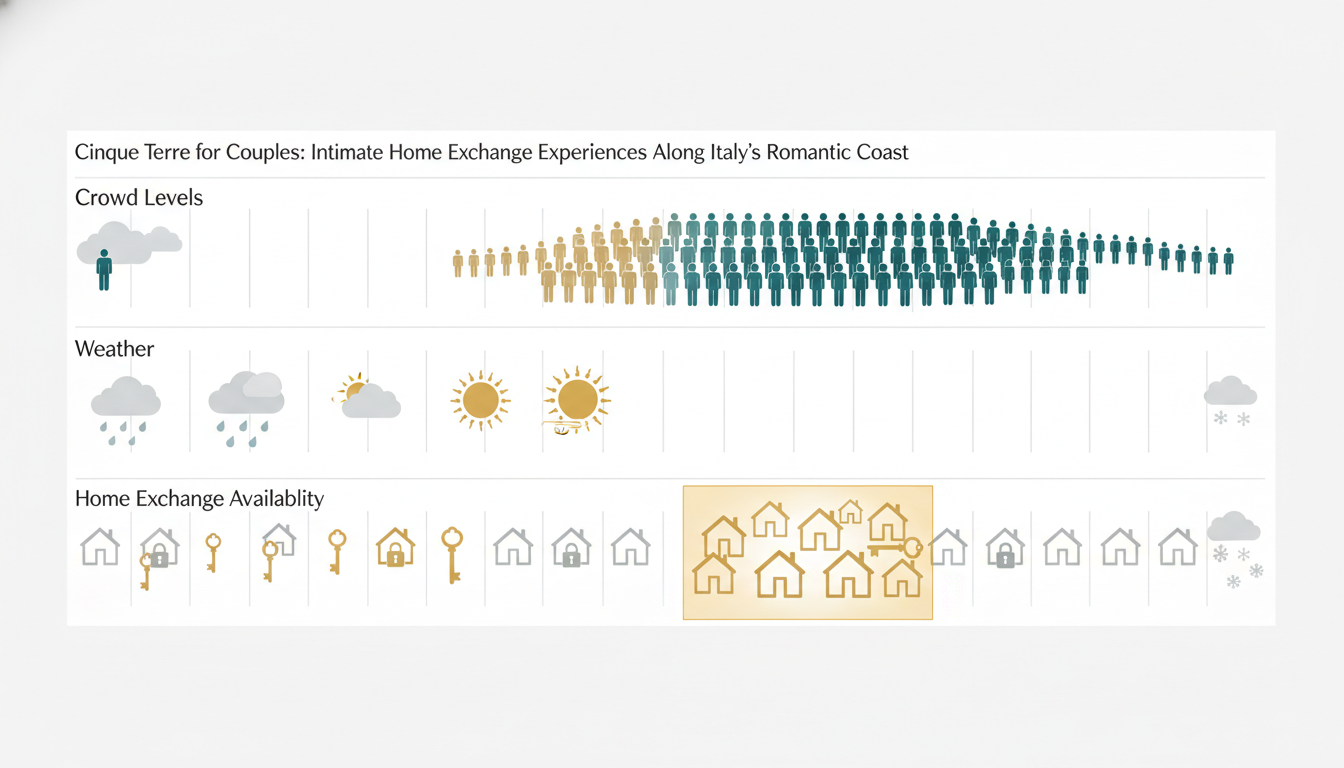 Infographic showing best times to visit Cinque Terre for couples crowd levels, weather, and home exc
Creating Romantic Moments in Your Cinque Terre Home Exchange
The advantage of staying in someone's home—versus a hotel—is that you can create your own romantic experiences instead of relying on packaged ones. Here's what's worked for me and my partner:
Morning rituals matter. Every Italian home has a moka pot. Learn to use it. The ritual of making coffee together, then taking it to the terrace as the village wakes up, becomes something you'll remember longer than any fancy restaurant meal. Trust me on this.
Cook at least one proper meal. Hit the village shops in the morning: fresh bread from the bakery, tomatoes from the produce stand, anchovies or mussels from whoever's selling the day's catch. Making dinner together in a tiny Italian kitchen, with the windows open and the sea visible, is genuinely romantic in a way that "romantic restaurants" rarely achieve.
Find your private swimming spot. Each village has rocks where locals swim, usually away from the main tourist areas. Ask your host where they go. Packing a picnic, finding a quiet spot on the rocks, and spending an afternoon swimming and reading together beats any beach club.
Watch sunset from home. Everyone crowds the famous viewpoints at golden hour. You know what's better? Watching from your own terrace with a bottle of Sciacchetrà (the local sweet wine, around €15-25/$16-27 for a small bottle) and no one else around.
Take the late train. After the day-trippers leave, hop the train to whichever village you haven't explored yet. Walking through Vernazza or Riomaggiore at 8 PM, when it's just locals and overnight visitors, is a completely different experience than visiting at noon.
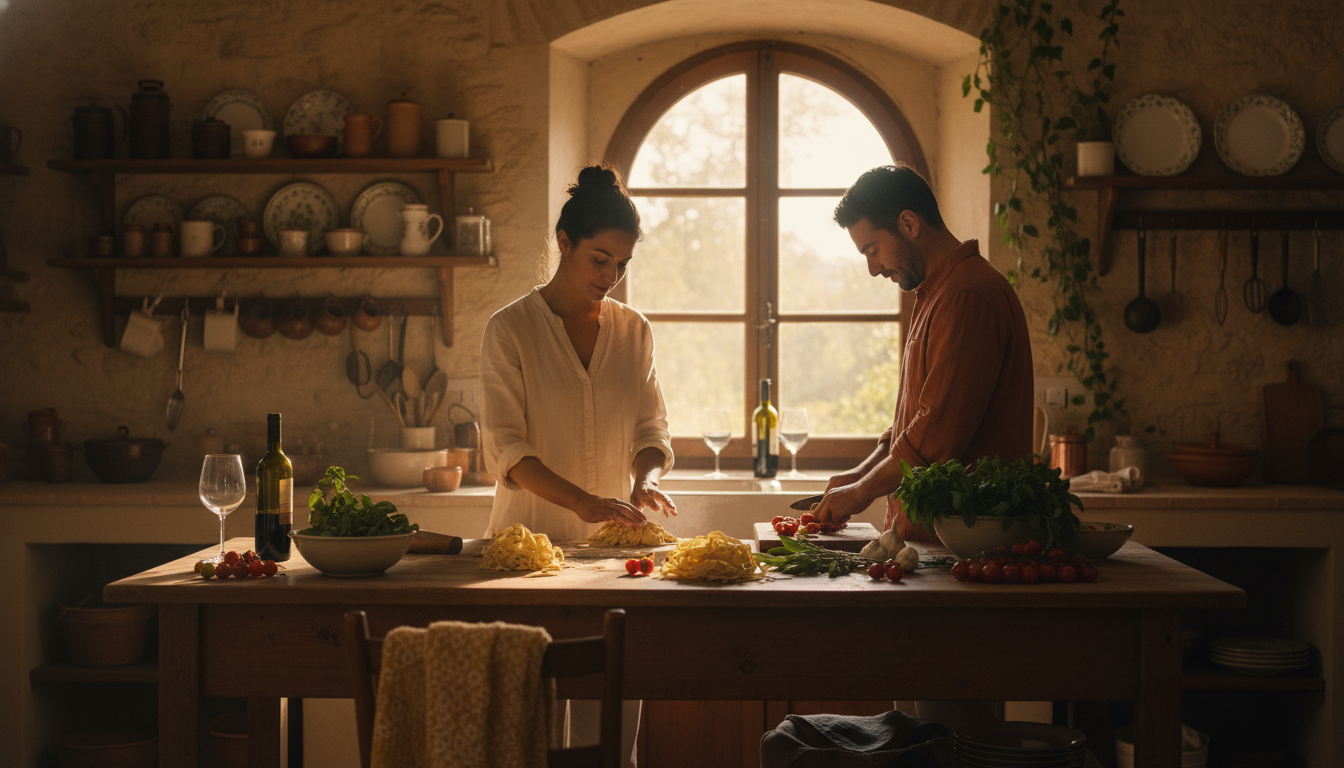 Couple cooking together in a small Italian kitchen, pasta and fresh vegetables on the counter, eveni
The Unspoken Benefits of Home Exchange for Couples
I've been writing about home swapping for years, and I keep coming back to something that's hard to quantify: staying in someone's home changes how you travel together.
In a hotel, you're consumers. You order room service, you request more towels, you leave your key at the desk. The relationship is transactional.
In a home exchange, you're guests—and temporary residents. You water the plants. You figure out which burner on the stove runs hot. You learn that the shower takes 30 seconds to warm up. You leave a thank-you note and maybe a small gift.
This shift does something to couples. You problem-solve together ("How do we work this coffee machine?"). You settle into a rhythm that feels like real life, not vacation performance. You have conversations in the morning that aren't interrupted by housekeeping knocking.
My partner and I have done maybe fifteen home swaps together over the years. Each one has taught us something about how we function as a unit. The Cinque Terre trips, specifically, showed us that we're both happier with less—a small space, simple meals, nowhere we have to be.
That's not something a hotel stay would have revealed.
Planning Your Cinque Terre Couples Home Exchange: A Realistic Timeline
Here's how I'd approach it if I were planning this trip today:
6 months out: Create or update your SwappaHome profile. Make sure your photos show your home at its best—this is what convinces Cinque Terre residents to accept your exchange request. Start browsing listings and saving favorites.
4-5 months out: Send personalized messages to your top 3-5 choices. Introduce yourselves, explain why you're interested in their specific home, and share your travel dates. Be flexible if possible—offering a range of dates increases your chances.
3-4 months out: Confirm your exchange and start planning logistics. Book trains from wherever you're flying into (likely Pisa, Genoa, or Milan) to La Spezia, the gateway to Cinque Terre.
1 month out: Connect with your host for practical details. Where do you pick up keys? What's the WiFi password? Any quirks about the apartment you should know? Also ask for their restaurant recommendations and local tips.
1 week out: Stock up on any specialty items you want to bring (your favorite coffee, snacks for the train, etc.). Download offline maps of the area. Check trail conditions.
During your stay: Send your host a message letting them know you arrived safely. Take care of their home like it's your own. Leave it cleaner than you found it.
What I'd Do Differently on My Next Cinque Terre Home Exchange
After four trips to this region, I've learned a few things the hard way.
I'd spend more time in one village instead of trying to see all five thoroughly. The villages are small—you can "do" each one in a few hours. But that's not the point. The point is settling in, becoming a temporary regular at one café, learning the rhythms of one place.
I'd bring better walking shoes. The trails and village streets are uneven stone. Cute sandals look great in photos but destroy your feet after a few days.
I'd plan fewer activities. My first trip, I had a spreadsheet of restaurants, viewpoints, and experiences. By day three, we'd abandoned it entirely. Cinque Terre rewards slowness—the best moments happen when you're not trying to optimize anything.
I'd budget more for food and wine. The local specialties—fresh anchovies, trofie al pesto, fried seafood cones from the harbor stands, Sciacchetrà with cantucci cookies—are worth every euro. Don't cheap out on the things that make this region special.
And I'd extend the trip by a few days. A week sounds like enough, but you'll want more. You always want more.
Cinque Terre isn't the easiest place to visit as a couple. It's crowded, it's expensive (if you do it the normal way), and it requires some logistical creativity. But when you find yourself on a terrace at dawn, coffee in hand, watching the Mediterranean turn gold while your partner reads beside you—you'll understand why people keep coming back.
Home exchange makes this possible. Not just financially, though that helps. It makes it possible by giving you a place in these villages instead of just a room. You stop being tourists and start being, for a week or two, the people who live in that apartment with the lemon tree and the view.
If that sounds like the kind of trip you want, start browsing Cinque Terre listings on SwappaHome. Look for the terraces. Look for the kitchens. Look for the hosts who clearly love where they live and want to share it.
Then go. And don't forget to water their plants.
Frequently Asked Questions
Is home exchange in Cinque Terre safe for couples?
Yes—home exchange in Cinque Terre is safe when you use a platform like SwappaHome with verified profiles and review systems. The villages themselves are extremely safe, with low crime and tight-knit communities. Members build trust through reviews and direct communication. Consider getting your own travel insurance for extra peace of mind.
How much can couples save with home exchange versus hotels in Cinque Terre?
Couples typically save €1,500-3,000 ($1,620-3,240) per week compared to mid-range hotels in Cinque Terre. Peak season hotel rooms average €250-400/night ($270-430), while home exchange costs only your SwappaHome credits—1 credit per night regardless of location or property value.
What's the best village in Cinque Terre for a romantic home exchange?
Manarola offers the best balance for couples seeking home exchange in Cinque Terre—it's residential enough to have good availability, central for exploring all villages, and has stunning sunset views. Vernazza suits couples wanting piazza life, while Corniglia is perfect for those seeking complete seclusion.
When should couples book a Cinque Terre home exchange?
Start searching 4-6 months before your trip for the best selection. Cinque Terre has limited permanent residents, so desirable properties with terraces and views get requested early. September and October offer ideal conditions: warm weather, fewer crowds, and better home exchange availability than peak summer.
Do you need a car for a Cinque Terre home exchange stay?
No—a car is actually a hindrance in Cinque Terre. Villages are car-free, parking is nearly impossible, and roads are treacherous. The regional train connects all five villages every 10-20 minutes. A Cinque Terre Card (€18.20-33/$20-36) covers unlimited train travel and trail access.

Published by
SwappaHome
SwappaHome Editorial Team
Home Exchange & Slow Travel Editorial
The SwappaHome Editorial Team brings together travel research, home-exchange community insights, and platform data to produce practical guides for first-time and experienced home swappers. Every article cites real platforms, current market rates, and verifiable city-level facts so readers can make informed decisions without guessing.
Ready to try home swapping?
Join SwappaHome and start traveling by exchanging homes. Get 7 free credits when you sign up!
Related articles

Bachelor and Bachelorette Parties in Singapore: The Complete Home Swap Group Guide for 2026
Planning a bachelor or bachelorette party in Singapore? Discover how home swapping lets groups of 6-12 stay together in luxury condos, saving thousands while partying in Marina Bay.
Cycling in Lisbon: 7 Home Swap Bike Tour Itineraries for Every Rider
Discover the best cycling routes in Lisbon with these home swap bike tour itineraries—from waterfront paths to hilltop adventures, all starting from your borrowed home.
Graduation Trip to Barcelona: How Home Swapping Gives New Graduates the Ultimate Celebration
Planning a graduation trip to Barcelona? Discover how home swapping lets new graduates explore Spain's most vibrant city without the hostel crowds or hotel costs.