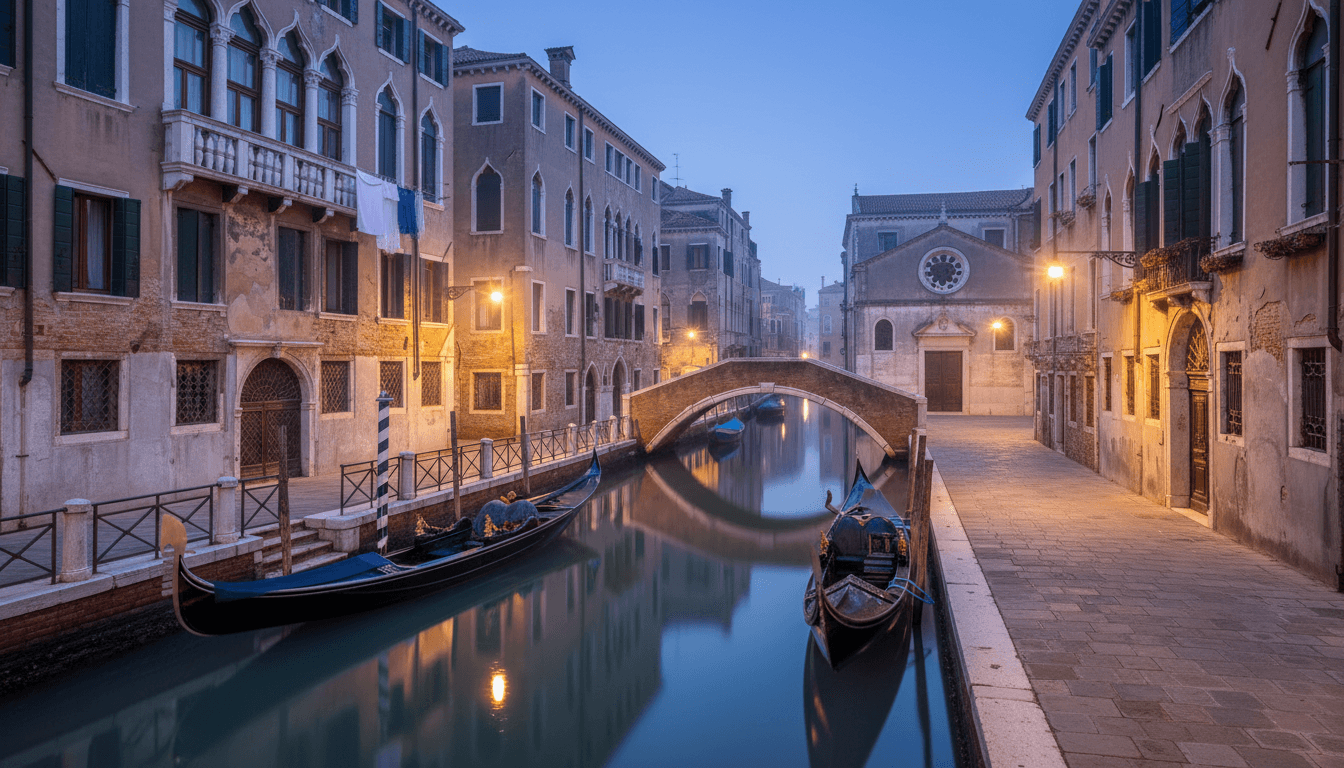
Digital Nomad Home Swap in Venice: Work Remotely from a Floating City

SwappaHome Editorial Team
Home Exchange & Slow Travel Editorial
Discover how digital nomads use home swaps to live and work remotely in Venice—real neighborhoods, WiFi realities, and how to avoid tourist-trap pricing.
Digital Nomad Home Swap in Venice: Work Remotely from a Floating City
Morning light bounces off canal water in a way that changes everything. You're at a wooden desk in Cannaregio, espresso cooling beside your laptop, watching a gondolier navigate past your window while Slack notifications pile up. This isn't a vacation—it's Tuesday. And you're paying nothing for accommodation because you arranged a digital nomad home swap in Venice before the summer crowds descended.
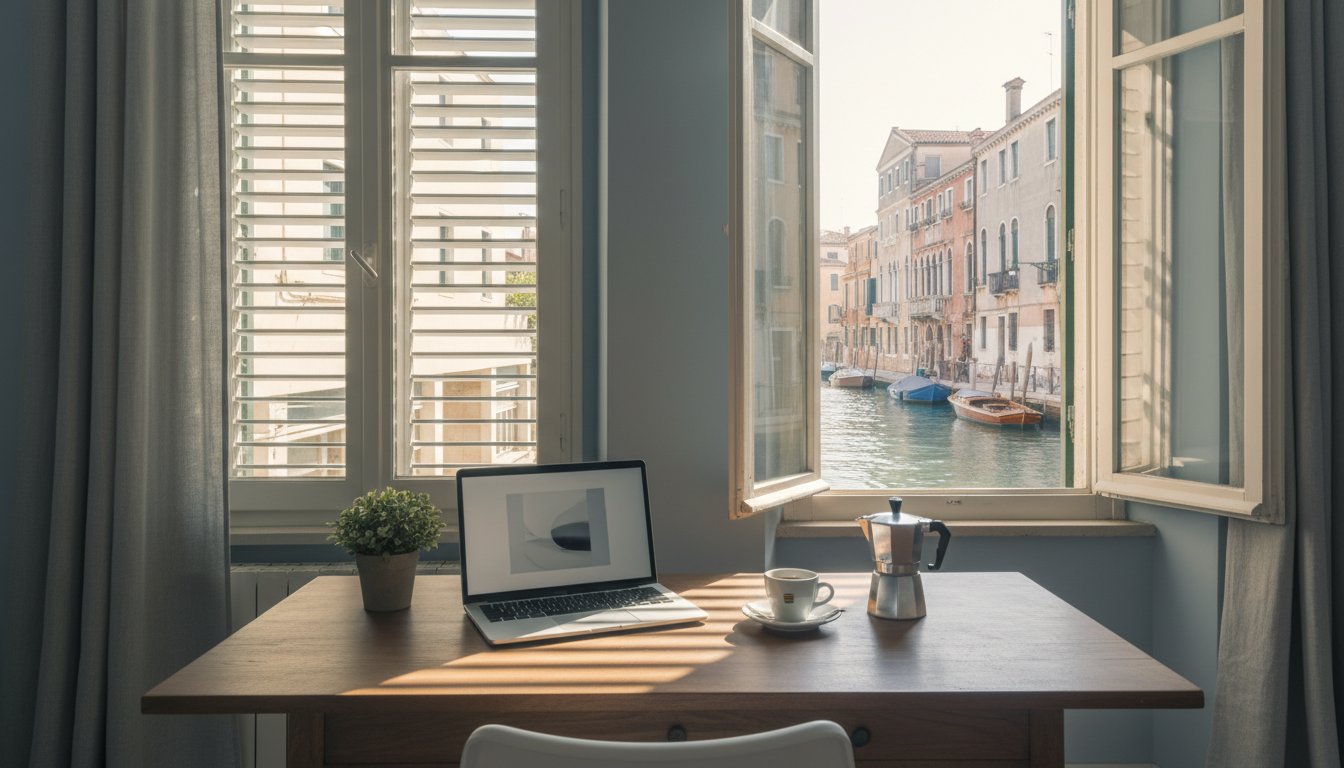 Morning light streaming through shuttered windows onto a desk with laptop, espresso, and canal view
Venice presents a paradox for remote workers. It's arguably the most photographed city on Earth, yet most visitors experience it as a day trip—rushing from Piazza San Marco to the Rialto Bridge before catching the last vaporetto back to Mestre. They never discover that Venice has actual neighborhoods where actual people live and work. Neighborhoods with reliable internet, quiet mornings, and the kind of deep focus that's impossible in a hotel lobby.
The challenge? Venice is expensive. Brutally so.
A modest hotel room near the train station runs €180-280 per night in shoulder season. Airbnbs in residential areas—the ones with decent WiFi and kitchen access—start around €120 and climb quickly. For a digital nomad planning a month-long stay, that's €3,600-8,400 in accommodation alone. Home swapping changes that math entirely.
Why Venice Actually Works for Remote Work
Here's something most travel guides won't tell you: Venice has surprisingly solid internet infrastructure. The city invested heavily in fiber optic connections over the past decade, partly to support its university population (Ca' Foscari has over 20,000 students) and partly because running new cables through 400-year-old buildings is easier when you do it all at once.
SwappaHome members who've stayed in residential Venice report average speeds of 50-100 Mbps in most apartments—more than enough for video calls, large file transfers, and the occasional Netflix break. The key is staying in neighborhoods where locals actually live, not in converted tourist apartments that rely on shared building connections.
The time zone works beautifully for certain work arrangements. Venice sits at UTC+1 (UTC+2 during daylight saving), which means morning overlap with East Coast US (your 2 PM is their 8 AM), full workday overlap with UK and Western Europe, and early morning calls possible with West Coast US (your 6 PM is their 9 AM). Australia and Asia get trickier—your evening is their morning—but it's manageable.
But the real reason Venice works for remote work isn't logistics. It's psychology.
The city forces you to slow down. There are no cars, no Ubers, no rushing. You walk everywhere, which means your commute from "home" to a canal-side café becomes a mandatory 15-minute decompression. The SwappaHome community frequently mentions this unexpected benefit: the enforced pace actually improves focus and reduces burnout.
Best Venice Neighborhoods for Digital Nomad Home Swaps
Cannaregio: The Working Professional's Choice
Cannaregio is Venice's largest sestiere (district) and its most residentially authentic. The area around Fondamenta della Misericordia and Fondamenta dei Ormesini feels like a different city entirely from the tourist crush around San Marco—locals drinking spritz at outdoor tables, kids playing soccer in campi, laundry hanging between buildings.
For remote workers, Cannaregio offers practical advantages. The neighborhood has multiple coworking-friendly cafés, including Paradiso Perduto (a local institution with outdoor seating and decent WiFi) and several smaller bars along the fondamente that welcome laptop workers during off-peak hours. Grocery shopping is straightforward—there's a Coop supermarket near the Strada Nova, and the neighborhood hosts a small daily market.
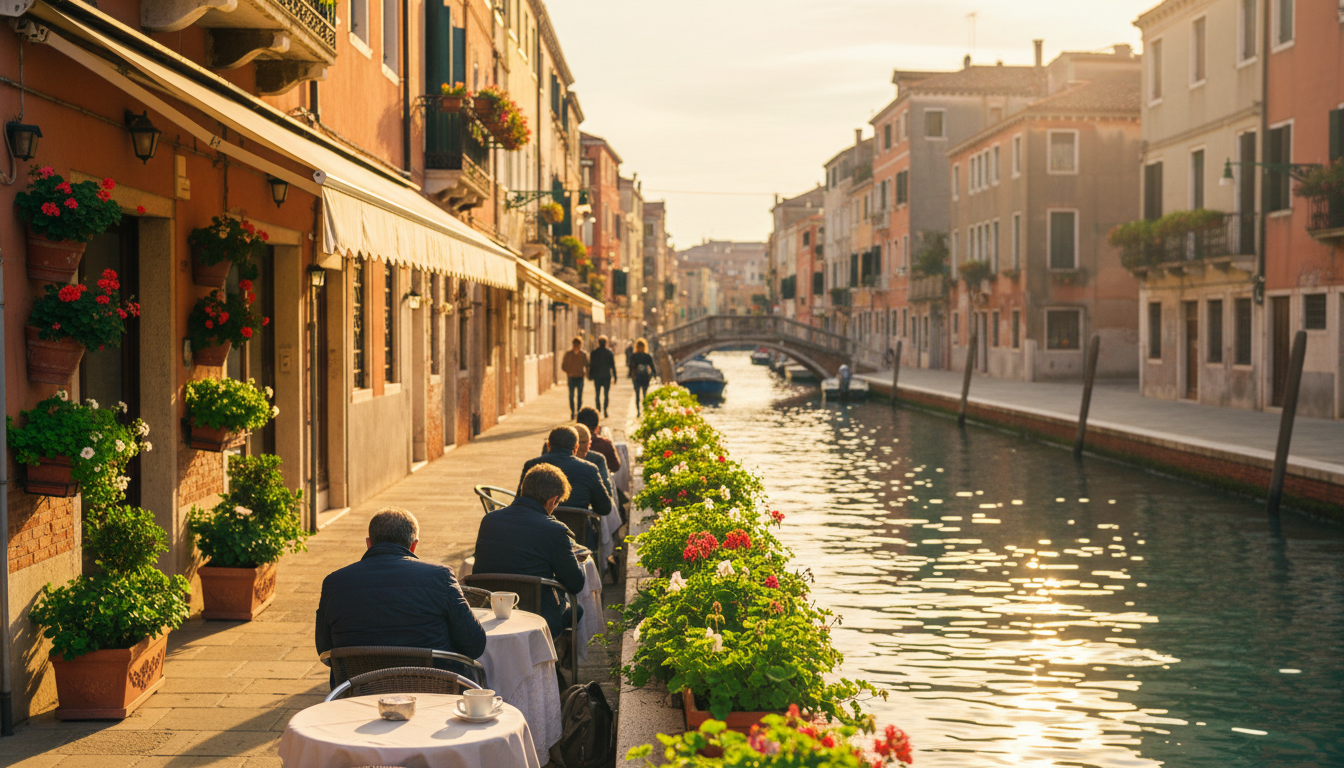 Quiet canal-side scene in Cannaregio with locals at outdoor caf tables, residential buildings with f
Home swap properties in Cannaregio typically offer what digital nomads actually need: dedicated workspaces (even if just a proper desk), residential-grade internet, and washing machines. The neighborhood's distance from major tourist sites means you'll find larger apartments at lower credit demands—many SwappaHome listings here are from academics, artists, and professionals who travel frequently for work.
Dorsoduro: The Creative's Enclave
Dorsoduro wraps around the southern edge of Venice, home to the Accademia gallery, the Peggy Guggenheim Collection, and a significant student population from Ca' Foscari and IUAV (Venice's architecture university). The energy here skews younger and more international, with a café culture that accommodates working remotely.
The area around Campo Santa Margherita is particularly suited to digital nomad life. The campo itself hosts a morning market, several affordable restaurants (Osteria alla Bifora serves €12-15 lunch plates), and bars that transition from coffee spots to aperitivo venues as the day progresses. Caffè Rosso, on the corner of the campo, has become an unofficial remote worker hub—though you'll want to buy something every couple of hours to maintain goodwill.
Dorsoduro apartments tend toward the compact side (Venice apartments generally run 40-70 square meters), but many have one feature that's gold for video calls: natural light. The southern exposure means bright interiors, and several SwappaHome listings in this neighborhood specifically mention dedicated desk areas with window views.
Castello: The Local's Secret
Castello is Venice's largest sestiere by area, stretching from the Arsenale (the historic shipyard) eastward toward the Giardini della Biennale. The western portion near San Marco gets tourist overflow, but venture past Via Garibaldi and you'll find one of Venice's most authentically residential neighborhoods.
Via Garibaldi itself is worth highlighting—it's one of the only actual streets in Venice (most "streets" are called calli and are too narrow for the designation). The street hosts a daily market, multiple bakeries, and a string of neighborhood bars where you can work undisturbed for hours. The area has a working-class history that persists in lower prices and a more relaxed atmosphere.
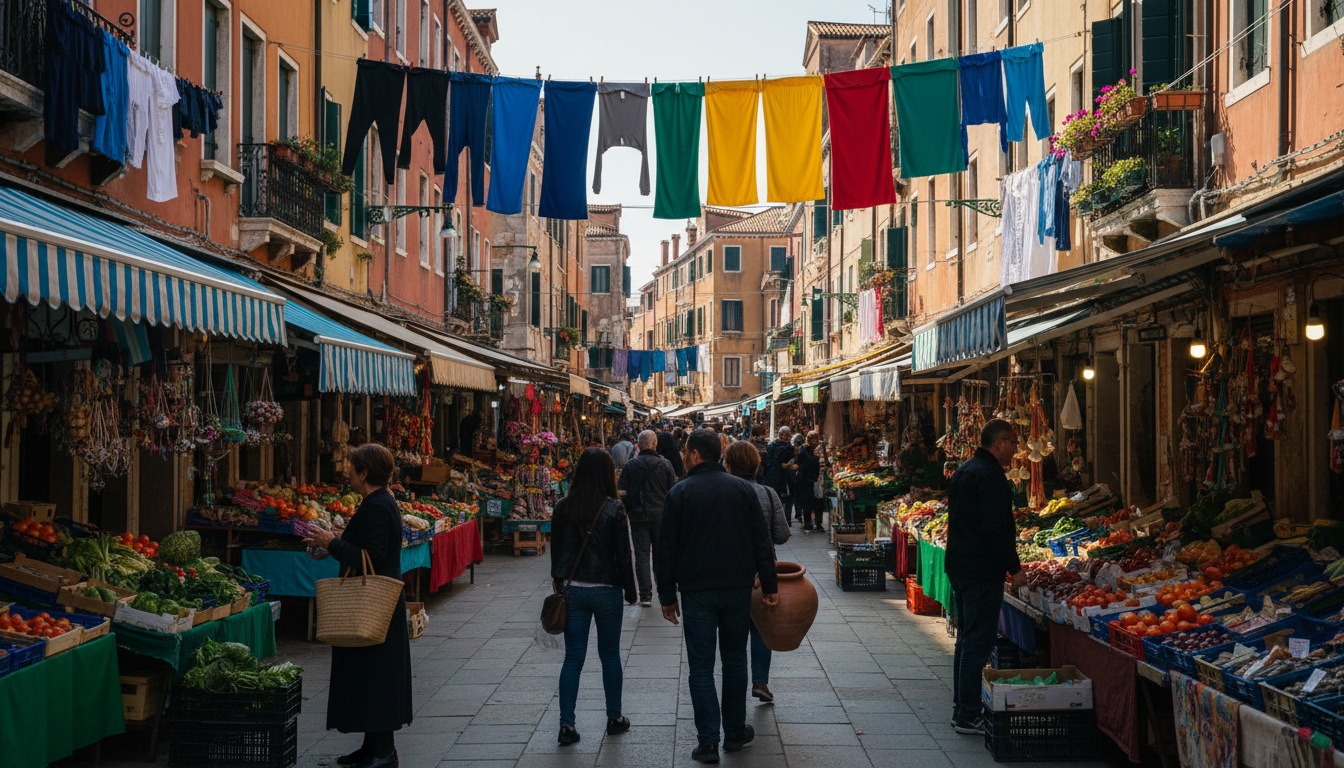 Via Garibaldi in Venices Castello district showing the wide street with market stalls, locals shoppi
For digital nomads, eastern Castello offers something rare in Venice: space. Apartments here tend to be larger and less expensive than equivalent properties in more central neighborhoods. The trade-off is distance—you're 20-25 minutes on foot from the Rialto—but many remote workers consider that a feature, not a bug.
The Practical Reality of Working Remotely in Venice
Internet and Connectivity
Let's be direct about this: Venice's internet is generally reliable, but you need to verify before committing to any home swap. The SwappaHome messaging system lets you ask hosts specific questions—and you should. What's the typical download/upload speed? (Request a Speedtest.net screenshot if possible.) Is the connection fiber, ADSL, or something else? How many devices typically connect simultaneously? Have there been outages during acqua alta events?
That last question matters more than you'd think. Venice floods regularly during autumn and winter—minor flooding (under 100cm) happens 3-4 times per year, while more significant events occur less frequently. Most residential buildings have adapted, but some older properties experience connectivity issues during extreme weather.
As a backup, Italian mobile data is affordable and fast. TIM, Vodafone, and WindTre all offer tourist SIM cards with 50-100GB of 4G/5G data for €20-30. You can pick these up at the train station (Venezia Santa Lucia) immediately upon arrival.
Workspace Realities
Most Venetian apartments weren't designed with remote work in mind. Spaces are compact, lighting can be dim (those romantic shuttered windows cut both ways), and "desk" often means a small table that doubles as dining space.
When evaluating home swap listings, look for photos showing actual desk or work areas, mentions of office chairs (not just dining chairs), window placement relative to work areas (glare on screens is a real issue), and separate rooms if you need to take calls without disturbing others.
Some SwappaHome members have found creative solutions—listings featuring mezzanine levels converted into dedicated office space, or small studies that hosts use professionally. These details often appear in listing descriptions, but asking directly yields better information.
Coworking Options
Venice has limited formal coworking infrastructure compared to cities like Lisbon or Berlin, but options exist.
Talent Garden Isola di San Giorgio sits on its own island, accessible by vaporetto from San Marco. The space is stunning—a converted monastery with high ceilings and water views—but the location means you're commuting by boat, which adds 20-30 minutes each way plus €7.50 per trip (or €22 for a daily pass).
Impact Hub Venezia operates on Giudecca island, offering day passes (around €25) and monthly memberships. The community skews toward social entrepreneurs and sustainability-focused projects.
H-Farm is technically on the mainland in Roncade (30 minutes by train from Venice), but it's worth mentioning as one of Europe's largest innovation campuses. If you need serious infrastructure for a day or two, it's an option.
More practically, many digital nomads in Venice work from a rotation of cafés and their home swap apartment. The café culture here supports this—ordering a coffee buys you an hour or two of seat time, and ordering lunch extends that significantly.
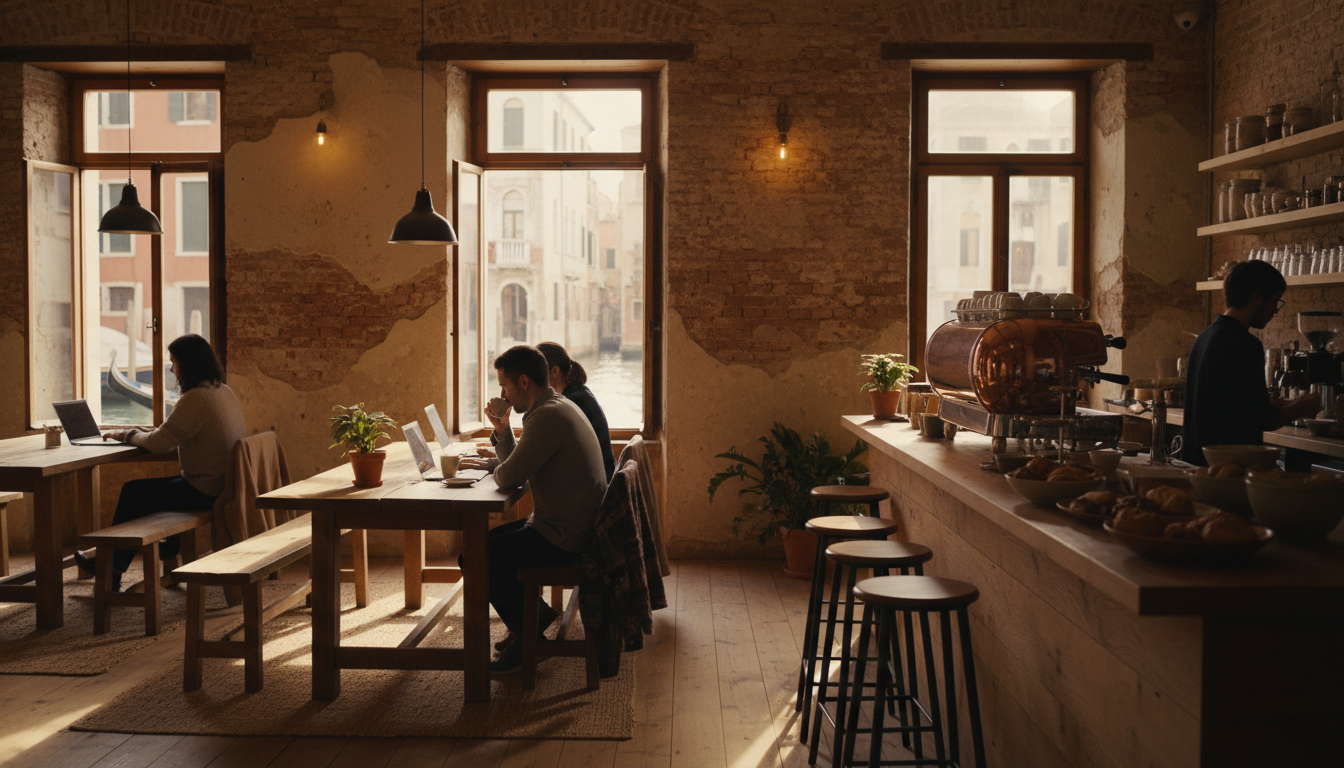 Interior of a Venice caf with exposed brick, good natural light, a few people working on laptops, an
How to Find and Secure a Venice Home Swap
Timing Your Search
Venice's tourism patterns create distinct windows for home swapping. The city receives roughly 30 million visitors annually, but they're not evenly distributed.
High season (April-June, September-October): Venetian residents travel less during these months because, frankly, it's when their city is most livable. Home swap availability drops, and you'll face more competition for listings.
Carnival (February): The famous festival attracts massive crowds, and many residents either rent their apartments at premium rates or stay to enjoy the festivities. Home swap availability is minimal.
Summer (July-August): Counterintuitively, this can be a good time for home swaps. Venice is hot, humid, and crowded with tourists, so many locals escape to the mountains or beaches. SwappaHome listings increase as residents seek exchanges that get them out of the city.
Winter (November-March, excluding Carnival): The sweet spot for digital nomads. Tourist numbers drop dramatically, locals are more likely to travel, and you'll experience Venice at its most authentic. The trade-off: acqua alta flooding events, shorter days, and some businesses closing for vacation.
Crafting Your Swap Request
Venetian hosts receive plenty of swap requests—the city's appeal is obvious. Standing out requires demonstrating that you understand what makes Venice different and that you'll treat their home appropriately.
Mention specific neighborhoods you're interested in (shows you've done research). Explain your work situation clearly—remote workers are often preferred over vacationers since you'll be home during the day, which some hosts find reassuring. Address the practical: "I work from home 9-6 and typically explore the city in evenings and weekends." Ask thoughtful questions about the space and neighborhood. Offer specifics about your own home that might appeal to them.
The SwappaHome credit system means you don't need a simultaneous swap—your Venice host doesn't need to stay at your place. But if you're in a desirable location (major cities, beach destinations, mountain areas), mentioning that your home is available can strengthen your request.
What to Expect from Venetian Homes
Venetian apartments have quirks that might surprise first-time visitors.
Stairs, everywhere. Most buildings lack elevators, and apartments often span multiple floors connected by narrow, steep staircases. If you have mobility concerns or heavy equipment, ask specifically about access.
Compact kitchens. Full-size ovens are rare; many apartments have only cooktops and small convection ovens. Refrigerators tend toward European sizing (smaller than American standards).
Humidity. Venice is built on water, and moisture is a constant presence. Apartments may have dehumidifiers, and hosts often leave specific instructions about ventilation.
Noise patterns. Tourist areas are loud during the day but quiet at night (visitors leave). Residential areas have the opposite pattern—quiet days, lively evenings as locals socialize in campi.
Heating/cooling. Many older buildings lack central air conditioning. Winters are managed with radiators; summers require fans or portable AC units. Ask about climate control if you're visiting during temperature extremes.
Living the Digital Nomad Life in Venice
Daily Rhythms That Work
Successful remote workers in Venice tend to develop routines that play to the city's strengths.
Early morning (6-8 AM): Venice is yours. Tourist crowds haven't arrived, and locals are just beginning their days. This is the time for a quiet walk, a coffee at a neighborhood bar, or simply enjoying the silence. Many digital nomads use this window for focused work before the city wakes up.
Mid-morning (8 AM-12 PM): Prime work hours. If you're taking calls with European colleagues, this is the window. Work from your apartment or relocate to a café.
Lunch (12-2 PM): Venetian lunch culture is real. Restaurants fill with locals eating the menu del giorno (daily menu, typically €12-18 for primo, secondo, and water). This is not the time to be hunched over a laptop—step away, eat properly, observe the ritual.
Afternoon (2-6 PM): Tourist peak. If you need to work, stay in your apartment or a residential-area café. If you can take a break, this is actually a good time to visit major sites—the crowds are there anyway, and you might as well see the Doge's Palace while everyone else is.
Evening (6-9 PM): The aperitivo window. Venetians gather in campi for spritz and cicchetti (Venetian tapas). This is social time, networking time, decompression time. Join them.
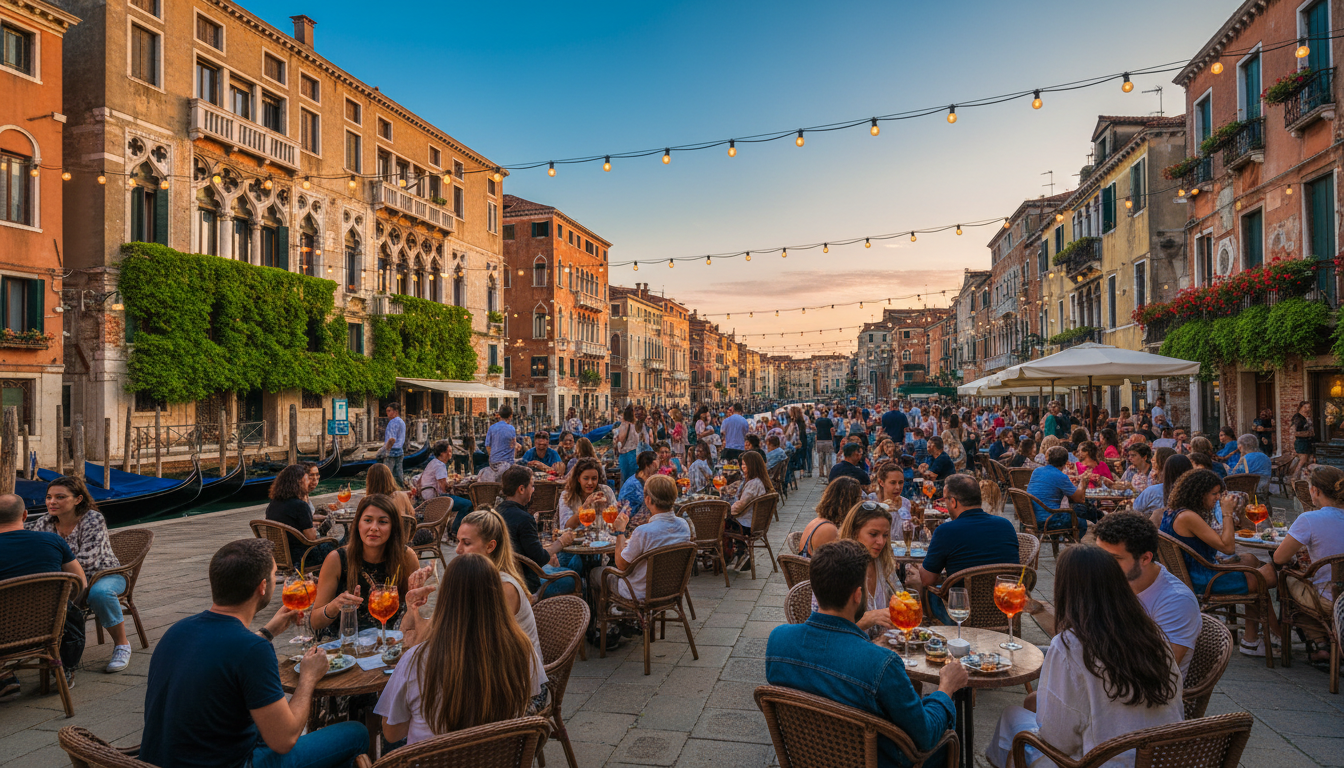 Evening aperitivo scene in a Venice campo with locals and visitors gathered at outdoor tables, warm
Managing Costs as a Digital Nomad
Even with free accommodation through home swapping, Venice requires budget awareness.
Groceries: Surprisingly reasonable at local supermarkets. A week's worth of groceries for one person runs €50-70. Avoid the tourist-trap mini-markets near San Marco—prices are 30-50% higher.
Coffee: €1-1.50 at the bar (standing), €2.50-4 at a table. Venetians drink espresso quickly at the bar; sitting is a luxury you pay for.
Meals out: Lunch menus at local trattorias run €12-20. Dinner at a proper restaurant starts around €35-45 per person with wine. Cicchetti at a bacaro (wine bar) can be a full meal for €15-20.
Transportation: Vaporetto single rides cost €9.50 (yes, really). If you're staying more than a few days, buy a travel card: €30 for 72 hours, €40 for a week. Better yet, walk—Venice is only about 4km end to end.
Day trips: The Veneto region offers excellent escapes. Trains to Padova (€4.50, 25 minutes), Verona (€9-15, 1 hour), or the Dolomites (€15-25, 2-3 hours) provide weekend variety without breaking the budget.
Building Community
One challenge of digital nomad life anywhere is isolation. Venice's small size actually helps here—you'll start recognizing faces at your regular café within days, and the expat/international community is tight-knit.
Ca' Foscari university brings international students and researchers who often seek English-speaking social connections. Language exchange meetups happen regularly. The contemporary art scene (Venice hosts the Biennale and numerous galleries) attracts creative professionals from around the world.
SwappaHome members sometimes connect with each other when their stays overlap—the platform's messaging system allows for this, and sharing tips about a city you're both experiencing can spark genuine friendships.
Navigating Venice's Unique Challenges
Acqua Alta (High Water)
Venice floods. It's been flooding for centuries, and while the MOSE barrier system (completed in 2020) has reduced major flooding events, minor acqua alta still occurs, particularly between October and March.
What this means for remote workers: check forecasts at Centro Maree (the city's tide monitoring center) or download the "Hi!tide Venice" app. Flooding typically lasts 2-4 hours around peak tide. Elevated walkways (passerelle) appear on major routes during floods. Ground-floor apartments may have specific protocols—ask your host. Internet and power are rarely affected unless flooding is severe (130cm+).
The honest assessment: minor flooding is an inconvenience, not a crisis. You might need to alter your walking route or delay a café visit by an hour. Major flooding (which the MOSE system now largely prevents) would be more disruptive, but forecasts give 24-48 hours warning.
Tourist Crowds
Venice's relationship with mass tourism is complicated and increasingly contentious. The city implemented a day-tripper entry fee (€5) in 2024 for peak days, and discussions about limiting daily visitors continue.
As a digital nomad staying in residential areas, you'll experience this differently than typical tourists. Your neighborhood will be relatively calm. You'll learn the back routes that avoid major thoroughfares. You'll time your movements to avoid peak hours (10 AM-4 PM). You'll develop opinions about cruise ship passengers. Everyone does.
The psychological reality: even knowing you're "different" from day-trippers, the crowds can wear on you. Build in escapes—day trips to the mainland, quiet mornings before the masses arrive, evenings in residential campi where tourists don't venture.
The Bureaucratic Reality
Italy has specific rules for digital nomads that you should understand.
Tourist stays (up to 90 days): No visa required for US, UK, Canadian, Australian citizens. You're technically supposed to register with local police within 8 days of arrival, but for home swaps this is rarely enforced.
Longer stays: Italy introduced a digital nomad visa in 2024, requiring proof of remote employment, minimum income (€28,000 annually), and health insurance. The process takes 2-3 months.
Tax implications: Spending more than 183 days in Italy in a calendar year can trigger tax residency. Consult a professional if you're planning extended stays.
Working legally: The digital nomad visa allows you to work remotely for non-Italian employers. Working for Italian clients or companies requires different arrangements.
Making the Most of Your Venice Home Swap
Before You Arrive
Download offline maps (Google Maps allows this; Venice's maze-like streets make it essential). Install the AVM Venezia app for real-time vaporetto schedules. Get the Hi!tide Venice app for acqua alta forecasts. Bring a portable WiFi device as backup (or plan to buy an Italian SIM). Pack light—you'll be carrying everything across bridges and up stairs.
During Your Stay
Introduce yourself to neighbors (a simple "buongiorno" goes far). Shop at the Rialto market at least once (arrive before 9 AM for the best selection). Find your "regular" café within the first few days. Take the vaporetto line 1 at least once—it's the scenic route down the Grand Canal. Visit Murano (glass) and Burano (lace, colorful houses) on a weekday when crowds are lighter.
Work-Life Integration
Set clear boundaries—Venice will seduce you into wandering when you should be working. Use the "one tourist thing per day" rule to prevent burnout and FOMO. Schedule calls for morning or evening, leaving afternoons free for exploration. Find a backup work location (café, coworking space) in case your apartment has issues.
Frequently Asked Questions
Is home swapping in Venice safe for digital nomads?
Home swapping in Venice is generally very safe. The city has low crime rates, and the SwappaHome verification and review system helps ensure trustworthy exchanges. Most concerns—like flooding or internet reliability—are manageable with proper research. Members consistently report positive experiences, particularly in residential neighborhoods like Cannaregio and Castello where community ties are strong.
How much can I save with a Venice home swap versus hotels or Airbnb?
A month-long stay in Venice typically costs €3,600-8,400 for hotels or €2,400-4,500 for Airbnb in residential areas. With SwappaHome's credit system, your accommodation cost is effectively zero—you exchange hosting credits earned elsewhere. Even accounting for SwappaHome membership fees, digital nomads report saving €2,000-7,000 on a month-long Venice stay.
What internet speed should I expect in Venice home swaps?
Residential Venice apartments typically offer 50-100 Mbps fiber connections, sufficient for video calls and remote work. Always confirm speeds with your host before booking—request a Speedtest screenshot if possible. As backup, Italian mobile data (TIM, Vodafone, WindTre) offers 50-100GB 4G/5G plans for €20-30, available at Venezia Santa Lucia train station.
When is the best time for a digital nomad home swap in Venice?
Winter (November-March, excluding Carnival) offers the best combination of availability, authenticity, and value. Tourist crowds thin dramatically, locals travel more (increasing swap availability), and you'll experience Venice as residents do. The trade-offs—shorter days, occasional flooding, cooler weather—are manageable for remote workers with flexible schedules.
Can I take vaporetto boats to coworking spaces in Venice?
Yes, but it's expensive—single vaporetto rides cost €9.50. If you're commuting to coworking spaces like Talent Garden on San Giorgio island, buy a travel pass (€40/week). Most digital nomads find working from their home swap apartment and rotating through neighborhood cafés more practical and economical than daily vaporetto commutes.
Venice wasn't built for efficiency. The city resists rushing, demands attention, rewards patience. For digital nomads willing to adapt their rhythms, a home swap here offers something rare: the chance to live inside a work of art while getting actual work done.
The morning light on the canals. The evening aperitivo in a quiet campo. The gradual recognition from your neighborhood barista. These aren't interruptions to productivity—they're the point.
SwappaHome makes the logistics possible. The rest is up to you.

Published by
SwappaHome
SwappaHome Editorial Team
Home Exchange & Slow Travel Editorial
The SwappaHome Editorial Team brings together travel research, home-exchange community insights, and platform data to produce practical guides for first-time and experienced home swappers. Every article cites real platforms, current market rates, and verifiable city-level facts so readers can make informed decisions without guessing.
Ready to try home swapping?
Join SwappaHome and start traveling by exchanging homes. Get 7 free credits when you sign up!
Related articles
Bachelor and Bachelorette Parties in Singapore: The Complete Home Swap Group Guide for 2026
Planning a bachelor or bachelorette party in Singapore? Discover how home swapping lets groups of 6-12 stay together in luxury condos, saving thousands while partying in Marina Bay.
Cycling in Lisbon: 7 Home Swap Bike Tour Itineraries for Every Rider
Discover the best cycling routes in Lisbon with these home swap bike tour itineraries—from waterfront paths to hilltop adventures, all starting from your borrowed home.
Graduation Trip to Barcelona: How Home Swapping Gives New Graduates the Ultimate Celebration
Planning a graduation trip to Barcelona? Discover how home swapping lets new graduates explore Spain's most vibrant city without the hostel crowds or hotel costs.