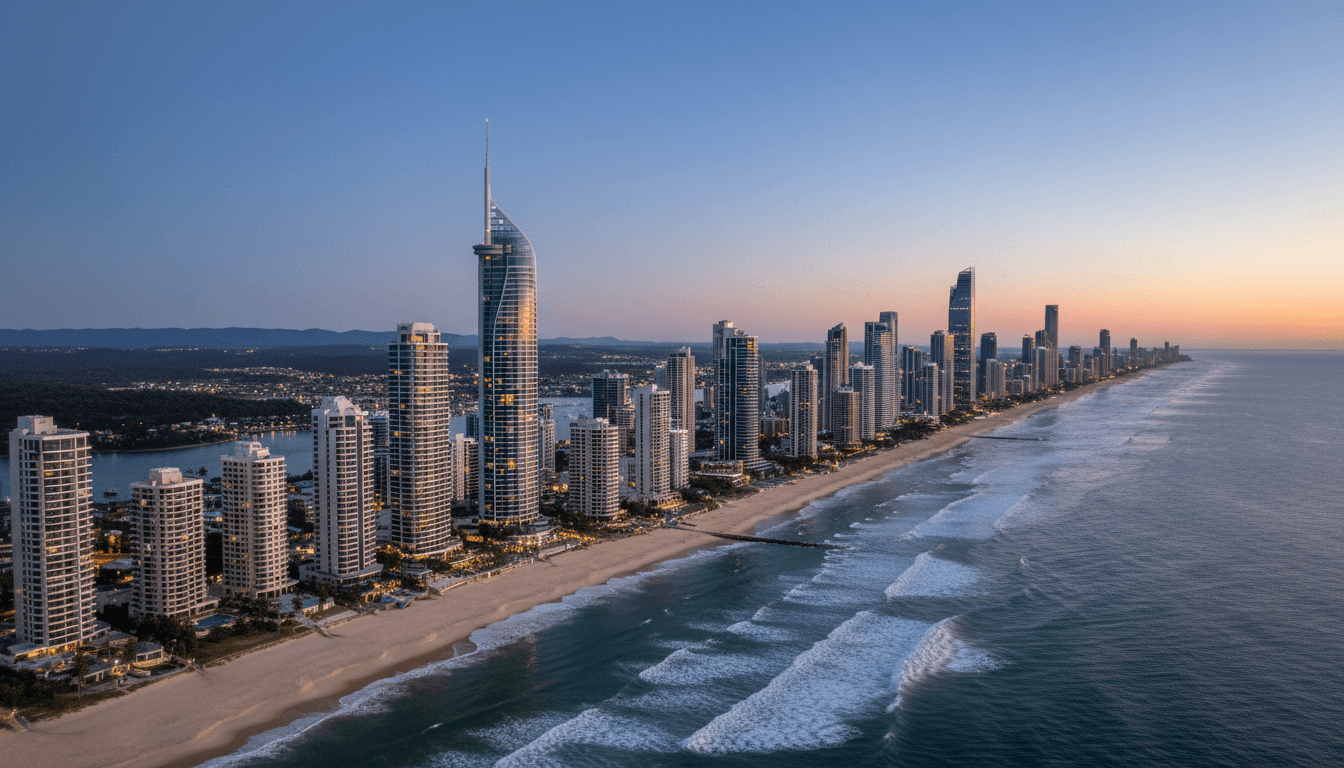
Digital Nomad Home Swap in Gold Coast: Your Complete Guide to Working Remotely Like a Local
Maya Chen
Travel Writer & Home Exchange Expert
Discover how a digital nomad home swap in Gold Coast lets you work remotely from beachside apartments, save thousands, and live like a true local for weeks or months.
I was three espressos deep at a café in Burleigh Heads when I realized I'd made a terrible mistake—I'd scheduled a client call during what locals call "the golden hour." Outside, surfers were catching their last waves as the sun painted everything amber, and I was stuck on Zoom explaining content strategy to someone in Chicago.
That's the thing about doing a digital nomad home swap in Gold Coast: you'll constantly be torn between work and the magnetic pull of this coastline. But here's what I've learned after spending six weeks in a borrowed apartment overlooking Nobby Beach—it's absolutely worth the internal conflict.
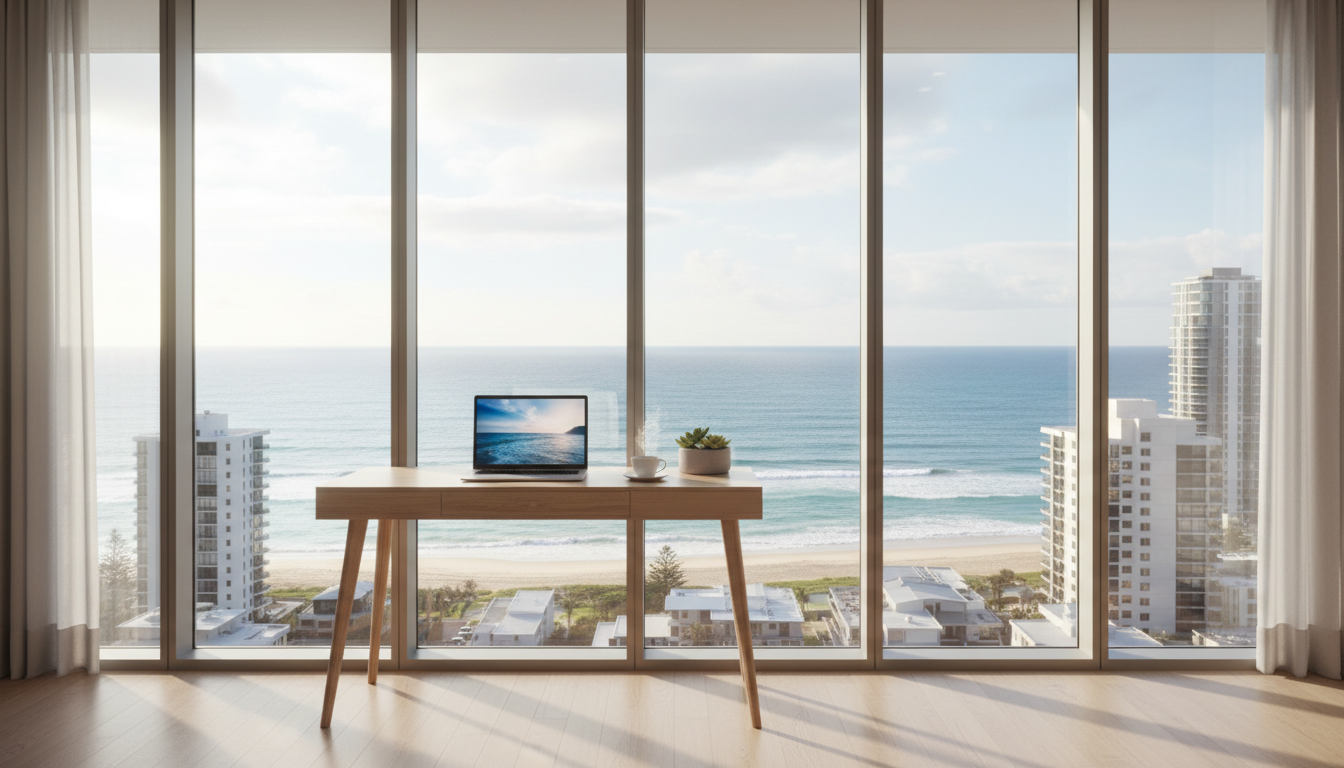 Morning light streaming through floor-to-ceiling windows of a modern Gold Coast apartment, laptop op
Why Gold Coast Is Perfect for a Digital Nomad Home Swap
I'll be honest—when I first considered Australia for remote work, Sydney and Melbourne were at the top of my list. Gold Coast felt like something you'd visit for a weekend beach trip, not a serious work destination.
I was wrong.
The Gold Coast has quietly become one of Australia's most compelling spots for digital nomads, and a home swap here makes it genuinely accessible. We're talking about a 57-kilometer stretch of coastline with reliable 4G coverage (often better than what I get in San Francisco), a timezone that works surprisingly well for both US and Asian clients, and a cost of living that won't make you weep into your flat white.
But here's what really sold me: the work-life integration is baked into the culture here. Nobody blinks when you show up to a café at 2 PM on a Tuesday with a laptop. The coworking spaces have outdoor areas. People actually take lunch breaks—real ones, not the sad desk sandwich situation I was used to back home.
The home exchange angle changes everything financially. Hotels in Gold Coast run anywhere from $150-300 AUD ($95-190 USD) per night for something decent. Airbnbs with proper workspaces? You're looking at $180-400 AUD ($115-255 USD) nightly, minimum. But through a platform like SwappaHome, you're spending 1 credit per night regardless of whether you're in a modest Southport apartment or a sprawling Mermaid Beach house. For someone planning to stay a month or longer—which is really the minimum for productive remote work—the math becomes absurd.
Best Gold Coast Neighborhoods for Digital Nomad Home Swaps
Not all Gold Coast suburbs are created equal when you're trying to actually get work done. After exploring pretty much the entire coast during my stay, here's my honest breakdown.
Burleigh Heads: The Sweet Spot for Remote Workers
This is where I'd send any digital nomad doing their first Gold Coast home swap. Burleigh has this perfect balance—enough going on that you won't feel isolated, but not so chaotic that you can't focus.
James Street is essentially an outdoor office with better coffee. I'm talking about spots like Commune, where the WiFi is solid and nobody rushes you, or The Collective on Palm Beach, about a 10-minute walk north.
The homes here tend to be a mix of older beach houses and newer apartments. I stayed in a two-bedroom unit about 400 meters from the beach—my host was a graphic designer who'd set up a proper desk area with an ergonomic chair. She was spending two months in Vancouver, and we swapped tips about our respective cities, which was lovely. The natural light situation was incredible for video calls, and I could hear the ocean if I opened the windows.
Expect to pay around $6-8 AUD ($4-5 USD) for a specialty coffee, and $18-25 AUD ($11-16 USD) for a decent lunch. The local IGA supermarket is well-stocked but pricier than bigger stores—I'd do major grocery runs at Coles in nearby Miami.
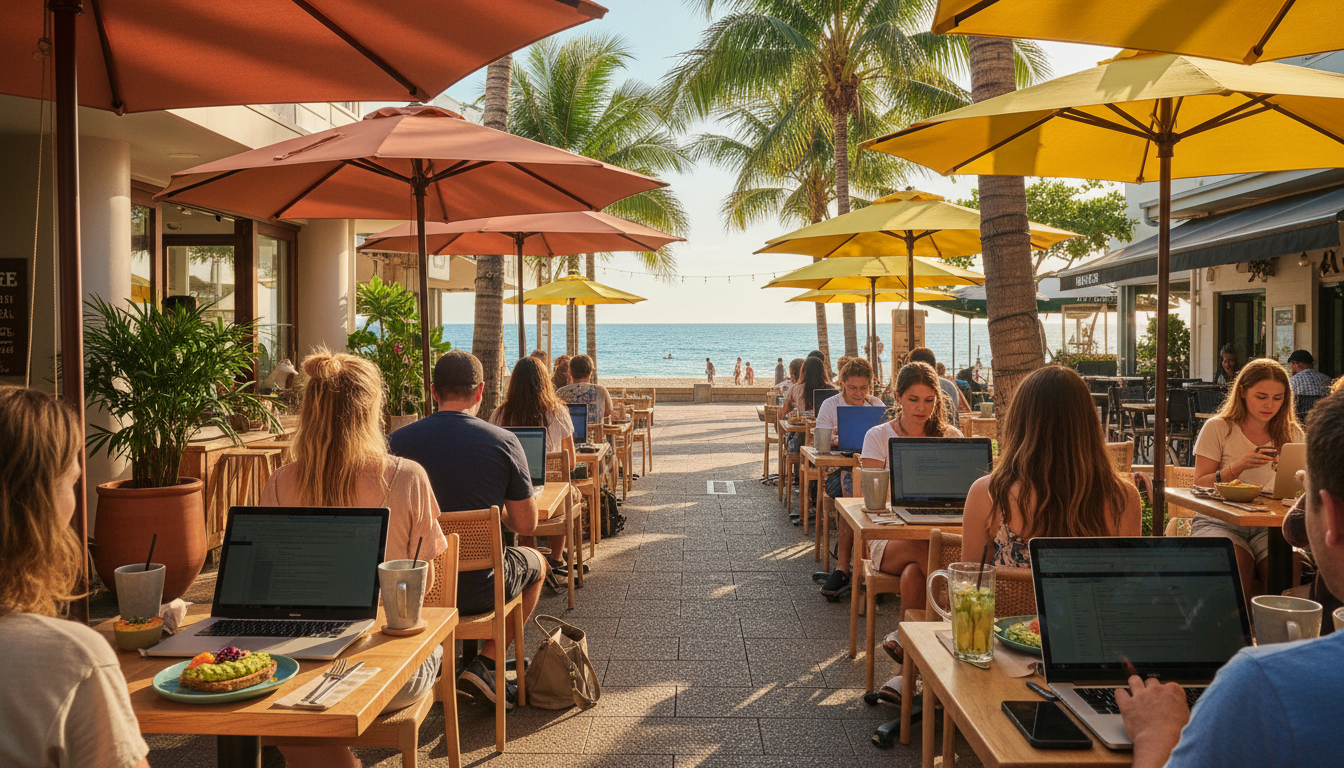 Bustling James Street in Burleigh Heads with outdoor caf seating, people working on laptops under um
Coolangatta: Underrated and Affordable
Right on the Queensland-New South Wales border, Coolangatta gets overlooked by travelers heading straight to the more famous beaches north. That's your advantage.
The homes here are generally more affordable—even through traditional rentals—which means the home swap inventory tends to be solid. I visited a friend who'd arranged a swap in a 1970s apartment block that had been beautifully renovated. Her host was a retired teacher traveling through Europe, and the place had this retro-meets-modern vibe with a dedicated office nook.
Coolangatta's big selling point? Gold Coast Airport is literally right there. If you're flying in from Asia or doing domestic trips, you can be at your temporary home in 15 minutes. The café scene is smaller but genuine—Café D'Bar has been around forever and serves a proper breakfast with reliable WiFi.
Broadbeach: When You Need More Infrastructure
If you're the type who wants backup options—multiple coworking spaces, a variety of cafés, gyms, and restaurants—Broadbeach delivers. It's more developed than the southern beaches, with high-rises and a proper shopping district.
The home swap options here often include apartments in those high-rises, which can be hit or miss. I toured one through a friend that had incredible ocean views but the internet was shared building WiFi (capped and slow during peak hours). Always ask about internet specifics before confirming any swap.
The Oracle Boulevard area has everything you might need, and Kurrawa Beach is genuinely lovely. It's just... less characterful than Burleigh or Coolangatta. More resort-town energy, if that makes sense.
Surfers Paradise: Probably Skip It
I'll be real with you—unless you're in your early twenties and want nightlife, Surfers Paradise isn't ideal for focused remote work. It's loud, touristy, and the home swap options tend to be either party apartments or overpriced hotel-style units. The beach is nice, but you can access it from neighboring suburbs without the chaos.
Setting Up Your Gold Coast Home Swap for Remote Work Success
Here's where I get tactical, because the difference between a productive home swap and a frustrating one often comes down to preparation.
The Internet Question (Non-Negotiable)
Australia's NBN (National Broadband Network) has improved dramatically, but speeds vary wildly by location and plan. Before confirming any digital nomad home swap in Gold Coast, I ask hosts these specific questions:
What's your typical download/upload speed? (Ask them to run a Speedtest and screenshot it.) Is it NBN, and if so, what tier? NBN 50 is minimum for video calls; NBN 100 is comfortable. Is there a data cap? Some older plans have limits. And what's the backup if internet goes down—mobile hotspot capability, nearby café with WiFi?
During my stay, my host's NBN 100 plan delivered consistent 85/35 Mbps speeds, which handled Zoom calls, file uploads, and my partner streaming Netflix simultaneously without issues.
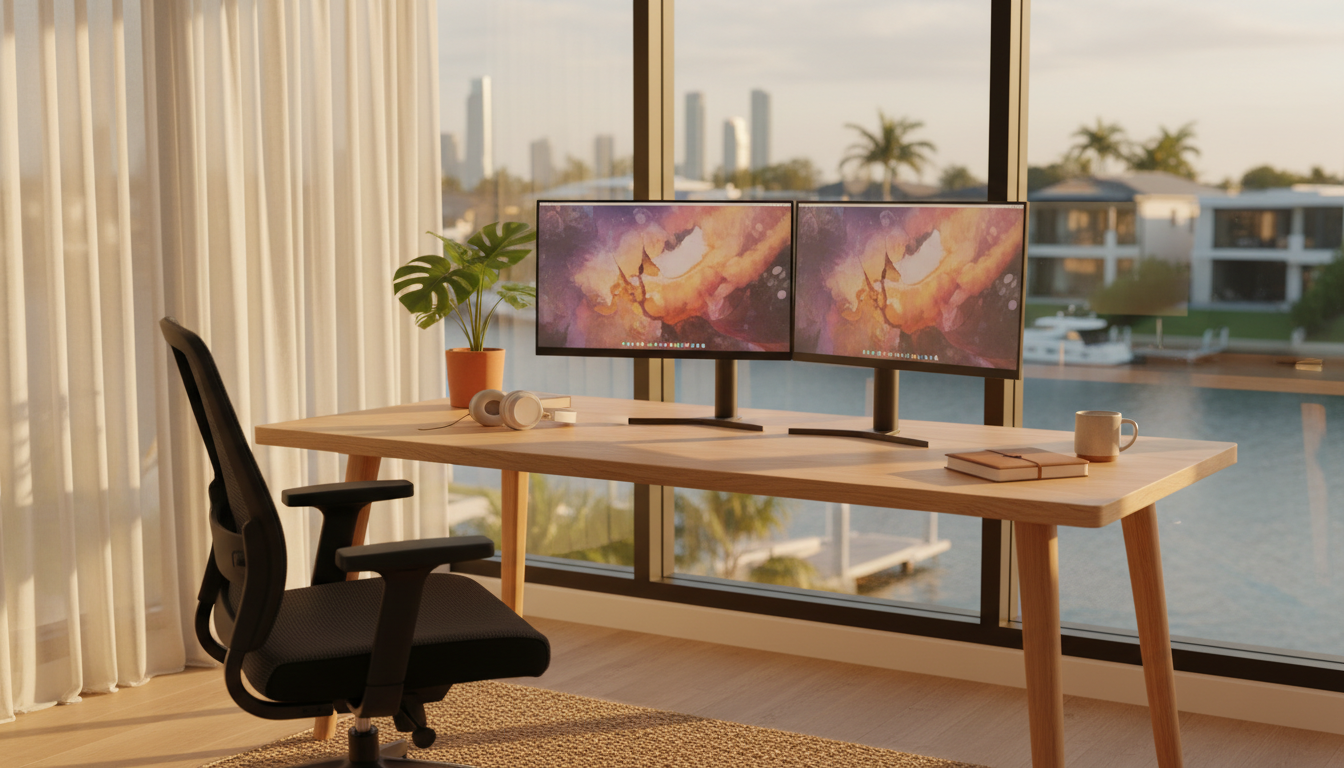 Clean home office setup with dual monitors, ergonomic chair, and a window showing Gold Coast canal v
Workspace Essentials to Confirm
Through SwappaHome's messaging system, I always clarify workspace details before committing. My checklist includes whether there's a dedicated desk and chair (not just a kitchen table), what the lighting is like in the work area (important for video calls), whether there's air conditioning (Gold Coast summers are humid), if there are blackout options for the bedroom (jet lag is real), and what the noise situation is during work hours.
The best swap I've done was with a host who actually worked remotely herself. She'd documented her entire setup in her listing photos and even left a note about which café had the best backup WiFi within walking distance. That level of detail tells you someone understands the digital nomad life.
Timezone Logistics
Gold Coast runs on AEST (Australian Eastern Standard Time), which is UTC+10 (UTC+11 during daylight saving from October to April). Here's how that plays out:
For US West Coast (LA, SF), you're 17-18 hours ahead. A 9 AM call in California means 2-3 AM for you. I scheduled all US calls for their late afternoon/evening, which hit my morning. US East Coast (NYC) is 14-15 hours ahead—slightly more manageable. Their 6 PM is your 8-9 AM. UK/Europe is 9-10 hours ahead, so European morning calls work well for your evening. And Asia (Singapore, Hong Kong) is only 2-3 hours behind. This is the sweet spot—normal business hours align almost perfectly.
I found the Gold Coast timezone actually worked in my favor for deep work. My mornings were completely uninterrupted (most clients were asleep), so I'd batch all calls into late afternoon/early evening and protect my mornings for focused tasks.
Living Like a Local: Beyond the Tourist Experience
The whole point of a home swap is avoiding the tourist bubble, right? Here's how to actually embed yourself in Gold Coast life.
The Morning Routine That'll Change You
Within a week, I'd adopted what I now think of as the Gold Coast morning protocol. Wake up around 5:45 AM (the light does this naturally—blackout curtains are essential if you're not a morning person). Walk to the beach by 6:15 AM. Not to surf necessarily, just to watch the sunrise and maybe do a quick swim.
This isn't some Instagram wellness performance—it's genuinely what locals do. The beaches are packed at dawn with swimmers, walkers, and surfers. By 7 AM, I'd be back at the apartment, showered, and starting work with a clarity I never achieve in San Francisco.
The ocean swimming deserves its own mention. Gold Coast beaches have patrolled areas (swim between the red and yellow flags) and the water temperature hovers around 20-24°C (68-75°F) most of the year. I bought a cheap pair of goggles at a Chemist Warehouse and started doing laps in the ocean. It sounds intense, but it's incredibly common here.
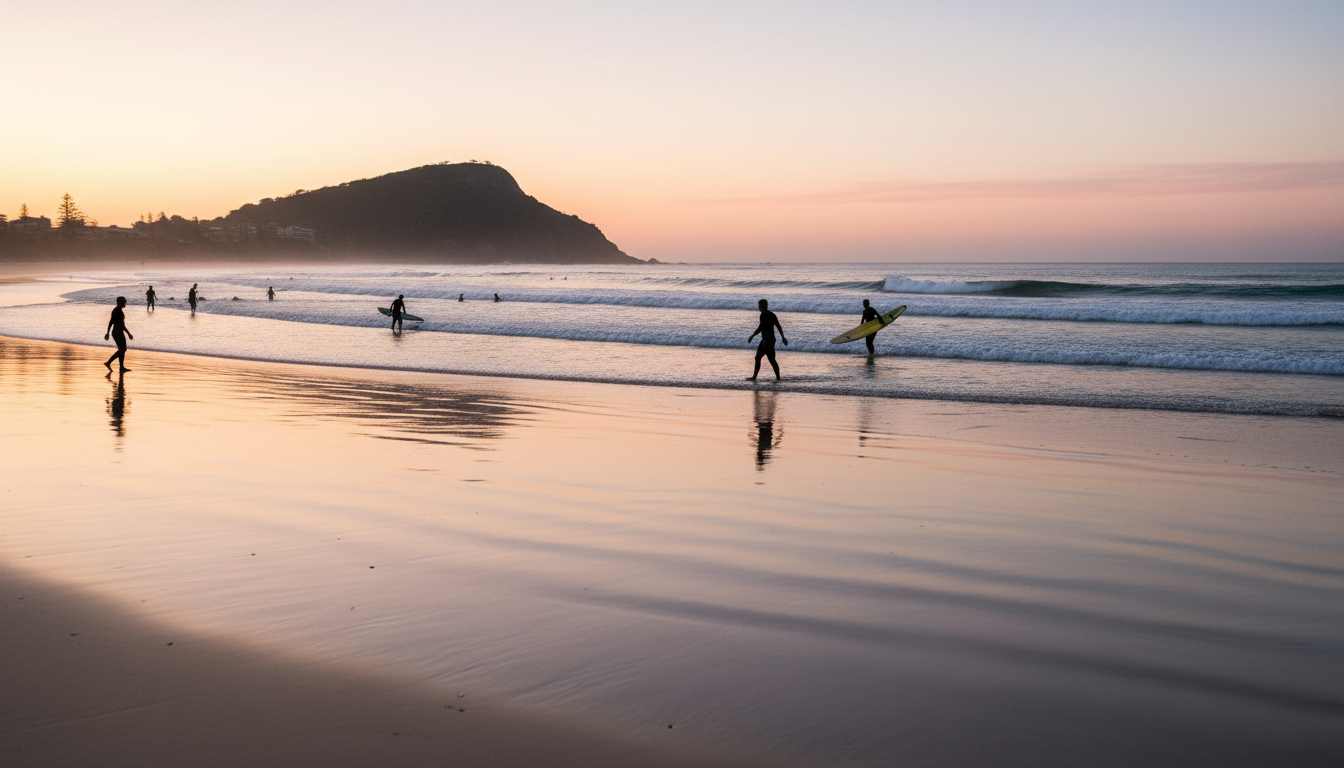 Dawn at Burleigh Beach with silhouettes of swimmers and surfers in golden morning light, the iconic
Grocery Shopping and Cooking
Your home swap kitchen is a massive advantage. Eating out for every meal in Gold Coast adds up—even casual spots run $20-30 AUD ($13-19 USD) for lunch.
The major supermarkets are Coles, Woolworths, and Aldi (yes, Aldi is huge in Australia). For a week's worth of groceries including good coffee, fresh produce, and basics, I'd spend around $80-120 AUD ($50-75 USD). The farmers markets are worth seeking out—Burleigh's market runs every Wednesday morning at Justins Park, and Miami Marketta happens Friday and Saturday nights with incredible food stalls if you want to treat yourself.
Australian grocery stores have some quirks that threw me at first. Eggs aren't refrigerated (they're on a regular shelf). Milk comes in liters, not gallons. The bread aisle is overwhelming. And you'll need to bring your own bags or buy reusable ones.
The Social Element
One thing I didn't expect: making friends was surprisingly easy.
The coworking spaces have regular social events—Wotso in Burleigh does Friday afternoon drinks. The surf community is welcoming to beginners if you're interested in learning (expect to pay around $80-100 AUD/$50-65 USD for a two-hour lesson).
I also found that being in a home swap opened conversations. When neighbors realized I wasn't a tourist but someone living there temporarily, they'd share recommendations—the Thai place that doesn't look like much but has incredible Pad See Ew, the walking track through the national park that tourists miss, which café actually has good WiFi versus which one just claims to.
Coworking Spaces: Your Backup Plan
Even with a great home setup, sometimes you need a change of scenery or a more professional environment for important calls. Gold Coast has solid options.
Wotso Burleigh
This is my top pick. It's in the heart of Burleigh, has outdoor areas, and the community is genuinely friendly. Day passes run around $39 AUD ($25 USD), or you can do a 10-day pass for $290 AUD ($185 USD). The internet is enterprise-grade, there are phone booths for calls, and the coffee is included.
Regus Locations
If you need something more corporate—private offices, meeting rooms, that kind of thing—Regus has several Gold Coast locations including Surfers Paradise and Robina. Pricier but reliable.
The Café Circuit
Honestly, many digital nomads just rotate through cafés. My personal circuit: Commune (Burleigh) for morning work, The Collective (Palm Beach) for afternoon sessions, and Paddock Bakery (Miami) when I needed a treat. Always buy something substantial if you're camping out—it's just respectful.
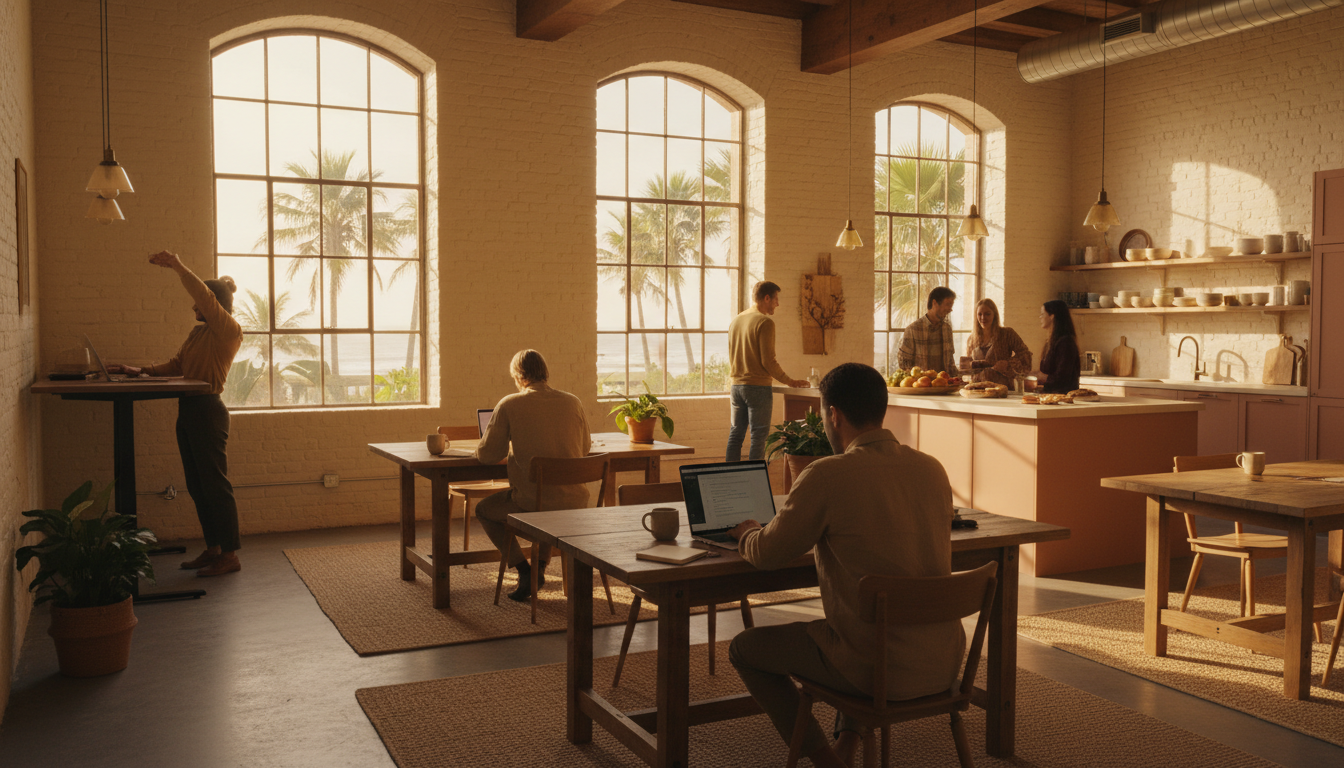 Interior of a bright coworking space with exposed brick, large windows overlooking palm trees, peopl
How to Find Your Perfect Gold Coast Home Swap
Alright, let's talk logistics. Finding the right home exchange for remote work takes a bit more effort than booking a hotel, but the payoff is significant.
On SwappaHome, I filter for listings that specifically mention workspace or home office. Many hosts who work remotely themselves will highlight this in their descriptions. Look for photos that show the actual desk setup—if there are no workspace photos, that's a yellow flag.
The credit system makes longer stays genuinely feasible. Since you're spending 1 credit per night regardless of the property, a month-long stay costs the same 30 credits whether you're in a modest apartment or a fancy house. New members start with 10 free credits, so you could theoretically do a 10-night trial stay before committing to earning more credits by hosting.
I'd recommend messaging potential hosts with specific questions about remote work suitability. Most people on home exchange platforms are travelers themselves—they get it. The verification and review system helps you gauge reliability before committing.
Timing Your Gold Coast Home Swap
Gold Coast has distinct seasons that affect your experience:
September-November (Spring) is my favorite. Warm but not humid, fewer tourists, jacaranda trees blooming everywhere. Water's getting warmer for swimming.
December-February (Summer) is hot and humid, and school holidays mean crowds, but the beach lifestyle is at its peak. Book swaps early—this is peak domestic travel season.
March-May (Autumn) is still warm, crowds thin out after Easter, and surfing conditions are excellent. Great time for longer stays.
June-August (Winter) is mild by most standards (15-22°C/59-72°F), but locals act like it's freezing. Whale watching season. Easiest time to find available swaps.
The Real Cost Breakdown: Home Swap vs. Traditional Options
Let me show you actual numbers from my six-week stay.
Traditional Rental (Airbnb/VRBO): A decent one-bedroom with workspace in Burleigh runs about $200 AUD/night minimum. For 42 nights, that's $8,400 AUD ($5,350 USD), plus cleaning fees and service fees adding another ~$600 AUD ($380 USD). Total: ~$9,000 AUD ($5,730 USD).
Hotel: A mid-range hotel with workspace costs around $180 AUD/night. For 42 nights, that's $7,560 AUD ($4,815 USD). No kitchen means eating out, which adds roughly $50/day—another $2,100 AUD ($1,340 USD). Total: ~$9,660 AUD ($6,155 USD).
Home Swap via SwappaHome: 42 nights equals 42 credits. Add SwappaHome membership (varies by plan) plus groceries and occasional dining at ~$1,200 AUD ($765 USD). Total: ~$1,200 AUD ($765 USD) plus membership.
The savings funded my entire food budget, several surf lessons, a weekend trip to Byron Bay, and still left me ahead by thousands.
What I Wish I'd Known Before My Gold Coast Home Swap
A few things caught me off guard:
The sun is no joke. Even on overcast days, UV levels are extreme. I got sunburned walking to a café. Wear SPF 50+, reapply constantly, and buy a hat immediately upon arrival. Australian sunscreen brands like Cancer Council are excellent.
Driving is on the left. If you're renting a car (useful for exploring the hinterland), remember this. The Gold Coast has decent public transport—the G:link tram runs from Broadbeach to Helensvale—but a car opens up the rainforest day trips.
Coffee culture is serious. Australians don't do drip coffee or Starbucks-style drinks. Learn to order a flat white, long black, or piccolo. Asking for a "regular coffee" will confuse everyone.
The wildlife is real. I saw a carpet python in my host's backyard. Possums will raid your balcony at night. Bin chickens (ibises) will absolutely steal your lunch if you're eating outside. None of this is dangerous, just... Australian.
Public holidays shut things down. Australia has quite a few, and many businesses close or reduce hours. Check the calendar before planning important work around ANZAC Day or Easter.
Making the Most of Your Non-Working Hours
Because what's the point of a digital nomad home swap in Gold Coast if you're just staring at screens?
The hinterland is spectacular and only 30-45 minutes from the coast. Springbrook National Park has waterfalls and glow worm caves. Tamborine Mountain has wineries and cute village shops. Mount Warning (Wollumbin) is a challenging sunrise hike that's worth the 4 AM alarm.
Surfing is practically mandatory. Even if you've never tried it, the Gold Coast has gentle learner waves at spots like Currumbin Alley and Greenmount. After a few lessons, I was managing to stand up for a few seconds at a time—not impressive, but genuinely joyful.
The food scene deserves exploration. Rick Shores in Burleigh does incredible Asian-inspired seafood with ocean views (book ahead). Labart in Nobby Beach is a tiny wine bar with exceptional small plates. Justin Lane in Burleigh has rooftop pizza and cocktails.
So, Should You Do It?
I left Gold Coast with a tan line from my watch, a newfound appreciation for flat whites, and a genuine sense of what it means to work remotely without sacrificing quality of life. The digital nomad home swap approach transformed what could have been an expensive, isolated hotel experience into something that felt like actually living somewhere.
The Gold Coast surprised me. I expected beaches and not much else. What I found was a community of people who've figured out how to balance productivity with pleasure, a coastline that makes morning swims feel like meditation, and a lifestyle that made me question why I live where I do.
If you're considering your first Australian home swap, or looking for somewhere that genuinely supports remote work while offering world-class beaches and a laid-back culture, Gold Coast deserves serious consideration. SwappaHome's credit system makes extended stays financially realistic in a way that traditional accommodation simply can't match.
Just maybe don't schedule calls during golden hour. Trust me on that one.
Frequently Asked Questions
Is a digital nomad home swap in Gold Coast safe?
Gold Coast is consistently ranked among Australia's safest cities. Home swapping through platforms like SwappaHome adds accountability through member verification and review systems. I'd recommend getting your own travel insurance for peace of mind, but I've never felt unsafe during any of my Australian swaps. The community-based nature of home exchange means both parties have reputations to protect.
How fast is the internet for remote work in Gold Coast?
Most Gold Coast homes now have NBN (National Broadband Network) with speeds ranging from 25-100+ Mbps download. For reliable remote work, ask your swap host for their specific plan tier and a recent speed test. NBN 50 or higher handles video calls comfortably. Always have a mobile hotspot backup—Australian 4G coverage is excellent along the coast.
What's the best time of year for a Gold Coast home swap?
September through November (Australian spring) offers ideal conditions: warm weather, fewer tourists, and easier availability for home swaps. Summer (December-February) is peak season with higher demand. Winter (June-August) is mild and the easiest time to find available properties, though locals consider it "cold" at 15-22°C (59-72°F).
How much can I save with a home swap versus hotels in Gold Coast?
For a six-week stay, I calculated savings of approximately $5,000-6,000 USD compared to mid-range hotels or Airbnbs. Home swaps through SwappaHome cost 1 credit per night regardless of property type, plus you save significantly on food by having a full kitchen. The longer your stay, the more dramatic the savings become.
Do I need a car for a digital nomad stay in Gold Coast?
Not necessarily. The G:link tram connects major areas from Broadbeach to Helensvale, and most beach suburbs are walkable. However, a car opens up the spectacular hinterland (Springbrook, Tamborine Mountain) and makes grocery runs easier. Consider renting for weekend explorations rather than the entire stay. Ride-sharing apps like Uber work well throughout the Gold Coast.
40+
Swaps
25
Countries
7
Years
About Maya Chen
Travel Writer & Home Exchange Expert
Maya is a travel writer with over 7 years of experience in the home swapping world. Originally from Vancouver and now based in San Francisco, she has completed more than 40 home exchanges across 25 countries. Her passion for "slow" and authentic travel led her to discover that true luxury lies in living like a local, not a tourist.
Ready to try home swapping?
Join SwappaHome and start traveling by exchanging homes. Get 10 free credits when you sign up!
Related articles

Lyon Home Exchange: Your Complete Guide to France's Hidden Gem for Home Swapping
Discover why Lyon home exchange is booming among savvy travelers. From Croix-Rousse to Presqu'île, find the best neighborhoods and insider tips for your swap.

Zurich Bucket List: 47 Unforgettable Experiences to Enjoy During Your Home Swap
Discover the ultimate Zurich bucket list for home swappers—from secret swimming spots to fondue rituals locals actually do. Save thousands while living like a true Zürcher.
Dublin Home Exchange Utilities Guide: WiFi, Heating & Everything Your Guests Need
Master Dublin home exchange utilities—from dodgy WiFi fixes to heating quirks. Practical tips from 7 years of swapping homes across Ireland.