
Digital Nomad Home Swap in Rio de Janeiro: Your Guide to Working Remotely Like a Carioca
Maya Chen
Travel Writer & Home Exchange Expert
Discover how a digital nomad home swap in Rio de Janeiro lets you work remotely from beachside apartments, save thousands, and live like a true carioca.
The wifi cut out mid-Zoom call, and honestly? I didn't even panic. I just grabbed my laptop, walked three blocks to my favorite padaria in Leblon, ordered a café com leite, and finished the meeting with Sugarloaf Mountain framed perfectly behind me. My client actually thanked me for "the view."
That's the thing about doing a digital nomad home swap in Rio de Janeiro—the city doesn't just tolerate remote workers, it embraces them with open arms, strong coffee, and internet speeds that would surprise you. I spent two months working from a swapped apartment in the Zona Sul last year, and it fundamentally changed how I think about combining work and travel.
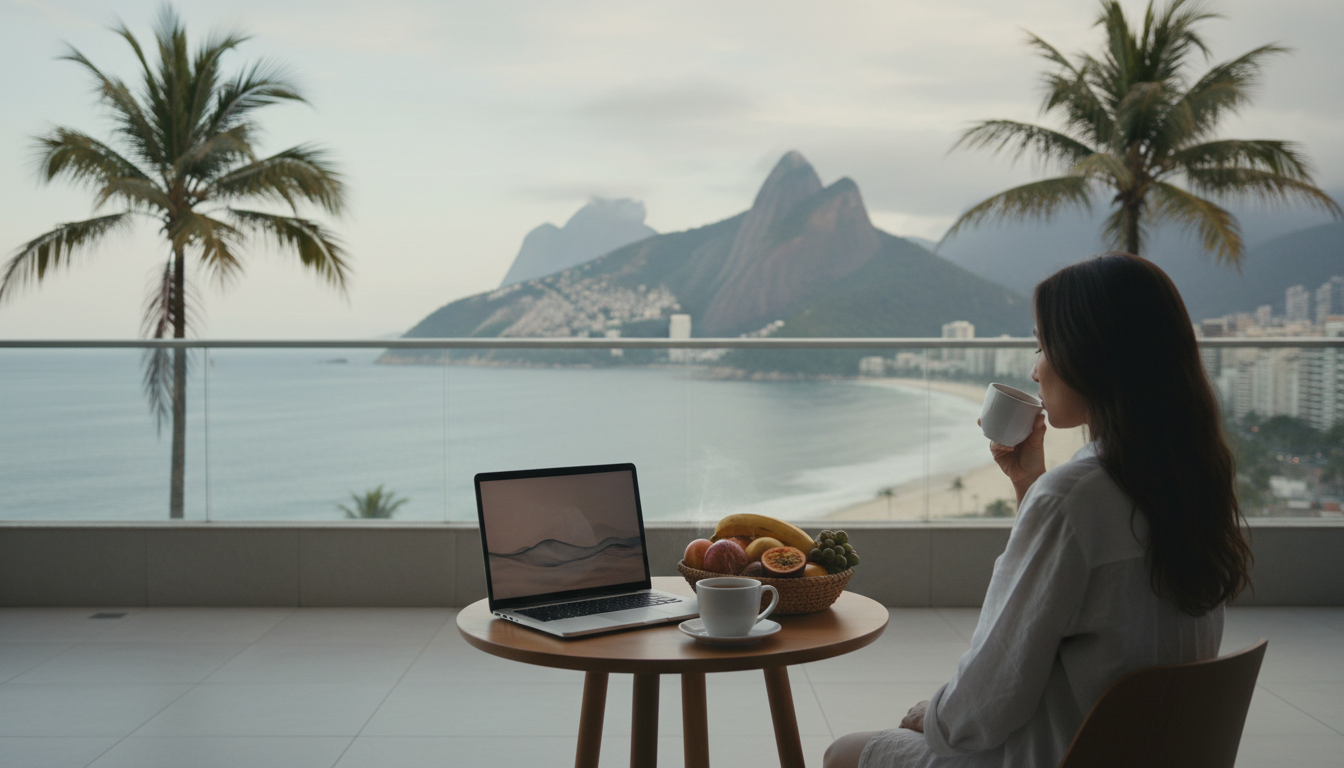 Morning view from a Leblon apartment balcony showing Dois Irmos mountain, a laptop open on a small t
Rio isn't Lisbon or Bali—it doesn't have the polished digital nomad infrastructure those places have built up. But that's precisely what makes it special. You're not surrounded by other laptop warriors in coworking spaces designed for Instagram. You're living in a real neighborhood, buying groceries at the same feira your neighbors do, learning to time your work around the afternoon beach break that everyone takes. It's remote work, but it actually feels like living somewhere rather than just existing in a tourist bubble.
Why Rio Works So Well for Digital Nomad Home Swapping
I'll be honest: Rio wasn't on my radar until a friend who'd done a home swap there wouldn't stop talking about it. "The timezone," she kept saying. "Maya, the timezone."
She was right.
Rio sits in GMT-3, which means if you work with US clients, you're basically on East Coast time with a one or two-hour difference. European clients? You've got overlap in your morning and their afternoon. It's one of the few places in South America where you don't have to completely restructure your work schedule.
But timezone is just the beginning. The cost of living stretches your budget in ways that feel almost unfair. That apartment in Ipanema with the ocean view? Through a home swap, you're paying zero dollars for accommodation. Your daily expenses—fresh açaí bowls for $3 USD, a full lunch at a per-kilo restaurant for $6-8 USD, excellent local beer for $2 USD—mean you can live well on $40-50 per day including everything except flights.
And the internet? The stereotype of unreliable Brazilian connectivity is about a decade out of date, at least in Rio's wealthier neighborhoods. Most residential buildings in the Zona Sul now have fiber optic connections, and I consistently got 100+ Mbps in my swapped apartment.
Then there's the lifestyle balance, which is built right into the culture. Cariocas don't live to work—they work to live. That afternoon beach break I mentioned? It's not laziness. It's a cultural institution. And when you're doing remote work, you can actually participate in it without anyone questioning your commitment.
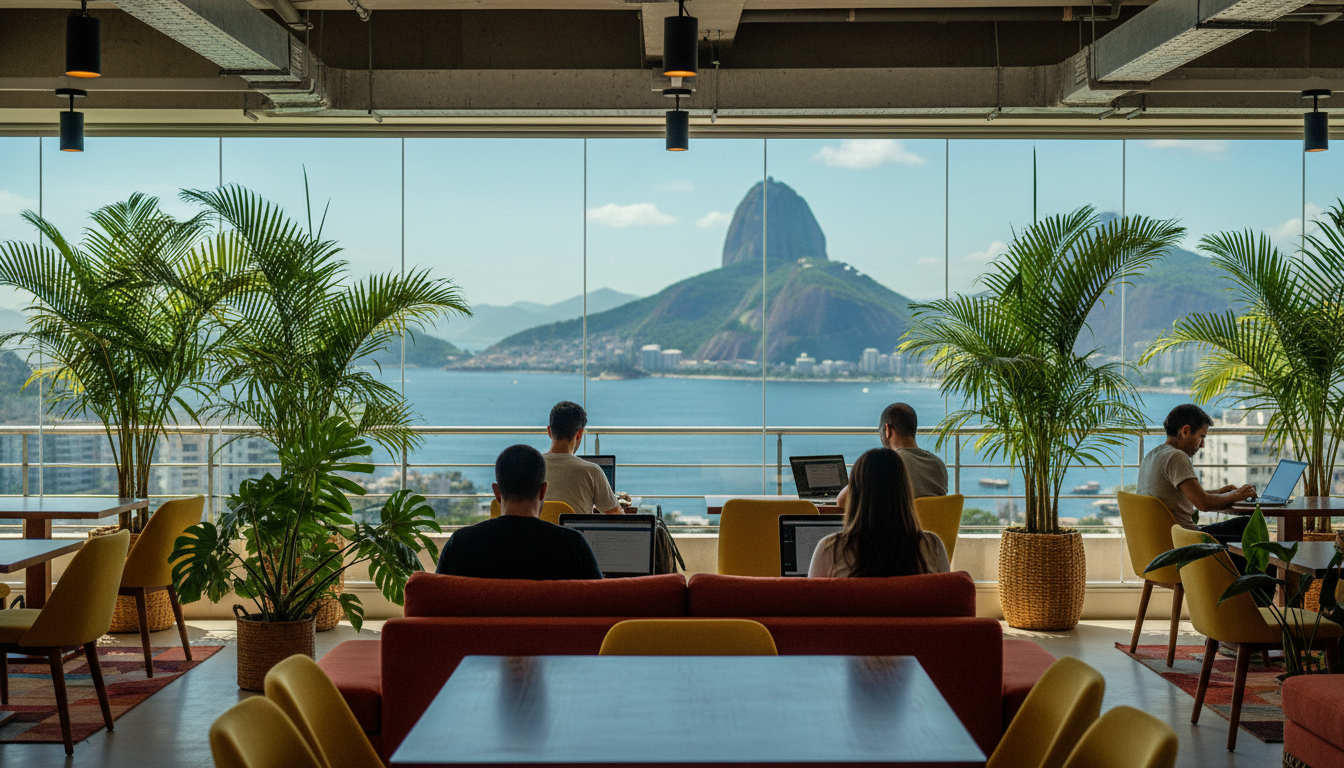 Coworking space in Botafogo with floor-to-ceiling windows overlooking Guanabara Bay, modern furnitur
Best Neighborhoods for Your Rio Home Swap
Not all Rio neighborhoods are created equal for remote work. I've explored most of them, and here's my honest breakdown.
Leblon: The Gold Standard
Leblon is where I stayed, and I'd go back in a heartbeat. It's Rio's most upscale neighborhood, which means the apartments tend to have the best internet, the most reliable power, and the kind of quiet mornings that make focused work possible.
The beach is a seven-minute walk from almost anywhere. There's a fantastic covered market—Cobal do Leblon—where I'd take lunch meetings surrounded by locals eating grilled fish. Coffee shops like Talho Capixaba became my second office. They never rushed me out, even when I nursed a single espresso for two hours.
Expect home swap listings here to be apartments in the $200-400/night range if you were paying hotel prices. Through SwappaHome's credit system, you're getting that same space for one credit per night—the same as you'd pay for a modest studio anywhere else on the platform.
Ipanema: More Energy, More Tourists
Ipanema is more touristy than Leblon, which has pros and cons. The energy is higher—more restaurants, more nightlife, more people-watching from your café table. But it's also louder, and you'll encounter more tourists which can break that "living like a local" spell.
The internet is equally good here. I'd recommend Ipanema if you're someone who gets energized by activity around you while you work, or if you're planning to be more social during your stay.
Botafogo: The Underrated Choice
Real talk: if I were doing a longer home swap in Rio—say, three months or more—I'd probably choose Botafogo over the beach neighborhoods.
It's less glamorous. No beach. More urban, more gritty in places. But it's where a lot of young Brazilian professionals actually live, which means the café culture is oriented toward people who need to get work done, not tourists taking vacation selfies.
Botafogo has Rio's best coworking spaces, including WeWork and several local options like Templo and Nex Coworking. The neighborhood sits right at the base of Sugarloaf, so your evening decompression walk has one of the world's most iconic views. And the food scene is incredible—everything from $4 USD lunch plates to innovative restaurants that would cost triple in Manhattan.
Santa Teresa: Beautiful but Challenging
I have to mention Santa Teresa because every travel article about Rio does, and I don't want you to choose it without understanding the tradeoffs.
Yes, it's charming. The colonial architecture, the art studios, the winding streets—it photographs like a dream. But for digital nomads, there are real challenges. Internet can be spotty in the older buildings. The neighborhood is hilly, which makes quick trips to grab coffee more of an expedition. And while safety has improved, it still requires more awareness than the Zona Sul neighborhoods.
If you're a creative type who prioritizes atmosphere over convenience, Santa Teresa might work. For most remote workers, I'd suggest visiting for day trips rather than basing yourself there.
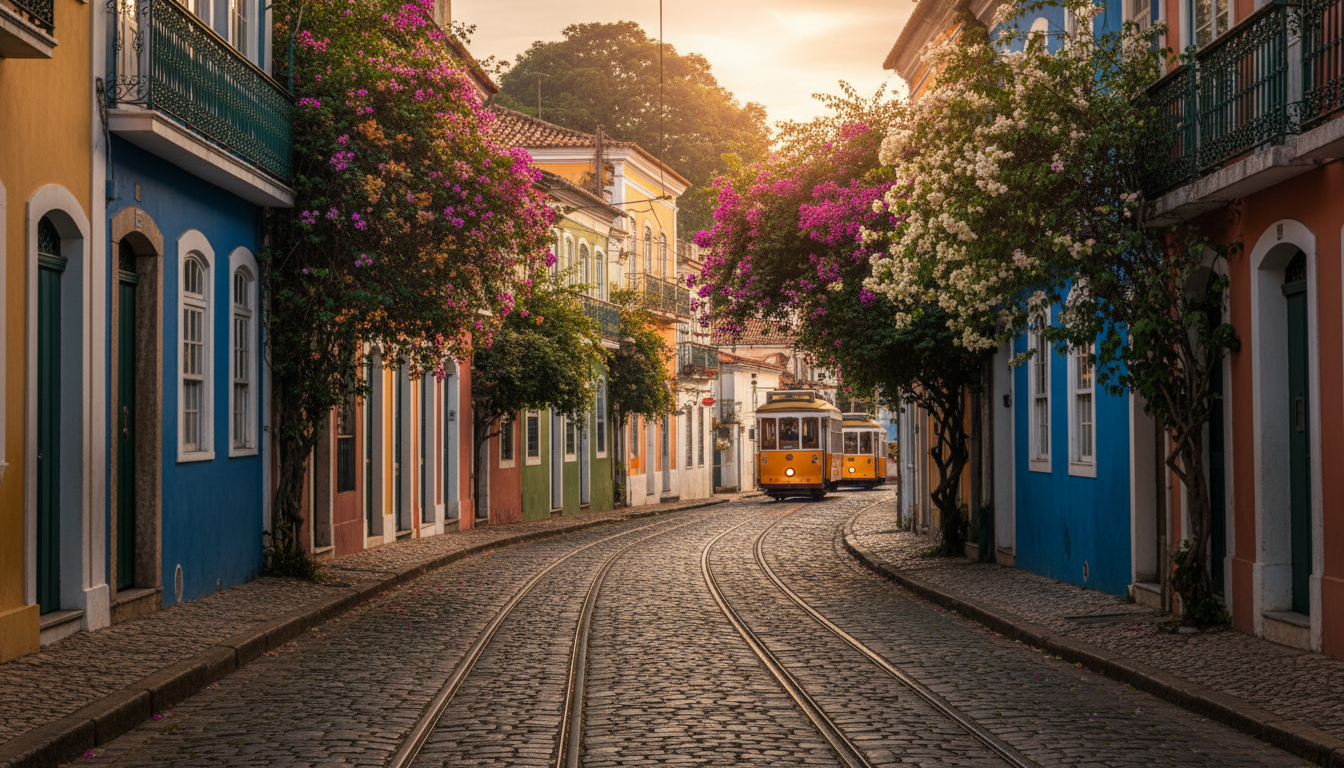 Cobblestone street in Santa Teresa with colorful colonial buildings, bougainvillea cascading from ba
Building a Work Routine That Actually Works
The biggest mistake I see digital nomads make in Rio is trying to maintain their exact home routine. It doesn't work. The city has its own rhythm, and fighting it will just make you miserable.
Here's what worked for me:
Morning block (7am-12pm): Your golden productivity window. Rio is quiet in the morning—cariocas are not early risers. I'd make coffee in my swapped apartment, work from the living room with the windows open, and get my most demanding tasks done before noon.
Midday break (12pm-3pm): Non-negotiable. Go to the beach. Have a long lunch. Take a nap. The afternoon heat makes focused work nearly impossible anyway, and you'll be more productive if you embrace the break rather than fighting through it.
Afternoon block (3pm-7pm): Lighter work—emails, calls with US clients who are just getting to their desks, planning, admin tasks. I'd often do this from a café for a change of scenery.
Evening: Yours. The beach at sunset. Caipirinha at a boteco. Live music in Lapa. Whatever you want.
This schedule gave me 6-7 hours of actual work time while still feeling like I was living in Rio, not just existing in an apartment that happened to be located there.
The Internet Situation (It's Better Than You Think)
Let's get specific about connectivity, because this is make-or-break.
Home Internet
Most apartments in Leblon, Ipanema, Copacabana, and Botafogo have fiber optic internet through providers like Claro, Vivo, or Oi. When you're arranging your home swap, ask your host specifically about their internet speed and provider. I always request a speed test screenshot before confirming.
What to look for: minimum 50 Mbps for video calls, ideally 100+ Mbps if you're doing anything bandwidth-intensive. Ask about the router location too—some older apartments have the router in a weird spot that creates dead zones.
Backup Options (You Need These)
Even with good home internet, you need backups. Brazilian infrastructure occasionally hiccups—a neighborhood outage, a building issue, whatever.
Get a local SIM card from Claro or TIM immediately upon arrival. A 15GB monthly plan costs around $15-20 USD and works as a hotspot in emergencies. I bought mine at the airport.
Identify 2-3 cafés within walking distance with reliable wifi. In Leblon, I used Talho Capixaba (excellent pastries, decent wifi), Bibi Sucos (faster wifi, more crowded), and CT Boucherie for when I needed to impress someone on a video call with the background.
Even if you prefer working from home, have a coworking membership as insurance. Day passes at WeWork Botafogo run about $25 USD. Local spaces like Templo offer monthly rates around $150-200 USD with 24/7 access.
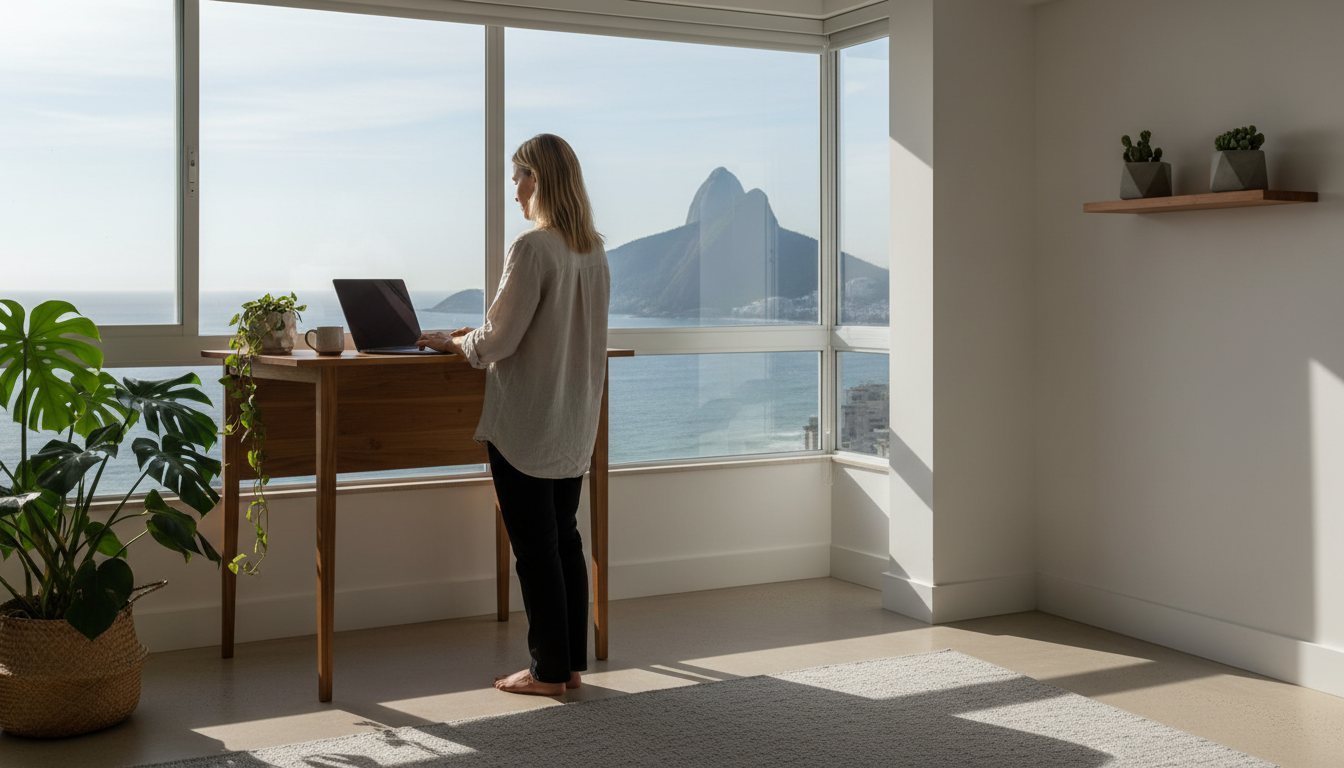 Interior of a bright Rio apartment set up as a home office, standing desk by window with ocean view,
Finding the Right Home Swap for Remote Work
Not every listing is suitable for digital nomads. Here's exactly what to look for.
The Non-Negotiables
Dedicated workspace. This sounds obvious, but many vacation-oriented listings don't have a proper desk or work chair. Look for photos showing a workspace, or message the host to ask specifically. A kitchen counter is not a workspace—your back will hate you after a week.
Air conditioning in the work area. Rio gets hot, especially from December through March. You need AC where you'll be working, not just in the bedroom. Some older apartments have window units only in certain rooms.
Natural light. For video calls and your own sanity. Interior-facing apartments in Rio can be quite dark.
Quiet street. Ground-floor apartments on busy streets are a no-go for calls. Ask your host about noise levels, or look for apartments on higher floors.
Questions to Ask Before Confirming
Send your potential host these specific questions: What's your internet speed? (Ask for a speed test result.) Who's your internet provider, and is there a backup if it goes down? Is there a desk and comfortable chair for working? What floor is the apartment on, and how's the street noise? Is there AC in the living area, not just bedrooms? Are there any regular power outages in the building?
Hosts on SwappaHome are usually happy to answer these—they want their swap to go well too. If someone is evasive about internet speed or workspace, that's a red flag.
Timing Matters
Best for digital nomads: April-June and August-November. Mild weather (70-80°F), fewer tourists, lower humidity. You can work with windows open, and the city feels more local.
Challenging: December-March. Peak summer, peak tourism, peak heat. Carnival falls in February or March and essentially shuts the city down for a week. If you must come during summer, make sure your apartment has excellent AC.
Avoid for first-timers: Carnival week and New Year's. Unless you're specifically coming for the party, these periods make focused work nearly impossible.
What a Month Actually Costs
Let me break down what I actually spent during my two-month home swap in Rio. This assumes you're doing a home swap (so zero accommodation costs) and living comfortably but not extravagantly.
Fixed monthly costs: Coworking backup membership ($150), mobile phone plan with data ($20), health insurance through SafetyWing ($45), gym membership at Smart Fit ($25).
Variable daily costs (averaged): Breakfast, usually at home ($3-5). Lunch at a per-kilo restaurant or café ($6-10). Dinner, mix of cooking and eating out ($10-20). Coffee and snacks ($3-5). Transport, mostly walking plus occasional Uber ($3-5). Entertainment and drinks ($10-15).
Monthly total: approximately $1,200-1,800 USD.
Compare that to what you'd spend in Lisbon ($2,500-3,500 with accommodation) or Bali ($1,500-2,200), and Rio starts looking very attractive. The home swap component is what makes this possible—you're essentially getting a $3,000-6,000/month apartment for free.
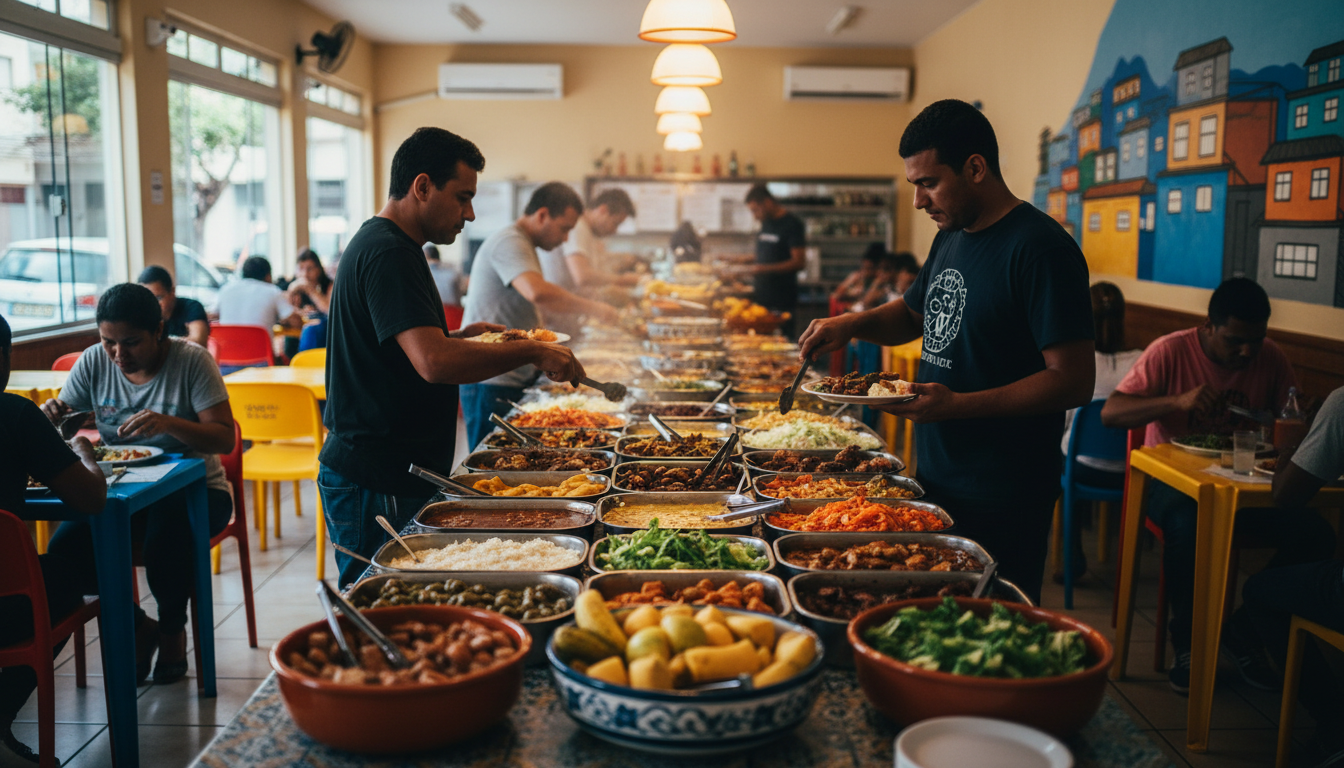 Colorful per-kilo restaurant in Rio with trays of Brazilian food, customers serving themselves, casu
The Safety Question (Honest Take)
I'm not going to pretend Rio doesn't have safety challenges—it does. But the fear is often overblown, especially for the neighborhoods where you'd be doing a home swap.
Here's my practical approach:
Gear management: I never took my main laptop to the beach or walked around with it visible. For beach days, I used an old phone and left valuables at the apartment. For café work sessions, I stayed in established places in safe neighborhoods and kept my laptop bag close.
Neighborhood awareness: Leblon, Ipanema, and Botafogo are genuinely safe during the day and reasonably safe at night if you stick to main streets. I walked home alone at 11pm regularly without issues. But I also didn't wander into unfamiliar areas after dark or flash expensive electronics on quiet streets.
Common sense: Don't wear flashy jewelry. Don't count cash in public. Use Uber instead of hailing random taxis at night. These rules apply in most major cities worldwide.
Insurance: Get travel insurance that covers your electronics. I use SafetyWing, which has a gear coverage add-on. SwappaHome connects you with hosts but doesn't provide insurance for your belongings—that's on you to arrange.
The digital nomads I know who've had problems in Rio usually made obvious mistakes: walking alone on the beach at 2am, leaving laptops visible in parked cars, wandering into favela areas without a guide. Use the same judgment you'd use in any major city, and you'll be fine.
Building a Social Life
One thing that surprised me about Rio: it's actually easy to meet people. Cariocas are genuinely friendly—not in a superficial way, but in a "let me introduce you to my friends" way.
Language exchange meetups happen regularly, usually at bars in Botafogo or Lapa. You help someone practice English, they help you with Portuguese, everyone drinks and makes friends. Check Meetup.com or Facebook groups for "Intercâmbio de Idiomas Rio."
Beach volleyball and futevôlei are the fastest way to meet locals if you're even slightly athletic. Just show up at the nets in Ipanema or Leblon in the late afternoon and ask to play. Brazilians are incredibly welcoming to beginners.
Coworking communities in Botafogo have regular events, happy hours, and skill-sharing sessions. Even if you mostly work from home, attending a few events can build your social network quickly.
Your home swap host's network is underrated. When I did my Rio home swap, my host introduced me to her neighbor, who invited me to a churrasco the following weekend. That one connection led to friendships I still have today.
Making a Longer Stay Work
If you're thinking about an extended stay—two months or more—there are some additional considerations.
Visa situation: US, Canadian, and most European citizens can stay in Brazil for 90 days without a visa, extendable to 180 days. For longer stays, you'll need to look into digital nomad visa options, which Brazil has been developing. Check current requirements before booking.
Multiple home swaps: For longer stays, you might do consecutive swaps in different neighborhoods. I know digital nomads who've done a month in Leblon, then a month in Botafogo, then a month in Santa Teresa—essentially getting a multi-neighborhood Rio experience while paying nothing for accommodation.
Building local routines: The longer you stay, the more you should invest in local routines. Find your regular padaria. Learn the names of the staff at your favorite juice bar. Take Portuguese lessons. The city rewards people who commit to it.
Dealing with homesickness: Rio is far from everywhere except other parts of South America. The time zone makes calls with friends in Europe or Asia tricky. Build this into your expectations. I found that scheduling regular video calls with home—even if it meant early mornings or late nights—helped me stay connected.
Why Home Swapping Beats Everything Else
I've done Rio as a tourist in hotels, as a backpacker in hostels, and as a digital nomad in a home swap. The home swap experience was incomparably better.
Hotels are designed for tourists, not workers. The wifi is often throttled or unreliable. The "desk" is usually a tiny table meant for writing postcards. And the daily costs eat into your budget fast—a decent hotel in Ipanema runs $150-250 USD per night.
Airbnb is better, but you're still paying significant money. A proper one-bedroom apartment suitable for remote work costs $80-150 USD per night in good neighborhoods. Over a month, that's $2,400-4,500 USD just for accommodation.
Hostels are cheap but completely unsuitable for remote work. No privacy for calls, unreliable wifi, noisy environments.
Home swapping through platforms like SwappaHome gives you a real apartment—with a real desk, real kitchen, real neighborhood life—for the cost of hosting someone at your own place. The credit system means one night hosting equals one night staying, regardless of whether you're offering a studio in Kansas City or a penthouse in Manhattan. It's the only option that makes extended digital nomad stays financially sustainable while maintaining quality of life.
Getting Started
If you've read this far, you're probably seriously considering it. Here's how to make it happen:
List your own home on SwappaHome if you haven't already. You'll start with 10 free credits, but building up more by hosting guests gives you flexibility for longer Rio stays.
Start browsing Rio listings 2-3 months before your intended travel dates. Good digital nomad-friendly apartments get booked, especially in Leblon and Ipanema. Filter for apartments with workspace photos and good reviews mentioning wifi.
Reach out to 3-5 potential hosts with specific questions about remote work suitability. Don't just send generic requests—mention that you're a digital nomad, explain your work needs, ask the specific questions I listed earlier.
Book your flights once you've confirmed a swap. Rio has direct flights from Miami, Houston, and Atlanta on US carriers, plus connections through São Paulo from almost anywhere.
Arrive, settle in, and give yourself a few days to adjust before expecting full productivity. Jet lag plus new environment plus excitement equals distraction. Plan for it.
The first week might feel chaotic. The second week, you'll find your rhythm. By the third week, you'll be ordering açaí in Portuguese and wondering why you ever thought you needed to work from the same city where you grew up.
Rio isn't the easiest digital nomad destination. It's not as set up for remote workers as Lisbon or Chiang Mai. The language barrier is real if you don't speak Portuguese. The city asks something of you—attention, adaptation, openness to a different rhythm.
But that's exactly why I keep going back. A digital nomad home swap in Rio isn't just about finding a cheap place with good wifi. It's about experiencing what it actually feels like to live somewhere extraordinary, to have your work and your life intertwined with a city that pulses with energy and beauty and chaos and joy.
Your laptop works the same everywhere. But the view from your desk, the coffee in your cup, the sound of samba drifting up from the street below—that's something only Rio can give you.
Frequently Asked Questions
Is a digital nomad home swap in Rio de Janeiro safe for remote workers?
Rio is safe for digital nomads who take reasonable precautions. Stick to established neighborhoods like Leblon, Ipanema, and Botafogo. Don't display expensive electronics on the street. Use Uber at night. The Zona Sul neighborhoods where most home swaps are located have security and are comparable to any major international city.
How fast is the internet for digital nomads in Rio de Janeiro?
Most apartments in Rio's Zona Sul neighborhoods have fiber optic internet with speeds of 100-300 Mbps. Always confirm internet speed with your home swap host before booking. Backup options include mobile data plans ($15-20 USD/month) and coworking spaces with reliable connections throughout Botafogo and Ipanema.
How much does a digital nomad spend per month in Rio with a home swap?
With accommodation covered through home swapping, expect to spend $1,200-1,800 USD monthly. This includes food ($20-35 USD daily), coworking backup ($150 USD), phone plan ($20 USD), transport ($100 USD), and entertainment. Compare this to $3,500-5,000 USD monthly with paid accommodation.
What's the best neighborhood in Rio for a digital nomad home swap?
Leblon offers the best balance of reliable infrastructure, safety, beach access, and quiet work environment. Botafogo is ideal for longer stays with better coworking options and lower costs. Ipanema works well for those who prefer more energy and nightlife. Avoid Santa Teresa for primary work bases due to inconsistent internet.
Do I need to speak Portuguese to work remotely from Rio de Janeiro?
Basic Portuguese helps significantly but isn't required. Most service workers in Zona Sul neighborhoods speak some English. Download Google Translate for daily interactions. Consider taking Portuguese lessons during your stay—language exchange meetups are excellent for both learning and socializing with locals.
40+
Swaps
25
Countries
7
Years
About Maya Chen
Travel Writer & Home Exchange Expert
Maya is a travel writer with over 7 years of experience in the home swapping world. Originally from Vancouver and now based in San Francisco, she has completed more than 40 home exchanges across 25 countries. Her passion for "slow" and authentic travel led her to discover that true luxury lies in living like a local, not a tourist.
Ready to try home swapping?
Join SwappaHome and start traveling by exchanging homes. Get 10 free credits when you sign up!
Related articles

Lyon Home Exchange: Your Complete Guide to France's Hidden Gem for Home Swapping
Discover why Lyon home exchange is booming among savvy travelers. From Croix-Rousse to Presqu'île, find the best neighborhoods and insider tips for your swap.

Zurich Bucket List: 47 Unforgettable Experiences to Enjoy During Your Home Swap
Discover the ultimate Zurich bucket list for home swappers—from secret swimming spots to fondue rituals locals actually do. Save thousands while living like a true Zürcher.
Dublin Home Exchange Utilities Guide: WiFi, Heating & Everything Your Guests Need
Master Dublin home exchange utilities—from dodgy WiFi fixes to heating quirks. Practical tips from 7 years of swapping homes across Ireland.