
Home Swap in Rio de Janeiro: The Complete Guide to Neighborhoods, Tips and Local Secrets

SwappaHome Editorial Team
Home Exchange & Slow Travel Editorial
Discover the best neighborhoods for a home swap in Rio de Janeiro, from Ipanema's beachfront apartments to Santa Teresa's artistic hillside homes. Local tips included.
The first time I saw Sugarloaf Mountain from a stranger's kitchen window, I was making coffee at 6 AM, jet-lagged and disoriented, wearing borrowed flip-flops because I'd forgotten mine. That home swap in Rio de Janeiro changed everything I thought I knew about this city—and about travel itself.
I'd visited Rio twice before, staying in hotels in Copacabana both times. Nice enough. Perfectly fine. But standing in that Botafogo apartment, watching the sun turn the bay gold while neighborhood dogs barked their morning greetings, I realized I'd never actually experienced Rio. I'd just observed it from behind glass.
That was four years ago. Since then, I've done three more home swaps in Rio de Janeiro, each in a different neighborhood, each revealing layers of this city that no guidebook ever captured. And honestly? I think Rio might be the single best city in the world for home exchange. The culture, the neighborhoods, the way cariocas actually live—it's all so different from what tourists typically see.
So let me share everything I've learned. The neighborhoods that work brilliantly for home swapping (and the ones that don't). The local secrets that took me years to discover. The practical stuff nobody tells you.
 Early morning view of Sugarloaf Mountain from a residential apartment balcony in Botafogo, with coff
Why Rio de Janeiro is Perfect for Home Swapping
Here's something that surprised me: Brazilians absolutely love the home exchange concept. There's a cultural openness to it that I haven't found everywhere. Maybe it's the carioca warmth, or maybe it's practical—Brazilians love to travel but international hotels are expensive when your currency doesn't stretch far.
Whatever the reason, you'll find an unusually high number of engaged, enthusiastic hosts in Rio. My first host, Fernanda, left me a hand-drawn map of her favorite spots in Botafogo, complete with Portuguese phrases to use at each one. My most recent host texted me recommendations for three days straight after I arrived.
The economics work beautifully too. A decent hotel in Ipanema runs $150-250 USD per night. A beachfront apartment? You're looking at $300+ easily. With SwappaHome's credit system—where you earn one credit per night hosting and spend one credit per night staying, regardless of the property—a two-week Rio trip that would cost $3,000+ in accommodation becomes essentially free. You just need to host travelers in your own home first, or use the 7 free credits you get when joining.
But beyond the money, there's something deeper. Rio is a city of neighborhoods, each with its own personality, rhythm, and secrets. Hotels cluster you in tourist zones. Home swapping drops you into real life.
Best Neighborhoods for a Home Swap in Rio de Janeiro
Not all Rio neighborhoods are created equal for home exchange. Some have tons of listings but tricky logistics. Others are hidden gems.
Ipanema: The Sweet Spot for First-Timers
If this is your first home swap in Rio de Janeiro, Ipanema is probably your best bet. Yes, it's touristy. Yes, you'll hear English on the streets. But there's a reason it's popular—the infrastructure is excellent, the beach is stunning, and you can walk to almost everything.
The best streets for home swapping are the ones between Rua Visconde de Pirajá and the beach, particularly near Praça Nossa Senhora da Paz. Apartments here tend to be well-maintained, and you're close to the Sunday hippie market, excellent restaurants, and the iconic Posto 9 beach section.
What I love about Ipanema apartments: they're often compact but cleverly designed, with balconies that catch the ocean breeze. Many have porteiros (doormen) 24/7, which adds a layer of security that's reassuring for newcomers. Expect to find modern 1-2 bedroom apartments, often with partial ocean views. Many hosts are young professionals or retirees who travel frequently.
Local secret: The juice bars on Rua Farme de Amoedo make the best açaí in the city. Specifically, look for the one with the green awning—ask for açaí com banana e granola, and prepare to have your açaí standards permanently ruined.
 Ipanema Beach at golden hour with Two Brothers mountain in background, locals playing footvolley, an
Leblon: Ipanema's Quieter, Pricier Neighbor
Leblon sits just west of Ipanema, separated by a canal, and it's where wealthy cariocas actually live. The vibe is noticeably calmer, the restaurants slightly more upscale, and the beach less crowded.
For home swapping, Leblon offers excellent properties but fewer listings. The hosts here tend to be established professionals or families with beautiful apartments. If you can find a swap, jump on it—these homes often have amenities like proper kitchens, washing machines, and sometimes even parking.
The downside? Leblon can feel a bit... sanitized. It lacks the gritty energy that makes Rio feel like Rio. Great for families or travelers who prioritize comfort over adventure. Best area: Near Rua Dias Ferreira, which has some of the city's best restaurants, or close to the Jardim de Alah (the canal park) for morning runs.
Botafogo: My Personal Favorite for Home Swaps
Okay, I'm biased. That first transformative Rio swap was in Botafogo, and I've been obsessed ever since. This neighborhood sits at the base of Sugarloaf, facing Guanabara Bay, and it's experiencing a renaissance that makes it incredibly exciting right now.
Botafogo is where young creative cariocas live. The streets around Rua Voluntários da Pátria are packed with craft breweries, indie coffee shops, and restaurants that would fit right into Brooklyn or East London. But unlike those places, prices are still reasonable—an excellent dinner with wine runs about R$150-200 ($30-40 USD) per person.
For home swapping in Rio de Janeiro, Botafogo hits a sweet spot: authentic neighborhood feel, excellent metro access, stunning views, and hosts who tend to be culturally engaged and communicative. The apartments are often in older buildings with character—high ceilings, interesting architecture, and that lived-in warmth that makes you feel like a temporary local. Look for listings near Praia de Botafogo (the bay beach—not swimmable but beautiful for walks) or up the hill toward the Mirante do Pasmado viewpoint.
Local secret: Café Secreto on Rua Capitão Salomão serves the best specialty coffee in Rio. The owner, Ricardo, roasts beans from Minas Gerais farms he visits personally. Tell him Maya sent you—he'll probably look confused, but it's worth a shot.
Santa Teresa: For Travelers Who Want Character Over Convenience
Santa Teresa is Rio's bohemian hillside neighborhood, all winding cobblestone streets, colonial mansions converted to artist studios, and views that make you catch your breath. It's also the trickiest neighborhood for home swapping.
The good: Absolutely stunning properties, often with gardens, pools, and architecture you won't find anywhere else. The neighborhood has a village-within-a-city feel, with everyone knowing everyone at the local bars.
The challenging: Getting around requires taxis or steep walks. The famous bondinho (tram) is charming but limited. Some areas have security concerns after dark. And the hills are no joke—I once climbed to a swap house in flip-flops and genuinely questioned my life choices.
My advice: Santa Teresa is perfect for a second Rio home swap, once you know the city. For first-timers, the logistics can be frustrating. But if you find a listing with good reviews and clear directions, the experience is magical. I stayed in a converted artist's studio there once, surrounded by half-finished sculptures and the smell of oil paint, and it remains one of my most memorable swaps anywhere.
Copacabana: Proceed with Caution
I know, I know—Copacabana is iconic. The curved beach, the black-and-white sidewalk pattern, the classic Rio postcard. But for home swapping? I'd actually steer most travelers away from Copa.
The neighborhood has struggled in recent years. Many buildings are aging poorly, street crime is higher than in Ipanema or Leblon, and the tourist-trap restaurants will disappoint you. The beach itself is more crowded and less pleasant than its neighbors to the south.
That said, if you find a well-reviewed listing in the Leme section (the quieter end near Sugarloaf), it can work. Prices are lower, and some beautiful old apartments exist. Just be more careful vetting the specific location and read reviews thoroughly.
Flamengo and Laranjeiras: Under-the-Radar Gems
These adjacent neighborhoods rarely appear on tourist itineraries, which is exactly why they're interesting for home swaps.
Flamengo has a gorgeous waterfront park, excellent metro access, and a residential calm that feels far from the beach chaos. The apartments here are often larger and more affordable than equivalent properties in the Zona Sul beach neighborhoods. Laranjeiras, tucked against the hills, has a neighborhood-y feel with good bakeries, local bars, and easy access to the Corcovado train (for Christ the Redeemer). It's where middle-class carioca families live, and the home swap options reflect that—comfortable, unpretentious, and genuinely local.
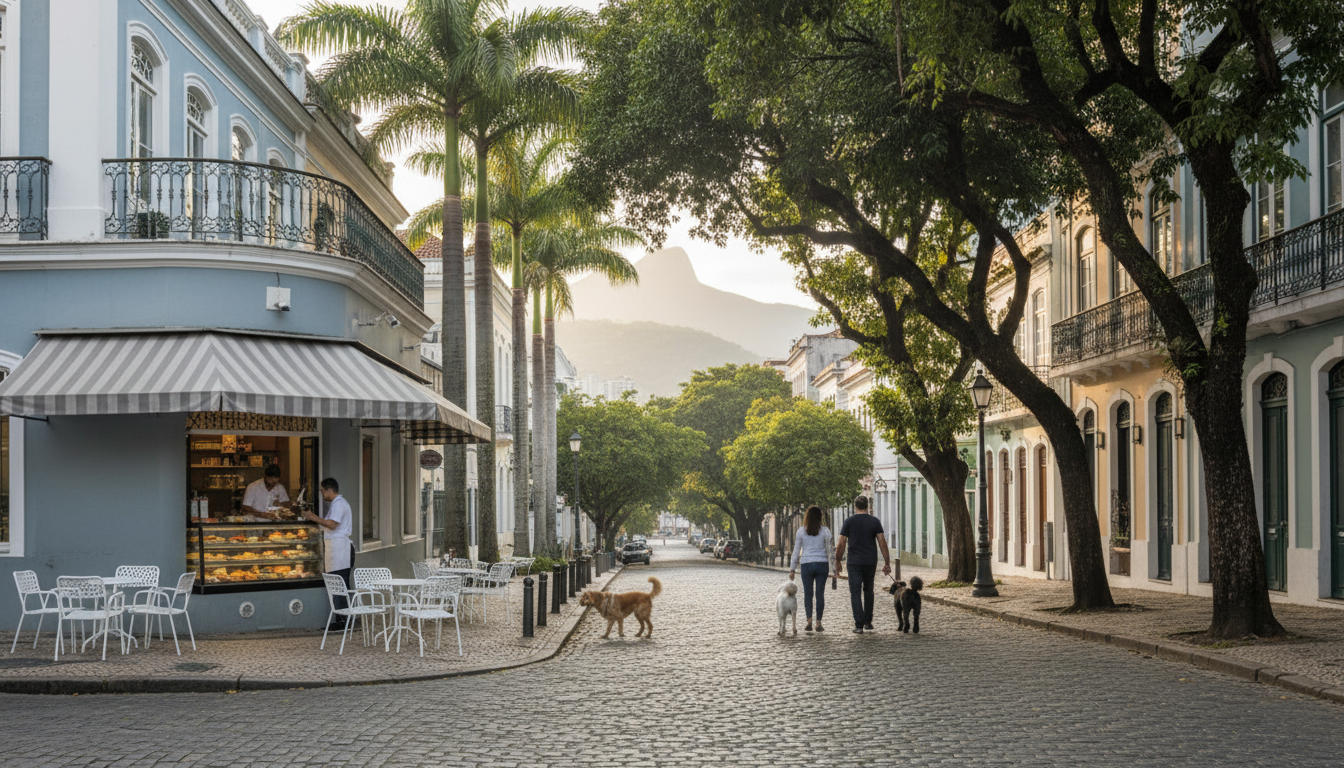 Tree-lined street in Laranjeiras neighborhood with colonial-era buildings, locals walking dogs, and
Essential Tips for Your Rio de Janeiro Home Swap
Timing Your Visit
Rio has a reputation for year-round warmth, but the reality is more nuanced. December through March is summer—hot, humid, and crowded, especially around Carnival (usually February). Home swap availability actually increases during Carnival because many cariocas flee the chaos, but be prepared for insane prices on flights and everything else.
My favorite time? April through June, or September through November. The weather is warm but not oppressive, the beaches are less packed, and you'll find more swap options as Brazilians travel domestically during school holidays. Avoid July if possible—it's Brazilian winter vacation, and while "winter" means 70°F, the city fills with domestic tourists and prices spike.
Security: Real Talk
I won't sugarcoat this: Rio has crime. It's a reality that every visitor needs to acknowledge, and home swapping actually helps mitigate some risks.
When you stay in a residential building, you benefit from the security measures locals use—doormen, secure entrances, and neighbors who notice strangers. You're also less obviously a tourist, which matters. Walking out of a high-rise hotel in Copacabana with a camera around your neck signals "target" in ways that walking out of an apartment building in Botafogo doesn't.
Practical advice from my swaps: Ask your host about their neighborhood's specific considerations. Don't flash expensive phones or cameras on the street. Use Uber or 99 (the Brazilian rideshare app) rather than hailing taxis. Keep a "mugger's wallet" with small bills if you're walking at night. Trust your instincts—if a street feels wrong, turn around.
I've never had an incident in Rio, but I've also been careful. Your host's local knowledge is invaluable here—lean on it.
Communication with Your Host
Brazilians tend to be warm, effusive communicators, and your home swap host will likely shower you with recommendations, warnings, and offers of help. Embrace it.
Before arriving, ask about their favorite local restaurants within walking distance, their preferred beach spots (which barracas—beach kiosks—they recommend), any quirks about the apartment (Brazilian showers can be... interesting), emergency contacts in case something goes wrong, and whether they have a porteiro and what hours they work. Most hosts will also appreciate small gifts from your home country. I always bring local coffee or chocolate, and the gesture goes a long way.
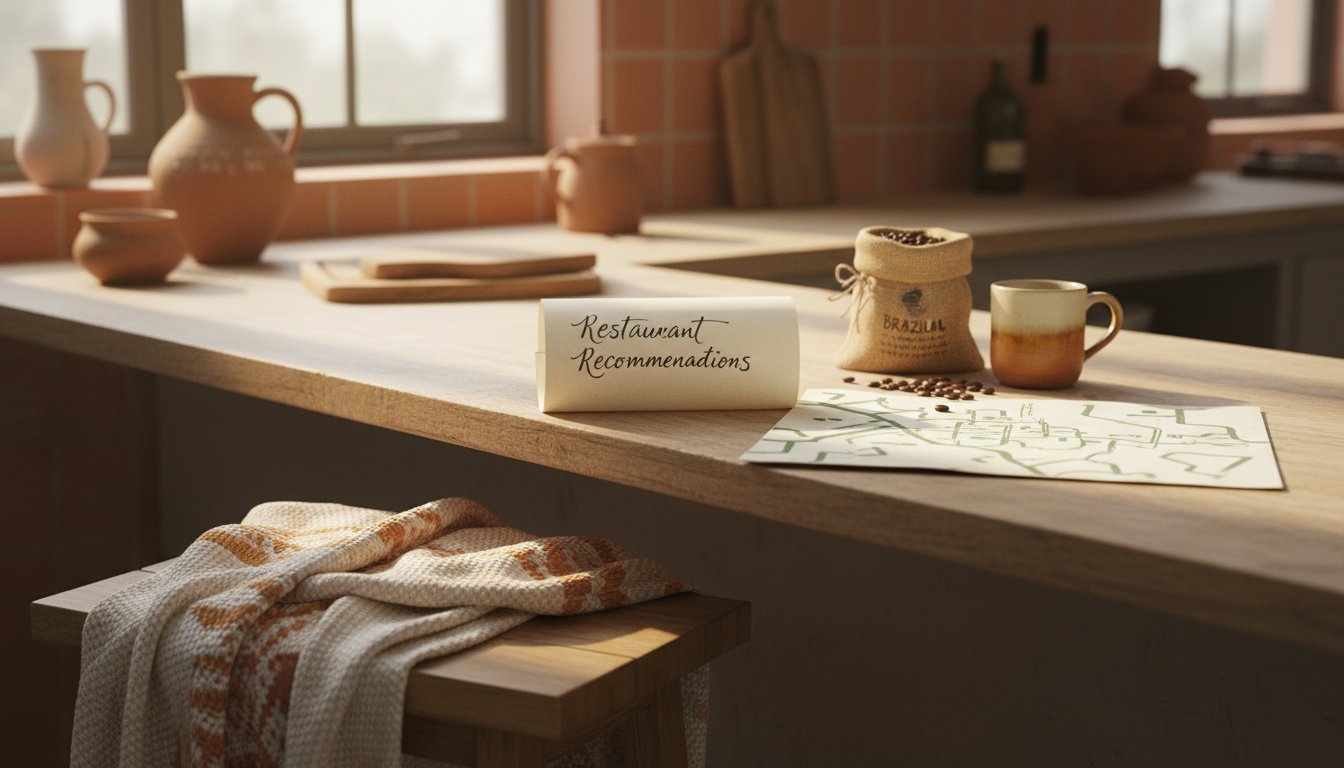 Handwritten note on a kitchen counter with local restaurant recommendations, a hand-drawn map, and a
Getting Around During Your Home Swap
Rio's metro is clean, safe, and covers the main tourist areas well. Lines 1 and 4 connect Zona Sul neighborhoods (Copacabana, Ipanema, Leblon) to Centro and the north. If your swap is near a metro station, you're golden.
For areas the metro doesn't reach—Santa Teresa, parts of Botafogo, anywhere in the hills—Uber and 99 are your friends. Rides are cheap by US/European standards; a 20-minute trip rarely exceeds R$30 ($6 USD). Buses exist but are confusing for newcomers. I'd skip them unless your host specifically recommends a route. Renting a car? Generally unnecessary and potentially stressful. Rio drivers are aggressive, parking is a nightmare, and you don't need one for typical tourist activities.
The Kitchen Situation
One of home swapping's greatest joys is cooking with local ingredients. Rio's markets and supermarkets are fantastic, and your swap kitchen lets you take full advantage.
Must-try local ingredients: fresh tropical fruits (look for caju, graviola, and cupuaçu), queijo minas (mild white cheese, perfect for breakfast), pão de queijo (cheese bread—buy frozen, bake at home), and fresh fish from the market (especially in Ipanema's COBAL market).
Fair warning: Brazilian kitchens often have smaller refrigerators and fewer gadgets than North American or European ones. Your host's coffee situation might be a stovetop moka pot rather than a drip machine. Embrace the differences.
Local Secrets Only Home Swappers Discover
The Real Carioca Schedule
Rio runs late. Dinner at 8 PM is early; 10 PM is normal. Bars fill up after midnight. Sunday beach days start around noon. Trying to maintain a 7 AM breakfast schedule will leave you eating alone.
Adjust your rhythm to match the city. Sleep in. Take long lunches. Stay out late. You'll connect with local life in ways early-rising hotel tourists never do.
Beach Culture Decoded
Each beach section has its own tribe. In Ipanema, Posto 8 is for families, Posto 9 draws the beautiful people and LGBTQ+ crowd—the see-and-be-seen spot, while Posto 10 belongs to surfers and athletes. In Copacabana, Posto 5 attracts older locals with a calmer vibe, and Posto 6 has a mixed crowd near the fort.
Your home swap location determines your "home beach." Ask your host where they go—it's usually the best indicator of where you'll feel comfortable.
Brazilians rent chairs and umbrellas from barracas (beach kiosks). Pick one, order drinks throughout the day, and pay when you leave. It's not expensive (maybe R$50-80 for a full day including drinks), and it's how everyone does it.
The Neighborhood Bar
Every Rio neighborhood has a boteco—a casual bar where locals gather for cold beer and petiscos (snacks). Finding your swap neighborhood's best boteco is a rite of passage.
Look for places with plastic chairs, lots of locals, and no English menu. Order a chopp (draft beer), some bolinhos de bacalhau (cod fritters), and settle in. You'll spend R$50-80 ($10-15) and feel more connected to Rio than any fancy restaurant could provide.
 Lively neighborhood boteco at dusk with locals gathered around small tables, cold beers sweating in
Beyond the Beaches
Most tourists never leave the sand. Your home swap gives you time and local knowledge to explore deeper.
Places your host might recommend: Parque Lage, a gorgeous estate at the base of Corcovado with a café in a mansion. Feira de São Cristóvão, a massive northeastern Brazilian market with food, music, and culture on weekends. Pedra Bonita, a relatively easy hike with paragliders launching overhead. Museu de Arte do Rio (MAR), an excellent museum with rotating exhibitions. And Escadaria Selarón, the famous tiled steps—go early morning to avoid crowds.
Ask your host what they do on weekends. The answers are always more interesting than guidebook suggestions.
Making the Most of SwappaHome's Credit System in Brazil
Rio is an excellent city to earn credits by hosting, not just spending them. Brazilian travelers are curious about other countries, often speak English, and tend to be respectful guests.
If you live in a desirable location—any major US or European city, really—consider hosting Brazilian travelers before your Rio trip. You'll build credits for your own adventure while making connections that might help you during your swap. The beauty of SwappaHome's system is its simplicity: one credit equals one night, everywhere. That luxury apartment in Leblon costs the same in credits as a modest place in Flamengo. So if you've been hosting guests at home, you can afford to aim high with your Rio swap.
Common Mistakes to Avoid
Booking too short a stay. Rio reveals itself slowly. A three-night swap barely scratches the surface. I'd recommend at least a week, ideally two. You need time to find your rhythm, discover your neighborhood, and actually relax.
Ignoring the hills. Addresses in Rio can be deceptive. A listing that looks close to the beach might be up a steep hill. Use Google Street View to check the terrain, and ask your host directly about walking routes.
Forgetting about noise. Rio is loud. Parties, traffic, construction, neighbors' TVs—it's part of the culture. If you're a light sleeper, ask about the apartment's noise levels and consider bringing earplugs.
Underestimating distances. The Zona Sul neighborhoods look compact on a map, but walking from Leblon to Copacabana takes over an hour. Plan accordingly, especially in the heat.
Not learning basic Portuguese. Brazilians appreciate any effort. Even "obrigado/obrigada" (thank you) and "com licença" (excuse me) will warm interactions. Download Google Translate offline before you go.
Planning Your Rio de Janeiro Home Swap
Here's my suggested approach:
Start browsing 3-4 months ahead. Good Rio listings get snapped up, especially for high season. Prioritize neighborhoods based on your travel style—first-timer wanting beaches? Ipanema. Culture and nightlife? Botafogo. Bohemian adventure? Santa Teresa.
Read reviews carefully. Look for comments about the neighborhood, not just the apartment. Security mentions, noise levels, and walkability matter. Message potential hosts with specific questions. Their responsiveness tells you a lot about the experience you'll have.
Confirm practical details: air conditioning (essential in summer), wifi reliability, washing machine access, and kitchen equipment. Ask for their neighborhood guide—most hosts have recommendations they're eager to share.
The SwappaHome community in Rio is genuinely welcoming. I've stayed in touch with all my Rio hosts, and one has even become a real friend—she visited San Francisco last year and stayed with me.
That's the thing about home swapping in Rio de Janeiro. You don't just get free accommodation. You get a window into how cariocas actually live, eat, relax, and experience their extraordinary city. You get recommendations you'd never find online. You get a temporary home in one of the world's most vibrant places.
Four years after that first sunrise in Botafogo, I'm still chasing that feeling—the coffee, the view, the borrowed flip-flops, the sudden understanding that I'd been doing travel wrong all along.
Rio is waiting. Your swap home is out there. And trust me, the view from someone else's kitchen window is worth everything.
Frequently Asked Questions
Is home swapping in Rio de Janeiro safe?
Home swapping in Rio de Janeiro can be quite safe when you choose verified hosts in secure neighborhoods like Ipanema, Leblon, or Botafogo. Residential buildings typically have doormen and security measures that hotels can't match. Always read reviews, communicate with your host about neighborhood specifics, and follow standard urban safety practices.
How much money can I save with a home swap in Rio compared to hotels?
A two-week home swap in Rio de Janeiro can save you $2,000-4,000 USD compared to hotel stays. Mid-range hotels in Ipanema cost $150-250 per night, while beachfront apartments run $300+ nightly. With SwappaHome's credit system, your accommodation cost is essentially zero once you've earned credits by hosting.
What's the best neighborhood for a first-time home swap in Rio?
Ipanema is ideal for first-time home swappers in Rio de Janeiro. It offers excellent infrastructure, walkable beaches, reliable public transport, and a good balance of local life and tourist convenience. The area has many verified listings and hosts experienced with international travelers.
When is the best time to do a home swap in Rio de Janeiro?
The best months for a Rio home swap are April through June or September through November. You'll enjoy warm weather (70-85°F), fewer crowds, and better availability of swap properties. Avoid Carnival season (February) unless you specifically want that experience, as the city becomes extremely crowded and expensive.
Do I need to speak Portuguese for a home swap in Rio?
While not required, basic Portuguese significantly enhances your home swap experience in Rio. Most hosts speak some English, but neighborhood shops, markets, and restaurants often don't. Learning key phrases and downloading offline translation apps will help you navigate daily life and connect more meaningfully with locals.

Published by
SwappaHome
SwappaHome Editorial Team
Home Exchange & Slow Travel Editorial
The SwappaHome Editorial Team brings together travel research, home-exchange community insights, and platform data to produce practical guides for first-time and experienced home swappers. Every article cites real platforms, current market rates, and verifiable city-level facts so readers can make informed decisions without guessing.
Ready to try home swapping?
Join SwappaHome and start traveling by exchanging homes. Get 7 free credits when you sign up!
Related articles
How to Extend or Modify a Home Swap Mid-Stay: The Complete Flexibility Guide
Need to extend your home swap or change dates mid-trip? Here's exactly how to negotiate changes, handle credits, and keep both parties happy.

How to Visit Bali for Free with Home Exchange: The Complete 2026 Guide
Skip the $150/night villas. Home exchange in Bali lets you stay in Ubud rice field houses and Seminyak beach pads for zero accommodation cost. Here's exactly how.
How to Vet Home Swap Guests: 12 Red Flags Every Host Should Know
Learn how to vet home swap guests before handing over your keys. Spot the 12 red flags experienced hosts watch for—and protect your home with confidence.