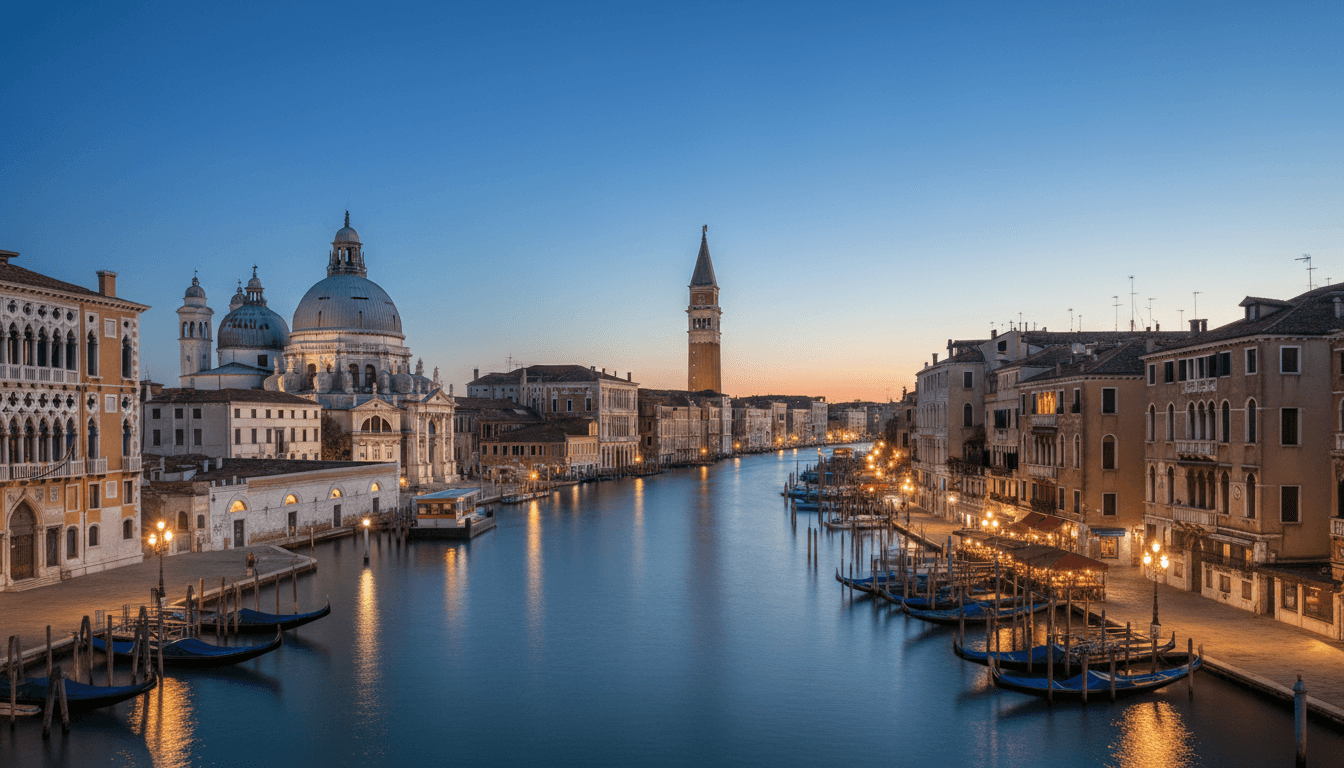
Venice on a Budget: The Ultimate Home Exchange Guide to La Serenissima

SwappaHome Editorial Team
Home Exchange & Slow Travel Editorial
Discover how to experience Venice's magic without the tourist prices. Your complete guide to exploring La Serenissima through home swapping.
Venice on a Budget: The Ultimate Home Exchange Guide to La Serenissima
Imagine waking up to the sound of water gently lapping against ancient stone walls. You pad across cool terracotta tiles to throw open wooden shutters, and there it is—a quiet canal bathed in golden morning light, a gondolier gliding past with his first passengers of the day. You're not watching this from a hotel window that cost you €400 a night. You're in someone's home, sipping espresso from their moka pot, about to spend the day exploring Venice like the locals do.
This isn't a fantasy. This is what happens when you discover the secret that savvy travelers have been whispering about for years: home exchange in Venice isn't just possible—it's transformative.
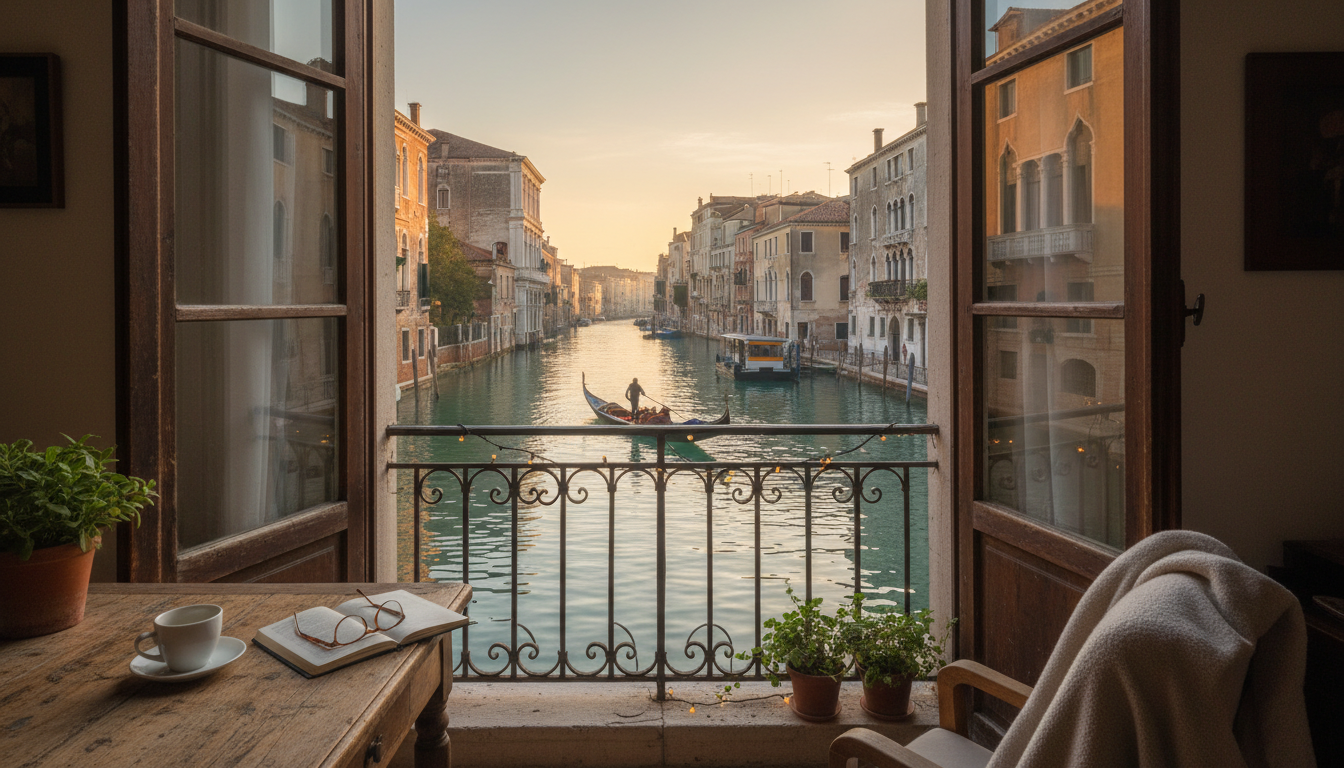 Early morning view of a quiet Venetian canal from an apartment window, with soft golden light reflec
Venice has a reputation problem. Mention you're planning a trip, and someone will inevitably wince and say something about crowds, cruise ships, and costs that make your wallet weep. And yes, if you approach Venice the way most tourists do—staying in overpriced hotels near San Marco, eating at restaurants with English menus in the window, buying €8 bottles of water—you'll leave feeling like the city mugged you.
But here's what those people don't know: there's another Venice. A Venice where nonnas hang laundry between buildings, where bacari overflow with locals drinking ombra (small glasses of wine) at 11 AM because that's just what you do, where you can live for a week on what others spend in a day. The key to unlocking this Venice? Having a home base that puts you inside the city's rhythm rather than observing it from behind velvet ropes.
Why Home Exchange Changes Everything in Venice
Let's talk numbers for a moment, because they're staggering. The average hotel room in Venice during peak season runs between €200 and €400 per night. Even modest accommodations near the main tourist areas rarely dip below €150. For a week-long stay, you're looking at €1,400 to €2,800 just for somewhere to sleep—and that's before you've eaten a single plate of pasta or taken a single vaporetto ride.
Now imagine that expense simply... disappearing. Through home swapping, you exchange your home for someone else's Venetian apartment. No nightly rates. No tourist taxes adding up. No feeling like you need to rush through the city to justify what you're paying.
But the financial savings, as significant as they are, aren't even the best part. When you stay in a local's home, you inherit their life for a little while. You shop at their neighborhood alimentari where the owner knows everyone by name. You discover that the best coffee in the sestiere is at the tiny bar three bridges away that no guidebook mentions. You find yourself nodding buongiorno to the same faces each morning until, by day four, you almost feel like you belong.
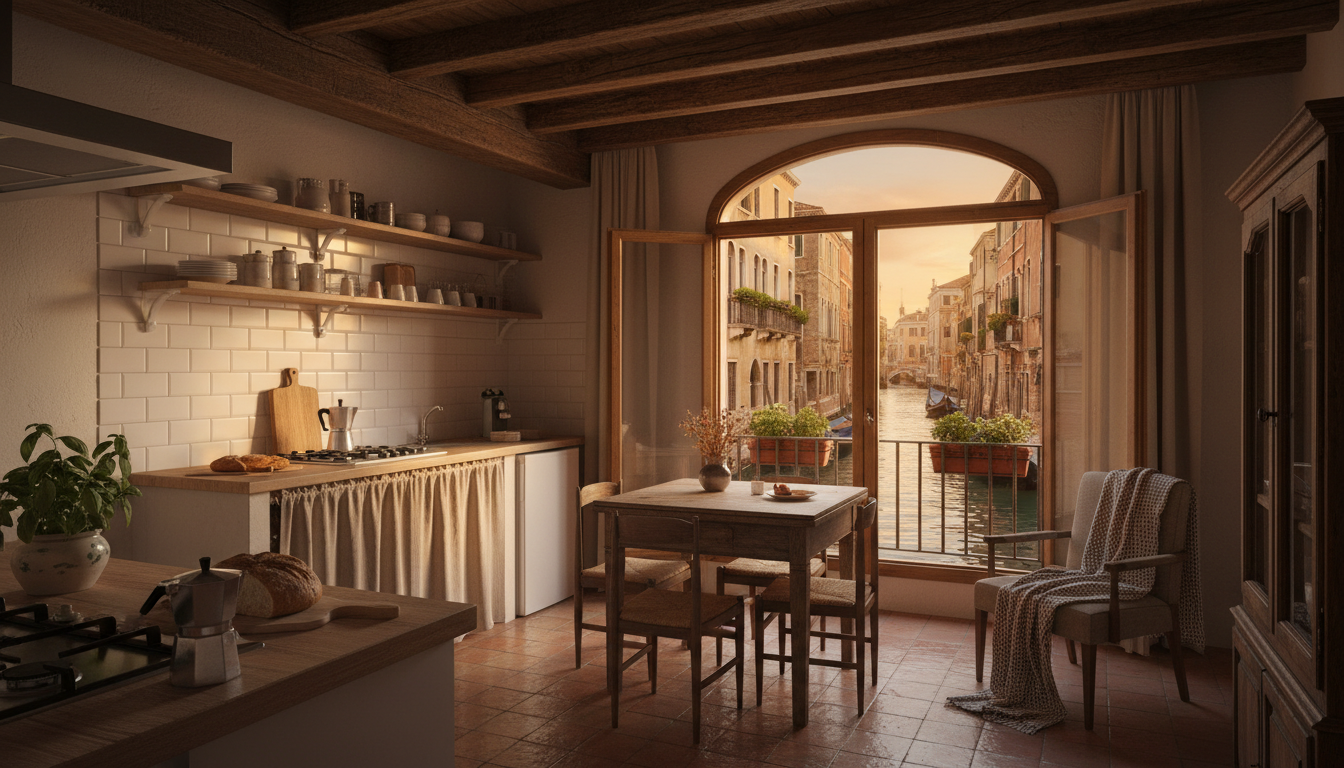 Interior of a cozy Venetian apartment showing characteristic features like exposed wooden beams, a s
I spoke with Maria, a SwappaHome member from London who did her first Venice exchange last autumn. "We stayed in Cannaregio, in this wonderful apartment above a mask-maker's workshop," she told me. "Our host left us a list of her favorite spots—a bacaro where the cicchetti were incredible, a gelateria that only locals seemed to know about, even which vaporetto lines to avoid during rush hour. We spent half of what we'd budgeted and had twice the experience."
This is the magic of home exchange: you're not just saving money, you're gaining access to insider knowledge that money literally cannot buy.
Finding Your Perfect Venetian Home Swap
Venice is divided into six sestieri (districts), and where you stay dramatically shapes your experience. Let me walk you through each one so you can find your ideal match.
San Marco is the beating heart of tourist Venice—stunning, yes, but also crowded and expensive even for groceries. That said, staying here through a home exchange gives you something magical: the chance to experience Piazza San Marco at 6 AM, when it's empty except for pigeons and street cleaners, before retreating to your apartment as the crowds descend. If you're a first-time visitor who wants the iconic experience, a swap here can work beautifully.
Dorsoduro feels like Venice's artistic soul. Home to the Peggy Guggenheim Collection and the Accademia Gallery, it attracts a slightly bohemian crowd. The southern edge along the Zattere offers wide fondamente (waterfront walkways) perfect for evening strolls, and Campo Santa Margherita buzzes with university students and young locals every night. Apartments here tend to be slightly larger than in more central areas, and you'll find excellent neighborhood restaurants that haven't been discovered by the tour bus crowd.
Cannaregio is where I always recommend first-time home exchangers look. It's the largest sestiere, stretching from the train station to the edge of the Jewish Ghetto (the world's first, and worth several hours of exploration). The further you go from the station, the more authentic it becomes. By the time you reach the northern fondamente overlooking the lagoon, you might go entire mornings without hearing English spoken.
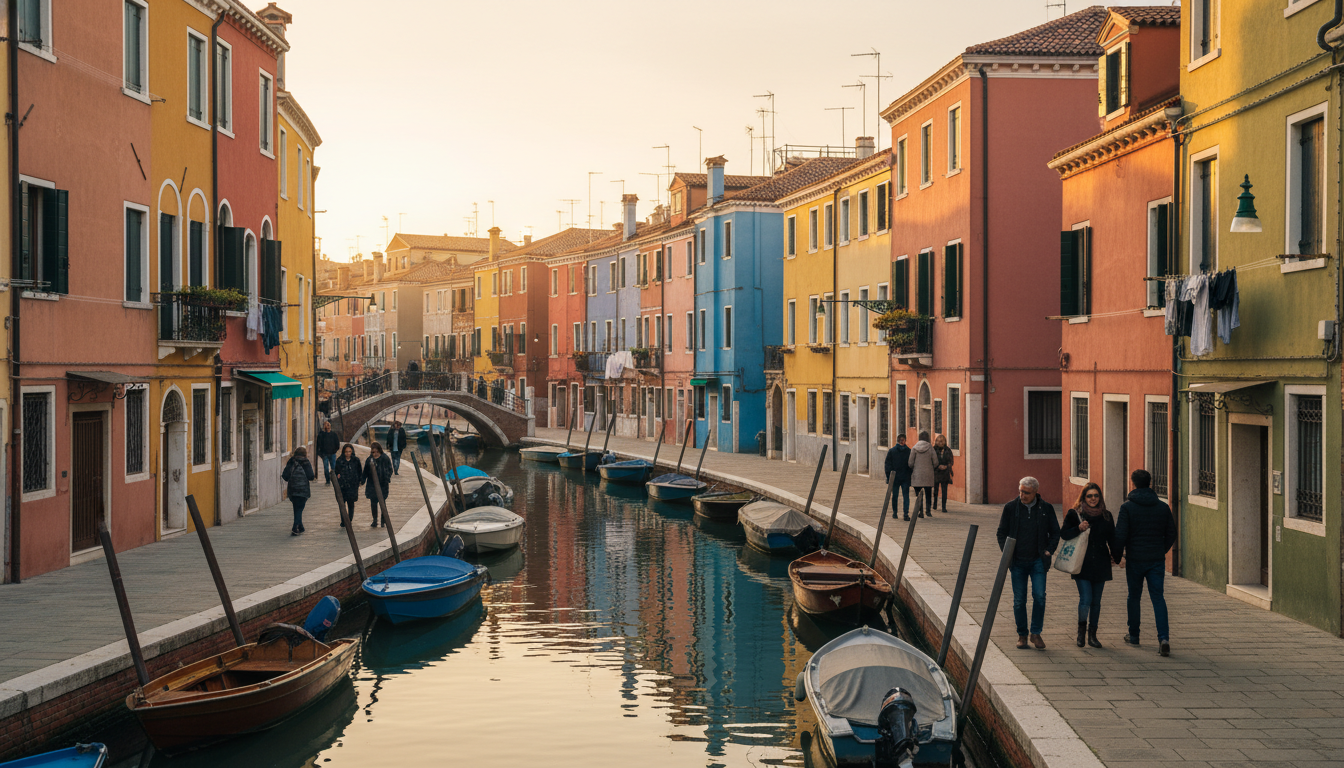 Colorful buildings along a canal in Cannaregio district, with locals walking along the fondamenta an
San Polo and Santa Croce sit at the city's center, home to the famous Rialto Market. Staying here means you can stumble out of bed and buy the freshest fish and produce in Venice before most tourists have finished their hotel breakfast buffets. The neighborhoods feel genuinely lived-in, with narrow calli (streets) that twist and turn in ways that will get you delightfully lost.
Castello is Venice's largest and most varied district. Near San Marco, it's polished and busy. But venture toward the eastern end, past the Arsenale and into the residential areas, and you'll find a Venice that feels almost like a small town. Old men play cards in campi, children kick soccer balls against ancient walls, and the only tourists you'll see are the ones who, like you, figured out the secret.
When browsing home exchange listings, look for apartments that mention neighborhood markets, local recommendations, or proximity to vaporetto stops on lines 4.1 or 4.2 (the circular routes that locals actually use). These details signal hosts who understand what makes a Venetian stay special.
The Art of Eating Well Without Spending a Fortune
Venetian cuisine deserves its own love letter, but let me give you the condensed version: this city will feed you magnificently if you know where to look, and home exchange makes looking much easier.
Your secret weapon is the kitchen. Having a place to cook transforms your relationship with Venice's food culture. Instead of paying €25 for a mediocre pasta dish in a tourist trap, you can spend €10 at the Rialto Market on ingredients that would cost five times as much back home—and probably weren't available at all. Fresh-caught moeche (soft-shell crabs) in autumn. Tiny purple artichokes called castraure in spring. Seafood so fresh it was swimming that morning.
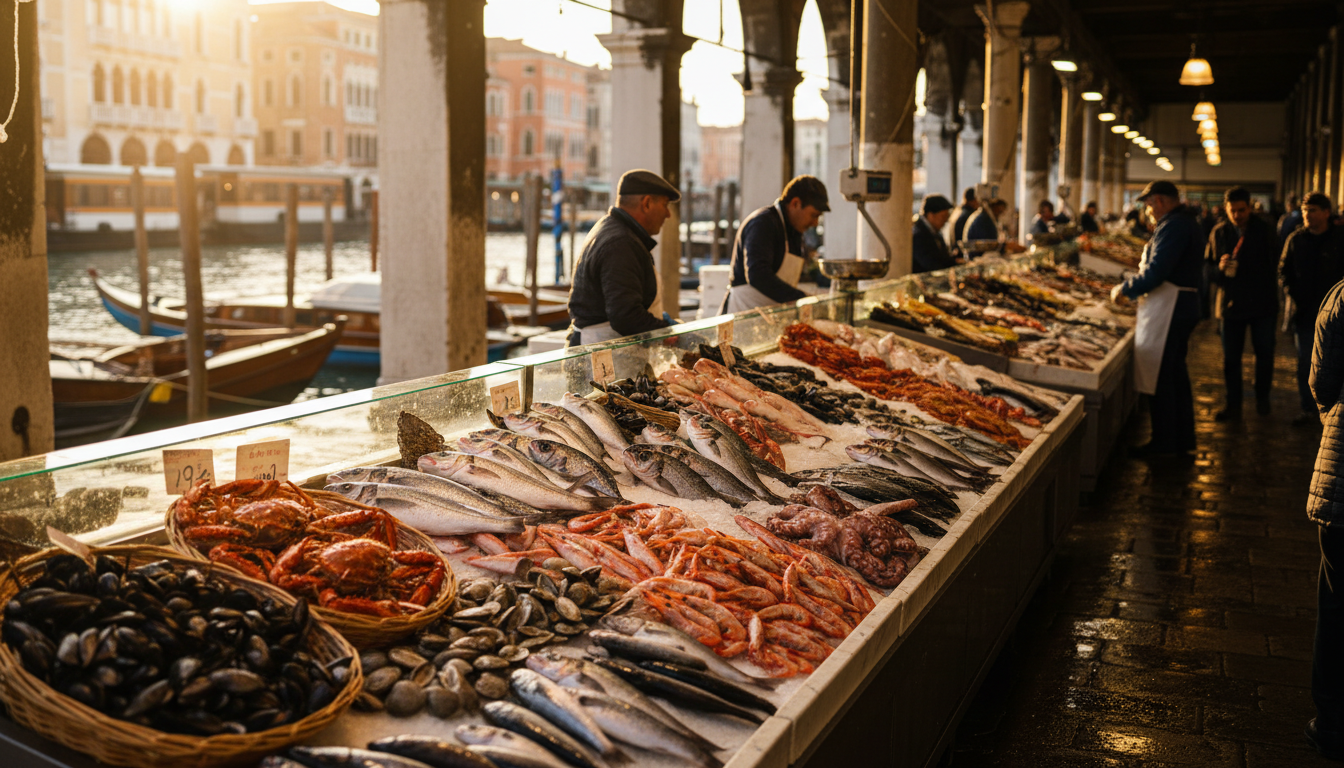 Vibrant display at the Rialto Fish Market showing fresh seafood including whole fish, shellfish, and
The market operates Tuesday through Saturday mornings, and getting there early (before 9 AM) is essential. Watch what the Venetian nonnas are buying, ask the vendors what's good today, and don't be afraid to point and smile if your Italian is limited. Most vendors appreciate the effort and will help you choose.
For meals out, embrace the bacaro culture. These traditional Venetian wine bars serve cicchetti—small plates that range from simple crostini topped with creamy baccalà mantecato (whipped salt cod) to elaborate creations involving seafood you've never heard of. You stand at the bar, order an ombra of house wine for €2-3, point at whatever cicchetti look appealing (usually €1-3 each), and enjoy. Three or four cicchetti and a couple of glasses of wine make a perfectly satisfying lunch for under €15.
Some bacari that locals genuinely love: Cantina Do Spade near Rialto has been serving since 1488 and still gets it right. All'Arco is tiny and always packed with market workers grabbing a mid-morning bite. Osteria Al Squero in Dorsoduro sits across from a working gondola boatyard, and the cicchetti are excellent.
For sit-down dinners, venture away from San Marco and look for restaurants without photos on the menu (a reliable red flag). Trattoria alla Madonna near Rialto serves old-school Venetian seafood at reasonable prices. Anice Stellato in Cannaregio is worth the walk for their creative takes on traditional dishes. And if you're craving pizza—not traditionally Venetian, but sometimes you just need it—Antico Forno on the Rialto side has been making excellent slices for decades.
Getting Around Like a Local
Here's something that surprises first-time visitors: Venice is tiny. The entire historic center measures roughly 3 kilometers across, and you can walk from one end to the other in about an hour. Once you accept this, your transportation budget shrinks dramatically.
The vaporetto (water bus) system is wonderful but expensive for tourists. A single ride costs €9.50, which adds up painfully if you're hopping on and off all day. However, if you're staying for several days, the travel passes become reasonable—€25 for 24 hours, €35 for 48 hours, €45 for 72 hours, or €65 for a full week.
But here's what home exchange teaches you: you probably don't need the vaporetto as much as you think. When you're staying in a neighborhood rather than a hotel in the tourist center, walking becomes the natural choice. You'll discover shortcuts through tiny sottoporteghi (covered passageways), stumble upon hidden campi (squares), and develop your own mental map of the city. Getting lost is part of the experience—and in Venice, you're never truly lost because you'll always hit water eventually.
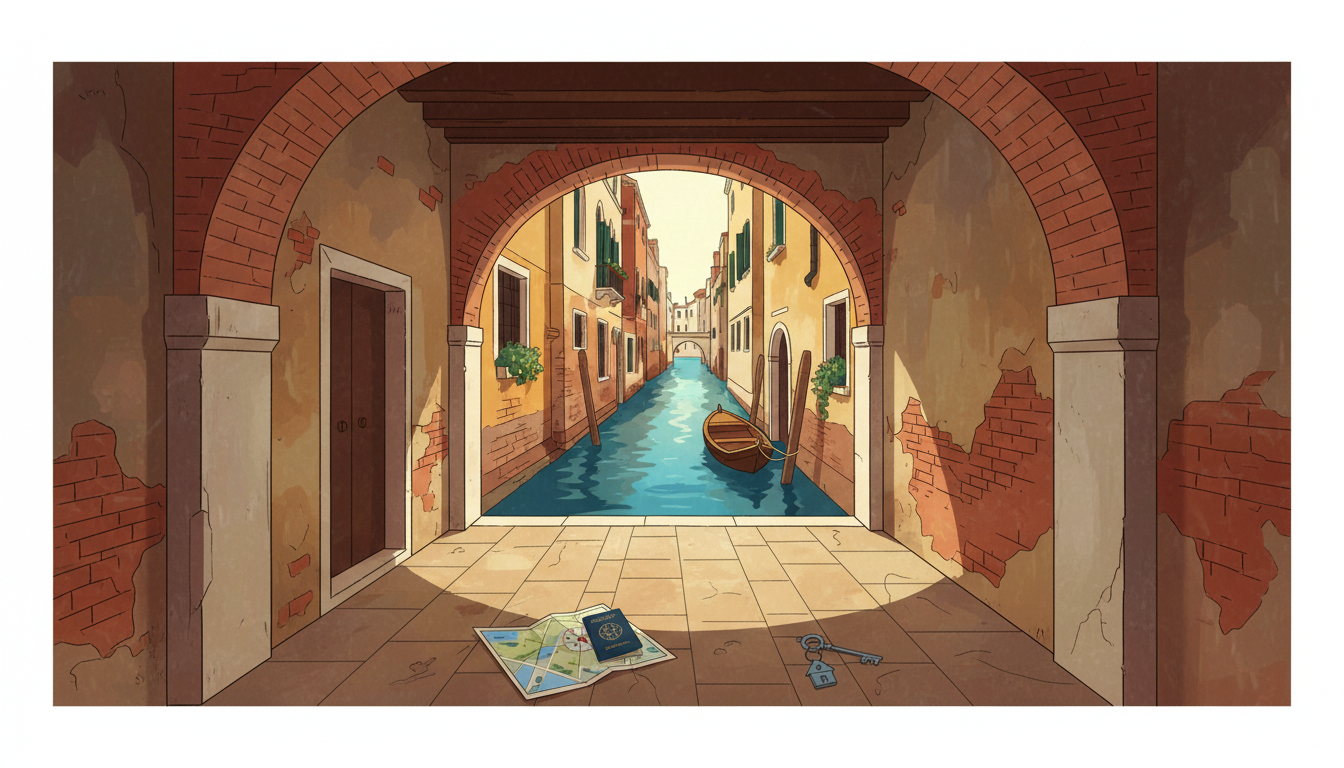 A quiet Venetian sottoportego covered passageway with old brick walls and a glimpse of a small canal
When you do take the vaporetto, embrace the slower lines. The number 1 runs the length of the Grand Canal and is perpetually packed with tourists, but it's also genuinely beautiful. Lines 4.1 and 4.2 circle the exterior of the city and offer stunning lagoon views. The number 12 goes out to Burano and Torcello—essential day trips that feel like escaping to entirely different worlds.
For reaching the islands, here's a budget tip: the ferry to Lido (line 1, 5.1, or 5.2) takes you to Venice's beach in about 15 minutes. The Lido has a completely different character—art nouveau architecture, wide streets with actual cars, and long sandy beaches. It's free to access (though beach clubs charge for chairs and umbrellas), and it offers a perfect change of pace when the historic center feels overwhelming.
Experiencing Venice Beyond the Obvious
Every visitor should see St. Mark's Basilica, walk across the Rialto Bridge, and probably take at least one overpriced gondola ride (I'd suggest the traghetto instead—these gondola ferries cross the Grand Canal at several points for just €2, giving you the experience without the €80 price tag). But the Venice that stays with you is usually found elsewhere.
Book a visit to the Scuola Grande di San Rocco, where Tintoretto spent 23 years covering the walls and ceilings with some of the most breathtaking art in Italy. Unlike the Accademia, it's rarely crowded, and you can spend an hour craning your neck at the ceiling without anyone bumping into you.
Wander into the Jewish Ghetto in Cannaregio, where the word "ghetto" originated (from the Venetian word for foundry, as the area was previously an iron-working district). The synagogues are beautiful, the history is profound, and the small museum tells a story that resonates far beyond Venice's borders.
Take the vaporetto to San Michele, the cemetery island. This might sound morbid, but it's actually one of the most peaceful spots in the lagoon. Cypress trees line the pathways, famous figures like Stravinsky and Ezra Pound rest here, and the views back toward Venice are extraordinary.
Climb the campanile of San Giorgio Maggiore instead of the one in St. Mark's Square. The views are arguably better (you can actually see St. Mark's from here), the lines are shorter, and the cost is lower. Plus, the Palladian church itself is worth exploring.
And please, please venture to Burano. Yes, it's in every guidebook, but for good reason. The hour-long vaporetto ride takes you through the northern lagoon, past mussel farms and fishing boats, to an island where every house is painted a different vivid color. Go early, stay for lunch (the seafood risotto at Trattoria al Gatto Nero is legendary, though you'll need a reservation), and wander the quiet streets after the day-trippers leave.
Timing Your Visit for Maximum Value
Venice's rhythm changes dramatically with the seasons, and when you visit affects both your experience and your budget.
Summer (June through August) brings the largest crowds, highest temperatures, and most competition for home exchanges. The city can feel oppressively hot and crowded, though the long evenings are magical and the beach at Lido offers relief. If you're set on summer, try for June or late August rather than July, and focus your sightseeing on early mornings and evenings.
Spring (April through early June) and autumn (September through October) are the sweet spots. The weather is pleasant, the light is beautiful, and while you'll still encounter tourists, the crowds are manageable. Home exchange options tend to be plentiful during these shoulder seasons, as many Venetian apartment owners travel during these ideal months.
Winter (November through March) offers a completely different Venice. The city empties out, prices drop, and you might experience acqua alta—the high tides that flood St. Mark's Square and require elevated walkways. Some find this atmospheric and romantic; others find it inconvenient. The famous Carnival in February brings crowds back briefly, but outside that period, you can have the city almost to yourself. Home exchanges during winter are often easier to arrange, as owners may be happy to escape the cold and damp.
One timing consideration specific to home exchange: Venice's residents sometimes leave during major events like the Film Festival (late August/early September) or the Biennale (May through November in odd years). These can be excellent times to find swaps, as locals prefer to rent out their apartments rather than deal with the crowds.
Making Your Home Exchange Happen
So how do you actually find someone willing to swap their Venetian apartment for your home? The process is simpler than you might think, though it requires some planning and flexibility.
Start by creating a compelling listing of your own home. Venetians, like all home exchangers, want to know they're getting a good deal. Highlight what makes your location special—nearby attractions, good restaurants, transportation links, unique features of your home. Quality photos matter enormously; spend an afternoon making your space look its best and shoot in natural light.
When searching for Venice listings on platforms like SwappaHome, don't limit yourself too narrowly. A home exchanger with a credit-based system gives you flexibility—you might host a family from Venice at your home in spring, then use those credits to stay in a different Venetian apartment in autumn. This opens up far more possibilities than requiring a direct swap.
Reach out to potential hosts with personalized messages. Mention specific things about their listing that appeal to you, share a bit about yourself, and be clear about your dates and flexibility. Venetians are generally warm and welcoming, but they receive many requests; standing out requires showing genuine interest.
Plan ahead. Venice is a popular destination, and the best apartments get snapped up months in advance, especially for peak seasons. If you're targeting spring or autumn, start your search six months ahead. For summer, even earlier.
And finally, be a good guest. Leave the apartment cleaner than you found it, replace anything you use up, and perhaps leave a small gift—a specialty from your hometown, a nice bottle of wine, a heartfelt thank-you note. The home exchange community thrives on mutual respect and generosity. Your thoughtfulness now might lead to a return invitation later, or a glowing reference that helps secure your next exchange.
Your Venice Awaits
There's a moment that happens to almost everyone who stays in Venice for more than a few days. You're walking through a quiet campo in the evening light, maybe carrying groceries from the market, and you realize you haven't thought about the price of anything in hours. You've been too busy living—chatting with the baker, admiring the way the sunset turns the buildings pink, planning which bacaro to visit before dinner.
This is the Venice that home exchange unlocks. Not the Venice of tour groups and cruise ship crowds, but the Venice of morning markets and neighborhood bars, of quiet canals and friendly neighbors, of feeling like a temporary local rather than a permanent tourist.
The city is expensive, yes. It's crowded in places, yes. But it's also one of the most extraordinary places humans have ever built, a city that shouldn't exist and yet has persisted for over a thousand years. It deserves to be experienced properly—slowly, affordably, from the inside out.
Start browsing home exchange listings today. Somewhere in Venice, there's an apartment with your name on it, a local host ready to share their secrets, and a version of La Serenissima waiting to be discovered that you never knew existed.
The canals are calling. How will you answer?

Published by
SwappaHome
SwappaHome Editorial Team
Home Exchange & Slow Travel Editorial
The SwappaHome Editorial Team brings together travel research, home-exchange community insights, and platform data to produce practical guides for first-time and experienced home swappers. Every article cites real platforms, current market rates, and verifiable city-level facts so readers can make informed decisions without guessing.
Ready to try home swapping?
Join SwappaHome and start traveling by exchanging homes. Get 7 free credits when you sign up!
Related articles

Bachelor and Bachelorette Parties in Singapore: The Complete Home Swap Group Guide for 2026
Planning a bachelor or bachelorette party in Singapore? Discover how home swapping lets groups of 6-12 stay together in luxury condos, saving thousands while partying in Marina Bay.
Cycling in Lisbon: 7 Home Swap Bike Tour Itineraries for Every Rider
Discover the best cycling routes in Lisbon with these home swap bike tour itineraries—from waterfront paths to hilltop adventures, all starting from your borrowed home.
Graduation Trip to Barcelona: How Home Swapping Gives New Graduates the Ultimate Celebration
Planning a graduation trip to Barcelona? Discover how home swapping lets new graduates explore Spain's most vibrant city without the hostel crowds or hotel costs.