
Digital nomad Las Palmas: The complete guide to living and working in Gran Canaria

SwappaHome Editorial Team
Home Exchange & Slow Travel Editorial
Key Takeaways Las Palmas combines a mild climate, beachside neighborhoods, practical European time zones, and a well-established remote-work culture. A…
Key Takeaways
Las Palmas combines a mild climate, beachside neighborhoods, practical European time zones, and a well-established remote-work culture. A comfortable stay depends less on finding the trendiest address than on choosing the right home, internet setup, and daily rhythm.
- Las Canteras, Santa Catalina, Vegueta, and Triana suit different working styles.
- Confirm Wi-Fi, desk quality, noise levels, and utilities before booking.
- Home exchange can make a longer stay more affordable and local.
- Public buses, walking, and cycling cover much of the city.
- Check entry rules, insurance, mobile data, and backup internet before departure.
Why Las Palmas works for digital nomads
Las Palmas de Gran Canaria has the unusual feel of a working city with a resort on its doorstep. The capital offers ordinary neighborhoods, supermarkets, cultural venues, and local routines, while Las Canteras provides an easy escape from a screen. For many remote workers, the attraction is the balance: enough energy to stay connected, but enough space to build a calm week.
Year-round weather and beachside living
The city’s mild climate makes outdoor living possible for much of the year, although wind, occasional rain, and cooler evenings still deserve a place in your packing plan. Las Canteras is especially convenient because a swim, walk, or sunset can fit around a normal workday rather than requiring a special excursion. A balcony or nearby promenade can also make a small apartment feel considerably larger.
The best approach is to treat the beach as part of your routine, not as a reason to avoid routine altogether. A morning walk can clear your head, while an afternoon break by the water gives the day a natural dividing line.
Time zone advantages for European teams
Las Palmas follows the Canary Islands time zone, which is the same as the United Kingdom and generally close to mainland European working hours. That makes recurring meetings easier than in many long-haul nomad destinations. You can often keep a familiar schedule without forcing colleagues into early calls or late evenings.
Still, check the seasonal clock change with your employer and clients. A team spread across several countries may shift by an hour at different points of the year, so putting important meetings on a shared calendar is a simple precaution.
Cost of living compared with mainland Europe
Las Palmas can be less expensive than many major mainland European capitals, but the final figure depends heavily on rent, season, and how often you eat out. Beachfront apartments and short bookings can quickly raise the average, while a residential home with a kitchen may keep daily spending more manageable. The Las Palmas budget guide is useful as a second reference when you are sketching out a month.
Plan with ranges rather than a single promise. Accommodation, coworking, groceries, transport, and activities all move according to your habits, and a month built around restaurant meals will look very different from one built around local markets and home cooking.
The city’s international remote-work community
Las Palmas has attracted remote workers from across Europe and beyond, creating an international social scene without making the city feel exclusively nomad-oriented. Coworking spaces, meetups, language exchanges, and casual café conversations can make the first weeks less isolated. At the same time, learning a few Spanish phrases helps you participate in the city beyond the international bubble.
Community is easiest to find when you show up consistently. Returning to the same café, workspace, or neighborhood event creates low-pressure familiarity, which is often more rewarding than trying to attend something different every night.
Choosing the best neighborhood for your stay
Las Palmas is not one uniform remote-work base. The northern beach districts feel different from the older streets around Vegueta, and a home near nightlife may suit a social traveler but frustrate someone with early calls. Spend time matching the neighborhood to your working hours, noise tolerance, and preferred way of leaving the house.
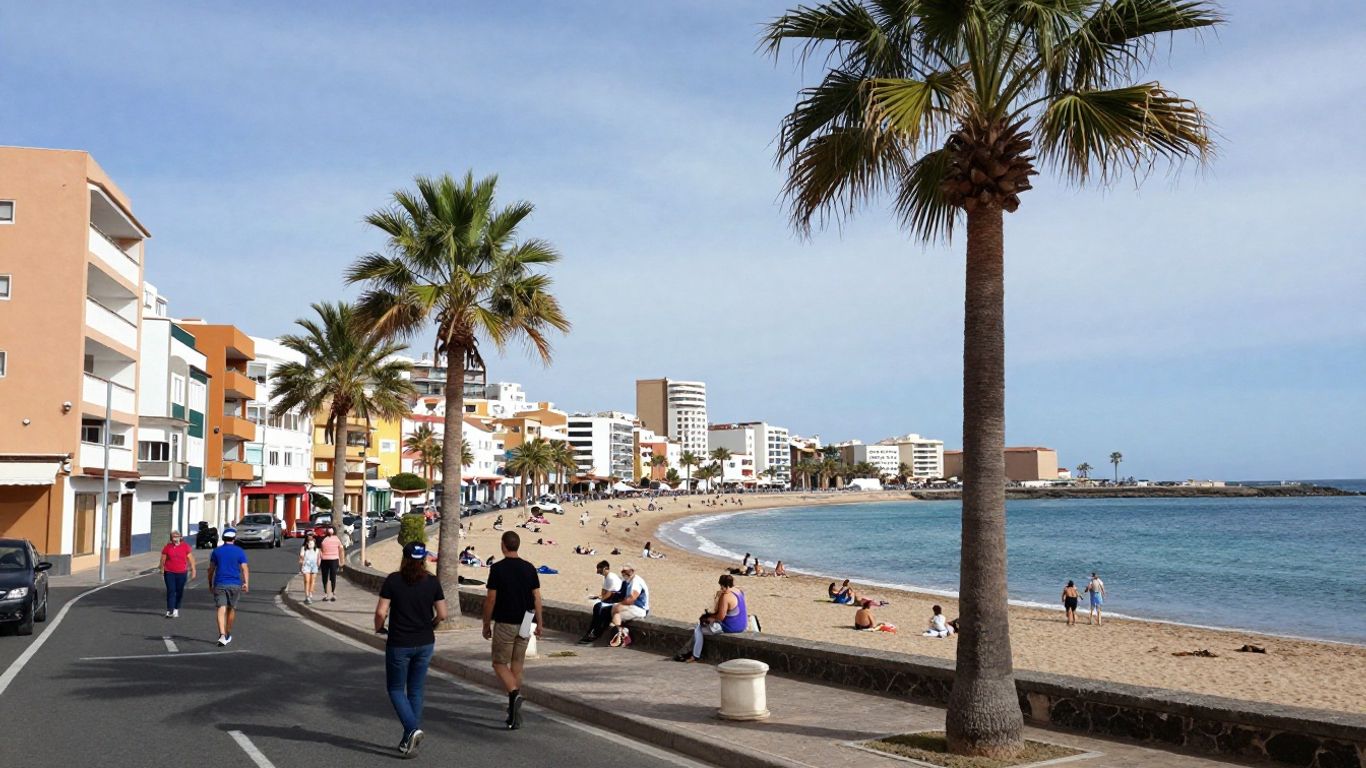 Las Palmas neighborhood streets beside beach
Las Canteras for beach access and convenience
Las Canteras is the natural choice if you want the shoreline within a few minutes of home. It has supermarkets, restaurants, cafés, pharmacies, and everyday services, so many errands can be done on foot. The trade-off is that popular streets can be lively, and sea-facing accommodation often commands a premium.
When viewing a listing, look beyond the photograph of the ocean. Ask which floor the apartment is on, whether windows face the promenade, and how well they close at night. A quieter side street a few blocks inland may offer nearly the same convenience with better working conditions.
Santa Catalina for coworking and nightlife
Santa Catalina suits people who like having restaurants, cafés, transport connections, and social options close by. It can be a practical base for meeting other remote workers, especially if you prefer to alternate between home and a shared workspace. Nightlife is part of its appeal, though it also means more evening activity on some streets.
If your workday ends late, inspect the immediate block rather than judging the whole district. A calm apartment can work well here, but a bedroom above a busy bar or beside a taxi route may make sleep more difficult than expected.
Vegueta and Triana for culture and walkability
Vegueta and Triana offer historic streets, independent shops, galleries, markets, and a strong sense of the city’s older identity. They are good choices for people who want cultural life and walkable errands rather than a holiday-apartment atmosphere. Some streets are wonderfully quiet in the daytime, while others carry sound between closely packed buildings.
Older homes can have charm, high ceilings, and balconies, but they may also lack elevators, modern insulation, or a purpose-built desk. Confirm the practical details before falling for the architecture.
Port and residential areas for longer stays
Areas around the port and quieter residential districts can make sense for a longer stay, particularly if you value space, local routines, or a lower nightly rate over immediate beach access. They may also provide larger kitchens and more comfortable living areas. The question is whether the saved rent outweighs extra commuting time and fewer spontaneous outings.
A useful test is to imagine an ordinary Tuesday rather than a sightseeing day. If the route to groceries, your workspace, and the beach feels realistic in poor weather or after a long meeting, the location may work well.
Finding reliable accommodation for remote work
A remote-work apartment needs to function as a small office, not merely look attractive in listing photos. The essentials are unglamorous: a stable connection, a chair you can use for several hours, enough light, and a sleeping area separated from work if possible. Accommodation is also where a home exchange can become especially practical, since a real home may offer a kitchen, workspace, and neighborhood routine rather than a compact tourist room.
What to check in a work-ready apartment
Start with the desk and chair, then inspect the electrical setup and natural light. A dining table may be adequate for occasional work, but it is less appealing for a full month if the chair has no support. Check whether the apartment has heating or cooling appropriate to the season, because mild weather does not mean every indoor space feels comfortable all day.
You should also confirm the basics that photos hide: a door that closes properly, a quiet bedroom, sufficient storage, and a place to take private calls. Small practical details matter when the apartment becomes both your home and workplace.
Comparing short-term rentals, coliving spaces, and home exchange
Short-term rentals offer convenience and a predictable booking process, while coliving can provide community and ready-made work areas. Home exchange takes a different route: you stay in a member’s home, often using credits earned by hosting or listing your own place. SwappaHome describes its model as homes with Wi-Fi and workspaces, with one credit representing one night; review the current terms before relying on any arrangement.
A home exchange may be particularly appealing for a stay of several weeks, but it requires clear communication and flexibility around dates. Compare options by looking at the whole experience rather than the headline nightly rate: kitchen access, workspace quality, location, cleaning expectations, and the amount of social contact you want.
How to confirm Wi-Fi speed and stability before booking
Ask the host for a recent speed test that shows download, upload, ping, and the date and location of the test. A fast result is useful, but it does not prove that the connection remains stable during busy periods. Ask whether the router is inside the apartment, whether other units share the connection, and whether the host has experienced outages.
If your work depends on video calls, request permission to test the connection soon after arrival. Keep a phone hotspot or local SIM ready as a fallback, and avoid scheduling your most sensitive meeting before you know how the apartment behaves in practice.
Questions to ask hosts about noise, desks, and utilities
A short message before booking can prevent a long list of surprises. Ask about construction nearby, street noise, neighbors, air conditioning, hot water, utility limits, and whether the desk shown in the photos is available for your entire stay. It is also sensible to clarify check-in arrangements and who to contact if the internet fails.
Keep the exchange friendly and specific. Hosts are more likely to give useful answers when they understand your working hours and the kind of calls you need to make.
Building a productive remote-work routine
Las Palmas makes it tempting to treat every day as a holiday, which is enjoyable briefly and exhausting over time. A workable routine gives you protected focus hours while leaving room for the island’s food, beaches, and changing scenery. The goal is not to reproduce an office perfectly, but to create enough structure that leisure feels genuinely free.
 Remote worker at desk overlooking Las Palmas
Setting up a comfortable workspace
Use the first day to set up rather than improvising for a month. Place the screen at a comfortable height, keep chargers within reach, and position the desk away from glare if the room receives strong afternoon sun. If the apartment lacks an office chair, a folded towel or cushion may help temporarily, but it is not a substitute for a proper setup during a long stay.
Keep work materials in one defined area. Closing the laptop and clearing the table at the end of the day creates a small but useful psychological boundary, especially in a studio apartment.
Using coworking spaces and work-friendly cafés
Coworking spaces can solve several problems at once: dependable desks, stronger meeting etiquette, backup connectivity, and easy introductions to other workers. Cafés are better for lighter tasks and a change of scenery, but not every table is suitable for a three-hour call. Check opening hours, power outlets, noise, and whether staff welcome longer stays.
The best arrangement may be a hybrid one. Use home for focused writing, coworking for meetings, and cafés for administrative work, then choose the location according to the task rather than working everywhere simply because you can.
Managing calls, time zones, and quiet hours
Cluster meetings where possible and leave uninterrupted blocks for work that requires concentration. Tell housemates or hosts when you need quiet, especially if your schedule overlaps with local meal times or evening activity. Headphones help, but they should not be your only plan if the apartment has thin walls or a lively street below.
A shared calendar should display the time zone clearly. That small habit prevents missed calls and makes it easier to protect evenings for rest.
Creating a schedule around the island’s lifestyle
A realistic week might begin with an early walk, continue with concentrated work before lunch, and reserve late afternoon for the beach or an errand. On another day, you might work from a coworking space and explore a different part of the city afterward. Gran Canaria’s broader landscape rewards leaving room for occasional day trips rather than filling every hour in advance.
Try setting two or three non-negotiable work blocks and keeping the rest flexible. This preserves the freedom that brought you to Las Palmas without allowing every sunny morning to derail a deadline.
Estimating your monthly digital nomad budget
A useful budget starts with the costs you cannot easily change, especially accommodation and flights, then adds the habits that shape daily spending. Las Palmas can work for several budgets, but the same city may feel affordable or expensive depending on whether you choose a central furnished apartment, cook regularly, and pay for a dedicated workspace. Treat online estimates as starting points, not guarantees.
Typical accommodation and home exchange costs
Accommodation is usually the largest variable. A private apartment in a highly requested area may cost much more than a room or a longer residential booking, while home exchange can reduce accommodation spending when the dates and available homes align. SwappaHome presents home exchange as a way to stay in real homes without money changing hands between members; confirm availability and current participation requirements directly.
Before comparing prices, decide whether you need a private office, a second bedroom, a balcony, or simply a reliable table. Those preferences can matter more than a small difference in nightly cost.
Groceries, restaurants, and everyday expenses
Cooking at home several times a week usually gives you more control over spending and makes a longer stay feel less like a series of restaurant visits. Local bakeries, cafés, markets, and casual restaurants can still fit comfortably into the routine if you track them. Set aside a separate amount for occasional social meals, since those are often the expenses people forget when building a strict budget.
The following framework helps separate fixed commitments from flexible choices:
| Monthly category | Main cost driver | Budgeting approach |
|---|---|---|
| Accommodation | Area, season, and length of stay | Secure this first and compare total costs |
| Food | Cooking habits and restaurant frequency | Set a weekly grocery target |
| Transport | Walking versus regular bus or car use | Estimate ordinary workday journeys |
| Coworking | Membership type and access level | Pay only for the days you need |
| Activities | Tours, sports, and weekend travel | Keep a separate leisure allowance |
Once these categories are separated, it becomes easier to see where a change will actually help. Cutting a few coffees may matter less than moving a little farther from the most expensive beachfront streets.
Transport, mobile data, and coworking fees
Daily transport costs depend on where you stay and how often you cross the city. Include local bus fares, occasional taxis, bike rental, or a car for island trips, along with a SIM or data plan. Coworking fees may be worthwhile if they prevent missed calls or make your apartment usable for deep work, but they should be judged against the quality of the workspace you already have.
Keep a small contingency for a replacement charger, extra data, or an unexpected transfer. These minor costs are easy to absorb when they are planned and irritating when they are not.
Ways to reduce costs during a longer stay
Longer stays can make it easier to negotiate dates, cook at home, and choose a neighborhood slightly away from the busiest visitor areas. Home exchange is another option worth investigating, particularly if you can host or have flexibility around your travel calendar. A month-long plan also spreads setup costs such as transport cards, groceries, and basic household purchases across more days.
Avoid reducing costs by choosing a home that undermines your work. A cheaper apartment with unstable internet or constant noise may lead to coworking fees, missed hours, and a less satisfying stay.
Getting around and enjoying life outside work
The city is compact enough for many daily errands on foot, while buses connect the main districts and make longer crossings straightforward. Gran Canaria itself is more varied than the capital, with mountains, smaller towns, and coastal landscapes that feel far removed from Las Palmas. Build leisure around your energy rather than trying to see the whole island every weekend.
Walking, buses, bikes, and car rentals
Walking is often the simplest option within Las Canteras, Santa Catalina, Vegueta, and Triana. Buses are useful for longer urban journeys, and bikes can work well along flatter coastal routes if you are comfortable with traffic and weather. A rental car becomes more useful for mountain roads and remote beaches, though it may be unnecessary if you mainly work in the city.
Check the return conditions, insurance, and parking situation before renting. A car that is convenient for one weekend can become an avoidable expense if your apartment has no parking and your weekday life is walkable.
Beaches, surfing, hiking, and weekend trips
Las Canteras is easy for quick swims and walks, while other coastal areas offer different conditions for surfing and quieter time by the water. Inland, Gran Canaria has dramatic changes in elevation and scenery, so a hike can feel like a complete change of setting. Plan longer outings around weather, transport, and your Monday workload.
A Friday afternoon departure can be tempting, but a shorter trip with a relaxed return is often better than spending Sunday night dealing with logistics. Leave buffer time when roads or mountain weather may complicate the journey.
Local markets, restaurants, and cultural experiences
Markets are a good way to learn the city through ingredients, conversation, and ordinary shopping rather than sightseeing alone. Try local dishes, visit museums or historic streets, and attend cultural events when the schedule allows. The experience becomes richer when you return to places more than once and begin to recognize the rhythm of a neighborhood.
SwappaHome’s Spain home exchange guide can also provide a broader starting point for thinking about longer local stays in the country, even when your base is on Gran Canaria. Use it for inspiration, then verify Las Palmas details locally.
Balancing tourism with respectful neighborhood living
A temporary stay still affects the people who live around you. Keep noise down at night, follow building rules, dispose of rubbish correctly, and avoid treating shared spaces as extensions of a holiday rental. Learning basic greetings and being patient with local routines usually goes further than trying to behave like a resident immediately.
Traveling slowly helps with this balance. When you shop locally, return to the same businesses, and give yourself time to understand a street, the city feels less like a backdrop and more like a place you are temporarily sharing.
Planning the practical details of your stay
Good preparation removes much of the stress from a remote-work trip. Rules for entry, tax, healthcare, and remote employment can depend on your nationality and personal situation, so generic travel advice is not a substitute for official guidance. Make a short checklist several weeks before departure, then revisit it shortly before you fly.
Visa and entry considerations for remote workers
Check the entry conditions that apply to your passport, the permitted length of stay, and whether your work arrangement requires a specific authorization. A tourist entry is not automatically the right basis for every remote-work situation. If you plan to remain for an extended period, obtain current information from Spanish and Canary Islands authorities or a qualified immigration professional.
Keep copies of your passport, accommodation details, insurance documents, and any approval or application records. Digital copies are useful, but an offline copy can help if your phone or connection is unavailable.
Healthcare, travel insurance, and emergency planning
Arrange health coverage that matches the length and activities of your trip. European visitors should check how their existing public healthcare arrangements apply, while everyone should understand exclusions for surfing, hiking, rental cars, or other planned activities. Travel insurance can also address cancellations, baggage, and emergency transport.
Save local emergency numbers, your insurer’s assistance line, and the address of your accommodation. Share the itinerary with someone you trust, particularly if you plan solo hikes in unfamiliar terrain.
Mobile SIM cards and backup internet options
A local SIM or eSIM can provide affordable data and a practical fallback when apartment Wi-Fi fails. Check whether your phone is unlocked, whether your plan supports roaming in Spain, and how much data video calls consume. A charged power bank is useful during long days away from home.
Do not wait for an outage to decide what to do. Keep hotspot instructions, meeting links, and essential files available offline, and identify a nearby café or coworking space where you could work for a few hours.
Best seasons and how long to stay in Las Palmas
Las Palmas works for different reasons across the calendar. Winter can appeal to people leaving colder parts of Europe, while spring and autumn may offer a comfortable balance of weather and demand. Summer can be lively and warm, though the best time depends on your tolerance for heat, wind, crowds, and higher accommodation prices.
A stay of two to four weeks is long enough to settle into a routine without requiring a major life rearrangement. If you can stay longer, the city’s neighborhoods and the island’s wider landscapes tend to reveal more after the initial holiday feeling fades.
Conclusion
Las Palmas is a strong base for remote workers who want European working hours, outdoor life, and a city that remains livable beyond its visitor attractions. Choose the neighborhood carefully, verify the home’s working conditions, budget honestly, and leave room for local routines; those choices will shape the experience more than any single beach view.
Frequently Asked Questions
Is Las Palmas a good destination for digital nomads?
Yes, it can suit remote workers who value mild weather, beach access, European time zones, city services, and an international community. The experience depends on selecting accommodation with dependable internet and a suitable workspace.
Which Las Palmas neighborhood is best for remote work?
Las Canteras is convenient for beach access, Santa Catalina is social and well connected, and Vegueta and Triana offer culture and walkability. Quieter residential areas may be better for longer stays or people who need more space and less evening noise.
How much does a month in Las Palmas cost?
There is no single reliable figure because accommodation, season, dining habits, transport, and activities vary widely. Build a personal range around housing first, then add food, connectivity, workspace, transport, and leisure.
Is the internet reliable in Las Palmas?
Many apartments, cafés, and coworking spaces offer suitable connections, but quality varies by building and provider. Ask for a recent speed test, confirm stability during calls, and keep mobile data available as a backup.
Can remote workers stay in Las Palmas without a digital nomad visa?
Entry and work permissions depend on nationality, intended length of stay, employment arrangement, and current Spanish rules. Check official guidance before traveling rather than assuming a standard tourist entry covers your situation.
Do I need a car in Las Palmas?
Not usually for daily life in the city, where walking and buses cover many common journeys. A car can be useful for exploring mountain areas, remote beaches, and smaller towns outside the capital.
What is the ideal length of stay in Las Palmas?
Two to four weeks gives many visitors enough time to settle into work and explore beyond the central districts. Longer stays can offer better value and a deeper local routine, provided your entry status and accommodation arrangements allow it.

Published by
SwappaHome
SwappaHome Editorial Team
Home Exchange & Slow Travel Editorial
The SwappaHome Editorial Team brings together travel research, home-exchange community insights, and platform data to produce practical guides for first-time and experienced home swappers. Every article cites real platforms, current market rates, and verifiable city-level facts so readers can make informed decisions without guessing.
Ready to try home swapping?
Join SwappaHome and start traveling by exchanging homes. Get 7 free credits when you sign up!