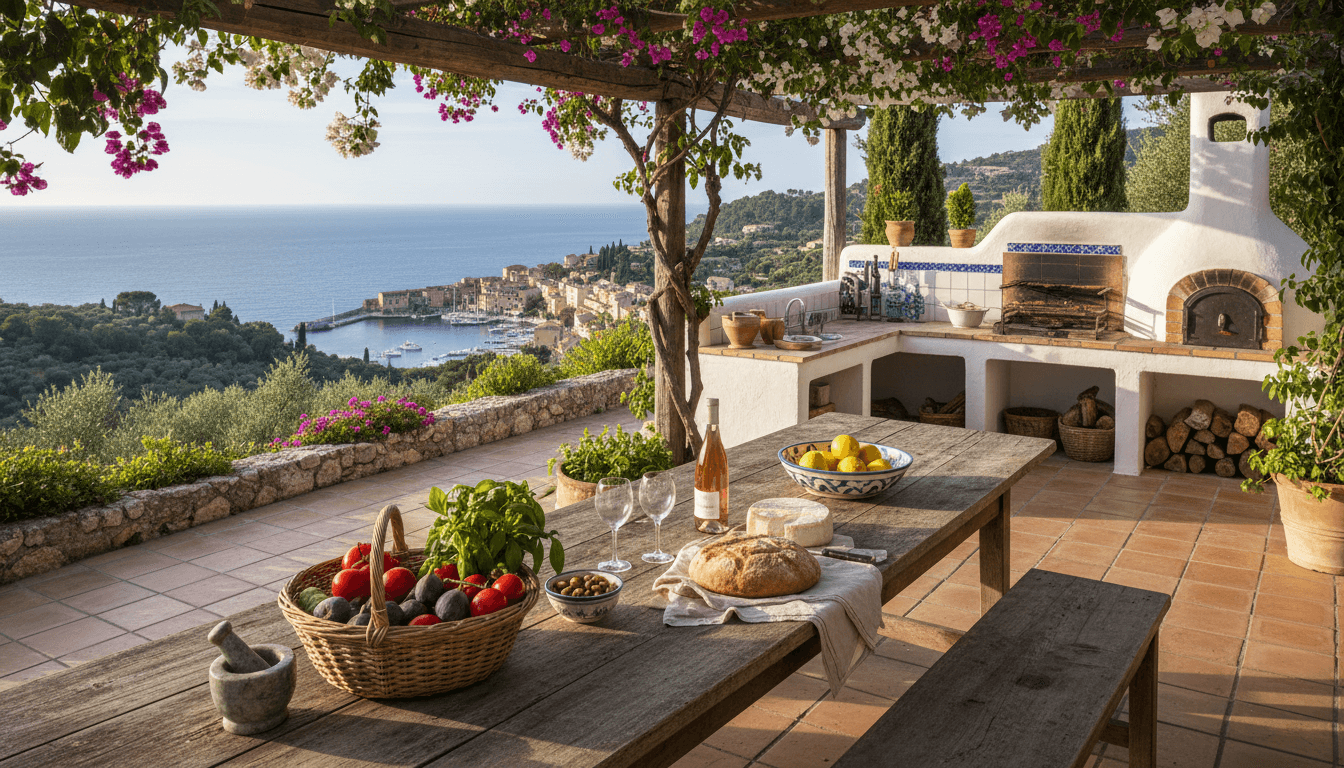
French Riviera Food Scene: Your Complete Guide to Culinary Experiences During a Home Exchange
Maya Chen
Travel Writer & Home Exchange Expert
Discover the French Riviera food scene like a local during your home exchange—from morning markets to Michelin stars, with insider tips only residents know.
The smell hit me before I even opened my eyes. Butter, yeast, and something faintly almond-scented drifting through the open window of my borrowed apartment in Nice. My host had left a note: "Boulangerie Maison Auer, two blocks left. Get there before 8am or the croissants are gone."
That first morning set the tone for two weeks of eating my way through the French Riviera food scene—and honestly? I've never fully recovered. Three years and countless home exchanges later, I keep coming back to this stretch of coastline not for the beaches (though those are nice), but for what might be the most underrated culinary destination in Europe.
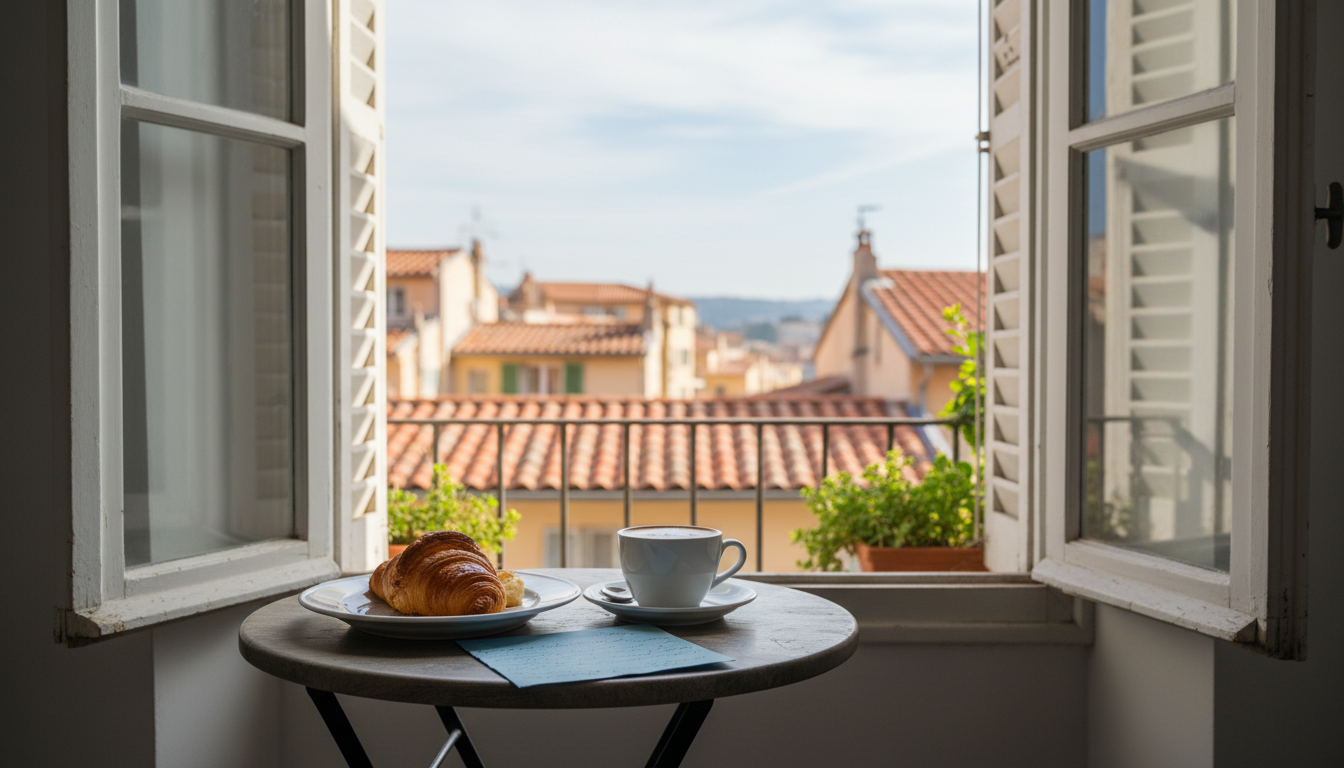 Early morning light streaming through shuttered windows onto a small bistro table with a half-eaten
So here's what I've learned about experiencing the French Riviera food scene during a home exchange—the kind of knowledge you only get from living in someone's actual kitchen, shopping at their neighborhood markets, and following their handwritten restaurant recommendations.
Why Home Exchange Transforms Your French Riviera Food Experience
I've done the Côte d'Azur both ways. Once, years ago, from a hotel in Cannes where the minibar cost more than my flight. And now, repeatedly, through home exchanges that have landed me in a fisherman's cottage in Villefranche-sur-Mer, a modern apartment overlooking Nice's Cours Saleya market, and a villa in Mougins where my host left her grandmother's recipe for pissaladière tucked inside a cookbook.
The difference isn't just about money—though staying in hotels along this coast will absolutely drain your bank account. It's about access.
When you're staying in someone's home, you inherit their neighborhood. Their boulangerie. Their poissonnier who sets aside the good stuff for regulars. Their secret restaurant that doesn't appear on any English-language website.
My host in Antibes, a retired chef named Gérard, left me a hand-drawn map with his personal food route. "Tuesday and Friday mornings only," he'd written next to the fish market. "Ask for Jean-Pierre. Tell him you're staying at my place." That introduction got me langoustines that weren't available to anyone else that morning. You simply cannot buy that kind of access.
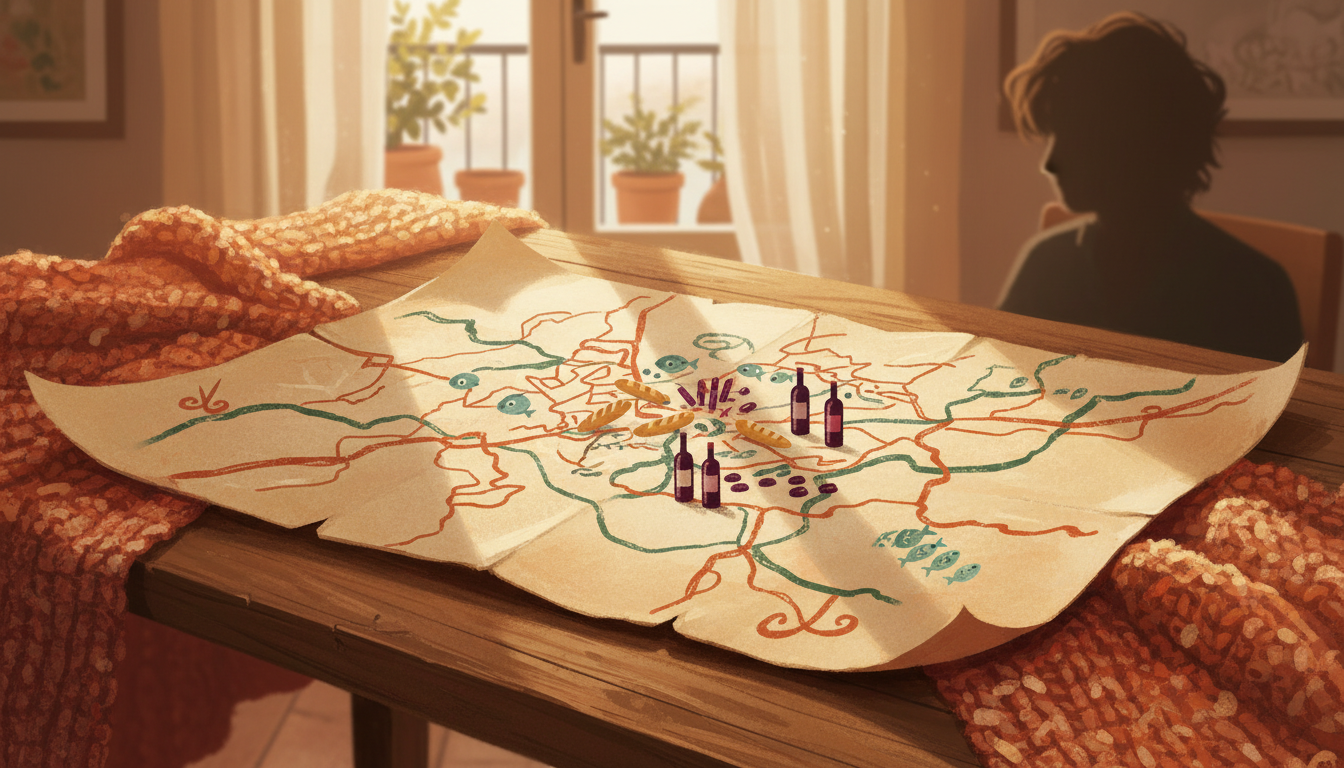 A hand-drawn map on aged paper showing streets of Antibes with annotations in French, small illustra
Real talk: the French Riviera food scene rewards locals and punishes tourists—not out of snobbery, exactly, but because the best stuff is genuinely limited. The fisherman only caught so many sea urchins this morning. The fromagerie only got one wheel of that aged Banon. Home exchange puts you on the right side of that equation.
The Morning Markets: Where French Riviera Culinary Life Begins
If you take nothing else from this guide, take this: your French Riviera food experience lives or dies by how you approach the morning markets.
And I mean morning. By 11am, the good stuff is gone and you're left with what the locals rejected.
Cours Saleya in Nice is the famous one, and yes, it's touristy—but it's touristy because it's genuinely spectacular. The trick is arriving by 7:30am, before the cruise ship crowds descend. At that hour, you'll find yourself shoulder-to-shoulder with Nice's grandmothers, which is exactly where you want to be. Watch what they buy. Follow their lead.
During my last home exchange in Nice's Vieux Nice neighborhood, I developed a Cours Saleya routine that I'd repeat in a heartbeat. First stop: the socca stand at the market's eastern edge. Socca is Nice's signature street food—a chickpea flour pancake cooked in massive copper pans over wood fire, served in paper-wrapped wedges dusted with black pepper. It costs about €3 ($3.25) and it's best eaten immediately, standing up, burning your fingers slightly. This is non-negotiable.
From there, I'd work my way through the produce vendors. The tomatoes here don't look like American tomatoes—they're misshapen, sometimes cracked, occasionally ugly. They also taste like tomatoes actually tasted before industrial agriculture ruined everything. Budget around €15-20 ($16-22) for enough produce to last several days.
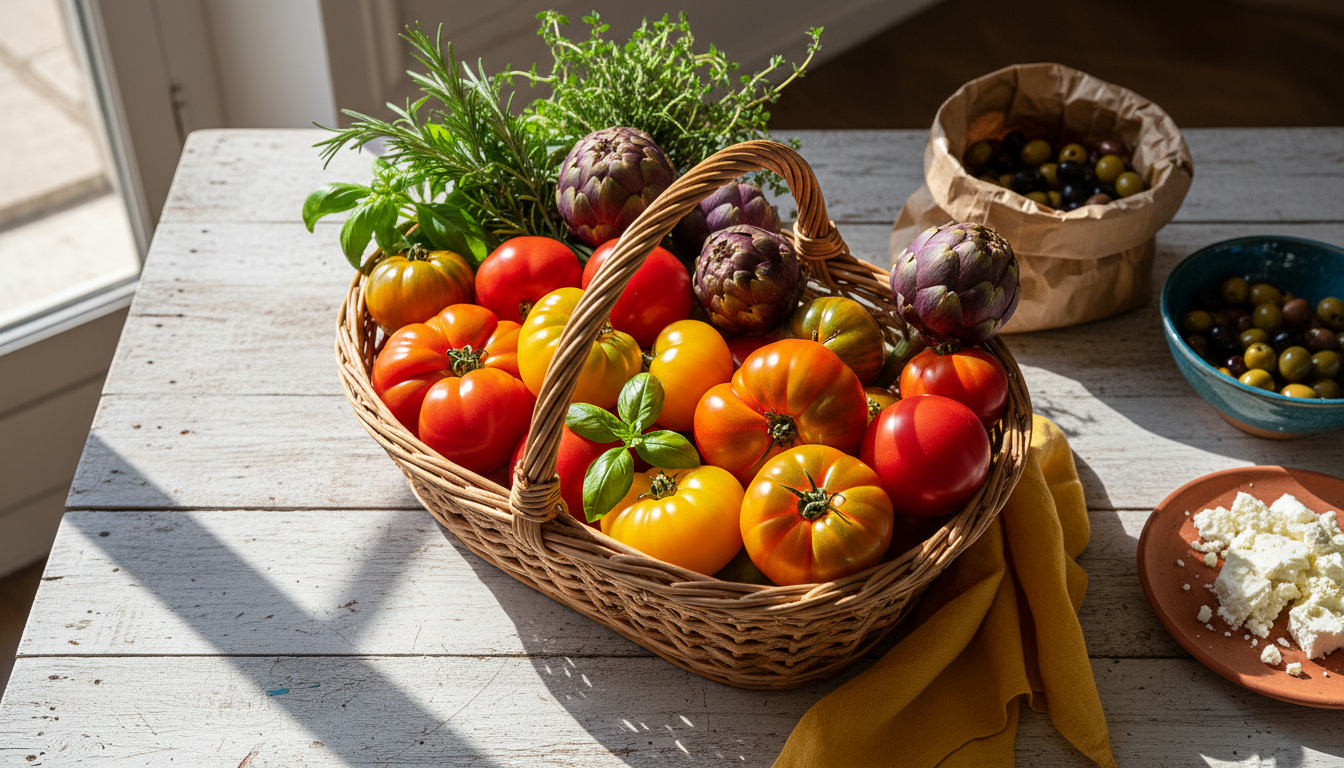 Overhead shot of a woven market basket filled with irregular heirloom tomatoes in various colors, pu
But here's the insider knowledge that home exchange provides: Cours Saleya isn't even the best market on the Riviera.
That honor goes to the Marché Forville in Cannes—a covered market that the film festival crowd never discovers because they're too busy being photographed on La Croisette. Marché Forville is where Cannes' restaurant chefs shop, which tells you everything. The seafood section alone is worth the trip: towers of violet-black sea urchins, still-twitching langoustines, fish so fresh they're practically swimming. My host in Cannes had left detailed instructions for navigating the market, including which vendors to trust and which to avoid. "The cheese woman in the corner by the back door," she'd written. "Nowhere else."
Other markets worth your morning:
Antibes' Marché Provençal (Cours Masséna) is smaller than Cours Saleya but more manageable—exceptional olive oils here, so do a tasting at one of the specialty stands. The lavender honey is the real thing, not the tourist stuff.
Menton's Marché des Halles sits near the Italian border, and this town has the best lemons in France (they have their own AOC designation). The market reflects that citrus obsession—lemon everything. The limoncello made by the elderly woman near the entrance? Dangerously good.
Villefranche-sur-Mer's Saturday Market is tiny, almost hidden, and absolutely perfect. During a home exchange here, I'd walk down from my host's hillside cottage every Saturday, buy everything I needed for the weekend, and spend under €30 ($33).
Cooking in Your Home Exchange Kitchen: Essential French Riviera Ingredients
One of the greatest luxuries of home exchange is having a real kitchen. Not a hotel room with a mini-fridge and a microwave—an actual kitchen with actual equipment. And on the French Riviera, that kitchen becomes your portal to understanding the local food culture.
The cuisine of this region—sometimes called Niçoise cooking, sometimes Provençal, always delicious—is built on a handful of ingredients that you'll find in every market, every épicerie, every host's pantry.
Olive Oil is the foundation of everything. The Riviera produces its own, primarily from the Cailletier olive (also called the Nice olive). It's fruitier and less peppery than Tuscan oil, with an almost buttery quality. My host in Nice had three different olive oils in her kitchen, each for different purposes—one for cooking, one for finishing, one specifically for salads. A good bottle runs €15-25 ($16-27) and will transform your cooking.
Olives—those same Cailletier olives, cured—are what you'll find in every salade niçoise and pissaladière. They're small, dark, and intensely flavored. At the market, you'll see them sold from massive wooden barrels, often alongside olives marinated with herbs, garlic, or citrus. Buy more than you think you need.
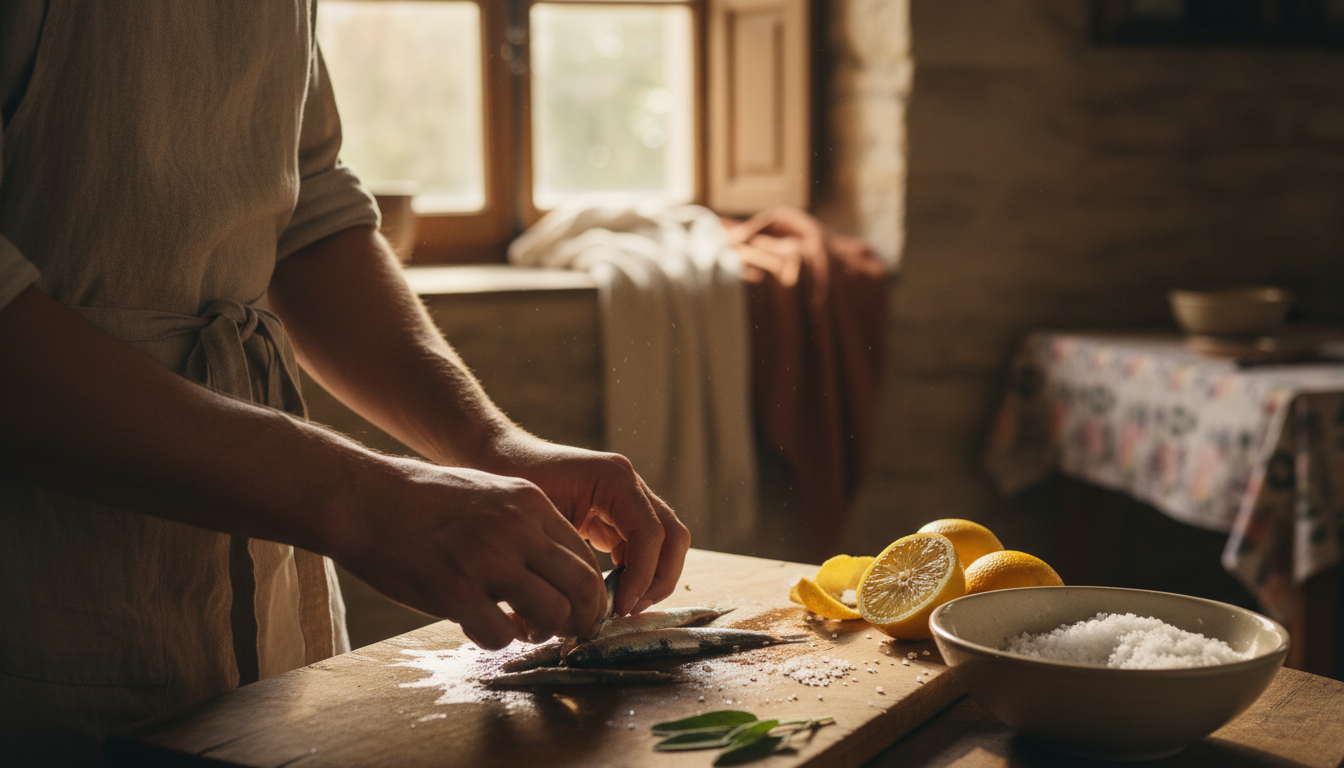
Anchovies are a revelation if you've only had the tinned kind. During anchovy season (roughly April through September), you'll find them at fish markets for around €8-12 ($9-13) per kilo. They're traditionally eaten fried, but also appear in tapenade, pissaladière, and the legendary pan bagnat sandwich.
 Close-up of hands preparing fresh anchovies on a worn wooden cutting board, a bowl of coarse sea sal
Tomatoes deserve emphasis. Riviera tomatoes, especially the Coeur de Boeuf variety, are worth building entire meals around. During my Antibes home exchange, I ate some variation of tomato salad almost every day—just tomatoes, olive oil, flaky salt, and maybe some fresh basil. It never got old.
Herbs grow everywhere here—basil on home exchange balconies, rosemary and thyme wild on the hillsides. Fresh herbs cost almost nothing at the markets and make everything better.
The dishes you should try making in your home exchange kitchen:
Salade Niçoise—the real version, not the bastardized American interpretation. No lettuce (traditionally), no cooked vegetables. Just tomatoes, raw vegetables (peppers, radishes, spring onions, fava beans), hard-boiled eggs, anchovies, olives, and olive oil. Some versions add tuna, but the purist Nice version doesn't.
Pissaladière is Nice's answer to pizza—a thick, bread-like crust topped with caramelized onions, anchovies, and olives. My host in Mougins left her grandmother's recipe, which involved cooking the onions for nearly two hours until they were sweet and jammy. The result was transcendent.
Pan Bagnat means "bathed bread"—a round sandwich soaked in olive oil, filled with salade niçoise ingredients. Perfect for beach picnics. The bread should be slightly soggy; that's the point.
Socca—if you're feeling ambitious, you can make this at home, though it requires a very hot oven and a cast-iron pan. Most home exchange kitchens won't have the right equipment, so stick to the market version.
Restaurant Guide: From Neighborhood Bistros to Michelin Stars
The French Riviera food scene spans everything from €3 socca to €300 tasting menus. Home exchange gives you the flexibility to experience both—you save so much on accommodation that you can actually afford to splurge on meals.
But here's my honest advice: the best eating on the Riviera isn't in the Michelin-starred restaurants. It's in the neighborhood places that don't have English menus, where the owner's grandmother is still making the desserts, where the wine list is a chalkboard and the daily special is whatever came off the boat that morning.
Nice: Where to Eat Like a Local
Chez Palmyre (Vieux Nice) has been serving the same menu since 1932. Literally the same menu. You don't choose; you eat what Madame makes that day. It's usually some combination of daube (beef stew), stuffed vegetables, and a dessert that might be tarte aux pommes or might be chocolate mousse. Cash only, no reservations, around €25 ($27) for a complete meal. Get there when they open or you won't get a table.
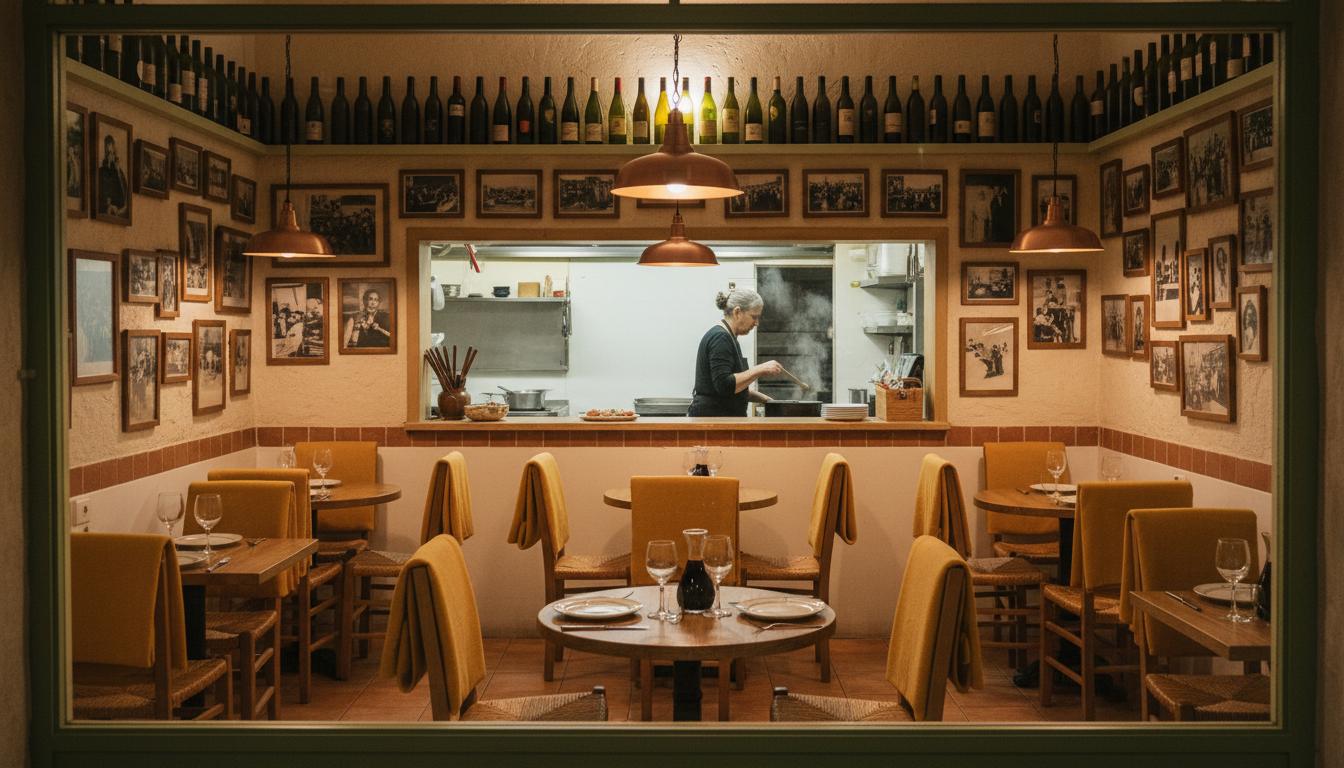
La Merenda (Vieux Nice) has no phone, no credit cards, no reservations. Just exceptional Niçoise cooking in a space the size of a large closet. The petits farcis (stuffed vegetables) are legendary. Expect to spend €30-40 ($33-44) and expect to wait.
 Interior of a tiny, warmly-lit restaurant with maybe six tables, walls covered in old photographs an
Olive et Artichaut (Port area) offers a more modern take on Niçoise cuisine, with a young chef who trained at some fancy places but came home to cook the food he grew up eating. The lunch menu is a steal at €22 ($24). Dinner is pricier but worth it for the bouillabaisse.
Antibes and the Cap
Le Safranier (Old Antibes) is named after the neighborhood it's in—one of the most picturesque in all of Provence. The terrace is tiny, the menu is short, and everything is perfect. The fish soup with rouille and croutons is the best I've had outside of Marseille. Around €35-45 ($38-49) per person.
National (Place Nationale) is where Antibes locals go for a proper meal. Not trendy, not trying to be anything other than what it is: a good neighborhood restaurant with excellent seafood and reasonable prices. The whole grilled fish, whatever's fresh that day, is always the right choice. €40-50 ($44-55).
Cannes: Beyond the Croisette
Avoid the restaurants on La Croisette itself—they're overpriced and mediocre, designed to separate film festival visitors from their money. Head to Le Suquet instead, the old town on the hill above the harbor.
Aux Bons Enfants (Le Suquet) has no menu, no credit cards, no nonsense. The chef shops at Marché Forville every morning and cooks whatever looks good. You'll spend around €30 ($33) and you'll eat better than people paying three times that on the waterfront.
Mantel (near the train station) is a Michelin-starred restaurant that somehow remains reasonably priced—the lunch menu is €45 ($49) for multiple courses of genuinely creative cooking. This is where to splurge if you want the fine dining experience without the fine dining attitude.
Worth the Drive
La Colombe d'Or (Saint-Paul-de-Vence) is the famous one—the restaurant where Picasso, Matisse, and Chagall used to pay for meals with paintings, which still hang on the walls. Yes, it's touristy. Yes, it's expensive (€80-100/$87-109 per person). Yes, you should go anyway, at least once. The food is good, not transcendent, but eating lunch on that terrace surrounded by actual Mirós is an experience you won't forget.
La Bastide Saint-Antoine (Grasse)—if you're going to do one truly fancy meal, make it this one. Jacques Chibois' restaurant is set in an 18th-century bastide surrounded by olive groves. The tasting menu (€180/$196) is a journey through Provençal cooking elevated to high art. My host in Mougins took me here for my birthday during one exchange, and I'm still thinking about the lamb.
Wine and Aperitivo Culture on the French Riviera
The French Riviera straddles two wine regions: Provence to the west and the tiny, often overlooked wines of Bellet to the east. Both deserve your attention.
Provence rosé needs no introduction—it's become globally famous, sometimes to its detriment (a lot of mediocre rosé now trades on the Provence name). But the good stuff, from appellations like Bandol and Côtes de Provence, is genuinely excellent. Look for bottles in the €12-20 ($13-22) range at wine shops; anything cheaper is probably industrial.
Bellet is the secret, though.
This tiny appellation—barely 50 hectares—produces red, white, and rosé wines exclusively within the hills above Nice. The white, made from the Rolle grape, is particularly special: mineral, floral, and perfect with seafood. You'll rarely find Bellet outside the region, so drink it while you're here. Bottles run €20-35 ($22-38).
The aperitivo hour is sacred on the Riviera, borrowed from nearby Italy but given a French twist. Starting around 6pm, café terraces fill with people nursing glasses of rosé or pastis (the anise-flavored spirit that's practically mandatory in this part of France). In Nice, the Place Garibaldi is aperitivo central—grab a table at Café de Turin and order a dozen oysters with a glass of Bellet white. In Antibes, the Place Nationale fills up around sunset. In Cannes, head to Le Suquet and find a spot overlooking the harbor.
Pastis deserves special mention. If you've never had it, prepare yourself: it's intense, anise-flavored, and served with a carafe of cold water that you add yourself, turning the clear liquid cloudy and opalescent. It's an acquired taste, but once acquired, it becomes essential to the Riviera experience. A glass costs €4-6 ($4.35-6.50) at most cafés.
Practical Tips for French Riviera Food Experiences During Home Exchange
After multiple home exchanges along this coast, I've accumulated some hard-won wisdom:
Timing matters more than you think. The French eat lunch between noon and 2pm, dinner between 8pm and 10pm. Outside those windows, your options shrink dramatically. Markets close by 1pm, often earlier. Boulangeries sell out of the best bread by mid-morning. Plan your day around food, not the other way around.
Learn five French phrases. You don't need to be fluent, but "Bonjour," "S'il vous plaît," "Merci," "L'addition" (the check), and "C'est délicieux" will get you far. Starting any interaction with "Bonjour" is non-negotiable—skip it and you'll get worse service.
Bring a market bag. Plastic bags are banned in France, and even paper bags are becoming rare. Your home exchange host will probably have reusable bags—use them. A proper French market basket (panier) makes an excellent souvenir and costs €15-25 ($16-27) at most markets.
Cash is still king at markets. Larger restaurants take cards, but market vendors, small bakeries, and neighborhood cafés often don't. Keep €50-100 in cash on you at all times.
Ask your host for recommendations. This is the home exchange advantage—use it. Before your stay, message your host asking for their favorite restaurants, their preferred market vendors, their go-to boulangerie. Most hosts love sharing this information. Some, like my host in Antibes, will leave detailed written guides that become the highlight of your trip.
The coast is expensive; the hills are not. If you're watching your budget, venture inland. Towns like Vence, Grasse, and Mougins have excellent restaurants at prices 30-40% lower than their coastal counterparts. Plus, you'll escape the crowds.
Planning Your French Riviera Food-Focused Home Exchange
If the French Riviera food scene is your priority—and after reading this, I hope it is—here's how I'd structure a home exchange trip:
Duration: Two weeks minimum. One week isn't enough to develop routines, find your favorite vendors, and truly settle into the rhythm of local food life. Two weeks lets you make mistakes, discover gems, and eat your way through the region properly.
Location: For first-timers, Nice is ideal. It has the best market access, the most restaurant options, and easy day-trip potential to everywhere else. For repeat visitors, consider Antibes (more relaxed, excellent market) or Villefranche-sur-Mer (stunning setting, quieter vibe).
Season: May-June or September-October. July and August are brutally crowded and hot. The shoulder seasons offer perfect weather, fewer tourists, and better market selection. Spring brings artichokes, fava beans, and strawberries; fall brings figs, grapes, and wild mushrooms.
On SwappaHome, I've found the French Riviera to be one of the easier regions for finding exchanges—the French embrace the home swap concept, and many Riviera residents are eager to explore other destinations. Start your search early (3-4 months ahead for peak season) and be flexible on exact dates.
The credits you save on accommodation—easily €150-300 ($163-327) per night for comparable quality to what you'd pay at a hotel—can fund some truly memorable meals. That's the math that makes home exchange so powerful for food-focused travel: you're not just saving money, you're redirecting it toward experiences that actually matter.
I'm sitting on another borrowed terrace as I write this, watching the sun drop toward the Mediterranean, a glass of Bellet rosé sweating in the evening heat. Tomorrow I'll wake up early, walk to the market, buy whatever looks good, and figure out dinner from there. It's a simple rhythm, but it's one that the French Riviera rewards like nowhere else.
The food here isn't trying to impress you. It's not avant-garde or Instagram-ready or designed for tourists. It's just honest cooking built on extraordinary ingredients, prepared the same way it's been prepared for generations. Home exchange lets you tap into that tradition—not as a visitor, but as a temporary local.
Your borrowed kitchen is waiting. Your host's favorite boulangerie is two blocks away. The market opens at 7am.
What are you going to cook?
Frequently Asked Questions
What is the best time to visit the French Riviera for food experiences?
May-June and September-October are your sweet spots. The weather's perfect, the crowds thin out, and seasonal produce is at its peak—spring means artichokes and strawberries, fall brings figs and wild mushrooms. Skip July-August unless you enjoy fighting for market space and finding your favorite spots shuttered for vacation.
How much should I budget for food on the French Riviera?
Figure €50-80 ($55-87) per person daily if you're mixing market shopping, casual lunches, and one nice dinner. Market ingredients for home cooking run €15-25 ($16-27) daily, neighborhood bistros €25-45 ($27-49), and upscale restaurants €80-150 ($87-163). Home exchange frees up serious cash for better dining—that's the whole point.
Which French Riviera market is best for food lovers?
Marché Forville in Cannes is where the chefs shop, which tells you everything you need to know. But for atmosphere and accessibility, Nice's Cours Saleya is hard to beat—just get there before 8am. Antibes' Marché Provençal hits that sweet spot between quality and manageable size, with exceptional olive oils and local specialties.
Is it easy to find vegetarian food on the French Riviera?
Absolutely. Traditional Niçoise cuisine is naturally vegetable-forward: ratatouille, socca (that chickpea pancake I can't stop talking about), pissaladière (request it without anchovies), and countless fresh salads. The markets overflow with exceptional produce, making home cooking in your exchange kitchen particularly rewarding if you don't eat meat.
What traditional French Riviera dishes should I try?
Start with socca (€3, non-negotiable), then work your way through authentic salade niçoise (no lettuce, raw vegetables, anchovies), pissaladière (caramelized onion tart), pan bagnat (that gloriously soggy olive oil sandwich), and petits farcis (stuffed vegetables). Seafood lovers: bouillabaisse and whatever grilled fish came off the boat that morning.
40+
Swaps
25
Countries
7
Years
About Maya Chen
Travel Writer & Home Exchange Expert
Maya is a travel writer with over 7 years of experience in the home swapping world. Originally from Vancouver and now based in San Francisco, she has completed more than 40 home exchanges across 25 countries. Her passion for "slow" and authentic travel led her to discover that true luxury lies in living like a local, not a tourist.
Ready to try home swapping?
Join SwappaHome and start traveling by exchanging homes. Get 10 free credits when you sign up!
Related articles
Lyon Home Exchange: Your Complete Guide to France's Hidden Gem for Home Swapping
Discover why Lyon home exchange is booming among savvy travelers. From Croix-Rousse to Presqu'île, find the best neighborhoods and insider tips for your swap.

Zurich Bucket List: 47 Unforgettable Experiences to Enjoy During Your Home Swap
Discover the ultimate Zurich bucket list for home swappers—from secret swimming spots to fondue rituals locals actually do. Save thousands while living like a true Zürcher.
Dublin Home Exchange Utilities Guide: WiFi, Heating & Everything Your Guests Need
Master Dublin home exchange utilities—from dodgy WiFi fixes to heating quirks. Practical tips from 7 years of swapping homes across Ireland.