Getting Around Marseille: Complete Transport Guide for Home Swap Travelers

SwappaHome Editorial Team
Home Exchange & Slow Travel Editorial
Master Marseille transport like a local during your home swap. Metro, buses, ferries, and insider tips for navigating France's oldest city without the tourist traps.
The first time I stepped off the train at Gare Saint-Charles, I made the classic mistake of immediately hailing a taxi. Forty-five euros later—for what turned out to be a fifteen-minute ride to my home swap in Le Panier—I learned my first lesson about getting around Marseille: this city rewards those who figure out its transport system.
Marseille isn't Paris. It doesn't have that neat, color-coded metro map that even jet-lagged tourists can decode in minutes. But here's what I've discovered after three separate home swaps in this gloriously chaotic Mediterranean port city: once you crack Marseille's transport code, you'll move through it like you've lived here for years.
And honestly? The slightly scrappy, real-world feel of navigating this city is part of what makes it so much more interesting than the polished tourist circuits of Nice or Cannes.
 Sweeping view from the top of Gare Saint-Charles grand staircase, looking down over Marseilles rooft
Why Marseille Transport Feels Different (And Why That's Good)
I'll be straight with you—Marseille's public transport can feel intimidating at first. The city sprawls across hills, coastline, and urban neighborhoods that each have their own personality. The Vieux-Port area feels almost walkable, then suddenly you're trying to get to the Calanques and realize you're dealing with a completely different beast.
But here's the thing. Marseille's transport system, run by RTM (Régie des Transports Métropolitains), is actually comprehensive and affordable. It's just not designed for tourists who want to hop between Instagram spots. It's designed for the 870,000 people who actually live here and need to get to work, school, and the beach.
During my last home swap in the Cours Julien neighborhood, I spent my first full day just riding the metro and buses, getting deliberately lost. By day two? I felt like I owned the place. That's the Marseille transport learning curve—steep but short.
The Metro: Your Backbone for Getting Around Marseille
Marseille's metro system has just two lines. Two! Coming from cities with sprawling subway networks, this might seem limiting. But these two lines hit most of the spots you'll actually want to visit during a home swap.
Line 1 (Blue) runs roughly east-west, connecting La Rose in the northeast to La Fourragère in the southeast, passing through the city center. Key stops include Vieux-Port, Castellane, and Saint-Charles (the main train station). Line 2 (Red) runs north-south, from Bougainville in the north to Sainte-Marguerite-Dromel in the south. This line hits Noailles (the incredible market area), Notre-Dame du Mont (near Cours Julien), and connects to Line 1 at Saint-Charles and Castellane.
The metro runs from about 5:00 AM to 12:30 AM on weekdays, with slightly later service on weekends. Trains come every 4-7 minutes during peak hours, stretching to 10-12 minutes late at night.
 Inside a Marseille metro car, showing the clean blue seats and a mix of commutersa woman with a mark
A single metro ticket costs €2.00 (about $2.15 USD), but nobody who's staying more than a day should buy singles. The 24-hour pass costs €5.40 ($5.80 USD) and covers unlimited metro, bus, and tram rides. For a week-long home swap, the 7-day pass at €15.00 ($16.15 USD) is frankly a steal. You can buy these at any metro station from the machines (they have English language options) or at RTM kiosks.
Pro tip from my last swap: the RTM app lets you buy tickets on your phone. No fumbling for coins, no paper tickets to lose. Just scan your phone at the turnstile. I genuinely don't know why more tourists don't use this.
Marseille Buses: Where the Real City Reveals Itself
The bus network is where Marseille transport gets interesting—and where most visitors give up too quickly.
Don't be most visitors.
Marseille has over 80 bus lines crisscrossing the city, reaching neighborhoods the metro can't touch. And when you're doing a home swap, you're probably not staying in the tourist center. You might be in Endoume, or Mazargues, or up in the 8th arrondissement with those incredible sea views. Buses are how you'll actually live here.
Bus 83 is the legendary coastal route. It runs from the Vieux-Port along the Corniche Kennedy—Marseille's sun-drenched coastal road—all the way to the beaches at Prado. On a sunny day, grab a window seat on the right side. You'll pass the Vallon des Auffes (a tiny fishing port that looks like it's from another century), the Monument aux Morts, and eventually the Plage du Prado. The whole ride takes about 40 minutes and costs the same as any other bus ticket. It's basically a free sightseeing tour.
Bus 60 takes you from the city center to the Calanques National Park trailheads. More on this later, because it deserves its own section. Bus 49 connects Castellane to the Pointe Rouge area, where you'll find some of the city's best casual seafood restaurants and a more local beach scene.
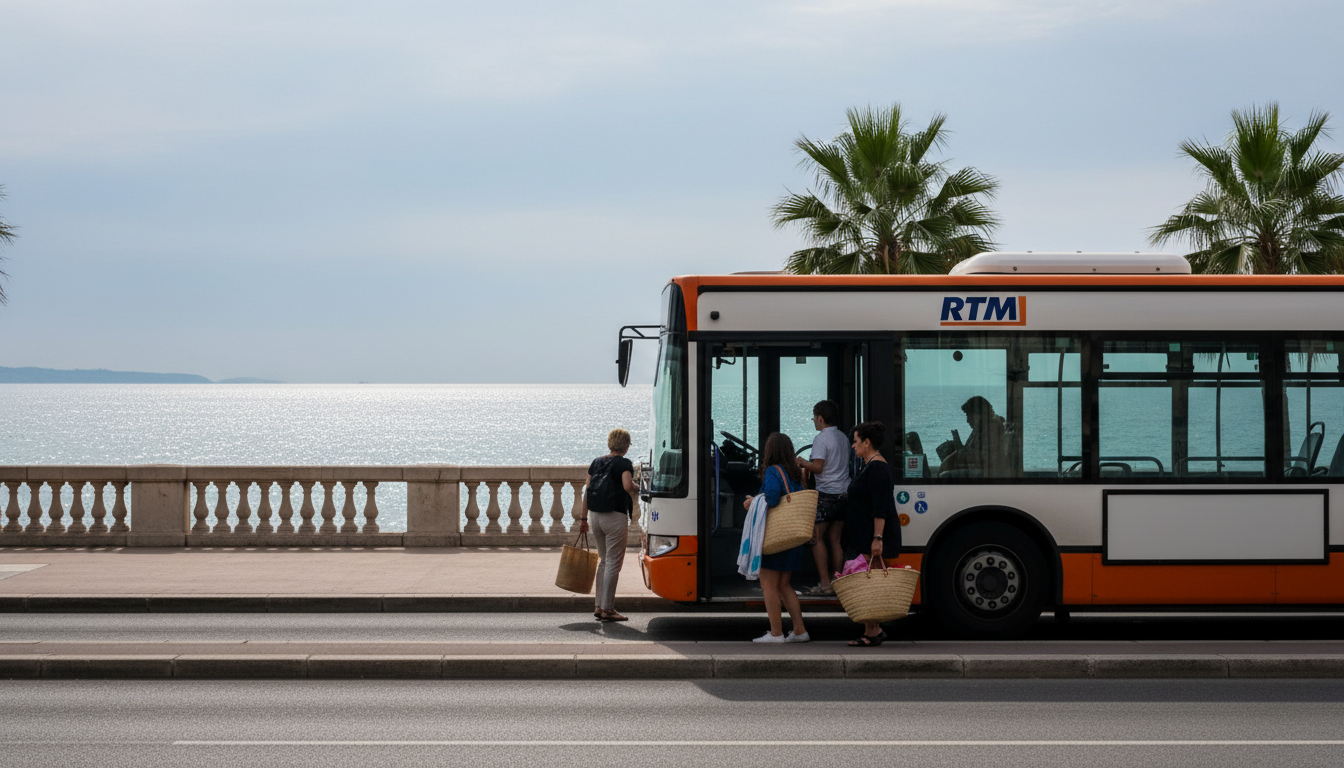 A Marseille city bus orange and white RTM livery stopped along the Corniche Kennedy, the Mediterrane
Bus schedules can be... flexible. The RTM app shows real-time arrivals, which helps manage expectations. During my Cours Julien swap, I learned to add 5-10 minutes of buffer time to any bus-dependent plans. It's not unreliable, exactly—it's just Mediterranean.
The Tramway: Marseille's Underrated Transport Option
Marseille's tram network often gets overlooked, but the three lines serve some genuinely useful routes, especially if your home swap is in the eastern parts of the city.
T1 runs from Noailles (near the Vieux-Port) to Les Caillols in the east. T2 connects Arenc (near the Docks) to Blancarde and La Blancarde train station. T3 is the newest, running from Arenc to Castellane. The trams are modern, air-conditioned (crucial in Marseille's summers), and run frequently. Same tickets as the metro and buses—your day pass or week pass covers everything.
Real talk: unless your home swap is along a tram line, you might not use them much. But if you're heading to Blancarde to catch a regional train, or exploring the renovated Docks area, the tram is smooth and efficient.
Getting to the Calanques: The Transport Question Everyone Asks
Okay, let's address the elephant in the room. You're doing a home swap in Marseille, and you want to see the Calanques—those dramatic limestone cliffs and turquoise inlets that show up on every "places to visit before you die" list. How do you get there without a car?
First, some context. The Calanques National Park stretches from Marseille's southern edge to the town of Cassis. There are multiple entry points, and your transport strategy depends on which calanque you want to visit.
For Calanque de Sugiton and Calanque de Morgiou: Take metro Line 2 to Rond-Point du Prado, then Bus 23 to Luminy. From the Luminy university campus, it's about a 45-minute hike to Sugiton. This is probably the most accessible calanque without a car, and it's genuinely stunning.
For Calanque de Sormiou: This one's trickier. Bus 23 gets you to the general area, but then you're looking at a longer hike. During summer (roughly April to September), private vehicles are banned from the access road, so everyone's on foot anyway.
For Calanque d'En-Vau and Calanque de Port-Pin: Take the train from Gare Saint-Charles to Cassis (about 20 minutes, €6.40/$6.90 one way), then hike from Cassis. This is a longer trek—about 90 minutes to Port-Pin, another 30 to En-Vau—but these are arguably the most breathtaking calanques.
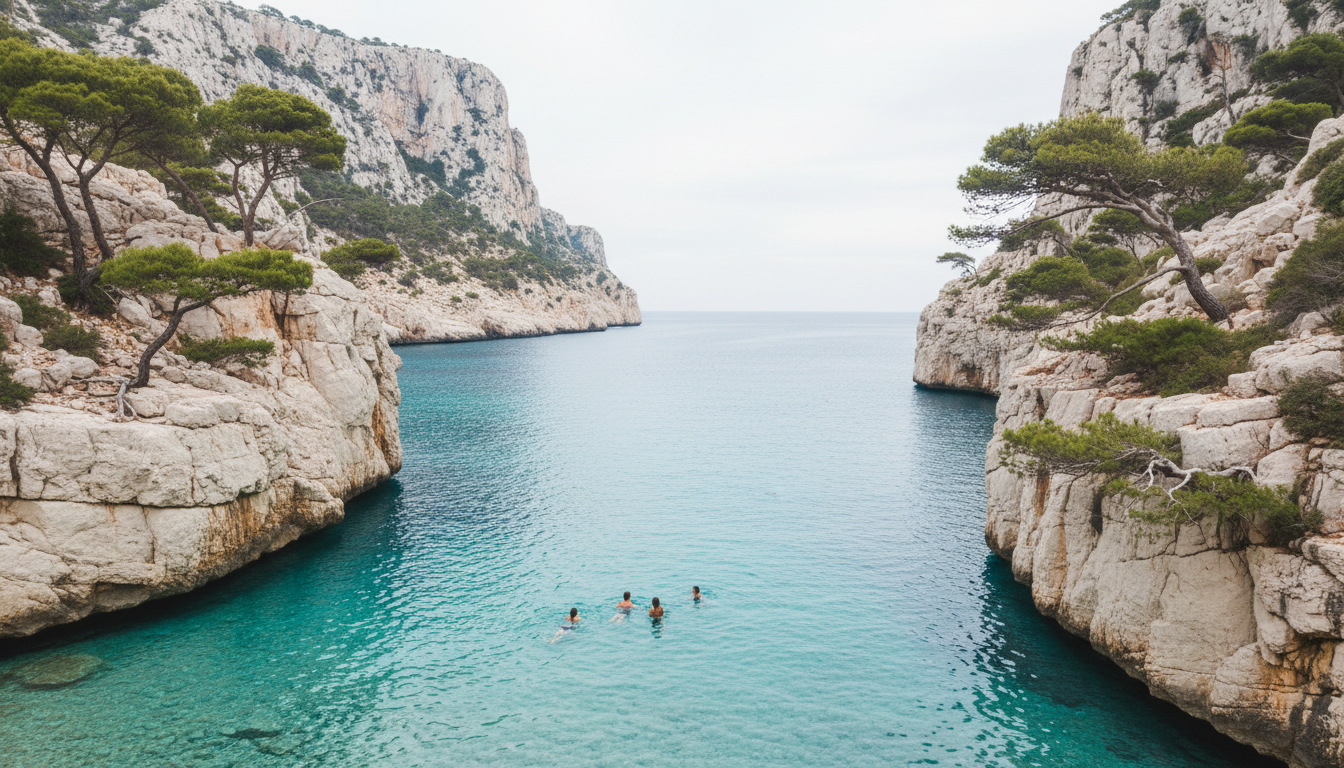 Turquoise waters of Calanque de Sugiton framed by white limestone cliffs, a few swimmers visible in
During my second Marseille home swap, I made the Calanques my weekend project. Saturday I did Sugiton via bus and hiking. Sunday I trained to Cassis and hiked to En-Vau. Both days cost me less than €15 in transport, and I saw landscapes that people pay hundreds for on boat tours.
Speaking of boats...
Ferry Transport in Marseille: The Secret Weapon
Here's something that took me three visits to discover: Marseille has a small but incredibly useful ferry network, and hardly any tourists know about it.
The RTM ferry crosses the Vieux-Port, connecting the Hôtel de Ville side to the Place aux Huiles side. It takes about 3 minutes, runs every 10 minutes or so, and costs... nothing extra if you have a transport pass. Without a pass, it's the same €2.00 as a bus ticket.
Why does this matter? Because walking around the Vieux-Port takes 15-20 minutes. The ferry cuts straight across. When your home swap is in Le Panier and you want to hit the restaurants on the south side of the port, this little ferry is a game-changer.
There's also the Frioul If Express, which isn't part of RTM but runs from the Vieux-Port to the Frioul Islands and the Château d'If (yes, the Count of Monte Cristo prison). Tickets are about €11 ($11.85) round-trip to If, or €17 ($18.30) for a combined If + Frioul ticket. Not daily transport, but worth knowing about for a day trip.
 The small RTM ferry crossing the Vieux-Port at sunset, silhouetted against the golden light, the Not
Walking in Marseille: More Viable Than You'd Think
I need to mention this because Marseille has a reputation for being unwalkable, and it's only partially deserved.
The central areas—Vieux-Port, Le Panier, Noailles, Cours Julien, Préfecture—are all within walking distance of each other. I've done the Vieux-Port to Cours Julien walk dozens of times; it's about 20 minutes and takes you through some of the city's most interesting streets.
The challenge is the hills.
Marseille is built on seriously steep terrain. Walking from the Vieux-Port up to Notre-Dame de la Garde is technically possible (about 30 minutes), but you'll arrive drenched in sweat. The Bus 60 or the tourist train exists for a reason. My rule of thumb: if you're staying in the city center during your home swap, walking handles 60% of your transport needs. The metro and buses cover the rest.
Cycling and E-Scooters: The New Marseille Transport Options
Marseille has embraced micro-mobility in recent years, with varying degrees of success.
Le Vélo is the city's bike-share system. Stations are scattered throughout the center, and a day pass costs €1.00 ($1.08). The catch: Marseille's hills make cycling genuinely difficult unless you're in good shape. The flat areas along the coast and around the Vieux-Port are pleasant enough, but don't plan on cycling up to Notre-Dame de la Garde.
E-scooters from companies like Lime and Dott are everywhere. They cost about €1 to unlock plus €0.20-0.25 per minute. For short hops—say, from your home swap in Noailles to a restaurant in the Vieux-Port—they're convenient. Just watch out for the cobblestones in Le Panier. I learned that lesson the hard way.
Honestly, I've found the e-scooters most useful late at night when metro service ends but you're not quite ready to pay for a taxi.
Taxis and Rideshares: When You Need Them
Sometimes public transport just doesn't cut it. Maybe you're arriving with heavy luggage, or you're heading to a restaurant in L'Estaque at midnight, or you've hiked the Calanques and your legs have officially quit.
Marseille taxis are metered and regulated. From the airport (Marseille Provence, about 25 km northwest of the city), expect to pay €50-55 ($54-59) to the city center. Within the city, most rides run €10-20 ($11-22) depending on distance and traffic.
Uber operates in Marseille, as does the French competitor Kapten (now part of Free Now). Prices are usually similar to or slightly cheaper than taxis. I've found Uber more reliable for getting a car quickly, especially in less central neighborhoods.
One taxi tip: the official taxi stands (marked with blue signs) are where you'll have the best luck flagging one down. Trying to hail a cab on random streets is hit-or-miss.
Airport Transport: Getting to Your Marseille Home Swap
Marseille Provence Airport sits in Marignane, about 25 km from the city center. Your options:
The Navette Marseille airport shuttle bus runs every 15-20 minutes to Gare Saint-Charles. The journey takes 25-30 minutes (longer in traffic), and tickets cost €10 ($10.75) one way. Buy on the bus or in advance online. This is what I use 90% of the time. Direct train service exists but is less frequent and requires a shuttle from the airport terminal to the train station. Unless you're connecting to another city, the bus is easier. Taxi runs €50-55 ($54-59) flat rate to the city center. Worth it if you're arriving late, traveling with others, or have excessive luggage.
From the train station, you can metro or bus to wherever your home swap is located. If your host has given you their address, plug it into Google Maps or the RTM app before you land—Marseille's 3G/4G coverage is solid, and you'll have directions ready the moment you step off the shuttle.
Neighborhood-Specific Transport Tips
Depending on where your home swap is located, your transport reality will vary. Here's what I've learned from stays in different areas:
Le Panier: This is the old town, full of narrow streets and stairs. No cars, no bikes, just walking. The nearest metro is Vieux-Port or Joliette. Budget 5-10 minutes to walk from your apartment to public transport.
Cours Julien / Notre-Dame du Mont: Well-served by metro (Notre-Dame du Mont - Cours Julien station on Line 2). This neighborhood is central enough that you can walk to most things, metro to the rest.
Endoume / Malmousque: These coastal neighborhoods southwest of the Vieux-Port are gorgeous but bus-dependent. Lines 83 and 54 are your friends. Accept that you'll wait for buses more than you'd like.
Prado / Castellane: Excellent transport hub. Metro Line 1 and Line 2 both stop at Castellane. Multiple bus lines. If your home swap is here, you've hit the transport jackpot.
La Joliette / Docks: The renovated port area has good tram connections (T2 and T3) and is walkable to the Vieux-Port. The MuCEM and major cruise terminal are here.
My Actual Transport Budget from a Week-Long Home Swap
Last October, I did a seven-day home swap in the 6th arrondissement, near Préfecture. Here's exactly what I spent on getting around Marseille:
- 7-day RTM pass: €15.00 ($16.15)
- Airport shuttle (round trip): €20.00 ($21.50)
- Train to Cassis for Calanques hike: €12.80 ($13.80)
- Château d'If ferry: €11.00 ($11.85)
- One late-night Uber: €14.00 ($15.05)
Total: €72.80 ($78.35) for a full week of transport
Compare that to what you'd spend on taxis or rental cars, and the savings are obvious. But more than the money, using public transport meant I experienced Marseille the way locals do. I overheard conversations at bus stops, discovered a bakery near a random metro station, and generally felt like a temporary resident rather than a tourist.
Common Mistakes to Avoid When Using Marseille Transport
After multiple home swaps here, I've seen (and made) the usual errors:
Not validating your ticket. Even with a pass, you need to tap in at metro turnstiles and on bus/tram validators. Inspectors do check, and fines are €50+.
Assuming the metro runs all night. It doesn't. Last trains are around 12:30 AM. Plan accordingly or budget for a taxi.
Ignoring the ferry. Seriously, the Vieux-Port ferry is free with your pass and saves real time.
Trying to drive. Unless you're doing extensive Calanques exploration or day trips to Provence, a car in Marseille is more hassle than help. Parking is expensive and scarce, traffic is aggressive, and the one-way streets will break your navigation app.
Walking to Notre-Dame de la Garde in August. Just don't. Take Bus 60 up, walk down if you want. The basilica isn't going anywhere.
Day Trips from Marseille: Transport Options
One of the joys of a Marseille home swap is using the city as a base for exploring Provence. The transport connections are solid:
Aix-en-Provence: Bus or train, both about 30-40 minutes. Trains run from Saint-Charles (€8.40/$9.05 each way), buses from Gare Routière Saint-Charles (€6.10/$6.55). I prefer the bus—it drops you closer to the old town.
Cassis: Train from Saint-Charles, 20 minutes, €6.40 ($6.90). The town is small and walkable; you don't need any transport once you arrive.
Avignon: TGV from Saint-Charles, 35 minutes, €15-30 ($16-32) depending on when you book. A perfect day trip.
Arles: Regional train, about 50 minutes, €15 ($16.15). Van Gogh's town, Roman ruins, incredible light.
The train station at Saint-Charles is the hub for all of this. If your home swap is anywhere near a metro line, you can reach the station in 15-20 minutes.
Making Marseille Transport Work for Your Home Swap
Here's what I'd tell anyone arriving for their first Marseille home swap:
Download the RTM app before you land. Buy a week pass if you're staying more than three days. Spend your first morning just riding the metro end to end, getting a feel for the city's layout. Take Bus 83 along the coast at least once. Use the Vieux-Port ferry just because it's charming. And don't stress about having everything figured out immediately.
Marseille rewards curiosity. Getting a little lost, ending up in an unexpected neighborhood, finding a café because you got off at the wrong stop—that's the good stuff. The transport system is a tool for exploration, not just efficiency.
When I list my own place on SwappaHome, I always include detailed transport notes for guests. The nearest metro, which bus goes to the beach, where to catch the airport shuttle. It's the kind of insider knowledge that transforms a trip from "visiting" to "living." If you're swapping homes in Marseille, ask your host for their transport tips. And when you host someone in your city, pay it forward.
Marseille isn't trying to be easy. It's trying to be real. And once you figure out how to move through it—on metros that smell faintly of the sea, on buses that wind through neighborhoods tourists never see, on ferries that cross the ancient port—you'll understand why some of us keep coming back.
Frequently Asked Questions
How much does public transport cost in Marseille?
A single ticket for Marseille metro, bus, or tram costs €2.00 ($2.15 USD). For home swap stays, the 7-day unlimited pass at €15.00 ($16.15) offers the best value, covering all RTM transport including the Vieux-Port ferry. Day passes cost €5.40 ($5.80).
Is the Marseille metro safe at night?
Marseille's metro is generally safe, including evening hours. The system is well-lit and monitored by security cameras. Normal urban awareness applies—keep valuables secure and stay alert. Service ends around 12:30 AM, so plan for taxi or rideshare for later nights.
Can you get to the Calanques without a car?
Yes, the Calanques are accessible via public transport. Take metro Line 2 to Rond-Point du Prado, then Bus 23 to Luminy for Calanque de Sugiton (45-minute hike from bus stop). For Calanque d'En-Vau, train to Cassis then hike 90 minutes. No car needed.
How do I get from Marseille airport to the city center?
The Navette Marseille airport shuttle bus runs every 15-20 minutes to Gare Saint-Charles train station. Journey time is 25-30 minutes, tickets cost €10 ($10.75) one way. Taxis charge a flat rate of €50-55 ($54-59) to central Marseille.
Is Marseille walkable for tourists?
Central Marseille is reasonably walkable—Vieux-Port, Le Panier, Noailles, and Cours Julien are all within 20 minutes of each other on foot. The city's steep hills make some routes challenging, though. Combine walking with metro and buses for the best experience during your home swap.

Published by
SwappaHome
SwappaHome Editorial Team
Home Exchange & Slow Travel Editorial
The SwappaHome Editorial Team brings together travel research, home-exchange community insights, and platform data to produce practical guides for first-time and experienced home swappers. Every article cites real platforms, current market rates, and verifiable city-level facts so readers can make informed decisions without guessing.
Ready to try home swapping?
Join SwappaHome and start traveling by exchanging homes. Get 7 free credits when you sign up!
Related articles

Bachelor and Bachelorette Parties in Singapore: The Complete Home Swap Group Guide for 2026
Planning a bachelor or bachelorette party in Singapore? Discover how home swapping lets groups of 6-12 stay together in luxury condos, saving thousands while partying in Marina Bay.

Cycling in Lisbon: 7 Home Swap Bike Tour Itineraries for Every Rider
Discover the best cycling routes in Lisbon with these home swap bike tour itineraries—from waterfront paths to hilltop adventures, all starting from your borrowed home.

Graduation Trip to Barcelona: How Home Swapping Gives New Graduates the Ultimate Celebration
Planning a graduation trip to Barcelona? Discover how home swapping lets new graduates explore Spain's most vibrant city without the hostel crowds or hotel costs.