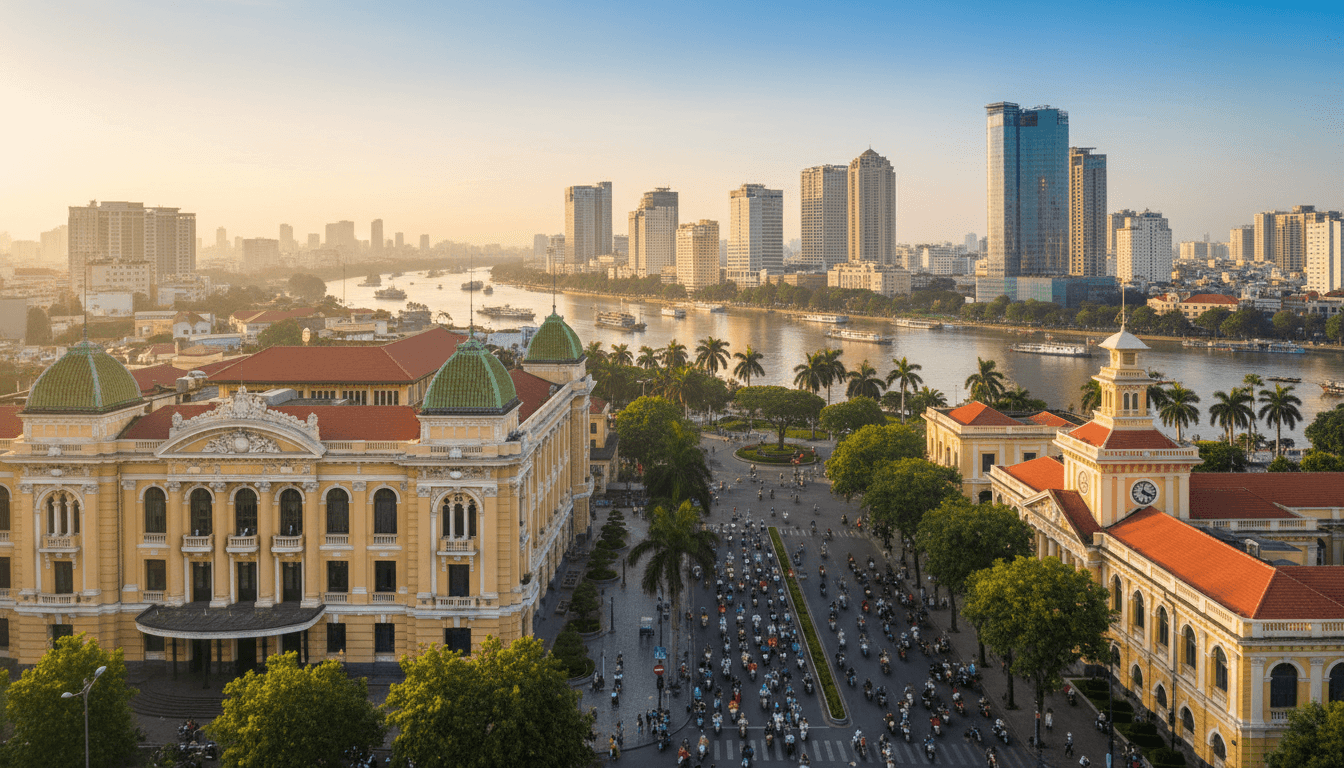
Ho Chi Minh City Bucket List: 23 Unforgettable Experiences During Your Home Swap

SwappaHome Editorial Team
Home Exchange & Slow Travel Editorial
From 6 AM pho sessions to rooftop cocktails at sunset, here's your complete Ho Chi Minh City bucket list for an authentic home swap experience in Vietnam's electric southern hub.
The motorbike almost clipped my elbow—and I didn't even flinch. That's when I knew Ho Chi Minh City had gotten under my skin.
I was standing on the corner of Bùi Viện and Đề Thám, clutching a bánh mì that cost me 25,000 VND (about a dollar), watching the organized chaos of rush hour unfold like some kind of urban ballet. Motorbikes carrying entire families, street vendors balancing impossible loads, businesspeople in pressed shirts weaving through it all with supernatural calm. This wasn't the Vietnam I'd seen in movies. This was something wilder, more alive, more real.
That was my third morning of a two-week home swap in District 3, and I was already mentally extending my stay. If you're planning your own Ho Chi Minh City bucket list during a home exchange, you're in for something special. This city doesn't just welcome you—it absorbs you, challenges you, feeds you (constantly), and ultimately transforms the way you think about travel.
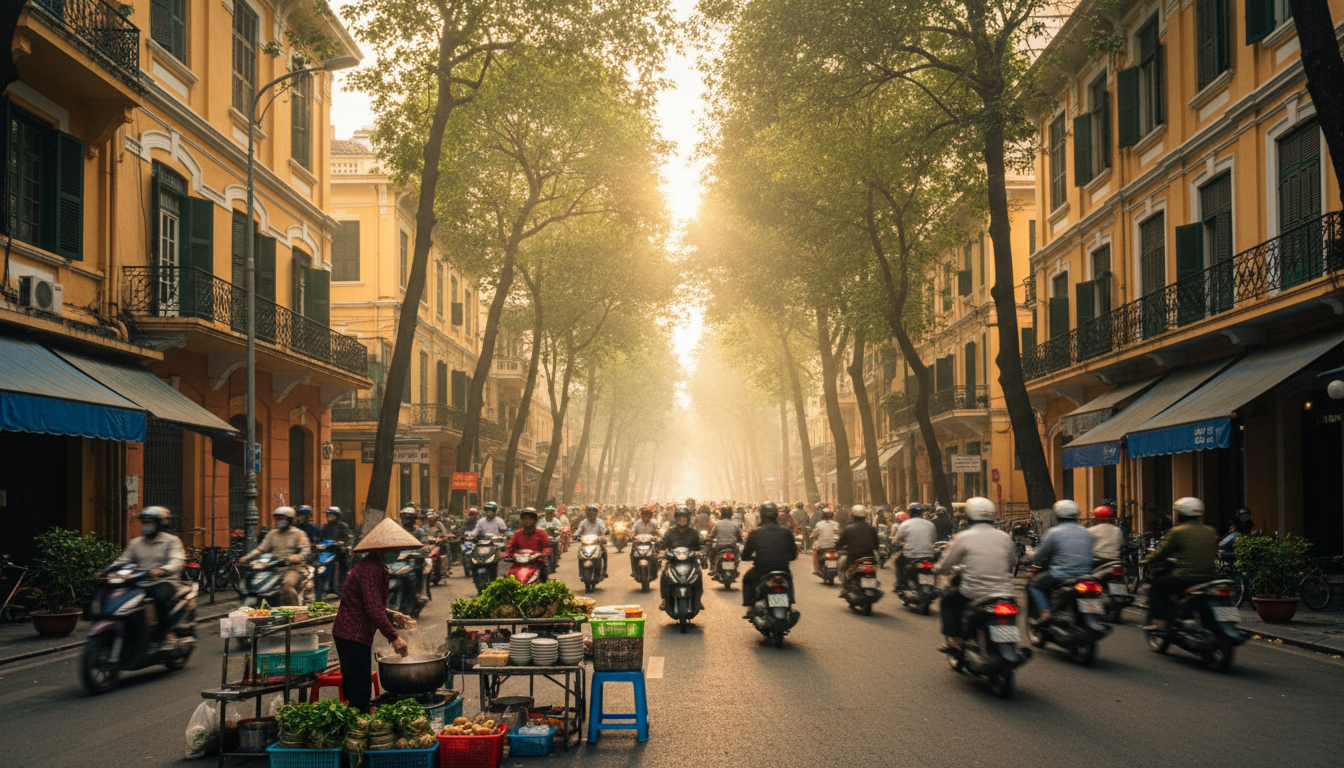 Early morning street scene in Ho Chi Minh Citys District 1, motorbikes streaming past colonial Frenc
Why Ho Chi Minh City Belongs on Every Home Swap Bucket List
Here's what most travel guides won't tell you: Saigon (locals still use the old name) is exhausting in the best possible way. It demands your attention. It rewards curiosity. And it absolutely requires more than a three-night hotel stay to understand.
That's exactly why a home swap here makes so much sense.
When I stayed in my host's apartment in District 3—a converted French colonial building with 12-foot ceilings and a tiny balcony overlooking a tamarind tree—I wasn't a tourist passing through. I was a temporary resident. I learned which bánh mì cart had the crispiest bread (the one near the pharmacy on Võ Văn Tần, obviously). I figured out that the coffee shop downstairs served the best cà phê sữa đá before 8 AM, but the one around the corner was better after noon. I knew which nights the karaoke bar across the street got rowdy—Thursday and Saturday, in case you're wondering.
This kind of knowledge doesn't come from guidebooks. It comes from living somewhere, even briefly. And that's what makes building your Ho Chi Minh City bucket list through a home exchange so fundamentally different from ticking boxes at tourist attractions.
The cost savings don't hurt either. Hotels in central Saigon run $80-150 USD per night for anything decent. My two weeks in that District 3 apartment? Ten SwappaHome credits. I spent the money I saved on cooking classes, vintage shopping, and approximately 47 bowls of phở.
The Essential Ho Chi Minh City Bucket List: Food Experiences
Wake Up with Phở at 6 AM
I'm going to be direct with you: if you're not eating phở for breakfast, you're doing Saigon wrong.
The best bowls happen early, when the broth is freshest and the streets are still cool enough to enjoy hot soup without sweating through your shirt. My favorite spot was Phở Lệ on Võ Văn Tần in District 3—a no-frills joint where the broth has been simmering since 3 AM and the regulars don't even need to order. A bowl runs about 55,000-70,000 VND ($2.30-$3 USD), and it'll ruin you for any phở you've had back home.
Pro tip from my home swap host: ask for "tái nạm" (rare beef and flank) and add a squeeze of lime, a few Thai basil leaves, and a healthy dose of hoisin. Skip the Sriracha—that's for tourists.
Learn to Make Vietnamese Food (Then Cook It in Your Swap Home)
One of the best parts of having a kitchen during your home exchange? Actually using it.
I took a morning cooking class at Saigon Cooking Class in District 1 (around $45 USD, includes market tour) and came back to my apartment armed with fresh herbs, fish sauce, and the confidence to attempt bánh xèo. The sizzling crepes turned out... acceptable. The spring rolls were genuinely good. The point is, I got to experiment in a real kitchen, not just watch a demonstration and forget everything by dinner.
 Hands assembling fresh Vietnamese spring rolls on a wooden cutting board, with bowls of herbs, rice
Drink Coffee Like a Local
Vietnamese coffee culture deserves its own section—possibly its own article.
The ritual of watching dark roast drip slowly through a metal phin filter into a glass of condensed milk is genuinely meditative. And the caffeine hit? Let's just say I learned not to order cà phê sữa đá after 3 PM unless I wanted to stare at my bedroom ceiling until 2 AM.
My go-to spots during my home swap: The Workshop in District 1 for third-wave specialty coffee in a gorgeous industrial space (flat whites around 75,000 VND, great for laptop work). Cộng Cà Phê for Communist-kitsch decor and coconut coffee that tastes like dessert—perfect for Instagram, but genuinely good too. And honestly? Some of the best cà phê sữa đá I had came from plastic stools on random sidewalks. 15,000 VND and an experience you can't replicate anywhere else.
Eat Your Way Through Bến Thành Market (But Know When to Go)
Bến Thành is touristy—I won't pretend otherwise. But the food stalls inside are legitimately excellent, especially if you go during off-peak hours (before 10 AM or after 2 PM). The bánh canh cua (crab noodle soup) at stall 1088 made me close my eyes and sigh out loud. Embarrassing? Yes. Worth it? Absolutely.
At night, the market transforms. The surrounding streets fill with vendors selling everything from grilled seafood to chè (sweet dessert soups). Budget about 200,000-300,000 VND ($8.50-$12.50 USD) to try multiple dishes and leave uncomfortably full.
Ho Chi Minh City Bucket List: Cultural Deep Dives
Spend a Morning at the War Remnants Museum
I almost skipped this. I'm glad I didn't.
The War Remnants Museum in District 3 is not an easy visit. The exhibits—particularly the photography collections—are graphic, heartbreaking, and presented primarily from the Vietnamese perspective. But if you're going to spend time living in this city, understanding its recent history feels essential.
Entry is 40,000 VND (about $1.70 USD). Give yourself at least two hours. Maybe schedule something gentle afterward—I walked to a nearby park and sat with my thoughts for a while.
 Exterior of the War Remnants Museum with military helicopters and tanks on display in the courtyard,
Get Lost in the Jade Emperor Pagoda
Most tourists hit the Notre-Dame Cathedral and move on. The Jade Emperor Pagoda, tucked away in District 3, is where locals actually worship—and it shows.
The air inside is thick with incense. Elaborate wood carvings cover every surface. Turtles swim in a courtyard pond (they're considered sacred). I visited on a random Tuesday afternoon and watched families light offerings, elderly women chant prayers, and a young couple ask for blessings. It felt like an intrusion and a privilege simultaneously.
Free entry, but bring some small bills to leave as an offering. It's respectful.
Take a Cyclo Ride Through District 5 (Chinatown)
Yes, cyclos are touristy. Yes, you should do it anyway—but in Chợ Lớn (Chinatown), not the backpacker district.
District 5 is where Saigon's Chinese-Vietnamese community has lived for generations. The temples are ornate, the markets are chaotic, and the food is distinctly different from the rest of the city. A cyclo ride lets you absorb it all at human speed.
Negotiate the price beforehand—expect to pay around 150,000-200,000 VND ($6.30-$8.40 USD) for an hour. My driver spoke minimal English but somehow communicated exactly where to find the best dim sum afterward.
Your Home Swap Bucket List: Neighborhood Exploration
District 1: The Obvious Starting Point
This is where most first-timers stay, and honestly? It's fine. The French colonial architecture is stunning, the rooftop bars have killer views, and you can walk to most major attractions. But District 1 is also the most expensive and most crowded part of the city.
If your home swap is here, you'll have easy access to the Saigon Central Post Office (worth visiting just for the architecture), Nguyễn Huệ Walking Street (best at night when families come out), the Saigon Opera House, and approximately 400 rooftop bars.
District 3: Where Locals Actually Live
This was my home swap neighborhood, and I'd choose it again in a heartbeat.
District 3 is residential, leafy, and packed with incredible food options that haven't been discovered by TripAdvisor yet. The streets are narrower, the pace slightly slower, and you'll see more Vietnamese families than Western tourists.
My host's apartment was a 15-minute walk from District 1 attractions but felt like a completely different city. The rent she saves on her modest place (compared to District 1) is why she can afford to travel so often—and why she lists on SwappaHome in the first place.
District 2/Thảo Điền: The Expat Enclave
If you want Western comforts—international schools, yoga studios, brunch spots—Thảo Điền in District 2 delivers. It's across the river and feels almost suburban compared to central Saigon. Great for families or anyone who needs occasional breaks from sensory overload.
The downside? You'll need to cross the Saigon River to reach most attractions, which can mean 30-45 minutes in traffic. The upside? Beautiful villas, green spaces, and some genuinely excellent restaurants.
 Tree-lined street in District 3 with French colonial buildings, a woman on a motorbike carrying flow
Bucket List Adventures Beyond the City Center
Day Trip to the Củ Chi Tunnels
I'll be honest—crawling through underground tunnels built during wartime wasn't something I thought I'd enjoy. But the Củ Chi Tunnels, about 70 km northwest of the city, are genuinely fascinating.
The tunnel network stretches over 250 kilometers and once housed entire communities—hospitals, kitchens, living quarters. Today, tourists can crawl through widened sections (still claustrophobic) and learn about the incredible ingenuity that went into their construction.
Most tours run $15-40 USD depending on group size and inclusions. I'd recommend the Ben Duoc site over Ben Dinh—it's farther but less crowded and more authentic.
Mekong Delta: Worth the Early Wake-Up
Yes, it's a tourist trail. Yes, you should still go.
The Mekong Delta day trips typically leave Saigon around 7 AM and return by 5 PM. You'll cruise through floating markets, visit coconut candy workshops, and eat some of the freshest river fish you've ever tasted. Is it manufactured? A little. Is it still beautiful and worthwhile? Absolutely.
Budget around $25-50 USD for a group tour. Private tours run $100+ but offer more flexibility.
Vũng Tàu Beach Escape
When Saigon's chaos gets overwhelming—and it will, eventually—the beach town of Vũng Tàu is just two hours away by hydrofoil.
The beaches aren't Thailand-level stunning, but they're clean enough for a swim, and the seafood restaurants along the shore serve some of the best grilled prawns I've ever had. Hydrofoil tickets run about 250,000 VND ($10.50 USD) each way. Go on a weekday if possible—weekends bring Saigon's middle class in droves.
Nightlife and Evening Bucket List Experiences
Sunset Cocktails at a Rooftop Bar
Saigon's rooftop bar scene is legitimately world-class.
Chill Skybar (AB Tower, District 1) is the OG rooftop with 360-degree views—cocktails around 200,000-350,000 VND ($8.40-$14.70 USD), dress code enforced. Social Club Saigon at Hotel des Arts is more intimate with killer sunset views and an excellent gin selection. Air 360 at Ben Thanh Tower is newer, less crowded, and you can see Bến Thành Market lit up below.
 Sunset view from a rooftop bar showing Ho Chi Minh Citys skyline, the Saigon River curving in the di
Bùi Viện Street: The Backpacker District Experience
Look, Bùi Viện is loud, chaotic, and full of 22-year-olds drinking 15,000 VND ($0.63 USD) beers. It's also genuinely fun if you're in the right mood.
The street closes to traffic at night and transforms into one long party. Bars blast competing music, street food vendors work the crowds, and the energy is infectious. Even if clubbing isn't your thing, walking through on a Saturday night is an experience worth having.
Just... maybe don't stay on Bùi Viện during your home swap unless you enjoy bass-heavy lullabies until 3 AM.
Live Music at Yoko Café
For something mellower, Yoko Café in District 1 hosts live acoustic performances most nights. The vibe is distinctly local—young Vietnamese couples on dates, groups of friends sharing bottles of wine, the occasional solo traveler (hi) scribbling in a notebook. Cover is usually free; drinks are reasonable.
Practical Tips for Your Ho Chi Minh City Home Swap
Getting Around
Grab (Southeast Asia's Uber) is your best friend. Rides across the city rarely exceed 100,000 VND ($4.20 USD), and the app eliminates language barriers and price negotiations. Download it before you arrive.
Motorbike taxis (xe ôm) are faster and cheaper but require nerves of steel. I used them for short hops once I'd acclimated to traffic patterns—maybe around day five.
Renting a motorbike yourself? Only if you have significant riding experience. Saigon traffic follows rules that aren't written anywhere, and accidents involving tourists are common.
Money Matters
The Vietnamese dong will make you feel like a millionaire—and also require serious mental math. As of my last swap, 1 USD equals approximately 24,000 VND. ATMs are everywhere, and Vietcombank has the lowest fees. Cash is king for street food and markets, but credit cards work at most restaurants and all hotels.
What to Tell Your Home Swap Host
When I connected with my host through SwappaHome's messaging system before my trip, I asked about the quirks of her apartment (the hot water takes 30 seconds to kick in, the door sticks in humidity), her favorite neighborhood spots (the bánh mì cart, the coffee shop, the tailor who does same-day alterations), and anything I should know about the building (the security guard doesn't speak English but is incredibly helpful if you smile and gesture).
This kind of local knowledge transformed my stay. It's the whole point of home swapping versus booking a random Airbnb.
The Best Time to Visit
Saigon has two seasons: wet and dry.
Dry season (December-April) means less humidity, fewer downpours, more comfortable walking. Also peak tourist season, so book your home swap early.
Wet season (May-November) brings daily afternoon thunderstorms that last 30-60 minutes, then clear. Fewer tourists, lower prices on tours, and honestly? The rain is dramatic and beautiful. Just carry a poncho.
I visited in March (dry season) and again in September (wet season). Both were excellent. The September trip had more atmospheric photos.
Creating Your Own Ho Chi Minh City Bucket List
Here's the thing about bucket lists: they should be personal. My must-dos might be your skip-its, and vice versa.
What I've shared here is a starting point—the experiences that made my home swap in Saigon unforgettable. But the real magic happened in the moments I couldn't plan: the grandmother who taught me to eat snails properly, the rainstorm that trapped me under an awning with a group of laughing teenagers, the sunrise I accidentally witnessed after staying out too late in District 4.
A home swap gives you the time and space for these moments. You're not rushing to check boxes before your checkout time. You're living somewhere, however temporarily, and letting the city reveal itself on its own schedule.
My host's apartment in District 3 is still listed on SwappaHome—I checked before writing this. The tamarind tree is still there. The coffee shop downstairs is still serving excellent cà phê sữa đá. And somewhere, right now, another traveler might be standing on that balcony, watching the motorbikes stream past, realizing that Saigon has gotten under their skin too.
That's the thing about this city. It doesn't let you leave unchanged.
Frequently Asked Questions
Is Ho Chi Minh City safe for home swap travelers?
Ho Chi Minh City is generally very safe for tourists, including solo travelers and home swappers. Petty theft (bag snatching from motorbikes) is the main concern—keep valuables secure and avoid displaying expensive phones on the street. Violent crime against tourists is rare. The biggest actual danger? Crossing the street. Seriously, just walk slowly and steadily, and traffic will flow around you.
How much should I budget per day in Ho Chi Minh City?
With accommodation covered through your home swap, budget $25-50 USD per day for a comfortable experience. This covers three meals at local restaurants ($8-15), transportation via Grab ($5-10), one activity or entrance fee ($5-15), and coffee/drinks ($5-10). You can easily spend less eating street food, or more if you're hitting rooftop bars nightly.
What's the best neighborhood for a Ho Chi Minh City home swap?
District 3 offers the ideal balance: residential calm with easy access to District 1 attractions, excellent local food options, and authentic neighborhood vibes. District 1 works for first-timers wanting walkable convenience. District 2/Thảo Điền suits families and those seeking Western amenities. Avoid Bùi Viện area unless you love backpacker party noise.
How many days do I need for a Ho Chi Minh City bucket list?
Plan for minimum 5-7 days to experience the city properly, or 10-14 days if including day trips to Củ Chi Tunnels and the Mekong Delta. A home swap makes longer stays financially feasible—and Saigon rewards extended exploration. I stayed two weeks and could have easily filled a third.
Do I need to speak Vietnamese for a home swap in Saigon?
No, but learning a few phrases helps enormously. "Xin chào" (hello), "cảm ơn" (thank you), and "bao nhiêu" (how much) will get you far. English is widely spoken in tourist areas and by younger Vietnamese. Google Translate's camera function is invaluable for menus and signs. Your home swap host can also write down key phrases and addresses for taxi drivers.

Published by
SwappaHome
SwappaHome Editorial Team
Home Exchange & Slow Travel Editorial
The SwappaHome Editorial Team brings together travel research, home-exchange community insights, and platform data to produce practical guides for first-time and experienced home swappers. Every article cites real platforms, current market rates, and verifiable city-level facts so readers can make informed decisions without guessing.
Ready to try home swapping?
Join SwappaHome and start traveling by exchanging homes. Get 7 free credits when you sign up!
Related articles
Bachelor and Bachelorette Parties in Singapore: The Complete Home Swap Group Guide for 2026
Planning a bachelor or bachelorette party in Singapore? Discover how home swapping lets groups of 6-12 stay together in luxury condos, saving thousands while partying in Marina Bay.
Cycling in Lisbon: 7 Home Swap Bike Tour Itineraries for Every Rider
Discover the best cycling routes in Lisbon with these home swap bike tour itineraries—from waterfront paths to hilltop adventures, all starting from your borrowed home.
Graduation Trip to Barcelona: How Home Swapping Gives New Graduates the Ultimate Celebration
Planning a graduation trip to Barcelona? Discover how home swapping lets new graduates explore Spain's most vibrant city without the hostel crowds or hotel costs.