
Home Exchange Emergencies: Your Complete Guide to Handling Crises While Swapping Homes

SwappaHome Editorial Team
Home Exchange & Slow Travel Editorial
From burst pipes to medical scares, learn exactly how to handle home exchange emergencies with confidence. Real strategies from 7 years of swapping.
The call came at 2 AM Barcelona time. My phone buzzed with a number I didn't recognize, and my sleep-fogged brain took a moment to register that it was my home exchange guest calling from my San Francisco apartment.
"Maya, I'm so sorry to wake you, but there's water coming through the kitchen ceiling."
Home exchange emergencies don't wait for convenient moments. They strike when you're in a different time zone, when you don't speak the local language fluently, or when you're three hours from the nearest major city. After seven years and over forty home swaps, I've learned that the difference between a ruined trip and a minor hiccup comes down to one thing: preparation.
 A traveler sitting in a cozy European apartment living room, phone in hand with a concerned but calm
That night in Barcelona, my guest followed the emergency protocol I'd left in my welcome binder. She turned off the main water valve (clearly labeled), called my neighbor Tom (whose number was on the fridge), and by morning, a plumber had fixed what turned out to be a corroded pipe fitting. Total crisis time: four hours. Trip impact: minimal.
But here's what I wish someone had told me before my first swap—most home exchange emergencies aren't dramatic disasters. They're smaller, trickier situations. A lost key at midnight. A pet that escapes. A power outage during a heatwave. Suddenly needing medical care in an unfamiliar healthcare system. This guide covers all of it.
Why This Matters More Than You'd Think
When you're staying in a hotel and something goes wrong, you call the front desk. Done. But during a home exchange, you're essentially living like a local—which is exactly what makes it incredible, and exactly what makes emergencies more complex.
You're responsible for someone else's home. They're responsible for yours. There's no concierge, no maintenance team on speed dial, no corporate insurance policy backing everything up.
I'm not trying to scare you. I still think home swapping is the best way to travel. But it does mean you need to approach emergencies differently.
The good news? Most home exchange emergencies are completely manageable when you've done the prep work. I've handled a gas leak in Amsterdam, a medical emergency in rural Portugal, and yes, that burst pipe situation while I was 6,000 miles away. Every single time, having systems in place made all the difference.
Before You Leave: Building Your Emergency Kit
I call this my "sleep soundly" checklist. It takes about two hours to set up before your first swap, and then you just update it for each new exchange.
Create a Physical Emergency Binder for Your Guests
This lives on my kitchen counter during every swap. It includes shut-off locations for water main, gas, and electrical panel—with photos, because nobody wants to be squinting at pipes during a crisis. My contact info plus two backup contacts who have spare keys. Nearest hospital address and urgent care clinic (I throw in a Google Maps screenshot). Vet information if they're watching my cat, Oliver. Utility company emergency numbers. Building super contact. WiFi password and what to do if internet goes out. Local emergency numbers—yes, 911 in the US, but I also include the non-emergency police line.
I print this on bright yellow paper so it's impossible to miss.
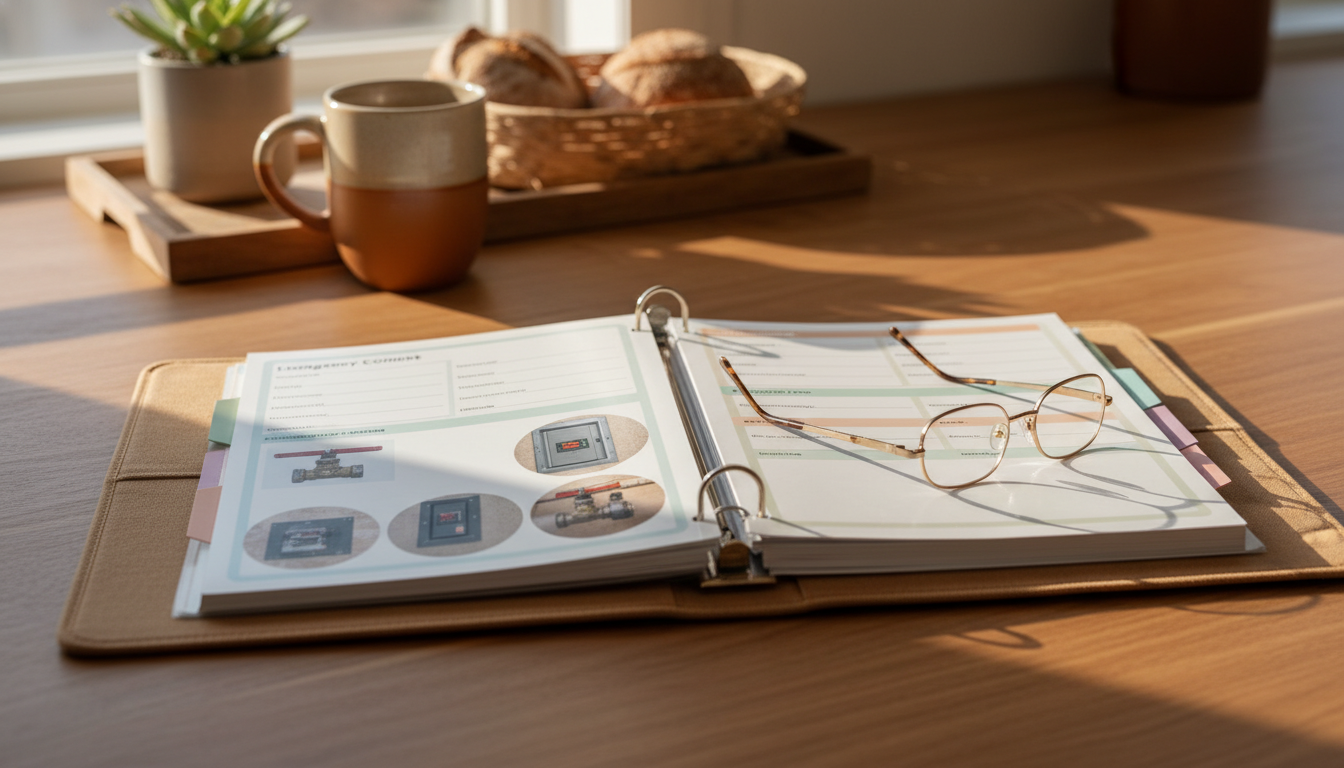 A neatly organized emergency binder open on a kitchen counter, showing laminated pages with clear he
Request the Same From Your Exchange Partner
This is non-negotiable for me now. Before I confirm any swap, I ask my exchange partner to prepare similar information. Most experienced swappers already have this ready. If someone seems reluctant or dismissive about emergency prep? That's a yellow flag.
Through SwappaHome's messaging system, I send a simple template about a week before the exchange:
"Hey! Getting excited for the swap. Could you send me your emergency contact info, the location of shut-off valves, and nearest medical facilities? I'll send you the same for my place. Just want us both to feel prepared!"
I've never had anyone react negatively to this. Usually, they're grateful I brought it up.
Sort Out Your Insurance Situation
Here's something crucial to understand—SwappaHome connects you with other members, but it doesn't provide insurance coverage for damages or emergencies. This is standard for home exchange platforms. You're responsible for your own protection.
Before any swap, I make sure I have travel insurance that covers medical emergencies, trip interruption, and personal liability (I use World Nomads, around $80-150 for a two-week trip depending on destination). I've confirmed my homeowner's insurance covers short-term guests—call your provider and ask specifically about home exchanges. And I've had a clear conversation with my exchange partner about expectations if something gets damaged.
I know. Insurance isn't the fun part of travel planning. But spending $100 on a good policy beats spending $10,000 on emergency medical evacuation.
The Most Common Emergencies (And How to Handle Them)
Property Emergencies: When Things Break
Water issues are the most common property emergency I've encountered, both as a host and a guest. Burst pipes, overflowing toilets, mysterious leaks.
If you're the guest and water is involved: find and turn off the water main immediately (this is why that binder matters). Take photos and videos of the damage. Contact your host—even if it's 3 AM their time, water damage gets worse every minute. If you can't reach them within 30 minutes, call their emergency backup contact. And don't try to fix anything yourself unless you genuinely know what you're doing.
Electrical problems require more caution. If you smell burning, see sparks, or lose power to part of the home, locate the electrical panel and switch off the affected circuit. If you're not comfortable doing this, leave the home and call the host. Electrical issues can wait for a professional.
Lockouts happen more than you'd think. I once locked myself out of an apartment in Lyon at 11 PM on a Sunday. The locksmith cost €180 (about $195), and I paid it myself because it was my mistake. If the lock malfunctions through no fault of yours, that's a conversation to have with your host about splitting costs.
Pro tip: I always ask hosts if there's a spare key with a neighbor or hidden somewhere. And I take a photo of the key before I leave each day—sounds paranoid, but it's saved me twice.
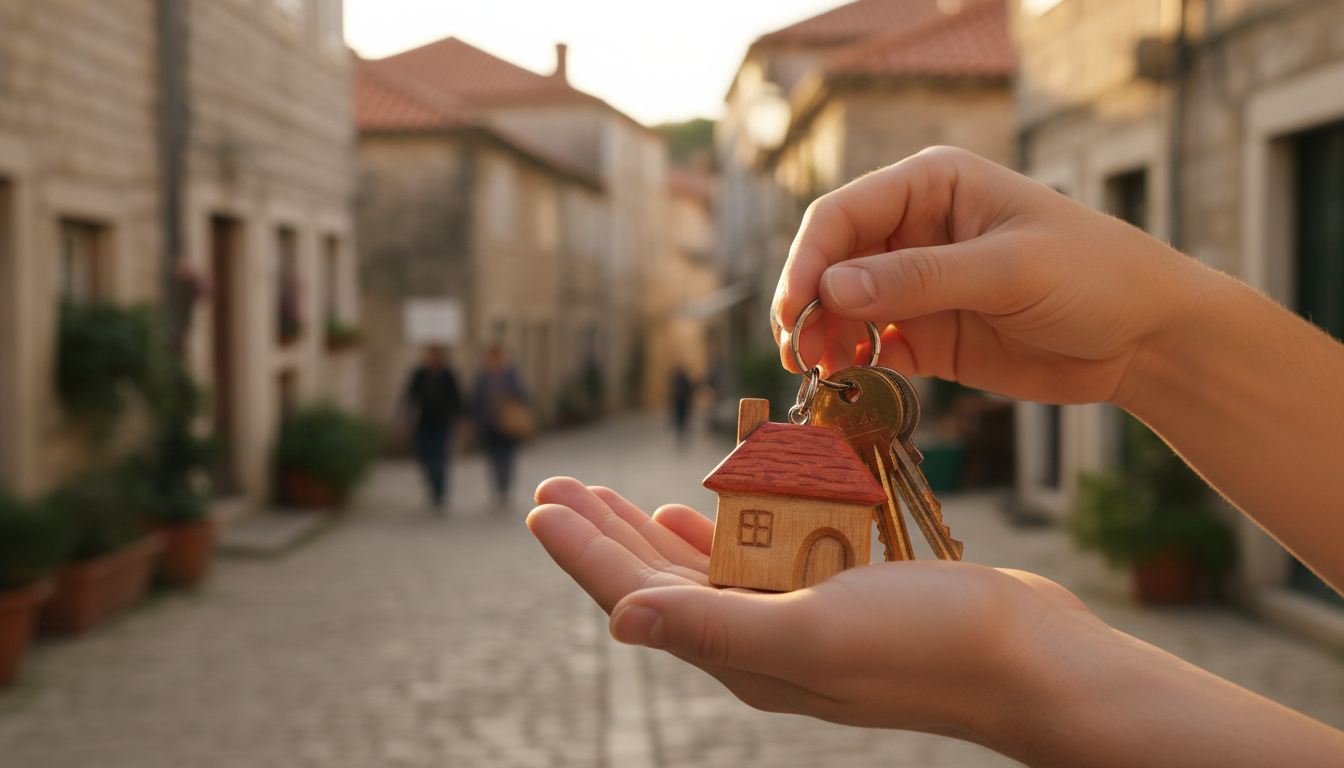 Close-up of hands holding a set of house keys with a distinctive keychain, a European cobblestone st
Medical Emergencies During Home Exchange
This is the category that genuinely scares people, and I get it. Being sick or injured far from home is disorienting even in the best circumstances.
Before you travel, know your blood type and any allergies. Carry a list of current medications—generic names, not brand names, since they vary by country. Download your travel insurance app and save your policy number somewhere accessible offline. Research whether your destination requires specific vaccinations. And locate the nearest hospital to your exchange home within an hour of arriving anywhere.
If a non-life-threatening emergency happens:
Last year in Lisbon, I woke up with what turned out to be a kidney stone. Not fun, but not immediately dangerous. I used Google to find the nearest "centro de saúde" (health center), showed up at 8 AM, and was seen within an hour. The visit cost €18 (about $20) because Portugal has reciprocal healthcare agreements with many countries. My travel insurance reimbursed me fully.
For non-emergencies, local health centers and urgent care clinics are almost always faster and cheaper than hospital emergency rooms. Ask your host for recommendations—they'll know which facilities are good and which to avoid.
If a life-threatening emergency happens:
Call emergency services immediately. In the EU, it's 112. In the UK, 999. In Australia, 000. In Japan, 119 for ambulance. Write down the local emergency number as soon as you arrive anywhere.
Don't worry about language barriers in true emergencies—dispatchers in major cities typically speak English, and even if they don't, saying "emergency" and your address will get help coming.
Once the immediate crisis is handled, contact your travel insurance company. Most have 24/7 emergency lines and can coordinate hospital payments, medical evacuation if needed, and help you navigate foreign healthcare systems.
When Your Host's Home Has an Emergency (And You're There)
This is trickier emotionally. You're staying in someone's beloved home, and suddenly their basement is flooding or their ancient boiler has died in January.
Your responsibilities: mitigate immediate damage (turn off water, move valuables away from leaks), document everything with photos and timestamps, contact the host immediately with clear factual information, follow their instructions for contacting repair services, and be flexible if they need you to let workers in or adjust your plans.
Not your responsibilities: paying for repairs to pre-existing issues, making decisions about major repairs without host approval, or feeling guilty. Stuff happens. It's not your fault the pipes were old.
The key is communication. Most home exchange emergencies become conflicts only when communication breaks down. Send updates even when there's nothing new to report. "Just wanted to let you know the plumber came, fixed the issue, and everything looks good now" goes a long way.
When Your Own Home Has an Emergency (And You're Away)
That 2 AM call from Barcelona? Stressful, but manageable because I'd prepared.
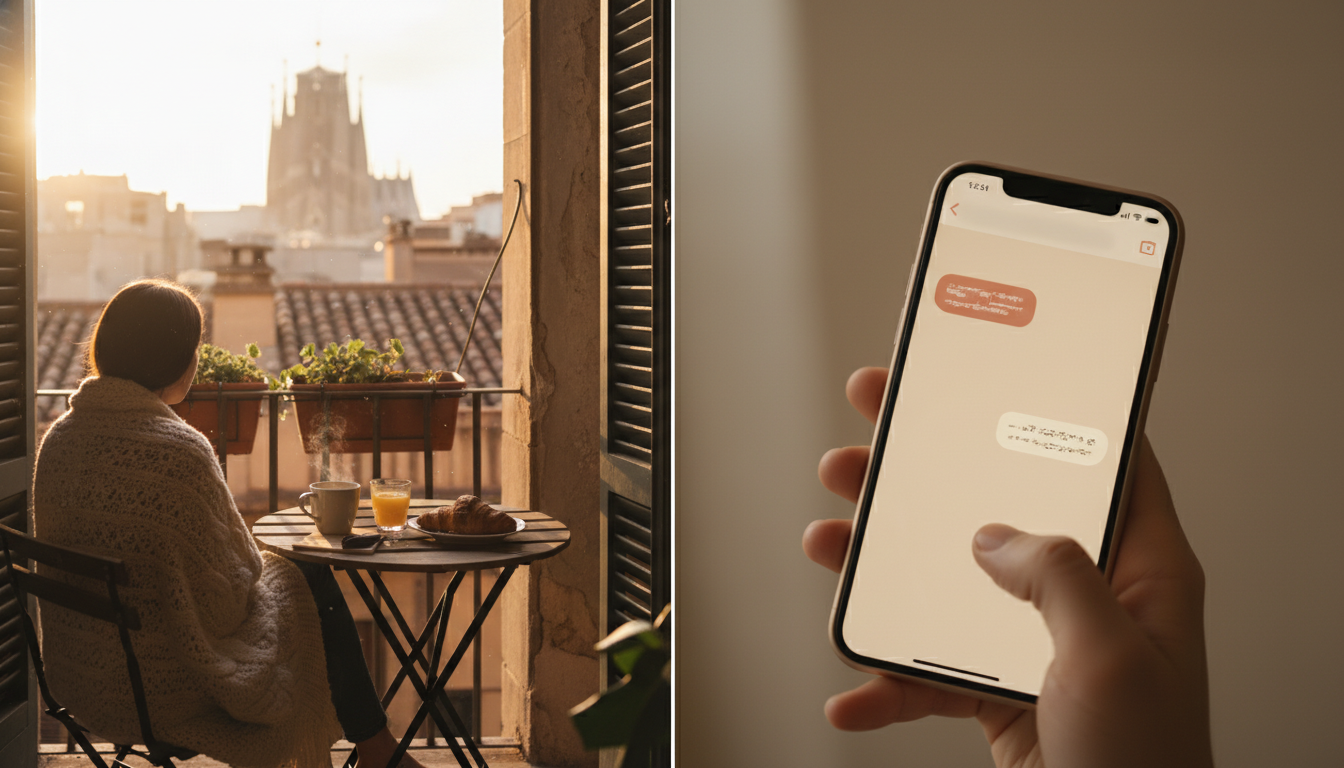 Split-screen style composition showing a cozy Barcelona apartment balcony with morning coffee on one
Setting Up Your Support Network
Before every swap, I confirm my primary backup contact—my neighbor Tom has a spare key, knows where the shut-offs are, and is retired so he's usually available. My secondary backup is my friend Sarah, who lives 20 minutes away. And I have professional contacts: my plumber's number, electrician, and the building super.
I text all three before each trip: "Hey, I'll be in [destination] from [dates]. [Guest name] is staying at my place. You're my emergency contact if anything comes up. Thanks!"
Five minutes. Countless hours of stress saved.
Communicating With Your Guest During a Crisis
When my Barcelona guest called about the leak, here's what worked: I stayed calm (or at least sounded calm). I walked her through finding the water shut-off via FaceTime. I told her exactly who to call—Tom, then the plumber if needed. I thanked her profusely for handling it so well. And I followed up the next morning to make sure everything was resolved.
What I didn't do: panic, blame her, or make her feel bad for waking me up. Home exchange emergencies are stressful for everyone involved. Your guest is probably more anxious than you are—they're in an unfamiliar place dealing with someone else's crisis.
The Damage Question: Who Pays for What?
This is where things can get awkward, so let's be direct.
General principle: whoever caused the damage is typically responsible for repair costs.
In practice, pre-existing issues (old pipes bursting, appliances dying of natural causes) fall to the host. Guest negligence (leaving a tap running, breaking something through carelessness) falls to the guest. True accidents (a tree falls on the house during a storm) are usually covered by homeowner's insurance.
SwappaHome doesn't mediate these situations or provide financial coverage—members work it out directly. This is why clear communication before the swap matters so much. I always have a brief conversation about expectations: "If something breaks through normal use, no worries. If something breaks because of negligence, let's talk about it honestly."
Most home exchangers are responsible, respectful people. In 40+ swaps, I've had exactly two damage incidents. Both minor. Both resolved amicably through direct conversation.
Emergency Communication: Staying Connected Across Time Zones
One of the trickiest aspects of home exchange emergencies is the time zone problem. When it's 2 AM for you, it might be 11 AM for your guest—or vice versa.
My Communication Protocol
I share this with every exchange partner:
For true emergencies—fire, flood, medical crisis, security threat—call me immediately, any time, day or night. I keep my phone on "do not disturb" with exceptions for my exchange contacts.
For urgent but not emergency situations—appliance stopped working, minor leak, lost key—message me through SwappaHome or WhatsApp. I'll respond within a few hours.
For questions and minor issues—can't find the extra towels, WiFi acting up—message anytime, I'll get back to you when I wake up.
This tiered system prevents both of us from panicking over non-emergencies while ensuring real crises get immediate attention.
Tech Tools That Help
WhatsApp works internationally, it's free, and it allows voice and video calls. Google Translate's app lets you download offline language packs before you travel. What3Words gives your exact location in three words—useful for directing emergency services to rural or hard-to-find addresses. And save your host's contact with emergency bypass enabled (on iPhone, go to their contact > Edit > Ringtone > Emergency Bypass).
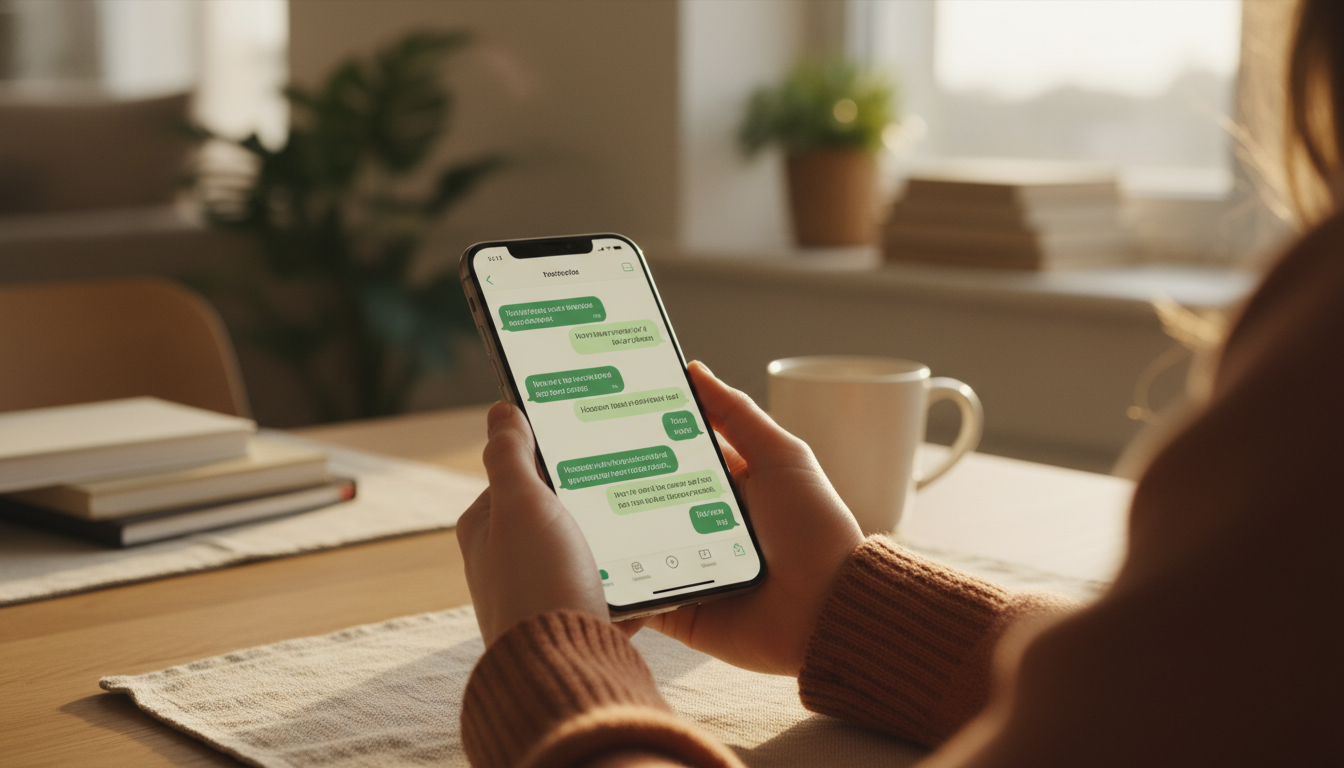 A smartphone screen showing a WhatsApp conversation with a home exchange partner, message bubbles vi
Specific Emergency Scenarios: A Quick Reference
Power Outage
First, check if it's just the home or the whole neighborhood. Look outside—are other buildings dark? If it's widespread, it's a utility issue; sit tight. If it's just your exchange home, check the circuit breaker panel. A tripped breaker is an easy fix. If breakers keep tripping, there's an electrical issue that needs a professional.
Keep flashlights accessible (I note their location in my emergency binder) and know where candles are—but be careful with open flames in an unfamiliar space.
Gas Smell
This one's serious. If you smell gas, don't turn on any lights or electrical switches. Don't use your phone inside the home. Open windows if you can do so quickly. Leave immediately. Call the gas emergency line from outside (this should be in your emergency binder). And don't re-enter until professionals clear it.
Break-In or Security Threat
If you return to find signs of a break-in, don't go inside. Call local police from a safe location. If you're inside and hear someone breaking in, lock yourself in a room with your phone if possible, call emergency services, and stay quiet.
After any security incident, contact your host immediately. They may want to change locks, file insurance claims, or take other steps.
Pet Emergency
If you're caring for your host's pet and something goes wrong, this can feel especially fraught. You're responsible for someone's beloved family member.
Before the swap, get vet contact information (regular vet plus emergency/after-hours clinic), pet insurance details if applicable, authorization to approve emergency treatment up to a certain amount, and any known health conditions or medications.
If a pet emergency happens, contact the vet immediately, then the host. Most pet owners would rather you act first and ask questions later when their animal's health is at stake.
Natural Disasters
Earthquakes, hurricanes, severe storms—these require different responses depending on the type and location.
General principles: follow local emergency broadcasts and official guidance, know evacuation routes from your exchange home, keep important documents and a small emergency bag accessible, have your host's and your country's embassy contact information handy, and register with your government's travel advisory system (for US citizens, that's STEP—Smart Traveler Enrollment Program).
After the Emergency: Documentation and Follow-Up
Once the immediate crisis is handled, take a breath. Then document everything—photos of any damage with timestamps, receipts for any emergency expenses, a written summary of what happened and when, names and contact info of any professionals who helped.
Communicate with your exchange partner. Send a clear, factual summary. Share all documentation. Discuss any costs and who's responsible. Thank them for their patience and help.
File insurance claims if applicable—contact your travel insurance for medical expenses, contact homeowner's insurance for property damage, keep copies of all correspondence.
And leave an honest review. SwappaHome's review system helps the community. If your exchange partner handled an emergency gracefully, mention it. If they were unresponsive or unhelpful during a crisis, other members deserve to know.
Emergencies as Part of the Adventure
I know this article has covered a lot of worst-case scenarios. But here's some perspective: in seven years of home swapping, I've had maybe a dozen situations I'd classify as "emergencies." That's out of hundreds of nights in other people's homes.
Most of those emergencies were minor inconveniences that felt bigger in the moment. The burst pipe? Fixed in hours. The kidney stone in Lisbon? Painful but handled. The time I accidentally set off a home alarm in Amsterdam at midnight? Embarrassing but resolved with a quick call to my host.
Home exchange emergencies, like most travel emergencies, become great stories. They're the moments that remind you you're actually living—not just existing in a sanitized tourist bubble.
The preparation isn't about expecting disaster. It's about freeing yourself to enjoy the swap fully, knowing that if something does go wrong, you've got it handled.
Building Your Emergency Confidence
If you're new to home exchange and feeling nervous about emergencies, start small. Do a weekend swap in your own country first. Get comfortable with the rhythm of staying in someone else's space and having someone in yours. Build up to longer swaps and more distant destinations.
SwappaHome's community is full of experienced swappers who've handled every situation imaginable. Read reviews, ask questions in messages, learn from others' experiences. The verification system helps you connect with trustworthy members, and the review history shows you how people handle challenges.
Every swap you complete builds your confidence and your emergency-handling skills. By your tenth swap, you'll barely think about emergencies. By your twentieth, you'll be the calm voice on the phone at 2 AM, walking a nervous first-timer through turning off a water main.
That Barcelona trip, by the way? After the pipe incident, I had two more incredible weeks exploring the Gothic Quarter, eating my weight in pa amb tomàquet, and watching sunsets from Barceloneta beach. The emergency became a footnote, not the story.
That's what good preparation does. It shrinks the crisis down to size so the adventure can stay big.
If you're ready to start your home exchange journey—emergencies and all—SwappaHome makes it easy to connect with like-minded travelers worldwide. Your first 7 credits are free, which means your first 10 nights of accommodation are waiting. And now you know exactly how to handle whatever comes your way.
Frequently Asked Questions
What should I do if there's a home exchange emergency and I can't reach my host?
First, try all available contact methods—SwappaHome messaging, WhatsApp, phone call, and email. If 30 minutes pass with no response, contact their designated emergency backup person (which should be in your welcome information). For true emergencies involving safety, don't wait—call local emergency services immediately and sort out communication with your host afterward.
Does SwappaHome provide insurance coverage for home exchange emergencies?
No, SwappaHome is a platform that connects members but doesn't provide insurance or financial coverage for damages or emergencies. Members are responsible for arranging their own travel insurance and confirming their homeowner's or renter's insurance covers short-term guests. I recommend policies that include medical emergencies, trip interruption, and personal liability.
Who pays for damages during a home exchange emergency?
Generally, whoever caused the damage is responsible for repair costs. Pre-existing issues like old pipes bursting are typically the host's responsibility, while damage from guest negligence falls on the guest. True accidents may be covered by homeowner's insurance. SwappaHome doesn't mediate these situations—members resolve them directly through communication.
How can I prepare for medical emergencies during a home exchange abroad?
Before traveling, purchase comprehensive travel insurance with medical coverage, know your blood type and allergies, carry a medication list with generic names, and research the nearest hospital to your exchange home. Download your insurance company's app and save your policy number offline. Upon arrival, locate the nearest health center and hospital within your first hour.
What's the most common home exchange emergency and how do I handle it?
Water-related issues—burst pipes, leaks, and overflowing toilets—are the most common property emergencies. If water is involved, immediately locate and turn off the main water valve, take photos of any damage, and contact your host right away. Don't attempt repairs yourself unless you're genuinely qualified. Having shut-off valve locations documented in a welcome binder prevents minor leaks from becoming major disasters.

Published by
SwappaHome
SwappaHome Editorial Team
Home Exchange & Slow Travel Editorial
The SwappaHome Editorial Team brings together travel research, home-exchange community insights, and platform data to produce practical guides for first-time and experienced home swappers. Every article cites real platforms, current market rates, and verifiable city-level facts so readers can make informed decisions without guessing.
Ready to try home swapping?
Join SwappaHome and start traveling by exchanging homes. Get 7 free credits when you sign up!
Related articles
How to Extend or Modify a Home Swap Mid-Stay: The Complete Flexibility Guide
Need to extend your home swap or change dates mid-trip? Here's exactly how to negotiate changes, handle credits, and keep both parties happy.

How to Visit Bali for Free with Home Exchange: The Complete 2026 Guide
Skip the $150/night villas. Home exchange in Bali lets you stay in Ubud rice field houses and Seminyak beach pads for zero accommodation cost. Here's exactly how.
How to Vet Home Swap Guests: 12 Red Flags Every Host Should Know
Learn how to vet home swap guests before handing over your keys. Spot the 12 red flags experienced hosts watch for—and protect your home with confidence.