Save Money in San Francisco: Home Exchange Tips That Actually Work for Budget Travelers

SwappaHome Editorial Team
Home Exchange & Slow Travel Editorial
San Francisco home exchange can cut your travel costs by 70-90%. Real strategies for budget travelers navigating the Bay Area's expensive housing market.
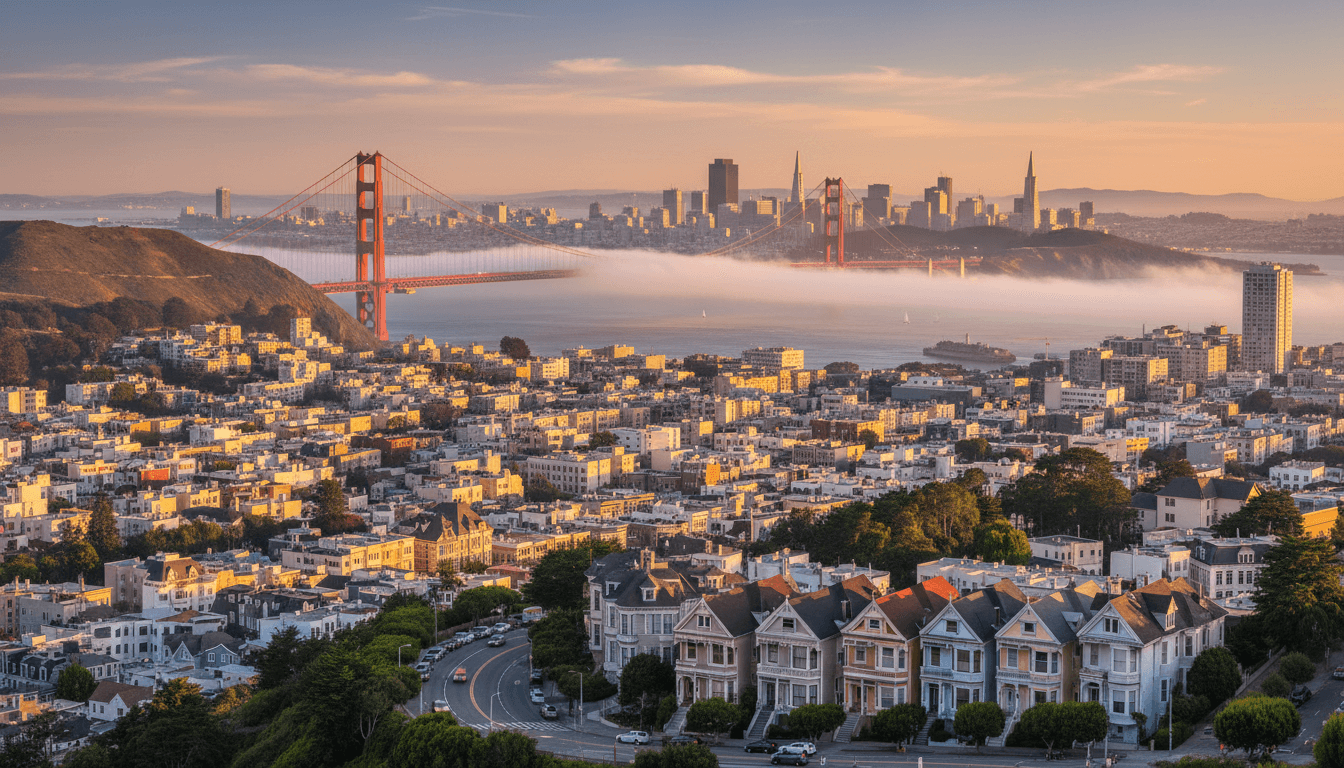
Picture stepping off the Powell-Hyde cable car at Fisherman's Wharf, fog rolling in through the Golden Gate, and knowing you're not about to hand over $400 for another night in a cramped hotel room. That's the reality for travelers who've discovered home exchange in San Francisco—a city where saving money feels almost revolutionary given the astronomical accommodation costs.
San Francisco consistently ranks among the most expensive cities in the United States for travelers. A mid-range hotel in Union Square averages $280-450 per night. Vacation rentals in neighborhoods like the Mission or Noe Valley? Easily $200-350 nightly, plus cleaning fees that can add another $150-200 per stay. For budget travelers hoping to explore the Bay Area for a week or two, these numbers can crush a trip before it starts.
Here's what experienced SwappaHome members have figured out: home exchange transforms San Francisco from a budget-breaker into something genuinely accessible. You're not paying for accommodation—you're trading the value of your own home, wherever that might be. A teacher from Austin swaps her two-bedroom bungalow for two weeks in a Victorian flat in Haight-Ashbury. A retired couple from Manchester exchanges their cottage for a month in a Sunset District home with a backyard. The accommodation cost? Zero dollars.
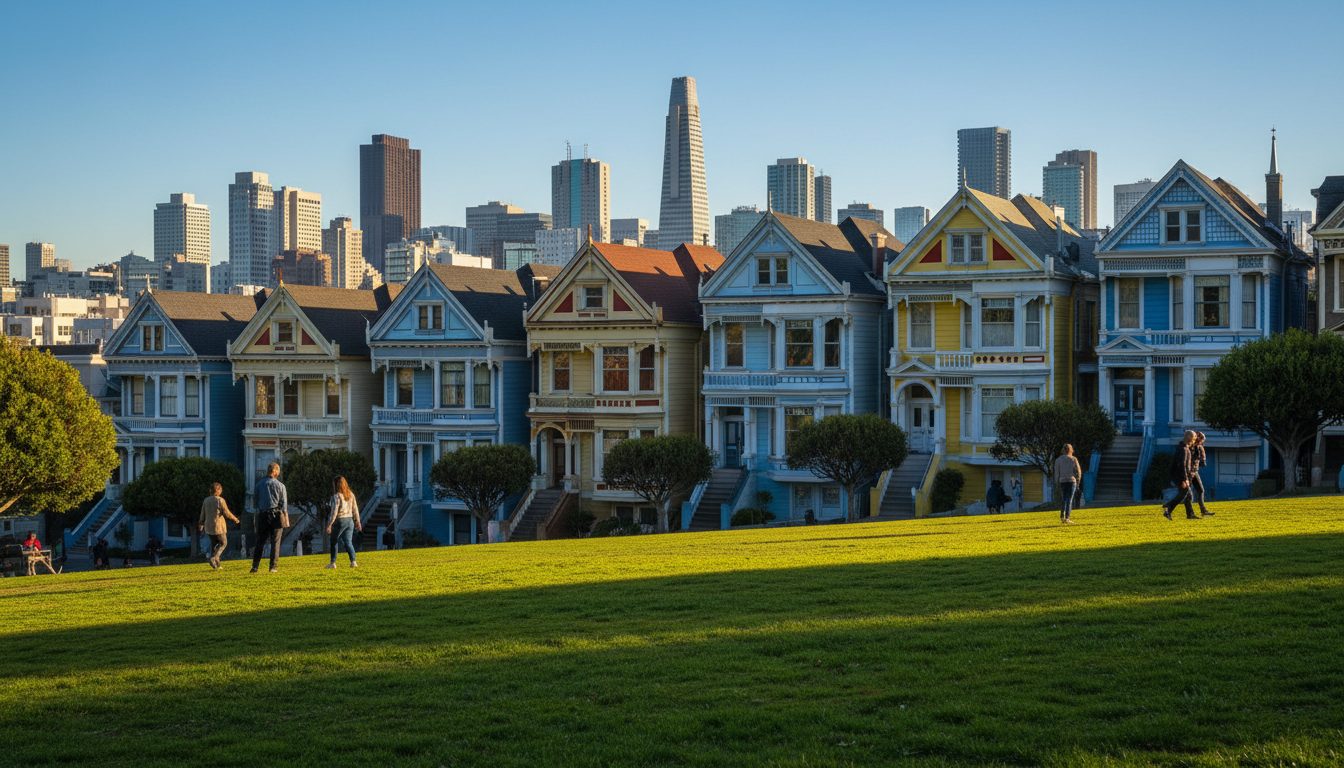 Victorian painted lady homes in San Franciscos Alamo Square with city skyline behind, morning light
Why San Francisco Home Exchange Makes Financial Sense
The math on San Francisco home exchange isn't complicated—it's just dramatic. SwappaHome community members regularly report savings of $3,000-6,000 on two-week Bay Area stays compared to traditional accommodation. That's not hyperbole; it's basic arithmetic applied to one of America's most expensive rental markets.
Consider the typical San Francisco trip budget breakdown. A family of four booking a vacation rental large enough to actually fit everyone—two bedrooms, a kitchen, maybe a washer-dryer—will spend $250-400 per night in neighborhoods like Cole Valley, Glen Park, or the Richmond District. That's $3,500-5,600 for a two-week stay, before anyone's eaten a single Mission burrito or ridden the F-Market streetcar down the Embarcadero.
With home exchange, that accommodation line item drops to zero. The SwappaHome credit system means you earn one credit for each night you host someone at your place, then spend one credit per night wherever you travel—whether that's a studio in the Tenderloin or a three-bedroom in Pacific Heights. New members start with seven free credits, enough for a full week in San Francisco without hosting anyone first.
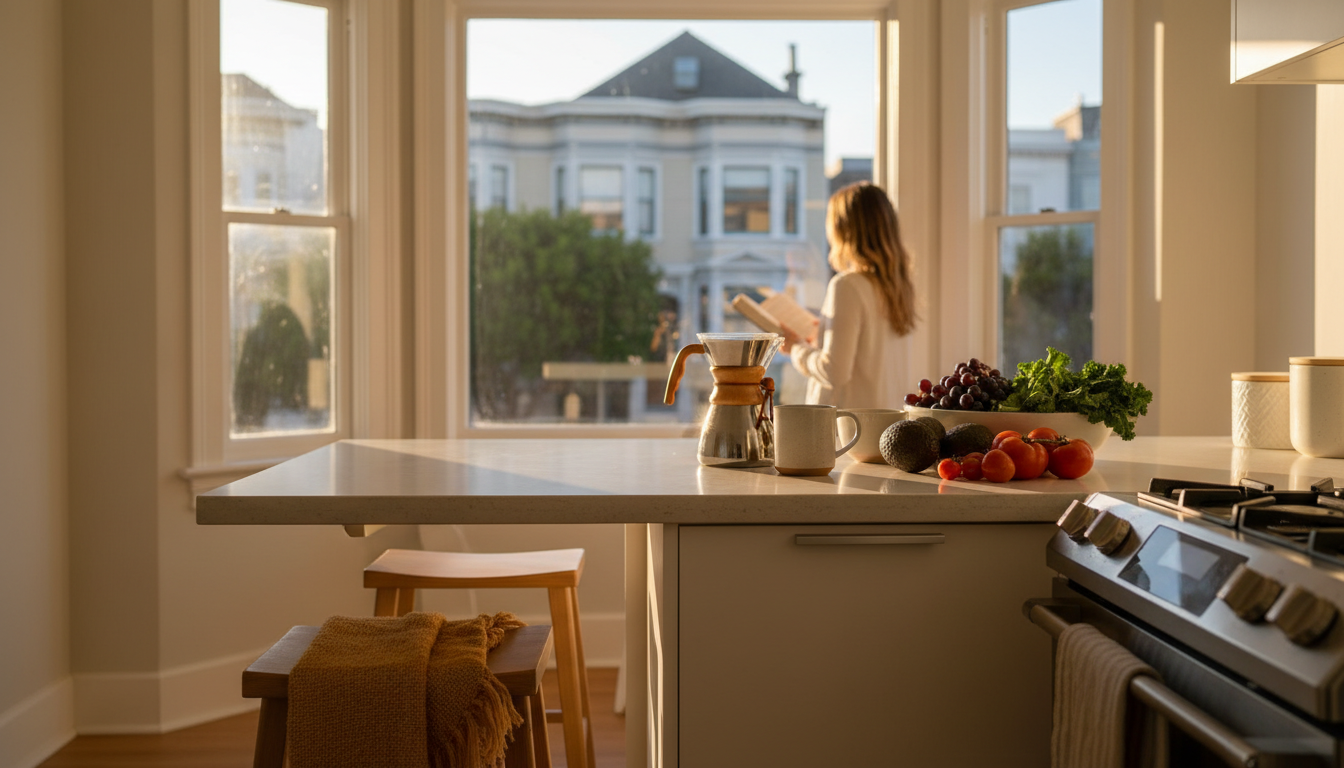
But the savings extend beyond the nightly rate. San Francisco home exchanges typically include a full kitchen—cooking breakfast in your borrowed Marina District flat instead of paying $18 for avocado toast at a café on Chestnut Street adds up fast. Grocery shopping at the Safeway on Marina Boulevard or the Trader Joe's on Masonic Avenue costs a fraction of restaurant meals. Most exchanges also include laundry facilities (two weeks of vacation laundry at a San Francisco laundromat runs $40-60 otherwise), and many hosts leave Clipper cards with remaining balances or share tips on free parking near their homes—genuinely valuable intel in a city where parking garages charge $40-60 per day.
There's something else, too. You're not staying in the tourist corridor; you're living in Russian Hill, Bernal Heights, or the Outer Sunset. That means access to neighborhood grocery stores, farmers markets, and local spots that don't charge tourist premiums.
 Bright modern kitchen in a San Francisco apartment with bay windows overlooking a tree-lined street,
Best San Francisco Neighborhoods for Budget-Minded Home Swappers
Not all San Francisco neighborhoods offer equal value for home exchange travelers. Some provide better transit access, cheaper local amenities, or more practical layouts for visitors. Here's where budget-conscious swappers tend to find the best fit.
The Sunset District: Space Without the Price Tag
The Sunset stretches from Golden Gate Park to Ocean Beach along San Francisco's western edge, and it's where many local families actually live. Homes here tend to be larger than in trendier neighborhoods—three bedrooms aren't unusual—with garages that solve the parking nightmare.
The trade-off? You're 30-45 minutes from downtown by Muni (the N-Judah line runs through the neighborhood). But for budget travelers, that distance translates to cheaper grocery options at the Sunset Super and neighborhood markets on Irving Street, affordable Vietnamese and Chinese restaurants on Taraval Street where pho runs $12-14, easy access to Ocean Beach for free morning walks, and Golden Gate Park's free attractions—including the botanical gardens on the second Tuesday of each month.
The Richmond District: Underrated and Accessible
Parallel to the Sunset but along the park's northern edge, the Richmond offers similar value with slightly better transit options. The 38 Geary bus runs frequently downtown, and you're walking distance to the California Academy of Sciences, de Young Museum, and the Japanese Tea Garden.
Clement Street—the neighborhood's main commercial strip—delivers some of San Francisco's best affordable eating. Dim sum at Good Luck Dim Sum costs $3-5 per plate. Burma Superstar's sister restaurant, B Star, offers the same flavors with shorter waits and lower prices. The Green Apple Books on Clement is a San Francisco institution where you can spend hours without spending much money.
Bernal Heights: Village Feel, Central Location
Bernal Heights occupies a hill in San Francisco's southern half, centered on Cortland Avenue's small-town main street. Home exchanges here put you 15 minutes from the Mission District's nightlife and restaurants, with a quieter home base that feels distinctly residential.
The neighborhood's Precita Park farmers market runs Saturdays, offering local produce at reasonable prices. Bernal Heights Park itself provides free panoramic views of the entire city—arguably better than the paid observation decks downtown.
The Mission: Worth the Premium for Some Travelers
The Mission District commands higher demand on home exchange platforms, but the location justifies it for travelers prioritizing walkability and nightlife. BART stops at 16th Street and 24th Street stations, putting the entire Bay Area within reach. Valencia Street's restaurants, bars, and shops sit outside your door.
Budget tip: Mission home exchanges often work best for solo travelers or couples who can use smaller spaces efficiently. The neighborhood's density means apartments trend smaller, but you're compensating with location value.
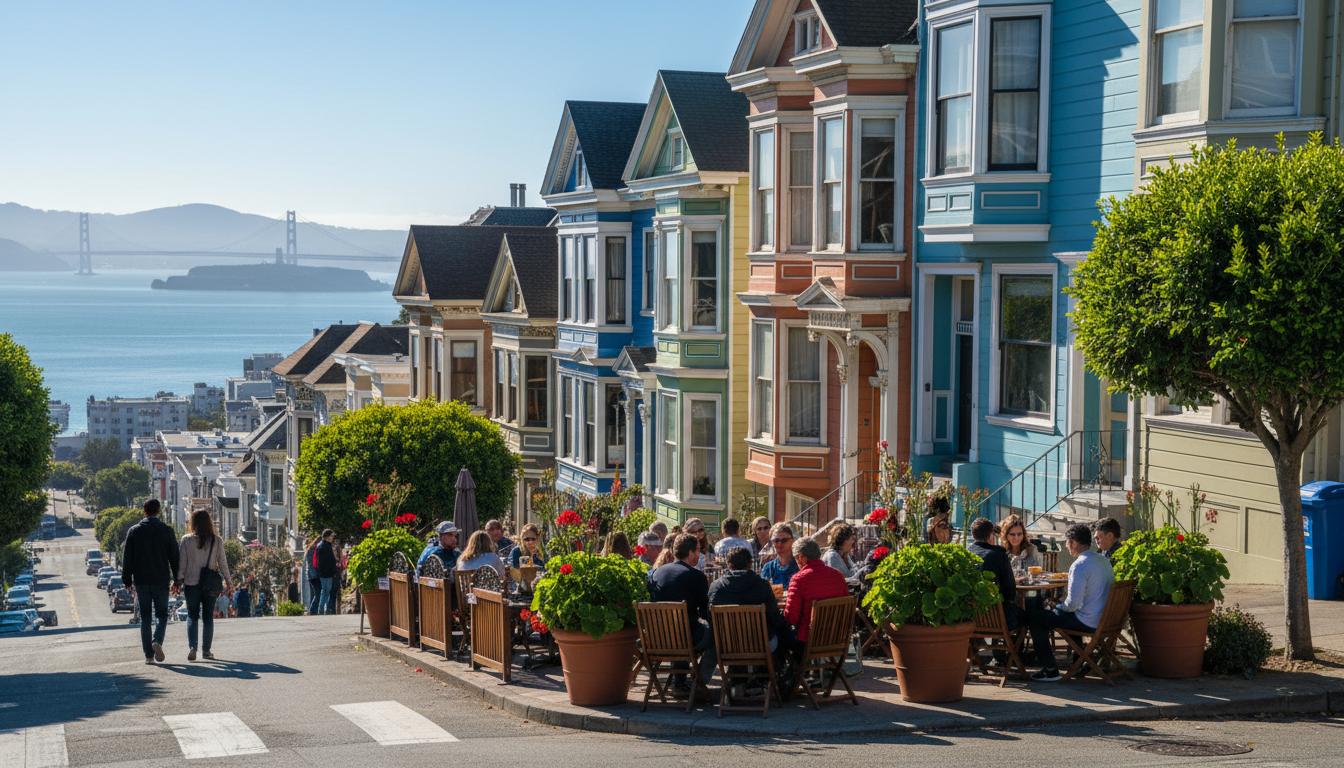 Colorful Victorian homes lining a steep San Francisco street with the Bay visible in the distance, a
How to Find San Francisco Home Exchanges (Practical Steps)
Securing a San Francisco home exchange requires strategy. The city's desirability means competition exists—but it also means San Francisco residents are actively looking to swap, creating genuine opportunities for travelers who approach the process thoughtfully.
Timing Your Search
San Francisco's tourism peaks from June through October, when the city's famous fog actually keeps temperatures mild while the rest of California bakes. Home exchange requests for these months should go out 3-4 months in advance. The SwappaHome community sees the highest San Francisco availability during November through February (when locals escape the rain and shorter days), early spring from March through April (before peak season but after the heaviest rains), and September through October (ironically San Francisco's warmest months, but slightly less competitive than summer).
Avoid planning around major San Francisco events unless you're specifically attending them. Dreamforce—Salesforce's annual conference, usually in September—books out downtown hotels and drives up all accommodation demand. Fleet Week in October and Pride Weekend in late June similarly compress availability.
Crafting Your Exchange Request
Generic requests disappear into the noise. San Francisco hosts receive multiple exchange inquiries, and the ones that succeed share common traits.
Be specific about why San Francisco. "We're visiting to see family in Berkeley and want to explore the city without commuting from the East Bay" resonates more than "We've always wanted to visit San Francisco." Mention specific neighborhoods you're interested in, activities you're planning, or connections you have to the area.
Highlight what makes your home appealing. San Francisco residents planning their own travels want to know what they're getting. A quiet street? Walking distance to restaurants? A spare bedroom for a child? A backyard? These details matter.
Offer flexibility. "We're hoping for the first two weeks of September but could adjust by a week in either direction" dramatically increases your match probability compared to fixed dates.
Building Your SwappaHome Profile for San Francisco Success
Your profile is your application. San Francisco hosts—particularly those in desirable neighborhoods—can afford to be selective. Profiles that succeed typically include detailed home descriptions with square footage, bedroom count, and specific amenities like parking, laundry, and outdoor space. Neighborhood context matters: What's walking distance? What's the transit situation? What makes your area special? Clear, well-lit photos—at least 10-15 images covering every room, the exterior, and neighborhood highlights—make a significant difference. Completing identity verification signals seriousness and builds trust, and even one or two positive reviews from previous exchanges significantly increase response rates.
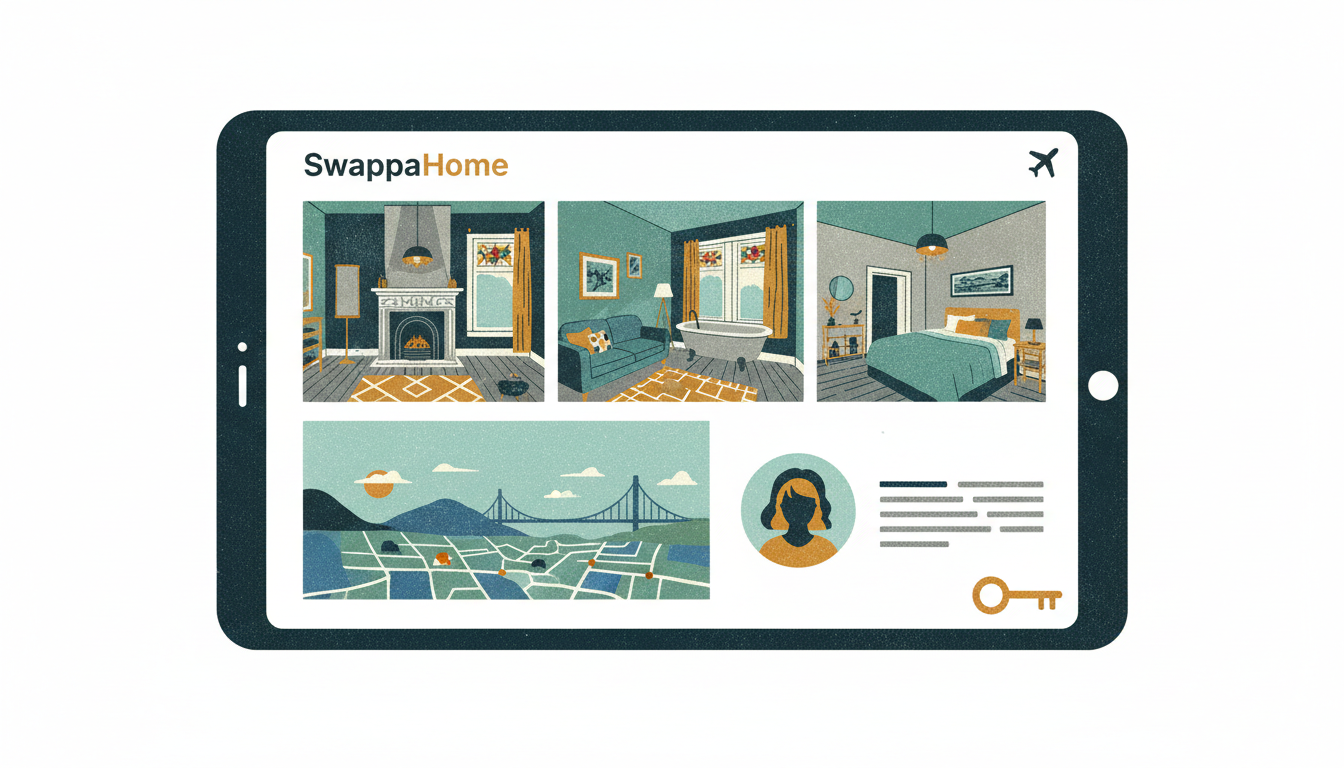 SwappaHome app interface showing a San Francisco listing with Victorian interior photos, neighborhoo
Maximizing Your Budget Once You're in San Francisco
Home exchange handles accommodation, but San Francisco still requires budget awareness for everything else. Here's how experienced SwappaHome members stretch their dollars once they arrive.
Transportation Strategy
San Francisco's public transit—Muni buses, light rail, cable cars, and BART—covers most of the city, but costs add up. A single Muni ride costs $3.00, and the famous cable cars charge $8.00 per ride.
The budget move: Get a Clipper card and load a monthly pass if staying more than a week. The $81 Muni monthly pass covers unlimited rides on all Muni services except cable cars. For shorter stays, the day pass ($24) or three-day pass ($40) offers better value than paying per ride.
Ask your home exchange host about their transportation habits. Many San Francisco residents have bikes they're willing to lend, or they can point you toward the city's bike share stations—Bay Wheels charges $3 per ride or $25 per month for unlimited 45-minute trips.
For trips outside the city to Wine Country, Muir Woods, or Berkeley, consider renting a car for specific days rather than the entire trip. Enterprise and Hertz locations in the Sunset and Richmond Districts often offer lower rates than downtown or airport locations.
Free and Low-Cost San Francisco Experiences
San Francisco delivers enormous value for travelers willing to seek out free options.
Walking the Golden Gate Bridge costs nothing (parking at the Presidio is free with some patience). Neither does exploring Golden Gate Park's trails, gardens, and meadows, wandering the murals in the Mission District's Balmy Alley and Clarion Alley, watching sea lions at Pier 39, hiking to the summit of Twin Peaks for 360-degree city views, browsing the Ferry Building Marketplace, or exploring Chinatown's temples, shops, and alleyways.
Several attractions offer free admission on specific days. The de Young Museum opens free on first Tuesdays. The California Academy of Sciences offers free admission on select Sundays—check their calendar. The Asian Art Museum is free on first Sundays, the Conservatory of Flowers on first Tuesdays, and the San Francisco Botanical Garden on second Tuesdays and every day for SF residents (your home exchange address may qualify).
For paid experiences, Alcatraz Island at $41 per adult is genuinely worth it—book 2-3 weeks ahead. Take the cable car once for the experience at $8, then use Muni for actual transportation. And skip the expensive Ferry Building Saturday market; try Alemany Farmers Market on Saturdays for better prices.
 Morning fog rolling through the Golden Gate Bridge towers with Marin Headlands visible, a lone jogge
Eating Well Without Breaking the Bank
San Francisco's food scene intimidates budget travelers, but the city's diversity creates affordable options in every neighborhood.
The Mission District delivers the best value for money. La Taqueria's legendary tacos run $4-6 each. El Farolito serves burritos until 3 AM for under $12. Tartine Manufactory's pastries cost $5-7 and justify every penny.
Chinatown offers dim sum breakfasts and lunches for $15-20 per person at spots like Good Mong Kok Bakery—arrive early, expect crowds, bring cash. The neighborhood's produce markets sell fruits and vegetables at half the price of Whole Foods.
The Sunset and Richmond Districts specialize in affordable Asian cuisines. Pho Hung on Irving Street serves massive bowls for $13-15. Kingdom of Dumpling in the Outer Sunset offers handmade dumplings at $8-12 per plate.
For groceries, Trader Joe's locations on Masonic Avenue and in Stonestown offer the best value for basics. For produce, the Alemany Farmers Market on Saturdays from 6 AM to 3 PM sells directly from farms at wholesale-adjacent prices. Your home exchange kitchen transforms these ingredients into meals at a fraction of restaurant costs.
Common Home Exchange Concerns (And How San Francisco Swappers Handle Them)
First-time home exchangers often hesitate around legitimate concerns. Here's how the SwappaHome community approaches these issues specifically in the San Francisco context.
"What if something gets damaged?"
SwappaHome doesn't provide damage insurance or coverage—that's important to understand upfront. The platform connects members; it doesn't guarantee outcomes. Experienced swappers handle this through personal renters or homeowners insurance (many policies cover short-term exchanges—check with your provider before traveling), dedicated travel insurance from providers like World Nomads or Allianz that can include property coverage, clear communication about house rules and expectations before the exchange, and the reputation system that creates accountability through reviews.
The honest reality: damage incidents are rare in the home exchange community. Members treating each other's homes with respect is the norm, not the exception—people who join home exchange platforms self-select for conscientiousness.
"Is San Francisco safe for home exchange?"
San Francisco's safety reputation varies wildly depending on who you ask. The practical truth: most residential neighborhoods where home exchanges occur are perfectly safe, while certain downtown and Tenderloin areas require urban awareness.
Home exchange actually improves your safety profile compared to hotels. You're staying in residential neighborhoods where locals live, not tourist corridors that attract opportunistic crime. Your host can provide specific guidance about their block and neighborhood.
Neighborhoods like the Sunset, Richmond, Bernal Heights, Noe Valley, and Glen Park see minimal street crime. The Mission requires more awareness, particularly late at night, but remains a popular and generally safe home exchange destination.
"What about parking and my rental car?"
San Francisco's parking situation frustrates even locals. Street parking in popular neighborhoods requires permit stickers unavailable to visitors or enforces strict time limits. Garages charge $30-60 per day.
Home exchanges often solve this. Many San Francisco homes—particularly in the Sunset, Richmond, and outer neighborhoods—include garage parking. Ask specifically when arranging your exchange. If your host's home lacks parking, they can usually point you toward free or cheap street parking within walking distance.
The budget-savvy approach: Don't rent a car for your entire San Francisco stay. Use transit within the city, then rent a car for specific day trips to Wine Country, Muir Woods, or Point Reyes. This strategy typically saves $200-400 over a two-week trip compared to keeping a rental car parked in a garage.
Real Budget Breakdown: Two Weeks in San Francisco
What does a budget San Francisco trip actually cost with home exchange? Here's a realistic breakdown based on SwappaHome community feedback:
With home exchange:
- Accommodation: $0
- Flights: Varies by origin (not included)
- Muni monthly pass: $81
- Groceries (cooking most meals): $250-350
- Dining out (6-8 restaurant meals): $200-300
- Activities (Alcatraz, one museum, cable car ride): $100-150
- Incidentals (coffee, snacks, small purchases): $100-150
Total two-week budget: $730-1,030
With hotel accommodation:
- Mid-range hotel (14 nights × $320 average): $4,480
- No kitchen, so more dining out: $600-800
- Same activities: $100-150
- Same incidentals: $100-150
Total two-week budget: $5,280-5,580
The difference—roughly $4,500—represents the transformative power of home exchange for budget travelers. That's money that could fund another trip entirely, or extend your San Francisco stay by weeks.
Getting Started: Your San Francisco Home Exchange Action Plan
Ready to make San Francisco affordable? Here's the practical sequence.
Week 1: Create your SwappaHome profile. Upload quality photos of your home. Write a detailed description highlighting what makes your place appealing to San Francisco residents who might want to visit your area.
Week 2: Complete identity verification. Browse San Francisco listings to understand what's available and what neighborhoods interest you.
Month 2-3: Start reaching out to San Francisco hosts. Send personalized messages explaining your travel dates, flexibility, and genuine interest in their specific home and neighborhood.
Month 3-4: Confirm your exchange. Coordinate logistics with your host—key handoff, house rules, local recommendations, parking situation.
Before departure: Get appropriate insurance coverage if desired. Prepare your own home for your incoming guest. Download the SFMTA app for real-time transit information.
San Francisco doesn't have to break your budget. The city's magic—the fog rolling through the Golden Gate, the Victorian houses climbing impossible hills, the burritos and dim sum and sourdough bread—remains exactly the same whether you're paying $400 a night or $0. Home exchange just means you get to experience more of it, for longer, without the financial stress.
The cable car will still clang up Powell Street. The sea lions will still bark at Pier 39. The sunset will still paint the sky orange over Ocean Beach. You'll just be watching from your borrowed living room in the Sunset District, glass of California wine in hand, having figured out something most tourists never discover.
Frequently Asked Questions
How much can I save with home exchange in San Francisco compared to hotels?
Typical savings range from $3,000-6,000 for a two-week San Francisco stay. Mid-range hotels in neighborhoods like Union Square or Fisherman's Wharf average $280-450 nightly, while vacation rentals in residential areas run $200-350 plus cleaning fees. Home exchange eliminates accommodation costs entirely—you're trading the value of your own home rather than paying cash.
Is home swapping in San Francisco safe for first-time exchangers?
Yes, with appropriate preparation. San Francisco home exchanges typically occur in residential neighborhoods like the Sunset, Richmond, Bernal Heights, and Noe Valley—areas where local families live and street crime is minimal. SwappaHome's verification and review systems help establish trust between members. Most experienced swappers recommend getting your own travel or homeowners insurance for additional peace of mind, as the platform doesn't provide damage coverage.
What are the best San Francisco neighborhoods for home exchange?
The Sunset and Richmond Districts offer the best value—larger homes, easier parking, and lower-cost local amenities, though they're 30-45 minutes from downtown. Bernal Heights provides a village feel with good transit access. The Mission District commands higher demand but delivers unmatched walkability and food options. Noe Valley and Glen Park work well for families seeking quiet, residential settings.
When should I start looking for a San Francisco home exchange?
Begin your search 3-4 months before your desired travel dates for peak season (June-October). San Francisco's highest home exchange availability typically occurs November-February when locals escape the rain, and September-October when the city enjoys its warmest weather. Avoid booking around major events like Dreamforce, Fleet Week, or Pride Weekend unless you're specifically attending.
Can I use public transit easily from San Francisco home exchange locations?
Absolutely. Muni buses and light rail serve virtually every neighborhood, and BART connects to the East Bay and SFO airport. A monthly Muni pass costs $81 and covers unlimited rides except cable cars. Many home exchange hosts also lend bikes or share tips on the Bay Wheels bike share system. Ask your host about transit options from their specific location—some neighborhoods like the Richmond have excellent bus service while others rely more on light rail lines.

Published by
SwappaHome
SwappaHome Editorial Team
Home Exchange & Slow Travel Editorial
The SwappaHome Editorial Team brings together travel research, home-exchange community insights, and platform data to produce practical guides for first-time and experienced home swappers. Every article cites real platforms, current market rates, and verifiable city-level facts so readers can make informed decisions without guessing.
Ready to try home swapping?
Join SwappaHome and start traveling by exchanging homes. Get 7 free credits when you sign up!
Related articles
How to Extend or Modify a Home Swap Mid-Stay: The Complete Flexibility Guide
Need to extend your home swap or change dates mid-trip? Here's exactly how to negotiate changes, handle credits, and keep both parties happy.

How to Visit Bali for Free with Home Exchange: The Complete 2026 Guide
Skip the $150/night villas. Home exchange in Bali lets you stay in Ubud rice field houses and Seminyak beach pads for zero accommodation cost. Here's exactly how.
How to Vet Home Swap Guests: 12 Red Flags Every Host Should Know
Learn how to vet home swap guests before handing over your keys. Spot the 12 red flags experienced hosts watch for—and protect your home with confidence.