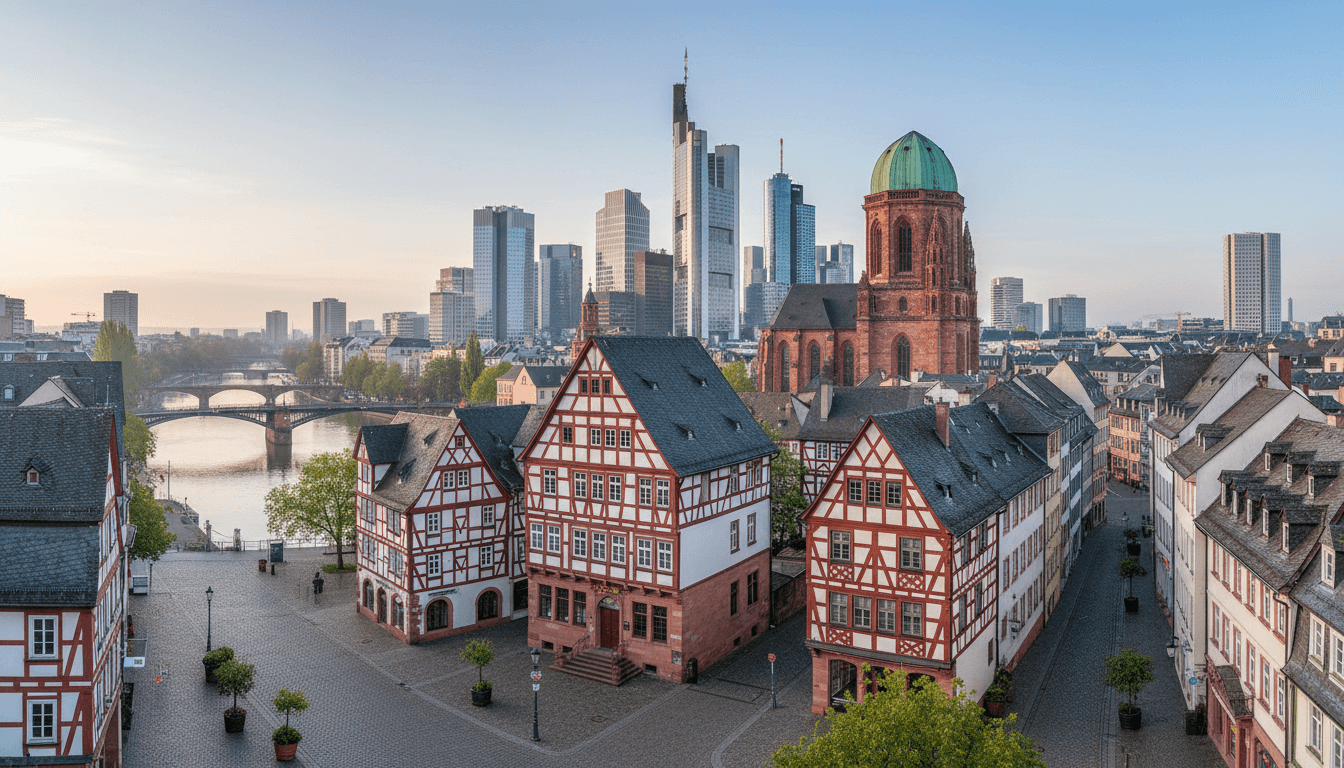
Home Exchange in Frankfurt: Your Complete Guide to Free Accommodation in Germany's Financial Capital

SwappaHome Editorial Team
Home Exchange & Slow Travel Editorial
Discover how home exchange in Frankfurt can save you $200+ per night while living like a local in Germany's most underrated city.
I almost skipped Frankfurt entirely.
Everyone told me it was just a banking hub, a stopover city, a place you fly through on your way to somewhere more interesting. But three years ago, I did a home exchange in Frankfurt's Nordend neighborhood, and honestly? It completely rewired how I think about this city—and about the hidden gems we overlook because of outdated stereotypes.
That week, I paid exactly zero euros for accommodation. I woke up in a sun-filled apartment with original parquet floors, walked to a Turkish bakery for fresh simit, and spent my days discovering a city that felt nothing like the cold financial center I'd been warned about. My host, Katrin, left me a hand-drawn map of her favorite spots—a jazz bar in Bornheim, a secret swimming spot along the Main River, a wine tavern in Sachsenhausen that doesn't appear on Google Maps.
Home exchange in Frankfurt isn't just about free accommodation. It's about experiencing a city that most tourists never actually see.
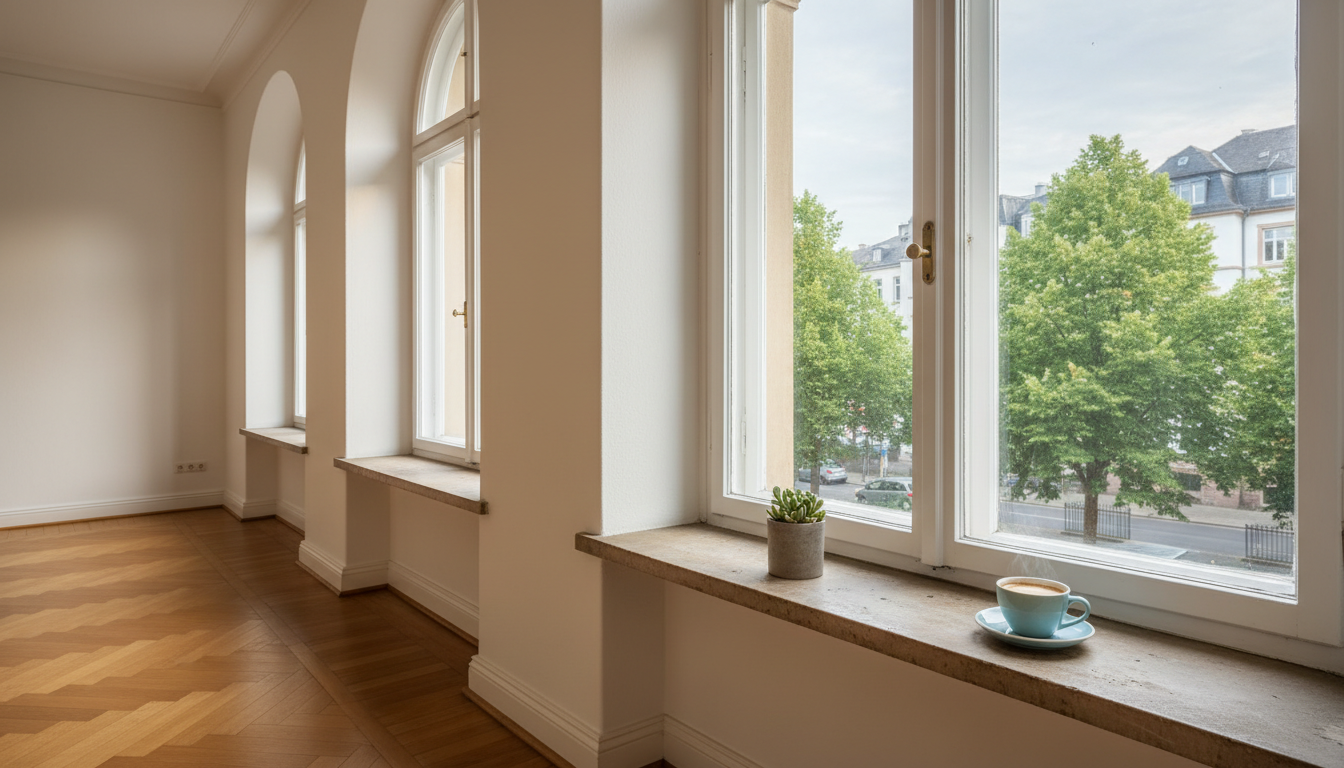 Morning light streaming through tall windows of a classic Frankfurt Altbau apartment, wooden floors,
Why Home Exchange in Frankfurt Makes Financial Sense
Let me hit you with some numbers that might make you reconsider that hotel booking.
Frankfurt hotels are expensive. Like, really expensive. The city hosts massive trade fairs—Messe Frankfurt is one of the world's largest exhibition grounds—and hotel prices swing wildly depending on when you visit. During events like the Frankfurt Book Fair or IAA auto show, a basic business hotel can run you $300-400 per night. Even during "normal" weeks, expect $150-200 for anything decent near the center.
Compare that to home exchange through SwappaHome, where you're spending 1 credit per night regardless of the property. You earn those credits by hosting travelers in your own home—1 credit per night, no matter where you live. A week in Frankfurt that might cost you $1,400+ in hotels? Zero dollars in accommodation costs.
But here's what people miss when they only focus on savings: the quality of experience is fundamentally different.
In a hotel, you're a guest in a sanitized, impersonal space. In someone's Frankfurt apartment, you're borrowing a life. You have a kitchen to cook local Grüne Soße—that weird green herb sauce Frankfurt is obsessed with, and yes, you should try it. You have a washing machine. You have a neighborhood where the bakery owner starts recognizing you by day three. That's worth more than any amount of money saved. Though the money saved is pretty great too.
Best Frankfurt Neighborhoods for Home Exchange
Not all Frankfurt neighborhoods are created equal, and where you stay dramatically shapes your experience. Here's my honest breakdown after spending time in several areas through different exchanges.
Nordend: Where I'd Choose Every Time
Nordend is my favorite Frankfurt neighborhood, full stop.
It's residential, leafy, and feels like a small village that happens to be 15 minutes from a major financial district. The streets are lined with Wilhelminian-era buildings—those gorgeous four-story apartment blocks with high ceilings and ornate facades that make you want to photograph every doorway.
Berger Straße runs through the heart of it, basically a kilometer of independent cafés, boutiques, and restaurants. Saturday mornings, there's a farmers market at Friedberger Platz that's worth waking up early for. Home exchange properties here tend to be classic Altbau apartments—think 10-foot ceilings, wooden floors, and that particular European charm no hotel can replicate. They're on the smaller side (this is Frankfurt, not Texas), but the character more than makes up for square footage.
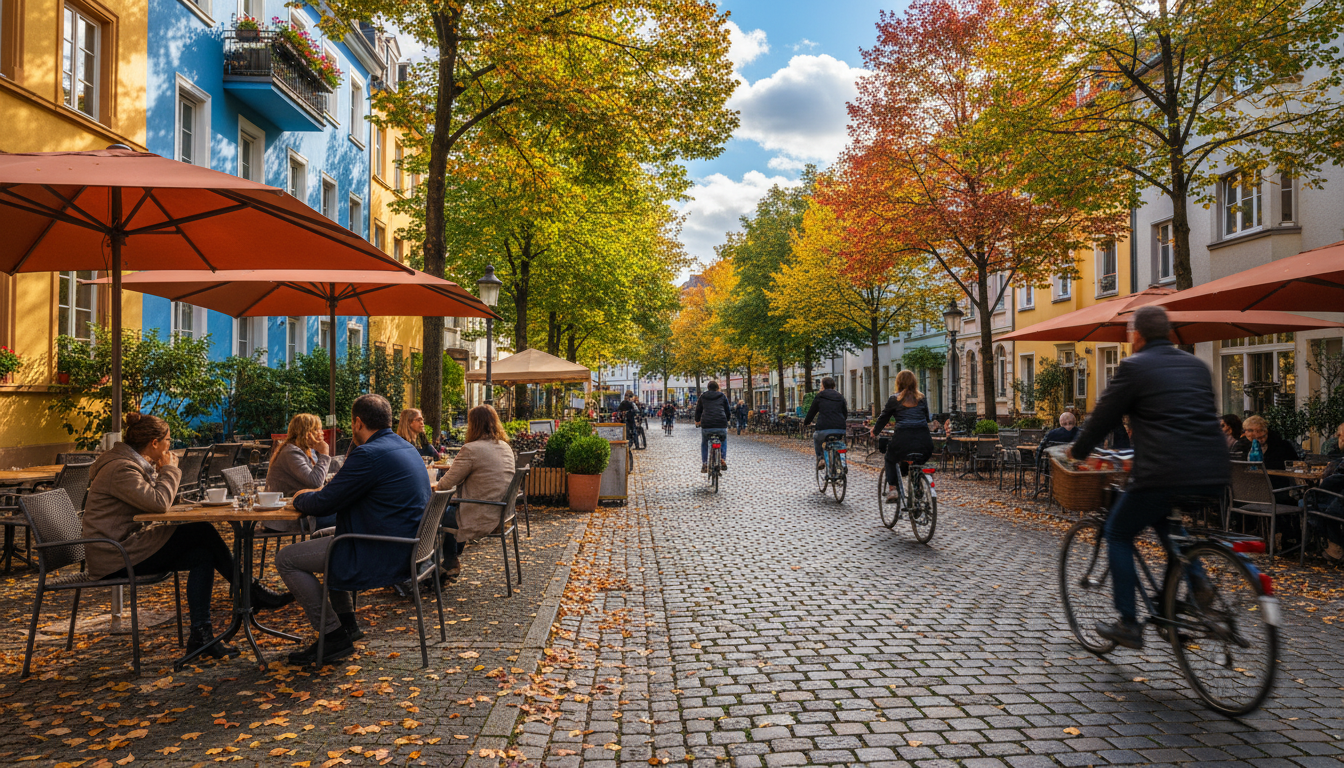 Cobblestone street in Frankfurts Nordend neighborhood, outdoor caf tables, locals on bicycles, autum
Sachsenhausen: For Apple Wine and River Views
Sachsenhausen sits on the south bank of the Main River, and it's where Frankfurters go to drink Apfelwein in traditional taverns. The area around Schweizer Straße has a village-like feel, while Alt-Sachsenhausen is more touristy but still fun for an evening out.
The Museumsufer runs along the river here, so you're walking distance from world-class museums like the Städel and the German Film Museum. I did a weekend exchange in Sachsenhausen once and spent an entire afternoon just walking the riverbank, watching rowers glide past. Home exchanges here range from modern apartments in newer buildings to traditional homes on quieter side streets. If you're a museum person or want that river proximity, this is your spot.
Bornheim: The Artsy Alternative
Bornheim is where Frankfurt gets a little weird—in the best way.
It's younger, more alternative, and has that creative energy you find in transitional neighborhoods. Berger Straße continues through here (it's a long street), and this section has more bars, live music venues, and late-night döner spots. I'd recommend it if you're in your 20s-30s, traveling solo, or just prefer neighborhoods with more nightlife options. The architecture is more mixed—some beautiful old buildings, some post-war reconstruction, some modern additions.
Westend: For a Quieter, Upscale Experience
Westend is Frankfurt's old-money neighborhood, with grand villas, embassy buildings, and proximity to the Palmengarten botanical garden. It's quieter and more residential than the other options—perfect or boring depending on what you're after. Home exchanges here tend to be larger properties, sometimes actual houses with gardens, which is rare in central Frankfurt. Traveling with family or want more space? Worth filtering for.
How to Find the Perfect Frankfurt Home Exchange
Alright, practical stuff.
Timing matters more than you'd think. Frankfurt's hotel prices spike during trade fairs, but home exchange availability can actually be better during these periods—locals often want to escape the chaos and are happy to have someone watch their apartment. Check the Messe Frankfurt calendar before you plan your trip.
On SwappaHome, I always filter by neighborhood first. I know I want Nordend or Sachsenhausen, so I start there rather than scrolling through every listing. Look at the photos carefully—Germans tend to be understated in descriptions, so a "cozy apartment" might actually be quite spacious. Read reviews from previous guests. In my experience, German hosts are incredibly reliable and often leave detailed house guides. Multiple positive reviews mentioning cleanliness and communication? You're in good hands.
Send a personalized message when you request a stay. Mention something specific about their home or neighborhood. I once secured a fantastic exchange because I mentioned I was excited to try the bakery the host had recommended in their listing. Small details show you're a real person who'll respect their space.
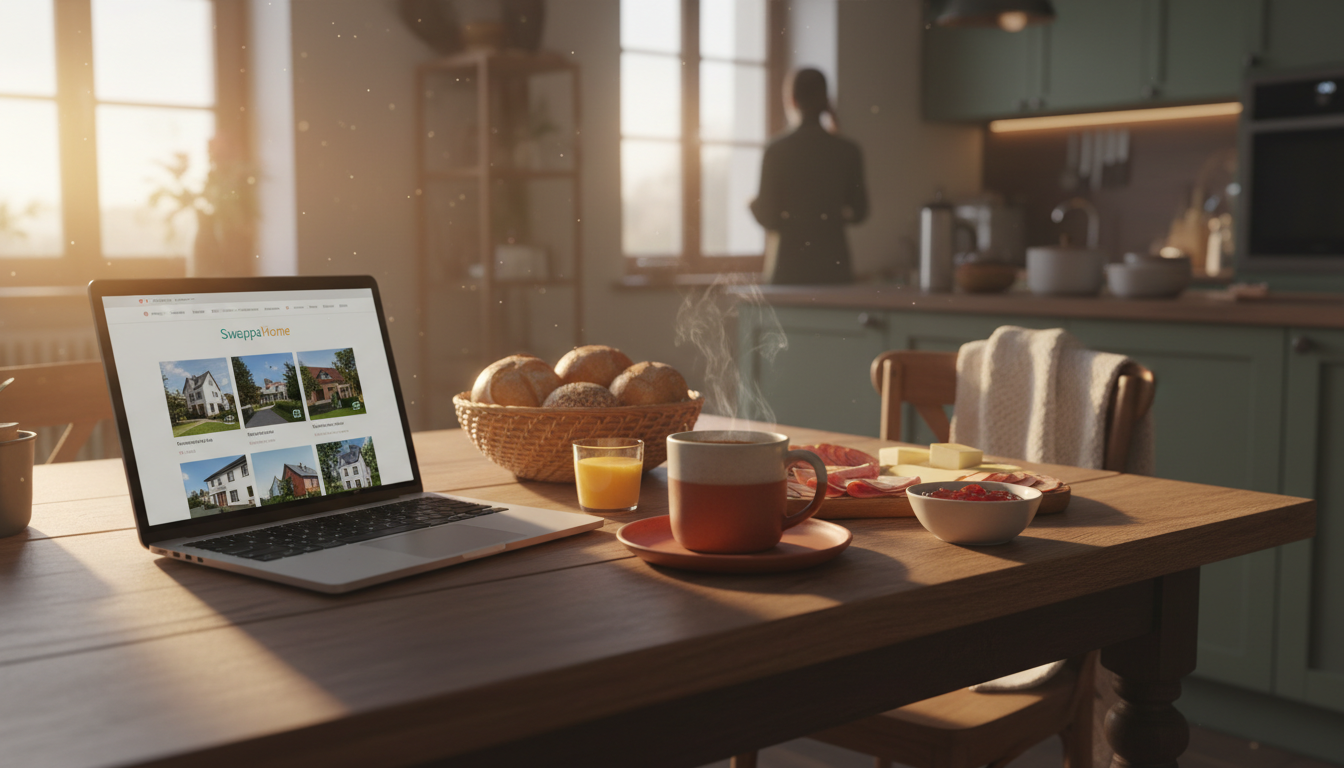 Laptop open on kitchen table showing SwappaHome interface, coffee and German breakfast spread nearby
What Your Frankfurt Home Exchange Hosts Expect
German hosts—and I'm generalizing here, but it's been consistent in my experience—have certain expectations that differ from hosts in other countries.
They value punctuality. If you say you're arriving at 3 PM, arrive at 3 PM. Not 2:30, not 3:45. This isn't rigidity; it's cultural respect. They expect you to follow house rules precisely. If the recycling system has four different bins (and it will), use them correctly. If quiet hours are 10 PM to 7 AM, don't vacuum at 6:30 AM. Germans take these things seriously, and respecting the rules is how you get glowing reviews.
They appreciate direct communication. Something's wrong—hot water isn't working, you can't figure out the coffee machine—just ask. Germans prefer straightforward questions to polite hinting.
In return? You'll get hosts who are incredibly thorough. I've received house guides with maps, transit instructions, restaurant recommendations organized by cuisine, and notes about which neighbors are friendly. My Nordend host left me a laminated card with the WiFi password, emergency numbers, and instructions for the complicated German window-tilting mechanism. If you know, you know.
Free and Cheap Things to Do in Frankfurt
Since you're saving hundreds on accommodation, let's talk about experiencing Frankfurt without destroying your budget.
Walking the Museumsufer costs nothing, and the architecture along the river is gorgeous. Every Saturday it becomes a gathering spot where locals jog, cycle, and picnic. The Römerberg—Frankfurt's reconstructed medieval square—is free to wander, though admittedly touristy. Go early morning before the crowds.
Here's a local tip: the Main Tower observation deck costs €9, but the restaurant at the top has no cover charge if you're just having a drink. A €6 beer with the same view? Much better deal.
Frankfurt's parks are exceptional. The Palmengarten requires €7 admission, but the adjacent Grüneburgpark is free and nearly as beautiful. Pack a picnic.
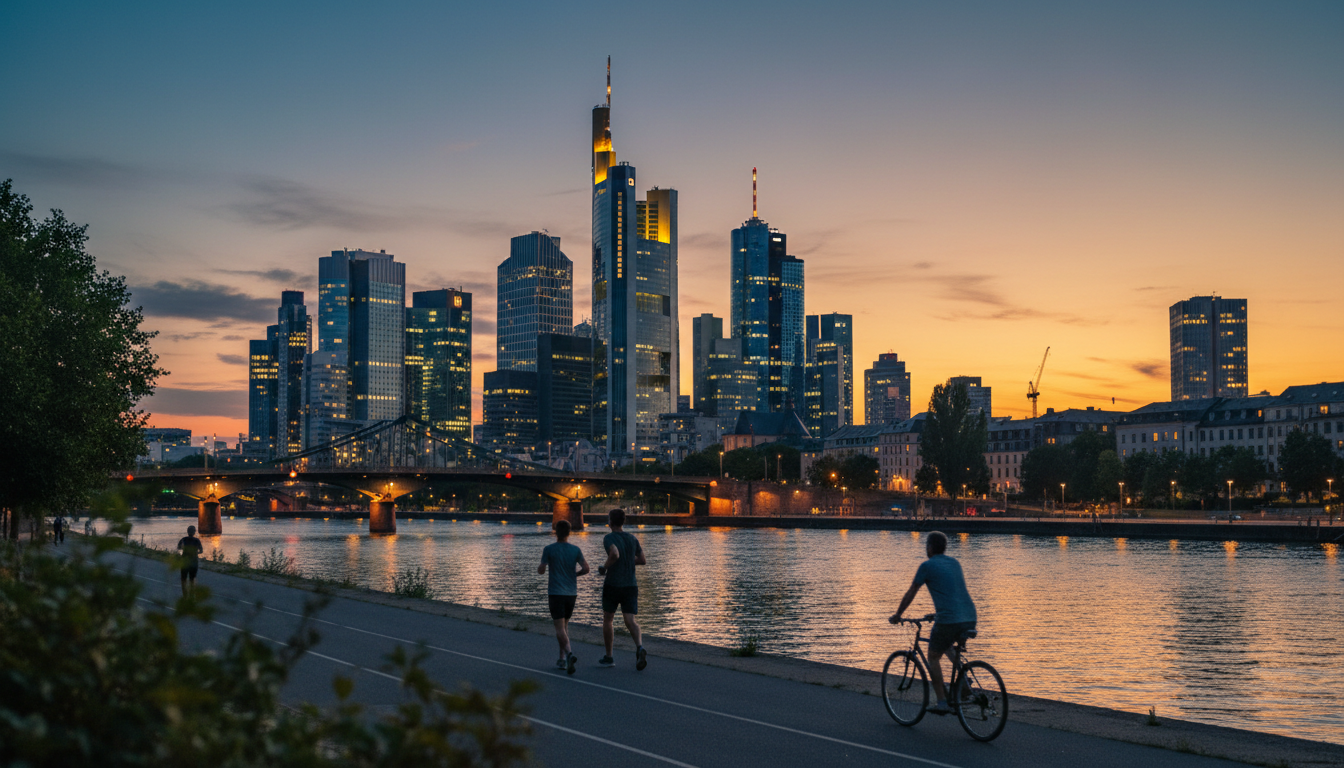 Sunset view of Frankfurt skyline from the Main River bank, joggers and cyclists on the path, city li
For eating, the Kleinmarkthalle is Frankfurt's historic market hall where locals actually shop. You can assemble an incredible lunch—fresh bread, local cheese, Handkäse (a pungent regional cheese that's an acquired taste), seasonal fruit—for under €10. For traditional food, hit an Apfelwein tavern in Sachsenhausen. A glass of apple wine runs €2.50-3, and Schnitzel with Grüne Soße is around €14-16. Try Adolf Wagner or Zum Gemalten Haus for the authentic experience. Döner kebabs in Bornheim are €5-7 and absolutely massive—my go-to was Best Döner on Berger Straße. Creative name, excellent food.
If you're paying for one museum, make it the Städel. One of Germany's most important art museums, everything from Botticelli to Gerhard Richter. Admission is €16, but it's free on the last Saturday of each month.
Getting Around Frankfurt for Free (or Nearly Free)
Frankfurt is extremely walkable if you're staying in the central neighborhoods I mentioned. I did my entire Nordend exchange without once taking public transit—everything was within a 20-minute walk.
But if you need to cover more ground: a single U-Bahn/S-Bahn ticket within the city costs €2.75, a day pass is €5.95 and worth it if you're making more than two trips. Frankfurt has a bike-sharing system called nextbike—€1 per 30 minutes, which adds up, but convenient for a quick trip across the river. Some home exchange hosts leave bikes for guests to use. Always worth asking.
The airport connects to city center by S-Bahn. It's €5.35 and takes about 15 minutes. Do not take a taxi unless you enjoy spending €40 unnecessarily.
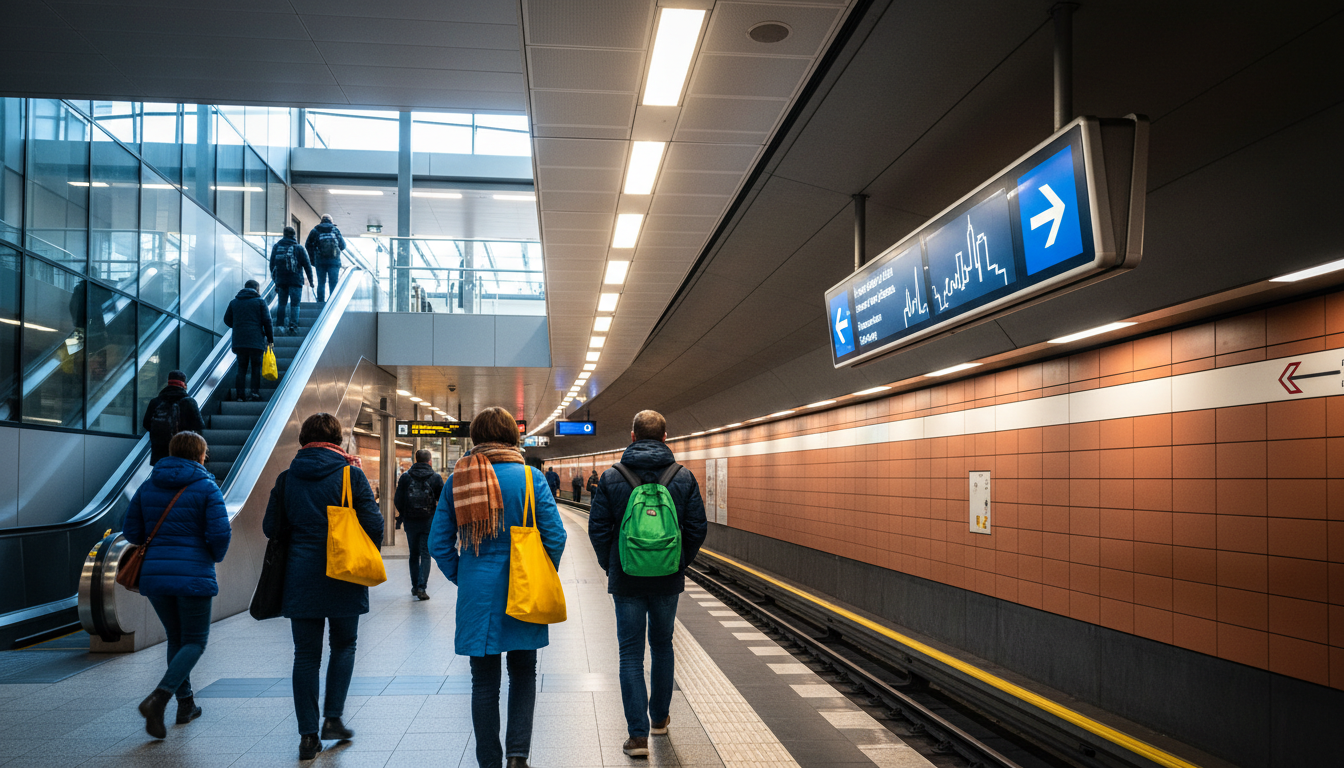 Frankfurt U-Bahn station with modern design, local commuters, clear signage showing city center dire
When to Visit Frankfurt for the Best Home Exchange Experience
Frankfurt's weather is... fine. Continental European weather—cold winters, warm summers, unpredictable springs and falls. But timing your visit strategically makes a difference.
April through June is my favorite window. Parks are blooming, outdoor café culture kicks in, trade fair season has mostly calmed down. Hotel prices normalize, but more importantly, locals are in good moods because the sun has returned.
September is excellent if you catch the Museumsuferfest—a three-day festival along the river with music, food, and free museum entry. One of Germany's largest cultural festivals, and the energy is infectious.
December brings Christmas markets, and Frankfurt's is legitimately one of Germany's best. The Römerberg transforms into a winter wonderland, the smell of Glühwein and roasted almonds everywhere. Home exchanges during this period are popular, so book early.
Avoid major trade fairs unless you're attending them. Frankfurt Book Fair (October), IAA auto show (September, odd years), and Ambiente (February) all cause hotel prices to triple and the city to feel overcrowded.
My Honest Take on Frankfurt
Look, I'm not going to pretend Frankfurt is Paris or Barcelona. It doesn't have that immediate, obvious charm that makes you fall in love at first sight.
But that's actually what I like about it.
Frankfurt rewards the curious. It's a city where you have to look a little harder, walk a little further, ask a few more questions. And when you're staying in someone's home rather than a generic hotel, you're automatically positioned to discover the real city. The Frankfurt I experienced through home exchange—the jazz bars, the hidden wine taverns, the morning runs along the river, the neighborhood bakeries—that Frankfurt is genuinely wonderful. It's just not the Frankfurt you see from the airport or the convention center.
Home exchange isn't just a way to save money here. It's the key that unlocks a completely different city.
Getting Started with Your Frankfurt Home Exchange
If you're new to home exchange, Frankfurt is actually an ideal city to start. German hosts tend to be organized, communicative, and reliable—exactly what you want for your first experience.
On SwappaHome, you'll start with 7 free credits when you sign up. That's 7 nights of accommodation anywhere in the network, including Frankfurt. List your own home, start earning credits by hosting, and suddenly that Frankfurt trip becomes financially feasible in a way it wasn't before.
I've done over 40 home exchanges across 25 countries, and I still remember that first Frankfurt exchange as one of the most eye-opening. Not because it was the most dramatic or exotic—but because it taught me that the best travel experiences often happen in places we almost skip.
Frankfurt is waiting. And someone's apartment in Nordend might just change how you see the whole city.
Frequently Asked Questions
Is home exchange in Frankfurt safe?
Home exchange in Frankfurt is generally very safe. SwappaHome's review system means members rate each other after stays, building accountability and trust. German hosts tend to be particularly reliable and communicative. For extra peace of mind, consider getting your own travel insurance that covers personal belongings—that's your responsibility to arrange.
How much can I save with home exchange in Frankfurt compared to hotels?
Frankfurt hotels average $150-200 per night during normal periods and spike to $300-400 during trade fairs. A week-long home exchange saves you $1,050-2,800 in accommodation costs. SwappaHome uses a simple credit system—1 credit equals 1 night, regardless of property—so your only costs are the membership fee and earning credits by hosting at your own home.
What are the best neighborhoods for home exchange in Frankfurt?
Nordend offers charming Altbau apartments and a village-like atmosphere. Sachsenhausen provides river views and museum proximity. Bornheim suits younger travelers seeking nightlife and creative energy. Westend offers larger, quieter properties near the Palmengarten. Filter by neighborhood on SwappaHome to find properties matching your preferences.
When should I avoid visiting Frankfurt for home exchange?
Avoid major trade fair dates when the city gets overcrowded: Frankfurt Book Fair (October), IAA auto show (September, odd years), and Ambiente (February). Check the Messe Frankfurt calendar before booking. Conversely, these periods can offer good home exchange availability since locals often want to escape the chaos.
Do I need to speak German for home exchange in Frankfurt?
No. English proficiency is high in Frankfurt, especially among the internationally-minded people who participate in home exchange. Most hosts communicate comfortably in English and provide house guides in English. Learning basic German phrases—Danke, Bitte, Guten Tag—is appreciated but not required.

Published by
SwappaHome
SwappaHome Editorial Team
Home Exchange & Slow Travel Editorial
The SwappaHome Editorial Team brings together travel research, home-exchange community insights, and platform data to produce practical guides for first-time and experienced home swappers. Every article cites real platforms, current market rates, and verifiable city-level facts so readers can make informed decisions without guessing.
Ready to try home swapping?
Join SwappaHome and start traveling by exchanging homes. Get 7 free credits when you sign up!
Related articles
How to Extend or Modify a Home Swap Mid-Stay: The Complete Flexibility Guide
Need to extend your home swap or change dates mid-trip? Here's exactly how to negotiate changes, handle credits, and keep both parties happy.

How to Visit Bali for Free with Home Exchange: The Complete 2026 Guide
Skip the $150/night villas. Home exchange in Bali lets you stay in Ubud rice field houses and Seminyak beach pads for zero accommodation cost. Here's exactly how.
How to Vet Home Swap Guests: 12 Red Flags Every Host Should Know
Learn how to vet home swap guests before handing over your keys. Spot the 12 red flags experienced hosts watch for—and protect your home with confidence.