
Home Swapping in Frankfurt for Seniors: Your Complete Guide to Comfortable, Affordable Travel
Maya Chen
Travel Writer & Home Exchange Expert
Discover how seniors can enjoy Frankfurt through home swapping—accessible neighborhoods, easy transport, and authentic experiences without hotel hassles.
My mother called me last spring with a question I wasn't expecting. "Maya, you know that home swapping thing you do? Could someone my age actually pull that off?"
She was 67, had just retired from teaching, and was staring down a bucket list that included Germany. Specifically, Frankfurt—where her grandfather had emigrated from in 1923. But hotels were expensive, Airbnbs felt impersonal, and she wasn't sure her knees could handle youth hostels anymore.
Three months later, she spent two weeks in a ground-floor apartment in Sachsenhausen, waking up to church bells and walking to the local bakery for Brötchen every morning. She paid nothing for accommodation. And she came home with stories I'm still hearing about.
Home swapping in Frankfurt for seniors isn't just possible—it might actually be the ideal way to experience this underrated German city. Frankfurt offers something rare: world-class accessibility, excellent public transit, and a pace that's energetic without being exhausting. And when you're staying in a real home instead of a hotel, you get the kitchen for your morning medications, the comfortable bed you actually slept well in, and a neighborhood that starts to feel like yours.
Let me walk you through everything I've learned—both from my own swaps and from watching my mom navigate hers.
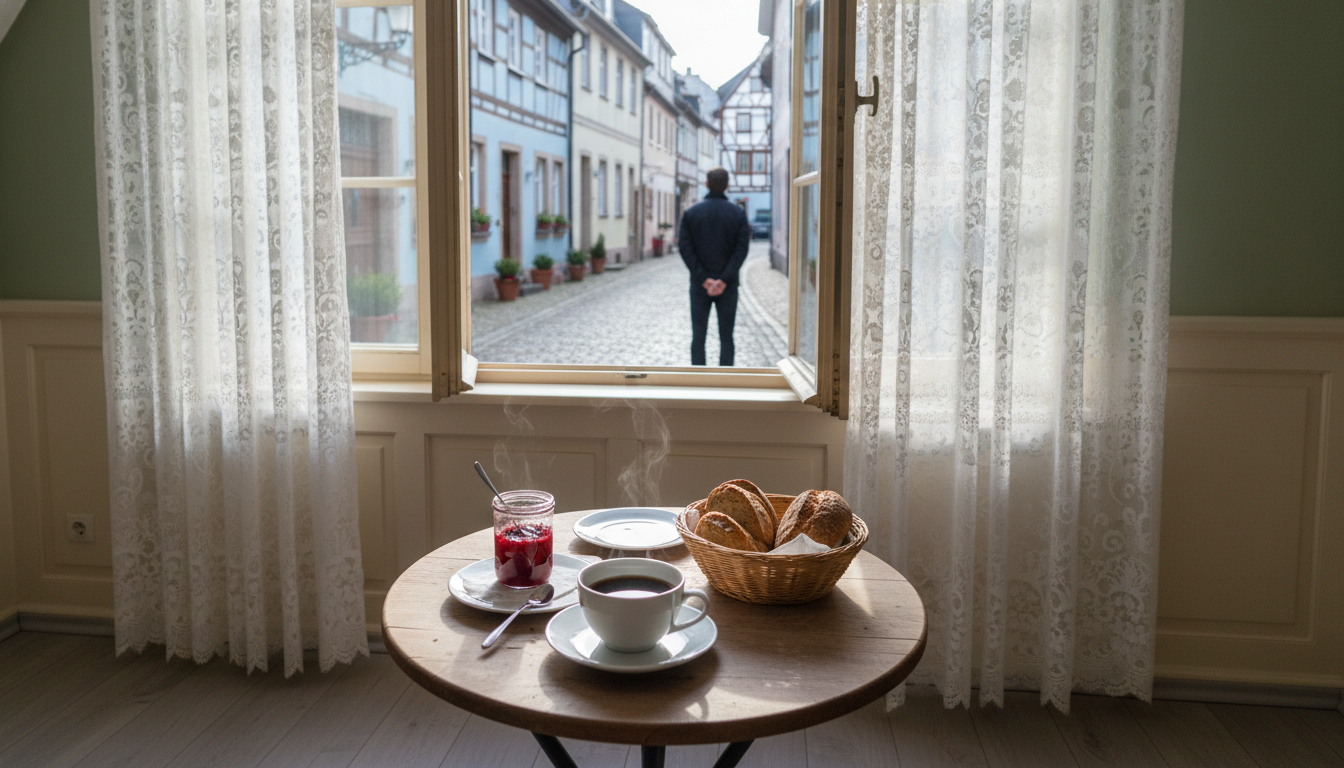 Morning light streaming through lace curtains in a traditional Frankfurt apartment, with a small bre
Why Frankfurt Is Surprisingly Perfect for Senior Home Swappers
I'll be honest with you: Frankfurt wasn't on my radar for years. I thought of it as a banking hub, a layover city, a place you passed through on the way to somewhere more charming.
I was completely wrong.
Frankfurt has this duality that works remarkably well for travelers who want culture without chaos. The city center is compact—you can walk from the Römerberg (the historic square) to the museum embankment in about fifteen minutes. But if walking isn't your thing, the public transit system is genuinely exceptional.
The U-Bahn and S-Bahn trains have elevators at most stations. Buses kneel for easier boarding. Trams are frequent and air-conditioned. My mom, who uses a cane on bad days, said she never once felt stranded or exhausted by getting around.
Here's what surprised me most: Frankfurt has a significant senior population, and the city is designed with accessibility in mind because the people who live there need it. Curb cuts are everywhere. Restaurants have wide aisles. Museums offer seating throughout galleries. This isn't performative accessibility—it's woven into how the city actually functions.
For home swapping specifically, Frankfurt offers another advantage: a strong community of German retirees who love to travel but appreciate the security of having their home looked after. Many of them specifically seek out mature, responsible swappers. My mom's host, Ingrid, told her she preferred swapping with "people who understand that a home is more than walls."
Best Frankfurt Neighborhoods for Senior Home Swapping
Not all neighborhoods are created equal when you're prioritizing comfort and accessibility. Here's where I'd focus your search:
Sachsenhausen: The Classic Choice
This is where my mom stayed, and I'd recommend it first for most senior travelers. Sachsenhausen sits just south of the Main River, connected to the city center by multiple bridges and excellent transit. The neighborhood has two distinct personalities: the touristy apple wine tavern area (fun but crowded) and the quieter residential streets just a few blocks away.
The residential parts of Sachsenhausen are genuinely lovely—tree-lined streets, small shops, bakeries that have been family-run for generations. Most buildings are 4-5 stories with elevators, and ground-floor apartments are common. The Schweizer Platz area is particularly good: close to the U-Bahn, surrounded by cafés, and flat enough that walking is comfortable.
Expect homes here to range from traditional German apartments with high ceilings and wooden floors to more modern renovated spaces. Many have small balconies—perfect for morning coffee.
Westend: Elegant and Accessible
If you want something a bit more upscale, Westend is Frankfurt's old money neighborhood. The architecture is stunning—grand 19th-century buildings, many of which survived the war. The streets are wide, the parks are manicured, and the pace is noticeably slower than the city center.
Westend is also home to the Palmengarten, one of Germany's largest botanical gardens. It's completely accessible, with paved paths throughout, and makes for a perfect afternoon of gentle walking. Entry is about €7 (around $7.50 USD).
The downside? Westend is more residential and less bustling. If you want to be in the thick of things, this might feel too quiet. But if you're looking for peace with easy access to culture, it's ideal.
Nordend: The Goldilocks Zone
Nordend sits between the busy city center and the quieter northern suburbs. It's where a lot of Frankfurt's creative professionals live—think good coffee shops, independent bookstores, and restaurants that aren't tourist traps.
The Berger Straße, which runs through Nordend, is one of Frankfurt's best shopping streets. Not the luxury brand kind—the "excellent pharmacy, family-owned cheese shop, hardware store that's been here since 1952" kind. Practical and charming.
Transit access is excellent, with multiple U-Bahn stations. The streets are mostly flat, though some of the older buildings lack elevators. If mobility is a significant concern, ask specifically about elevator access when arranging your swap.
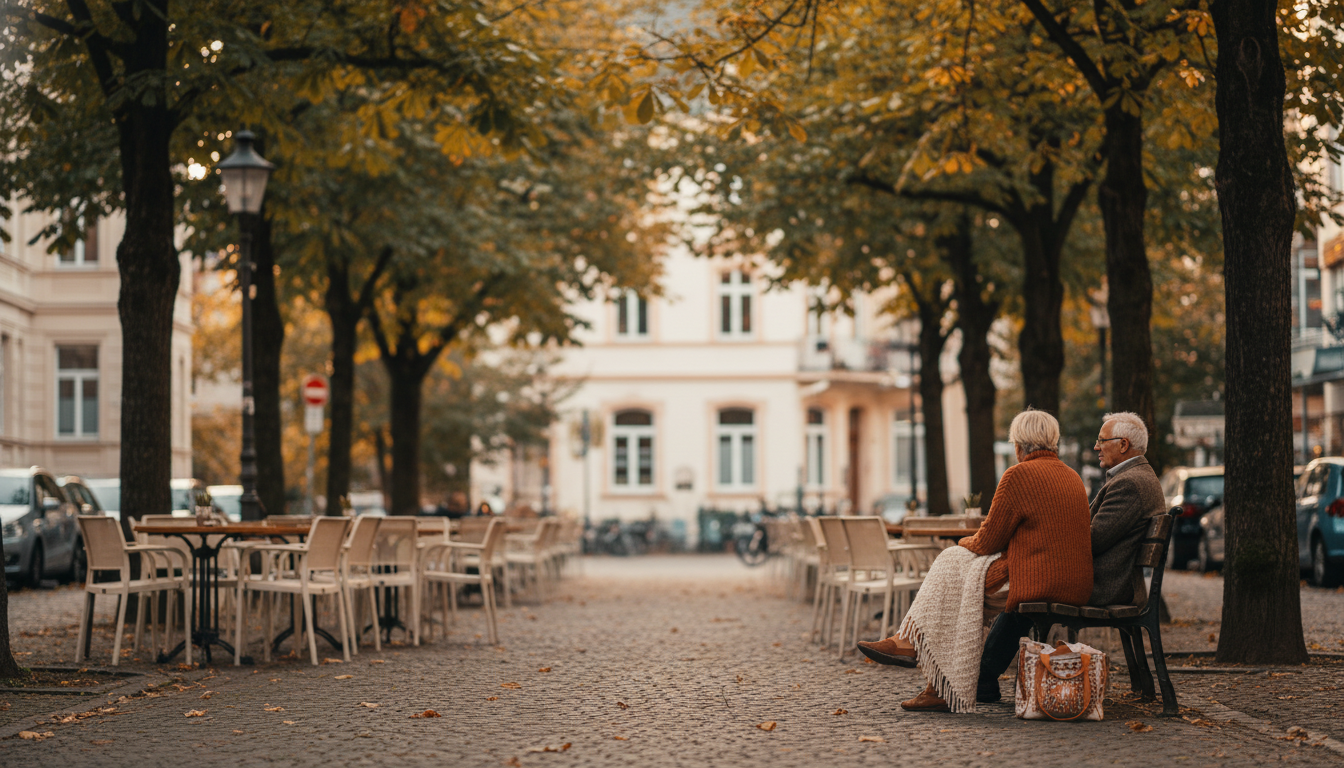 A quiet residential street in Frankfurts Nordend neighborhood, with mature chestnut trees, outdoor c
How the SwappaHome Credit System Works for Seniors
I want to demystify this because I know it can sound complicated at first.
SwappaHome uses a simple credit system: you earn 1 credit for every night someone stays in your home, and you spend 1 credit for every night you stay somewhere else. It doesn't matter if you're hosting someone in a studio apartment in Cleveland or a villa in Tuscany—the exchange rate is always 1:1.
New members start with 10 free credits, which means you could book a 10-night stay in Frankfurt before anyone has even stayed at your place. This is huge for testing the waters.
Here's what I love about this system for seniors specifically: there's no pressure for simultaneous swaps. You don't have to find someone who wants to visit your city at the exact same time you want to visit theirs. You can host a young family from Munich in October, bank those credits, and use them for your Frankfurt trip in May.
My mom was nervous about hosting strangers in her condo. So she started small—offered her place for a long weekend while she stayed with my aunt. She hosted a lovely couple from Hamburg, earned 3 credits, and realized she actually enjoyed the experience. By the time she was ready for Frankfurt, she had plenty of credits saved up.
The platform has a messaging system where you can communicate with potential guests or hosts before committing. My mom asked a lot of questions—about accessibility, about the neighborhood, about whether there was a good pharmacy nearby. Ingrid answered everything patiently and even sent photos of the building entrance and elevator.
Practical Accessibility Considerations for Your Frankfurt Swap
Let me get specific here, because "accessible" means different things to different people.
Questions to Ask Your Host
Before confirming any swap, I'd recommend asking:
- Is there an elevator? If not, which floor is the apartment on?
- Are there steps at the building entrance?
- Is there a bathtub, a walk-in shower, or both? Are there grab bars?
- How far is the nearest grocery store, and is the route flat?
- Is there a pharmacy within walking distance?
- What's the closest public transit stop, and does it have elevator access?
Most Frankfurt hosts are happy to answer these questions. Germans tend to be direct and thorough—you'll get honest answers.
Medication and Healthcare
Frankfurt has excellent pharmacies (Apotheken), and many pharmacists speak English. If you take regular medications, bring enough for your entire trip plus a few extra days. German pharmacies can fill some prescriptions, but it's complicated and not worth the stress.
The city also has outstanding hospitals if needed. The Universitätsklinikum Frankfurt is a major teaching hospital with English-speaking staff. Hopefully you won't need it, but it's reassuring to know it's there.
Weather and Timing
Frankfurt has four distinct seasons. For comfortable travel, I'd recommend late April through early June—mild temperatures (60-70°F/15-21°C), gardens in bloom, fewer tourists than summer. September through mid-October is also wonderful, with warm days, cool evenings, and beautiful autumn colors in the parks.
I'd avoid July and August (can be hot and humid, 85°F+/30°C+) and December through February (cold, gray, icy sidewalks).
 The Palmengarten botanical garden in Frankfurt during late spring, with blooming rhododendrons, a wi
What to Do in Frankfurt: A Senior-Friendly Itinerary
Forget the packed-schedule, see-everything approach. Here's how I'd actually spend time in Frankfurt if comfort was the priority.
Day 1: Settle In and Explore Your Neighborhood
Don't try to do anything ambitious on arrival day. Get to your swap home, unpack properly, find the nearest bakery and pharmacy. Walk around the immediate neighborhood. Have dinner somewhere local—not in the city center. This is when you start feeling like a temporary resident instead of a tourist.
Day 2: The Museum Embankment (Museumsufer)
Frankfurt's museum row along the Main River is genuinely world-class. The Städel Museum has one of Europe's best art collections—Vermeer, Rembrandt, Monet, Picasso. It's fully accessible with elevators and plenty of seating. Entry is €16 (about $17 USD), and they offer guided tours in English.
Don't try to see everything. Pick one museum, spend 2-3 hours, then have lunch at one of the riverside cafés. The walk along the river is flat and beautiful.
Day 3: Römerberg and Old Town
The historic center was largely destroyed in WWII and rebuilt—some of it recently, in a controversial but visually stunning reconstruction project. The Römerberg square is charming without being overwhelming. The new-old town (DomRömer Quarter) has accessible paths and elevators.
Climb the tower of the Frankfurt Cathedral only if you're comfortable with stairs—there's no elevator. But the cathedral itself is worth a visit at ground level.
Day 4: Palmengarten and Westend
Spend a morning at the botanical gardens. Rent a wheelchair if walking is difficult—they're available free at the entrance. Have lunch in Westend, maybe at Café Laumer (excellent traditional cakes, around €8-12 for coffee and cake).
Day 5: Day Trip to Heidelberg
If you're feeling adventurous, Heidelberg is about an hour by train and absolutely worth the trip. The old town is pedestrianized and mostly flat. The castle has a funicular railway that's wheelchair accessible. It's touristy but genuinely beautiful.
Day 6-7: Slow Days
Build in rest days. Visit the local market. Read in a café. Take a boat cruise on the Main River (fully accessible, about €10-15 for an hour). This is when home swapping really shines—you have a comfortable home to return to, not a cramped hotel room.
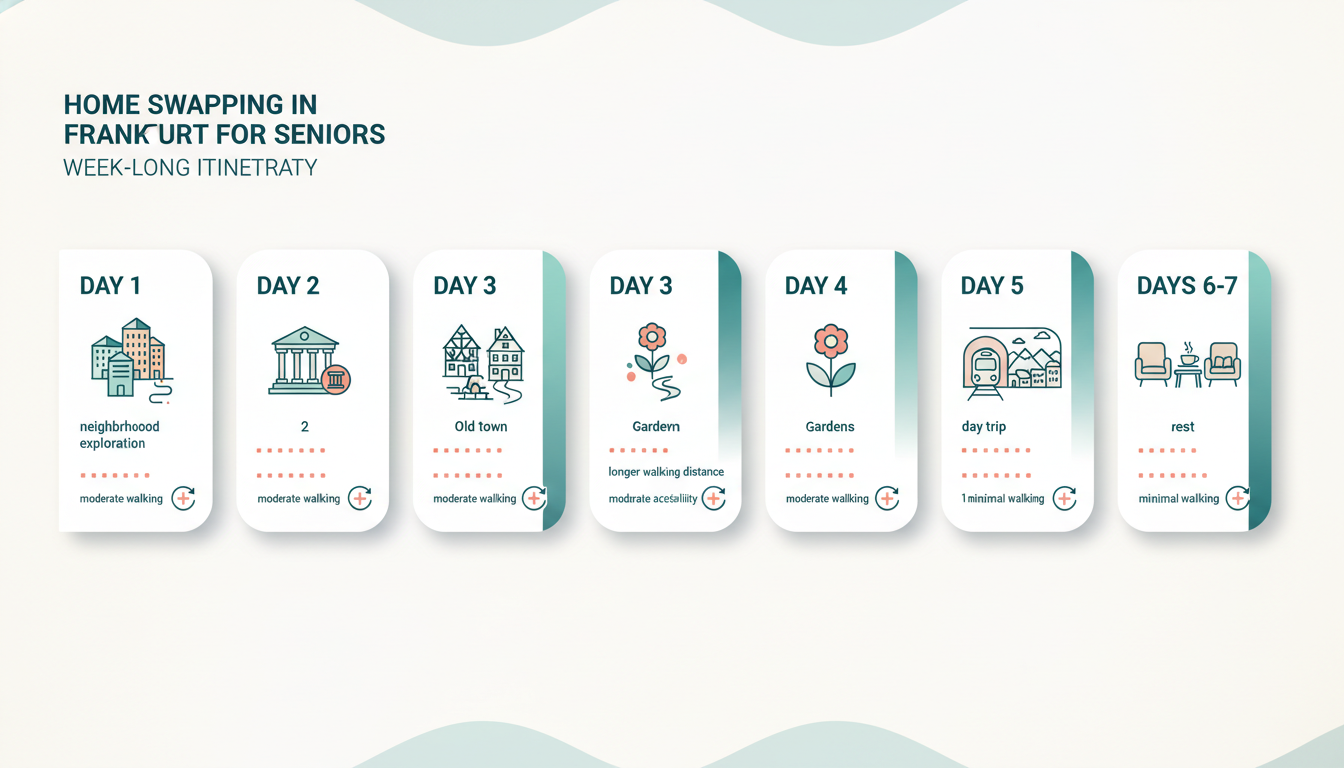 An infographic showing a week-long Frankfurt itinerary with icons for each day Day 1 neighborhood ex
Building Trust: Safety and Security for Senior Home Swappers
I understand the hesitation. You're letting strangers stay in your home, and you're staying in a stranger's home. That requires trust.
SwappaHome builds trust through a few mechanisms.
The review system means that after every swap, both parties leave reviews. Over time, members build reputations. My mom specifically looked for hosts with multiple positive reviews from other senior travelers.
Verification allows members to confirm their identity through the platform. Look for verified profiles when searching.
The messaging system lets you get to know someone before committing. My mom exchanged probably 20 messages with Ingrid before confirming. They discussed everything from how to work the coffee machine to which neighbors might say hello.
And there's the mutual investment factor—here's the thing about home swapping: both parties have something to lose. Your guest wants you to take care of their home because you're taking care of theirs (or earning credits to do so later). It's a fundamentally different dynamic than a rental.
One thing to be clear about: SwappaHome is a platform that connects members. If something goes wrong—damage, misunderstandings, issues—members work it out directly. The platform doesn't provide insurance or damage coverage. If that concerns you, consider getting your own travel insurance that covers home exchange stays. Many policies do, and it's worth the peace of mind.
Real Costs: What You'll Actually Spend
Let me break down realistic costs for a two-week Frankfurt trip, comparing home swapping to traditional options.
For accommodation over 14 nights, a mid-range Frankfurt hotel runs $150-200 per night, totaling $2,100-2,800. An Airbnb for an entire apartment costs $100-150 per night, or $1,400-2,100 total. A home swap? Zero dollars, using credits you've earned or your initial 10 free credits.
For food, eating out every meal runs $60-80 per day, or $840-1,120 for two weeks. Cooking at home with occasional restaurants drops that to $30-40 per day, or $420-560 total. With a home swap, you have a kitchen. You can buy groceries at local markets—fresh bread, cheese, cold cuts, fruit—and make simple meals. My mom said she cooked breakfast and lunch at home most days and went out for dinner. She spent about $400 on food for two weeks.
Transportation is reasonable: a weekly transit pass costs €29 (about $31 USD), so two weeks totals $62. Budget another $50 for taxis or Uber on tired days.
Activities add up to maybe $50-80 for museum entries, $40-60 round trip for a day trip to Heidelberg by train, and another $100 for miscellaneous expenses.
So the total estimated cost for 14 nights? With hotels and eating out, you're looking at $3,200-4,200. With home swapping and cooking, it's $600-900.
That's not a typo. Home swapping can save you $2,500+ on a two-week trip. For retirees on fixed incomes, that's the difference between traveling and not traveling.
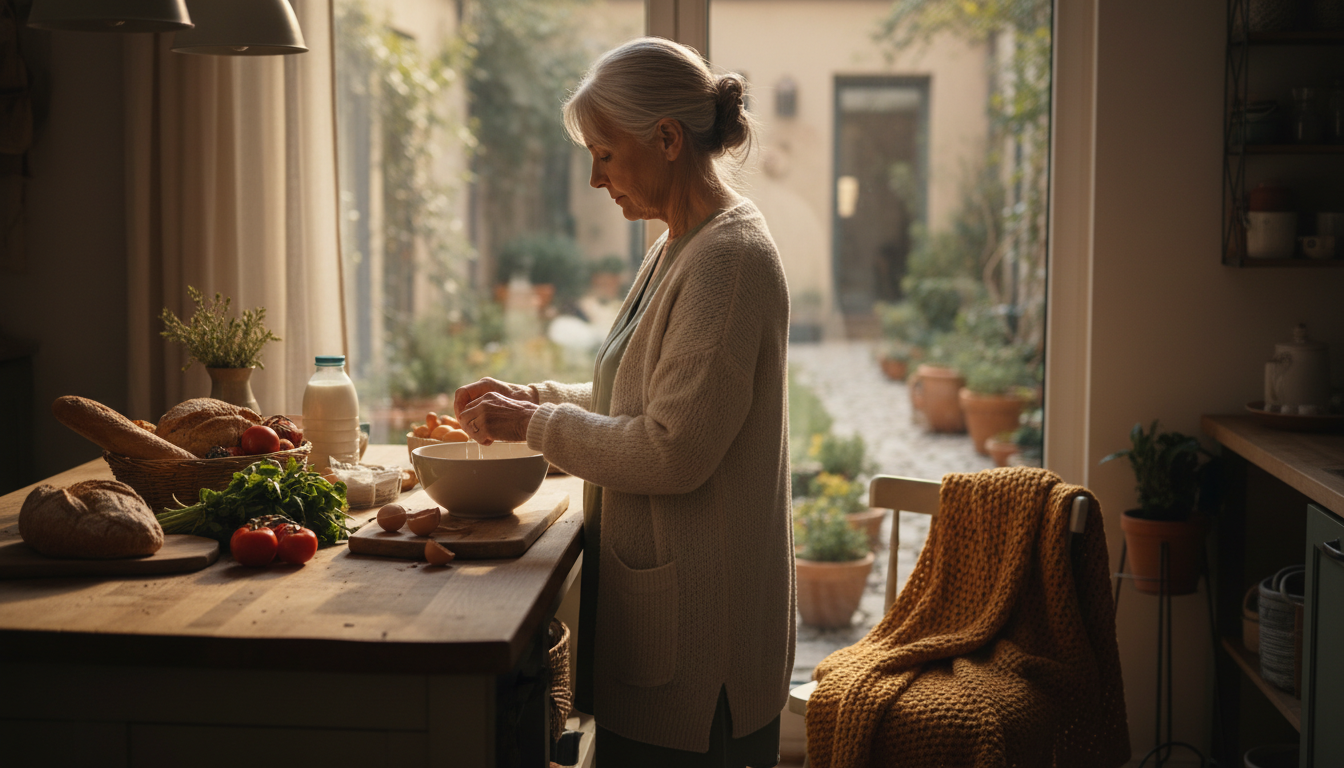 A cozy Frankfurt kitchen with morning light, a senior woman in a cardigan preparing breakfast, fresh
Tips Specifically for Senior First-Time Home Swappers
After watching my mom go through this process and talking to other senior swappers, here's what I'd emphasize:
Start by hosting first. Before you travel anywhere, host someone in your home for a weekend. This lets you experience the platform, build your reputation with reviews, and earn credits—all from the comfort of your own city. If something feels off, you're not stranded in a foreign country.
Be extremely specific in your listing. Describe your home's accessibility features in detail. Mention if you have a walk-in shower, a ground-floor bedroom, or an elevator. This attracts the right guests and sets clear expectations.
Ask for a video tour. My mom asked Ingrid to send a short video walking through the apartment. It took five minutes and answered questions photos couldn't—how heavy the doors were, whether the shower had a lip, how the kitchen was laid out.
Arrange a phone or video call. Before confirming a swap, talk to your host. You'll get a sense of who they are, and they'll get a sense of you. My mom and Ingrid did a 30-minute Zoom call and ended up chatting like old friends.
Create a detailed house manual. For your guests, write down everything: how the heating works, where the fuse box is, which neighbor has a spare key, how to work the TV remote. Senior guests especially appreciate this level of detail.
Leave emergency contacts. Give your guests a list of local contacts—a neighbor who speaks English, a nearby friend, someone who can help if needed. Ask your host to do the same for you.
Don't over-schedule. This is the biggest mistake I see. You're not 25. You don't need to see everything. Pick 2-3 things per day maximum, and build in rest time. The beauty of home swapping is that you have a real home to relax in.
When Things Go Differently Than Expected
I want to be honest: not every swap is perfect. My mom's had a few minor hiccups.
The coffee machine was more complicated than expected. She messaged Ingrid, who sent a video explanation within an hour.
The hot water took longer to heat up than she was used to. A quirk of older German buildings. She adapted.
The neighborhood was quieter than she expected in the evenings. She ended up loving this—it felt safe and peaceful—but it wasn't what she'd pictured.
None of these were problems, exactly. They were just... differences. Part of staying in someone's real home is accepting that it won't be a hotel. The toilet paper might be a different brand. The pillows might be firmer. The kitchen might have that one drawer that sticks.
For most people, these small differences are part of the charm. You're living like a local, and locals have quirky homes.
If something is genuinely wrong—the apartment isn't as described, something major is broken, you feel unsafe—communicate immediately with your host. Most issues can be resolved with a conversation. And if you're ever truly uncomfortable, you can leave. Home swapping is built on mutual respect, and good hosts want you to have a positive experience.
The Unexpected Joys of Senior Home Swapping
Here's what my mom didn't expect: she made a friend.
Ingrid and my mom stayed in touch after the swap. They email now, sharing photos of grandchildren and garden projects. When Ingrid visited California last fall, she stayed with my mom for a week. They went wine tasting in Napa.
This happens more often than you'd think. Home swapping attracts a certain kind of person—curious, open, trusting. When you stay in someone's home, surrounded by their books and photos and kitchen gadgets, you learn about them. And when they stay in yours, they learn about you.
My mom said something that stuck with me: "Hotels are comfortable, but they're lonely. I was always just a room number. In Frankfurt, I was a guest in someone's life."
For seniors especially—many of whom travel solo after losing a spouse, or who worry about isolation—this human connection matters. You're not just seeing a city. You're being welcomed into a community, even temporarily.
Getting Started: Your First Steps
If you're ready to try home swapping in Frankfurt for seniors, here's what I'd do:
-
Create your SwappaHome profile. Be thorough. Upload good photos. Describe your home's accessibility features. Mention that you're a senior traveler—many hosts appreciate knowing this.
-
Browse Frankfurt listings. Filter for ground-floor or elevator-accessible apartments. Read reviews carefully. Look for hosts who mention being senior-friendly or who have hosted older travelers before.
-
Message 3-4 potential hosts. Introduce yourself. Explain what you're looking for. Ask your accessibility questions. See who responds warmly and thoroughly.
-
Start with a short trip. A week is plenty for a first swap. You can always go back.
-
Book your flights after confirming your swap. Don't commit to travel until you have accommodation locked in.
Frankfurt is waiting. And somewhere in Sachsenhausen or Nordend or Westend, there's a home with your name on it—a real home, with a kitchen and a comfortable bed and a neighborhood that could become yours for a little while.
My mom is already planning her next swap. She's thinking Portugal. I have a feeling Ingrid might join her.
Frequently Asked Questions
Is home swapping in Frankfurt safe for seniors traveling alone?
Home swapping in Frankfurt is generally very safe for senior solo travelers. The city has low crime rates, excellent public transit, and a culture of respect for older adults. SwappaHome's review system helps you choose verified, well-reviewed hosts. Many seniors specifically seek out mature swappers, creating a trusted community. For extra peace of mind, consider travel insurance that covers home exchange stays.
How much money can seniors save with home swapping in Frankfurt compared to hotels?
Seniors can save $2,000-3,000 on a two-week Frankfurt trip through home swapping. Mid-range hotels cost $150-200 per night ($2,100-2,800 for 14 nights), while home swapping costs zero for accommodation. Add savings from cooking in your swap home's kitchen, and total trip costs can drop from $3,500+ to under $1,000.
What accessibility features should I look for in a Frankfurt home swap?
Prioritize ground-floor apartments or buildings with elevators—most newer Frankfurt buildings have them. Ask about walk-in showers versus bathtubs, grab bars in bathrooms, and the distance to public transit with elevator access. Sachsenhausen and Westend neighborhoods tend to have the most accessible housing stock for senior travelers.
Do I need to speak German to home swap in Frankfurt?
No, German language skills aren't necessary for home swapping in Frankfurt. Most SwappaHome hosts in Frankfurt speak English, especially those who regularly host international guests. The city is very English-friendly—menus, transit signs, and museum information are typically available in English. Your host can also leave instructions in English for appliances and local tips.
How do I find senior-friendly home swap hosts in Frankfurt?
Search SwappaHome for Frankfurt listings and read profiles carefully—many hosts mention being senior-friendly or having hosted older travelers. Look for reviews from other seniors. Message potential hosts directly, explain you're a senior traveler, and ask specific accessibility questions. Hosts who respond thoroughly and warmly are usually the best matches for comfortable stays.
40+
Swaps
25
Countries
7
Years
About Maya Chen
Travel Writer & Home Exchange Expert
Maya is a travel writer with over 7 years of experience in the home swapping world. Originally from Vancouver and now based in San Francisco, she has completed more than 40 home exchanges across 25 countries. Her passion for "slow" and authentic travel led her to discover that true luxury lies in living like a local, not a tourist.
Ready to try home swapping?
Join SwappaHome and start traveling by exchanging homes. Get 10 free credits when you sign up!
Related articles

Lyon Home Exchange: Your Complete Guide to France's Hidden Gem for Home Swapping
Discover why Lyon home exchange is booming among savvy travelers. From Croix-Rousse to Presqu'île, find the best neighborhoods and insider tips for your swap.

Zurich Bucket List: 47 Unforgettable Experiences to Enjoy During Your Home Swap
Discover the ultimate Zurich bucket list for home swappers—from secret swimming spots to fondue rituals locals actually do. Save thousands while living like a true Zürcher.
Dublin Home Exchange Utilities Guide: WiFi, Heating & Everything Your Guests Need
Master Dublin home exchange utilities—from dodgy WiFi fixes to heating quirks. Practical tips from 7 years of swapping homes across Ireland.