
Home Exchange Friendships: How Swapping Homes Creates Lifelong Connections

SwappaHome Editorial Team
Home Exchange & Slow Travel Editorial
Discover how home exchange friendships transform travel into meaningful human connections. Real stories and tips from 7 years of home swapping worldwide.
I still remember the moment I realized home swapping had changed my life in ways I never expected. I was standing in a cramped kitchen in Porto, Portugal, learning to make bacalhau à brás from a woman named Sofia who'd stayed in my San Francisco apartment six months earlier. Her teenage daughter was teaching me Portuguese curse words while her husband uncorked a bottle of local wine. It hit me then: home exchange friendships aren't just a nice side effect of this travel style—they're the whole point.
Seven years and 40+ swaps later, I've got a contact list that reads like a United Nations directory. A retired architect in Copenhagen who sends me photos of his grandkids. A yoga teacher in Bali who talked me through a career crisis over WhatsApp at 3 AM. A family in Lyon who've become so close that their kids call me "Auntie Maya." None of these friendships would exist if I'd booked hotels.
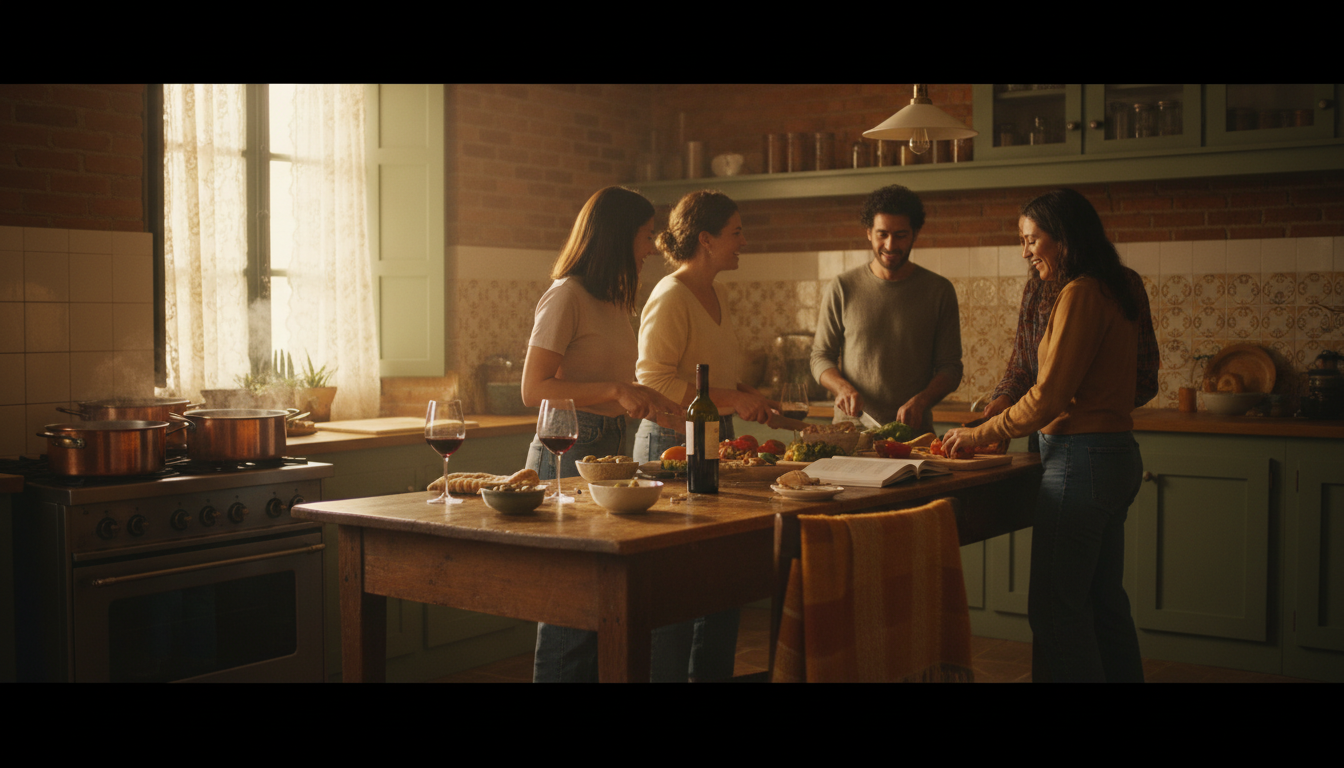 Warm kitchen scene in a Portuguese home with friends cooking together, copper pots on the stove, win
Why Home Exchange Creates Deeper Friendships Than Traditional Travel
Here's something that took me years to understand: the reason home exchange friendships form so naturally isn't just about staying in someone's space. It's about the radical vulnerability of the whole arrangement.
Think about it. When you let someone into your home—your actual home, with your weird cookbook collection and that drawer full of takeout menus you'll never use—you're showing them who you really are. Not the curated Instagram version of yourself. The real, messy, human version with the stain on the couch and the fridge full of half-empty condiment jars.
That vulnerability creates instant intimacy. You're not a faceless tourist anymore. You're someone trusted enough to water their plants, sleep in their bed, and yes, judge their questionable DVD collection. (I'm not saying I've formed opinions about people based on their movie shelves. But I'm not saying I haven't.)
The research backs this up. Studies on social bonding consistently show that reciprocal exchange—doing things for each other—builds stronger relationships than one-sided transactions. When you stay in someone's home through a platform like SwappaHome, you're participating in a gift economy. You give trust, they give trust back. You share your space, they share theirs. It's fundamentally different from handing over a credit card.
How Home Exchange Friendships Actually Develop
I want to be real with you: not every home swap turns into a lifelong friendship. Some are purely transactional, and that's fine. You exchange keys, leave each other nice reviews, and move on. No hard feelings.
But the swaps that do become friendships? They tend to follow a predictable pattern.
Stage One: The Pre-Swap Connection
It usually starts before you even meet. When I'm planning a swap, I spend hours messaging with my exchange partner. We're not just discussing logistics—we're sharing restaurant recommendations, neighborhood tips, and inevitably, pieces of our lives.
Last year, before a swap in Edinburgh, my host Fiona and I exchanged probably 50 messages. By the time I arrived, I knew about her divorce, her passion for Scottish folk music, and her daughter's struggle with university applications. She knew about my complicated relationship with my mother and my secret dream of writing a novel. We'd never met face-to-face, but we weren't strangers.
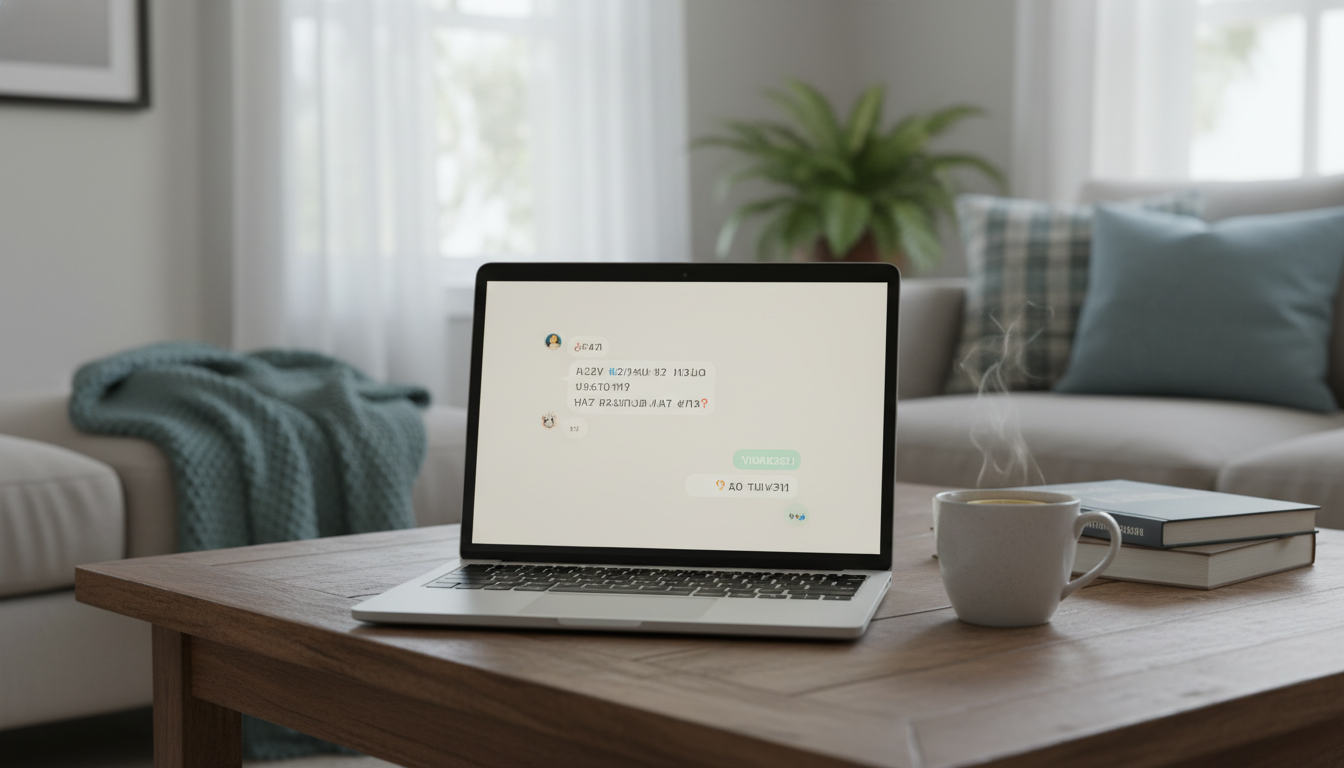 Laptop screen showing a warm message exchange between home swap partners, with a cup of tea beside i
Stage Two: Living in Their World
This is where the magic happens.
When you stay in someone's home, you're not just occupying their space—you're stepping into their life. You wake up in their bed, make coffee with their French press, and walk through their neighborhood. You notice the books on their nightstand, the photos on their walls, the way they've organized their spice rack. These details tell you more about a person than months of casual conversation ever could.
I once stayed in an apartment in Buenos Aires that belonged to a tango instructor named Martín. His walls were covered in photos from competitions, his shelves lined with worn dance shoes, his kitchen stocked with yerba mate and alfajores. By the time I met him in person (we overlapped for one afternoon), I felt like I already knew him. We ended up spending four hours talking about art, loneliness, and the way movement can express what words can't.
Stage Three: The Overlap (If You're Lucky)
Not all swaps include face-to-face time with your host, but when they do, it accelerates the friendship dramatically. Even a few hours together—sharing a meal, getting a neighborhood tour, swapping travel stories—can cement a connection that lasts years.
My advice? Always try to arrange some overlap if possible. Even if it's just coffee at the airport or a quick handoff of keys. That human contact transforms the exchange from a transaction into a relationship.
Stage Four: Staying in Touch
The swaps that become real friendships don't end when you leave.
You follow each other on Instagram. You send holiday cards. You comment on their kids' graduation photos. You text them when you see something that reminds you of your time in their city. And sometimes—this is the best part—you swap again. Or you visit them as a friend, no exchange involved. Or they come to your city and you show them around, reversing the hospitality.
The Types of Home Exchange Friendships You'll Make
Over seven years, I've noticed that home exchange friendships tend to fall into a few categories. Not all of them are deep and life-changing, but they're all valuable in their own way.
 Collage-style illustration showing different types of connections neighbors chatting over a fence, f
The Local Expert
This is someone who becomes your go-to resource for their city. They're not your closest friend, but whenever you're planning a trip to their area, you reach out. They tell you where to eat, what to avoid, which neighborhoods have changed since your last visit.
I have a Local Expert in Tokyo named Yuki. We've only met once, during a brief overlap at her apartment in Shimokitazawa. But she's answered approximately 47,000 questions about Japanese travel over the years, and she always responds with detailed, thoughtful advice. When she visited San Francisco last spring, I finally got to return the favor.
The Pen Pal
Some home exchange friendships exist mostly online, but that doesn't make them less real.
These are the people you message regularly, sharing life updates and photos and random thoughts. You might only see each other in person every few years, but the connection stays warm. My pen pal friendship with Ingrid in Stockholm has lasted five years now. We've only met twice, but we've messaged through two job changes, one cancer scare (hers, she's fine now), and countless smaller life moments. She knows things about me that people I see every day don't.
The Chosen Family
These are the rare ones. The home exchange friendships that become so deep they feel like family.
For me, that's the Dubois family in Lyon. What started as a simple two-week swap in 2019 has become one of the most important relationships in my life. Their kids stayed with me in San Francisco for a month last summer to practice English. I spent Christmas with them in 2022. When my father passed away, Claire was one of the first people I called.
You can't force this kind of connection. It happens when the chemistry is right, when your values align, when you both invest in keeping the relationship alive. But when it does happen? It's transformative.
The One-Time Wonder
Some swaps create intense, meaningful connections that don't last beyond the exchange itself. You share incredible conversations, maybe explore the city together, exchange heartfelt goodbyes—and then you drift apart.
That's okay. Not every connection needs to be permanent to be valuable. Some people are meant to be in your life for a season, not a lifetime.
Practical Tips for Building Home Exchange Friendships
Alright, let's get tactical. If you want to maximize the friendship potential of your home swaps, here's what I've learned:
Before the Swap
Be a real person in your messages. Don't just send logistics. Ask about their life. Share something about yours. The more human your pre-swap communication, the stronger your foundation.
Create a detailed home guide. Not just "here's the WiFi password" but "here's my favorite coffee shop, here's where I go when I'm sad, here's the neighbor who'll help if anything goes wrong." This level of sharing invites reciprocity.
Suggest an overlap. Even if it's just an hour, face-to-face time makes a huge difference. Offer to pick them up from the airport, give them a neighborhood tour, or share a meal before you leave.
During the Swap
Leave a thoughtful welcome. A bottle of local wine, fresh flowers, a handwritten note—these small gestures set a warm tone. I always leave a card with my contact info and a genuine invitation to reach out during their stay.
Stay loosely in touch. A quick message saying "hope you're enjoying the apartment!" or "that restaurant I recommended is closed Tuesdays, sorry!" keeps the connection alive without being intrusive.
Treat their home with extra care. This seems obvious, but nothing kills a potential friendship faster than leaving a mess or breaking something without owning up to it. Treat their space better than you'd treat your own.
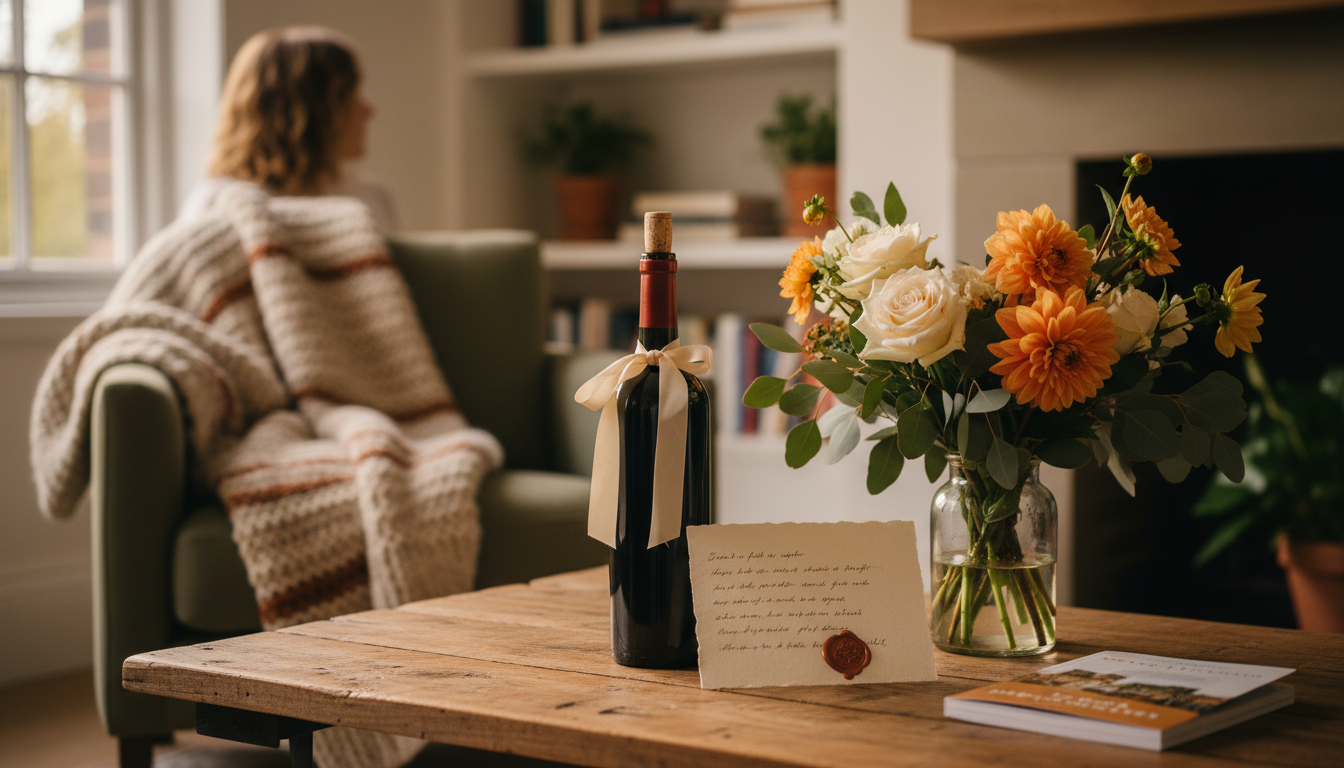 Beautifully set welcome scene in a home exchange bottle of wine with ribbon, handwritten note, fresh
After the Swap
Write a genuine review. Not just "great place, would recommend" but something specific and heartfelt. Mention details that show you actually paid attention to their home and their hospitality.
Follow up personally. A week after the swap, send a message thanking them again. Share a photo from your trip. Ask how their stay in your city was.
Stay connected casually. Follow them on social media. Comment on their posts occasionally. Send a message on their birthday if you know it. These small touches keep the friendship alive.
Invite them back. If you genuinely connected, tell them they're welcome to visit anytime—even outside of a formal swap. Some of my best home exchange friendships have evolved into regular friend visits.
The Unexpected Benefits of Home Exchange Friendships
I want to talk about something that doesn't get mentioned enough: the way these friendships change you as a person.
When you have genuine friends scattered across the world, your perspective shifts. The news from France isn't abstract anymore—it's about Claire's neighborhood. Climate change in Australia isn't just statistics—it's affecting Marcus's farm. Political upheaval in Brazil has a face: your friend Lucia, who messages you worried updates.
This global network of real human connections makes the world feel smaller and more precious. It's harder to be xenophobic when you've cried with someone from another country. It's harder to dismiss other cultures when you've been welcomed into their homes.
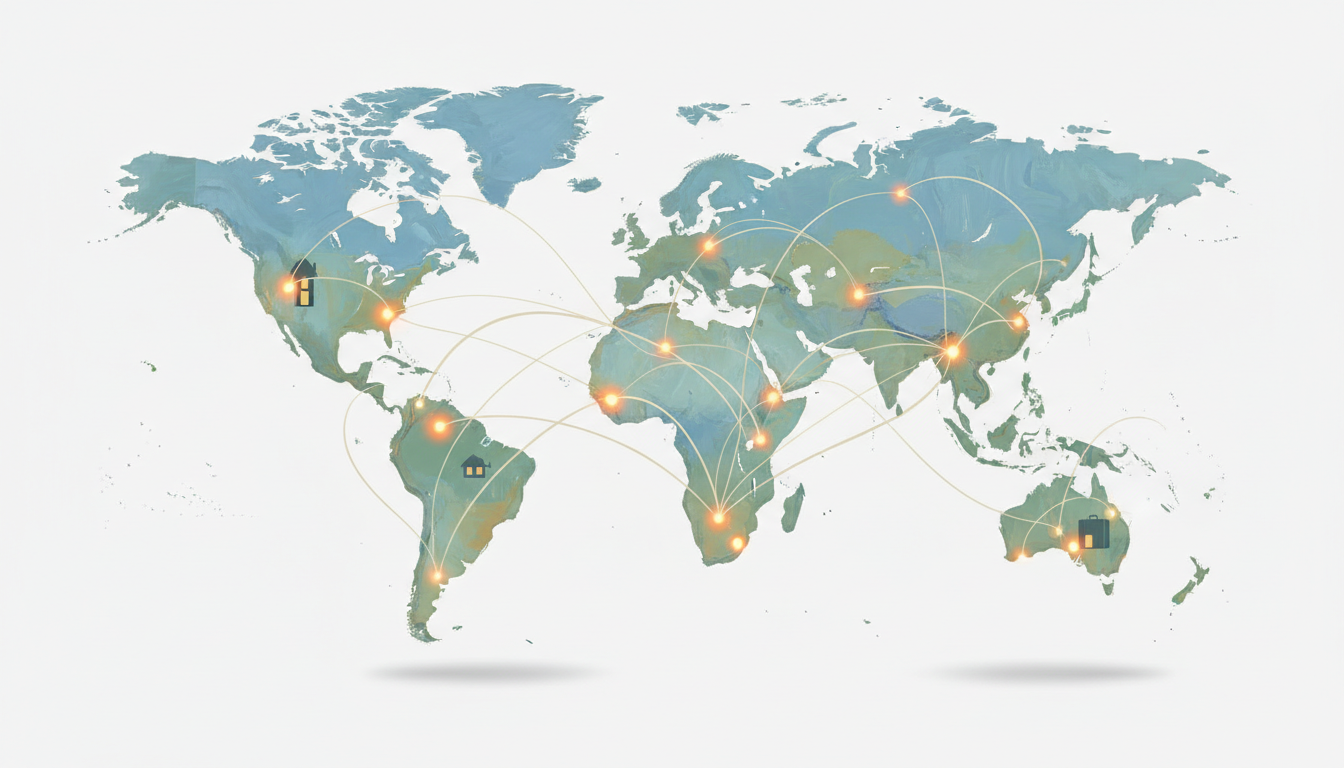 World map with warm glowing dots connected by gentle lines, representing a network of friendships ac
There's also a practical side. My home exchange friendships have led to a job referral that changed my career trajectory (from a swap contact in Berlin), free accommodation during an emergency trip when my aunt got sick in London, a place to quarantine during COVID when my building had a pipe burst, introductions to other travelers who became friends, and a deeper understanding of what "home" really means.
When Home Exchange Friendships Don't Work Out
I'd be lying if I said every swap creates positive connections.
Sometimes the chemistry just isn't there. Sometimes cultural differences create friction. Sometimes people are just... not your people.
I once did a swap with a couple in Amsterdam who seemed lovely in messages but turned out to be deeply incompatible with my communication style. They were formal where I was casual, private where I was open. The swap itself was fine—their apartment was gorgeous, they left detailed instructions—but there was no spark of friendship. We exchanged polite reviews and never spoke again.
That's not a failure. That's just life.
More challenging are the swaps where something goes wrong. I've had one experience where a guest damaged something in my apartment and didn't tell me about it. (I found out when I got home to a broken cabinet door.) That definitely killed any potential friendship. I left an honest review, they left a defensive response, and we moved on.
The key is to remember that home exchange friendships are a bonus, not a guarantee. If they happen, wonderful. If they don't, you still got an incredible travel experience at a fraction of the cost.
How SwappaHome's Community Makes Friendships Easier
I should mention why I use SwappaHome specifically, because the platform design actually matters for friendship-building.
The credit system—where you earn 1 credit per night hosting and spend 1 credit per night staying—removes a lot of the awkwardness from home exchange. You don't need to find someone who wants to visit your city at the exact same time you want to visit theirs. You can host a family from Tokyo, then use those credits to stay in Barcelona. This flexibility means you're matching based on genuine interest, not just scheduling convenience.
The review system also helps. When I'm considering a swap, I read reviews carefully—not just for "was the apartment clean" but for hints about the person's warmth and communication style. Detailed, thoughtful reviews suggest someone who invests in connections. Generic one-liners suggest someone who's just going through the motions.
And the verification system builds trust from the start. When you know someone has verified their identity, you can relax into the vulnerability that makes friendship possible.
The Long Game of Home Exchange Friendships
I want to end with a story about time.
Five years ago, I did a swap with a woman named Elena in a tiny apartment in Rome's Trastevere neighborhood. We overlapped for one afternoon, shared a long lunch at her favorite trattoria, and exchanged numbers with the usual "let's stay in touch" that often means nothing.
But we did stay in touch.
Occasional messages at first, then more regular ones. She visited San Francisco two years later and stayed in my guest room. I went back to Rome last fall and stayed with her—no swap involved, just friendship.
Last month, Elena called me with news: she's getting married. A small ceremony in a vineyard outside Rome. "You have to come," she said. "You're one of my closest friends."
I'm going, obviously. I already have my flights booked.
This is what home exchange friendships can become if you let them. Not just pleasant acquaintances or useful contacts, but real, deep, life-enriching relationships that span continents and years. It takes effort. It takes vulnerability. It takes showing up—both in their home and in their life—with genuine openness.
But the payoff? It's everything.
If you're new to home swapping, I hope this gives you something to look forward to beyond just free accommodation. And if you've been doing it for years, maybe it's a reminder to reach out to someone from a past swap. Send that message. Make that call. Water those friendship seeds you planted.
The world gets smaller and warmer when you do.
Frequently Asked Questions
How do home exchange friendships start?
Home exchange friendships typically begin during pre-swap messaging when you share more than just logistics. The intimacy of staying in someone's personal space accelerates connection, and overlapping in person—even briefly—often cements the bond. Staying in touch after the swap through social media and occasional messages keeps the friendship alive.
Can you really make lasting friends through home swapping?
Absolutely. Many home exchangers report friendships lasting years or even decades. The vulnerability of sharing homes creates instant intimacy that traditional travel can't match. I've made some of my closest friends through SwappaHome, including people I now consider chosen family. The key is genuine communication and follow-through.
What if my home exchange host and I don't click?
Not every swap creates a friendship, and that's completely normal. Some exchanges are purely transactional, and that's fine. Focus on being respectful, leaving honest reviews, and moving on. Home exchange friendships are a wonderful bonus, not a requirement for a successful swap.
How do I stay in touch with home exchange friends?
Follow them on social media, send occasional messages, and remember important dates like birthdays. Share photos from your travels and ask about their lives. When you're planning trips near their city, reach out. Small, consistent gestures keep connections warm without being overwhelming.
Do home exchange friendships work across language barriers?
Yes, though they require more effort. Translation apps help with messaging, and shared experiences transcend language. Some of my most meaningful home exchange friendships involve people whose English isn't fluent—we communicate through photos, emojis, and the universal language of hospitality. The willingness to try matters more than perfect communication.

Published by
SwappaHome
SwappaHome Editorial Team
Home Exchange & Slow Travel Editorial
The SwappaHome Editorial Team brings together travel research, home-exchange community insights, and platform data to produce practical guides for first-time and experienced home swappers. Every article cites real platforms, current market rates, and verifiable city-level facts so readers can make informed decisions without guessing.
Ready to try home swapping?
Join SwappaHome and start traveling by exchanging homes. Get 7 free credits when you sign up!
Related articles

Bachelor and Bachelorette Parties in Singapore: The Complete Home Swap Group Guide for 2026
Planning a bachelor or bachelorette party in Singapore? Discover how home swapping lets groups of 6-12 stay together in luxury condos, saving thousands while partying in Marina Bay.

Cycling in Lisbon: 7 Home Swap Bike Tour Itineraries for Every Rider
Discover the best cycling routes in Lisbon with these home swap bike tour itineraries—from waterfront paths to hilltop adventures, all starting from your borrowed home.

Graduation Trip to Barcelona: How Home Swapping Gives New Graduates the Ultimate Celebration
Planning a graduation trip to Barcelona? Discover how home swapping lets new graduates explore Spain's most vibrant city without the hostel crowds or hotel costs.