
Home Exchange in Kuala Lumpur: Top 5 Areas for Families and Couples

SwappaHome Editorial Team
Home Exchange & Slow Travel Editorial
Discover the best neighborhoods for home exchange in Kuala Lumpur—from family-friendly Mont Kiara to romantic Bangsar. Local tips, costs, and insider secrets included.
The first time I stepped off a plane at KLIA, the humidity hit me like a warm, damp blanket. It was 2019, and I'd just arranged my first home exchange in Kuala Lumpur through a last-minute swap with a Malaysian architect who wanted to experience San Francisco's fog. What I got in return was a month in her sleek apartment in Mont Kiara—and an education in why KL might be Southeast Asia's most underrated city for home swappers.
Here's what I've learned after three separate exchanges in this sprawling, chaotic, utterly captivating metropolis: where you stay matters enormously. More than almost any city I've swapped in, Kuala Lumpur's neighborhoods feel like different worlds. Pick the wrong one for your travel style, and you'll spend half your trip stuck in traffic or feeling isolated. Pick the right one? You'll wonder why everyone's still fighting for hotel rooms in Bangkok and Singapore.
 Aerial view of Kuala Lumpur skyline at golden hour, Petronas Towers gleaming against orange sky, mix
Why Home Exchange in Kuala Lumpur Makes Financial Sense
Let me throw some numbers at you—because this is where KL gets genuinely exciting for budget-conscious travelers.
A decent hotel in central Kuala Lumpur runs about $80-150 USD per night. Nothing fancy, just clean and well-located. Want something family-friendly with a pool and kitchen? You're looking at $150-250 USD nightly for a serviced apartment. Over two weeks, that's $2,100-$3,500 just for accommodation.
With home exchange through SwappaHome, you're spending zero on accommodation. The credit system means you earn credits by hosting guests at your home (1 credit per night, always), then spend those credits anywhere in the world—including KL's gorgeous condos and landed houses. New members start with 7 free credits, which is already 7 nights sorted.
But here's what the math doesn't capture: the quality of what you get. Malaysian homes, especially in the neighborhoods I'm about to walk you through, tend to be spacious. Full kitchens, multiple bathrooms, washing machines, and often pools and gyms included in condo facilities. Try finding that in a $100/night hotel.
The 5 Best Neighborhoods for Home Exchange in Kuala Lumpur
After extensive research (read: eating my way through this city multiple times), I've narrowed down the areas that work best for home swappers. Your ideal neighborhood depends on whether you're traveling as a couple seeking romance and nightlife, or as a family needing space and kid-friendly amenities.
Mont Kiara: Best for Families with Young Children
Mont Kiara is where I did my first KL swap, and I'll be honest—I initially thought it was too suburban. Too removed from the "real" Kuala Lumpur.
I was wrong.
This expat-heavy enclave in the northwest of the city is purpose-built for comfortable living. The condos here are enormous by any standard—we're talking 1,500-2,500 square feet for a typical three-bedroom unit. Most developments have multiple pools (including kids' pools), playgrounds, tennis courts, and 24-hour security. For families doing home exchange in Kuala Lumpur, this is the gold standard.
The neighborhood has excellent international schools, which means the infrastructure caters to families. Pediatric clinics, kid-friendly restaurants, massive grocery stores like Village Grocer and Jaya Grocer stocked with imported goods. Prices are higher than local markets—expect to pay $4-6 USD for a coffee, $15-20 USD for a family lunch—but the convenience is unmatched.
Getting around: Mont Kiara doesn't have its own MRT station yet (one is under construction), so you'll rely on Grab rides. Budget about $5-8 USD to reach KLCC or Bukit Bintang. Many families rent cars here, and parking is plentiful.
 Modern condo living room in Mont Kiara with floor-to-ceiling windows overlooking lush tropical garde
What families love: Desa Park City is a 10-minute drive away—think jogging paths, a dog park, and The Waterfront with lakeside dining. Publika mall has an excellent kids' play area and weekend markets. The international community means English is spoken everywhere. And condos often come with helpers' quarters, which is surprisingly useful for storing strollers and gear.
The honest downside: You won't feel like you're in Malaysia much. The area is sanitized and comfortable, but if you want street food chaos and local culture, you'll need to venture out.
Bangsar: Perfect for Couples Seeking Nightlife and Food
Bangsar is where I'd send any couple looking for that perfect mix of accessibility, dining options, and neighborhood character. It's also where I stayed during my second KL home exchange—a gorgeous pre-war bungalow that the owner had converted into a modern home while keeping the original timber floors and high ceilings. Honestly? I didn't want to leave.
This neighborhood sits south of the city center and has evolved from a quiet residential area into KL's most cosmopolitan dining and drinking district. Jalan Telawi is the main drag, lined with everything from craft cocktail bars to excellent banana leaf rice spots. On any given evening, you'll see young professionals spilling out of wine bars, families grabbing dinner at Italian restaurants, and couples strolling between galleries.
For home exchange in Kuala Lumpur as a couple, Bangsar offers something hotels can't: the feeling of actually living somewhere interesting. The homes here range from compact condos in newer developments to character-filled terraced houses and bungalows in Bangsar Park. Many have small gardens—rare in KL—and the tree-lined streets are genuinely walkable.
Coffee at a specialty café runs $4-5 USD (try Pulp or VCR). Dinner for two at a mid-range restaurant, maybe $25-40 USD. Grab to KLCC is $4-6 USD. Cocktails? About $10-15 USD each.
The Bangsar LRT station connects you to the rest of the city, and the new MRT line has improved access further. You can reach Bukit Bintang in about 20 minutes by train.
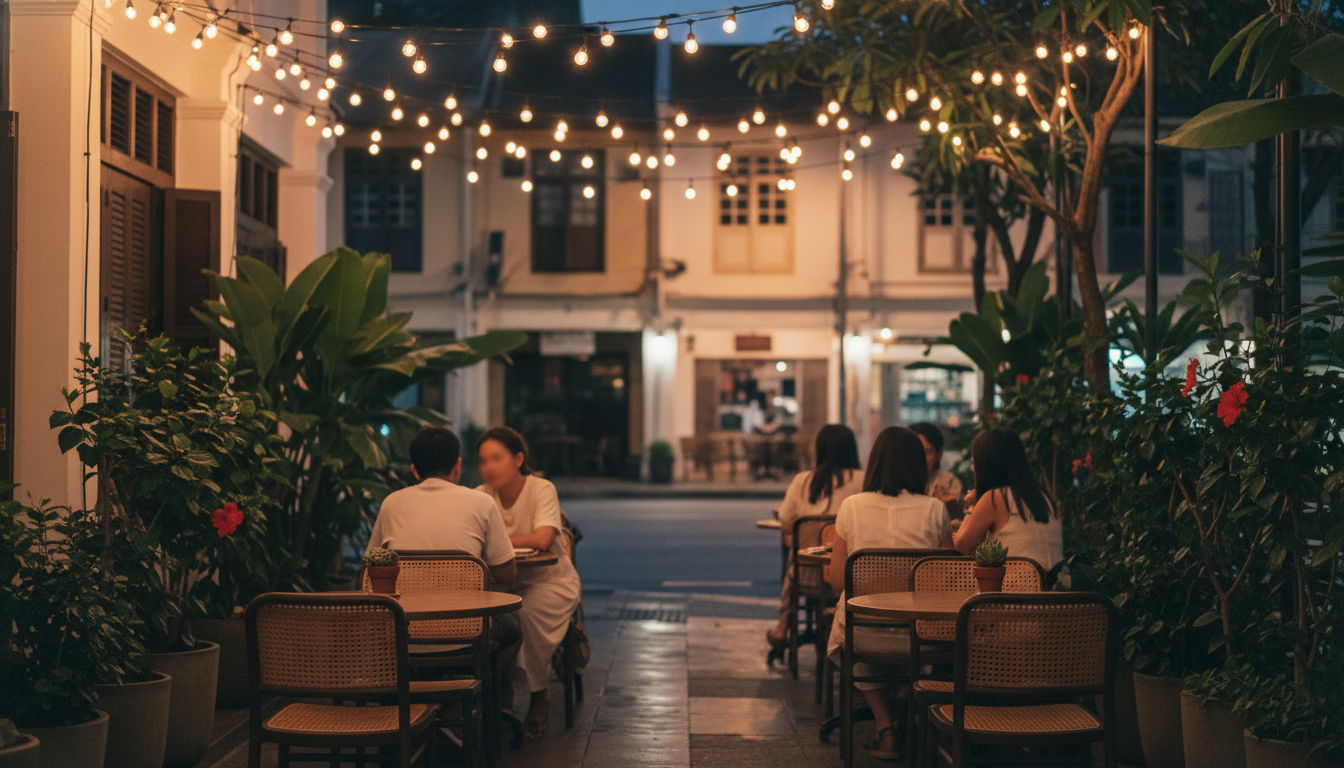 Cozy evening scene on Jalan Telawi in Bangsar, string lights illuminating outdoor dining area, coupl
What couples love: Weekend brunch culture is strong here—try Breakfast Thieves or Lisette's. Bangsar Village malls have excellent bookshops, boutiques, and a cinema. The neighborhood is safe for evening walks, and you've got easy access to Bangsar South, a newer development with additional dining and entertainment.
The honest downside: Parking is a nightmare, especially on weekends. If your home exchange includes a car, be prepared for frustration. Also, the area can feel gentrified—you'll pay premium prices for everything.
KLCC and Bukit Bintang: Best for First-Time Visitors and Couples
I'm grouping these two adjacent areas because they form the heart of modern Kuala Lumpur, and for first-time visitors doing a home exchange in Kuala Lumpur, being central simplifies everything.
KLCC (Kuala Lumpur City Centre) is dominated by the Petronas Twin Towers, and the surrounding area is packed with high-end condos, luxury malls, and the beautiful KLCC Park. Staying here puts you within walking distance of the towers, Suria KLCC mall, and the Aquaria oceanarium. Touristy? Yes. Undeniably convenient? Also yes.
Bukit Bintang, a short walk or one MRT stop away, is the city's shopping and entertainment hub. Jalan Alor—the famous street food strip—is here, along with Pavilion KL, Lot 10, and countless other malls. The area pulses with energy day and night.
Home exchange options in this zone tend to be modern condos in towers like The Troika, Binjai on the Park, or the Marc Residences. Sleek, well-maintained buildings with impressive facilities. Expect smaller square footage than Mont Kiara (800-1,200 square feet is typical for a two-bedroom), but the location premium is worth it for short stays.
Why couples love KLCC/Bukit Bintang: You can walk to everything—no Grab dependency. The MRT and monorail connect you to the entire city. Rooftop bars with skyline views abound (Heli Lounge Bar, Marini's on 57). And world-class dining exists at every price point.
Why families should think twice: Condos tend to be smaller and more expensive. The area is crowded and chaotic—not ideal with strollers. Limited green space beyond KLCC Park. And street food areas like Jalan Alor get overwhelming with kids.
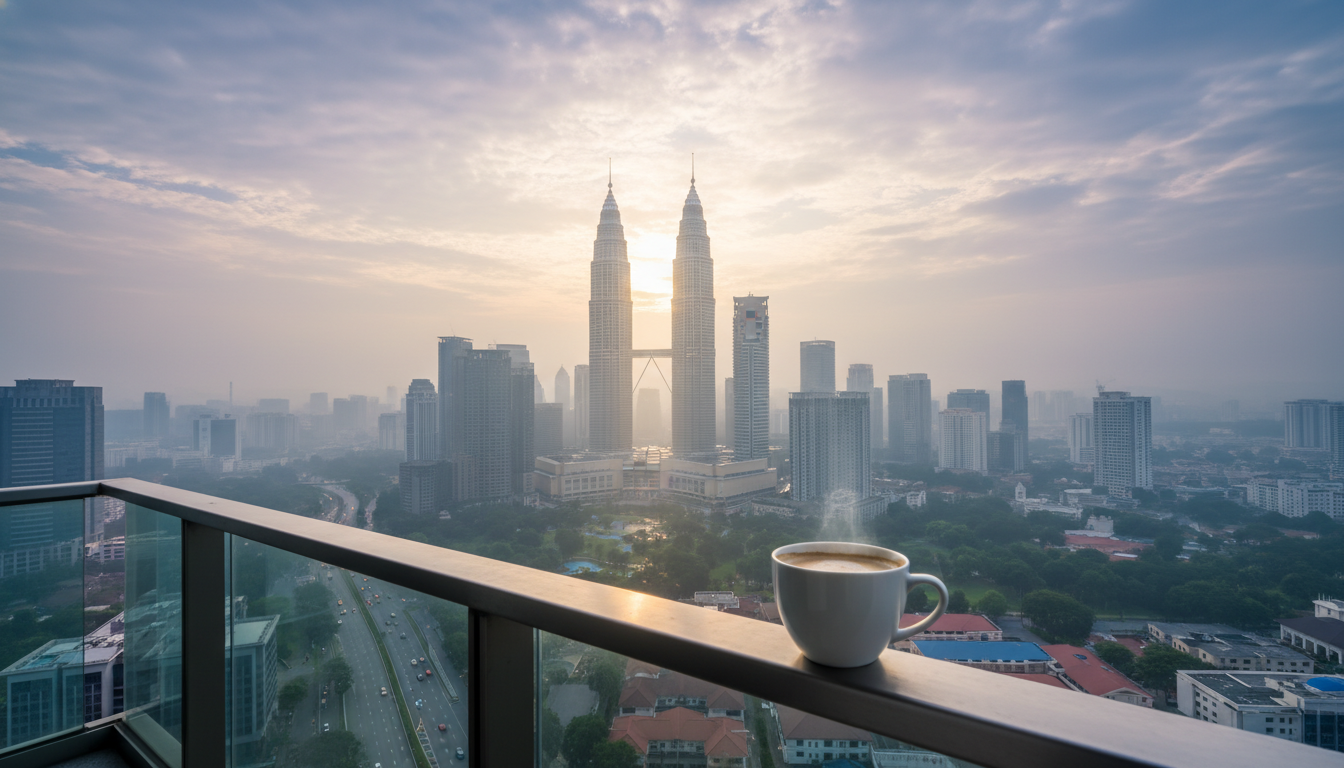 Morning view from a high-rise condo balcony in KLCC, Petronas Towers visible through morning haze, c
Desa ParkCity: The Family-Friendly Hidden Gem
If Mont Kiara feels too generic and you want something with more community character, Desa ParkCity is your answer. This master-planned township about 15 minutes northwest of the city center has become one of KL's most desirable family neighborhoods—and it's starting to show up more frequently on home exchange platforms.
The centerpiece is The Waterfront, a man-made lake surrounded by restaurants, cafés, and walking paths. On weekends, it's packed with families cycling, kids running around, and dogs (this is one of KL's most pet-friendly areas). The international school here, The International School @ ParkCity, draws families from across the region.
Homes range from linked houses to semi-detached properties and condos. The architectural style is more cohesive than other KL neighborhoods—think modern tropical with lots of natural light and open spaces. If you're doing a longer home exchange in Kuala Lumpur with kids, this neighborhood offers that rare combination of safety, community, and genuine livability.
No MRT station yet, so you'll need Grab or a car. Grab to KLCC runs $8-12 USD and takes 25-40 minutes depending on traffic. Groceries at Jaya Grocer or the weekend farmers' market. Excellent Japanese and Korean restaurants due to the expat demographic.
What families love: The Central Park has playgrounds, a jogging track, and open lawns. There's a strong sense of community—neighbors actually know each other. Lower density than Mont Kiara means more breathing room. And Plaza Arkadia mall has a cinema, bowling, and family restaurants.
The honest downside: You're genuinely suburban here. Spontaneous trips to the city center require planning around traffic. The area can feel a bit sterile—it's very new and very planned.
Damansara Heights and Bukit Damansara: Upscale Couples and Mature Families
These adjacent neighborhoods west of the city center represent old-money KL. Tree-lined streets, large bungalows with gardens, and a quieter pace than anywhere else on this list. For couples seeking sophistication or families with older children who don't need playgrounds, this is where I'd look for a home exchange in Kuala Lumpur.
Damansara Heights (often called "DH" by locals) has evolved into a dining destination. Plaza Damansara and the streets around it host some of KL's best restaurants—from the legendary Marini's at 57 to excellent local spots like Yun House for dim sum. The vibe is refined without being stuffy.
Bukit Damansara is slightly more residential and even quieter. The homes here are substantial—we're talking proper houses with gardens, not condos. Many date from the 1970s and 80s, giving the area an established, leafy character that's rare in rapidly-developing KL.
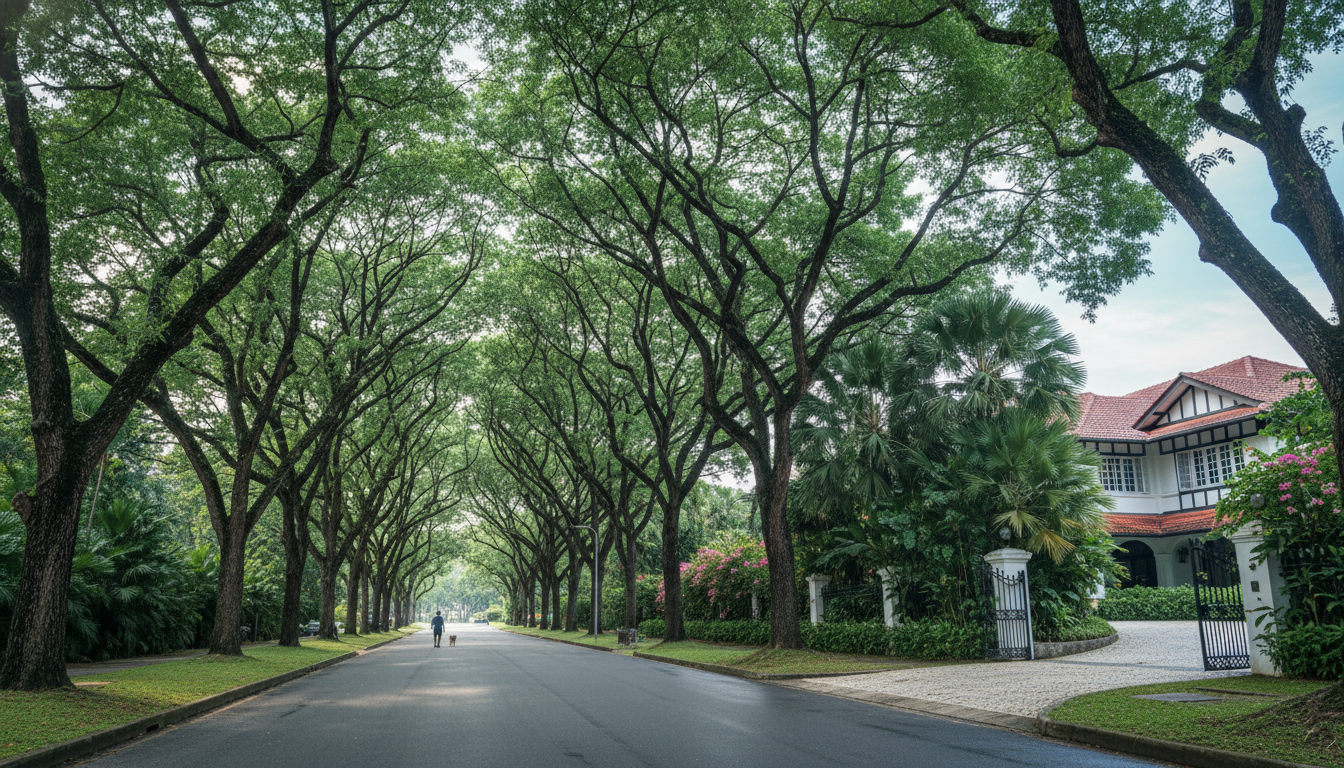 Lush residential street in Damansara Heights, mature rain trees creating green canopy over road, gli
What couples and mature families love: Genuinely quiet—no construction noise, no traffic chaos. Walking distance to excellent restaurants and cafés. Close to Bangsar for nightlife without the noise. Properties often have character and history. Good access to international schools in the area.
Practical considerations: Limited public transport—the Semantan MRT station is on the edge of the area. Homes are larger and may require more maintenance (discuss with your swap partner). Higher-end neighborhood means dining and services cost more. Can feel isolated if you don't have transport.
How to Find the Best Home Exchange in Kuala Lumpur
Now that you know where to look, here's how to actually secure a great swap.
Start your search on SwappaHome at least 2-3 months before your trip. Malaysian homeowners tend to travel during school holidays (March, June, November-December), so you'll find more availability if your dates align. That said, KL has a strong expat community, and many listings are from foreigners who travel year-round.
When browsing listings, pay attention to condo facilities—most KL condos have pools and gyms, but quality varies wildly. Look for recent photos and ask specific questions about maintenance. Floor level matters too: in tropical climates, higher floors are cooler and have fewer mosquitoes. Ground-floor units in landed properties can be humid. Air conditioning is essential, so make sure the listing confirms working AC in bedrooms at minimum. Some older properties only have AC in certain rooms. And always ask about transportation—Grab availability in their area, whether they recommend renting a car.
I always message potential swap partners with specific questions about their neighborhood—best local restaurants, nearest grocery store, any quirks about the home. Their responsiveness tells you a lot about what kind of host they'll be.
What to Expect from Your Kuala Lumpur Home Exchange
Malaysian hospitality is legendary, and this extends to home exchanges. During my swaps, hosts have left detailed neighborhood guides, stocked the fridge with local snacks, and even arranged for their regular cleaner to come mid-stay.
A few cultural notes worth knowing:
Shoes off indoors. This is standard in Malaysian homes. Your host will likely have a shoe rack at the entrance.
Domestic helpers. Some Malaysian homes employ live-in or part-time helpers. Discuss this with your swap partner beforehand—some may offer to have their helper continue during your stay (you'd cover the cost), which can be incredibly helpful for families.
Utilities. Electricity costs can spike with heavy AC use. Discuss expectations with your host. Most home exchangers include reasonable utility use, but running AC 24/7 in a large home adds up.
Security. Gated communities and condos with 24-hour security are the norm in the neighborhoods I've listed. You'll typically receive access cards or codes for gates, parking, and facilities.
Making the Most of Your Kuala Lumpur Stay
One of the joys of home exchange is living like a local, and KL rewards this approach.
Shop at wet markets. Every neighborhood has one. Prices are a fraction of supermarket costs, and the produce is fresher. Bangsar has an excellent one on Jalan Telawi (mornings only). Mont Kiara residents head to the Hartamas wet market.
Use the public transport. The MRT and LRT networks have expanded dramatically. Download the Touch 'n Go eWallet app for seamless payment.
Embrace the mall culture. I know, I know—malls aren't "authentic." But in KL, malls are community centers. They're where families spend weekends, where you escape the afternoon heat, and where you'll find everything from street food courts to high-end dining. Don't fight it.
Plan around traffic. KL traffic is notorious. Avoid driving during rush hours (7-9 AM, 5-8 PM) if possible. Friday evenings before long weekends are particularly brutal.
Try the local breakfast. Nasi lemak—coconut rice with sambal, anchovies, peanuts, and egg—is the national dish. Find a neighborhood spot your host recommends. It'll cost $2-3 USD and set you up for hours.
A Note on Safety and Trust
Home exchange works because of mutual trust and community accountability. SwappaHome's review system means members build reputations over time—you can see how previous guests and hosts have rated each other.
That said, I always recommend getting your own travel insurance that covers accommodation issues. SwappaHome connects members but doesn't provide damage coverage or insurance—that's on you to arrange. I use a policy that covers trip interruption and personal liability, which gives me peace of mind.
For your belongings at home while hosting, check whether your homeowner's or renter's insurance covers guests. Some policies do; some don't. A quick call to your insurance provider before listing your home is worth the five minutes.
When to Visit Kuala Lumpur
KL is a year-round destination, but timing affects your experience.
May to July and December to February tend to have slightly less rainfall. December is festive, with Christmas and New Year celebrations across the city. September to November sees the heaviest rainfall, usually in intense afternoon bursts—it rarely ruins a day, just plan indoor activities for late afternoon. March to April can be particularly humid, so if you're sensitive to heat, ensure your home exchange has excellent AC.
During Ramadan (dates shift yearly based on the lunar calendar), some restaurants close during daylight hours, but the evening bazaars are spectacular. It's a fascinating time to visit if you're culturally curious.
Malaysian school holidays (mid-March, June, mid-August, November-December) mean more domestic tourism and busier attractions. International schools follow different calendars, so expat-heavy neighborhoods stay relatively consistent.
Final Thoughts on Home Exchange in Kuala Lumpur
I'll be real with you: Kuala Lumpur wasn't on my radar for years. I'd done home exchanges across Europe, explored South America, even swapped in Japan—but Southeast Asia meant Thailand or Vietnam to me. KL felt like a stopover city, not a destination.
That first swap in Mont Kiara changed my perspective.
There's something about waking up in a real home, making coffee in a real kitchen, and walking to a real neighborhood market that transforms how you experience a place. I stopped seeing KL as a collection of malls and towers and started seeing it as a city of neighborhoods—each with its own rhythm, its own food culture, its own community.
Whether you're a couple seeking rooftop cocktails and street food adventures in Bangsar, or a family looking for space and safety in Desa ParkCity, home exchange in Kuala Lumpur opens doors that hotels simply can't. You'll save money, yes—but more importantly, you'll gain access to a version of the city that most tourists never see.
If you're ready to try it, SwappaHome is where I'd start. Browse the KL listings, reach out to a few hosts whose homes catch your eye, and see what's possible. Your Malaysian adventure might just begin with a message to a stranger who's curious about your corner of the world.
Frequently Asked Questions
Is home exchange in Kuala Lumpur safe for families?
Yes, home exchange in Kuala Lumpur is generally very safe for families, especially in the neighborhoods covered here. Gated communities and condos with 24-hour security are standard. The SwappaHome review system helps you verify hosts' reputations, and Malaysian culture is notably family-friendly. Always communicate thoroughly with your swap partner and consider travel insurance for added peace of mind.
How much can I save with home exchange vs hotels in Kuala Lumpur?
A typical family-friendly hotel or serviced apartment in KL costs $120-200 USD per night. Over a two-week stay, that's $1,680-$2,800. With home exchange through SwappaHome, accommodation costs nothing—you use credits earned by hosting. Even factoring in the platform membership, families typically save $1,500-2,500 USD on a two-week trip.
What's the best area for home exchange in Kuala Lumpur with kids?
Mont Kiara and Desa ParkCity are the top choices for families with children. Both offer spacious condos or houses, excellent facilities including pools and playgrounds, strong expat communities, and family-oriented amenities. Mont Kiara has more dining options; Desa ParkCity has a stronger community feel and more green space.
Do I need a car for home exchange in Kuala Lumpur?
It depends on your neighborhood. In KLCC and Bukit Bintang, public transport and walking cover most needs. In Mont Kiara, Desa ParkCity, or Damansara Heights, you'll rely heavily on Grab (rideshare) or benefit from having a car. Discuss transport with your swap partner—some may include car use in the exchange.
When is the best time to find home exchange listings in Kuala Lumpur?
Start searching 2-3 months ahead for the best selection. Malaysian homeowners often travel during school holidays (March, June, November-December), creating more availability. The expat community in KL means year-round listings exist, but peak travel seasons see more options. Browse SwappaHome early and message hosts promptly to secure your preferred dates.

Published by
SwappaHome
SwappaHome Editorial Team
Home Exchange & Slow Travel Editorial
The SwappaHome Editorial Team brings together travel research, home-exchange community insights, and platform data to produce practical guides for first-time and experienced home swappers. Every article cites real platforms, current market rates, and verifiable city-level facts so readers can make informed decisions without guessing.
Ready to try home swapping?
Join SwappaHome and start traveling by exchanging homes. Get 7 free credits when you sign up!
Related articles

Home Swap in Rome: Where to Find the Best Properties for Your Italian Exchange
Discover where to find the best home swap properties in Rome—from Trastevere's cobblestone charm to Testaccio's local authenticity. Real neighborhoods, real advice.

Home Swap in Bangkok: Where to Find the Best Properties for Free Stays
Discover where to find the best home swap properties in Bangkok—from riverside condos in Charoen Krung to family homes in Ari. Real neighborhoods, real savings.

Home Swap for Beach Lovers: 12 Coastal Destinations Ranked for 2026
Discover the best coastal destinations for home swapping in 2026. From Portugal's Algarve to Australia's Gold Coast, find your perfect beach exchange.