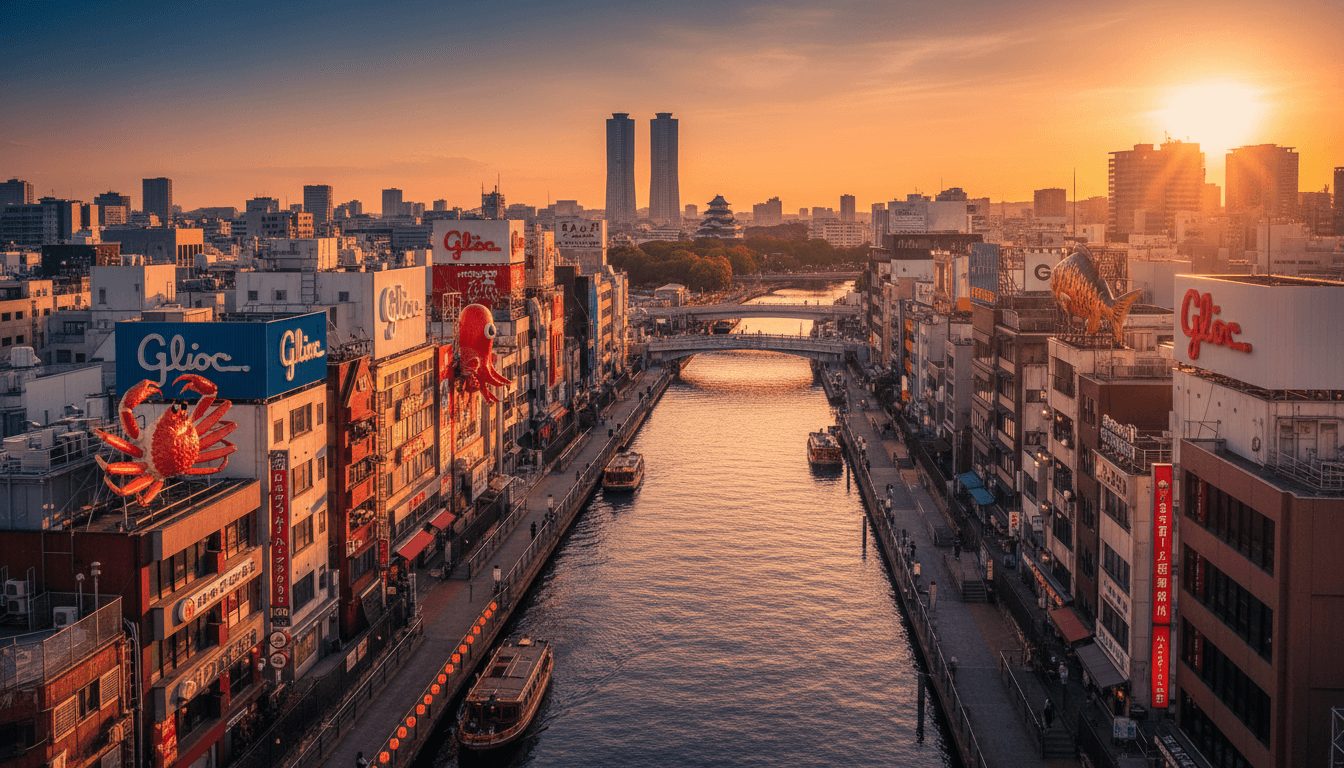
Summer Home Swap in Osaka: Your Complete Guide to Japan's Kitchen City

SwappaHome Editorial Team
Home Exchange & Slow Travel Editorial
Planning a summer home swap in Osaka? Discover the best months to visit, neighborhood picks, and insider tips for experiencing Japan's food capital like a local.
The humidity hit me like a warm, wet blanket the moment I stepped off the Haruka Express at Shin-Osaka Station. Late June. My first summer home swap in Osaka. A decision that would fundamentally change how I think about traveling to Japan.
Here's what nobody tells you about summer in Osaka: yes, it's hot. Yes, you'll sweat through your clothes by 10 AM. But there's something almost magical about experiencing this city when the locals themselves are out in full force, fanning themselves at outdoor izakayas and crowding into air-conditioned depachika to escape the afternoon sun.
I spent three weeks in a compact but perfectly designed apartment in Namba, swapping homes with a university professor eager to explore San Francisco. Those three weeks taught me more about real Japanese life than my previous four visits to the country combined.
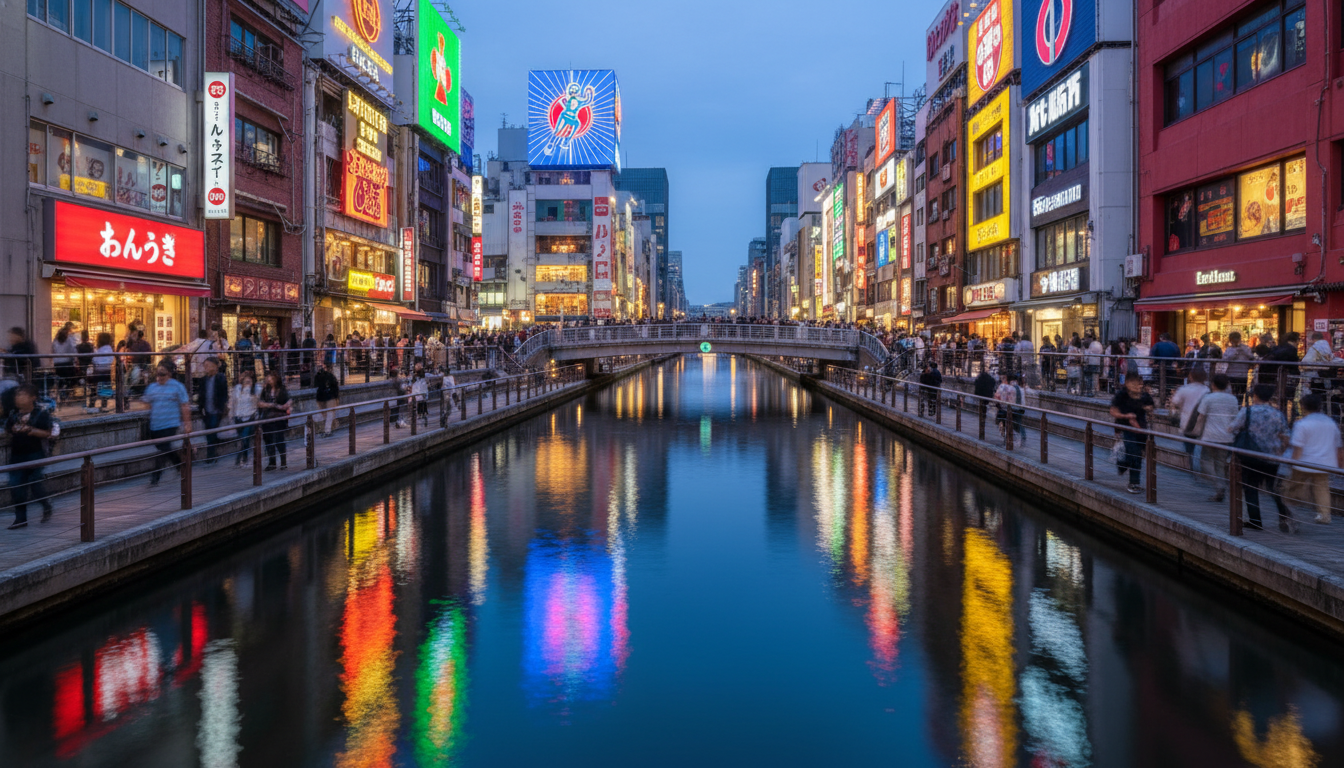 Bustling Dotonbori canal at dusk with neon lights reflecting on water, crowds walking along the rive
Why Summer is Actually Perfect for a Home Swap in Osaka
I know what you're thinking. Summer in Japan? Isn't that typhoon season? Won't I melt?
Let me address both concerns head-on.
Yes, typhoon season technically runs from June through October, with August and September seeing the most activity. But here's the thing—typhoons are tracked days in advance, and Osaka, being on the Seto Inland Sea, is more protected than coastal cities like Tokyo or Fukuoka. In my three weeks, we had one typhoon warning that amounted to a single day of heavy rain. I used it to explore the underground shopping arcades that connect most of central Osaka—a city beneath the city that most tourists never discover.
As for the heat? You adapt faster than you'd think.
Summer means festival season. Tenjin Matsuri in late July is one of Japan's three greatest festivals, with boat processions on the Okawa River and fireworks that turn the night sky into pure chaos. The Sumiyoshi Taisha Grand Festival follows in early August. These aren't tourist events—they're genuine community celebrations that have been happening for over a thousand years.
Summer also means fewer crowds at major attractions. While everyone flocks to Kyoto's temples in spring and fall, you can actually breathe at Osaka Castle in July. The lines at Universal Studios Japan are shorter on weekdays. You can get same-day reservations at restaurants that are booked months in advance during cherry blossom season.
And crucially for home swappers: summer is when many Japanese families travel abroad, meaning more homes become available for exchange. My host told me she specifically chose summer to visit the US because she wanted to experience an American Fourth of July—and her timing meant I got to experience an Osaka summer.
Best Months for Your Summer Home Swap in Osaka
Let me break this down month by month, because "summer" in Osaka spans a pretty wide range of experiences.
June: The Rainy Season Sweet Spot
June brings tsuyu (梅雨), the rainy season. Don't let that scare you off. The rain typically falls in the morning or evening, leaving afternoons surprisingly clear. Average temperatures hover around 77°F (25°C), which feels almost pleasant compared to what's coming.
The real advantage of June? Hydrangeas. Osaka's temples and gardens burst with ajisai in every shade of blue, purple, and pink. The grounds of Katsuoji Temple, about 30 minutes north of the city center, become almost surreal. And because most tourists avoid rainy season, you'll have these moments largely to yourself.
Hotel rates drop significantly in June—which means home swap demand increases as savvy travelers realize they can experience Japan without the crowds. If you're flexible, late June offers the best balance of weather, prices, and availability.
July: Festival Season Begins
July is when Osaka comes alive. The rainy season typically ends around July 20th, and the city immediately shifts into summer festival mode.
Tenjin Matsuri (July 24-25) is the main event. Picture this: thousands of people in traditional yukata lining the riverbanks, boats decorated with lanterns floating past, taiko drums echoing off the buildings, and a fireworks display that lasts over an hour. I watched from a rooftop terrace in Kitahama—one of the perks of staying in a real home rather than a hotel room.
Temperatures climb to around 86°F (30°C) with humidity often exceeding 80%. You'll want a home with good air conditioning—something to specifically ask about when arranging your swap.
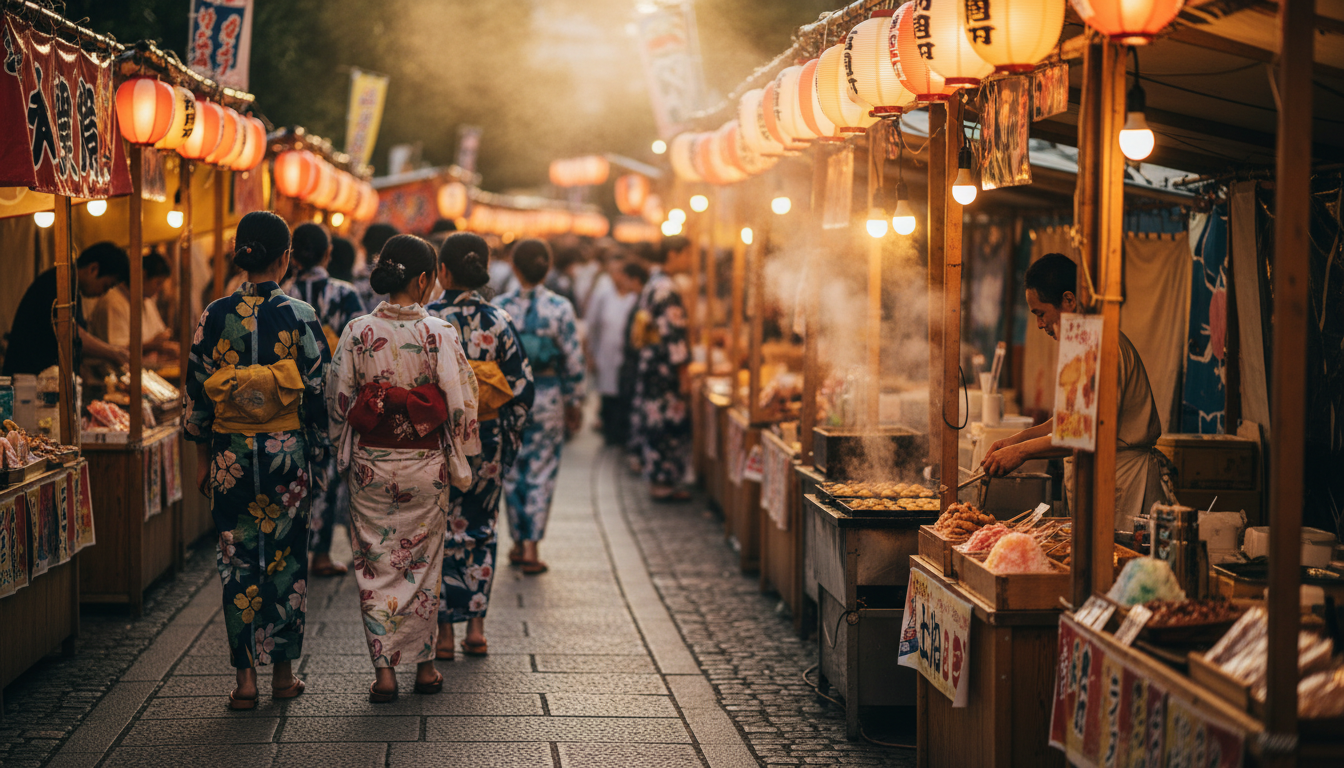 Traditional Japanese festival scene with people in colorful yukata walking between food stalls lit b
August: Peak Summer, Peak Experience
August is intense. There's no sugarcoating it. Temperatures regularly hit 95°F (35°C), and the humidity makes it feel even hotter.
But August is also when Osaka reveals its true character.
Obon (mid-August) is the Buddhist festival honoring ancestors. Many Osakans return to their hometowns, which means the city takes on a different rhythm. Some restaurants close, but others—especially the ones catering to locals who stay—become more relaxed, more welcoming to curious foreigners.
The Sumiyoshi Taisha Grand Festival (August 1) at one of Japan's oldest Shinto shrines is worth planning around. The summer night markets pop up throughout the city. And the kakigori stands on every corner become essential survival tools.
If you can handle the heat, August offers the most authentic glimpse into Osaka life. Just plan your days around the weather: early mornings for outdoor exploration, midday for air-conditioned museums and shopping, evenings for the food scene that makes Osaka famous.
Best Neighborhoods for Your Osaka Home Swap
Where you stay in Osaka dramatically shapes your experience. After swapping in three different neighborhoods over multiple trips, here's my honest assessment.
Namba: The Heart of the Action
My first Osaka home swap was in Namba, and I'll always have a soft spot for this neighborhood. It's loud, crowded, and overwhelming—and absolutely perfect for first-time visitors.
You're walking distance from Dotonbori, Shinsaibashi shopping arcade, and some of the best street food in Japan. The apartment I stayed in was a 600-square-foot space on the 8th floor of a residential building, with a small balcony overlooking a quieter side street. My host had left detailed notes on her favorite takoyaki stand—hint: it wasn't the famous one with the giant octopus sign. It was a tiny place three blocks away where the owner has been making takoyaki for 40 years.
The downside? Namba can feel touristy. You'll hear more English and Chinese than Japanese on the main streets. But duck into the residential blocks, and you're immediately in a different world—one where elderly women tend tiny vegetable gardens on their balconies and salarymen grab quick dinners at standing-only ramen counters.
Expect home swap listings in Namba to be smaller apartments, typically 400-700 square feet. Prices for equivalent Airbnbs run $150-250/night in summer, making a home swap particularly valuable here.
Kitahama/Nakanoshima: Riverside Sophistication
My second Osaka swap was in Kitahama, and it felt like discovering a secret.
This riverside neighborhood, built around the historic rice exchange, has a completely different energy than the tourist districts. The architecture here mixes Meiji-era Western buildings with sleek modern towers. The Nakanoshima Rose Garden is free and gorgeous. The cafes cater to local office workers rather than tourists, which means better coffee and lower prices. And the riverside walking paths offer some of the best urban strolling in Japan.
The apartment I stayed in belonged to an architect—you could tell from the thoughtful design, the carefully curated bookshelves, the way the morning light filtered through the shoji screens. She'd left a handwritten guide to her favorite spots, including a tiny kissaten that's been operating since 1947.
Kitahama is ideal for travelers who've been to Japan before and want a more local experience. You're still only 10 minutes by subway from Namba and Umeda, but you'll feel like you're living in Osaka rather than visiting it.
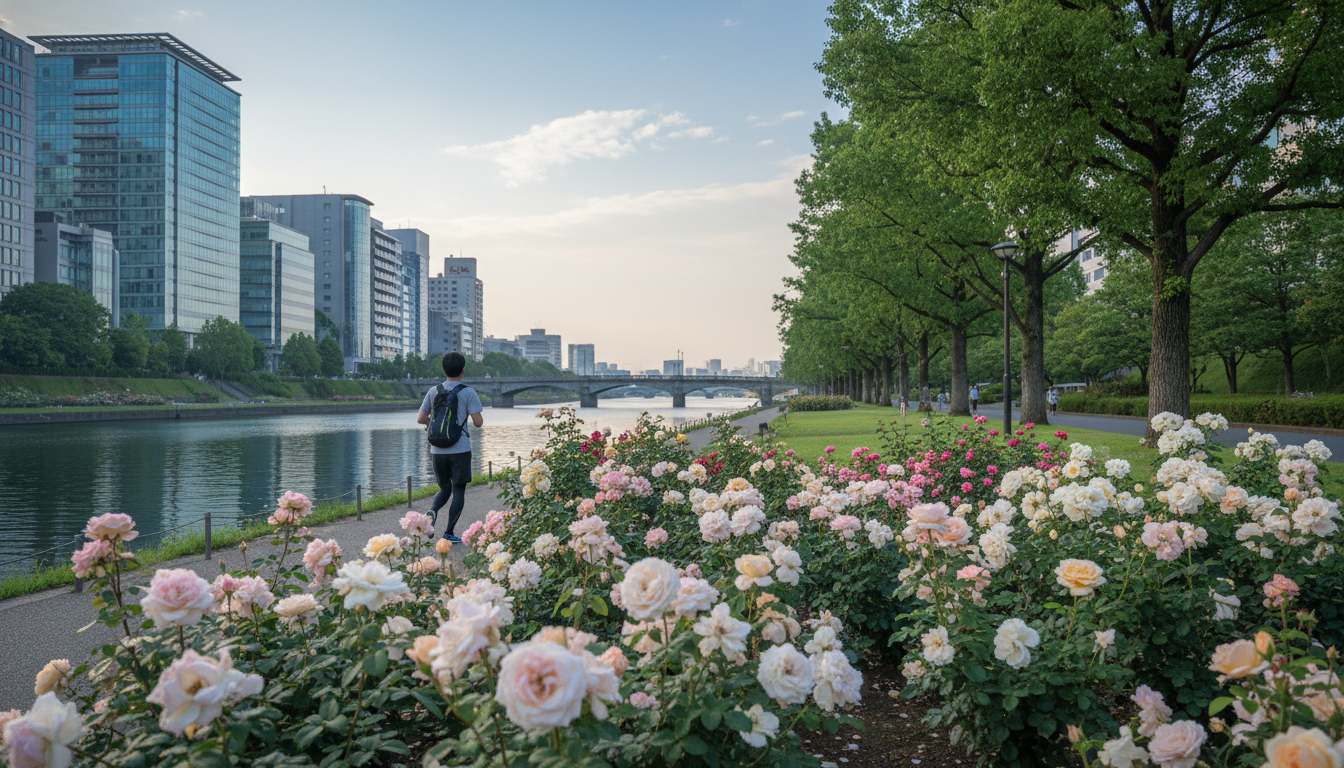 Serene morning scene along Nakanoshima riverside with modern architecture, rose gardens in bloom, an
Shinsekai: Retro Charm and Real Osaka
Shinsekai is where I'd recommend adventurous home swappers who want something completely different.
This neighborhood, built in the early 1900s to mimic Paris and New York, has aged into something uniquely Osaka—a little rough around the edges, deeply local, and absolutely fascinating. The Tsutenkaku Tower dominates the skyline. The kushikatsu restaurants here are legendary—and about 30% cheaper than their equivalents in Namba. The retro game centers and pachinko parlors create a neon-lit atmosphere that feels like stepping into a 1980s film.
I haven't done a home swap in Shinsekai yet, but I've walked the residential streets and seen the listing photos. The apartments tend to be older but spacious, often in low-rise buildings with character. This isn't the polished Japan of travel brochures—it's something more honest.
Fair warning: Shinsekai has a reputation (somewhat outdated) for being rough. It's perfectly safe for tourists, but it does have more visible homelessness than other neighborhoods and a grittier atmosphere. If that makes you uncomfortable, stick to Namba or Kitahama.
Umeda/Kita: Modern and Connected
Umeda is Osaka's other major hub, centered around the massive JR Osaka Station complex. More business-oriented than Namba, with towering department stores, underground shopping mazes, and some of the city's best restaurants tucked into basement food floors.
Home swaps in Umeda tend to be in newer high-rise buildings with modern amenities. You'll get better air conditioning, more reliable elevators, and often stunning city views. The trade-off is less neighborhood character—you could be in any modern Asian city.
That said, Umeda is incredibly convenient. You're directly connected to the Shinkansen at Shin-Osaka (one stop away), the airport express, and every major subway line. If you're planning day trips to Kyoto, Nara, or Kobe, Umeda's connectivity is hard to beat.
What to Expect from Your Osaka Home Swap Experience
Swapping homes in Japan comes with some unique considerations that I wish someone had told me before my first trip.
Japanese Homes Are Different
First, the practical stuff. Japanese apartments are measured in tatami mats (one mat is roughly 1.65 square meters), and what seems small on paper often feels perfectly designed. My 600-square-foot Namba apartment had everything I needed—and nothing I didn't.
You'll likely encounter a genkan (entryway) where you remove your shoes. There will probably be a separate toilet room from the bathroom. The bathtub might be deeper than you're used to, designed for soaking rather than showering—you wash outside the tub, then soak. The kitchen will likely be compact but efficient, with a two-burner stove and possibly no oven.
None of this is bad—it's just different. And honestly, living in a Japanese home for a few weeks gives you insights into the culture that no hotel stay ever could.
Communication with Your Host
Japanese hosts tend to be incredibly thorough. My Namba host left a 15-page guide (in English!) covering everything from how to sort garbage (it's complicated) to her favorite neighborhood spots to emergency contacts. She also left her LINE ID for questions.
Don't be surprised if your host asks detailed questions about your travel plans before confirming the swap. This isn't suspicion—it's genuine interest and a desire to ensure you'll enjoy their home. Answer thoroughly, and you'll often receive personalized recommendations in return.
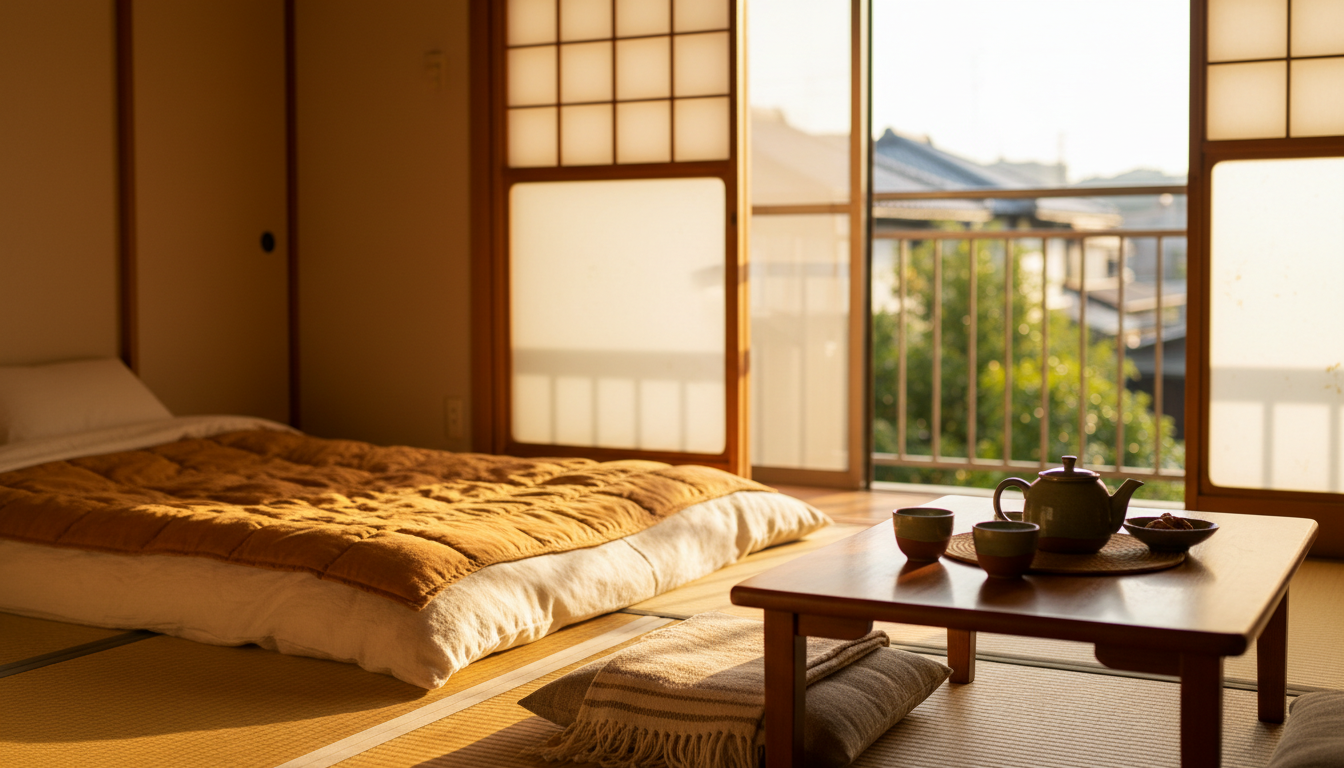 Cozy Japanese apartment interior showing tatami mat room with futon, shoji screens, small balcony wi
The Neighborhood Integration
One thing that surprised me about home swapping in Osaka: how quickly the neighbors accepted my presence.
In my Namba building, the elderly woman across the hall brought me homemade pickles on my third day. The convenience store clerk started remembering my usual order (onigiri and green tea, every morning). The guy at the local sento nodded in recognition after my second visit.
This doesn't happen in hotels. It barely happens in Airbnbs. But when you're staying in someone's actual home, in their actual neighborhood, you become—temporarily—part of the community. It's one of the most valuable aspects of home swapping, and it's especially pronounced in Japan, where neighborhood ties remain strong.
Practical Tips for Your Summer Osaka Home Swap
After multiple summer trips to Osaka, here's what I wish I'd known from the start.
Beat the Heat
Carry a small towel everywhere. The Japanese call them tenugui, and you'll see locals constantly dabbing their faces and necks. Every convenience store sells them for around ¥300 ($2).
Plan your outdoor activities for early morning (before 9 AM) or evening (after 5 PM). The hours between 11 AM and 4 PM are best spent in air-conditioned spaces—museums, department stores, underground shopping arcades.
Stay hydrated obsessively. Vending machines are everywhere, and they're your best friend. Look for Pocari Sweat or Aquarius—Japanese sports drinks that replace electrolytes better than water alone.
Wear light, breathable clothing. Linen is your friend. Dark colors absorb heat. And yes, you can absolutely wear shorts in Osaka—it's not as formal as Tokyo.
Navigate Like a Local
Get an IC card (ICOCA in the Kansai region) immediately. You can buy one at any major station. It works on all trains, buses, and even in convenience stores and vending machines. Load it with ¥5,000 ($35) to start.
Google Maps works flawlessly for Osaka transit. But for restaurant discovery, download Tabelog—it's the Japanese equivalent of Yelp, and the ratings are much more reliable for local spots.
Learn the phrase "sumimasen" (excuse me/sorry). You'll use it constantly—to get attention, to apologize for bumping into someone, to thank someone for their help. It's the Swiss Army knife of Japanese phrases.
Embrace the Food Culture
Osaka's nickname is "tenka no daidokoro" (the nation's kitchen), and summer is peak eating season.
Takoyaki at any street stand—but especially the ones where locals are lined up. The octopus balls should be crispy outside, molten inside. Around ¥500-600 ($3.50-4) for eight pieces.
Okonomiyaki at a neighborhood spot, not a tourist restaurant. Sit at the counter, watch them make it on the teppan grill in front of you. Budget ¥800-1,200 ($5.50-8) per person.
Kushikatsu in Shinsekai. The rule is simple: never double-dip in the communal sauce. Expect to pay ¥2,000-3,000 ($14-21) for a full meal with drinks.
Kakigori everywhere. The summer-only flavors—matcha, yuzu, seasonal fruits—are worth seeking out. Around ¥500-800 ($3.50-5.50) at most stands.
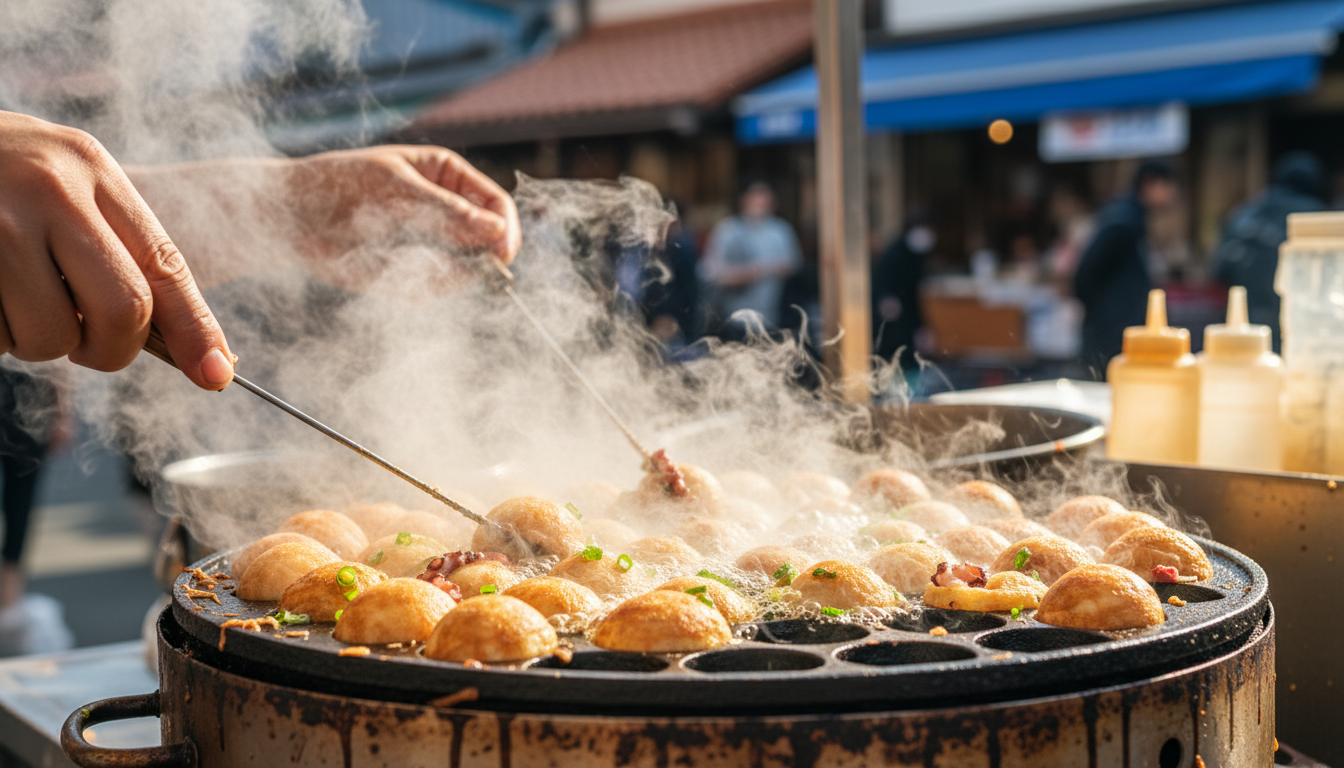 Close-up of sizzling takoyaki being prepared on a traditional cast iron mold, with steam rising and
Making the Most of Your Home Swap Through SwappaHome
When I started home swapping seven years ago, finding hosts in Japan was challenging. The concept wasn't well-known, and cultural barriers made communication difficult.
That's changed dramatically.
SwappaHome's credit system works particularly well for Japan trips. Japanese hosts are often eager to explore Western countries but hesitant about direct swaps due to scheduling complications. The credit system removes that barrier—they can host you in August and use their credits for a spring trip to Europe.
The platform's verification system also matters more in Japan, where trust is paramount. Japanese hosts I've connected with consistently mention that they appreciate knowing their guests have been verified and have positive reviews from previous swaps.
One tip: start your search early for summer dates. Japanese hosts often plan their travel months in advance, and the best listings get snapped up quickly. I typically start reaching out to potential hosts 4-6 months before my intended travel dates.
Day Trips Worth Planning From Your Osaka Base
One of the best things about basing yourself in Osaka is the access to the entire Kansai region. With a home swap as your base, you can explore without the hassle of moving hotels every few days.
Kyoto is 15 minutes by Shinkansen or 45 minutes by regular train. In summer, go early to beat the heat and crowds at temples. Fushimi Inari at 6 AM is a completely different experience than at noon.
Nara is 45 minutes by train. Yes, the deer are as charming as advertised. Yes, they will eat anything you're holding. The Todaiji Temple and its giant Buddha are genuinely awe-inspiring.
Kobe is 30 minutes away and offers a completely different vibe—more international, more laid-back. The Nunobiki Herb Gardens provide a cool escape from summer heat, and the beef... well, you know about the beef.
Himeji is an hour by Shinkansen and home to Japan's most spectacular original castle. Go on a weekday morning for the smallest crowds.
The Reality Check: Challenges of Summer Home Swapping in Osaka
I'd be doing you a disservice if I didn't mention the downsides. Summer in Osaka isn't for everyone.
The humidity is genuinely oppressive. I've traveled to tropical countries, and Osaka in August rivals anything I've experienced. If you have respiratory issues or really struggle with heat, consider shoulder seasons instead (late May or late September).
Some businesses close during Obon week (mid-August). Your favorite restaurant might be shuttered, and some attractions operate on reduced hours. This isn't a dealbreaker, but it requires flexibility.
Typhoons, while usually manageable, can disrupt plans. My one typhoon experience meant canceling a day trip to Himeji. Have backup plans for indoor activities.
And finally, summer is mosquito season. Japanese mosquitoes are aggressive. Bring repellent, or buy the local coils (katori senko) that every Japanese household uses. Your host will probably have some.
Your Summer Home Swap in Osaka Awaits
I'm writing this from my apartment in San Francisco, but part of me is still in that Namba flat, watching the sunset turn the Dotonbori canal golden while the smell of grilling meat drifts up from the yakitori stand below.
That's what home swapping gives you—not just a place to sleep, but a window into how people actually live. And in Osaka, where the culture is warmer and more welcoming than anywhere else in Japan, that window opens onto something special.
The summer heat will test you. The festivals will enchant you. The food will probably change your life a little bit. And when you're sitting in your temporary home, air conditioning humming, planning tomorrow's adventures, you'll understand why I keep coming back.
Start browsing listings on SwappaHome now if you're targeting summer dates—the best Osaka homes get requested early, and Japanese hosts appreciate travelers who plan ahead. Your own Osaka summer story is waiting to be written.
Frequently Asked Questions
Is summer a good time for a home swap in Osaka?
Summer is excellent for home swapping in Osaka despite the heat and humidity. You'll experience major festivals like Tenjin Matsuri, encounter fewer tourists at popular attractions, and find more home swap availability as Japanese families travel abroad. The key is planning activities around the hottest afternoon hours and staying well-hydrated.
How much can I save with a home swap in Osaka compared to hotels?
A mid-range hotel in central Osaka costs $150-250 per night in summer, while business hotels run $80-120. Over a two-week trip, home swapping through SwappaHome's credit system could save you $1,500-3,500 on accommodation alone—plus you'll have kitchen access to reduce food costs significantly.
What should I look for in an Osaka home swap listing?
Prioritize air conditioning quality (essential for summer), proximity to a subway station, and detailed house rules about garbage sorting. Look for hosts who provide English instructions and local recommendations. Apartments in Namba or Kitahama offer the best balance of location and authentic neighborhood experience.
When should I book my summer Osaka home swap?
Start searching 4-6 months before your intended travel dates. Japanese hosts plan well in advance, and popular listings—especially those in central neighborhoods with good reviews—get requested quickly. Late June and early July offer the best balance of weather and availability.
Is it safe to home swap in Japan during typhoon season?
Japan has excellent typhoon tracking and warning systems, giving you days of advance notice. Osaka's inland location provides more protection than coastal cities. Most typhoons result in one or two days of heavy rain at most. Have indoor backup plans and travel insurance, but don't let typhoon season deter you from a summer visit.

Published by
SwappaHome
SwappaHome Editorial Team
Home Exchange & Slow Travel Editorial
The SwappaHome Editorial Team brings together travel research, home-exchange community insights, and platform data to produce practical guides for first-time and experienced home swappers. Every article cites real platforms, current market rates, and verifiable city-level facts so readers can make informed decisions without guessing.
Ready to try home swapping?
Join SwappaHome and start traveling by exchanging homes. Get 7 free credits when you sign up!
Related articles
Home Swap in Rome: Where to Find the Best Properties for Your Italian Exchange
Discover where to find the best home swap properties in Rome—from Trastevere's cobblestone charm to Testaccio's local authenticity. Real neighborhoods, real advice.

Home Swap in Bangkok: Where to Find the Best Properties for Free Stays
Discover where to find the best home swap properties in Bangkok—from riverside condos in Charoen Krung to family homes in Ari. Real neighborhoods, real savings.

Home Swap for Beach Lovers: 12 Coastal Destinations Ranked for 2026
Discover the best coastal destinations for home swapping in 2026. From Portugal's Algarve to Australia's Gold Coast, find your perfect beach exchange.