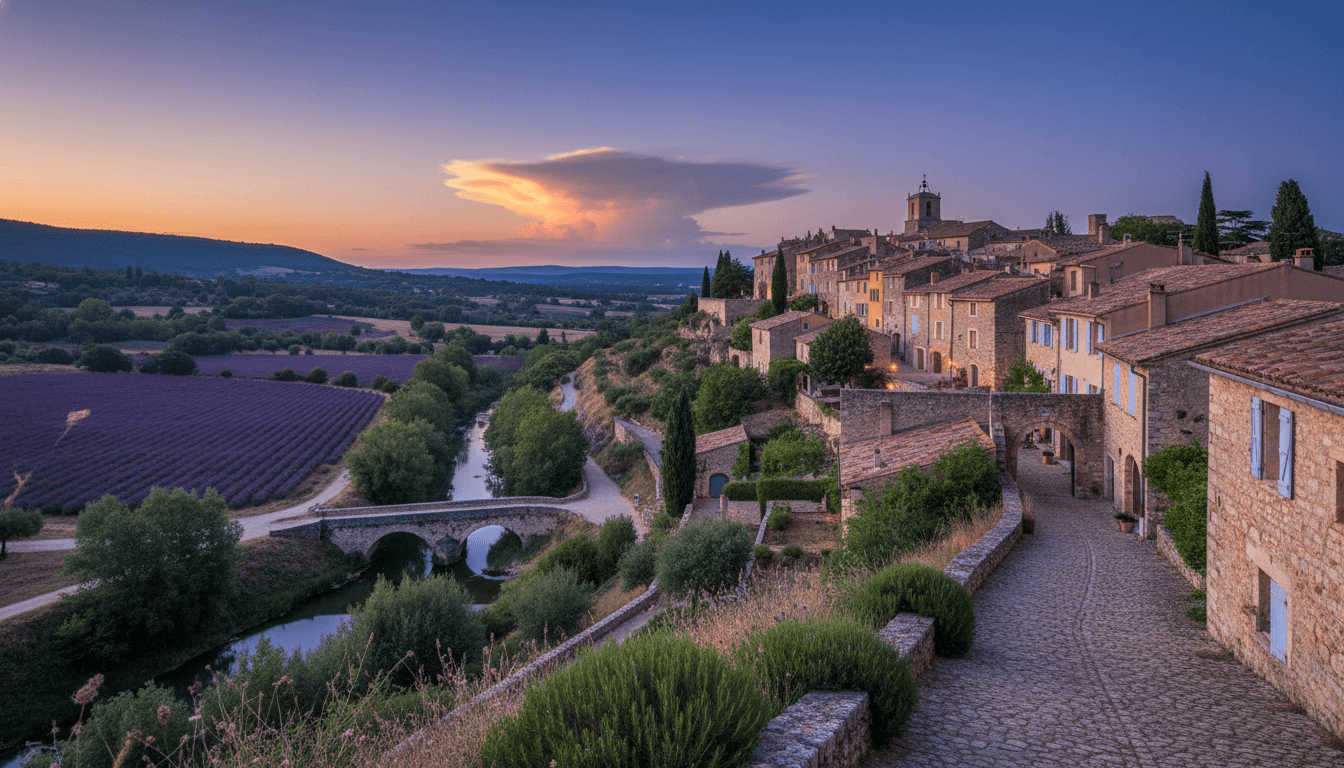
Best Neighborhoods for Home Swapping in Provence: Your Complete Guide to Where to Stay

SwappaHome Editorial Team
Home Exchange & Slow Travel Editorial
Discover the best neighborhoods for home swapping in Provence, from lavender-scented villages to coastal gems. Local tips, prices, and insider secrets.
The morning I woke up in a 17th-century stone farmhouse outside Gordes, with lavender fields stretching toward the Luberon mountains and a rooster announcing dawn like it was his personal mission, I understood why people become obsessed with Provence. Finding the best neighborhoods for home swapping in Provence had taken me three trips to figure out—and honestly, I made some mistakes along the way. That first swap in Marseille? Let's just say the "charming port view" was actually a view of a construction site.
But here's what seven years of home exchanges have taught me: Provence isn't one place. It's a dozen different worlds, each with its own rhythm, its own light, its own version of the good life. Where you stay determines everything—whether you're sipping rosé at sunset overlooking ochre cliffs or stuck in traffic trying to reach a beach that's two hours away.
So let me save you the trial and error.
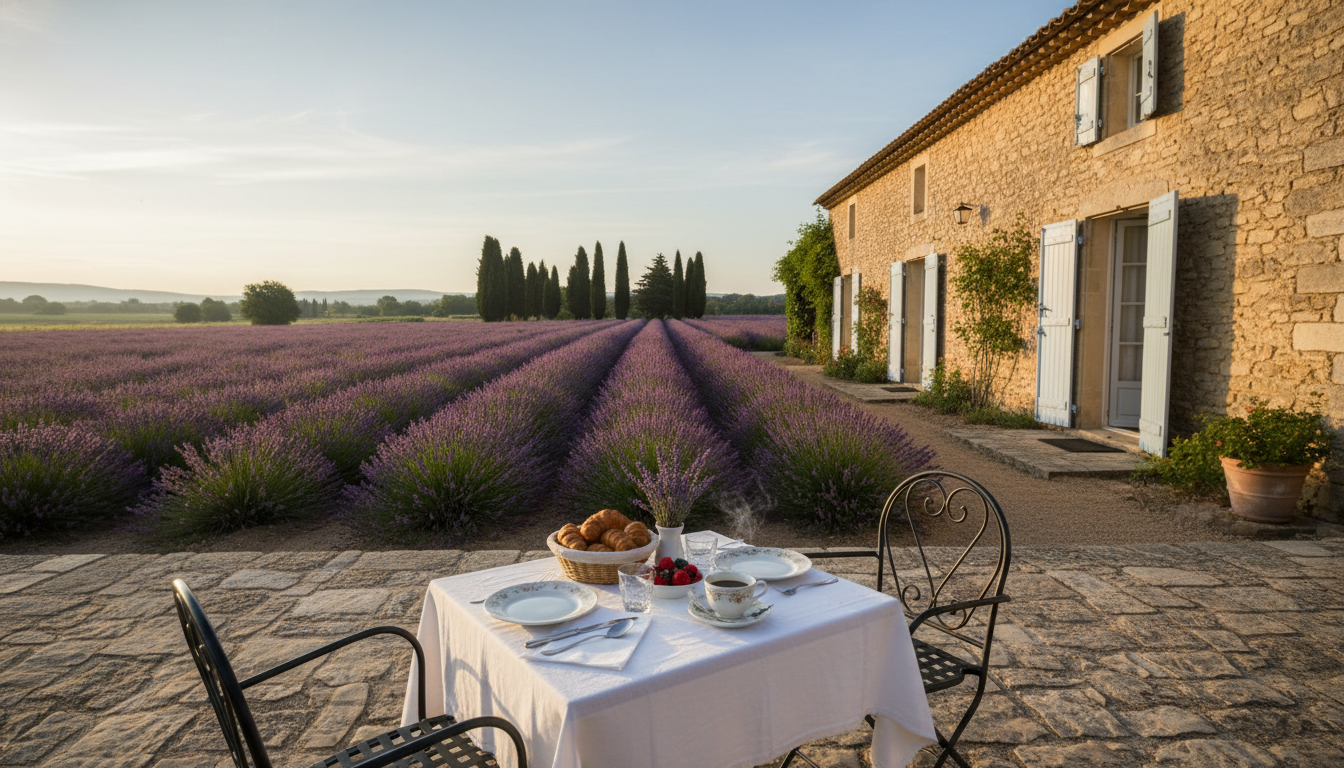 golden morning light washing over a traditional Provenal mas farmhouse with blue shutters, surrounde
Why Home Swapping in Provence Changes Everything
Here's something most travel guides won't tell you: Provence in high season is expensive. Like, shockingly expensive. A decent hotel in Aix-en-Provence runs €200-350/night ($215-380) in July. A villa rental in the Luberon? You're looking at €3,000-5,000 ($3,250-5,400) per week minimum.
Home swapping flips this equation entirely.
Through SwappaHome's credit system, you earn 1 credit for every night you host someone at your place—doesn't matter if you live in a studio apartment or a mansion. Then you spend those credits anywhere: 1 credit per night, whether it's a cottage in Gordes or an apartment in Nice. Those 7 free credits you get when joining? That's potentially 7 nights in Provence without accommodation costs.
But beyond the money, there's something else. When you stay in someone's actual home—their worn copy of "A Year in Provence" on the bookshelf, their handwritten list of the best bakeries, their neighbor who waves at you like you belong—you stop being a tourist. You become, briefly, a resident. And in Provence? That distinction matters more than anywhere else I've traveled.
The Luberon Valley: Best Neighborhoods for Home Swapping in Provence's Heart
If Provence had a greatest hits album, the Luberon would be every track. This is the region that launched a thousand memoirs, the landscape that made Peter Mayle famous, the place where ochre villages cling to hilltops like they're afraid of falling off.
Gordes: The Iconic Perched Village
Let me be honest—Gordes is touristy. In July and August, the main square feels like a theme park version of Provence.
But here's the thing: the tourists leave by 6 PM. They bus back to their cruise ships and resort hotels, and suddenly you have this impossibly beautiful village almost to yourself.
My swap here was in a converted bergerie (shepherd's hut) about 2 kilometers from the village center. Stone walls thick enough to keep the interior cool without AC. A plunge pool carved into the rock. Every evening, I'd walk into the village for dinner at Le Cercle Républicain (mains €18-28/$20-30), watching the sunset paint the Vaucluse plateau gold and pink.
What to expect from home swaps here: mostly rural properties—farmhouses, converted barns, village houses with terraces. Very few apartments. You'll definitely need a car. Hotel rooms in Gordes average €180-400/night ($195-430). Your SwappaHome credit? Still just 1 per night.
Ménerbes and Bonnieux: The Quieter Alternative
If Gordes feels too discovered, head 15 minutes east to Ménerbes or Bonnieux. Same stunning hilltop village aesthetic, maybe 30% of the crowds.
Ménerbes is where Peter Mayle actually lived (his house is visible from the road, though please don't be that tourist who peers over the fence). Bonnieux has better restaurants—try Le Fournil for lunch, where the €24 ($26) prix fixe menu includes dishes that would cost triple in Paris.
I did a two-week swap in Bonnieux last September, in a village house with a rooftop terrace overlooking the cedar forest. The homeowner left me a hand-drawn map of her favorite walking trails. One led to a hidden Roman bridge that wasn't in any guidebook.
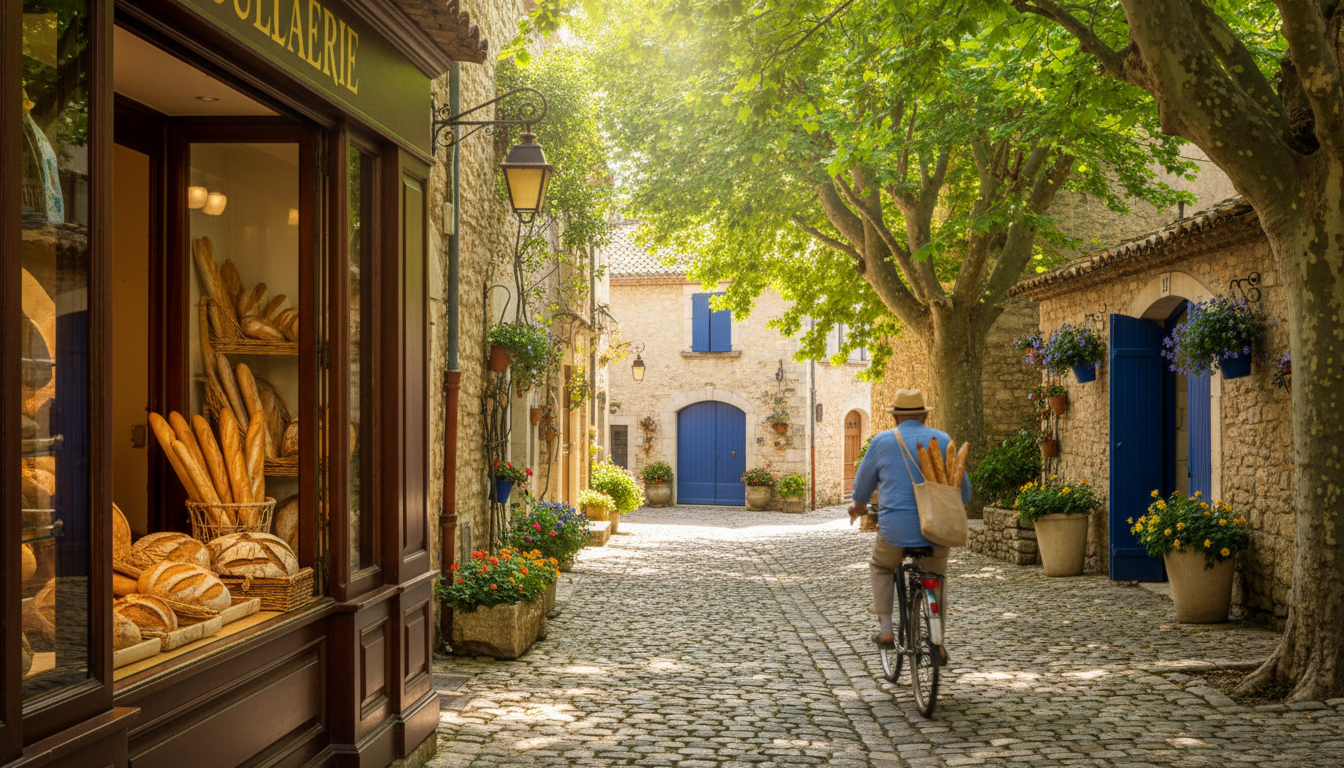 narrow cobblestone street in a Luberon village, morning light filtering through plane trees, a boula
Lourmarin: The Luberon's Social Hub
Lourmarin is different from the other Luberon villages. It's at the bottom of the valley, not perched on a hilltop. It has actual nightlife—well, Provençal nightlife, meaning cafés stay open past 10 PM. Albert Camus is buried in the cemetery here, which tells you something about its literary, artistic vibe.
Friday morning market is legendary. Get there by 8 AM or don't bother—by 10, you can't move.
This one's best for travelers who want village charm but also want to meet people, hear live music, find a decent cocktail. Couples, solo travelers, anyone who'd go stir-crazy in total isolation.
Aix-en-Provence: Best Urban Base for Home Swapping in Provence
Not everyone wants rural tranquility. Some of us need a good espresso within walking distance, bookshops to browse, the energy of a university town. Aix-en-Provence is that place.
The Historic Center (Vieil Aix)
The old town is compact enough to walk everywhere but large enough to keep discovering new corners for weeks. The Cours Mirabeau—that famous tree-lined boulevard—is the spine of the city, with cafés spilling onto sidewalks and fountains gurgling at every intersection.
Home swaps in the historic center are mostly apartments, often in 17th and 18th-century buildings with those high ceilings, tall windows, and creaky wooden floors that make you feel like you're in a French film. My last Aix swap was a two-bedroom on Rue Espariat, five minutes from the daily market at Place Richelme. I bought tomatoes that tasted like actual tomatoes. Revolutionary, I know.
One practical note: street parking is nearly impossible, and most buildings don't have private parking. If you're driving, look for swaps with garage access or stay just outside the center.
Mazarin Quarter
Just south of Cours Mirabeau, the Mazarin quarter has a different feel—quieter, more residential, with elegant hôtels particuliers (private mansions) lining geometric streets. This is where Cézanne grew up, and you can still visit his studio on the northern edge of town.
Swaps here tend to be in larger apartments, sometimes with small gardens or courtyards. It's a 10-minute walk to everything, but you escape the late-night noise of the student bars.
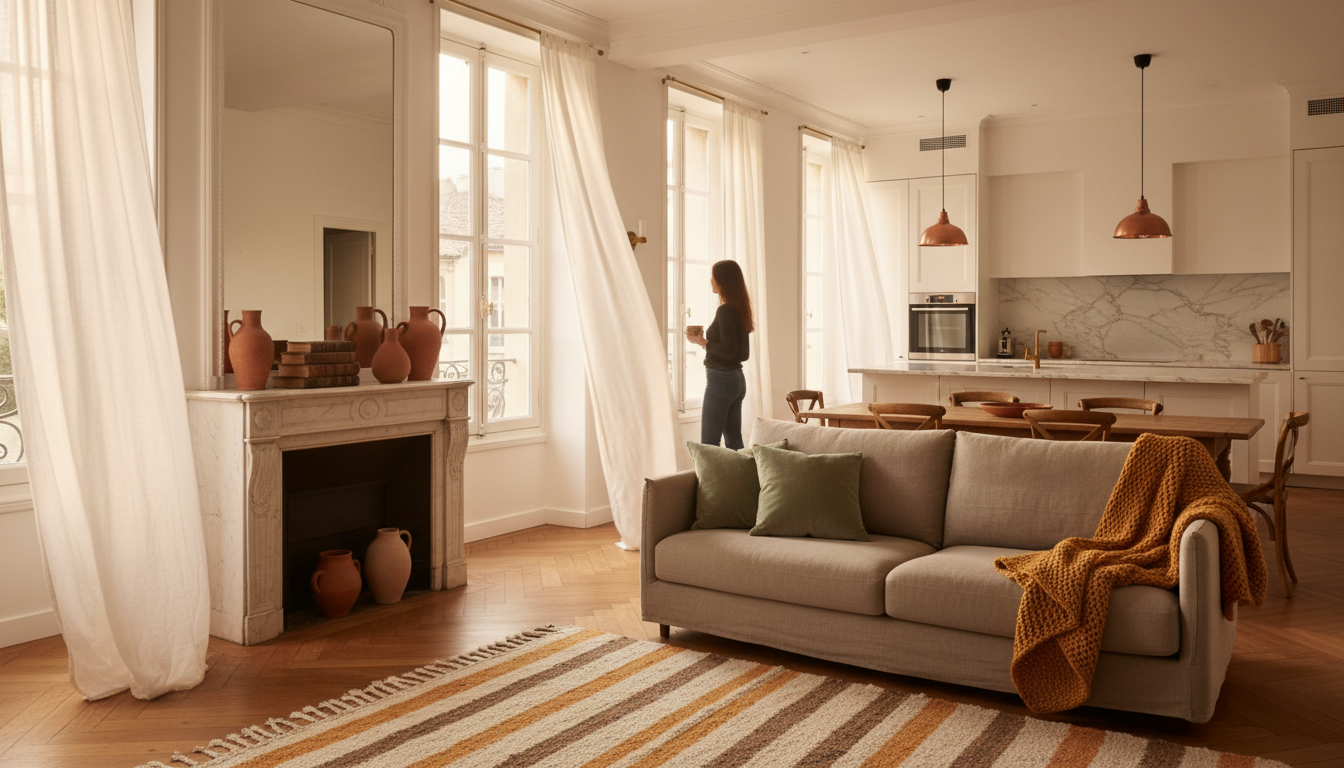 interior of a bright Provenal apartment in Aix-en-Provence, herringbone wood floors, tall French win
Beyond the Center: Les Milles and Jas de Bouffan
If you want more space—a garden, a pool, maybe a view of Mont Sainte-Victoire—look at the residential areas west of Aix. Les Milles and Jas de Bouffan have villas with the full Provençal package: terracotta tiles, blue shutters, olive trees.
You'll need a car, but you're only 15 minutes from downtown Aix, 30 minutes from the Luberon, 45 minutes from the coast.
Coastal Provence: Home Swap Neighborhoods for Beach Lovers
Provence has a coastline. I know—when people think "Provence," they picture lavender, not beaches. But the stretch from Marseille to the Var department includes some of the most dramatic Mediterranean scenery in France.
Cassis: The Postcard Fishing Village
Cassis is that place you see on Instagram and assume is photoshopped. Pastel buildings tumbling down to a tiny harbor. Fishing boats bobbing in impossibly turquoise water. Cliffs rising on either side like protective arms.
The calanques—those narrow, fjord-like inlets—are the main draw. You can hike to them (the trail to Calanque d'En-Vau takes about 2 hours one way) or take a boat tour from the harbor (€18-25/$20-27 depending on length).
Home swaps in Cassis proper are rare and highly sought-after. More common are swaps in the hills above town, with views down to the coast. One member I connected with on SwappaHome had a place 10 minutes uphill from the port—she said the walk down was easy, the walk back up after a bottle of rosé less so.
Marseille: Underrated and Unforgettable
I'll say something controversial: Marseille might be my favorite city in France.
Yes, it's gritty. Yes, certain neighborhoods require street smarts. But it's also the most alive, the most diverse, the most unapologetically itself of any French city I know. The food scene is incredible—bouillabaisse at Chez Fonfon (€75/$81, worth every centime), Algerian pastries in Noailles, pizza at Chez Étienne in the Panier.
For home swapping in Marseille, Le Panier is the oldest neighborhood with labyrinthine streets and an artsy vibe—apartments in converted warehouses and fishermen's houses. Endoume is residential and hilly, with views over the islands, and feels like a village within the city. Malmousque is a tiny peninsula with swimming spots carved into the rocks—very local, very quiet.
I'd avoid the areas immediately around Gare Saint-Charles and the northern arrondissements unless you know the city well.
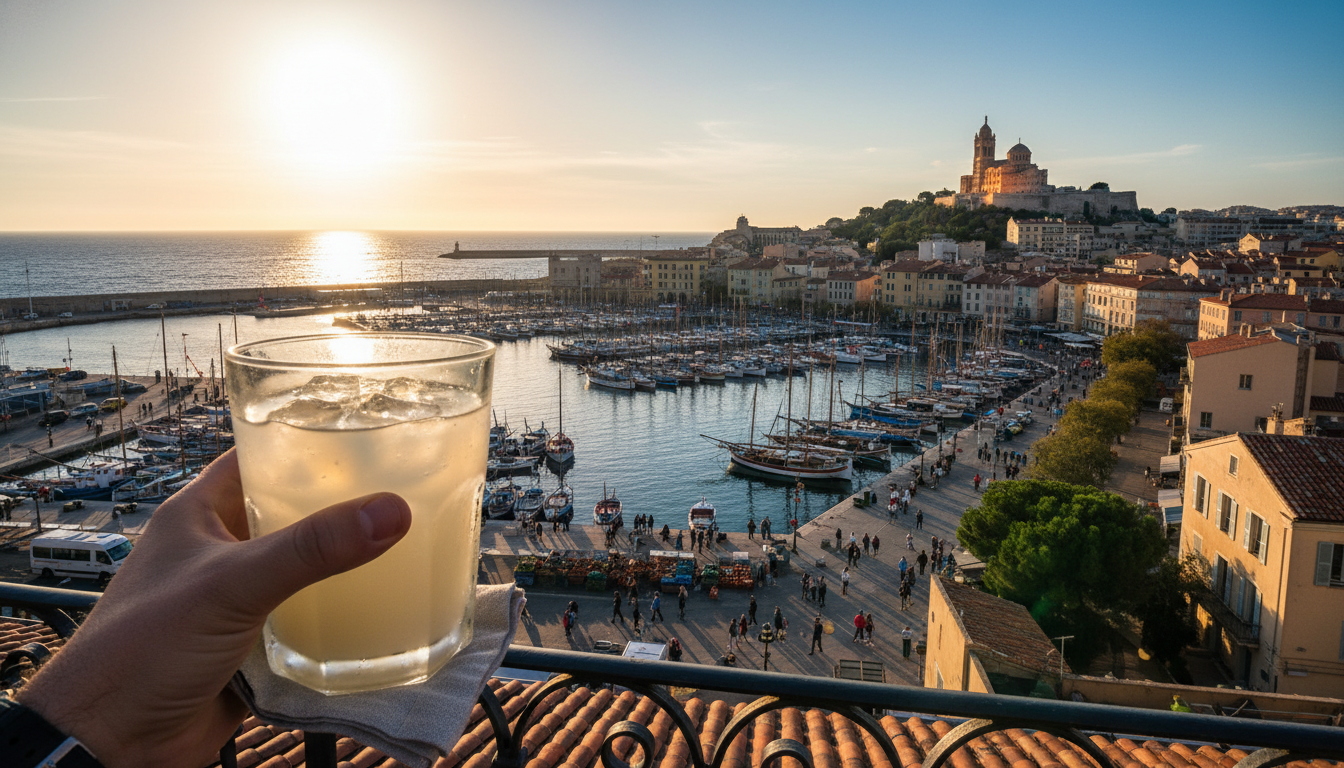 view from a Marseille rooftop terrace at golden hour, looking over the Vieux-Port with Notre-Dame de
The Var Coast: Hyères and the Golden Islands
East of Marseille, past Toulon, the Var department has beaches that rival anything in the Caribbean. Hyères is the gateway to the Îles d'Or—Porquerolles, Port-Cros, and Île du Levant—three islands with crystal water, pine forests, and almost no cars.
Hyères itself is underrated. The medieval old town has a North African feel, with palm trees and bougainvillea everywhere. The Presqu'île de Giens, a double tombolo connecting to the mainland, has salt marshes on one side and beaches on the other.
When searching for swaps, look for properties in the old town or along the Almanarre beach strip. Skip the modern suburbs—they're characterless.
Lavender Country: Home Swapping Near Provence's Purple Fields
Let's talk about lavender, because I know that's why half of you are reading this.
The lavender blooms from mid-June to early August, with peak color usually in the first two weeks of July. The most famous fields are on the Valensole Plateau, about an hour northeast of Aix.
Valensole and Riez
Valensole is a small town that becomes briefly famous each summer when the fields explode into purple. The plateau is vast—you can drive for 20 minutes seeing nothing but lavender and wheat.
Riez, nearby, is less touristy and has Roman ruins (four columns from a 1st-century temple just standing there in a field, no entrance fee, no crowds).
Home swaps in this area are mostly farmhouses and rural properties. Expect to be remote—the nearest decent restaurant might be 20 minutes away. But the silence at night, the stars without light pollution, the smell of lavender drifting through open windows... it's worth the isolation.
Sault: The Authentic Lavender Village
If Valensole feels too Instagram-famous, head to Sault on the slopes of Mont Ventoux. The lavender here is grown for distillation, not tourism, which means fewer tour buses and more working farms.
The town hosts a lavender festival on August 15th that's been running since 1903. Local producers sell oils, soaps, honey (lavender honey is a thing, and it's incredible).
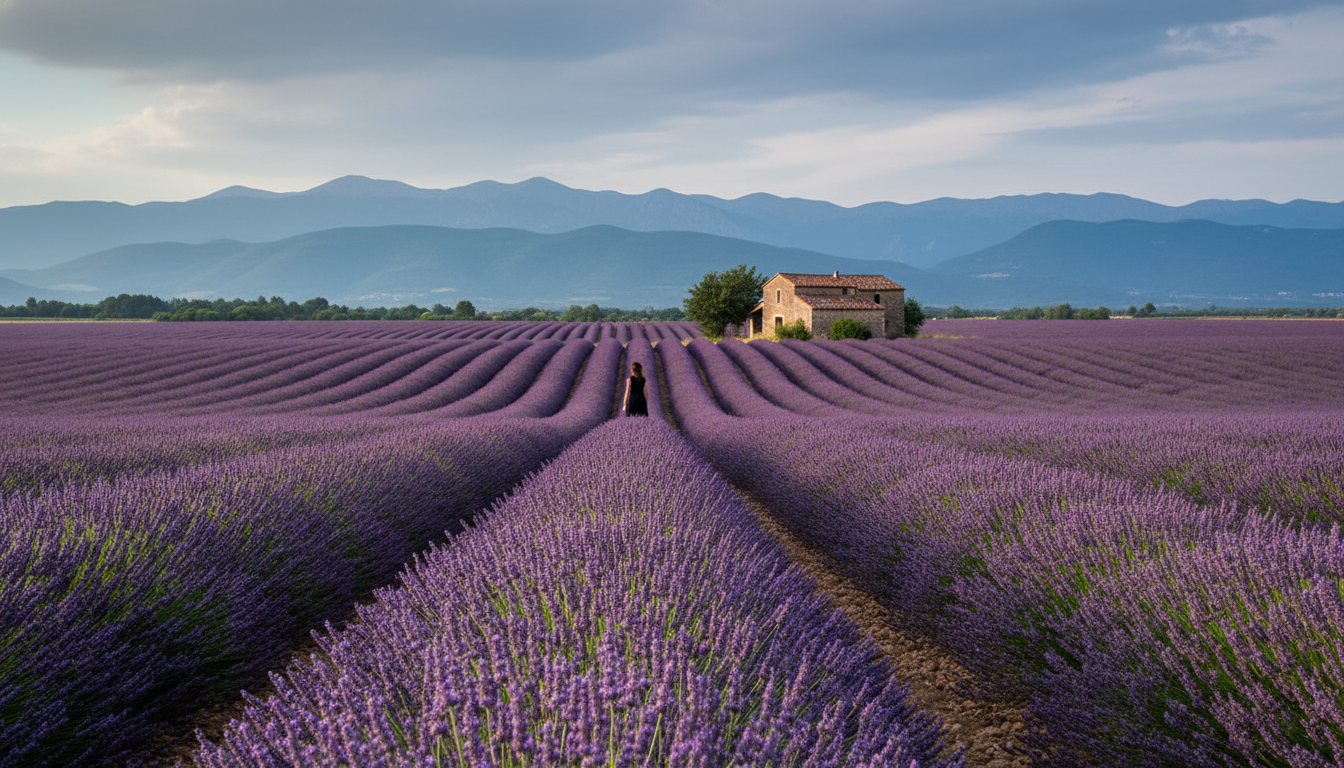 endless rows of lavender in full purple bloom stretching toward distant blue mountains, a lone stone
The Alpilles: A Secret Provence for Home Swappers
The Alpilles is a small mountain range between Avignon and the Camargue—limestone peaks rising dramatically from the plain, olive groves carpeting the valleys, villages that feel like they haven't changed in centuries.
This is my personal favorite corner of Provence. Let me tell you why.
Saint-Rémy-de-Provence
Saint-Rémy is sophisticated without being pretentious. Van Gogh painted some of his most famous works here (the asylum where he stayed is now a museum). The Wednesday market is one of the best in Provence—less chaotic than L'Isle-sur-la-Sorgue, more authentic than Gordes.
The town is small enough to walk everywhere but has excellent restaurants, wine bars, and shops. Maison Drôme does incredible natural wines. Bistrot Découverte serves local ingredients in a courtyard that feels like a secret garden.
Home swaps here are a mix of village houses in the center and mas (farmhouses) in the surrounding countryside. The countryside properties often have pools—essential in summer when temperatures hit 35°C (95°F).
Les Baux-de-Provence
Les Baux is one of the most dramatic villages in France—a ruined medieval fortress crowning a rocky spur, with views across the Alpilles and down to the Camargue. It's also extremely touristy during the day.
Staying here through a home swap transforms the experience. After 6 PM, when the day-trippers leave, you have the ramparts almost to yourself. I watched the sunset from the castle ruins once, completely alone, and it's still one of my favorite travel memories.
Eygalières and Maussane-les-Alpilles
These two villages are local favorites—less famous than Saint-Rémy, equally charming, with better value for home swaps. Eygalières has a church perched on a rock and a Friday market that's genuinely local. Maussane is the olive oil capital of the region; the cooperative sells oils that make supermarket stuff taste like motor fuel.
Avignon and the Rhône Valley: Where History Meets Home Swapping
Avignon was the seat of the Catholic papacy in the 14th century, and it still feels important. The Palais des Papes is massive—the largest Gothic palace in the world—and the city walls are intact, giving the old town a contained, fortress-like feel.
Inside the Walls (Intra-Muros)
Living inside Avignon's walls is like living in a museum, except the museum has excellent restaurants and a theater festival every July that takes over the entire city.
Swaps here are mostly apartments in historic buildings. Expect thick stone walls (great for summer heat), small kitchens, and stairs—lots of stairs. Very few buildings have elevators.
The July Festival d'Avignon is incredible but intense. The population triples, prices double, and finding a home swap during festival weeks requires booking 6+ months ahead.
Villeneuve-lès-Avignon
Just across the Rhône, Villeneuve was where the cardinals built their palaces when Avignon got too crowded. It's quieter, has free parking, and offers the best views of Avignon's skyline.
The Fort Saint-André at sunset is spectacular—you look across the river at the Palais des Papes glowing golden, with the Alpilles in the distance.
How to Find the Perfect Provence Home Swap
Alright, practical stuff. Here's how to actually make this happen.
Timing matters. The most desirable properties in Provence get booked months in advance for summer. If you want July or August, start looking in January or February. Shoulder seasons (May-June, September-October) are easier—and honestly better. The light is softer, the crowds thinner, the temperatures actually pleasant.
Be specific in your search. Don't just search "Provence"—search the specific village or area you want. The difference between a swap in Gordes and a swap in Apt (30 minutes away) is significant.
Read the reviews carefully. SwappaHome's review system is your best friend. Look for comments about cleanliness, accuracy of photos, and how responsive the host was. A few reviews mentioning "exactly as described" is worth more than a hundred generic "great stay!" comments.
Communicate before committing. Message potential swap partners with specific questions. How far is the nearest grocery store? Is there AC or just fans? What's the parking situation? Good hosts appreciate detailed questions—it shows you're serious.
Consider your transport needs. Outside of Aix and Avignon, you'll need a car. Period. Public transport in rural Provence is essentially nonexistent. Factor in rental costs (roughly €40-70/$43-76 per day in summer) when planning your budget.
What to Expect from Your Provençal Hosts
Provençal home swap hosts tend to be... particular. In the best way.
Expect detailed instructions about the house—which windows to open for cross-ventilation, how to coax the espresso machine into working, where the circuit breaker is when you inevitably trip it by running the AC and the washing machine simultaneously.
Expect recommendations. Lots of recommendations. Handwritten notes about their favorite boulangerie, the wine producer who does tastings by appointment, the swimming hole that locals guard like a state secret.
Expect warmth, but also boundaries. French hosts are generally more private than Americans—they might not want to video chat before the swap, preferring detailed messages instead. Don't take it personally.
Making the Most of Your Provence Home Swap
A few final thoughts from someone who's learned these lessons the hard way.
Embrace the rhythm. Provence runs on its own schedule. Everything closes from noon to 2 PM (or 3 PM, or whenever the shopkeeper feels like reopening). Sunday is sacred—most businesses are closed. Monday, many restaurants take their weekly break. Plan around this instead of fighting it.
Shop at markets, not supermarkets. Every village has a market day. The produce is better, the prices are often lower, and you'll have interactions with vendors that become the highlights of your trip. My favorite market memory: a cheese seller in Apt who spent 20 minutes explaining the difference between various goat cheeses, then threw in an extra wedge "because you asked good questions."
Learn five phrases. "Bonjour" (always, always say bonjour when entering any establishment). "S'il vous plaît" and "merci." "Parlez-vous anglais?" And "c'est délicieux" for when the food inevitably blows your mind.
Leave the house better than you found it. This is home swap etiquette 101, but it matters especially in Provence, where hosts often leave thoughtful welcome gifts—a bottle of local rosé, fresh fruit from their garden, homemade jam. Return the kindness. Strip the beds, run the dishwasher, maybe leave a small gift from your hometown.
Provence has a way of getting under your skin. The first time I visited, I thought it was just pretty—all those postcards come to life. By my third home swap, I understood it was something deeper. It's a place that rewards slowness, that reveals itself to people who stay long enough to learn its rhythms.
Home swapping makes that possible in a way hotels never could. You're not passing through—you're living there, however briefly. You have a kitchen to cook in, a terrace to watch sunsets from, neighbors who nod at you in recognition.
If you're ready to experience Provence this way, SwappaHome is where I'd start. List your place, earn some credits, and start browsing. That stone farmhouse in the Luberon, that apartment overlooking the Cours Mirabeau, that fisherman's cottage in Cassis—they're waiting for someone who'll appreciate them.
Might as well be you.
Frequently Asked Questions
What is the best time of year for home swapping in Provence?
The best time for home swapping in Provence is late May through June or September through mid-October. You'll avoid the intense summer crowds and heat while still enjoying warm weather, blooming landscapes, and full access to outdoor markets and restaurants. July offers lavender fields at peak bloom but brings higher demand and temperatures reaching 35°C (95°F).
How far in advance should I book a Provence home swap?
For summer months (July-August), book your Provence home swap 4-6 months in advance, especially for popular areas like the Luberon or Cassis. Shoulder season swaps (May-June, September-October) can often be arranged 2-3 months ahead. Last-minute swaps are possible but limit your neighborhood choices significantly.
Do I need a car for home swapping in Provence?
Yes, you'll need a car for most Provence home swaps outside Aix-en-Provence, Avignon, or Marseille city centers. Rural areas have minimal public transport, and the best villages, markets, and beaches require driving. Budget €40-70 ($43-76) per day for summer car rentals, and book early as vehicles sell out quickly.
Is home swapping in Provence safe?
Home swapping in Provence is generally very safe. SwappaHome's review system helps you choose verified, well-reviewed hosts with established reputations. Most swappers recommend getting your own travel insurance for peace of mind. The community aspect creates mutual accountability—hosts care for your home because you're caring for theirs.
Which Provence neighborhood is best for first-time home swappers?
Aix-en-Provence is ideal for first-time home swappers in Provence. It offers walkable streets, excellent restaurants, reliable public transport to nearby areas, and a good selection of apartment swaps. You get authentic Provençal atmosphere without the isolation of rural villages, making it easier to navigate logistics on your first exchange.

Published by
SwappaHome
SwappaHome Editorial Team
Home Exchange & Slow Travel Editorial
The SwappaHome Editorial Team brings together travel research, home-exchange community insights, and platform data to produce practical guides for first-time and experienced home swappers. Every article cites real platforms, current market rates, and verifiable city-level facts so readers can make informed decisions without guessing.
Ready to try home swapping?
Join SwappaHome and start traveling by exchanging homes. Get 7 free credits when you sign up!
Related articles
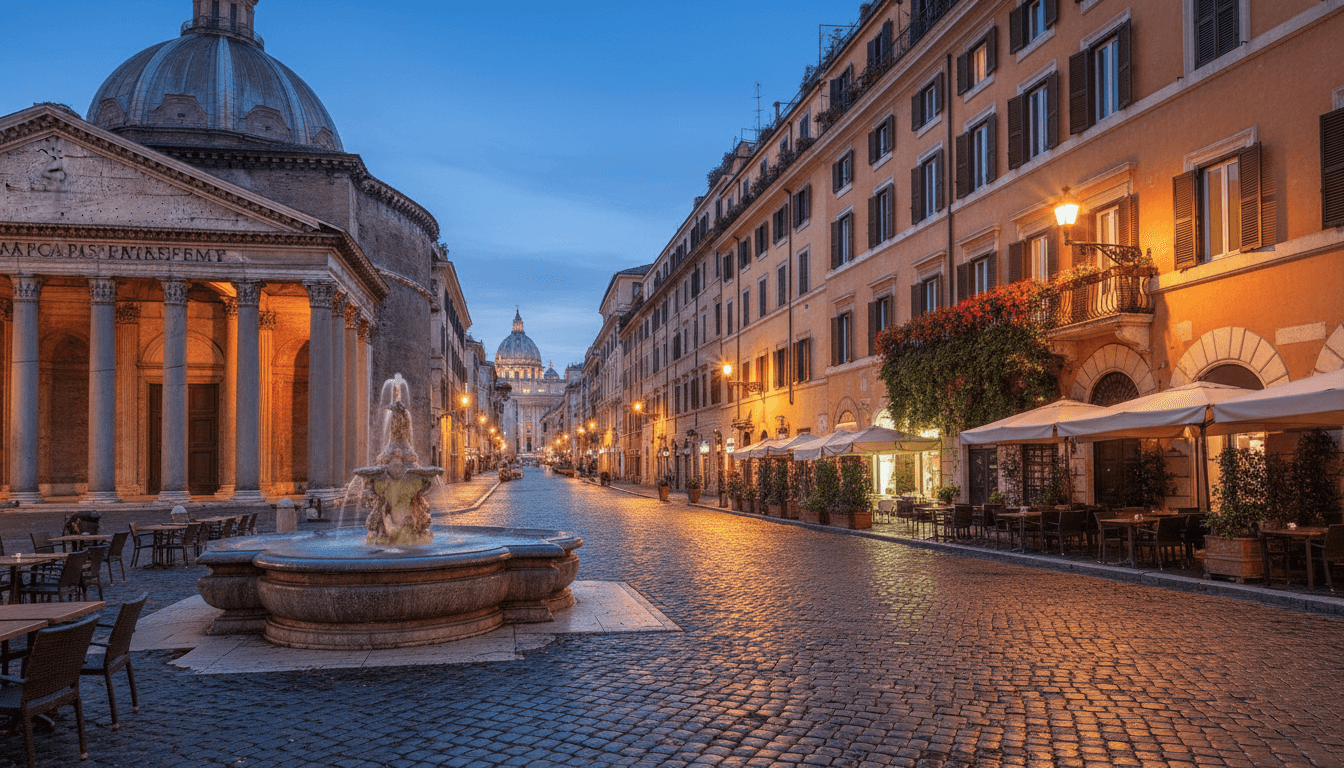
Home Swap in Rome: Where to Find the Best Properties for Your Italian Exchange
Discover where to find the best home swap properties in Rome—from Trastevere's cobblestone charm to Testaccio's local authenticity. Real neighborhoods, real advice.

Home Swap in Bangkok: Where to Find the Best Properties for Free Stays
Discover where to find the best home swap properties in Bangkok—from riverside condos in Charoen Krung to family homes in Ari. Real neighborhoods, real savings.
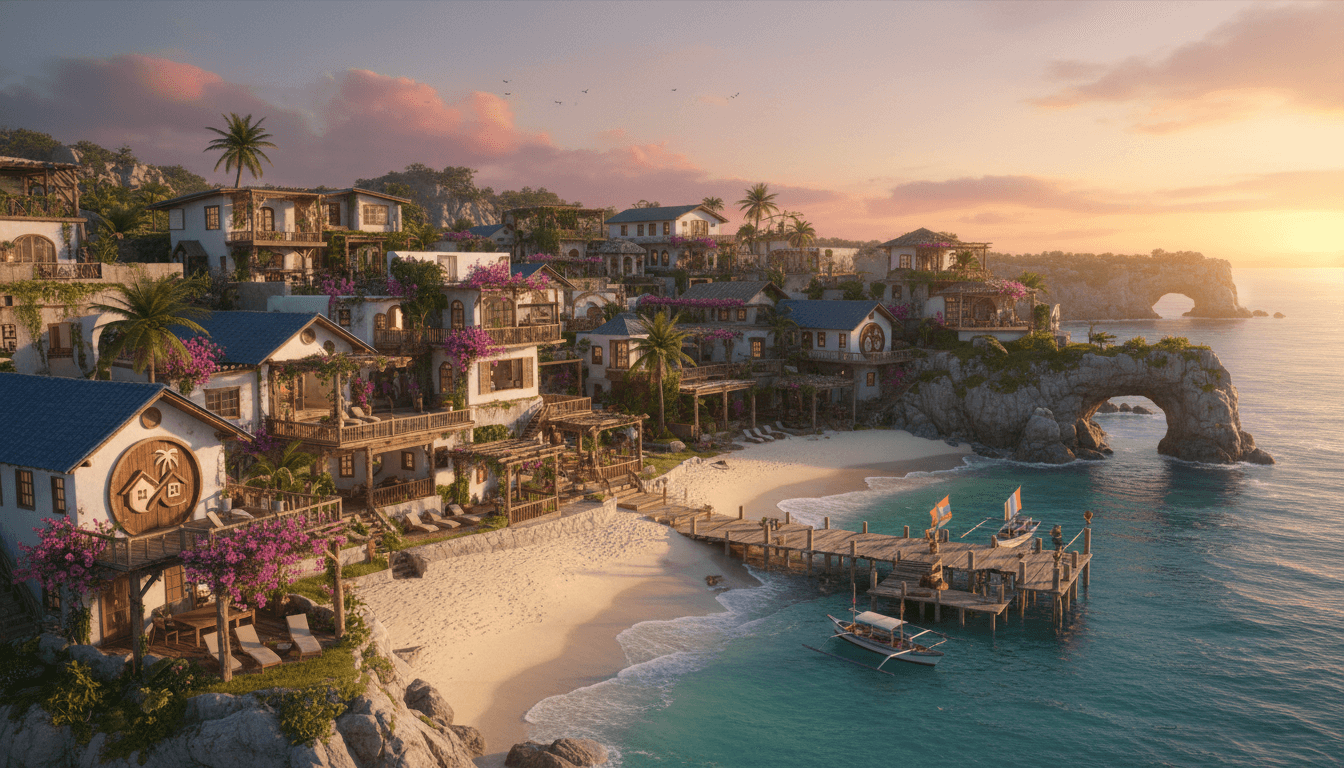
Home Swap for Beach Lovers: 12 Coastal Destinations Ranked for 2026
Discover the best coastal destinations for home swapping in 2026. From Portugal's Algarve to Australia's Gold Coast, find your perfect beach exchange.