Home Exchange in Málaga: Your Complete Guide to Living Like a Local on Spain's Costa del Sol

SwappaHome Editorial Team
Home Exchange & Slow Travel Editorial
Discover how home exchange in Málaga lets you live like a local—from hidden tapas bars to beachfront apartments. Save thousands while experiencing authentic Andalusian life.
The first time I stepped into a home exchange in Málaga, I walked straight into someone else's life. Half-finished crossword puzzle on the kitchen table. Shopping list stuck to the fridge—"aceitunas, pan, jamón." A balcony overlooking a courtyard where an elderly woman was hanging laundry while singing flamenco.
That's when it hit me: this wasn't a vacation. This was something else entirely.
I'd done home exchanges in Paris, Tokyo, a tiny Portuguese village where the nearest café was a 20-minute walk. But Málaga? Málaga taught me what it actually means to live somewhere instead of just visiting it. And honestly, I think everyone deserves to experience this city the way I did—not from a hotel lobby, but from a sun-drenched apartment with a coffee maker that takes three tries to figure out and a neighbor who brings you oranges from her tree.
So let me walk you through everything. How to find the perfect home exchange in Málaga, which neighborhoods will steal your heart, what to expect when you arrive, and all the little details that guidebooks never mention.
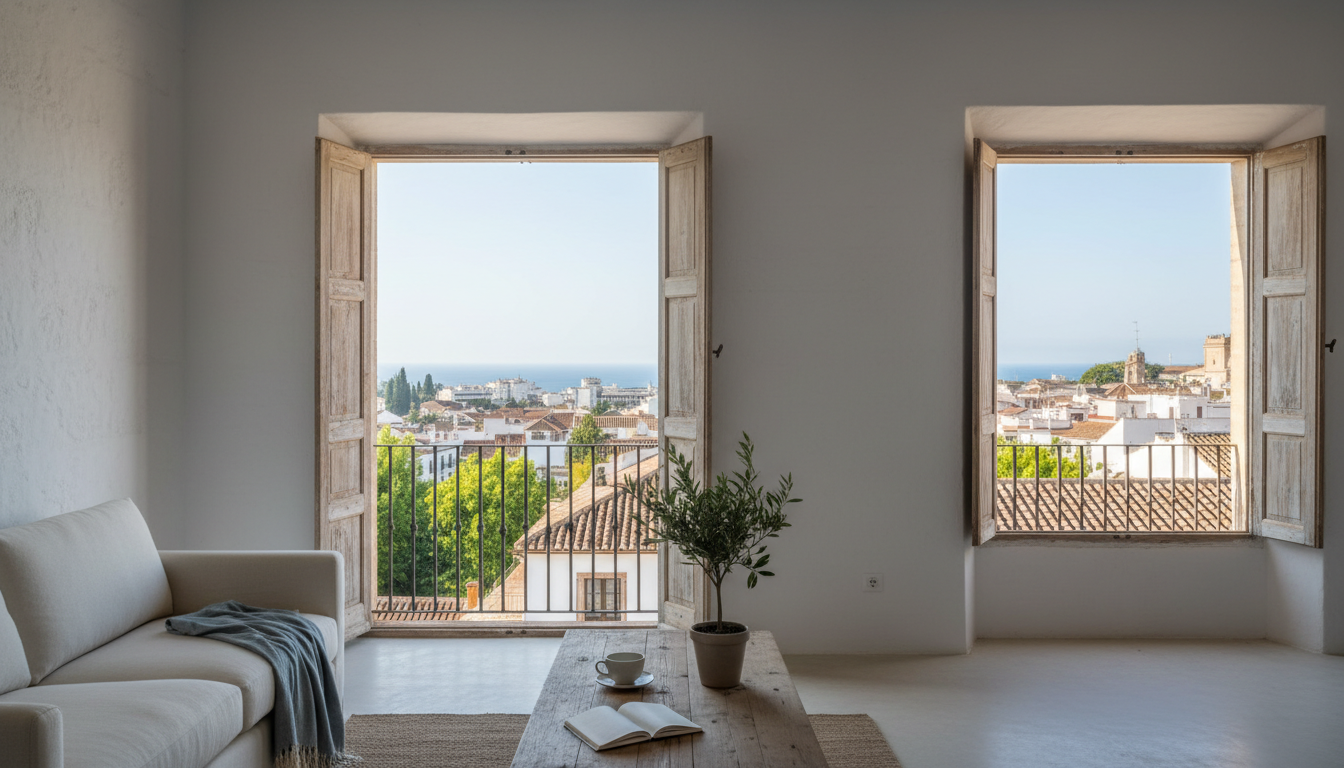 Morning light streaming through wooden shutters into a traditional Mlaga apartment, with a small bal
Why Home Exchange in Málaga Changes Everything About Travel
Here's something I've been thinking about lately: we've been conditioned to believe that travel means hotels. Check in, check out, minibar, room service, repeat. But what if the best travel experiences happen in kitchens? In neighborhoods where tourists never wander? In conversations with the person who waters your plants while you're gone?
Málaga is Spain's sixth-largest city, but it doesn't feel like it. It feels like a secret that 580,000 people are keeping from the rest of the world. Picasso was born here. The Phoenicians founded it 3,000 years ago. And yet most tourists just pass through on their way to Marbella or Granada.
Their loss. Your gain.
When you do a home exchange here, you're not just saving money—though let's be real, you absolutely are. Hotels in Málaga's historic center run anywhere from $150-300 USD per night in high season. A two-week trip? That's $2,100-4,200 just for accommodation. With SwappaHome's credit system, you're spending credits you earned by hosting others. One credit per night, regardless of whether you're staying in a studio or a penthouse.
But the real value isn't financial. It's experiential.
My host in Málaga—a graphic designer named Carmen—left me a hand-drawn map of her favorite spots. Not the Picasso Museum (though yes, go there). Not the Alcazaba (also go there). But the specific bench in Parque de Málaga where she reads on Sunday mornings. The churros place on Calle Granada that closes at 11 AM because the owner gets bored. The wine bar where they'll remember your name after one visit.
You can't buy that in a hotel.
Best Neighborhoods for Home Exchange in Málaga
Not all Málaga neighborhoods are created equal—at least not for home exchangers. Some are perfect for first-timers, others for families, and a few are ideal if you want to feel like you've discovered something nobody else knows about.
Centro Histórico: The Heart of It All
This is where I stayed on my first Málaga exchange, and I'll be honest—it spoiled me. The historic center is a maze of pedestrian streets, baroque churches, and tapas bars that spill onto cobblestones. You're walking distance from everything: the cathedral (locals call it "La Manquita" because one tower was never finished), the Roman theater, the Thyssen Museum.
Expect to pay more in credits? Nope. That's the beauty of SwappaHome's system—one credit equals one night, period. But homes here get snapped up fast, especially during Semana Santa (Holy Week, usually March/April) and the August Feria.
Best for first-time visitors, culture lovers, anyone who wants to walk everywhere. Just watch out for noise—these streets are alive until 2 AM, sometimes later. If you're a light sleeper, ask your host about bedroom placement.
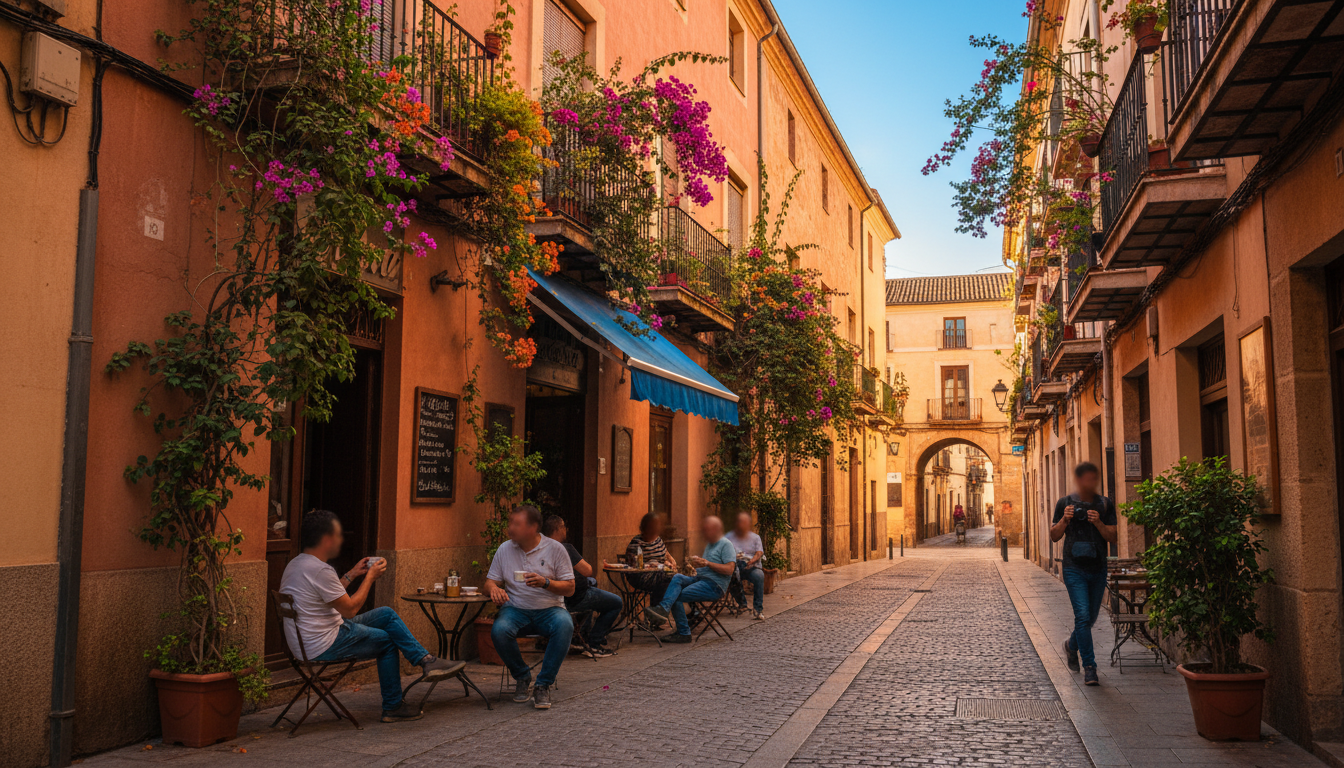 Narrow cobblestone street in Mlagas Centro Histrico at golden hour, with traditional wrought-iron ba
Soho: The Creative Quarter
I almost skipped Soho because it sounded too... gentrified? Too "arts district trying too hard"?
I was wrong.
Soho is where Málaga's creative energy lives. Street art covers entire building facades—not graffiti, actual commissioned murals by international artists. The Centre Pompidou Málaga sits at its edge, a multicolored cube that looks like it teleported from another dimension. The vibe runs younger, more international, with coffee shops that wouldn't feel out of place in Brooklyn or Berlin.
Home exchanges here tend to be in renovated apartments—think exposed brick, high ceilings, maybe a rooftop terrace. The beach is a 10-minute walk. The historic center is 15 minutes. You're in the middle of everything without being in the middle of the chaos.
Great for creative types, digital nomads, couples who want walkability plus beach access. Some streets are still gritty—not unsafe, just real. Ask your host which blocks are quieter.
El Palo and Pedregalejo: Beach Life, Local Style
Okay, this is my actual favorite, and I'm only telling you because I trust you.
El Palo and Pedregalejo are fishing villages that got absorbed into Málaga decades ago, but they never quite forgot what they were. The beach here isn't the manicured tourist stretch near the port—it's where malagueños actually go. Families set up for the whole day. Chiringuitos (beach bars) serve espetos de sardinas, sardines grilled on bamboo skewers over open fires right on the sand.
I spent a week in a home exchange here. Every morning I'd walk to the same café, order the same café con leche (€1.80, about $2 USD), and watch the fishing boats come in. By day three, the barista stopped asking what I wanted.
That's what I mean by living like a local.
Perfect for families, beach lovers, anyone staying longer than a week, people who want authentic over convenient. You'll need to bus or bike to the historic center (about 20 minutes). Worth it, but plan accordingly.
La Malagueta: Upscale and Central
La Malagueta sits between the port and the bullring—a residential neighborhood that's quieter than Centro but still walkable to everything. This is where you'll find larger apartments, often with sea views, and a slightly older, more established crowd.
The beach here is the main city beach—wide, well-maintained, with chiringuitos and rental chairs. Touristy, yes, but genuinely pleasant. The promenade running along it is perfect for morning runs or evening paseos.
Works well for families with kids, anyone wanting a balance of beach and culture, people who like their neighborhoods a bit calmer. You'll find fewer "authentic" tapas bars here—venture into Centro for the real stuff.
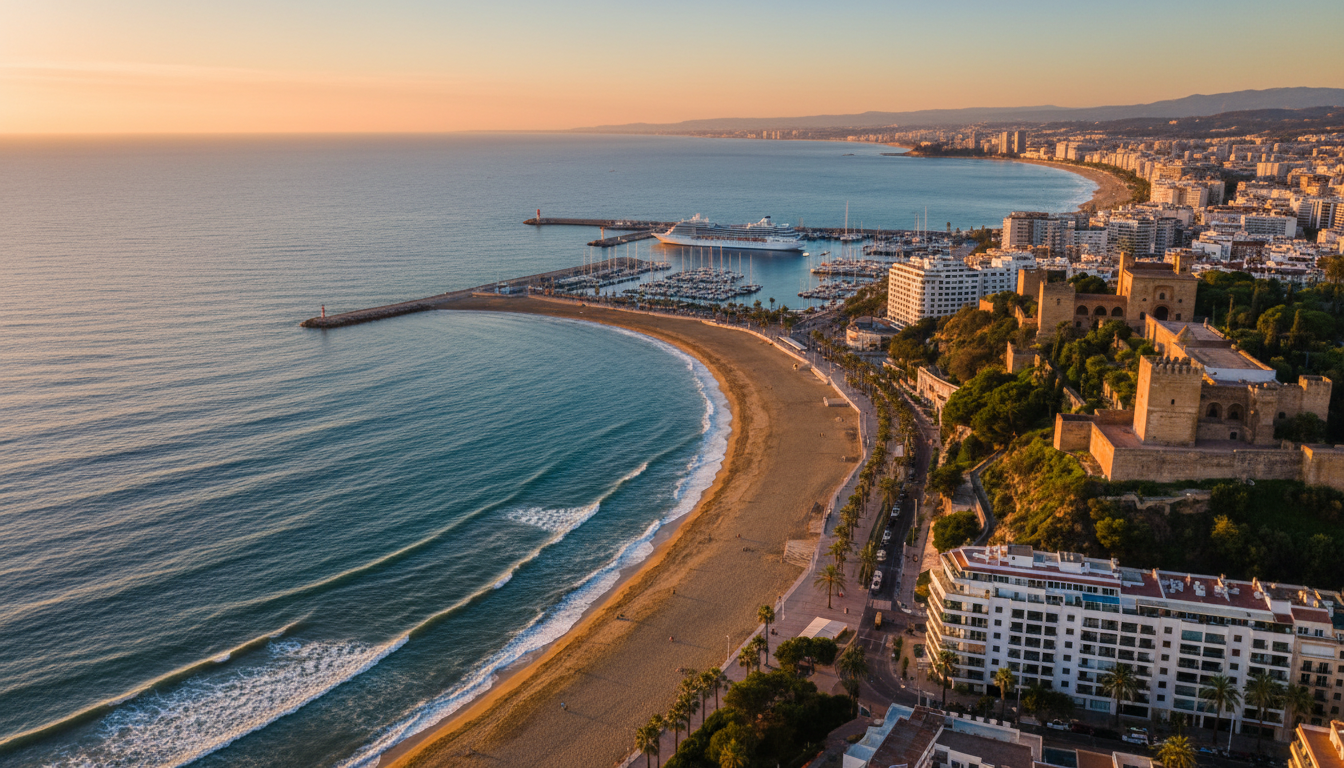 Aerial view of Mlagas coastline showing La Malagueta beach curving toward the port, with the Alcazab
How to Find the Perfect Málaga Home Exchange on SwappaHome
Alright, let's get practical. You want to do this. Here's exactly how.
Start Early, Especially for Peak Season
Málaga's high season runs from June through September, with secondary peaks during Semana Santa (March/April) and the Feria de Agosto (mid-August). If you're planning a summer trip, start browsing SwappaHome listings at least 3-4 months ahead.
I know that sounds like a lot. But here's the thing—the best homes, the ones with balconies and air conditioning and hosts who leave you homemade gazpacho, get booked fast. Members who've built up reviews and credits tend to request them early.
Craft a Request That Stands Out
When you find a home you love, don't just click "request." Write a real message. Tell them why you're coming to Málaga. Mention something specific about their listing—maybe their book collection caught your eye, or you noticed they have an espresso machine and you're a fellow coffee obsessive.
I've talked to hosts who get dozens of requests for popular dates. The ones who respond? They're looking for people who seem like they'll treat their home with respect. Show them you're that person.
Check Reviews, But Read Between the Lines
SwappaHome's review system is genuinely useful, but don't just look at star ratings. Read what people actually say. "Clean and convenient" tells you less than "Carmen left us fresh bread and the balcony was perfect for morning coffee."
Also look at how the host responds to reviews. Do they seem engaged? Grateful? That tells you a lot about the experience you'll have.
Ask the Right Questions Before Confirming
Once a host seems interested, ask about air conditioning (essential June-September, trust me), WiFi speed if you're working remotely, parking if you're renting a car, neighborhood noise levels, and any quirks—that coffee maker that takes three tries, the shower that needs a minute to warm up.
Good hosts appreciate specific questions. It shows you're taking the exchange seriously.
What to Expect When You Arrive
Your first hour in a home exchange sets the tone for everything. Here's how to make it smooth.
The Handoff (Or Lack Thereof)
Some hosts love meeting their guests. Carmen met me at her door with a bottle of local wine and spent an hour walking me through everything—how to work the ancient elevator, which neighbor to avoid eye contact with (long story), where she hides the extra keys.
Other hosts prefer a more hands-off approach. They'll leave detailed instructions, maybe a lockbox code, and you'll never see them. Both are fine. Just know what to expect before you arrive.
The Welcome Book Is Your Bible
Most experienced home exchangers leave a welcome book or document. Read it. All of it. Even the parts that seem obvious.
My Málaga host's book included her WiFi password (obviously), but also: the best time to go to the Atarazanas market (before 11 AM on Saturdays), which pharmacy stays open late, and a warning about the street performers on Calle Larios who get aggressive if you take photos without tipping.
This is local knowledge you can't Google.
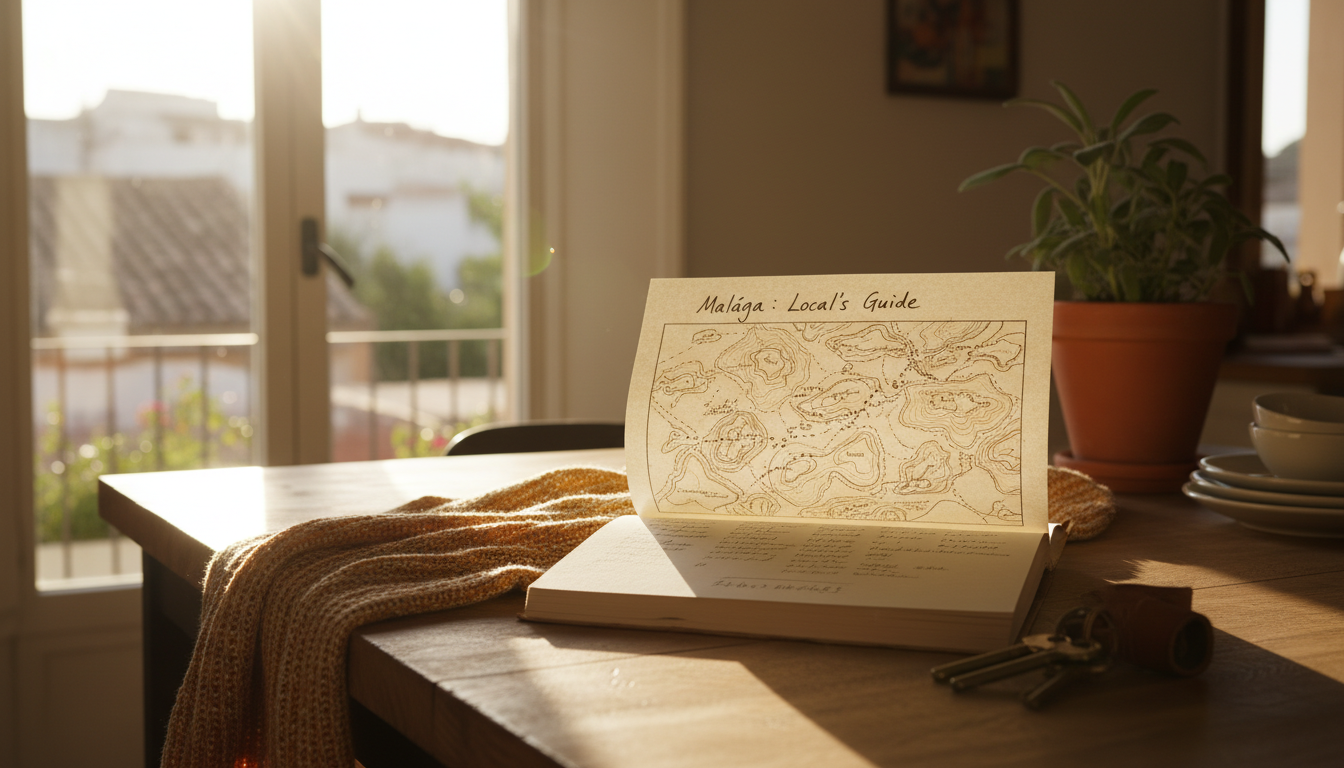 Open welcome book on a wooden kitchen table with handwritten notes and a hand-drawn map of Mlaga, a
Embrace the Learning Curve
Every home has its rhythms. The hot water might take 30 seconds. The front door might stick. The neighbors might have a dog that barks at 7 AM every single morning without fail.
This isn't a bug—it's a feature. You're not in a sanitized hotel room. You're in someone's life. The quirks are part of the story.
Living Like a Local: What That Actually Means in Málaga
I throw around "living like a local" a lot, but let me get specific. Because in Málaga, this looks different than anywhere else I've done home exchanges.
Adopt the Málaga Schedule
Spanish schedules are famously late, but Málaga takes it further. Lunch happens between 2-4 PM. Dinner rarely starts before 9 PM. On weekends, people are out until 3 or 4 AM—not just young people, families too.
Your first instinct will be to fight this. Don't. Embrace the siesta. Take a long lunch. Stay out late enough to see the streets come alive after midnight.
Shop Like a Malagueño
Forget supermarkets (well, mostly). The Atarazanas Market is where locals buy produce, fish, olives, and jamón. It's been operating since the 14th century, and the current building—a gorgeous iron-and-glass structure—dates to 1879.
Go hungry. Wander. Stop at the bars inside for a copa of sherry and some boquerones (fresh anchovies). This is breakfast, Málaga style.
Other markets worth knowing: Mercado de Salamanca in the Perchel neighborhood (less touristy), and the Sunday morning rastro (flea market) near the port.
Find Your Neighborhood Bar
Every Málaga neighborhood has a bar that functions as a community center. Not a fancy cocktail place—a bar with fluorescent lighting, jamón hanging from the ceiling, and regulars who've been coming for 30 years.
Your job is to find it. Go at the same time a few days in a row. Order a caña (small beer, about €1.50/$1.60 USD) and whatever tapa they're pushing that day. By day three, you'll start getting nods. By day five, maybe a conversation.
This is how you stop being a tourist.
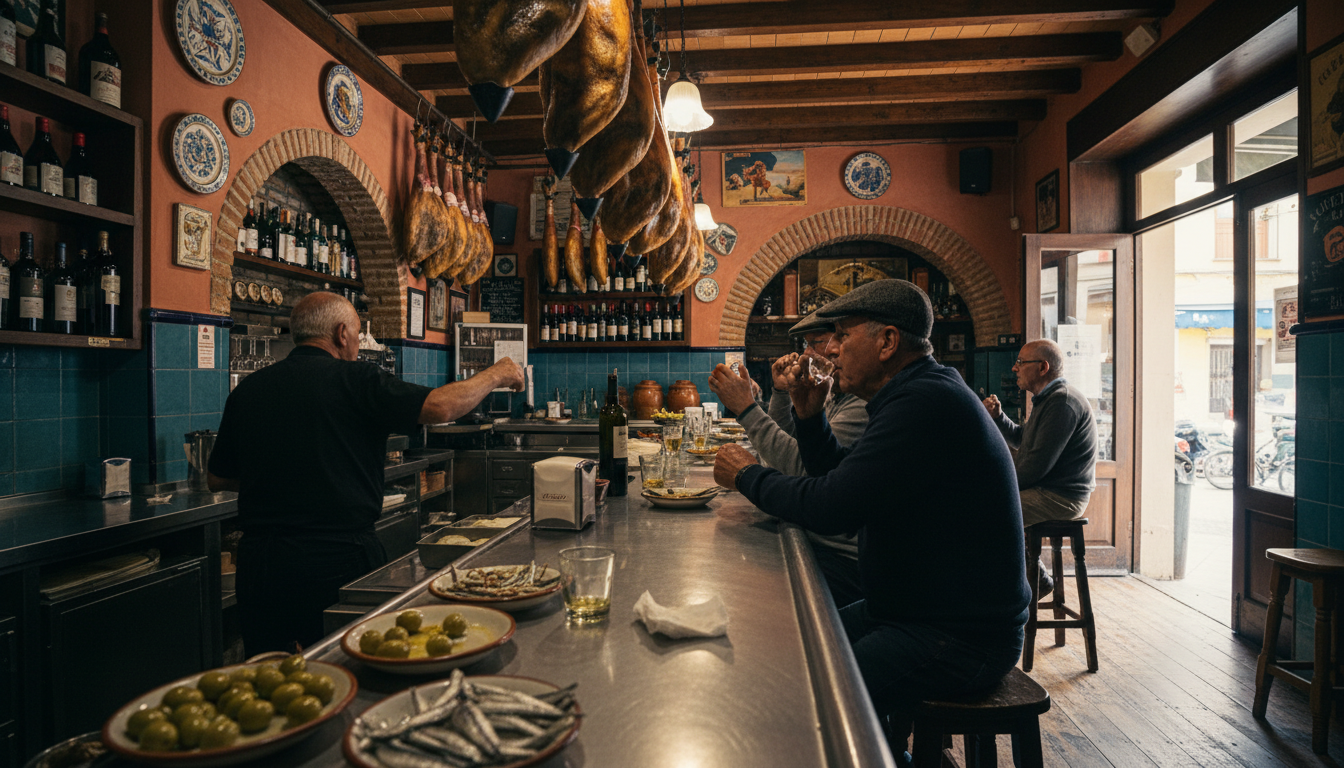 Interior of a traditional Mlaga tapas bar with hanging jamn legs, a zinc counter, elderly locals on
Practical Tips for Your Málaga Home Exchange
Let me rapid-fire some things I wish I'd known.
Getting Around: Málaga's historic center is entirely walkable. For El Palo/Pedregalejo, the #11 bus runs along the coast (€1.40/$1.50 per ride). The metro is clean and modern but only useful for getting to the airport or the shopping district.
Money Stuff: Spain is very card-friendly, but small bars and markets often prefer cash. ATMs are everywhere. Avoid the ones inside tourist shops—they charge brutal fees.
Language: English is widely spoken in tourist areas, but learning basic Spanish goes far. "Una caña, por favor" and "la cuenta" will get you through most situations. Locals genuinely appreciate any effort.
Weather Reality Check: Summers are hot. Like, 35-40°C (95-104°F) hot. Air conditioning isn't universal in older buildings—confirm with your host. Spring (April-May) and fall (September-October) are ideal.
Day Trips: Ronda is 90 minutes by car and absolutely worth it. Granada is 90 minutes the other direction. Nerja's caves are stunning. But honestly? Málaga itself has enough for weeks.
The Trust Factor: How Home Exchange Actually Works
I get this question constantly: "But aren't you nervous staying in a stranger's home? Aren't they nervous having you?"
Short answer: not really. Here's why.
SwappaHome's community is built on mutual trust. Every member has reviews from past exchanges. You can verify identities. You're messaging back and forth before anything is confirmed, getting a sense of each other.
And there's something deeper happening too. When you're staying in someone's home—surrounded by their books, their art, their weird collection of vintage cameras—you feel a responsibility to treat it well. They're trusting you. That means something.
The same goes in reverse. When you host someone, you're not handing your keys to a random tourist. You're welcoming a fellow traveler who's part of the same community, who has their own reviews and reputation to maintain.
Does this mean nothing ever goes wrong? Of course not. People are people. But in seven years of home exchanging, my worst experience was a broken wine glass that I replaced before leaving. The system works because everyone has skin in the game.
One practical note: SwappaHome connects members but doesn't provide insurance coverage. If you want protection for your belongings or liability coverage, arrange your own travel insurance. Most standard policies cover this, and it's worth the peace of mind.
Why Málaga Might Just Change How You Travel Forever
I've written about dozens of destinations for this blog, but Málaga holds a special place. Not because it's the most beautiful (though it's stunning). Not because it's the cheapest (though home exchange makes it remarkably affordable). But because it taught me something about travel that I keep coming back to.
The best trips aren't about seeing things. They're about feeling like you belong somewhere, even temporarily. It's the difference between photographing a cathedral and knowing which café has the best view of it at sunset. Between reading about a neighborhood and knowing which street smells like jasmine after rain.
Home exchange makes this possible in a way that hotels simply can't. You're not a visitor—you're a temporary resident. You have a kitchen to cook in, a balcony to drink wine on, a neighbor who might just bring you oranges.
My Málaga host, Carmen, sent me a message a few months after my stay. She'd just hosted someone else through SwappaHome—a retired teacher from Canada—and they'd become friends. Real friends, not just "we exchanged houses once" friends. They were planning to meet up in Barcelona.
That's the thing about home exchange. It doesn't just change how you travel. It changes who you meet, what you experience, how you see places. It turns destinations into communities and strangers into friends.
Málaga is waiting. Someone's apartment is waiting. That half-finished crossword puzzle, that balcony overlooking the courtyard, that neighbor singing flamenco while hanging laundry—it's all there.
You just have to show up.
Ready to find your own Málaga home exchange? SwappaHome has hundreds of listings across the Costa del Sol, from beachfront apartments in Pedregalejo to historic center gems with rooftop terraces. Start with your 7 free credits and see what's possible.
Frequently Asked Questions
Is home exchange in Málaga safe for first-time swappers?
Absolutely. Málaga is one of Spain's safest cities, and SwappaHome's verification and review system adds another layer of trust. Start with hosts who have multiple positive reviews, communicate thoroughly before your trip, and you'll feel confident from day one. Most first-time exchangers in Málaga report overwhelmingly positive experiences.
How much can I save with home exchange versus hotels in Málaga?
Significantly. Mid-range hotels in Málaga's center cost $150-250 USD per night in high season. A two-week stay runs $2,100-3,500 in accommodation alone. With SwappaHome, you spend credits earned by hosting—no cash exchanged. Factor in kitchen access for cooking, and most members save $3,000-5,000 on a two-week trip.
What's the best time of year for a home exchange in Málaga?
Spring (April-May) and fall (September-October) offer ideal weather—warm but not scorching—and fewer tourists. Summer (June-August) means beach weather but intense heat and crowds. Winter is mild (12-17°C/54-63°F) and very affordable. Book 3-4 months ahead for peak seasons.
Do I need to speak Spanish for a home exchange in Málaga?
Not necessarily, but it helps enormously. English is common in tourist areas and among younger residents. Basic Spanish—"hola," "gracias," "una caña por favor"—opens doors in neighborhood bars and markets. Your host's welcome notes will bridge most gaps, and translation apps handle the rest.
How does SwappaHome's credit system work for Málaga exchanges?
Simple: one credit equals one night, regardless of property size or location. Host guests at your home to earn credits, then spend them anywhere—including Málaga. New members receive 7 free credits to start. A week in a Málaga beachfront apartment costs the same credits as a week in a countryside cottage.

Published by
SwappaHome
SwappaHome Editorial Team
Home Exchange & Slow Travel Editorial
The SwappaHome Editorial Team brings together travel research, home-exchange community insights, and platform data to produce practical guides for first-time and experienced home swappers. Every article cites real platforms, current market rates, and verifiable city-level facts so readers can make informed decisions without guessing.
Ready to try home swapping?
Join SwappaHome and start traveling by exchanging homes. Get 7 free credits when you sign up!
Related articles

Bachelor and Bachelorette Parties in Singapore: The Complete Home Swap Group Guide for 2026
Planning a bachelor or bachelorette party in Singapore? Discover how home swapping lets groups of 6-12 stay together in luxury condos, saving thousands while partying in Marina Bay.
Cycling in Lisbon: 7 Home Swap Bike Tour Itineraries for Every Rider
Discover the best cycling routes in Lisbon with these home swap bike tour itineraries—from waterfront paths to hilltop adventures, all starting from your borrowed home.

Graduation Trip to Barcelona: How Home Swapping Gives New Graduates the Ultimate Celebration
Planning a graduation trip to Barcelona? Discover how home swapping lets new graduates explore Spain's most vibrant city without the hostel crowds or hotel costs.