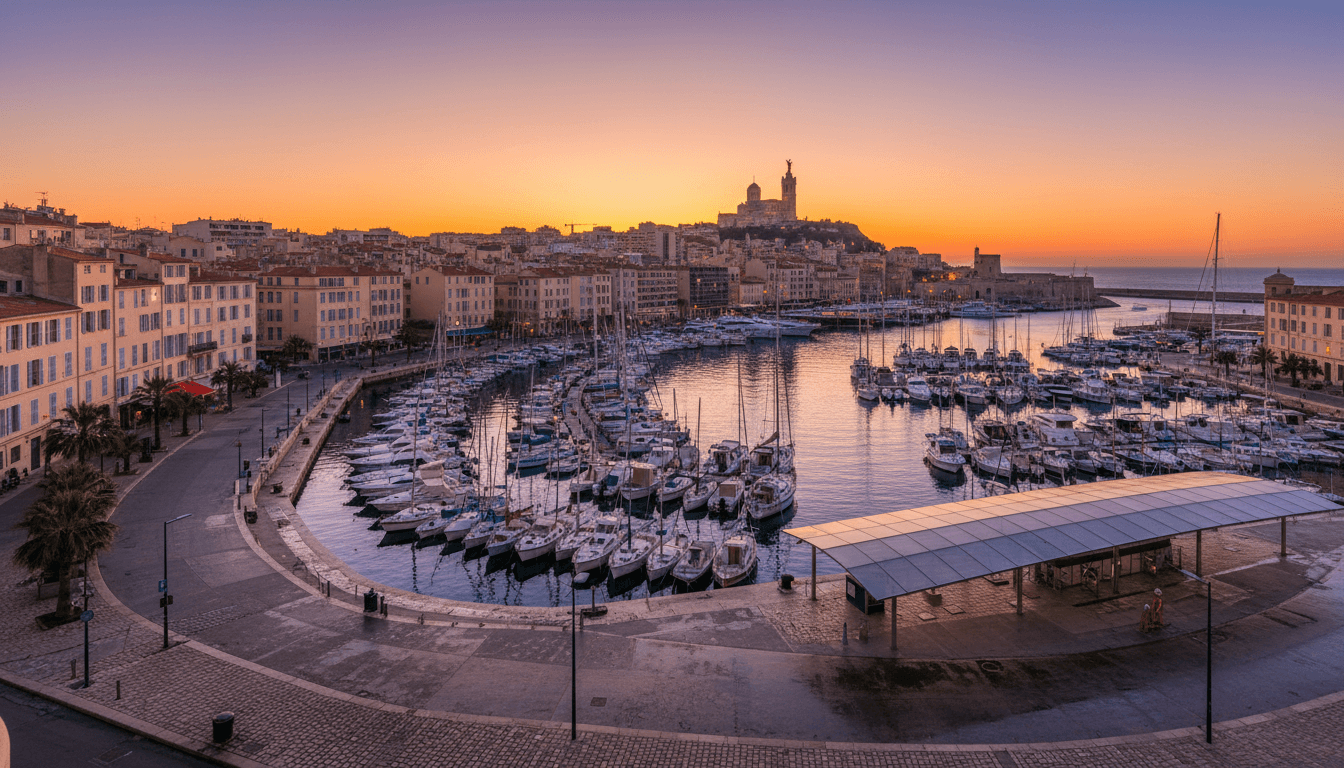
Home Exchange in Marseille: The Complete First-Timer's Guide to France's Mediterranean Gem

SwappaHome Editorial Team
Home Exchange & Slow Travel Editorial
Discover how home exchange in Marseille lets you live like a local in France's oldest city—from Le Panier's cobblestones to calanques hikes, all without hotel prices.
The first time I stepped off the train at Gare Saint-Charles, I made a mistake that still makes me laugh. I'd booked a hotel near the Vieux-Port because that's what guidebooks told me to do. Three nights later, I was eating overpriced bouillabaisse surrounded by tourists, watching locals disappear into neighborhoods I couldn't name, wondering why Marseille felt so... distant.
Two years later, I returned through home exchange—and honestly, it was like visiting an entirely different city.
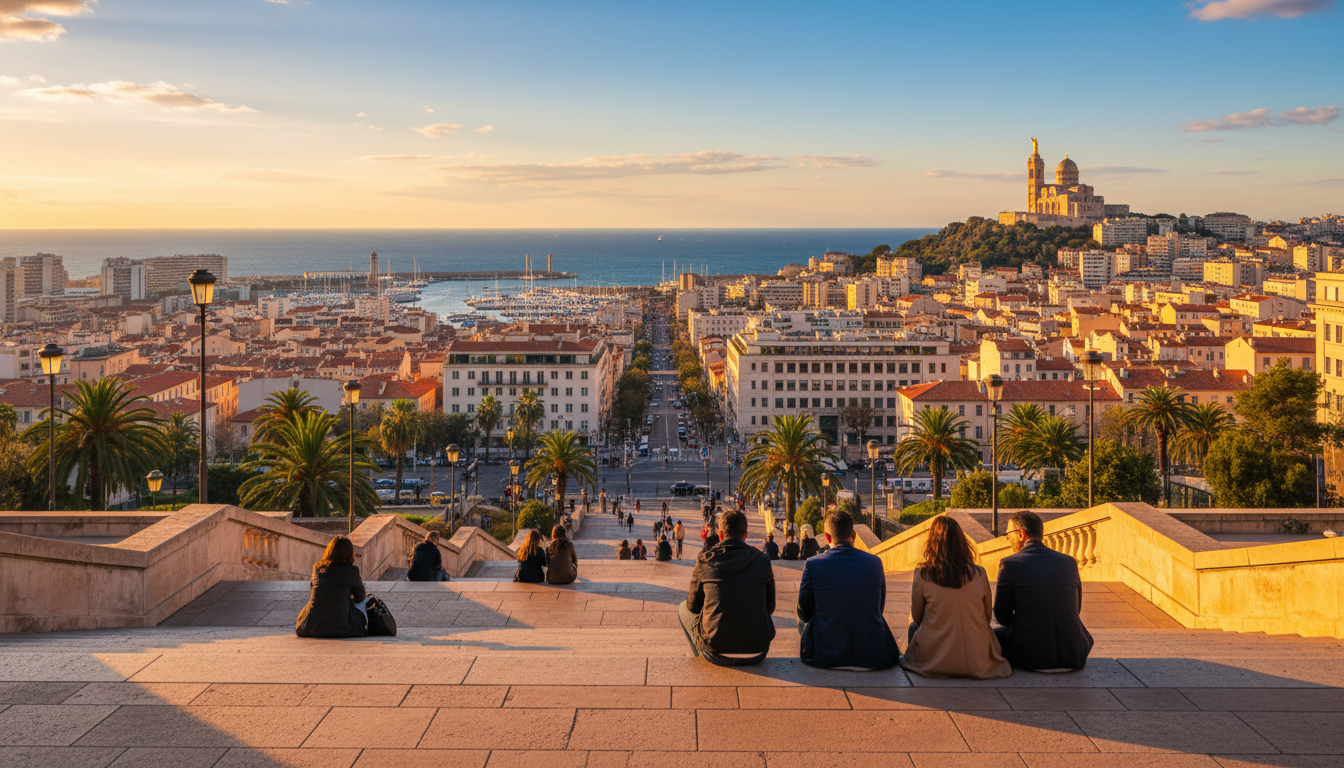 panoramic view from the steps of Gare Saint-Charles at golden hour, looking down toward the Vieux-Po
I stayed in a third-floor apartment in Le Panier, the city's oldest quarter, where my host Camille had left a hand-drawn map of her favorite spots. The corner bakery that sold navettes (Marseille's orange blossom cookies) for €1.20. The fish vendor at Marché des Capucins who'd give you the best catch if you said "Camille m'envoie." The rooftop where neighbors gathered on Thursday evenings with rosé.
That trip changed everything about how I think about this city. And I'm not being dramatic when I say home exchange is the only way I'd recommend experiencing Marseille now.
Why Home Exchange in Marseille Makes Sense (Beyond Just Saving Money)
So here's the thing about Marseille—it isn't Paris. It doesn't have that polished, Instagram-ready veneer. It's gritty, complicated, fiercely proud, and absolutely magnetic once you get past the surface. But you can't get past the surface from a hotel lobby. You just can't.
The average hotel near the Vieux-Port runs $180-250 per night for something decent. Airbnbs in central neighborhoods hover around $120-180. Over a week, you're looking at $840-1,750 just for a place to sleep.
With SwappaHome's credit system, that same week costs you 7 credits—which you've already earned by hosting travelers at your own place. No money changes hands. One credit equals one night, whether you're staying in a studio in Noailles or a villa in Endoume.
But the real value? It's not financial. It's access.
Camille didn't just leave me an apartment. She left me her neighborhood. Her butcher knew I was coming. Her neighbor watered the plants on the balcony and invited me for pastis on my second evening. I had a life in Marseille, not just a visit.
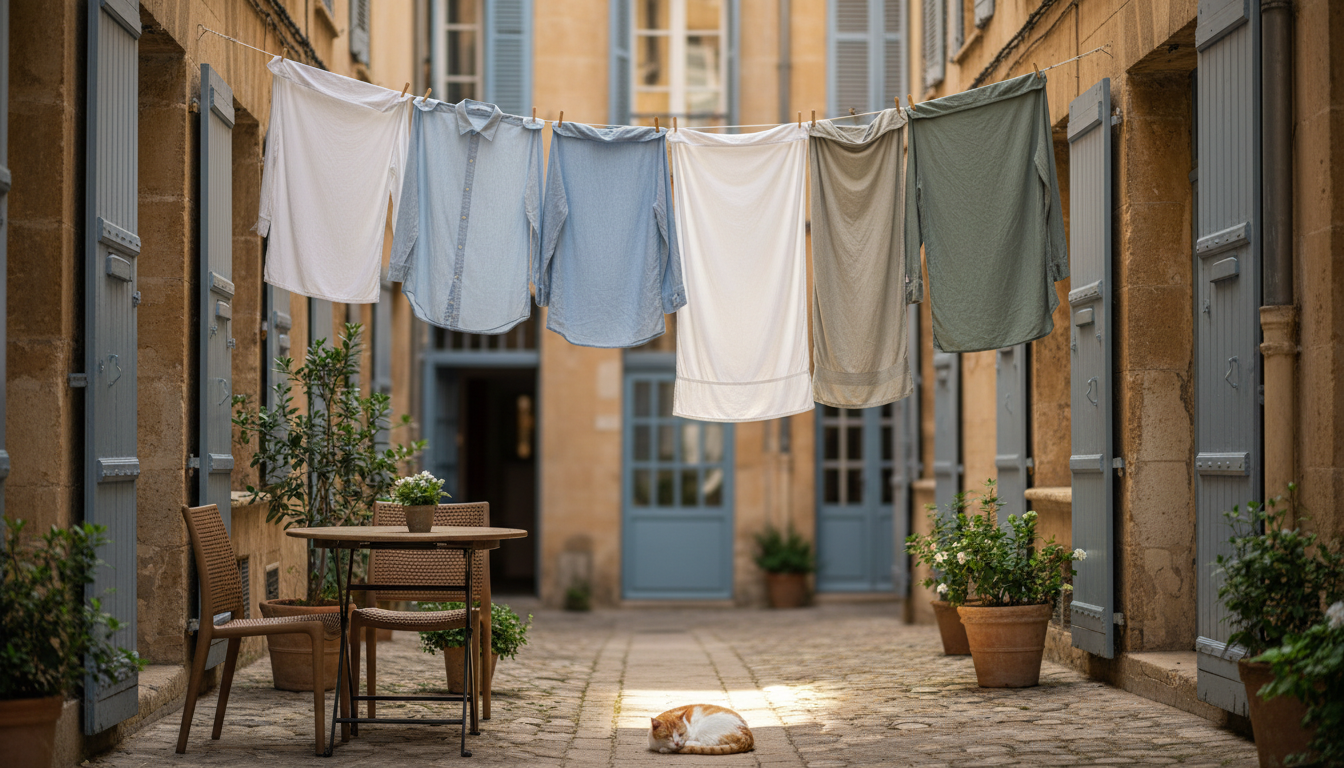 intimate courtyard scene in Le Panier with laundry hanging between ochre-colored buildings, a small
Best Neighborhoods for Home Exchange in Marseille: Where to Actually Stay
Marseille sprawls across 16 arrondissements, but for first-timers doing a home exchange, you'll want to focus on a handful of neighborhoods that balance character, safety, and access. Here's my honest breakdown—no sugarcoating.
Le Panier: The Soul of Marseille
This is where the city began 2,600 years ago, and it still feels like the beating heart. Narrow streets climb the hill behind the Vieux-Port, opening into small squares with fountains and café terraces. It's gentrified significantly in the past decade—you'll find artisan soap shops and concept stores alongside family-run Algerian restaurants—but it hasn't lost its edge.
Home exchanges here tend to be in older buildings with character: exposed stone walls, uneven floors, windows that look out over terracotta rooftops. Expect smaller spaces (this is old Marseille, after all) but unbeatable atmosphere.
Pros: Walkable to everything, incredible food scene, authentic neighborhood feel Cons: Steep streets, limited parking, some noise from nightlife Best for: First-time visitors who want to be in the thick of it
Endoume: The Local Secret
If Le Panier is Marseille's heart, Endoume is its Sunday afternoon. This residential neighborhood on the western edge feels like a small village that happens to have Mediterranean views. Locals swim at the Malmousque coves, buy fish directly from returning boats at Vallon des Auffes, and know each other by name.
Home exchanges here often include outdoor space—terraces, small gardens, rooftop access. You'll need to take the bus or drive to reach the city center (about 15 minutes), but you'll have the Calanques practically at your doorstep.
Pros: Stunning coastline access, quiet residential vibe, larger homes Cons: Requires transport to reach center, fewer restaurants within walking distance Best for: Nature lovers, families, anyone wanting a slower pace
Cours Julien: The Creative Quarter
Street art covers every available surface. Independent record shops share blocks with vintage clothing stores and vegan cafés. The Wednesday and Saturday markets fill the central square with organic produce, handmade jewelry, and more types of olives than you knew existed.
This is young, artistic, progressive Marseille. Home exchanges tend to be in renovated apartments with modern touches—think industrial lighting, open floor plans, the occasional unexpected bathtub in the living room. (I've seen it twice. Don't ask.)
Pros: Vibrant nightlife, excellent restaurants, creative energy Cons: Can be noisy, some rough edges on surrounding streets Best for: Younger travelers, creatives, anyone who gets bored easily
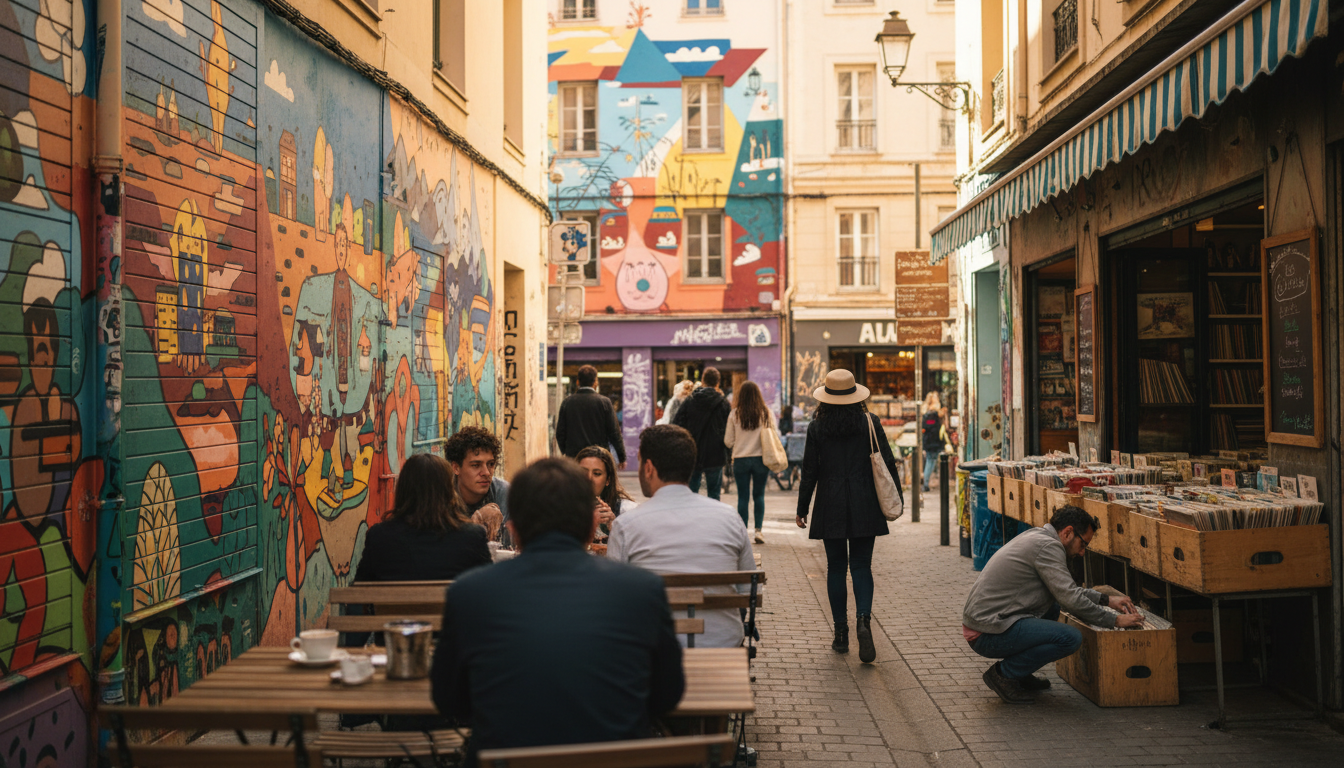 street scene in Cours Julien showing colorful murals on building facades, outdoor caf seating, and a
La Joliette: The Transformed Docklands
Ten years ago, this was industrial wasteland. Now it's home to MuCEM (the stunning Museum of European and Mediterranean Civilizations), Les Docks shopping center, and some of Marseille's most modern architecture. The transformation is genuinely impressive.
Home exchanges here tend to be in newer buildings—think floor-to-ceiling windows, sleek kitchens, and actual elevators. You're trading history for convenience and views.
Pros: Modern amenities, easy metro access, near major attractions Cons: Less neighborhood character, can feel corporate Best for: Design enthusiasts, accessibility needs, first-time visitors nervous about older buildings
How to Find the Perfect Marseille Home Exchange
I've done this enough times to have a system. Here's what actually works.
Start Your Search 3-4 Months Early
Marseille is increasingly popular, especially May through September. The best home exchanges—the ones with terraces, the ones in Le Panier, the ones with hosts who leave you their secrets—get booked early. I've found that 12-16 weeks before your trip hits the sweet spot: enough options to be choosy, not so early that plans feel abstract.
Read Between the Lines of Listings
On SwappaHome, pay attention to what hosts emphasize. Someone who writes three paragraphs about their neighborhood and one sentence about their apartment is telling you something valuable—they know the real magic is outside their walls. Someone who lists every appliance but doesn't mention the area? Might be in a less interesting location.
Look for hosts who mention specific places: "five minutes from Marché des Capucins" or "you can see Château d'If from the bedroom window." Specificity signals someone who actually lives there, not an investor with a rental property.
Ask the Right Questions
Before confirming any home exchange in Marseille, I always ask: What's your favorite thing about your neighborhood? Is there anything that surprised you when you first moved there? Any restaurants within walking distance you'd recommend? What's the parking situation if you're renting a car? How do you usually get to the Vieux-Port?
The answers tell you more than any listing ever could.
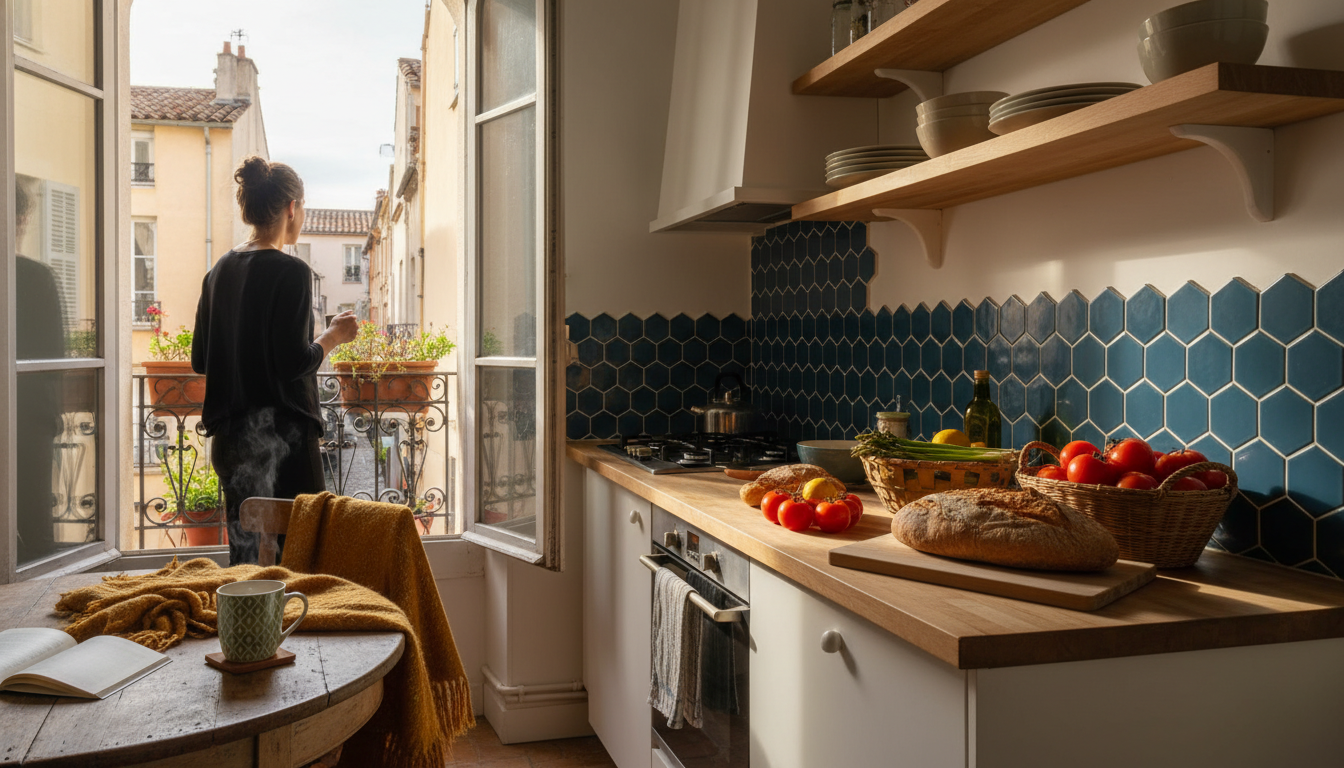 cozy apartment interior in Marseille showing a small kitchen with blue tiles, a window overlooking a
What to Expect from Your Marseille Home Exchange Experience
Here's where I'll be honest about something most guides won't mention: Marseille can be challenging. It's not a city that coddles visitors. But that's precisely what makes it rewarding.
The First Day Adjustment
Marseille operates on its own rhythm. Shops close for long lunches (roughly 12:30-2:30pm). Sunday is genuinely quiet outside the Vieux-Port tourist zone. People speak quickly, with an accent that even French learners find tricky at first.
Give yourself a slow first day. Pick up groceries at a neighborhood shop—not a supermarket. Sit at a café and just watch. Let the city come to you.
Navigating the City
The metro system is limited (two lines) but covers the basics. Buses are more comprehensive but can be confusing for newcomers. My recommendation: use public transport for longer distances, but plan to walk extensively. Marseille reveals itself on foot.
If you're staying in Endoume or planning Calanques hikes, consider renting a car for part of your trip. Parking in central neighborhoods is nightmarish, but having wheels opens up the coastline dramatically.
Food Shopping Like a Local
This might be my favorite part of any Marseille home exchange. You have a kitchen. Use it.
Marché des Capucins (daily except Sunday) is the city's oldest market—chaotic, loud, and absolutely worth the sensory overload. Marché de Noailles, nearby, has North African spices, fresh mint by the bundle, and the best dates I've ever tasted.
For fish, go to the Vieux-Port around 8am when boats return. The catch is sold directly on the quay. Point at what looks good, and they'll clean it for you. A kilo of fresh sardines runs about €8-12.
The Calanques: Plan Ahead
These limestone inlets between Marseille and Cassis are genuinely spectacular—think Norwegian fjords with Mediterranean water. But access is restricted during high fire-risk periods (typically July-August), and the most popular calanques (Sugiton, En-Vau) require early starts to avoid crowds.
From a home exchange base in Endoume or the 8th arrondissement, you can reach Calanque de Morgiou or Sormiou in 20 minutes by car. From central Marseille, budget 45 minutes by bus plus hiking time.
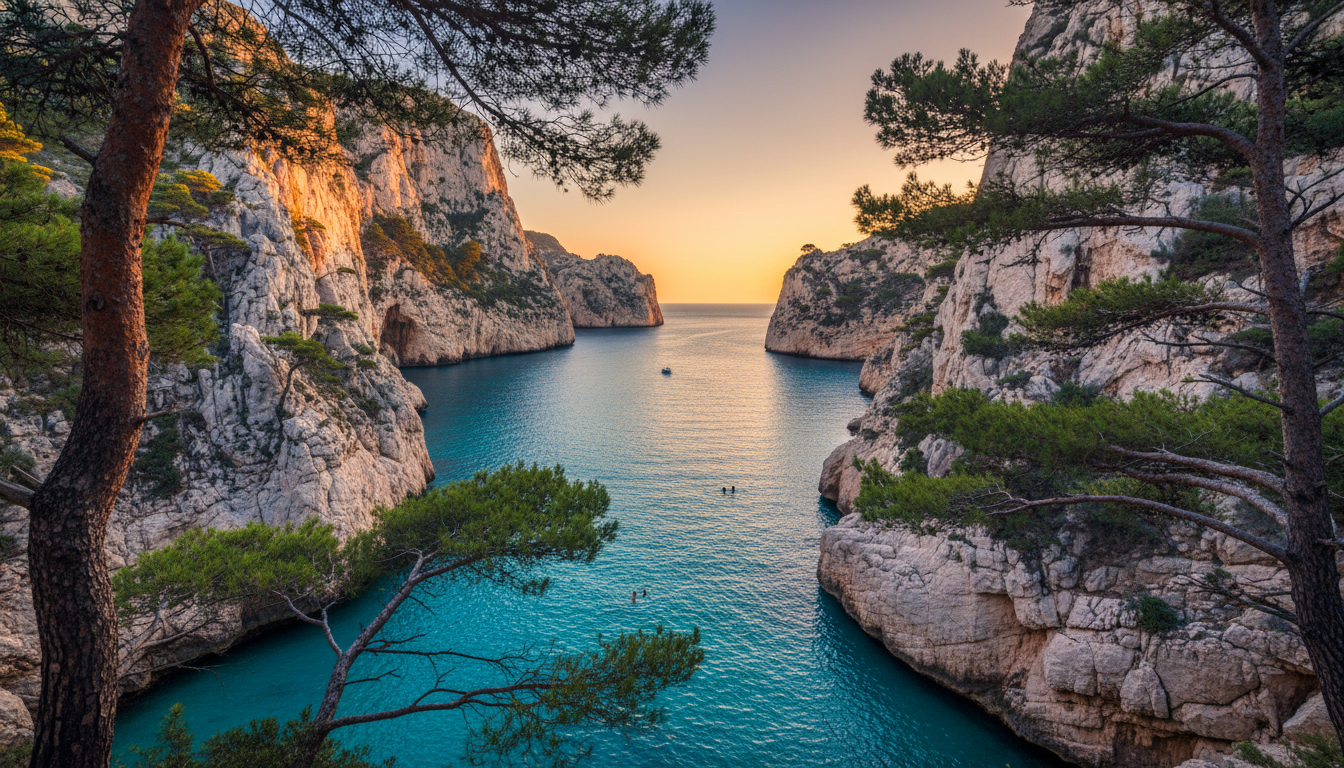 turquoise water of Calanque de Sugiton with dramatic white limestone cliffs, a few swimmers in the d
Marseille Home Exchange: Practical Tips That Actually Matter
After multiple stays and countless conversations with hosts, here's what I wish someone had told me.
Summer Means Mistral
The mistral wind can blow for days, turning a 28°C afternoon into something that feels much cooler. It's actually a blessing in high summer—it clears the air and keeps the heat bearable. But bring a light jacket even in July.
Learn Five French Phrases
Marseille is less English-friendly than Paris or Nice. You don't need fluency, but these will change how people respond to you: "Bonjour" (always, before anything else), "Je voudrais..." (I would like...), "L'addition, s'il vous plaît" (the bill, please), "Où est...?" (Where is...?), and "Merci beaucoup" (thank you very much).
The effort matters more than the execution. Trust me on this.
Budget Reality Check
Beyond your home exchange accommodation, here's what a day in Marseille actually costs: Coffee at a café runs €2-3. Lunch (a sandwich or pizza slice) is €6-10. Dinner at a neighborhood restaurant with wine will set you back €25-40 per person. Metro and bus tickets are €2 single or €14.50 for a 10-trip pass. MuCEM entry is €11 (free the first Sunday of the month). The boat to Château d'If costs €11 round trip, and Calanques boat tours run €25-35.
With home exchange eliminating accommodation costs, you can eat well, see everything, and spend under $100/day comfortably.
Safety: The Honest Version
Marseille has a reputation, and I won't pretend it's entirely unearned. Certain northern neighborhoods have real issues. Petty theft happens in tourist areas.
But the central neighborhoods I've recommended? They're fine. Use normal city awareness—don't flash expensive items, keep your bag close on the metro, avoid empty streets late at night. I've walked home alone through Le Panier at midnight multiple times without incident.
The bigger risk, honestly, is sunburn. That Mediterranean sun is no joke.
Making the Most of Your Marseille Home Exchange
Here's what I'd do with a week, knowing what I know now.
Day 1: Arrive and Settle
Pick up keys, buy groceries, walk your immediate neighborhood. Find the bakery you'll visit every morning. Have dinner somewhere within five minutes of your apartment.
Days 2-3: The City
Vieux-Port and Le Panier on foot. MuCEM and Fort Saint-Jean (the grounds are free and stunning). Take the ferry across the port—it's €0.50 and gives you the best skyline view. Climb to Notre-Dame de la Garde for sunset.
Days 4-5: The Coastline
Corniche Kennedy drive or walk. Swim at Plage des Catalans or the Malmousque coves. Lunch at Vallon des Auffes—Chez Fonfon does a legendary bouillabaisse, but you'll pay €70+ per person. Le Petit Nice nearby is more reasonable.
One full day for the Calanques. Start early, bring water and snacks, wear proper shoes.
Days 6-7: Deeper Exploration
Marché de Noailles and the North African neighborhood. The Friche la Belle de Mai cultural center (free, fascinating). A day trip to Cassis or Aix-en-Provence if you're feeling restless. Or just... slow down. Read on your terrace. Cook a long lunch. Let Marseille be lived in, not conquered.
Why SwappaHome Works for Marseille
I'll be straightforward—I've tried various home exchange platforms, and SwappaHome's credit system is particularly well-suited to a city like Marseille.
Because you're not doing a direct swap (where you'd need to find someone who wants to visit your city at the exact same time), you have flexibility. Earn credits hosting guests throughout the year, then spend them on a Marseille trip when it makes sense for you.
The verification system and member reviews help build trust—which matters when you're staying in someone's actual home. I always check a host's reviews carefully, and I always leave honest ones in return. It's how the community stays healthy.
One practical note: SwappaHome connects you with hosts, but any arrangements about keys, house rules, or expectations happen directly between you. I recommend a video call before confirming any exchange—it's nice to "meet" before you stay in someone's space.
The Marseille Home Exchange Mindset
Here's the thing about this city that took me two trips to understand: Marseille doesn't try to impress you. It's not performing for tourists. It's just... living. And when you do a home exchange here, you get to live alongside it.
You'll hear arguments in the street and accordion music from a window and the call to prayer from the mosque in Noailles. You'll eat at restaurants where you're the only non-local. You'll get slightly lost in Le Panier and find a courtyard with a fountain that isn't in any guidebook.
That's the trade-off. You give up the convenience of a hotel concierge and room service. You gain a city that actually lets you in.
My last Marseille home exchange ended with Camille's neighbor, Marie-Claire, insisting I take a jar of her homemade tapenade for the train journey home. "Pour le souvenir," she said. For the memory.
I still have the jar. It's empty now, but I can't bring myself to throw it away.
Frequently Asked Questions
Is home exchange in Marseille safe for first-time visitors?
Yes—and I say that having stayed in multiple neighborhoods. The central areas I've recommended (Le Panier, Endoume, Cours Julien, La Joliette) are safe for visitors using normal city awareness. Home exchange often places you in residential areas where locals live, which tends to be safer than tourist-heavy zones. Always check member reviews on SwappaHome before confirming any exchange.
How much can I save with home exchange in Marseille compared to hotels?
A lot, honestly. Average decent hotels near Vieux-Port cost $180-250/night; central Airbnbs run $120-180/night. A week's accommodation costs $840-1,750 through traditional booking. With SwappaHome, that same week costs 7 credits you've already earned by hosting—no money exchanged. You're essentially staying free.
What's the best time of year for a Marseille home exchange?
May-June and September-October offer ideal conditions: warm weather (20-25°C), fewer crowds, and full Calanques access. July-August brings peak heat and fire-risk closures of hiking trails. Winter (December-February) is mild but quieter, with some restaurants and attractions on reduced hours.
Do I need to speak French for home exchange in Marseille?
Basic French helps enormously—Marseille is less English-friendly than Paris. Learn essential phrases: bonjour, merci, je voudrais. Your home exchange host can leave local recommendations in English, and most younger residents speak some English. The effort to speak French, even imperfectly, changes how locals respond to you.
How far in advance should I book a Marseille home exchange?
Start searching 3-4 months before your trip for the best selection. Popular properties in Le Panier and Endoume book quickly, especially for May-September stays. Last-minute exchanges are possible but limit your neighborhood choices. SwappaHome's messaging system lets you connect with potential hosts early to discuss arrangements.

Published by
SwappaHome
SwappaHome Editorial Team
Home Exchange & Slow Travel Editorial
The SwappaHome Editorial Team brings together travel research, home-exchange community insights, and platform data to produce practical guides for first-time and experienced home swappers. Every article cites real platforms, current market rates, and verifiable city-level facts so readers can make informed decisions without guessing.
Ready to try home swapping?
Join SwappaHome and start traveling by exchanging homes. Get 7 free credits when you sign up!
Related articles
Bachelor and Bachelorette Parties in Singapore: The Complete Home Swap Group Guide for 2026
Planning a bachelor or bachelorette party in Singapore? Discover how home swapping lets groups of 6-12 stay together in luxury condos, saving thousands while partying in Marina Bay.
Cycling in Lisbon: 7 Home Swap Bike Tour Itineraries for Every Rider
Discover the best cycling routes in Lisbon with these home swap bike tour itineraries—from waterfront paths to hilltop adventures, all starting from your borrowed home.
Graduation Trip to Barcelona: How Home Swapping Gives New Graduates the Ultimate Celebration
Planning a graduation trip to Barcelona? Discover how home swapping lets new graduates explore Spain's most vibrant city without the hostel crowds or hotel costs.