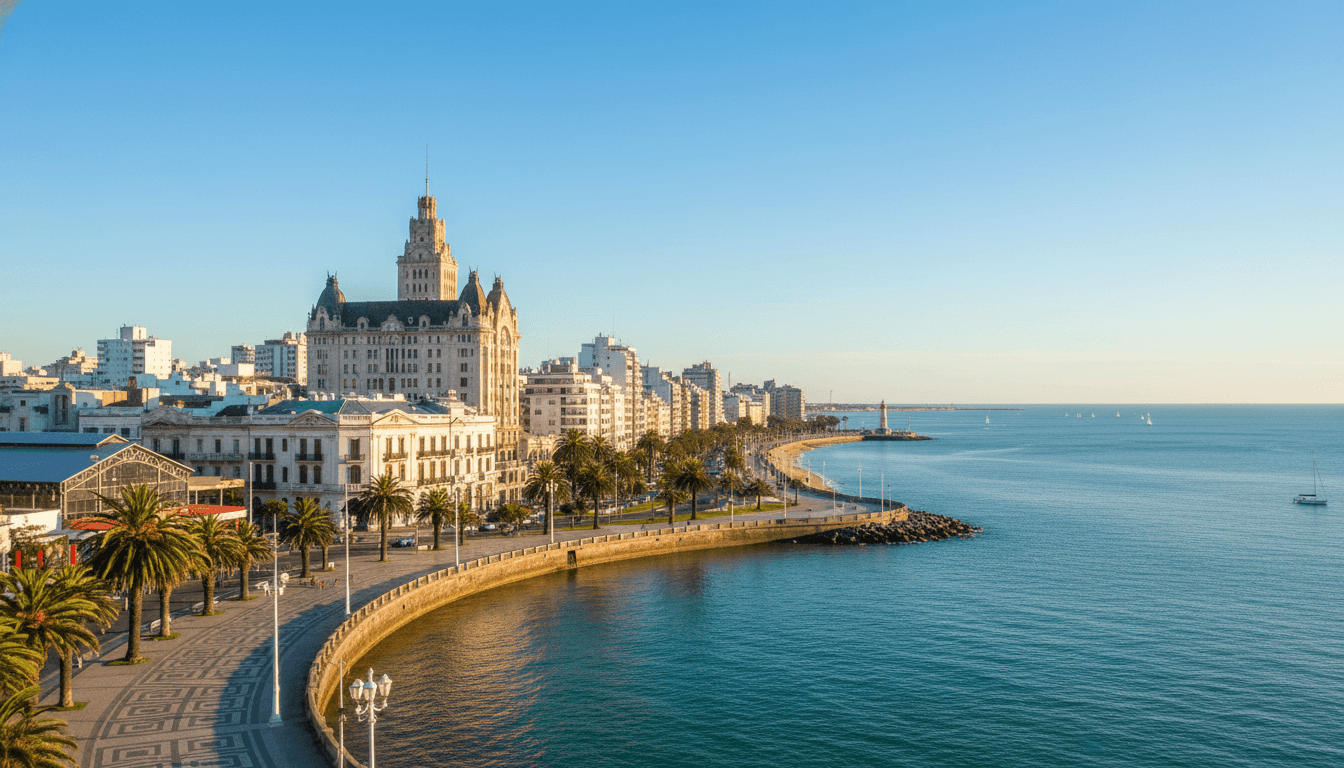
Home Exchange in Montevideo: The Complete First-Timer's Guide to Uruguay's Hidden Gem

SwappaHome Editorial Team
Home Exchange & Slow Travel Editorial
Discover why Montevideo is perfect for home exchange travel. Local neighborhoods, costs, insider tips, and everything first-timers need to know about swapping homes in Uruguay's capital.
I wasn't supposed to fall for Montevideo. It was a stopover—three nights between Buenos Aires and a beach week in Punta del Este. But here I am, four years and three return trips later, still thinking about the way the afternoon light hits the crumbling Art Deco facades in Ciudad Vieja, still craving those medialunas from the corner bakery on Sarandí.
Home exchange in Montevideo changed how I travel through South America. Full stop. While everyone else was fighting for overpriced hotel rooms in Palermo or Ipanema, I was waking up in a sun-filled apartment in Pocitos, making mate in a kitchen that actually felt like mine, and spending the money I saved on long lunches at parrillas I'd never have found otherwise.
 Morning light streaming through tall windows of a classic Montevideo apartment, original hardwood fl
This isn't Buenos Aires' flashier cousin or Rio's quieter neighbor—Montevideo is its own creature entirely. And it rewards travelers who slow down enough to notice.
Why Montevideo Is Perfect for Your First South American Home Exchange
So here's the thing about Montevideo: it's absurdly livable. The kind of city where you can actually imagine yourself staying for a month, not just surviving a week.
The home exchange scene here is still relatively undiscovered compared to European capitals or North American cities. That works in your favor—Montevideans who list their homes on platforms like SwappaHome tend to be genuinely curious about hosting. They're not jaded by years of tourist traffic. My first host, Martín, left me a hand-drawn map of his neighborhood with his favorite spots marked in red pen. His sister texted me restaurant recommendations the entire week.
The practical stuff matters too. Uruguay has some of the most stable infrastructure in South America. The tap water is drinkable (I know, I was shocked too). WiFi is reliable. The streets feel safe at 11 PM. English isn't widely spoken, but people are patient with your terrible Spanish—and honestly, that's half the charm.
And the cost? A decent hotel in a good Montevideo neighborhood runs $80-120 USD per night. Through home exchange, you're looking at zero accommodation costs—just your SwappaHome credits. Over a two-week trip, that's $1,100-1,680 you're not spending on a room. That's a lot of chivitos and Tannat wine.
Best Neighborhoods for Home Exchange in Montevideo
Choosing where to stay matters more in Montevideo than in most cities. The neighborhoods have distinct personalities, and the right match can make or break your trip.
Pocitos: Where Most First-Timers Should Start
I'll be honest—Pocitos is the safe choice, and I don't mean that dismissively. It's where I did my first Montevideo home exchange, and I'd recommend it to anyone who wants a soft landing.
Picture a beachfront neighborhood that feels like a cross between Barcelona's Barceloneta and a quiet corner of Miami Beach. The rambla (the coastal promenade) is perfect for morning runs or evening strolls. You've got excellent restaurants, solid public transit, and a mix of families and young professionals that makes the streets feel alive without being overwhelming.
Apartments here typically range from classic 1960s buildings with character (read: quirky plumbing) to modern high-rises with all the amenities. Expect to find homes with 1-3 bedrooms, often with at least partial ocean views. The neighborhood is flat and walkable, which matters more than you'd think after a day of exploring.
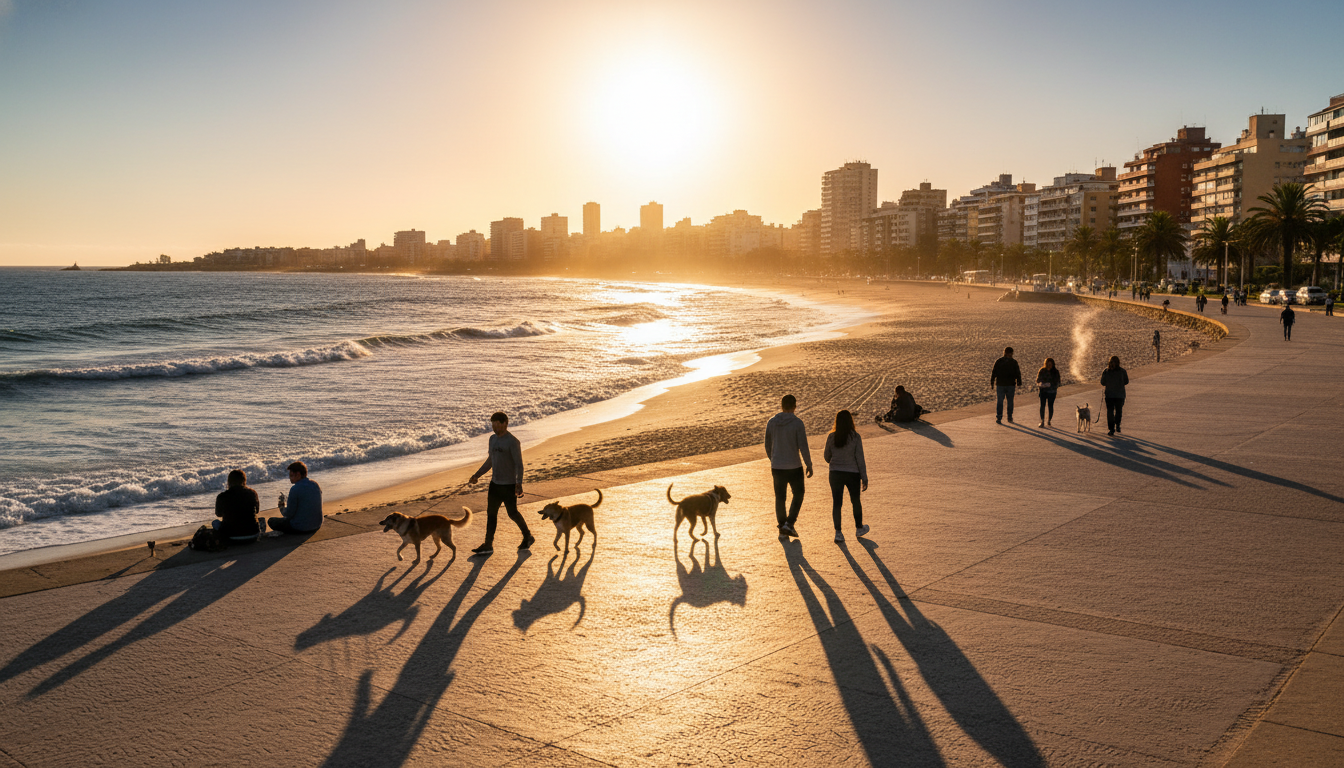 Sunset over Pocitos beach with locals walking dogs along the rambla, apartment buildings in warm eve
Ciudad Vieja: For History Lovers and Architecture Nerds
The old city is where Montevideo's soul lives. Narrow cobblestone streets, buildings that range from gorgeously restored to romantically decrepit, and a density of museums, theaters, and cafes that rivals neighborhoods three times its size.
Home exchanges here tend to be in converted historic buildings—think high ceilings, original tile floors, and windows that don't quite close properly in winter. The trade-off is worth it for the location. You're steps from the Mercado del Puerto (more on that later), the Teatro Solís, and some of the best street art in South America.
Fair warning: Ciudad Vieja gets quiet at night. Some blocks feel a bit desolate after dark, though it's generally safe. If you want nightlife at your doorstep, look elsewhere. But if you want to wake up and grab a cortado at a 100-year-old cafe before anyone else is awake? This is your spot.
Punta Carretas: The Upscale Sweet Spot
Wedged between Pocitos and the old city, Punta Carretas offers a bit of both worlds. It's leafier and slightly more upscale than Pocitos, with excellent restaurants and a converted prison that's now a shopping mall (seriously, it's worth seeing even if you hate malls).
The homes here tend to be larger—more houses and fewer apartments—which makes it ideal if you're traveling with family or want extra space. The lighthouse at the neighborhood's tip is one of my favorite sunset spots in the city.
Cordón and Parque Rodó: The Local Experience
These adjacent neighborhoods are where young Montevideans actually live. Less polished than Pocitos, more residential than Ciudad Vieja, and significantly cheaper for everything from groceries to restaurants.
Parque Rodó has the city's best park (same name) and a slightly bohemian vibe. Cordón is grittier but puts you close to the university, which means good cheap eats and a more authentic slice of daily life. Home exchanges here often come with the most character—think artist studios, quirky layouts, and hosts who are genuinely excited to share their city.
How to Find the Right Montevideo Home Exchange
The search process matters. I've learned this the hard way, after one unfortunate swap in Lisbon that involved a fifth-floor walkup, no hot water, and a "partial view" that required leaning dangerously out a window.
Start Your Search 3-4 Months Early
Montevideo isn't Paris. You won't find hundreds of listings competing for your attention. The upside is less decision paralysis; the downside is less flexibility. Give yourself time to find the right match, especially if you're visiting during peak season (December through February, when Uruguayans take their summer holidays).
Read Between the Lines
When browsing SwappaHome listings, pay attention to the details hosts emphasize—and the ones they skip. Lots of photos of the view but none of the kitchen? Ask about the cooking situation. Descriptions that focus heavily on the neighborhood? The apartment itself might be basic. This isn't manipulation; it's just how people naturally highlight strengths.
Ask About the Practical Stuff
Before confirming any home exchange in Montevideo, get clear answers on air conditioning (crucial December-March; nights can be brutal), hot water situation (some older buildings have... temperamental systems), laundry access, parking if you're renting a car, and building security.
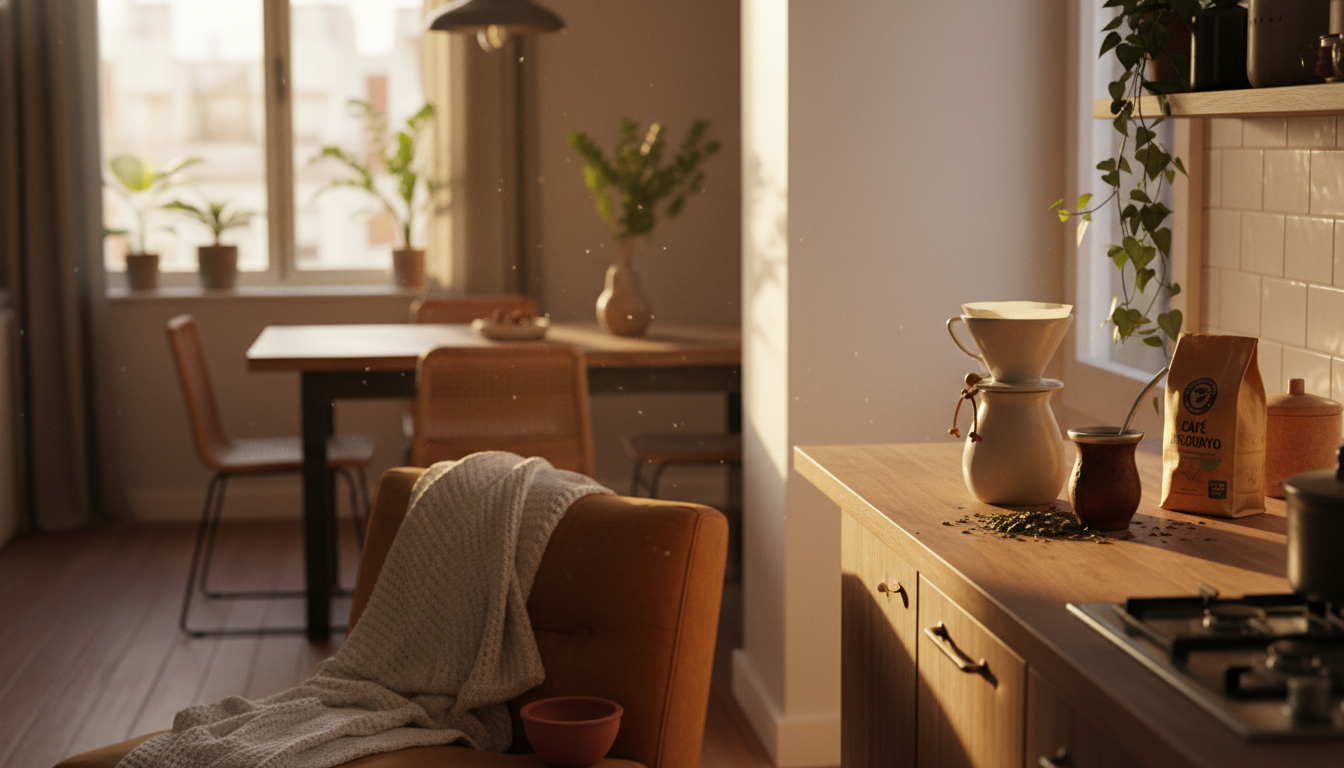 Cozy Montevideo apartment interior showing a well-equipped kitchen with local coffee and yerba mate
The Credit System Works in Your Favor
Here's something I love about SwappaHome's approach: every night costs one credit, regardless of location or property size. That penthouse in Punta Carretas? One credit per night. The cozy studio in Cordón? Same thing. You earn credits by hosting travelers in your own home, and new members start with 7 free credits—enough for a solid Montevideo week.
This means you don't need to find a simultaneous swap. Host a family from São Paulo in your apartment in March, then use those credits for your Montevideo trip in November. The flexibility is a game-changer.
What to Expect from Your Montevidean Host
Uruguayans have a reputation for being laid-back, and it's earned. But "laid-back" doesn't mean indifferent—it means relaxed, warm, and genuinely interested in making sure you have a good time.
Communication Style
Expect friendly but not overwhelming communication. Your host will probably share recommendations if asked, but they won't bombard you with a 47-page house manual (looking at you, certain German hosts I've had). WhatsApp is the preferred communication method—email feels oddly formal here.
The Mate Situation
Your host will almost certainly leave mate supplies. This isn't just tea; it's a cultural institution. The gourd, the bombilla (metal straw), and the yerba will probably be there. If they leave instructions, follow them—there's a right way to prepare mate, and getting it wrong is a minor social faux pas.
If your host offers to share mate with you before you take over the apartment, say yes. It's a bonding ritual, and refusing is like turning down a handshake.
Trust and Respect Go Both Ways
Home exchange works because of mutual trust. Your host is letting you into their actual life—their books, their kitchen, their neighborhood. Treat it accordingly. Leave the place as clean as you found it (cleaner, ideally). Replace anything you break. And leave a thoughtful review on SwappaHome when you're done; it helps build the community that makes this whole thing possible.
 Hands holding a traditional mate gourd with bombilla, morning light, simple wooden table, authentic
The Food Scene: What Your Host Won't Tell You (But I Will)
Montevideo's food scene is underrated. It's not Buenos Aires' flashy restaurant culture or Lima's ceviche revolution, but it's deeply satisfying in ways that sneak up on you.
Mercado del Puerto: Yes, It's Touristy. Go Anyway.
The port market is where everyone sends tourists, and for good reason. The parrillas (grill restaurants) inside serve some of the best beef you'll eat anywhere. Is it crowded on weekends? Absolutely. Is it worth it? Also yes.
My move: go for a late lunch on a weekday, grab a seat at the counter at Cabaña Veronica or El Palenque, and order the asado de tira (short ribs) with a medio y medio (half sparkling wine, half white wine—trust me). Budget around $25-35 USD for a feast.
Your Neighborhood Parrilla
The real magic happens at the unmarked parrilla two blocks from your home exchange. Every neighborhood has one. Ask your host, or just follow the smoke. These places don't have English menus or Instagram accounts. They have incredible meat, cold beer, and zero pretension. Expect to spend $15-20 USD for more food than you can finish.
The Chivito: Uruguay's Gift to Sandwiches
Imagine a steak sandwich that went to finishing school and then decided to rebel. Thin steak, ham, bacon, cheese, egg, lettuce, tomato, mayo, olives—all on a soft bun. It's excessive and perfect. Bar Tasende in Ciudad Vieja does a legendary version. So does Marcos in Pocitos. Budget $8-12 USD.
Breakfast Like a Local
Uruguayans don't do elaborate breakfasts. A cortado (espresso with a splash of milk) and a couple of medialunas (small, sweet croissants) from any corner bakery is the move. Total cost: under $3 USD. Fancy brunch culture exists in Pocitos and Carrasco, but it feels imported.
Getting Around: Transportation Tips for Home Exchange Travelers
Montevideo is manageable without a car, which is good news for home exchangers who want to travel light.
The Bus System
It works. It's not beautiful or particularly intuitive, but it works. Download the "Cómo Ir" app for routes and times. You'll need a STM card (available at kiosks) to pay—cash isn't accepted on buses. A single ride costs around $1.20 USD.
Uber Exists (Sort Of)
Uber operates in Montevideo, though it's technically in a legal gray area. Drivers are reliable, prices are reasonable (a 20-minute ride across the city runs $6-10 USD), and it's often easier than figuring out the bus system.
Walking Is the Point
The best way to experience Montevideo is on foot. The rambla stretches for miles along the coast, connecting neighborhoods in a way that makes walking feel like an activity rather than just transportation. Budget extra time for your commutes; you'll want to stop for photos, coffee, and unexpected discoveries.
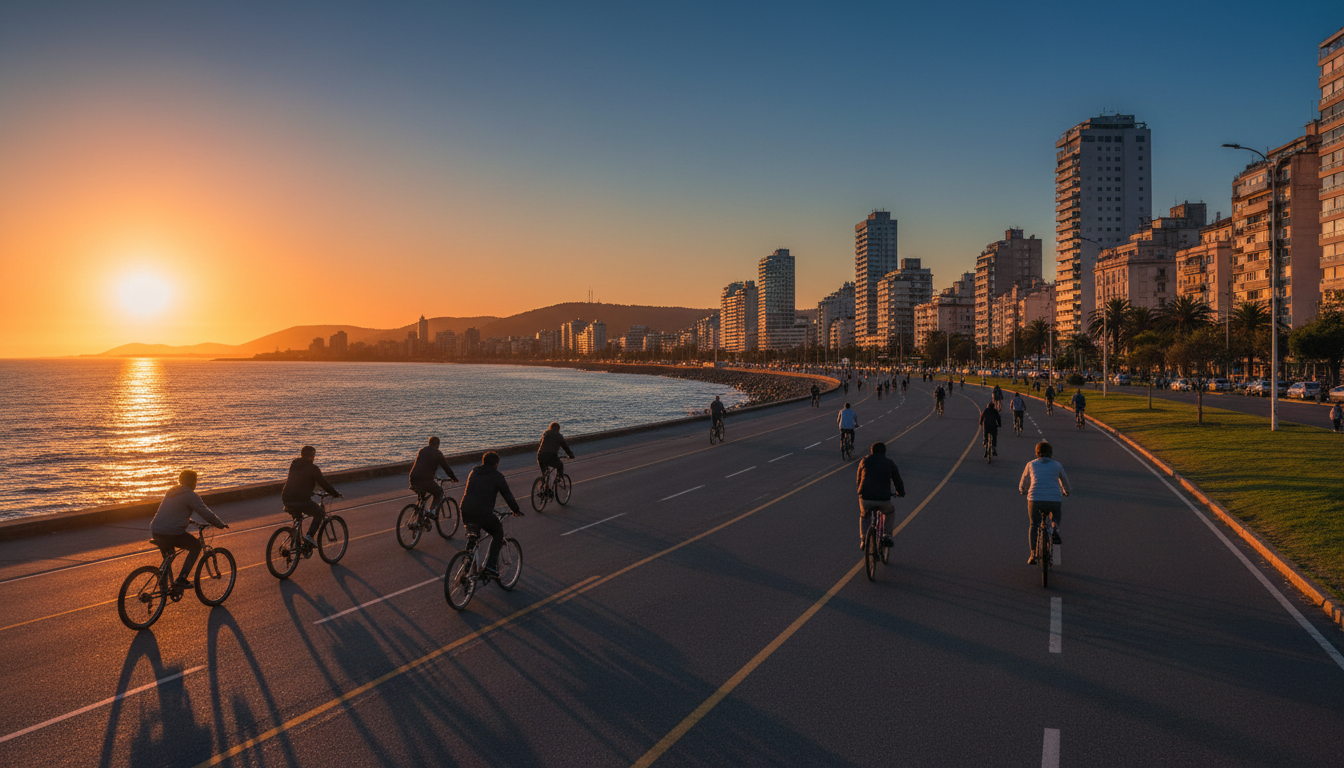 The Montevideo rambla at golden hour, cyclists and walkers along the coastal path, the city skyline
Timing Your Montevideo Home Exchange
High Season (December-February)
Summer in the Southern Hemisphere. Hot, humid, and busy. Montevideans flee to beach towns, which actually makes the city quieter in some ways—but also means some neighborhood spots close for vacation. Home exchange availability can be tricky; many hosts are traveling themselves.
Shoulder Season (March-April, October-November)
My favorite time. The weather is mild (60-75°F), the crowds are manageable, and the city feels alive without being overwhelming. Home exchange options open up significantly.
Low Season (May-September)
Winter. It doesn't get brutally cold (rarely below 45°F), but it gets gray and damp. Some travelers love the moody atmosphere. Home exchanges are easiest to find, and your credits stretch further in terms of timing flexibility.
What to Do Beyond the Obvious
Every guidebook covers the Mercado del Puerto and the Teatro Solís. Here's what they miss.
The Feria de Tristán Narvaja
Sunday morning market that sprawls for blocks through Cordón. It's part flea market, part farmers market, part social event. Get there by 10 AM, bring cash, and prepare to find things you didn't know you needed. The used book section is particularly good.
Sunset at the Fortaleza del Cerro
The hill across the bay has an old fortress with panoramic views of the city. It's a bit of a trek (Uber there, walk down), but the sunset views are unmatched. Bring wine.
A Day Trip to Colonia
The UNESCO-listed town of Colonia del Sacramento is an easy day trip—about 2.5 hours by bus, or you can rent a car and stop at wineries along the way. Cobblestone streets, Portuguese colonial architecture, and a pace that makes Montevideo feel hectic by comparison.
Budgeting for Your Montevideo Home Exchange Trip
Let me break down what two weeks actually costs, assuming you're doing home exchange for accommodation:
Accommodation: $0 (home exchange via SwappaHome) Flights: $600-1,200 USD from North America (varies wildly by season and origin) Food: $25-40 USD per day if you're mixing home cooking with restaurant meals Transportation: $5-10 USD per day (buses, occasional Uber) Activities: $50-100 USD total for museums, day trips, etc. Misc: $100-150 USD for coffee, wine, unexpected finds
Two-week total: Roughly $800-1,200 USD (excluding flights)
Compare that to hotel travel at $100/night, and you're looking at $1,400 in accommodation costs alone. Home exchange isn't just about saving money—though it absolutely does that—it's about redirecting that money toward experiences that actually matter.
Preparing Your Home for the Exchange
Remember: home exchange is a two-way street. While you're enjoying Montevideo, someone might be staying in your place.
The Basics
Clean thoroughly. Stock basic supplies (coffee, tea, toilet paper, a few pantry staples). Leave clear instructions for anything non-obvious—the thermostat, the finicky dishwasher, where to find extra blankets.
The Extras That Matter
Leave a few personal recommendations: your favorite coffee shop, the park where you walk your dog, the restaurant you'd take a friend. These details transform a transaction into an exchange in the truest sense.
Trust the Process
I know it feels strange to let strangers into your home. It felt strange to me too, the first time. But the SwappaHome community is built on mutual respect and accountability. Reviews matter. People take care of each other's spaces because they want the same treatment in return.
If you're nervous, start with a short exchange. A weekend trip while someone stays at your place. You'll realize quickly that most people are just like you—travelers looking for authentic experiences, not guests looking to trash your apartment.
Why I Keep Coming Back
I keep returning to Montevideo because it resists the performance of tourism. There's no pressure to see everything, check every box, prove you've been there. The city rewards presence over productivity.
Home exchange amplifies that. When you're staying in someone's actual apartment, shopping at their corner store, walking their route to the rambla, you're not visiting Montevideo—you're living there, however briefly.
The first time I made mate in Martín's kitchen, watching the morning light creep across his bookshelf full of Borges and Galeano, I understood something about this city that no hotel could have taught me. It's slow. It's warm. It's deeply, quietly beautiful.
SwappaHome has listings in Montevideo across all the neighborhoods I've mentioned. The community is smaller than in major European cities, but it's growing—and the hosts tend to be especially engaged. If you're considering your first South American home exchange, you could do a lot worse than starting here.
Actually, you couldn't do much better.
Frequently Asked Questions
Is home exchange in Montevideo safe for first-time visitors?
Montevideo is one of South America's safest capitals, and home exchange adds an extra layer of local connection. The SwappaHome review system helps you vet hosts before committing. Standard travel precautions apply, but most visitors find Montevideo welcoming and secure, especially in neighborhoods like Pocitos and Punta Carretas.
How much money can I save with home exchange in Montevideo compared to hotels?
A decent hotel in a good Montevideo neighborhood costs $80-120 USD per night. Over a two-week trip, that's $1,120-1,680 in accommodation costs. Home exchange through SwappaHome costs zero dollars—just credits you earn by hosting. Most travelers save $1,000+ on a two-week trip.
What's the best time of year for a Montevideo home exchange?
Shoulder seasons (March-April and October-November) offer ideal conditions: mild weather around 60-75°F, fewer crowds, and better home exchange availability. Summer (December-February) is hot and busy, while winter (May-September) is cooler but offers the most flexible booking options.
Do I need to speak Spanish for home exchange in Montevideo?
Basic Spanish helps significantly, as English isn't widely spoken outside tourist areas. However, most home exchange hosts can communicate in English for logistics, and translation apps work well for daily interactions. Learning a few key phrases will enrich your experience considerably.
How does the SwappaHome credit system work for Montevideo stays?
Every night costs one credit, regardless of property size or location. New members receive 7 free credits to start. You earn credits by hosting travelers in your own home—one credit per night hosted. No simultaneous swaps required; host someone in spring, use credits for Montevideo in fall.

Published by
SwappaHome
SwappaHome Editorial Team
Home Exchange & Slow Travel Editorial
The SwappaHome Editorial Team brings together travel research, home-exchange community insights, and platform data to produce practical guides for first-time and experienced home swappers. Every article cites real platforms, current market rates, and verifiable city-level facts so readers can make informed decisions without guessing.
Ready to try home swapping?
Join SwappaHome and start traveling by exchanging homes. Get 7 free credits when you sign up!
Related articles

Bachelor and Bachelorette Parties in Singapore: The Complete Home Swap Group Guide for 2026
Planning a bachelor or bachelorette party in Singapore? Discover how home swapping lets groups of 6-12 stay together in luxury condos, saving thousands while partying in Marina Bay.

Cycling in Lisbon: 7 Home Swap Bike Tour Itineraries for Every Rider
Discover the best cycling routes in Lisbon with these home swap bike tour itineraries—from waterfront paths to hilltop adventures, all starting from your borrowed home.

Graduation Trip to Barcelona: How Home Swapping Gives New Graduates the Ultimate Celebration
Planning a graduation trip to Barcelona? Discover how home swapping lets new graduates explore Spain's most vibrant city without the hostel crowds or hotel costs.