
Multi-Generational Home Swap in Barcelona: How to Travel with Grandparents, Parents, and Kids

SwappaHome Editorial Team
Home Exchange & Slow Travel Editorial
Planning a multi-generational home swap in Barcelona? Here's how to find space for grandparents, parents, and kids—plus neighborhoods, costs, and real logistics.
Multi-Generational Home Swap in Barcelona: How to Travel with Grandparents, Parents, and Kids
You're standing on a sun-soaked balcony overlooking Passeig de Gràcia. Your father-in-law has claimed the best chair and is working through La Vanguardia like it's his job. Behind you, the kids are chasing each other through a living room three times the size of any hotel suite you could afford—and nobody's shushing them. Your mother is making proper coffee in a real kitchen, not wrestling with a sad hotel kettle. And you? You're actually relaxed. Because everyone has their own bedroom, their own bathroom, their own space to decompress after a day navigating the Gothic Quarter's medieval alleyways.
This is what a multi-generational home swap in Barcelona looks like when you get it right.
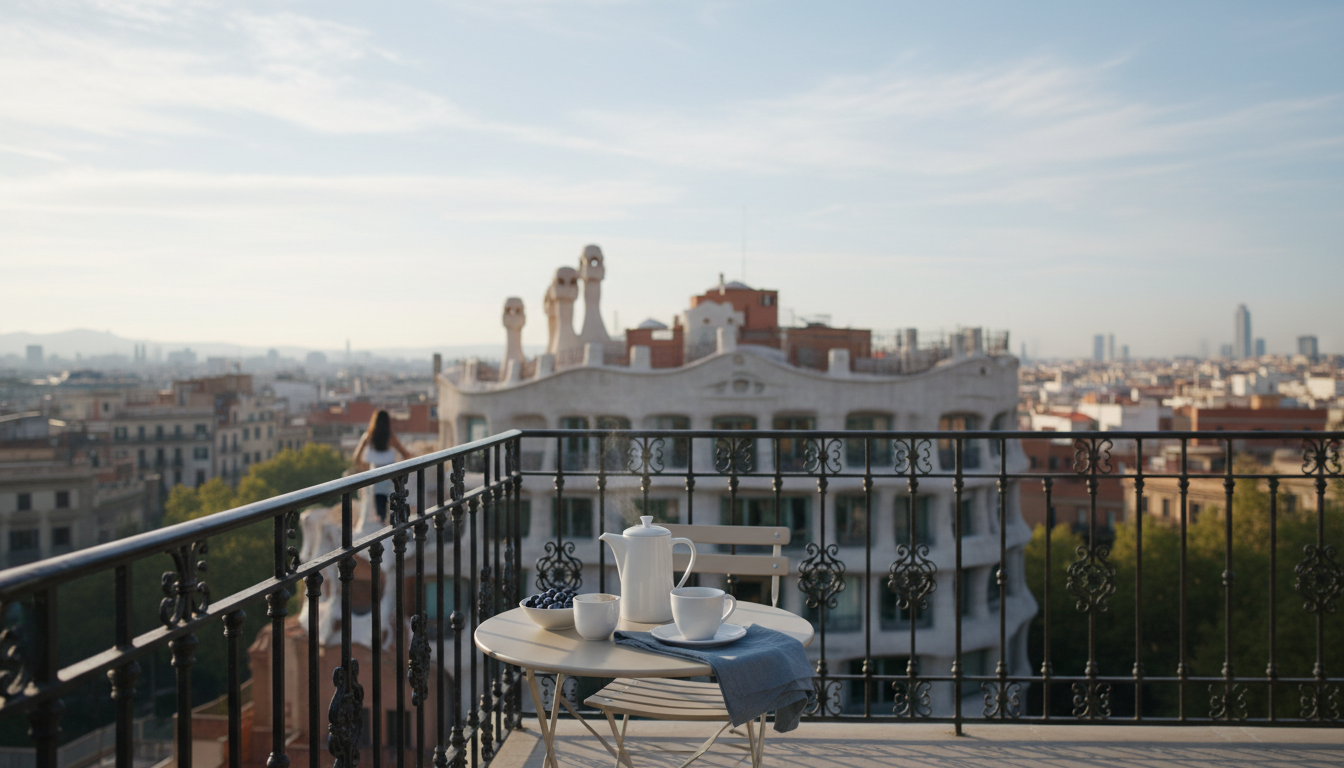 Spacious Barcelona apartment terrace with morning light, wrought-iron railings, coffee service on a
Traveling with three generations—grandparents, parents, and children—ranks among the most rewarding and most logistically nightmarish things a family can attempt. Hotels make it expensive and cramped. Vacation rentals help with space but still cost a fortune for the square footage you actually need. And finding accommodation that works for an 8-year-old's energy levels, a 75-year-old's mobility needs, and everyone's sanity? That's where most family trips start to unravel before they begin.
A multi-generational home swap in Barcelona solves the equation differently. Instead of paying €300-500 per night for enough hotel rooms to fit everyone (yes, that's the actual going rate for a family of six or more during peak season), you're exchanging your home for someone else's. The cost? Essentially zero for accommodation—just your SwappaHome membership and whatever you spend on flights and tapas.
But here's what most people don't realize: finding the right Barcelona home for multiple generations isn't just about bedroom count. It's about elevator access for grandma's knees. It's about a neighborhood where kids can play safely while adults linger over vermouth. It's about layout—because nothing destroys a family vacation faster than thin walls and a single bathroom.
What follows breaks down exactly how to pull off a successful multi-generational home swap in Barcelona. Which neighborhoods actually work for mixed-age groups. The specific amenities worth requesting. How to communicate your family's needs to potential swap partners without writing a novel.
Why Barcelona Works Exceptionally Well for Multi-Generational Travel
Barcelona isn't just beautiful—it's structurally designed for the kind of trip where everyone from age 5 to 85 needs to find something to love.
The SwappaHome community frequently notes that Barcelona hits a rare sweet spot: world-class culture that grandparents appreciate, beaches and parks that tire out children, and food and nightlife that keep parents from feeling like they've sacrificed their own vacation on the altar of family togetherness.
What makes the city particularly suited to multi-generational groups:
Walkability with transit backup. Barcelona's grid system (the Eixample district, specifically) was designed by urban planner Ildefons Cerdà in the 1850s with wide sidewalks, chamfered corners, and interior courtyards. Translation: strollers roll easily, wheelchairs navigate without constant curb battles, and when someone gets tired, the Metro is never more than a few blocks away. The L3 (green line) and L4 (yellow line) cover most tourist areas and have elevators at major stops like Passeig de Gràcia and Barceloneta.
Pace flexibility. Unlike cities that demand constant movement (looking at you, New York), Barcelona's culture practically requires mid-afternoon downtime. Shops close from 2-5pm in many neighborhoods. Lunch stretches for hours. This built-in siesta rhythm means grandparents can rest, kids can nap, and nobody feels like they're missing out because the whole city is doing the same thing.
Generational activity spread. The Picasso Museum for art-loving grandparents. The Barcelona Aquarium at Port Vell for kids. Camp Nou stadium tours for the football-obsessed middle generation. Gaudí's Park Güell where everyone finds something to marvel at. The city doesn't force you to choose between "adult trip" and "kid trip"—it accommodates both simultaneously.
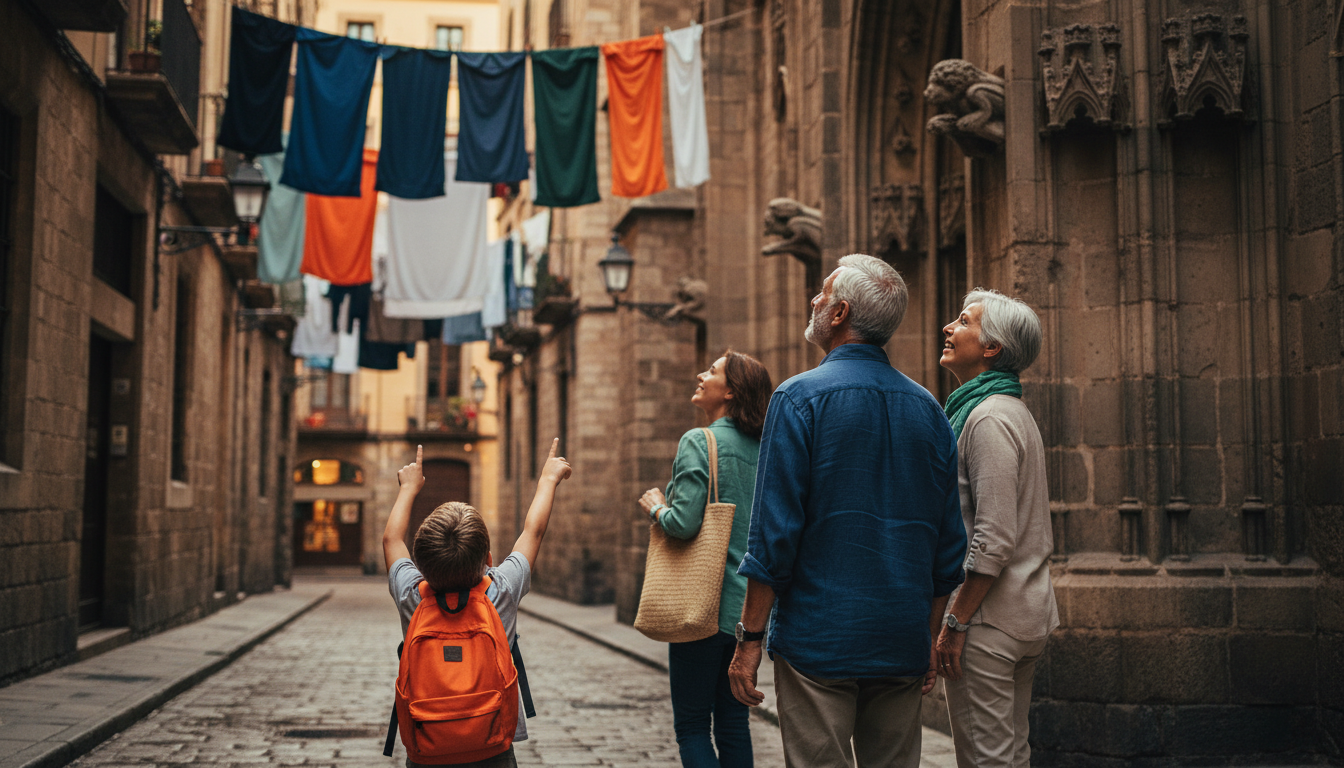 Three generations walking through Barcelonas Gothic Quarter, narrow medieval streets with overhead l
Finding the Right Barcelona Home: Space Requirements for Three Generations
The biggest mistake families make when searching for a multi-generational home swap in Barcelona? Underestimating space needs.
A 3-bedroom apartment that works fine for two adults and two kids becomes a pressure cooker when you add grandparents. Suddenly there's competition for the single bathroom in the morning. The "open concept" living room means nowhere to escape when the kids get loud. Grandpa's early bedtime conflicts with everyone else wanting to watch a movie.
Here's what experienced multi-generational swappers recommend:
Minimum bedroom count: N+1. If you have 3 couples/units (grandparents, parents, kids), look for 4 bedrooms. That extra room becomes a game-changer—a place for an overtired child to nap while adults continue lunch, a retreat for grandparents who need quiet, a buffer zone that prevents the "we're all on top of each other" feeling.
Bathroom ratio: at least 1:3. For a group of 6-8 people, you need minimum 2 full bathrooms, ideally 3. Many Barcelona apartments in the Eixample have been renovated with en-suite bathrooms—look for listings that specify this. A single-bathroom apartment, no matter how charming, will create morning bottlenecks that start every day with stress.
Separate living zones. The ideal multi-generational Barcelona home has at least two distinct areas where different groups can coexist without overlap. A living room AND a terrace. A kitchen that's separated from the TV area. A second sitting area in a hallway or bedroom. When the SwappaHome community discusses successful multi-gen swaps, "zones" comes up repeatedly.
Elevator access. Barcelona is full of gorgeous old buildings with stunning modernista details—and five flights of stairs. For grandparents with any mobility concerns, an elevator isn't optional. Look for listings that explicitly mention "ascensor" (elevator). Buildings constructed after 1960 typically have them; pre-war buildings often don't, though some have been retrofitted.
Laundry facilities. With 6+ people traveling for a week or more, you'll generate significant laundry. A washing machine is standard in Barcelona homes; a dryer is rarer but incredibly helpful. At minimum, confirm there's a drying rack or tendedero (clothesline area, often on a small interior patio).
Best Barcelona Neighborhoods for Multi-Generational Home Swaps
Not every Barcelona neighborhood works equally well for mixed-age groups. Some are too loud, too steep, too far from amenities, or too nightlife-focused to suit families with grandparents and kids.
Here's an honest breakdown:
Eixample (Left and Right): The Practical Choice
The Eixample district—divided into Eixample Esquerra (left) and Eixample Dreta (right)—offers the most consistently suitable properties for multi-generational home swaps in Barcelona.
Why it works: Flat terrain (critical for mobility), wide sidewalks, abundant pharmacies and supermarkets, excellent Metro access, and apartments that tend to be larger than in older neighborhoods. The grid layout means nobody gets lost. Buildings often have elevators. You're central to everything but not in the tourist crush.
Specific areas to target: Around Mercat de Sant Antoni (recently renovated, gorgeous, with a Sunday book market that grandparents tend to love), near Hospital Clínic (residential, quiet, but still central), or the blocks surrounding Passeig de Sant Joan (a tree-lined boulevard with playgrounds, benches, and a relaxed vibe).
What to watch for: Some Eixample apartments face interior courtyards and get minimal natural light. Request photos of windows and ask about sun exposure. The area around Plaça Universitat can be noisy due to demonstrations—it's where Barcelona protests typically gather.
Typical swap properties: 100-150m² apartments with 3-4 bedrooms, often with a small balcony, elevator access, and renovated interiors. These are the workhorses of Barcelona multi-generational swaps.
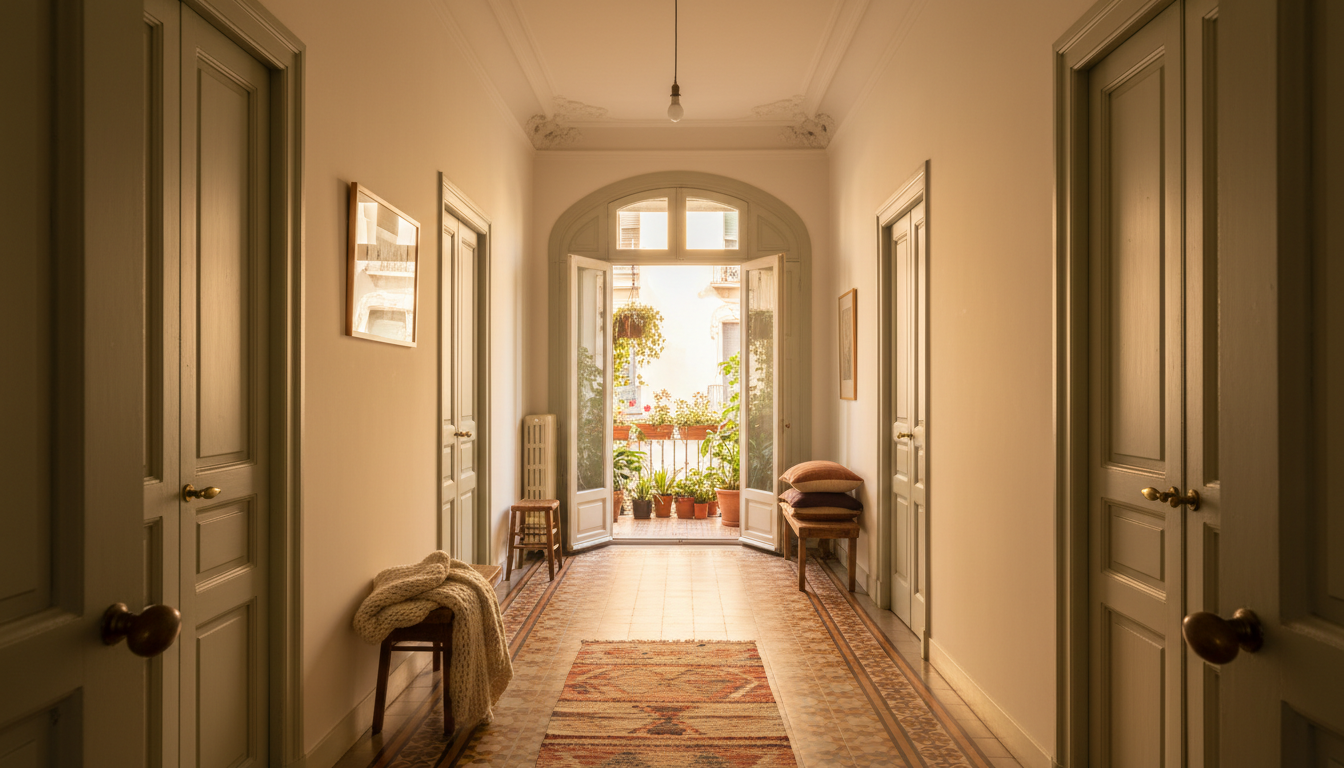 Interior of a bright Eixample apartment showing high ceilings with original moldings, a long hallway
Gràcia: Charming but Requires Research
Gràcia was an independent village until 1897, and it retains that small-town feel—narrow streets, local plazas filled with outdoor cafés, a bohemian-artistic vibe. Families with kids often love it for its community atmosphere.
Why it works: Plaça del Sol, Plaça de la Virreina, and Plaça del Diamant are genuine neighborhood squares where kids can run while adults sit at terraces. The area has excellent bakeries, small parks, and a sense of being "in Barcelona but not in tourist Barcelona." The Festa Major de Gràcia (mid-August) is one of Europe's best street festivals, with decorated streets that kids find magical.
What to watch for: Gràcia sits on a gentle slope leading up toward Park Güell, which means some streets are steeper than they appear on maps. The Fontana and Joanic Metro stops have elevators, but Lesseps doesn't always. Streets are narrower, so sidewalk navigation with strollers or mobility aids requires more attention. The narrow streets can also amplify noise—ask about the apartment's orientation and whether windows face a plaza (lively but loud) or an interior courtyard (quiet).
Typical swap properties: Smaller than Eixample—often 80-120m² with 2-3 bedrooms. Harder to find the 4-bedroom ideal, but the neighborhood charm compensates for some.
Poblenou: The Beach-Adjacent Option
If your multi-generational crew prioritizes beach access, Poblenou delivers. This former industrial district has transformed into a creative, family-friendly neighborhood with direct access to Barcelona's cleanest beaches.
Why it works: The Rambla del Poblenou is a pedestrian boulevard perfect for evening strolls with ice cream. Bogatell and Mar Bella beaches are less crowded than Barceloneta. The area is flat, modern, and has wide sidewalks. Grandparents can sit at beach cafés while kids play in the sand. The Glòries shopping center nearby has air conditioning, a cinema, and public restrooms—underrated amenities when traveling with mixed ages.
What to watch for: Poblenou is farther from the Gothic Quarter and Gaudí sites, meaning more Metro time to reach central attractions. The neighborhood can feel quiet—almost too quiet—in the evenings compared to livelier districts. Some blocks still have an industrial-transitional feel.
Typical swap properties: Mix of renovated loft-style apartments in former factories (cool but sometimes impractical layouts) and newer construction with modern amenities. More likely to find properties with terraces or rooftop access.
Where to Avoid for Multi-Generational Groups
El Raval: Gritty, authentic, and culturally fascinating—but narrow sidewalks, late-night noise, and a grungier atmosphere make it less suitable for grandparents and young kids.
Barceloneta: The beach neighborhood sounds ideal but is cramped, tourist-heavy, and apartments are typically tiny. The noise from beach bars extends late into the night.
El Born: Beautiful and historic, but the medieval street layout is challenging with strollers or mobility aids, and it's packed with tourists during the day.
Upper Zona Alta (Sarrià, Pedralbes): Lovely, quiet, and residential—but far from attractions and with limited Metro access. You'd spend too much time commuting.
How to Communicate Your Multi-Generational Needs to Swap Partners
Once you've identified potential Barcelona homes on SwappaHome, the next challenge is communicating your specific requirements clearly. Many swaps fall through not because the home wasn't suitable, but because expectations weren't aligned.
 Laptop open on a kitchen table showing a home swap listing with photos, a notepad beside it with han
Here's a template for your initial message that covers the essentials:
Subject: Multi-generational family (6 people) interested in your Barcelona home
Hello [Name],
We're a family of 6 planning a multi-generational trip to Barcelona [dates]. Our group includes:
- 2 grandparents (ages X and X)
- 2 parents (us)
- 2 children (ages X and X)
Your home looks wonderful, and we wanted to ask a few questions to make sure it would work for our mixed-age group:
- Elevator access: Is there a lift in the building? If not, how many floors up is the apartment?
- Bathroom count: How many full bathrooms are there, and are any en-suite?
- Sleeping arrangements: Could you describe the beds in each room? (We want to ensure comfortable arrangements for grandparents.)
- Noise levels: How would you describe the street noise, especially at night?
- Nearest playground/park: Is there somewhere close by for kids to run around?
- Mobility notes: Any steps inside the apartment, or is it all one level?
We're happy to share details about our home in [your city] and answer any questions you have about hosting here.
Thank you! [Your name]
Most hosts appreciate this level of specificity—it shows you're serious and helps them assess whether their home is genuinely a good fit.
Barcelona Activities That Actually Work for Ages 5 to 85
The real test of a multi-generational trip isn't finding a place to sleep—it's finding things to do that don't bore half the group while exhausting the other half.
Here's what actually works in Barcelona across generations:
Morning: Split and Reconvene
Barcelona mornings are best approached with a "divide and conquer" strategy. Grandparents might prefer a leisurely coffee at a traditional granja (milk bar) like Granja Viader on Carrer d'en Xuclà (open since 1870, famous for its cacaolat chocolate milk), while parents take kids to the Ciutadella Park playground—one of the city's best, with a large sandpit, climbing structures, and shade trees.
Reconvene for a late morning visit to La Boqueria market (arrive before 11am to avoid peak crowds). Kids love the fruit smoothie stands; grandparents appreciate the seafood displays; everyone finds something to snack on. Worth noting: skip the first row of stalls (tourist traps) and head deeper into the market for better prices and more authentic vendors.
Afternoon: Shared Experiences
This is when you do the "big" activities together. Options that genuinely work for all ages:
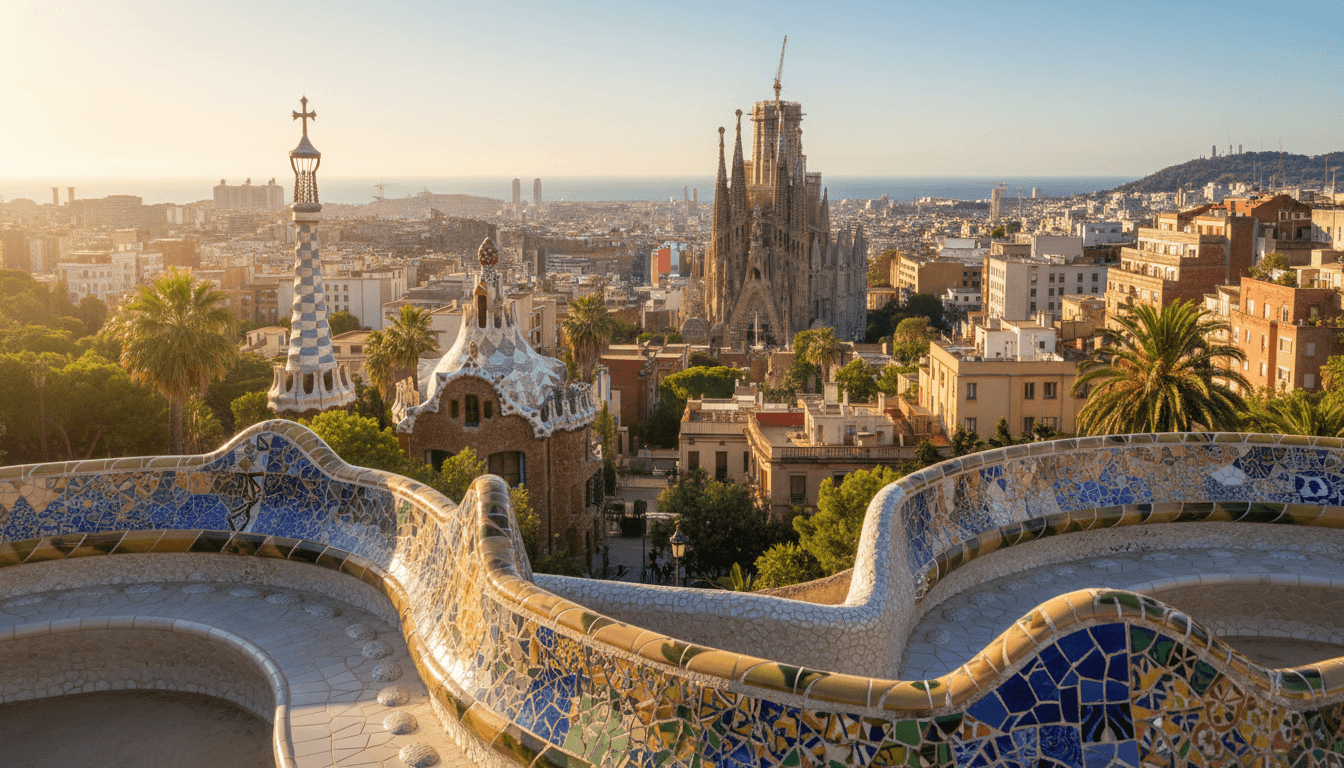
Park Güell (timed entry required): Gaudí's fantastical park has enough visual wonder to captivate kids and enough artistic significance to satisfy grandparents. The main monumental zone requires tickets (book online at least a week ahead for popular dates), but the free areas are also beautiful. The park involves hills and stairs, so assess mobility carefully. The main terrace and mosaic salamander are accessible; the upper paths are steeper.
Sagrada Familia (timed entry required): Gaudí's unfinished basilica genuinely impresses every age group. The interior's forest-like columns and kaleidoscopic light through stained glass windows hold children's attention better than most churches. Grandparents often find it moving. Book tickets for the basilica only (tower access involves significant stairs/elevators and isn't necessary for a first visit). Morning light is best for photography.
Barcelona Aquarium (Port Vell): Not the most sophisticated activity, but the underwater tunnel with sharks swimming overhead delights kids and gives grandparents a chance to sit on benches while watching. Air-conditioned, accessible, and located near the waterfront for a post-visit stroll.
Montjuïc by cable car: The Telefèric de Montjuïc offers stunning harbor views and is fully accessible. At the top, the Jardins de Joan Brossa have a playground, and the Fundació Joan Miró museum satisfies art-loving adults. The Magic Fountain light show (evenings, check seasonal schedule) is free and mesmerizing for kids.
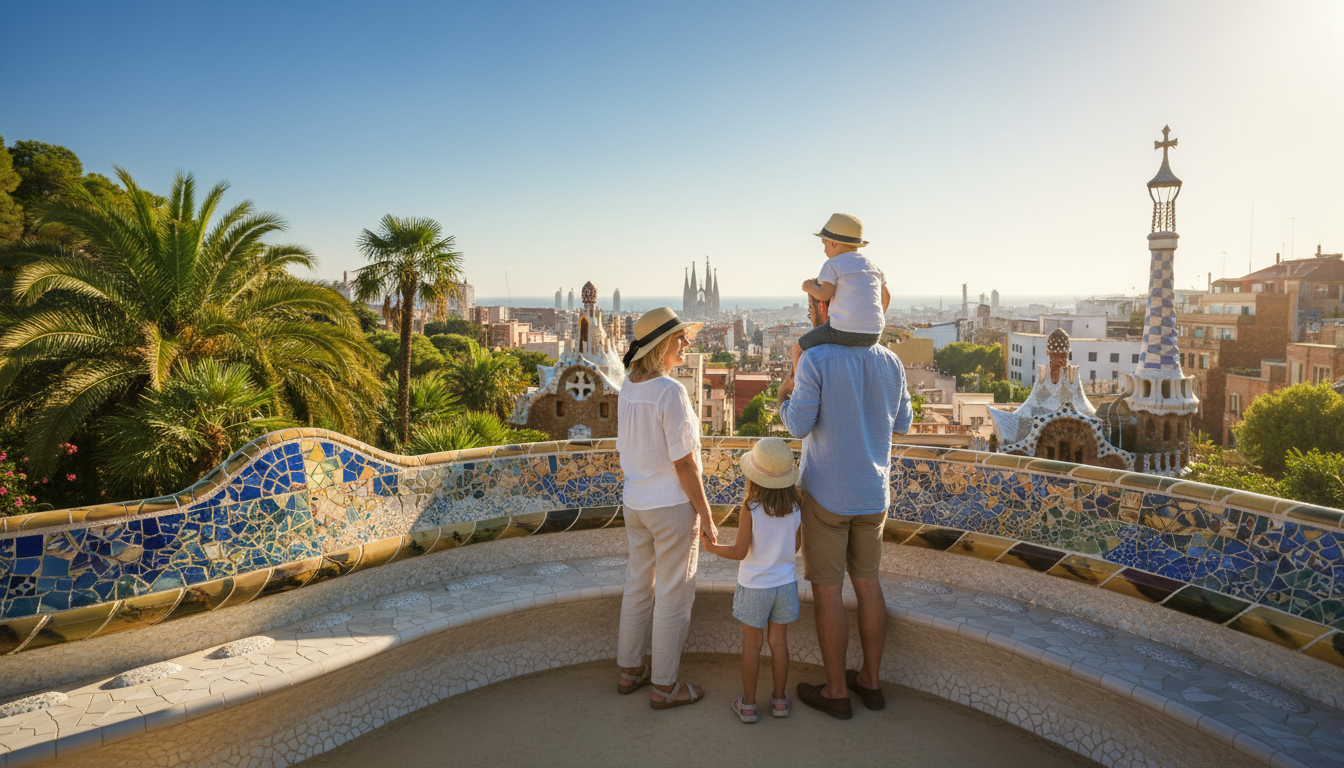 Multi-generational family group at Park Gell, standing on the famous serpentine bench with Barcelona
Evening: The Spanish Schedule Advantage
Barcelona's late dining culture actually helps multi-generational groups. Restaurants don't fill up until 9pm, which means you can eat at 7:30pm (early by local standards) and have the place nearly to yourselves. Kids can be louder without bothering other diners; grandparents aren't rushed; everyone gets home at a reasonable hour while locals are just starting their evenings.
Look for restaurants with outdoor terraces—kids can move around more freely, and the atmosphere is more forgiving of family chaos. The Eixample and Gràcia have dozens of options. Budget roughly €20-30 per adult for a full dinner with wine at a mid-range restaurant; kids' portions or sharing plates reduce costs.
Managing the Logistics: Groceries, Pharmacies, and Rest Days
One massive advantage of a home swap over hotels: you have a kitchen. For multi-generational groups, this isn't just about saving money (though you will)—it's about flexibility.
Grandparents can eat breakfast at their own pace instead of rushing to catch a hotel buffet. Kids can have familiar snacks when they're overwhelmed by new foods. Parents can prep simple lunches to take to the beach, avoiding overpriced tourist restaurants.
Grocery shopping in Barcelona: Mercadona and Bon Preu are the main supermarket chains—clean, well-stocked, and with reasonable prices. A week's groceries for 6 people (breakfasts, some lunches, snacks) runs approximately €150-200. For a more atmospheric experience, neighborhood markets like Mercat de Sant Antoni, Mercat de l'Abaceria (Gràcia), or Mercat del Ninot offer fresh produce, meats, and prepared foods.
Pharmacy needs: Pharmacies (farmàcies) are abundant and marked with green crosses. Pharmacists in Spain can recommend and dispense many medications that would require prescriptions elsewhere. For grandparents' regular medications, bring enough supply plus a few extra days—and carry prescriptions with generic drug names in case refills are needed. The Farmàcia Clapés on La Rambla is open 24 hours.
Rest days are mandatory. Build at least one full rest day into your Barcelona itinerary—more if your trip exceeds a week. Multi-generational travel is exhausting even when it's wonderful. Use rest days for laundry, slow mornings, and letting different family members do their own thing. Grandparents might enjoy a quiet afternoon at the MNAC (Museu Nacional d'Art de Catalunya) while parents take kids to the beach. Everyone regroups for dinner.
The Credit System: How Multi-Generational Swaps Work on SwappaHome
A quick note on logistics: SwappaHome uses a credit system where hosting earns you credits (1 credit per night, regardless of your home's size or location) and staying costs credits (same rate: 1 credit per night).
For multi-generational groups, this is particularly advantageous. You're not paying "per person" like hotels or many vacation rentals—you're exchanging homes. A 4-bedroom Barcelona apartment costs the same in credits as a studio. Your family of 6 pays the same as a solo traveler.
New members start with 7 free credits, which gets you a week in Barcelona to test the system. After that, you earn credits by hosting travelers in your own home.
The practical implication: if you have a larger home that can accommodate guests, you're in a strong position to earn credits quickly. Host a family for a week, earn 7 credits, spend them on a week in Barcelona. The math works beautifully for multi-generational travel.
What Can Go Wrong (And How to Prevent It)
Here's what the SwappaHome community reports as common issues—and how to avoid them:
Problem: The home wasn't as accessible as described. Prevention: Ask for a video walkthrough, not just photos. Request specific measurements if needed (doorway widths for wheelchairs, bed heights for grandparents who struggle with low mattresses). Don't assume "ground floor" means no steps—many Barcelona buildings have a few stairs to the entrance.
Problem: Family tensions erupted without escape valves. Prevention: Choose a home with separate zones, as discussed earlier. Plan activities where the group can split up. Not every moment needs to be together. Build in solo time for each adult.
Problem: Kids damaged something in the host's home. Prevention: Discuss this openly with your swap partner before arrival. Ask about fragile items that should be put away. Consider your own travel insurance that covers accidental damage (SwappaHome doesn't provide damage coverage—members are responsible for their own arrangements). Most importantly, supervise young children and bring activities to keep them occupied indoors.
Problem: Grandparents couldn't handle the pace. Prevention: Involve grandparents in itinerary planning. Ask what they most want to see and build the trip around those priorities. Accept that you might do fewer activities than a trip without them—but the ones you do will be more meaningful.
Problem: The neighborhood was too noisy/far/hilly. Prevention: Research neighborhoods thoroughly (use this guide). Ask hosts specific questions about noise, terrain, and proximity to transit. Google Street View the exact address to see the surroundings.
Before You Go: A Multi-Generational Barcelona Packing Reminder
This isn't a comprehensive packing list—you know what clothes to bring. But these items specifically help multi-generational Barcelona trips:
- Comfortable walking shoes for everyone (cobblestones are hard on feet and wheels)
- Portable phone chargers (you'll be navigating, translating, and photographing constantly)
- Medications in original packaging with prescriptions for anything controlled
- A lightweight stroller that folds small (for kids who might need it after long days)
- Earplugs for light sleepers (Barcelona is louder than you expect)
- Reusable water bottles (tap water is safe; refill at the many public fountains)
- A small first-aid kit (pharmacies are helpful but having basics saves time)
Making the Swap Request: Timing and Strategy
Barcelona is one of the most popular destinations on SwappaHome, which means competition for the best properties. For multi-generational groups, timing matters:
Book 3-6 months ahead for peak seasons (Easter week, summer, Christmas/New Year). The 4-bedroom apartments with elevators and multiple bathrooms get snapped up quickly.
Consider shoulder seasons: Late September through early November offers warm weather (18-22°C), fewer tourists, and better availability. Late February through April (excluding Easter week) is similarly pleasant. August is when many Barcelona residents leave on their own vacations, which can mean more properties available—but also peak heat and crowds.
Be flexible on exact dates if possible. Shifting your trip by a few days can open up properties that would otherwise be booked.
Lead with your home's appeal. When requesting a swap, highlight what makes your home attractive to potential guests. If you have a family-friendly property, mention it—Barcelona families looking to travel might be your perfect match.
The Honest Truth About Multi-Generational Travel
Here's what nobody puts in the glossy travel articles: traveling with grandparents, parents, and kids simultaneously is hard. There will be moments when your mother-in-law's pace drives you crazy. When your kids melt down in front of Gaudí's masterpiece. When you wonder why you didn't just book separate trips.
And then there will be the moment when your father helps your daughter count the mosaic tiles on a Park Güell bench. When your mother and your partner laugh together over a shared joke at dinner. When three generations watch the sunset from Bunkers del Carmel and nobody reaches for their phone because the moment is enough.
A multi-generational home swap in Barcelona creates the container for those moments. The space to spread out and come back together. The kitchen where everyone gathers in the morning. The terrace where grandparents can watch the city wake up while kids sleep in.
It's not a vacation. It's something more complicated and more valuable: time together, in a place beautiful enough to hold all of you.
Frequently Asked Questions
How many bedrooms do I need for a multi-generational home swap in Barcelona?
For a group with grandparents, parents, and children (typically 6-8 people), aim for at least 4 bedrooms. The SwappaHome community recommends an "N+1" rule—one more bedroom than the number of couples or family units traveling. This provides a buffer room for naps, quiet time, or when someone needs space. Equally important: ensure at least 2-3 bathrooms to avoid morning bottlenecks.
What's the best Barcelona neighborhood for traveling with grandparents and kids?
The Eixample district consistently works best for multi-generational groups. It offers flat terrain, wide sidewalks, abundant elevators in buildings, excellent Metro access, and apartments large enough for extended families. Specifically, areas around Mercat de Sant Antoni or Passeig de Sant Joan combine practicality with neighborhood charm. Gràcia is a close second if you prioritize village-like atmosphere over maximum accessibility.
How much does a multi-generational Barcelona trip cost with home swapping vs. hotels?
A comparable hotel setup (3 rooms for 6 people) in central Barcelona runs €250-400 per night during shoulder season, or €400-600+ in peak summer—that's €1,750-4,200 per week just for accommodation. With SwappaHome's credit system, your accommodation cost is essentially zero (1 credit per night regardless of home size). You'll spend on flights, food, and activities, but families typically save €2,000-4,000 on a week-long trip by swapping instead of booking hotels.
Is Barcelona accessible for grandparents with mobility issues?
Barcelona has improved accessibility significantly, though challenges remain. The Eixample's flat grid and wide sidewalks work well for limited mobility. Metro stations on lines L9, L10, and many on L3/L4 have elevators (check accessibility maps on the TMB website). Major attractions like Sagrada Familia and the Aquarium are wheelchair accessible. The Gothic Quarter's cobblestones and the hills in Gràcia and Montjuïc require planning. Always confirm elevator access in any home swap property.
When is the best time to visit Barcelona with a multi-generational group?
Late April through early June and mid-September through October offer the ideal balance: warm weather (18-24°C), manageable crowds, and better availability of family-sized swap properties. Avoid August if possible—locals leave, some neighborhood businesses close, and heat can exceed 30°C, which is challenging for elderly travelers and young children. Easter week and Christmas are festive but require booking 4-6 months ahead for suitable multi-generational properties.

Published by
SwappaHome
SwappaHome Editorial Team
Home Exchange & Slow Travel Editorial
The SwappaHome Editorial Team brings together travel research, home-exchange community insights, and platform data to produce practical guides for first-time and experienced home swappers. Every article cites real platforms, current market rates, and verifiable city-level facts so readers can make informed decisions without guessing.
Ready to try home swapping?
Join SwappaHome and start traveling by exchanging homes. Get 7 free credits when you sign up!
Related articles

Bachelor and Bachelorette Parties in Singapore: The Complete Home Swap Group Guide for 2026
Planning a bachelor or bachelorette party in Singapore? Discover how home swapping lets groups of 6-12 stay together in luxury condos, saving thousands while partying in Marina Bay.

Cycling in Lisbon: 7 Home Swap Bike Tour Itineraries for Every Rider
Discover the best cycling routes in Lisbon with these home swap bike tour itineraries—from waterfront paths to hilltop adventures, all starting from your borrowed home.
Graduation Trip to Barcelona: How Home Swapping Gives New Graduates the Ultimate Celebration
Planning a graduation trip to Barcelona? Discover how home swapping lets new graduates explore Spain's most vibrant city without the hostel crowds or hotel costs.