Home Exchange in New York: The Complete First-Timer's Guide to NYC Swaps

SwappaHome Editorial Team
Home Exchange & Slow Travel Editorial
Planning a home exchange in New York? This guide covers neighborhoods, costs, timing, and insider tips for your first NYC home swap experience.
Picture stepping off the elevator into a sunlit Brooklyn brownstone, keys in hand, a handwritten note on the counter pointing you toward the best bagel spot on Smith Street. No hotel concierge, no minibar charges, no $45 room service eggs. Just a real New York apartment in a real New York neighborhood—yours for the week because someone's staying at your place back home.
This is what a home exchange in New York actually looks like. For first-time visitors to the city, it's arguably the smartest way to experience Manhattan, Brooklyn, Queens, or any of the five boroughs without hemorrhaging money on accommodation that costs more per night than some people's monthly rent.
Why Home Exchange in New York Makes Financial Sense
Here's the uncomfortable math: the average hotel room in Manhattan runs $350–$450 per night in 2024. A two-week trip? You're looking at $5,000–$6,300 just for a place to sleep. And that's before factoring in the 14.75% hotel tax plus the $3.50 per night city fee.
Home exchange flips this equation entirely. Through platforms like SwappaHome, you're exchanging stays—not dollars. Host someone at your home, earn credits, then use those credits to stay in New York. The cost? Zero for accommodation. You'll still pay for flights, food, and subway rides, but removing the single largest expense from a New York trip changes everything about what's possible.
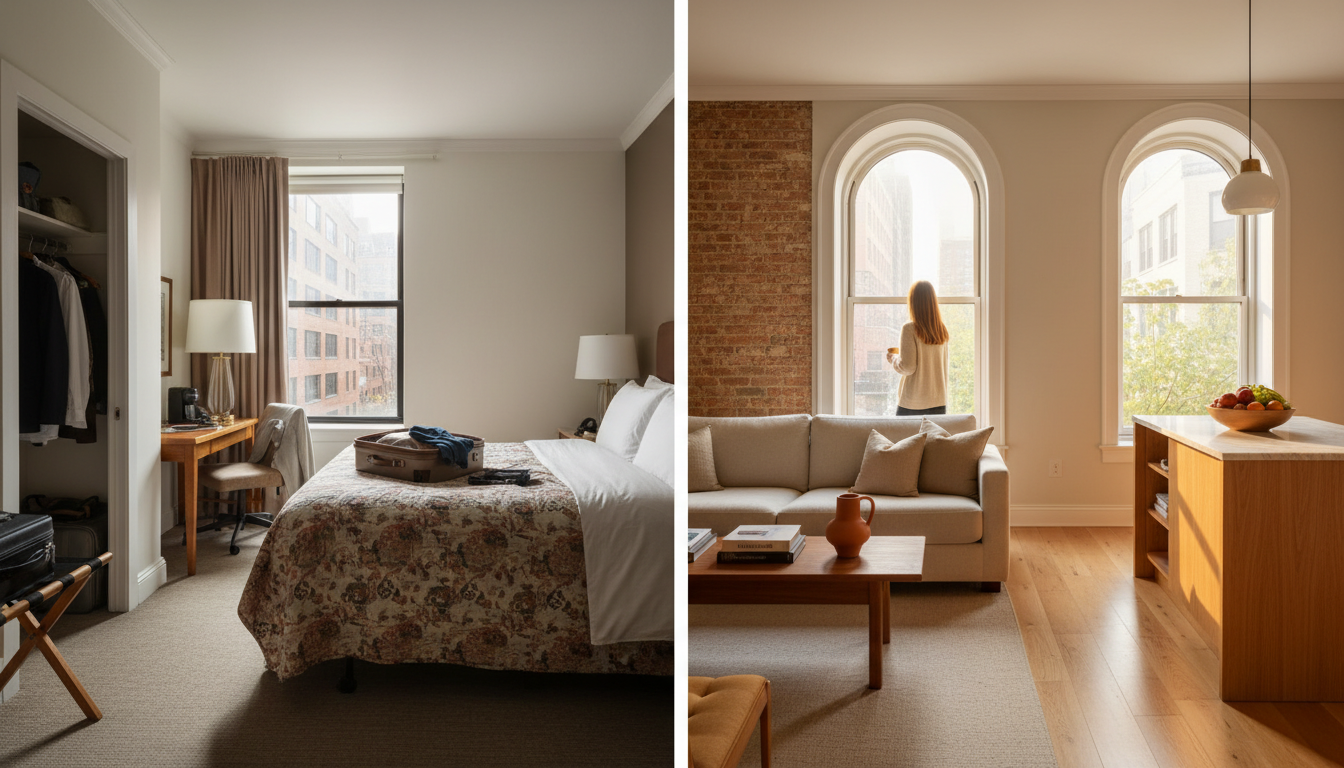 Split-screen showing a cramped midtown hotel room versus a spacious Brooklyn living room with expose
The SwappaHome community includes hundreds of New York listings across all five boroughs—everything from compact studios in Hell's Kitchen to family-sized apartments in Park Slope to artist lofts in Long Island City with direct Manhattan skyline views. The variety dwarfs what you'd find in any hotel search.
Best Neighborhoods for Your First New York Home Exchange
Choosing where to stay in New York is really choosing what kind of New York experience you want. Each neighborhood has a distinct personality, and home exchange lets you live inside that personality rather than just visiting it.
Brooklyn Heights and DUMBO
Want postcard views without Manhattan prices? Brooklyn Heights delivers. The brownstone-lined streets feel almost European, the Promenade offers unobstructed views of lower Manhattan and the Brooklyn Bridge, and you're a single subway stop from Wall Street. DUMBO (Down Under the Manhattan Bridge Overpass) sits just north, packed with converted warehouse apartments, cobblestone streets, and that Instagram-famous view of the Manhattan Bridge framed by brick buildings on Washington Street.
Home exchanges here typically feature pre-war details—crown moldings, original hardwood floors, those deep window seats New Yorkers obsess over. The neighborhood's proximity to Brooklyn Bridge Park means morning runs with skyline views become standard, not special.
The West Village and Greenwich Village
For first-timers who want the quintessential "movie New York" experience, the Villages deliver. Winding streets that break Manhattan's grid pattern, jazz clubs, Comedy Cellar on MacDougal Street, the townhouse from "Friends," Joe's Pizza on Carmine Street at 2 AM. This is the New York of romantic comedies and Nora Ephron films.
Home exchanges in the West Village tend to be smaller—think 400-600 square foot one-bedrooms—but the location premium is real. You're walking distance to Washington Square Park, the High Line, Chelsea Market, and some of the city's best restaurants. The trade-off between space and location usually favors location here.
Harlem
Harlem offers something the downtown neighborhoods can't: space, history, and authenticity at a different price point. The brownstones here are often larger than their Brooklyn or Village counterparts, with more bedrooms and actual dining rooms. Strivers' Row on 138th and 139th Streets showcases some of the most beautiful residential architecture in the city.
The cultural anchors are unmatched: the Apollo Theater, Sylvia's Restaurant, the Studio Museum, Marcus Garvey Park. Sunday gospel brunch at a Harlem church is a genuine New York experience that most hotel-bound tourists never discover. The A, B, C, and D trains connect you to Midtown in 15–20 minutes.
Astoria, Queens
Astoria has emerged as one of New York's most livable neighborhoods—and the home exchange options reflect that. Larger apartments, more outdoor space, and a food scene that rivals Manhattan's at half the price. Steinway Street alone offers Greek tavernas, Egyptian bakeries, Brazilian steakhouses, and some of the best Middle Eastern food in the city.
The N and W trains run directly to Times Square in about 20 minutes. Astoria Park along the East River provides green space and stunning views of the Robert F. Kennedy Bridge. For families or travelers who want more room to spread out, Queens delivers.
Upper West Side
Families with kids gravitate here for good reason: Central Park's western edge runs the entire length of the neighborhood, the American Museum of Natural History sits at 79th Street, Lincoln Center anchors the southern end. The residential feel is more pronounced than in Midtown—think strollers, dog walkers, and neighborhood restaurants where regulars have "their" table.
Home exchanges on the Upper West Side often include the kind of space that's rare in Manhattan: two and three-bedroom apartments, sometimes with park views. The 1, 2, and 3 trains provide quick access to downtown, and the express stops mean you're at Times Square in 10 minutes.
Timing Your New York Home Exchange
New York doesn't have an off-season the way beach destinations do, but timing still matters—both for availability and for experience.
Peak Demand Periods
December through early January is the toughest time to find New York home exchanges. The holiday windows at Saks and Bergdorf's, the Rockefeller Center tree, the Radio City Christmas Spectacular—everyone wants to be here. Planning a holiday trip? Start reaching out to potential hosts 4–6 months in advance. The SwappaHome community sees booking requests for Christmas week as early as July.
September and October are also high-demand. The weather is perfect, the summer crowds have thinned, and the city feels energized after August's traditional slowdown. Fashion Week, the US Open, and Broadway's fall season all drive visitor numbers up.
Sweet Spots for First-Timers
January through March offers the best availability for home exchanges. Yes, it's cold—average highs hover around 40°F—but New Yorkers don't hibernate. Museums are less crowded, Broadway shows are easier to book, and restaurant reservations that require weeks of planning in October can be had same-day in February. Plus, hosts are often eager to escape the winter themselves, making mutual exchanges easier to arrange.
Late April through May hits a sweet spot: warming weather, blooming cherry blossoms in Central Park, and pre-summer pricing on everything from flights to shows. The city feels alive without feeling overrun.
How to Secure Your New York Home Exchange
New York hosts on SwappaHome receive more requests than hosts in most other cities. Standing out requires more than a generic "I'd love to stay at your place" message.
Craft a Compelling Request
Lead with specifics. Mention why their particular apartment appeals to you—maybe it's the proximity to a museum you've always wanted to visit, or the neighborhood's reputation for a cuisine you love. Show that you've actually read their listing, not just skimmed the photos.
Include your travel dates and be clear about flexibility. "We're planning to visit during the first two weeks of April, with some flexibility on exact dates" gives hosts room to work with you. Rigid date requirements limit your options.
Highlight what makes your home appealing in return. Even if you're not doing a simultaneous swap, hosts often browse your listing to gauge what kind of guest you might be. A well-maintained home with thoughtful descriptions signals a conscientious traveler.
Build Your SwappaHome Profile First
Before reaching out to New York hosts, ensure your own listing is complete. Upload high-quality photos of every room. Write descriptions that go beyond square footage—mention the coffee shop around the corner, the park within walking distance, the quirks that make your place special.
Verify your identity through SwappaHome's verification system. New York hosts, particularly those in desirable neighborhoods, often filter for verified members only. Taking five minutes to complete verification dramatically increases your response rate.
Consider Non-Simultaneous Exchanges
Simultaneous swaps—where you stay at someone's place while they stay at yours—work beautifully but require calendar alignment. SwappaHome's credit system removes this constraint. You can host guests throughout the year, accumulate credits, then use those credits for your New York trip regardless of whether that specific host needs your place.
This flexibility is particularly valuable for New York, where hosts might not need a reciprocal stay in your city during your travel window. Credits earned from hosting a family from Paris in June can fund your November Manhattan stay.
What to Expect from a New York Home Exchange
New York apartments come with quirks that might surprise first-timers. Understanding these in advance prevents confusion and sets realistic expectations.
Space Realities
New York apartments are smaller than what you'd find in most other American cities. A 700-square-foot one-bedroom is considered spacious here. Closets are often tiny or nonexistent—many New Yorkers use wardrobes or clothing racks. Kitchens might be galley-style, with just enough room for one person to cook.
This isn't a negative—it's just New York. The trade-off is location, walkability, and access to a city where the "living room" is really the entire metropolis. You'll spend less time in the apartment and more time in the city, which is exactly the point.
Building Logistics
Many New York buildings have doormen, which actually simplifies key exchange. Your host can leave keys with the doorman, and you simply check in upon arrival. For walk-up buildings without doormen, hosts typically use lockboxes or arrange to meet you.
Elevator buildings are common in Manhattan; walk-ups are more typical in Brooklyn and Queens. If mobility is a concern, clarify the building situation before confirming your exchange. A charming fourth-floor walk-up becomes less charming after hauling luggage up 72 stairs.
Neighborhood Noise
New York is loud. Sirens, garbage trucks at 6 AM, neighbors' footsteps, street noise—it's part of the experience. Most long-term New Yorkers sleep through it, but light sleepers should ask hosts about noise levels and consider bringing earplugs.
That said, noise varies dramatically by location. A top-floor apartment on a tree-lined Brooklyn side street is genuinely quiet. A second-floor unit above a busy avenue in Midtown is not.
Navigating New York During Your Stay
Transportation Essentials
Forget renting a car. Parking in Manhattan averages $50–$75 per day in garages, street parking is a blood sport, and you simply don't need a vehicle. The subway runs 24/7, covers all five boroughs, and costs $2.90 per ride (or $34 for a weekly unlimited MetroCard).
Download the MTA app before you arrive. It shows real-time train arrivals, service changes, and trip planning. Google Maps and Citymapper also work well for navigation.
For airport transfers: the AirTrain plus subway from JFK costs $11.75 total and takes about 60–75 minutes to Midtown. From LaGuardia, the Q70 bus connects to the subway for a single fare. Newark has the AirTrain to NJ Transit, running about $15.25 total. Taxis and rideshares exist but will run $50–$100+ depending on traffic and destination.
Grocery and Food Logistics
One major advantage of home exchange: a kitchen. New York grocery prices run higher than the national average, but cooking even half your meals saves hundreds compared to restaurant-only dining.
Trader Joe's locations (Union Square, Chelsea, Upper West Side) offer the best value for basics. Whole Foods is everywhere but pricier. For authentic neighborhood shopping, explore local options: Fairway on the Upper West Side, Sahadi's in Brooklyn Heights, the Essex Market on the Lower East Side.
Hosts typically leave recommendations for their favorite local spots. These insider tips—the deli with the best bacon-egg-and-cheese, the Thai place that doesn't look like much but delivers incredible pad see ew—are worth more than any guidebook.
Money-Saving Strategies Beyond the Exchange
Eliminating accommodation costs is the big win, but New York offers plenty of ways to stretch your budget further.
Free and Low-Cost Attractions
Central Park costs nothing. Neither does walking the High Line, crossing the Brooklyn Bridge, exploring Grand Central Terminal's architecture, or wandering through the New York Public Library's stunning Rose Main Reading Room.
Many museums offer free or pay-what-you-wish hours: the Met suggests $30 but New York residents pay what they wish anytime; MoMA is free Friday evenings from 4–8 PM; the Brooklyn Museum offers free admission the first Saturday of each month.
The Staten Island Ferry runs 24/7, costs nothing, and provides postcard views of the Statue of Liberty and lower Manhattan. It's a better deal than any paid harbor cruise.
Food Without the Price Tag
New York's cheap eats scene is legendary. A slice of pizza runs $3–$4 at places like Joe's, Prince Street Pizza, or Scarr's. Halal carts serve chicken over rice for $7–$8. Chinatown dumpling spots like Vanessa's offer eight dumplings for $7. The Levain Bakery cookie is $5 and worth every calorie.
Happy hour transforms expensive restaurants into accessible ones. Many places offer half-price drinks and discounted appetizers from 4–7 PM. The Smith, for example, runs excellent happy hour specials across its locations.
Broadway on a Budget
TKTS booths in Times Square, Lincoln Center, and downtown Brooklyn sell same-day tickets at 20–50% off. The lines can be long, but the savings are real.
Broadway lotteries offer even better deals. Most shows run digital lotteries through their apps or the TodayTix app, with tickets as low as $30–$40 for front-row seats. Enter multiple lotteries daily to maximize your chances.
Off-Broadway shows often deliver comparable quality at lower prices. The Atlantic Theater, Playwrights Horizons, and the Public Theater all produce excellent work, and tickets rarely exceed $90.
Preparing Your Home for Your Exchange Partner
The golden rule: leave your home the way you'd want to find theirs. This means more than just cleaning—it means creating an experience.
Practical Preparations
Clear space in closets and drawers. Your guests need somewhere to put their things. A completely full apartment, even a clean one, feels unwelcoming.
Stock basics: toilet paper, paper towels, dish soap, a few coffee pods or tea bags, salt and pepper. You don't need to fill the fridge, but having the essentials prevents a grocery run the moment they arrive.
Leave clear instructions for anything non-obvious: how to work the shower, which key opens which lock, the Wi-Fi password, trash and recycling schedules. A simple printed guide saves endless back-and-forth messages.
The Welcome Touch
A handwritten note goes surprisingly far. Welcome them, point them toward your favorite neighborhood spots, leave your phone number for emergencies. This small gesture sets the tone for the entire exchange.
Many SwappaHome members leave a small welcome gift: a bottle of local wine, a guidebook, snacks from a favorite bakery. It's not required, but it's remembered.
Common Concerns for First-Time Exchangers
Trust and Security
The question everyone asks: "How do I know I can trust a stranger in my home?" Here's the honest answer: SwappaHome's community builds trust through mutual accountability. Every member has a profile, reviews from past exchanges, and verified identity. You're not handing your keys to an anonymous stranger—you're welcoming someone who has their own home on the line and their own reputation to protect.
Both parties have skin in the game. Your guest wants a good review just as much as you do. This mutual investment creates a level of care that hotel guests simply don't have.
That said, take sensible precautions. Lock away valuables, important documents, and anything irreplaceable. Consider your own travel insurance or home insurance policy for additional peace of mind—SwappaHome facilitates connections but doesn't provide coverage for damages or issues.
What If Something Goes Wrong?
Most exchanges go smoothly. When issues arise, they're usually minor: a broken glass, a stained towel, a miscommunication about checkout time. Direct communication resolves nearly everything.
For the rare serious issue, document everything with photos and communicate promptly. SwappaHome's messaging system keeps records of all conversations. Members resolve disputes directly, and the review system ensures accountability—hosts who cause problems see their reputation reflect it.
Making the Most of Your New York Exchange
Here's what separates a good New York trip from a transformative one: living like a local, not a tourist.
Your home exchange makes this possible in ways hotels can't. You have a neighborhood, not just an address. You have a coffee shop where the barista starts to recognize you by day three. You have a bodega for late-night snacks, a dry cleaner, a favorite bench in the nearby park.
Lean into this. Shop at the local farmers market (Union Square on Mondays, Wednesdays, Fridays, and Saturdays is the city's best). Take the same subway line the commuters take. Eat dinner at 8 PM like New Yorkers do, not 6 PM like tourists.
Ask your host for recommendations, then actually follow them. They know which pizza place is worth the line and which is tourist bait. They know the park entrance that's never crowded, the museum gallery everyone overlooks, the bar with the best jukebox.
New York rewards the curious. A home exchange gives you the time, the space, and the local knowledge to actually be curious—to wander without an itinerary, to stumble onto things, to let the city surprise you.
Frequently Asked Questions
Is home exchange in New York safe for first-time visitors?
Home exchange in New York is as safe as any accommodation option when you use established platforms. SwappaHome's verification system and review structure create accountability on both sides. Members have their own homes and reputations at stake, which encourages respectful behavior. Take standard precautions—lock away valuables, read reviews carefully, communicate clearly—and you'll find the community remarkably trustworthy.
How much can I save with a New York home exchange versus hotels?
A two-week New York hotel stay averages $5,000–$7,000 including taxes. Home exchange eliminates this cost entirely—you're exchanging stays, not paying nightly rates. Even accounting for SwappaHome membership and incidental expenses, most travelers save 70–90% on accommodation costs. For a family needing multiple hotel rooms, the savings multiply further.
What's the best time of year for a New York home exchange?
January through March offers the best availability as many New Yorkers seek warmer destinations. Late April through May provides ideal weather with fewer crowds than summer. September and October are beautiful but competitive—book 4–6 months ahead. December holiday season is the hardest to secure, requiring 6+ months advance planning.
Can I find family-friendly home exchanges in New York?
Absolutely. Brooklyn neighborhoods like Park Slope, Carroll Gardens, and Brooklyn Heights have numerous family-oriented listings with multiple bedrooms, kid-friendly amenities, and proximity to parks. The Upper West Side offers similar options in Manhattan with Central Park access. Filter your SwappaHome search by bedrooms and read listings carefully for mentions of cribs, high chairs, or family-friendly features.
Do I need a car for a New York home exchange?
No—in fact, having a car in New York creates more problems than it solves. Parking costs $50–$75 daily in Manhattan garages, street parking is extremely limited, and traffic makes driving slower than the subway for most trips. The subway, buses, and walking handle virtually every transportation need. Save your money and skip the rental entirely.

Published by
SwappaHome
SwappaHome Editorial Team
Home Exchange & Slow Travel Editorial
The SwappaHome Editorial Team brings together travel research, home-exchange community insights, and platform data to produce practical guides for first-time and experienced home swappers. Every article cites real platforms, current market rates, and verifiable city-level facts so readers can make informed decisions without guessing.
Ready to try home swapping?
Join SwappaHome and start traveling by exchanging homes. Get 7 free credits when you sign up!
Related articles

Bachelor and Bachelorette Parties in Singapore: The Complete Home Swap Group Guide for 2026
Planning a bachelor or bachelorette party in Singapore? Discover how home swapping lets groups of 6-12 stay together in luxury condos, saving thousands while partying in Marina Bay.

Cycling in Lisbon: 7 Home Swap Bike Tour Itineraries for Every Rider
Discover the best cycling routes in Lisbon with these home swap bike tour itineraries—from waterfront paths to hilltop adventures, all starting from your borrowed home.

Graduation Trip to Barcelona: How Home Swapping Gives New Graduates the Ultimate Celebration
Planning a graduation trip to Barcelona? Discover how home swapping lets new graduates explore Spain's most vibrant city without the hostel crowds or hotel costs.