New York Hidden Food Gems: 23 Spots Where Locals Actually Eat in 2026

SwappaHome Editorial Team
Home Exchange & Slow Travel Editorial
Skip the tourist traps. Discover New York hidden food gems from $1.50 dumplings in Flushing to $4 tacos in Jackson Heights—where real New Yorkers line up.
New York Hidden Food Gems: 23 Spots Where Locals Actually Eat in 2026
Picture this: you're standing outside Joe's Pizza on Carmine Street at 2 AM. The line wraps around the corner. Tourists clutch their phones, resigned to a 45-minute wait for a slice that—honestly—isn't even in the top 20 according to most New Yorkers. Meanwhile, three blocks away on Bleecker, a nearly empty shop serves superior crust to a handful of people who know better.
This is the fundamental tension of eating in New York: the places that get famous often coast on reputation while the real magic happens in unmarked storefronts, basement kitchens, and outer-borough neighborhoods most visitors never see. Finding New York hidden food gems requires knowing where locals actually eat—not where Instagram tells you to queue.
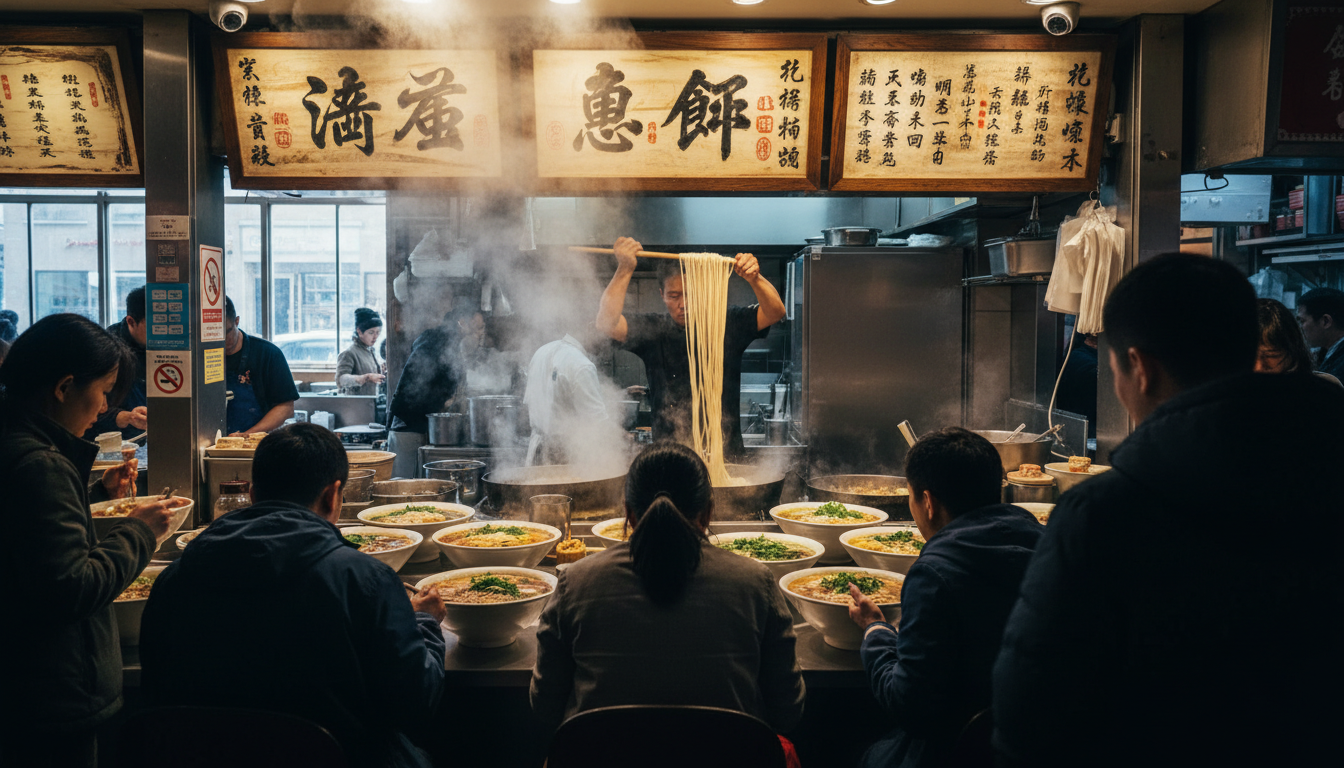 A crowded counter at a Flushing food court with steam rising from hand-pulled noodles, Chinese chara
Here's the thing: you don't need a local friend or years of neighborhood knowledge. You just need to know where to look—and more importantly, where to avoid. The SwappaHome community shares these spots constantly because home-swappers actually live in these neighborhoods, shopping at the same bodegas and grabbing lunch at the same counters as their hosts.
What follows is the unfiltered guide to eating like a New Yorker, from $1.50 dumplings to $18 tasting plates that would cost $45 in Manhattan.
Why Tourist Food in NYC Is Often Mediocre (and Overpriced)
Before diving into specific spots, it helps to understand why the most visible restaurants in New York are rarely the best. The economics are brutal.
Rent in Times Square runs $800–$2,000 per square foot annually. A restaurant paying that much needs massive volume and high prices just to survive. The result? Shortcuts. Frozen pasta reheated to order. Pre-made sauces. Portion sizes designed to photograph well rather than taste good.
A plate of mediocre chicken parm that costs $34 in Midtown would be $16—and significantly better—at a family spot in Bensonhurst.
Tourist restaurants also optimize for one-time visitors. They don't need repeat customers because fresh tourists arrive daily. But a neighborhood spot in Astoria or Bushwick? They survive on regulars. The quality has to stay high because the same faces come back every week.
This isn't snobbery—it's economics. Understanding it explains why the best food in New York often exists in the least photogenic locations.
Flushing, Queens: The Best Asian Food Outside of Asia
Forget Manhattan's Chinatown. The real action happens 40 minutes from Midtown on the 7 train, where Flushing's Main Street delivers food that rivals Hong Kong, Shanghai, and Taipei.
New World Mall Food Court (136-20 Roosevelt Avenue)
The basement food court here is legendary among New York food obsessives. Two dozen stalls serve regional Chinese cuisines you won't find anywhere else in the city—or the country.
What to order: Hand-pulled noodles at Lan Zhou Handmade Noodle run $8.50 for a massive bowl. The lamb skewers at the Xi'an stall cost $2 each, aggressively seasoned with cumin. And the Taiwanese shaved ice at Meet Fresh ($6–8) makes for the perfect summer dessert.
The key is going during off-hours. Weekend lunch means 30-minute waits. Tuesday at 2 PM? Walk right up.
Nan Xiang Xiao Long Bao (38-12 Prince Street)
This cramped spot serves soup dumplings that compete with Din Tai Fung at a fraction of the price. The crab and pork XLB ($12.95 for 6) are the move—thin skins, scalding broth, and enough meat to feel substantial.
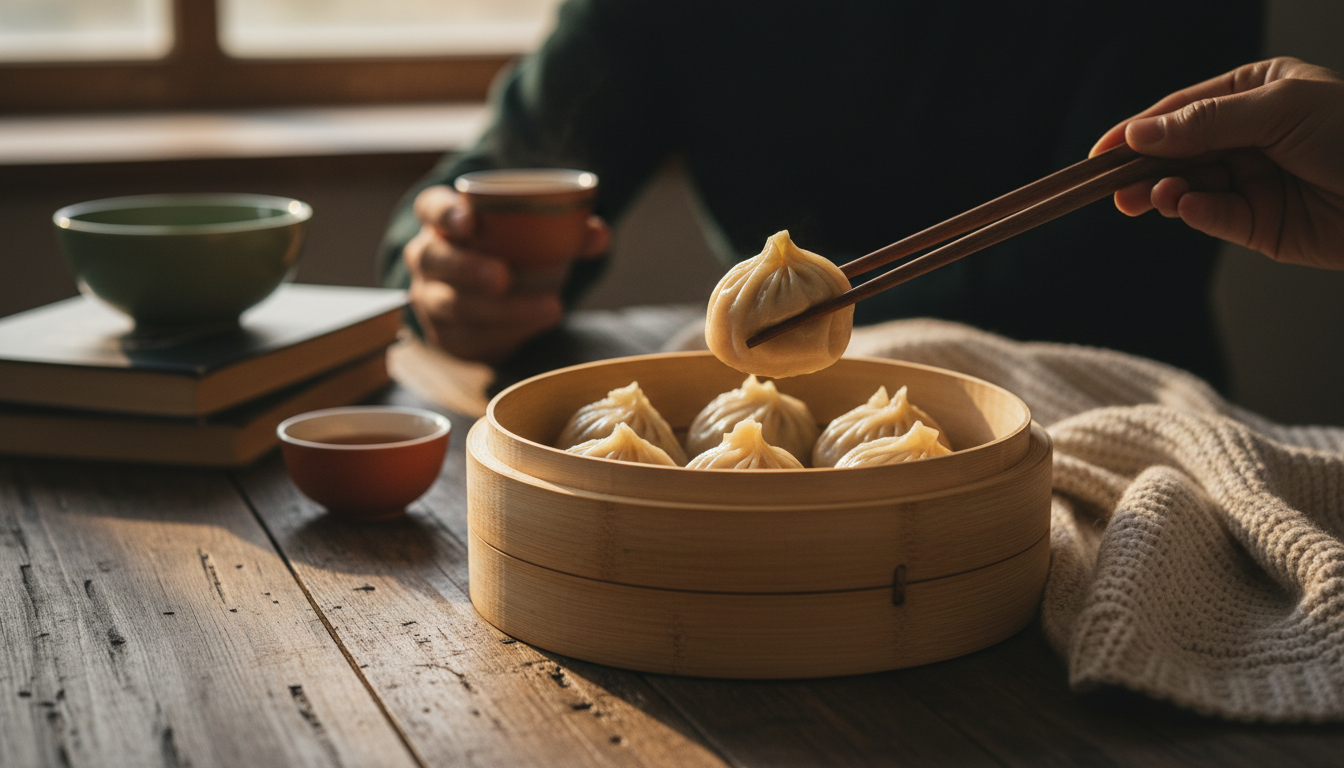 A bamboo steamer basket filled with perfectly pleated soup dumplings, chopsticks lifting one to show
A full meal here runs $15–22 per person. The same quality in Manhattan would easily hit $40.
Corner 28 (40-28 Main Street)
For Cantonese comfort food, this fluorescent-lit cafeteria serves roast meats that would make any Hong Kong local nod in approval. The roast duck ($12.50 over rice) has crackling skin and properly rendered fat. The char siu walks the perfect line between sweet and savory.
No ambiance. No English menus until recently. Just excellent food at prices that feel like a time warp.
Jackson Heights, Queens: South America and South Asia Collide
Take the 7 train to 74th Street and you'll step into one of America's most diverse food neighborhoods. Within four blocks: Colombian, Ecuadorian, Tibetan, Nepali, Indian, and Bangladeshi food—often at prices that seem impossible for New York.
Sammy's Halal (73rd Street and Broadway)
The chicken over rice cart outside the subway station draws lines at midnight. At $6 for a massive platter, it's one of the best value meals in the city. The white sauce—a mysterious, addictive garlic-mayo hybrid—is what makes it. Every cart has their own recipe, and Sammy's version is particularly good.
Arepa Lady (77-17 37th Avenue)
Maria Piedad Cano started selling arepas from a street cart in the 1980s. Now her brick-and-mortar spot serves the same recipe: crispy corn cakes stuffed with cheese that pulls in strings when you bite in. The arepa de choclo con queso ($5.50) is the signature—sweet corn studded with melted cheese.
Phayul (74-06 37th Road)
Tibetan food is rare in America, and Phayul serves some of the best. The momos (dumplings) come steamed or fried, filled with beef, chicken, or vegetables ($9.95 for 8). The thukpa (noodle soup) is a warming bowl of hand-cut noodles in spiced broth ($10.95).
The space is tiny—maybe 10 tables—and decorated with Tibetan flags and photos of the Dalai Lama. It feels like eating in someone's living room, in the best way.
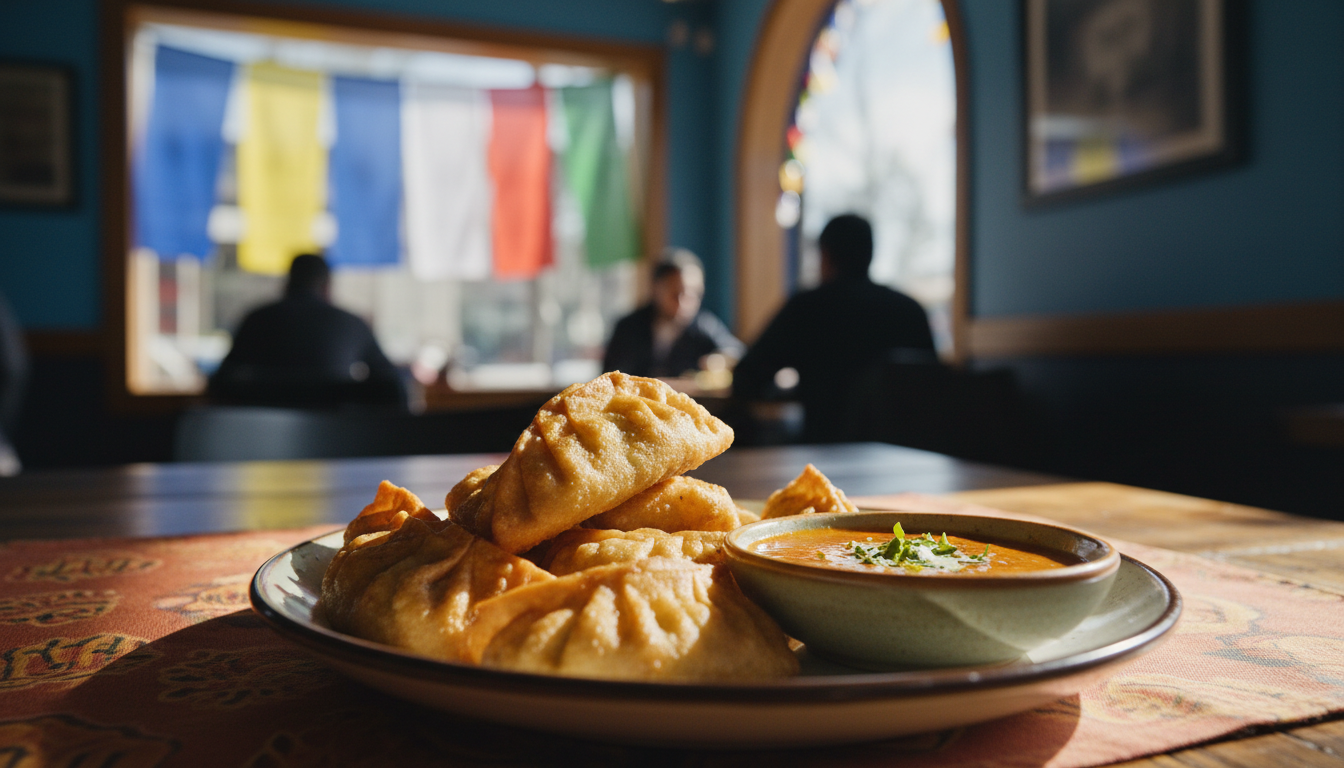 A plate of fried momos with bright orange dipping sauce, Tibetan prayer flags visible in the backgro
Brooklyn Neighborhoods That Reward Exploration
Brooklyn's food scene is vast and varied. Skip Williamsburg's overpriced brunch spots and head to neighborhoods where immigrant communities have built food ecosystems over decades.
Sunset Park: NYC's Other Chinatown
Eighth Avenue in Sunset Park runs for blocks with Chinese bakeries, seafood markets, and restaurants serving cuisines from Fujian, Guangdong, and Sichuan provinces.
Ba Xuyên (4222 8th Avenue) makes Vietnamese bánh mì that cost $5.50 and rival anything in Saigon. The combination sandwich layers pâté, ham, pickled vegetables, and jalapeños on bread that's crusty outside and pillowy inside.
Kai Feng Fu (4801 8th Avenue) specializes in northern Chinese dumplings—particularly the lamb and cumin variety that's hard to find elsewhere in the city. A plate of 12 runs $8.95.
Bensonhurst: Old-School Italian That Actually Delivers
The Italian-American community in Bensonhurst has thinned over decades, but the restaurants that remain are the real thing—not the red-sauce tourist traps of Little Italy.
L&B Spumoni Gardens (2725 86th Street) has served Sicilian-style square pizza since 1939. The sauce goes on top of the cheese here—a Sicilian tradition that creates a different texture entirely. A full pie runs $25–30, and the spumoni ice cream is mandatory.
Trunzo Brothers (6802 18th Avenue) is a butcher shop that also serves prepared foods. Their meatball parm hero ($12) uses house-ground beef and pork, hand-rolled and fried to order. It's a 15-minute wait. Worth every second.
Crown Heights: Caribbean Flavors Done Right
Nostrand Avenue between Eastern Parkway and Empire Boulevard is the heart of Brooklyn's Caribbean community. The food here is home cooking scaled up—not fusion experiments or modernized takes.
Gloria's (764 Nostrand Avenue) serves Trinidadian doubles—fried flatbread stuffed with curried chickpeas—for $2 each. They're messy, spicy, and perfect for breakfast. The roti ($10–14) wraps curry goat or chicken in thin, flaky bread.
The Islands (803 Washington Avenue) offers Jamaican patties for $2.50 that put the airport versions to shame. The beef patty has actual seasoning and meat that doesn't taste like filler. The jerk chicken plate ($12) comes with rice and peas and enough scotch bonnet heat to clear your sinuses.
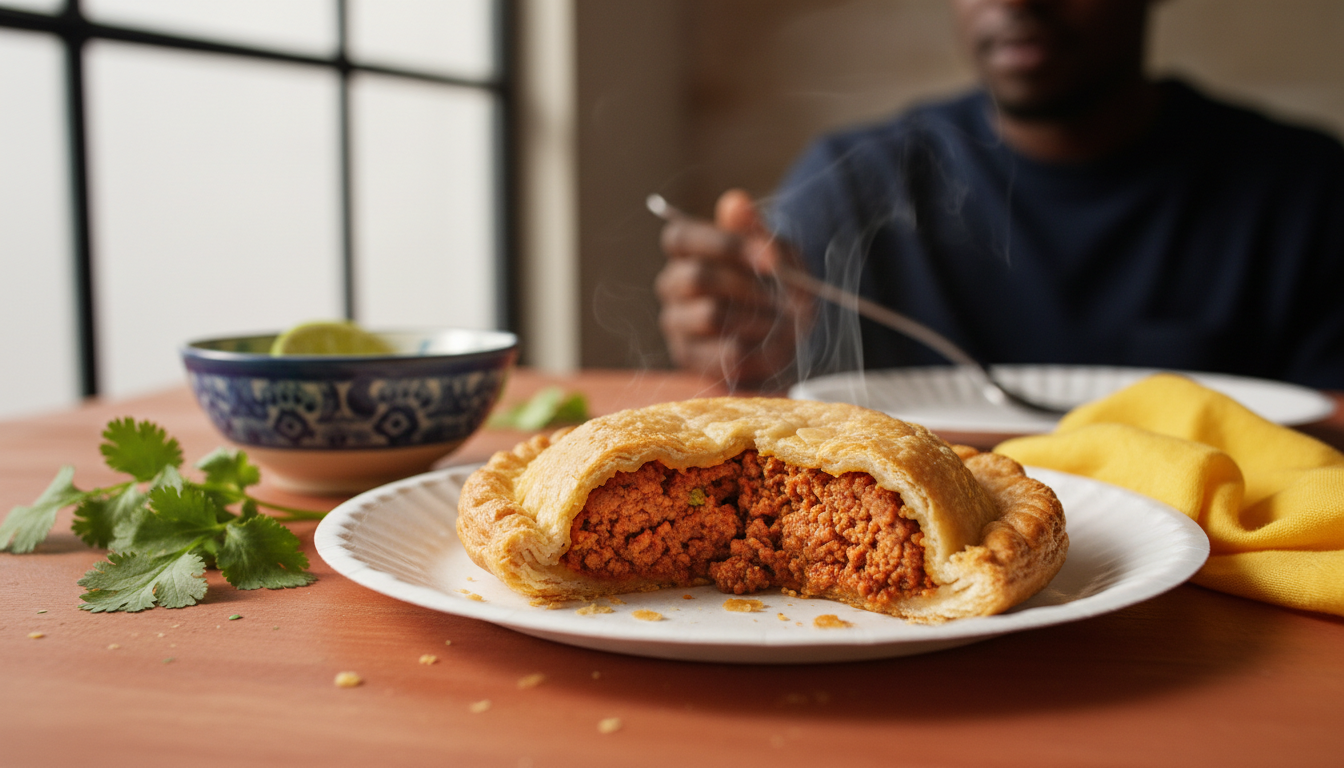 A Jamaican beef patty cut in half showing the seasoned meat filling, golden flaky crust visible, on
Manhattan Spots That Locals Actually Love
Yes, there's good food in Manhattan—you just have to know where to look. These spots survive on neighborhood regulars, not tourist traffic.
Xi'an Famous Foods (Multiple Locations, but Go to Chinatown)
The original Chinatown location (45 Bayard Street) still feels like the scrappy noodle shop it started as, not the mini-chain it's become. The spicy cumin lamb hand-ripped noodles ($11.95) are chewy, aggressively seasoned, and completely addictive. The liang pi (cold skin noodles, $7.95) work as a summer staple.
Kopitiam (151 East Broadway)
Malaysian coffee shop culture meets Lower East Side in this tiny spot. The nasi lemak ($16)—coconut rice with sambal, fried anchovies, peanuts, and egg—is a complete meal. The kaya toast ($8) spreads coconut jam on thick-cut bread with soft-boiled eggs for dipping.
Cash only, usually a wait, cramped tables. None of that matters once you're eating.
Los Tacos No. 1 (Chelsea Market and Times Square, but Go to 229 West 43rd Street)
The Times Square location sounds like a tourist trap, but the quality holds up because the owners refuse to cut corners. The adobada taco ($4.25) uses pork marinated for days in a chile paste that stains everything it touches red. Three tacos and a horchata runs about $16—cheap by Midtown standards, excellent by any standard.
Russ & Daughters (179 East Houston Street)
Yes, it's famous. Yes, tourists know about it. But Russ & Daughters has maintained quality since 1914 because the family still runs it and still cares. The classic bagel with lox ($19.50) uses fish they cure in-house. The whitefish salad ($15/half pound) is silky and smoky.
Go at 8 AM on a weekday to avoid the weekend crush. The appetizing counter—smoked fish, cream cheese, bagels—is the move. Skip the sit-down café next door.
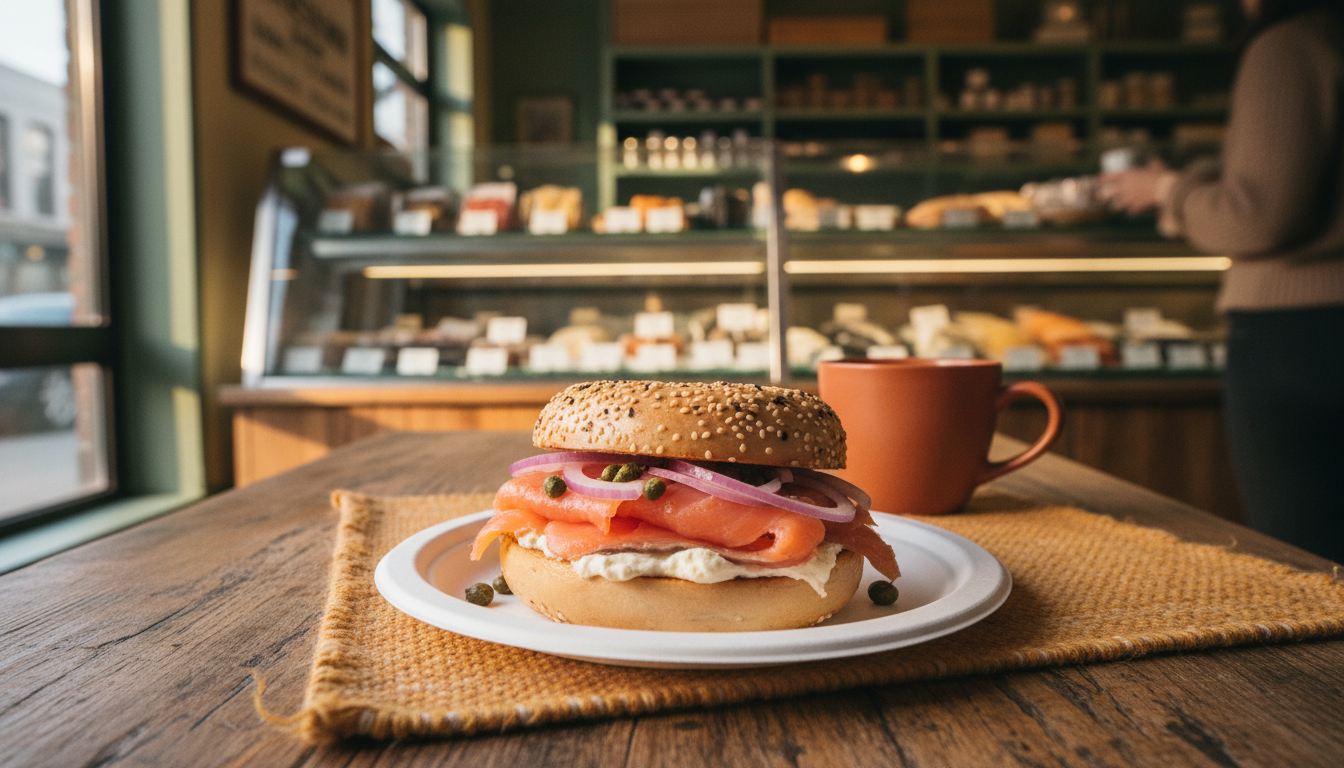 A fresh bagel loaded with lox, cream cheese, capers, and red onion on a paper plate, the Russ Daugh
The Bronx: Arthur Avenue and Beyond
Forget Little Italy in Manhattan—it's a tourist zone selling overpriced, mediocre Italian food. The real Italian-American food scene lives on Arthur Avenue in the Bronx, where families have run the same shops for generations.
Arthur Avenue Retail Market (2344 Arthur Avenue)
This indoor market houses butchers, bakers, pasta makers, and prepared food counters that supply both restaurants and home cooks. Mike's Deli inside the market makes sandwiches on fresh bread with house-cured meats—the Italian combo ($16) is a proper hero.
Teitel Brothers sells olive oils, cheeses, and dried goods at wholesale-ish prices. Grab a wedge of aged provolone ($12/lb) and some Calabrian chili paste ($8) to bring home.
Zero Otto Nove (2357 Arthur Avenue)
The wood-fired pizza here comes from a massive oven imported from Naples. The Margherita ($18) does the basics perfectly—San Marzano tomatoes, fresh mozzarella, basil, and a char-blistered crust. The burrata pizza ($24) adds creamy cheese that pools in the center.
Reservations help on weekends, but weeknight walk-ins usually work.
Liebman's Delicatessen (552 West 235th Street, Riverdale)
One of the last old-school Jewish delis in the city, Liebman's has served pastrami since 1953. The sandwich ($19.95) comes piled high on rye with mustard—no fancy additions, no modernization. It's what deli used to taste like before most of them closed or got bought by corporations.
Staten Island: Worth the Ferry for Food
Most tourists take the Staten Island Ferry for the free view of the Statue of Liberty, then turn around. That's a mistake. The island's Sri Lankan community has created a food scene unlike anywhere else in the country.
Lakruwana (668 Bay Street)
The Sunday buffet ($18.95) at this Sri Lankan spot is legendary among food obsessives. Hoppers (bowl-shaped rice flour pancakes), string hoppers (steamed rice noodle nests), and curries ranging from mild coconut to aggressively spicy cover long tables. It's a 10-minute walk from the ferry terminal.
San Rasa (226 Bay Street)
More upscale Sri Lankan, though still affordable by Manhattan standards. The lamprais ($16.95)—rice, meat curry, and accompaniments wrapped in banana leaf and baked—is the specialty. The kottu roti ($14.95) chops flatbread with vegetables and egg on a hot griddle.
How to Eat Like a Local: Practical Tips
Knowing the spots is only half the battle. Eating like a New Yorker means understanding the unwritten rules.
Timing Matters More Than You Think
The best food often comes from kitchens with limited capacity. Arrive at 11:30 AM or 5:30 PM to beat rushes. Weekday lunch beats weekend brunch every time. Late night (after 10 PM) works for pizza, tacos, and halal carts.
Cash Is Still King in Many Spots
Smaller family restaurants often run on thin margins. Many still don't take cards, or charge a fee for them. Carry $40–60 in cash when exploring outer-borough food scenes.
The Subway Is Your Best Friend
A single-ride MetroCard costs $2.90. That gets you to Flushing, Jackson Heights, Sunset Park, or Arthur Avenue—neighborhoods where $20 buys a feast. The 7 train alone accesses more great food than most cities contain.
Don't Fear the Language Barrier
Many of the best spots have limited English menus or staff who speak other languages primarily. Point at what other tables are eating. Use Google Translate. Most importantly, trust that the kitchen knows what's good—asking for recommendations usually works.
Home Swapping: The Secret to Eating Like a Local
Here's what the SwappaHome community has figured out: staying in a real neighborhood changes how you eat entirely.
A hotel in Midtown means you're surrounded by tourist restaurants. An apartment in Astoria means you're three blocks from the same Greek bakery your host visits every morning.
Home exchange puts you in residential neighborhoods where the food serves locals, not visitors. You have a kitchen to store leftovers and reheat last night's dumplings. You can ask your host—or check their notes—for the spots they actually frequent.
The economics work too. A week in a Manhattan hotel runs $2,100–$3,500. That money could instead fund a month of eating at every spot in this guide. SwappaHome's credit system (1 credit per night, no matter the location) means accommodation doesn't eat your food budget.
Many members specifically seek swaps in food-focused neighborhoods. A Flushing apartment. A Jackson Heights walk-up. A Sunset Park brownstone floor-through. The stay becomes part of the culinary exploration.
What to Skip: Tourist Traps That Aren't Worth It
Some famous spots genuinely deliver. Many don't. Save your time and money by avoiding:
Katz's Delicatessen — Yes, the pastrami is good. No, it's not worth $28 for a sandwich plus the tourist chaos. Liebman's in the Bronx or Pastrami Queen on the Upper East Side serve comparable quality without the scene.
Lombardi's Pizza — Claims to be America's first pizzeria. The pizza itself is fine but unremarkable, and the wait can hit an hour. Joe's on Carmine is better (and also crowded), but Lucali in Carroll Gardens or L&B in Bensonhurst are worth the trip.
Ellen's Stardust Diner — Singing waitstaff, mediocre diner food, and prices that don't match the quality. It's entertainment, not eating.
Most of Little Italy — The neighborhood is a tourist zone at this point. A handful of bakeries (Ferrara, Caffe Roma) still deliver, but the restaurants are overpriced and underwhelming. Arthur Avenue does everything better.
Times Square, Generally — There are exceptions (Los Tacos No. 1 holds up), but the default assumption should be that Times Square food costs too much and delivers too little.
Building Your Own Food Crawl
The best way to experience New York hidden food gems is to pick a neighborhood and dedicate a half-day to eating through it. Here's a sample Flushing itinerary:
10:00 AM — Start with congee and crullers at a Cantonese bakery on Main Street ($5)
11:30 AM — Hand-pulled noodles at New World Mall food court ($8.50)
1:00 PM — Walk down Roosevelt Avenue, grab a Taiwanese sausage from a street vendor ($3)
2:30 PM — Soup dumplings at Nan Xiang ($12.95 for 6)
4:00 PM — Shaved ice at Meet Fresh ($7)
5:30 PM — Early dinner of roast duck at Corner 28 ($12.50)
Total: roughly $49 for six eating experiences across multiple cuisines. That's less than a single mediocre dinner in Midtown.
The Honest Truth About NYC Food
New York's food scene is genuinely world-class—but not because of the famous places.
The magic lives in immigrant communities that brought recipes from home and adapted them to available ingredients. In family businesses where the third generation still shows up at 5 AM. In neighborhoods where landlords haven't yet priced out the small operators.
The challenge is access. Most visitors stick to Manhattan, maybe venture to Williamsburg, and eat at places optimized for tourists. They leave thinking New York food is overpriced and overhyped.
It doesn't have to be that way.
A MetroCard and a willingness to explore unlocks a food city that rivals anywhere on earth—at prices that often feel absurdly low. The SwappaHome approach makes this easier: stay in a real neighborhood, cook breakfast in a real kitchen, ask real locals where they eat.
The best meal of your trip probably won't be at a restaurant you've heard of. It'll be at a counter you stumbled into because it was on the way home.
That's how New Yorkers eat. And now you know where to find them.
Frequently Asked Questions
Where do locals eat in NYC instead of tourist areas?
New Yorkers eat in outer-borough neighborhoods like Flushing (Chinese), Jackson Heights (South Asian and Latin American), Sunset Park (Chinese and Mexican), and Arthur Avenue in the Bronx (Italian). These areas offer better food at lower prices because they serve residential communities, not tourists. A full meal in these neighborhoods typically costs $12–18 versus $30–45 in Midtown Manhattan.
What are the best cheap eats in New York City?
The best budget food in NYC includes $1.50 dumplings at Vanessa's Dumpling House, $5.50 bánh mì at Ba Xuyên in Sunset Park, $6 chicken over rice at Sammy's Halal cart in Jackson Heights, and $2 doubles at Gloria's in Crown Heights. Most outer-borough neighborhoods offer complete meals for under $15.
Is it worth going to Flushing for food?
Absolutely. Flushing offers the best Chinese food in the United States outside of San Francisco, with regional cuisines from Xi'an, Sichuan, Fujian, and Canton. The 40-minute subway ride from Midtown on the 7 train costs $2.90 and accesses hand-pulled noodles, soup dumplings, and roast meats at prices 50–70% lower than Manhattan equivalents.
What food is NYC actually known for among locals?
New Yorkers take pride in pizza (specifically coal-oven and Sicilian styles), bagels with lox from appetizing shops like Russ & Daughters, halal cart chicken over rice, and the diverse immigrant cuisines in outer boroughs. The city's real food identity is its variety—you can eat Tibetan momos, Sri Lankan hoppers, and Trinidadian doubles in the same week without leaving the subway system.
How do I find hidden food gems in New York?
Follow food writers who focus on outer boroughs (Eater NY's neighborhood guides are solid), ask home-swap hosts for their regular spots, and look for restaurants with limited English signage and mostly local clientele. The best indicator of quality is a crowded restaurant in a residential neighborhood—those places survive on repeat customers who know good food.

Published by
SwappaHome
SwappaHome Editorial Team
Home Exchange & Slow Travel Editorial
The SwappaHome Editorial Team brings together travel research, home-exchange community insights, and platform data to produce practical guides for first-time and experienced home swappers. Every article cites real platforms, current market rates, and verifiable city-level facts so readers can make informed decisions without guessing.
Ready to try home swapping?
Join SwappaHome and start traveling by exchanging homes. Get 7 free credits when you sign up!
Related articles
Bachelor and Bachelorette Parties in Singapore: The Complete Home Swap Group Guide for 2026
Planning a bachelor or bachelorette party in Singapore? Discover how home swapping lets groups of 6-12 stay together in luxury condos, saving thousands while partying in Marina Bay.
Cycling in Lisbon: 7 Home Swap Bike Tour Itineraries for Every Rider
Discover the best cycling routes in Lisbon with these home swap bike tour itineraries—from waterfront paths to hilltop adventures, all starting from your borrowed home.

Graduation Trip to Barcelona: How Home Swapping Gives New Graduates the Ultimate Celebration
Planning a graduation trip to Barcelona? Discover how home swapping lets new graduates explore Spain's most vibrant city without the hostel crowds or hotel costs.