
Home Exchange in Salzburg: Your Complete Guide to Living Like a Local in Mozart's City

SwappaHome Editorial Team
Home Exchange & Slow Travel Editorial
Discover how home exchange in Salzburg lets you wake up to Alpine views, shop at local markets, and experience Austria beyond the tourist crowds—all without hotel costs.
The first time I walked through the door of my home exchange in Salzburg, I genuinely thought I'd made a mistake. The apartment was too perfect—exposed wooden beams, a kitchen stocked with Austrian coffee, and a balcony overlooking the Salzach River with the fortress looming above. I kept waiting for someone to tell me there'd been a mix-up, that this couldn't possibly be where I was staying for free.
But that's the thing about home exchange in Salzburg that still catches me off guard, even after seven years of swapping: you don't get a hotel room. You get a life. You get someone's favorite coffee mug, their collection of hiking maps, their handwritten notes about which bakery makes the best Salzburger Nockerl. You get to live in a city rather than visit it.
 Morning view from a traditional Salzburg apartment balcony, showing the Hohensalzburg Fortress risin
I spent two weeks in that apartment last autumn. By the end, the woman at the corner Bäckerei knew my order. The guy at the wine shop had started recommending bottles based on what I'd bought before. I'd found my running route along the river. That's not a vacation—that's something closer to actually living somewhere, even if just for a little while.
So if you're considering a home exchange in Salzburg, whether you're drawn by Mozart, the Alps, or just the idea of waking up in one of Europe's most photogenic cities without paying €200 a night for the privilege, this is everything I've learned. The neighborhoods that actually work for home swappers, the honest realities of what to expect, and the local secrets that only come from sleeping in someone's actual home.
Why Home Exchange in Salzburg Makes More Sense Than Hotels
Real talk: Salzburg is expensive. Like, genuinely eye-watering expensive if you're trying to stay anywhere central. A decent hotel in the Altstadt runs €180-280 per night in shoulder season, and during festival time in summer? You're looking at €350+ easily. For a room that looks like every other hotel room you've ever stayed in.
Home exchange flips this completely. Through platforms like SwappaHome, you're exchanging hospitality rather than money. You host travelers at your place, earn credits (one credit per night, always), and spend those credits to stay in other members' homes anywhere in the world. Those two weeks in Salzburg? Cost me zero dollars in accommodation. I'd hosted a lovely couple from Melbourne for a week earlier that year, and suddenly I had credits burning a hole in my pocket.
But it's not just about the money—though saving roughly $3,000-4,000 on a two-week Salzburg stay is nothing to dismiss. It's about what you get access to.
The Space Difference Is Real
My Salzburg apartment was 75 square meters. That's about 800 square feet of living space—a full kitchen, a separate bedroom, a living room where I could actually spread out my maps and guidebooks, a balcony for morning coffee. The equivalent hotel space in Salzburg's center would cost €400+ per night, minimum.
I made schnitzel in that kitchen. I bought vegetables at the Grünmarkt and actually cooked them. I had friends over for wine one evening—friends I'd made at a hiking group the host had recommended. Try doing any of that in a hotel room.
Location, Location, Location
Here's what tourists don't realize about Salzburg: the best neighborhoods to actually experience the city aren't necessarily where the hotels are clustered. Hotels congregate around the Altstadt and train station because that's where tourists expect to be. But home exchanges? They're scattered throughout residential neighborhoods where Salzburgers actually live.
My place was in Nonntal, a quiet neighborhood south of the Old Town that most tourists never see. I could walk to Mozart's birthplace in 15 minutes, but my street had zero souvenir shops. Just a bakery, a butcher, a small grocery store, and neighbors who nodded hello when I passed.
Best Neighborhoods for Home Exchange in Salzburg
Not all Salzburg neighborhoods are created equal for home swapping. After my own stays and conversations with other SwappaHome members who've exchanged here, these are the areas that consistently deliver.
Nonntal: My Personal Favorite
Tucked between the Old Town and the Nonnberg Abbey (yes, the one from The Sound of Music), Nonntal feels like a village that happens to be a 10-minute walk from major attractions. Residential without being remote. Quiet without being boring.
What I loved: The Stiftsbäckerei St. Peter, one of Europe's oldest bakeries, is a short walk away. The neighborhood has actual grocery stores with normal prices, not tourist markups. And the morning light on the fortress from Nonntal? Genuinely spectacular.
Expect to find apartments in traditional buildings, some with balconies or small gardens. Older demographics, very safe, extremely quiet after 9 PM. Walking time to Altstadt: 10-15 minutes.
Mülln: Best for Foodies and Beer Lovers
Across the river from the Old Town, Mülln is where you'll find the Augustiner Bräustübl—a 400-year-old brewery with a beer garden that seats 1,400 people. But beyond the beer, Mülln has a neighborhood character that's distinctly local.
The apartments here tend to be slightly more affordable than those in the Altstadt, which means hosts often have larger spaces. There's a genuine neighborhood feel with local shops, and you're still only a 5-minute walk across the Müllner Steg footbridge to the Old Town.
The vibe is younger than Nonntal, more lively in the evenings, but still residential. Good mix of young professionals and families.
Maxglan: The Underrated Choice
Most tourists have never heard of Maxglan, and that's exactly the point. This western neighborhood is where airport workers, university staff, and regular Salzburgers live. It's not picturesque in the postcard sense, but it's authentic in ways the Old Town hasn't been for decades.
If you want to live like a true local and don't mind a 20-minute walk or short bus ride to the center, Maxglan offers the most "real" Salzburg experience. Home exchanges here often include parking (rare and valuable in Salzburg) and larger apartments. Best for travelers with cars, those staying longer than a week, anyone who prioritizes daily life authenticity over proximity to attractions.
Altstadt (Old Town): Proceed with Caution
Yes, you can find home exchanges in Salzburg's UNESCO-listed Old Town. And yes, it's magical to step out your door onto Getreidegasse or wake up with a view of the Residenzplatz.
But.
The Altstadt is a museum during the day and can feel oddly empty at night when all the tourists leave. Many "residential" apartments have been converted to short-term rentals, which means your neighbors might be different every few days. And the noise during summer—especially during the Salzburg Festival in July and August—can be intense.
Honestly? If you're coming for a short stay (under a week) and want maximum photo opportunities, an Altstadt home exchange can be wonderful. For longer stays, you'll likely be happier in a more residential neighborhood.
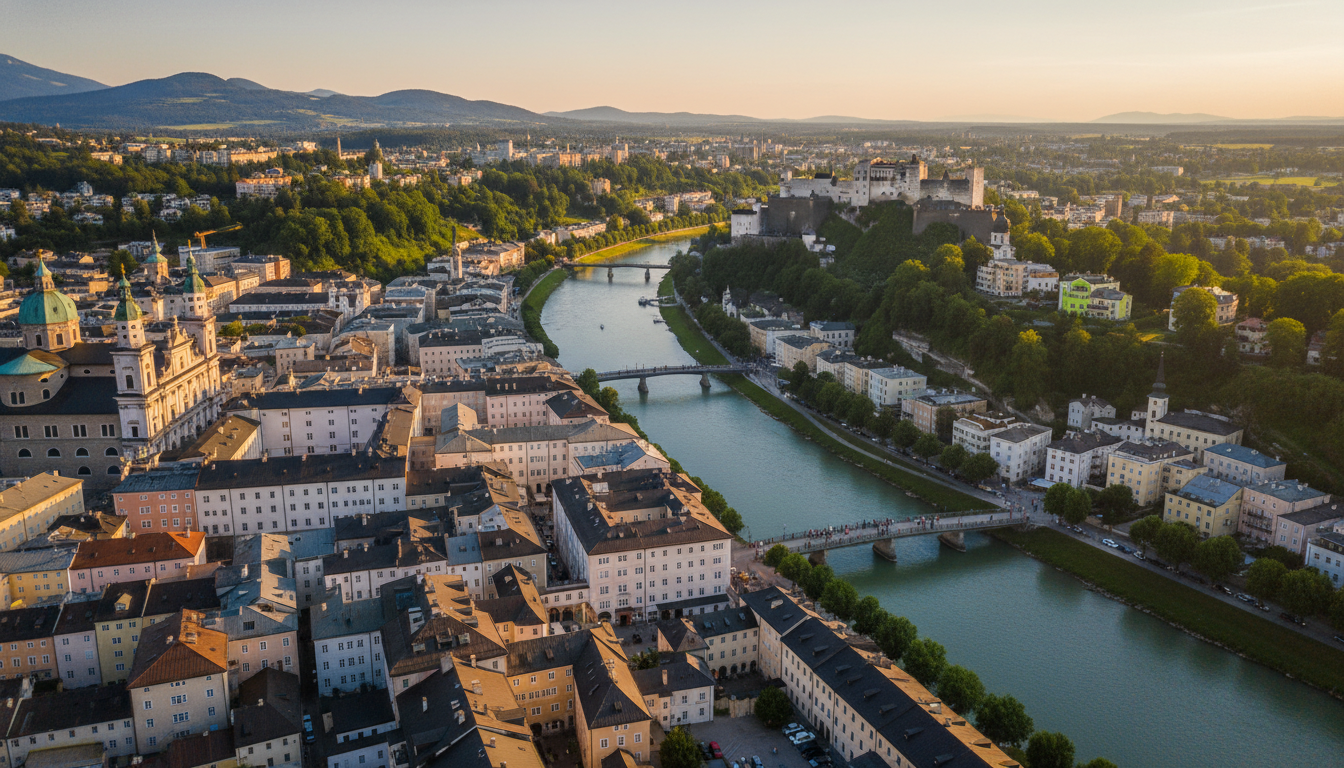 Aerial view of Salzburgs Old Town at golden hour, showing the dense baroque architecture, the Salzac
How to Find the Perfect Home Exchange in Salzburg
Salzburg isn't Paris or Barcelona—there aren't thousands of home exchange listings to sort through. This is actually a good thing. The members who list their Salzburg homes tend to be genuinely enthusiastic about hosting and sharing their city.
Start Your Search 3-6 Months Early
Salzburg home exchanges get snapped up fast, especially for summer (festival season) and December (Christmas markets). I've seen great listings disappear within days of being posted for peak dates.
For the Salzburg Festival (late July through August), start looking in January or February. For Christmas markets, September isn't too early. Shoulder seasons (May-June, September-October) are more flexible, but a 2-3 month lead time is still smart.
What to Look for in a Listing
Beyond the basics—location, size, amenities—pay attention to the host's description of their neighborhood. Detailed, enthusiastic descriptions suggest a host who genuinely wants you to experience their area. Vague descriptions might mean they're rarely home or not that invested in the exchange experience.
Look for local recommendations in the listing too. The best Salzburg hosts include their favorite restaurants, hiking trails, and hidden spots. This tells you they're thinking about your experience, not just filling their empty apartment.
Recent activity and reviews matter. On SwappaHome, you can see when a host was last active and read reviews from previous guests. Look for hosts who respond quickly and have consistent positive feedback about communication.
Crafting Your Request
When you message a potential Salzburg host, be specific about why you want to stay in their home and neighborhood. Generic requests get generic responses—or no response at all.
What works: "I noticed you mentioned the hiking trails near Gaisberg in your listing. I'm an avid hiker and would love to explore those routes. Your apartment looks perfect as a base for day hikes into the Alps."
What doesn't work: "Hi, I'm interested in your apartment in Salzburg. Is it available in June?"
Mention what makes your home appealing for a potential exchange too. Even though SwappaHome's credit system means they don't need to visit your place, hosts like knowing they're exchanging with interesting people who take care of their own homes.
What to Expect From Your Salzburg Home Exchange
Every home exchange is different, but Salzburg hosts tend to share certain characteristics—and certain expectations.
Austrian Hospitality Is Real (But Subtle)
Don't expect effusive welcomes or constant check-ins. Austrian hospitality is more reserved than, say, Italian or Spanish warmth. But it runs deep.
My Salzburg host, Margarethe, left me a folder with 20+ pages of typed recommendations—her favorite restaurants organized by cuisine and price, hiking routes with difficulty ratings, which museums were worth the entrance fee and which weren't. She'd clearly spent hours on it. But her welcome message was three sentences long and her in-person handoff (she was leaving as I arrived) lasted maybe ten minutes.
This is normal. It's not coldness; it's Austrian efficiency combined with respect for your independence.
The House Rules Thing
Austrians tend to be more particular about household rules than hosts in some other countries. Recycling is serious business—you'll likely find four or five different bins, and yes, you're expected to use them correctly. Quiet hours (typically 10 PM to 7 AM) are cultural norms, not suggestions. Shoes off at the door is nearly universal.
None of this is onerous, but it's worth being prepared. Your host will probably leave detailed instructions about trash sorting, and following them isn't optional.
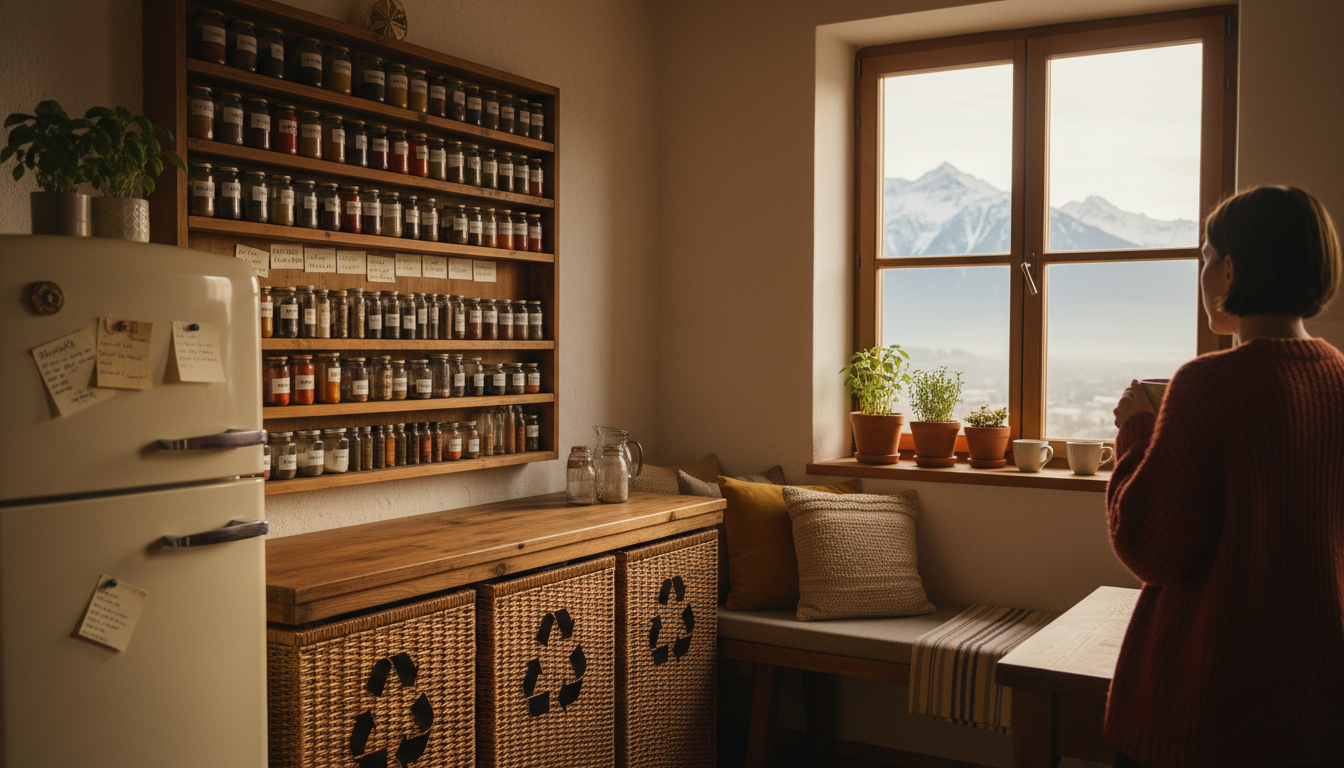 Interior of a cozy Salzburg apartment kitchen, showing typical Austrian organizationlabeled recyclin
What You'll Find in Most Salzburg Homes
Based on my experience and conversations with other home exchangers, you can almost always count on a full kitchen with quality cookware, washing machine, good bedding, WiFi, local maps and guidebooks, and basic pantry staples like oil, salt, and coffee.
Often you'll also find bicycles (Salzburg is very bike-friendly), hiking gear, guest slippers, and local transit passes or bike-share memberships.
What's rarely included? Air conditioning (most Salzburg apartments don't have it—the climate rarely requires it), dryers (Europeans mostly air-dry clothes), and English-language TV.
You should ask about parking if you're renting a car, elevator access (many older buildings don't have them), and whether the kitchen has an oven or just a stovetop.
Living Like a Local: Your Salzburg Home Exchange Itinerary
The whole point of home exchange is experiencing a place differently than tourists do. Here's how to actually live in Salzburg rather than just visit it.
The Morning Routine That Changed My Trip
Forget hotel breakfast buffets. Here's what I did most mornings, and it became the highlight of my days.
6:45 AM: Walk to the Grünmarkt (Green Market) in Universitätsplatz. It opens at 7 AM, and the first hour is when locals shop before the tourist crowds arrive. Buy fresh bread, local cheese, maybe some Speck (cured ham) if you're feeling indulgent.
7:30 AM: Coffee at Café Tomaselli if you want historic grandeur, or Kaffee Alchemie if you want actually good specialty coffee. Both open early.
8:15 AM: Walk back to your apartment through the waking city. This is when Salzburg is most itself—shopkeepers hosing down sidewalks, church bells marking the hour, the smell of fresh bread from every bakery.
9:00 AM: Breakfast on your balcony or at your kitchen table. You've already done more than most tourists will do all day.
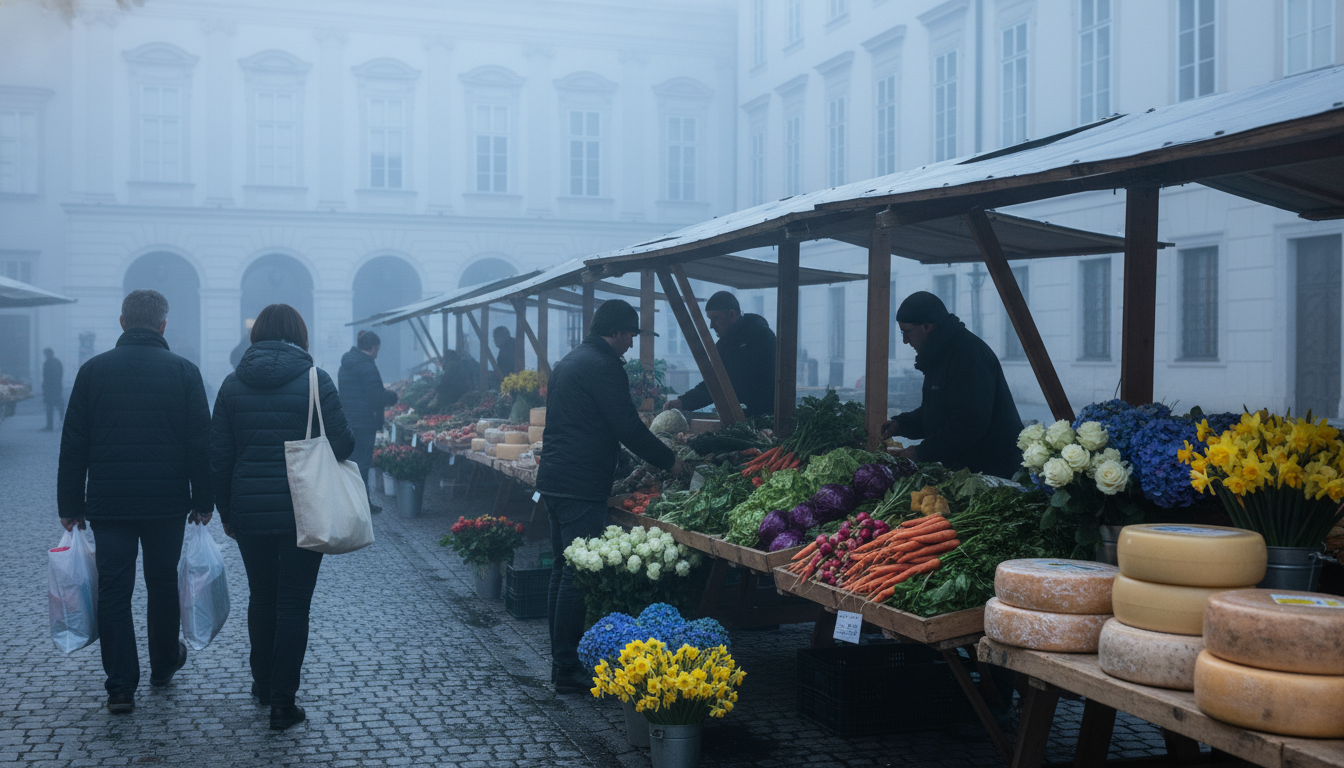 Early morning at Salzburgs Grnmarkt, vendors setting up stalls with fresh vegetables, flowers, and l
The Neighborhood Immersion Approach
Instead of trying to "see" all of Salzburg, pick one neighborhood per day and really explore it. Walk every street. Stop in every shop that looks interesting. Have coffee, then have another coffee somewhere else. Talk to people.
Day 1: Your own neighborhood. Get oriented. Find your grocery store, your bakery, your coffee spot.
Day 2: The Altstadt, but slowly. Skip the Mozart tourist traps. Find the quiet courtyards. Climb to the fortress at opening time (9 AM) when it's nearly empty.
Day 3: Across the river—Mülln and the Augustiner brewery area. End with beers in the beer garden.
Day 4: A day trip into the Alps. The Untersberg cable car is 25 minutes from the city center and puts you at 1,800 meters elevation with hiking trails in every direction.
Day 5: Maxglan or another outer neighborhood. Eat at a Gasthaus where the menu is only in German. Point at what someone else is having if you need to.
The Grocery Store as Cultural Experience
This sounds ridiculous, but hear me out: spending an hour in a Salzburg supermarket taught me more about Austrian daily life than any museum.
Billa and Spar are the main chains. Hofer is the discount option (it's Aldi, basically). But the real experience is the small specialty shops—the Fleischerei where they'll slice your Leberkäse to order, the Bäckerei with bread that's still warm, the cheese counter at the Grünmarkt where the vendor will let you taste five different Alpine cheeses before you decide.
Budget roughly €50-70 per person per week for groceries if you're cooking most meals. That's for good quality ingredients, local wine, and the occasional splurge on really excellent cheese.
The Practical Stuff: Costs, Transport, and Timing
What You'll Actually Spend
Home exchange eliminates accommodation costs, but here's a realistic budget for everything else.
Daily expenses run about €15-25 for groceries if you're self-catering, €8-12 for coffee and café snacks, €20-35 per person for a good Gasthaus dinner, €2.90 per public transit ride (or €6.70 for a 24-hour pass), and €12-20 per major museum or attraction.
One-time costs to consider: the Salzburg Card at €30-45 for 24-72 hours includes transit and most attractions. The Untersberg cable car is €27 round trip. The Sound of Music tour (if you must) runs €50-60.
A realistic daily budget is €60-100 per person if you're mixing self-catering with occasional restaurants. That's €840-1,400 for two weeks—compared to €3,500+ for hotel accommodation alone.
Getting Around
Salzburg's center is compact and walkable. I rarely used public transit except for day trips. But when you need it:
Salzburg's public buses are efficient, clean, and run frequently. Buy tickets at machines or the Tabak shops (tobacco/newspaper kiosks).
Many home exchange hosts have bikes you can borrow. If not, the S-Link bike share system costs €1 for 30 minutes. The city has excellent bike infrastructure.
Day trips by train are easy and affordable—Hallstatt takes 2.5 hours, Munich 1.5 hours, Vienna 2.5 hours, and Innsbruck 2 hours. Book on the ÖBB (Austrian railways) website for best prices.
As for a car? Honestly, you don't need one for Salzburg itself. If you want to explore the Alps or lake country, consider renting for just a few days rather than the whole trip. Parking in Salzburg is expensive and limited.
Best Time for Home Exchange in Salzburg
May-June is my favorite. Warm but not hot, long days, fewer tourists than summer, everything is green and blooming. Home exchange availability is good.
July-August is festival season. The city is at its most vibrant but also most crowded and expensive. Book home exchanges very early. Expect heat (up to 35°C/95°F some days) and no AC in most apartments.
September-October brings gorgeous autumn colors, hiking season at its peak, and tourist crowds thin out. Excellent for home exchange.
November is gray, cold, quiet. Not ideal unless you specifically want solitude.
December means Christmas markets transform the city. Magical but crowded on weekends. Book home exchanges months in advance.
January-April is cold, sometimes snowy. Great for skiing (day trips to nearby resorts) but the city itself is quiet. Easiest time to find home exchanges.
Home Exchange Safety and Trust in Salzburg
I get asked about this constantly: "But isn't it weird staying in a stranger's home? What if something goes wrong?"
Here's my honest perspective after 40+ exchanges, including multiple stays in Austria.
The Trust System Works
SwappaHome's review system creates accountability. Hosts and guests review each other after every stay, building a reputation that matters. A host with 15 positive reviews isn't going to risk that reputation by misrepresenting their home or being difficult to deal with.
In Salzburg specifically, I've found hosts to be exceptionally reliable. There's a cultural element here—Austrians tend to be precise, organized, and serious about commitments. When a Salzburg host says their apartment is 10 minutes from the Altstadt, it's 10 minutes. When they say the kitchen is fully equipped, it actually is.
What About Insurance?
This is important: SwappaHome connects members but doesn't provide insurance coverage for damages or issues. You're responsible for your own arrangements.
My approach: I carry travel insurance that includes personal liability coverage. It costs about $50-80 for a two-week trip and gives me peace of mind. I also treat every home exchange property like I'd want someone to treat my own home—which means being careful, respectful, and communicating immediately if anything goes wrong.
Most home exchangers never have issues. But having your own insurance means you're covered if something unexpected happens.
Communication Is Everything
The best protection is good communication. Before your Salzburg exchange, video chat with your host if possible. Ask specific questions about the home and neighborhood. Clarify expectations about cleaning, key handoff, and contact during your stay. Exchange phone numbers for emergencies.
During your stay, message your host if anything seems off or if you have questions. Most issues are simple misunderstandings that a quick message resolves.
The Moments That Make Home Exchange Worth It
I could tell you about the money saved or the extra space or the kitchen access. But honestly? It's the small moments that make home exchange in Salzburg special.
It's Margarethe's neighbor, an elderly woman named Gertrude, who knocked on my door the second day to bring me homemade Apfelstrudel because "Margarethe told me an American was staying and I wanted you to have real strudel, not the tourist kind."
It's finding a handwritten note tucked into a hiking guidebook: "The trail to the Gaisberg summit is best at sunrise. Bring coffee in a thermos."
It's the wine shop owner who, by my third visit, had started setting aside bottles he thought I'd like.
It's sitting on that balcony on my last evening, watching the fortress light up against the darkening sky, feeling not like a tourist who'd visited Salzburg but like someone who'd briefly lived there.
That's what home exchange offers that no hotel can match. Not just a place to sleep, but a glimpse into a life.
Getting Started With Your Salzburg Home Exchange
If you're ready to try this, here's the path forward.
Step 1: Create your SwappaHome profile. Be thorough—good photos of your home, detailed descriptions, and a genuine bio help you stand out when requesting exchanges.
Step 2: Start hosting guests at your place to build credits and reviews. You'll begin with 7 free credits, but having a few positive reviews makes Salzburg hosts much more likely to accept your request.
Step 3: Search for Salzburg listings 3-6 months before your intended dates. Filter by neighborhood if you have preferences.
Step 4: Send personalized requests to 3-5 hosts whose homes appeal to you. Mention specific details from their listings.
Step 5: Once confirmed, communicate with your host about logistics, local tips, and any questions. The more you engage before arrival, the better your experience will be.
Salzburg is waiting. Not the Salzburg of tour buses and Mozart chocolate balls, but the real one—the city of morning markets and quiet neighborhoods and fortress views from apartment balconies. The one you can only find by actually living there, even if just for a week or two.
I'll be back next autumn, probably. Margarethe already mentioned she'd love to visit San Francisco. The beauty of home exchange is that these connections don't end when you leave. They become the beginning of something else—a network of homes and friends scattered across the world, all of them open to you.
That converted barn in Tuscany I mentioned at the start? The owners have stayed at my place twice now. We're talking about a group trip to Japan next year, all of us using our SwappaHome credits.
That's not just travel. That's something better.
Frequently Asked Questions
Is home exchange in Salzburg safe for solo travelers?
Absolutely. Salzburg is one of Europe's safest cities, and home exchange adds extra security through verified members and review systems. I've done solo exchanges here twice. The residential neighborhoods where most exchanges are located feel safer than tourist-heavy hotel areas. Just use the same common sense you would anywhere—communicate with your host, share your itinerary with someone at home, and trust your instincts about listings and hosts.
How much money can I save with home exchange in Salzburg compared to hotels?
For a two-week stay, expect to save $3,000-4,500 compared to equivalent hotel accommodation. Central Salzburg hotels average €180-280 per night, while home exchange costs only your SwappaHome membership and credits earned by hosting. A typical apartment exchange gives you 2-3 times the space of a hotel room, plus a kitchen that saves another €30-50 daily on meals.
What's the best neighborhood for home exchange in Salzburg with families?
Nonntal and Mülln are ideal for families doing home exchange in Salzburg. Both neighborhoods are residential with playgrounds, safe streets, and easy walking distance to attractions. Nonntal is quieter; Mülln has more local restaurants and the family-friendly Augustiner beer garden. Avoid Altstadt for families—it's crowded, noisy, and lacks the space kids need.
Do I need to speak German for home exchange in Salzburg?
No, but learning basic phrases helps. Most Salzburg home exchange hosts speak English well, and tourist areas are fully English-friendly. However, neighborhood shops, local restaurants, and daily interactions are easier with simple German. Your host's notes will likely include German phrases for common situations. Apps like Google Translate work perfectly for grocery shopping and menus.
When should I book my Salzburg home exchange?
Book 3-6 months ahead for best selection. For Salzburg Festival (July-August) or Christmas markets (December), start searching 6+ months early—these periods have high demand and limited home exchange availability. Shoulder seasons (May-June, September-October) offer more flexibility; 2-3 months advance booking usually works. Last-minute exchanges are possible in winter months but selection is limited.

Published by
SwappaHome
SwappaHome Editorial Team
Home Exchange & Slow Travel Editorial
The SwappaHome Editorial Team brings together travel research, home-exchange community insights, and platform data to produce practical guides for first-time and experienced home swappers. Every article cites real platforms, current market rates, and verifiable city-level facts so readers can make informed decisions without guessing.
Ready to try home swapping?
Join SwappaHome and start traveling by exchanging homes. Get 7 free credits when you sign up!
Related articles

Bachelor and Bachelorette Parties in Singapore: The Complete Home Swap Group Guide for 2026
Planning a bachelor or bachelorette party in Singapore? Discover how home swapping lets groups of 6-12 stay together in luxury condos, saving thousands while partying in Marina Bay.

Cycling in Lisbon: 7 Home Swap Bike Tour Itineraries for Every Rider
Discover the best cycling routes in Lisbon with these home swap bike tour itineraries—from waterfront paths to hilltop adventures, all starting from your borrowed home.

Graduation Trip to Barcelona: How Home Swapping Gives New Graduates the Ultimate Celebration
Planning a graduation trip to Barcelona? Discover how home swapping lets new graduates explore Spain's most vibrant city without the hostel crowds or hotel costs.