
Home Exchange Savings: I Tracked Every Dollar for 3 Years (The Numbers Will Shock You)

SwappaHome Editorial Team
Home Exchange & Slow Travel Editorial
After 40+ home swaps, I finally calculated my actual savings. Spoiler: it's more than my car is worth. Here's the real breakdown with receipts.
Last Tuesday, I did something slightly unhinged. I pulled out three years of travel receipts, credit card statements, and spreadsheets—then calculated exactly how much money I've saved through home exchange.
The number made me sit down.
$47,340. That's what I would have spent on hotels and vacation rentals for the same trips. Instead, I spent $0 on accommodation. Zero. And honestly? The places I stayed were better than most hotels I've ever booked.
 laptop open on a sunny kitchen table showing a spreadsheet of travel expenses, coffee cup nearby, mo
These aren't theoretical savings. They're real dollars that stayed in my pocket—or got redirected to that Michelin-starred restaurant I'd been eyeing, or that extra week in Portugal I couldn't otherwise afford. I'm going to break down exactly how much you can save, with actual numbers from my own travels and data from thousands of other home swappers.
The Real Math Behind Home Exchange Savings
Here's the uncomfortable truth about travel costs: accommodation eats your budget alive.
The average hotel room in a major city runs $180-250 per night. In places like New York, London, or Tokyo? You're looking at $300-400 for anything decent. Vacation rentals on Airbnb aren't much better anymore—a two-bedroom apartment in Barcelona averages $175/night, and that's before cleaning fees, service fees, and whatever other fees they've invented this week.
My actual spending comparison from a two-week trip to Rome last fall tells the story:
Traditional Route (what I would have paid):
- Hotel in Trastevere: $220/night × 14 nights = $3,080
- OR Airbnb apartment: $165/night × 14 nights = $2,310 + $150 cleaning fee = $2,460
Home Exchange Route (what I actually paid):
- SwappaHome credits used: 14 credits
- Actual cost: $0
That's not a typo. The apartment I stayed in—a gorgeous third-floor walk-up with a terrace overlooking the Tiber—cost me nothing but the credits I'd earned by hosting guests in my San Francisco place.
 terrace view of Romes Tiber River at golden hour, small bistro table with wine glass, terracotta roo
But here's what really gets me. That Rome apartment was nicer than any hotel I could have afforded. Full kitchen, washing machine, a neighborhood café where the barista started recognizing me by day three. You can't put a price on that—except I just did. It's $2,460.
Savings by Destination
Not all savings are created equal. Where you travel dramatically affects how much home exchange puts back in your pocket.
High-Cost Cities: Where the Savings Get Ridiculous
These are the destinations where I literally gasp at hotel prices.
New York City runs $350/night for hotels, $275/night for Airbnb. A week of home exchange? That's $1,925-$2,450 back in your pocket. I did a 10-night swap in a Brooklyn brownstone last spring. The equivalent Airbnb would have been $3,200. Instead, I used 10 credits I'd earned hosting a lovely couple from Amsterdam.
London averages $280/night for hotels, $220/night for Airbnb—savings of $1,540-$1,960 per week. Tokyo comes in around $200/night for hotels (more in Shibuya), saving you $1,050-$1,400 weekly. Sydney at $240/night means $1,365-$1,680 in weekly savings.
Mid-Range Destinations
Barcelona hotels average $180/night, Airbnbs around $145—that's $1,015-$1,260 saved per week. Lisbon runs $150/night for hotels, $120 for rentals, saving you $840-$1,050 weekly.
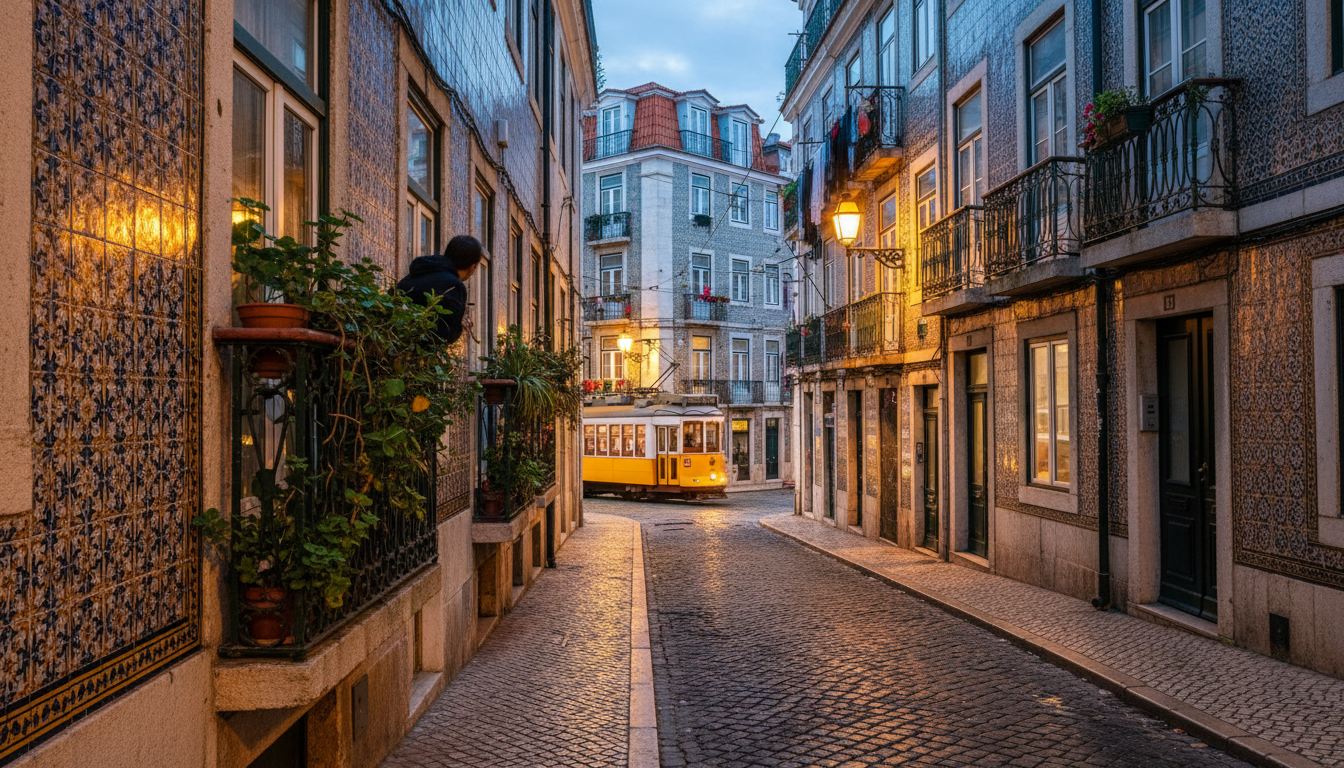
Lisbon is where I first discovered home swapping, actually. Seven years ago, I booked a month in a tiny Alfama apartment through a friend's recommendation. That month would have cost me $4,200 in hotels. I remember standing on the balcony, watching the sunset paint the city pink, thinking: "Why would anyone pay for a hotel when this exists?"
 narrow Lisbon street at dusk with traditional azulejo tiles on buildings, warm light from apartment
Budget Destinations Still Add Up
Even in "cheap" places, the savings compound. Mexico City hotels run $100/night, Airbnbs $75—that's $525-$700 saved weekly. Prague at $110/$85 saves you $595-$770. Bali at $80/$65 means $455-$560 in weekly savings.
Some people ask me: "Is home exchange worth it for budget destinations?" Absolutely. That $500 you save in Bali? That's two weeks of amazing meals, a cooking class, temple visits, and maybe a spa day.
The Hidden Savings Nobody Talks About
Accommodation is the obvious win. But after 40+ swaps, I've realized the real savings go way deeper.
Kitchen Access Changes Everything
This one transformed how I travel.
When you stay in a hotel, you eat out. Every. Single. Meal. In Paris, that's €15-25 for breakfast, €20-35 for lunch, €40-80 for dinner. Even being conservative, you're spending €75-100/day on food. For two people? Double it.
During my two weeks in Rome, I ate breakfast at "home" every morning—fresh cornetti from the bakery downstairs, good coffee from my host's Moka pot, some fruit from the Campo de' Fiori market. Cost: maybe €5/day. Lunch was often picnic-style: bread, cheese, prosciutto, wine. €10-15. I still ate out for dinner most nights—that's half the point of being in Rome—but I saved roughly €40-50/day on food compared to the hotel breakfast + restaurant lunch routine.
My Rome food savings: €600-700 over two weeks ($650-750 USD)
Laundry: The Expense You Forgot About
Stupid small, but it adds up. Hotel laundry services charge $3-8 per item. A week's worth of clothes? $50-100 easily. Every home exchange I've done has included a washing machine. Over three years of travel, I estimate I've saved $400-500 just on laundry.
Local Neighborhood Pricing
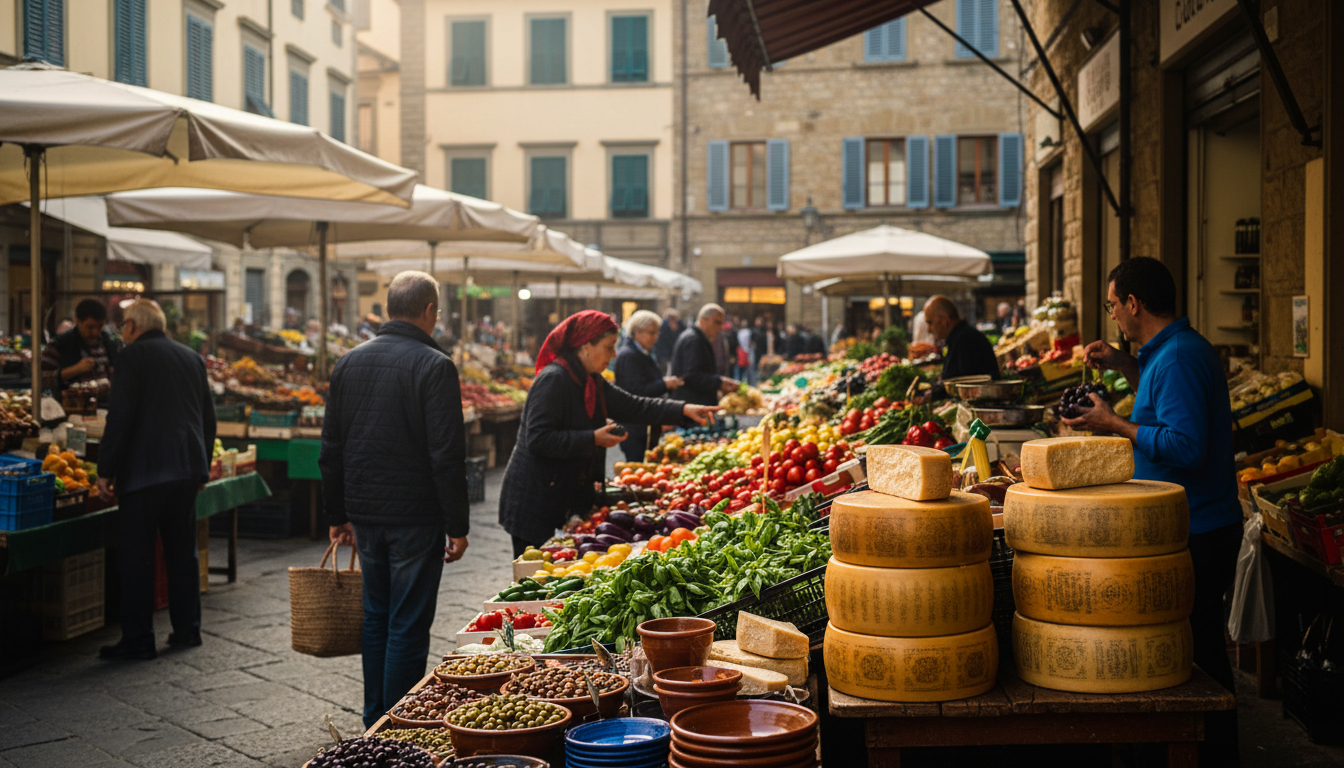
Here's something subtle but significant. Hotels cluster in tourist zones. Tourist zones have tourist prices. That coffee near your hotel in Florence? €5. The same coffee in a residential neighborhood where your home exchange is? €1.50.
When you stay in someone's actual home, you're usually in a real neighborhood. You shop where locals shop. You eat where locals eat. I'd estimate 20-30% lower daily expenses overall.
 bustling local market in Florence with fresh produce, cheese wheels, and locals shopping, morning li
Annual Savings: Three Scenarios
The Weekend Warrior (4-5 trips/year, 3-4 nights each)
This was me when I started. Total nights: 15-20/year. At $180/night average hotel cost, that's $2,700-$3,600 in accommodation savings. Add kitchen savings (~$30/day) of $450-600, and you're looking at $3,150-$4,200/year total.
The Serious Traveler (2-3 big trips/year, 2-3 weeks each)
This is where I am now. Total nights: 40-60/year. At $200/night average, that's $8,000-$12,000 in accommodation savings. Kitchen savings (~$35/day) add $1,400-$2,100. Total: $9,400-$14,100/year.
The Digital Nomad/Slow Traveler (3+ months abroad)
If you're location-independent or retired: 90-180 nights/year at $175/night average means $15,750-$31,500 in accommodation savings. Kitchen savings (~$40/day) add $3,600-$7,200. Total: $19,350-$38,700/year.
These numbers aren't fantasy. If anything, I'm being conservative—I've seen New York hotels hit $500/night during peak season.
My Three-Year Breakdown: Actual Numbers
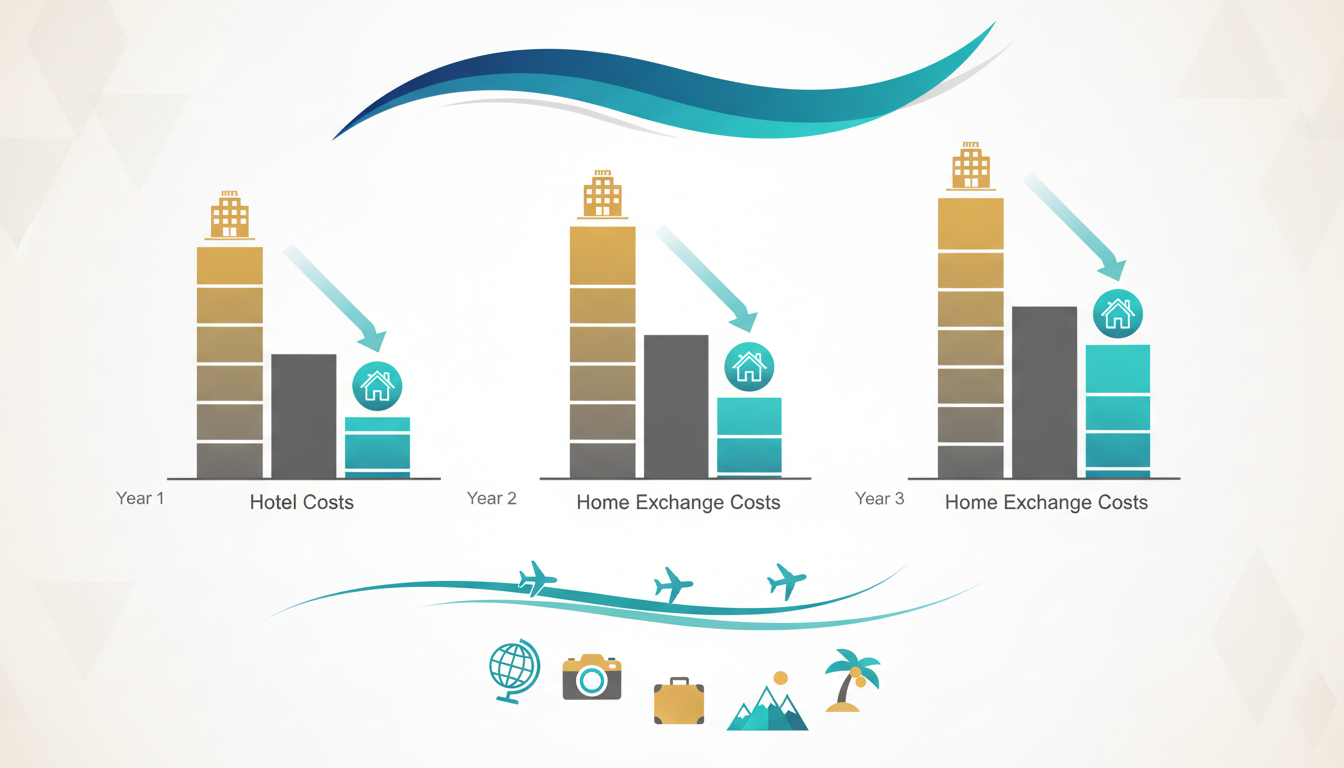
Year 1 (2022): 8 swaps, 47 nights. Equivalent hotel cost: $9,870. Food savings: ~$1,400. Total saved: $8,920-$11,270
Year 2 (2023): 12 swaps, 71 nights. Equivalent hotel cost: $15,620. Food savings: ~$2,100. Total saved: $13,460-$17,720
Year 3 (2024): 11 swaps, 58 nights. Equivalent hotel cost: $13,340. Food savings: ~$1,750. Total saved: $11,900-$15,090
Three-Year Total: $34,280-$44,080
My earlier estimate of $47,340? That included some incidentals I didn't break out here—laundry, neighborhood pricing differences, a few instances where I extended trips because I wasn't bleeding money on hotels.
 infographic showing home exchange savings breakdown over 3 years with bar charts comparing hotel cos
How the Credit System Works
Here's what makes platforms like SwappaHome particularly powerful: the credit system.
Traditional home swapping requires a direct exchange—you stay in my place, I stay in yours, same dates. Sounds fair, but it's logistically nightmarish. What if I want to visit Paris in June but the Parisian family wants to visit San Francisco in September? Dead end.
The credit system fixes this entirely. When someone stays at my San Francisco apartment, I earn 1 credit per night. Whether it's a studio or a mansion, 1 night = 1 credit. Then I can spend those credits anywhere—a week in Tokyo, a long weekend in Portland, a month in Lisbon. No scheduling gymnastics, no geographic limitations, no "value matching" stress.
I hosted a family from Berlin for 5 nights last month. Earned 5 credits. Next month, I'm using them for a week in Copenhagen. The Berlin family and I will never meet, and that's perfectly fine.
New members on SwappaHome start with 7 free credits. That's 7 nights of accommodation—potentially $1,800-$3,500 in savings—before you've hosted anyone.
Real Talk: The Costs
Home exchange isn't completely free. Here's what you might spend:
Platform Membership: Most platforms charge $100-$200 annually. Even at the high end, if you do just ONE week-long swap per year, you're still saving $1,000+ after fees.
Preparing Your Home: Deep cleaning ($100-200 or DIY), fresh linens/towels ($50-100 one-time), welcome supplies ($20-30 per guest). Maybe $200-300/year total.
Travel Insurance: I always recommend getting your own policy that covers personal belongings—$50-150 per trip depending on length and coverage.
Time Investment: Creating a good listing takes 2-3 hours. Communicating with potential guests runs 30 min-1 hour per booking. Preparing for guests takes 2-3 hours per swap. But compare it to the hours you'd spend researching hotels, reading reviews, and stressing about whether that Airbnb is actually as nice as the photos suggest.
Who Saves the Most?
You'll save the most if you live in a desirable location (my SF apartment gets 5-10 booking requests per month), travel to expensive cities, take longer trips, or travel with family (a whole apartment for 1 credit/night vs. multiple hotel rooms).
You'll save less—but still save—if you live somewhere remote, only travel to budget destinations, or prefer short trips.
My Biggest Win: Tuscany
I have to tell you about this one.
Two summers ago, I arranged a three-week swap at a converted barn outside Montepulciano. Stone walls, original beams, an olive grove in the backyard, a pool. The kind of place that shows up in those "dream Italian villa" articles.
I looked up comparable rentals afterward. The cheapest similar property? $450/night. For three weeks, that's $9,450. I spent $0.
But here's the part that surprised me: I actually spent less overall than I would have on a one-week hotel trip. Because I wasn't hemorrhaging money on accommodation, I could afford to stay three weeks instead of one. I rented a car for the whole period (€800), bought groceries at local markets, ate out maybe four times per week. My total spending for three weeks—flights, car, food, wine, activities—was around $3,200.
A one-week hotel trip to Tuscany with daily restaurant meals? Easily $4,000-5,000.
Home exchange didn't just save me money. It gave me a completely different trip. Three weeks of slow mornings, afternoon swims, sunset wine on the terrace. That's not a vacation. That's actually living somewhere.
Getting Started
If you're convinced—and honestly, the math is pretty compelling—here's how to begin:
Start with great photos. Natural light, clean spaces, highlight unique features. Your listing is your first impression.
Be responsive and flexible. The more guests you host, the more credits you earn. I try to respond to requests within 24 hours.
Try a shorter swap first. Your first home exchange doesn't need to be a month in Paris. A long weekend somewhere drivable lets you get comfortable with the process.
Build your reputation. Reviews matter. Be a great host, leave thoughtful reviews for your guests, and your profile becomes more attractive.
Think strategically about timing. Host during your city's peak season (when demand is highest) and travel during shoulder seasons (when you'll have more options and fewer crowds).
SwappaHome gives new members 7 free credits to start. That's potentially $1,800-$3,500 in free accommodation before you've hosted a single guest.
The Bottom Line
I've thrown a lot of numbers at you. Here's the distilled version:
- Conservative estimate: $3,000-5,000/year for occasional travelers
- Moderate travelers: $8,000-15,000/year
- Frequent travelers: $20,000-40,000/year
Over a decade of home swapping, even a casual traveler could save $30,000-50,000. Serious travelers? Six figures, easily.
When I stood on that Lisbon balcony seven years ago, I had no idea I was looking at a future of nearly $50,000 in savings. I just knew the sunset was beautiful, the apartment was perfect, and I never wanted to book a soulless hotel room again.
Turns out, I didn't have to.
Frequently Asked Questions
How much money can you really save with home exchange?
Home exchange savings typically range from $3,000-$15,000 annually for regular travelers. The exact amount depends on how often you travel, your destinations, and local hotel prices. A two-week trip to a major city like New York or London can save $3,500-$5,000 in accommodation costs alone, plus $500-$1,000 in food savings from having kitchen access.
Is home exchange worth it for short trips?
Yes, home exchange saves money even on short trips. A 3-night weekend in an expensive city saves $500-$900 compared to hotels. While longer trips maximize savings, the credit system means you're never "wasting" stays—every night you host earns credits for future travel, regardless of trip length.
How does the home exchange credit system work?
You earn 1 credit for each night someone stays at your home, regardless of your property's size or location. You spend 1 credit per night when staying elsewhere—also regardless of that property's value. New SwappaHome members receive 7 free credits to start. No money changes hands between members for stays.
Do I need to do a simultaneous swap to save money?
No, modern home exchange platforms like SwappaHome use credit systems that eliminate the need for simultaneous swaps. You can host guests from Paris in March and use your earned credits to stay in Tokyo in October. This flexibility dramatically increases your options and savings potential.
What hidden costs should I expect with home exchange?
Expect annual platform membership fees ($100-$200), home preparation costs ($200-$300/year for cleaning and guest supplies), and your own travel insurance ($50-$150 per trip). Even accounting for these costs, most travelers save thousands annually compared to traditional accommodation.

Published by
SwappaHome
SwappaHome Editorial Team
Home Exchange & Slow Travel Editorial
The SwappaHome Editorial Team brings together travel research, home-exchange community insights, and platform data to produce practical guides for first-time and experienced home swappers. Every article cites real platforms, current market rates, and verifiable city-level facts so readers can make informed decisions without guessing.
Ready to try home swapping?
Join SwappaHome and start traveling by exchanging homes. Get 7 free credits when you sign up!
Related articles

Bachelor and Bachelorette Parties in Singapore: The Complete Home Swap Group Guide for 2026
Planning a bachelor or bachelorette party in Singapore? Discover how home swapping lets groups of 6-12 stay together in luxury condos, saving thousands while partying in Marina Bay.

Cycling in Lisbon: 7 Home Swap Bike Tour Itineraries for Every Rider
Discover the best cycling routes in Lisbon with these home swap bike tour itineraries—from waterfront paths to hilltop adventures, all starting from your borrowed home.

Graduation Trip to Barcelona: How Home Swapping Gives New Graduates the Ultimate Celebration
Planning a graduation trip to Barcelona? Discover how home swapping lets new graduates explore Spain's most vibrant city without the hostel crowds or hotel costs.