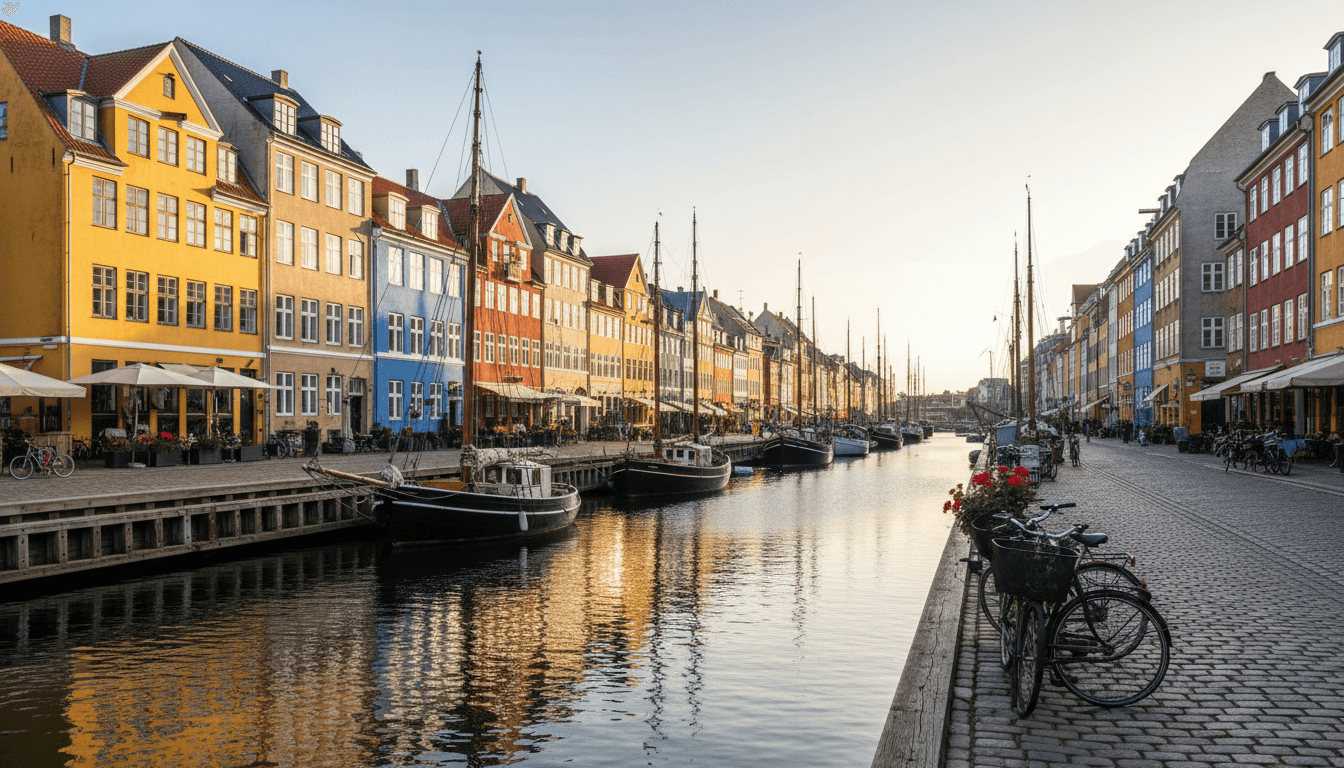
Home Swap in Copenhagen: Why Denmark's Capital Is the Hottest Exchange Destination of 2025

SwappaHome Editorial Team
Home Exchange & Slow Travel Editorial
Copenhagen home swaps are surging. Here's why savvy travelers are choosing Danish apartments over hotels—and how to score your own hygge-filled stay.
I wasn't supposed to fall in love with Copenhagen.
My original plan last October was a quick three-night stopover between Stockholm and Amsterdam. Just enough time to see the Little Mermaid, eat a pastry, and move on. But then I walked into the Vesterbro apartment I'd arranged through home exchange—a third-floor walk-up with creaky wooden floors, a kitchen full of someone else's life, and a handwritten note on the counter that said "The bakery on the corner does the best kanelsnegle in the city. Trust me."
Three nights turned into ten. And honestly? I've been scheming my way back ever since.
Home swap in Copenhagen has exploded over the past two years, and I'm far from the only one who's noticed. The Danish capital has quietly become one of the most sought-after destinations on every major home exchange platform, including SwappaHome. The numbers tell the story: listings in Copenhagen have jumped 47% since 2023, and booking requests for Danish homes are outpacing supply by nearly 3 to 1 during peak season.
So what's driving this surge? And more importantly—how do you actually land one of these coveted Copenhagen home swaps for yourself?
Let me break it all down.
 Morning light streaming through tall windows of a minimalist Scandinavian apartment in Copenhagen, w
Why Copenhagen Home Exchange Is Surging Right Now
Here's the thing about Copenhagen that doesn't hit you until you're actually there: it's absurdly expensive. Like, genuinely shocking if you're not prepared.
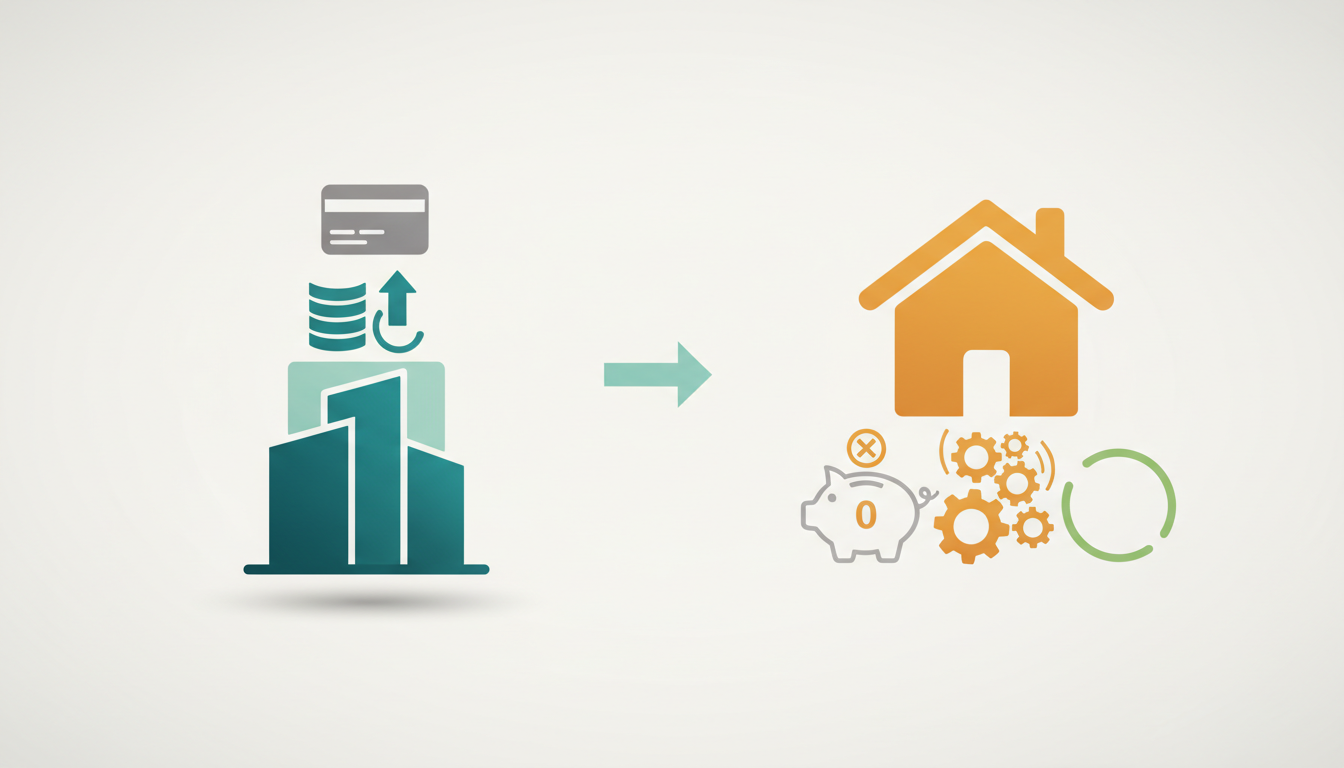
A mid-range hotel in the city center runs $280-350 USD per night. A basic Airbnb in a decent neighborhood? Easily $180-250. Even hostels have gotten pricey—I saw dorm beds going for $65 during my last visit.
But Copenhagen home swap? That's where the math gets interesting.
On SwappaHome, every night costs exactly one credit—whether you're staying in a cozy studio in Nørrebro or a spacious family apartment in Frederiksberg. You earn credits by hosting travelers in your own home, so the actual cost of accommodation becomes essentially zero. For a week-long Copenhagen stay, you're looking at saving roughly $1,500-2,000 compared to hotels.
That's not a rounding error. That's the difference between a budget trip and actually being able to afford the $24 smørrebrød at Aamanns.
But price isn't the only factor driving the Copenhagen home exchange boom. There's something deeper happening here.
The Hygge Factor Is Real
I used to roll my eyes at the whole hygge thing. It felt like a marketing gimmick—another lifestyle trend packaged for Instagram.
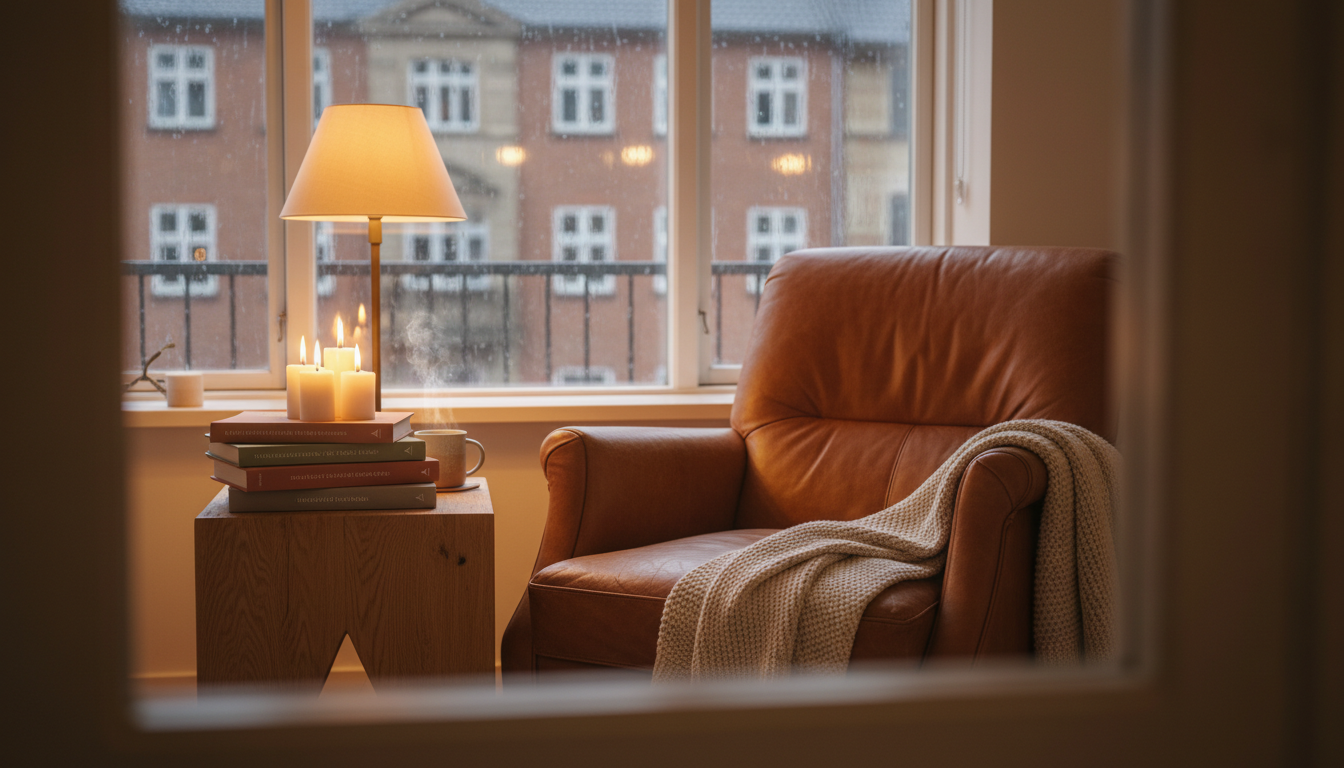
Then I spent a rainy Tuesday afternoon in my swap apartment in Vesterbro, wrapped in a borrowed wool blanket, drinking tea from ceramic mugs that clearly came from someone's favorite pottery studio, watching the wet cobblestones through windows that needed a good cleaning. No agenda. No rush. Just... existing.
That's hygge. And you can't get it in a hotel.
Home swapping in Copenhagen gives you access to the actual Danish way of living—the design-forward apartments, the thoughtfully curated kitchens, the neighborhoods where real Copenhageners go about their days. You're not a tourist staying in a tourist space. You're borrowing someone's life for a week.
 Cozy living room corner with lit candles, a worn leather chair, stack of Danish design books, rain v
Best Neighborhoods for Home Swap in Copenhagen
Not all Copenhagen neighborhoods are created equal—especially when you're looking for a home exchange. Here's where to focus your search, based on what actually matters to travelers.
Vesterbro: The Sweet Spot
This is where I stayed, and I'm biased, but hear me out.
Vesterbro is Copenhagen's former meatpacking district turned hipster paradise. It's got the best coffee (try Prolog on Halmtorvet), the most interesting restaurants, and a gritty-but-gentrifying energy that feels alive without being overwhelming. It's a 15-minute walk to Tivoli and the central station, but it doesn't feel touristy.
Home swap listings here tend to be smaller—lots of one-bedroom apartments and studios—but they're dripping with character. Expect exposed brick, vintage furniture, and neighbors who nod at you in the stairwell.
Average Copenhagen home swap availability in Vesterbro: Moderate. Competition is fierce, so book 2-3 months ahead for summer.
Nørrebro: For the Culturally Curious
Nørrebro is Copenhagen's most diverse neighborhood, and it shows in the food scene. You'll find Middle Eastern bakeries next to natural wine bars next to Ethiopian restaurants. The vibe is younger, louder, and more chaotic than Vesterbro.
The apartments here often have more space for your credits—you'll find two-bedrooms and even small houses with gardens. It's slightly farther from the center (20-25 minutes by bike), but Copenhagen is a biking city anyway.
Highlight: The Assistens Cemetery, where Hans Christian Andersen is buried. It sounds morbid, but locals use it as a park. People picnic there. It's lovely.
Frederiksberg: Family-Friendly Elegance
If you're traveling with kids or just want more space, Frederiksberg is your answer. It's technically its own municipality, but it's surrounded by Copenhagen and feels like an upscale extension of the city.
The apartments here are larger—think three-bedrooms with actual dining rooms—and the neighborhood has excellent parks, including Frederiksberg Have with its resident herons and canal boats. It's quieter, greener, and feels more residential.
Pro tip: Frederiksberg listings on SwappaHome often include access to shared courtyard gardens. Ask about this when you message potential hosts.
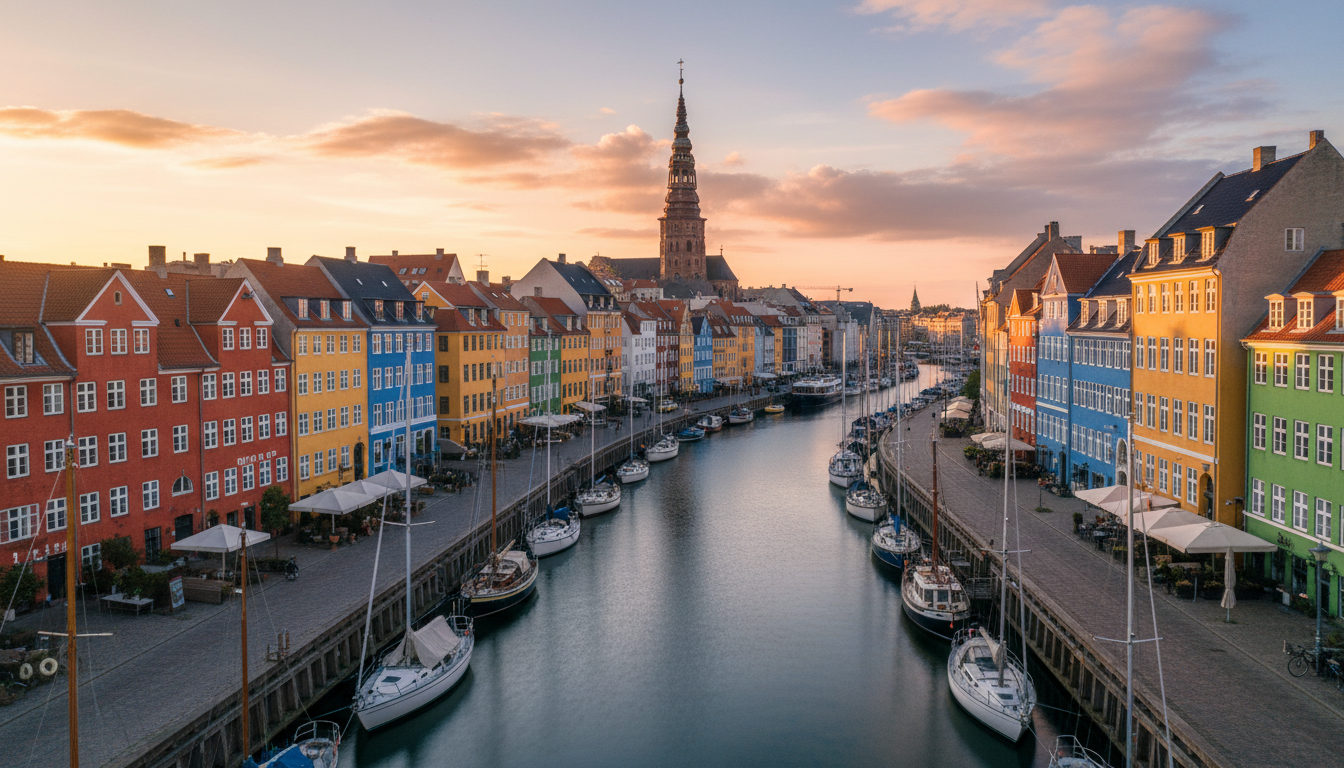
Christianshavn: The Canal District
This is Copenhagen's answer to Amsterdam—a neighborhood built on canals, with colorful buildings and houseboats. It's home to Christiania, the famous freetown, which is worth a visit regardless of your feelings about its... alternative approach to certain substances.
Home swaps in Christianshavn are rarer but worth the hunt. Many listings here are in historic buildings with quirky layouts and waterfront views. The neighborhood is walkable to the city center and has a village-within-a-city feel.
 Aerial view of Christianshavns colorful canal houses at golden hour, boats moored along the waterway
How to Actually Score a Copenhagen Home Swap
Alright, real talk. Copenhagen is competitive. The city is small (population 800,000), the apartments are desirable, and everyone wants to visit during the same months.
Here's what's worked for me and other experienced home exchangers.
Timing Is Everything
Peak season runs May through September, with July being absolute chaos. If you have flexibility, aim for late April or early May—tulips are blooming, weather hovers around 50-60°F, and competition drops noticeably. September is my personal favorite: summer crowds have scattered, but the weather still cooperates. And December? Copenhagen's Christmas markets are genuinely magical, and many Danes travel during the holidays, which opens up swap opportunities you won't find other times of year.
Avoid late June through mid-August unless you're willing to book 4-6 months in advance.
Make Your Listing Irresistible
Here's something people forget: Copenhagen home swap is a two-way street. Danish hosts are browsing YOUR listing to decide if they want to exchange with you.
Copenhageners tend to be design-conscious (understatement of the century). They're looking at your photos, your description, your vibe. Professional-quality photos of your space matter. So does mentioning local attractions near your home, maintaining a clear and friendly communication style in your profile, and completing your profile with verification.
I've had Danish hosts tell me they chose my listing partly because I mentioned the coffee roaster down the street from my San Francisco apartment. Details matter.
Send Personalized Requests
Generic messages get ignored. When you request a Copenhagen home swap on SwappaHome, reference something specific about their listing. Did they mention a favorite restaurant? Ask about it. Do they have a cat? Tell them about your experience with pet-sitting.
The credit system means they're not losing money by hosting you—they're gaining credits they can use anywhere. But they still want to feel good about who's staying in their home.
Consider Off-Center Locations
If central Copenhagen is booked solid, expand your search. The S-train system is excellent, and neighborhoods like Valby, Vanløse, and even Hellerup offer great home swap options with 15-20 minute train rides to the center.
I met a couple on SwappaHome who stayed in Dragør, a historic fishing village 20 minutes south of the city. They said it was the highlight of their trip—quieter, more authentic, and they had a garden.
 Comparison infographic showing cost breakdown 7 nights in Copenhagen hotel 2,100 vs home swap 0 acco
What Copenhagen Home Swap Hosts Actually Expect
I've talked to dozens of Copenhagen-based home exchangers over the years. Here's what they consistently mention.
Respect the Bikes
Almost every Copenhagen apartment comes with access to bikes—either personal bikes or building-shared ones. Hosts expect you to use them (this is a biking city, after all) but also to lock them properly and not leave them in random places.
Bike theft is real in Copenhagen. Use both locks if provided. Don't be the guest who loses someone's beloved Christiania cargo bike.
Follow the Quiet Hours
Danish apartments often have strict quiet hours, typically 10 PM to 7 AM. This isn't a suggestion—neighbors will complain, and your host will hear about it. Keep noise reasonable, especially in older buildings with thin walls.
The Kitchen Is Sacred
Danes take their kitchens seriously. You'll likely find quality cookware, good knives, and a well-organized setup. The expectation is that you leave it as you found it—clean, organized, and without mysterious stains on the counters.
Many hosts specifically mention this in their listing descriptions. Take it seriously.
Recycling Is Mandatory
Copenhagen has an aggressive recycling system. Your host will probably leave instructions—follow them. There are separate bins for paper, plastic, glass, metal, food waste, and general trash. Getting it wrong is a minor social crime.
Beyond the Apartment: Making the Most of Your Copenhagen Stay
Once you've secured your home swap in Copenhagen, here's how to actually experience the city like a local.
Eat Like a Dane
Skip the tourist restaurants on Nyhavn (overpriced, underwhelming). For breakfast, head to Andersen & Maillard in Nørrebro for pastries that'll ruin you for all other bakeries—expect to spend $8-12 USD. Lunch calls for Torvehallerne market, where Hallernes Smørrebrød serves the open-faced sandwiches Denmark is famous for ($15-20). Dinner? Neighbourhood in Vesterbro does natural wine and small plates that hit the spot for $40-60 per person. And if you're feeling fancy and can snag a reservation, Kadeau's tasting menu is worth every penny of its $250 price tag.
The Free Stuff
Copenhagen is expensive, but plenty of experiences cost nothing. Cycle along the harbor on your host's bike. Wander through the King's Garden (Kongens Have). Explore Christiania—controversial but fascinating. Take a dip at the harbor baths at Islands Brygge. Watch the sunset from the Cirkelbroen bridge.
The Paid Stuff Worth Paying For
Louisiana Museum of Modern Art sits 40 minutes north of the city, right on the coast. It's one of the best modern art museums in Europe, and the $22 USD entry is money well spent. Tivoli Gardens? Yes, it's touristy. Also yes, it's genuinely magical, especially at night—$25 USD gets you in. For a canal tour, take the cheap one from Nyhavn ($12 USD), not the expensive "gourmet" versions.
 Person cycling across Cirkelbroen bridge at sunset, Copenhagen harbor in background, golden light re
The Community Aspect: Why Home Swap Works So Well in Denmark
There's a reason Copenhagen home exchange has taken off faster than in many other cities. It aligns with Danish values in ways that feel almost inevitable.
Denmark consistently ranks as one of the highest-trust societies in the world. People leave babies in strollers outside cafés. They pay taxes willingly because they trust the system. They assume, by default, that strangers will behave well.
This cultural foundation makes home swapping feel natural here. Danish hosts on SwappaHome tend to be relaxed, communicative, and genuinely interested in making your stay good. They're not suspicious of strangers in their homes—they're curious about them.
The review system helps, of course. Members rate each other after every exchange, building accountability over time. But in Copenhagen specifically, the baseline trust level is just... higher.
A Note on Safety and Insurance
I want to be straight with you here because I see this question constantly: SwappaHome connects you with hosts, but it doesn't provide insurance or damage coverage. That's true for any home exchange platform.
If you're worried about liability—either as a guest or a host—get your own travel insurance or home insurance that covers guests. Many policies already do. Check before you go.
In seven years of swapping, I've never had a serious issue. But I also have travel insurance that covers me, and I'm careful about communication and expectations upfront.
When Copenhagen Home Swap Isn't the Right Choice
I'm a home exchange evangelist, but I'll be honest: it's not for everyone or every trip.
Skip the home swap if you're staying less than 3 nights (the logistics aren't worth it), if you want daily housekeeping and room service, if you're traveling with a large group that needs hotel-style flexibility, or if you're not comfortable in someone else's personal space.
For everyone else? Copenhagen home exchange is genuinely one of the best ways to experience this city. You save money, yes. But more than that—you get to live somewhere, not just visit it.
Getting Started: Your Copenhagen Home Swap Action Plan
If you've made it this far, you're probably serious about making this happen. Here's your roadmap.
Three months before your trip: Create or update your SwappaHome profile with great photos. Start browsing Copenhagen listings to understand what's available. Reach out to 5-10 potential hosts with personalized messages. Be flexible on dates if possible.
One month before: Finalize your exchange and confirm all details via SwappaHome messaging. Exchange practical information—keys, wifi, appliance quirks. Ask about bikes, local recommendations, and any house rules. Confirm your travel insurance covers the trip.
One week before: Send a friendly check-in message. Prepare a small gift from your hometown (not required, but appreciated). Download offline maps of Copenhagen. Make any restaurant reservations—the good places book up.
During your stay: Treat the home like you'd want yours treated. Message your host if any issues arise—they want to help. Take photos of the apartment when you arrive (just in case). Leave a thoughtful review when you're done.
The first Copenhagen home swap is the hardest. After that, you'll have reviews, experience, and the confidence to do it anywhere.
I'm already planning my next Copenhagen trip—probably September, probably Nørrebro this time. There's a listing I've been eyeing with a rooftop terrace and a neighbor who apparently makes homemade akvavit.
That's the thing about home swapping in Copenhagen. Once you've done it, hotels just feel empty. You miss the handwritten notes, the borrowed bikes, the kitchen that smells like someone else's morning coffee.
You miss the feeling of actually living somewhere, even if it's just for a week.
Frequently Asked Questions
Is home swap in Copenhagen safe for first-time exchangers?
Copenhagen is one of the safest cities in the world, and Danish hosts tend to be highly communicative and trustworthy. SwappaHome's review system lets you check a host's history before committing. Start with a well-reviewed host, communicate clearly about expectations, and you'll likely have a smooth experience. Consider travel insurance for extra peace of mind.
How much money can I save with Copenhagen home exchange versus hotels?
A mid-range Copenhagen hotel averages $280-350 USD per night. Over a week, that's $1,960-2,450. With home swap, accommodation costs zero dollars—you use credits earned by hosting others. Even accounting for hosting costs at your own home, most exchangers save $1,500-2,000 per week compared to traditional accommodation.
What's the best time of year for home swap in Copenhagen?
September offers the ideal balance: summer weather lingers, tourist crowds thin out, and home swap availability increases as Danes return from vacation. Late April through early May is another sweet spot. Avoid July and early August unless you book 4-6 months ahead—competition for Copenhagen listings peaks during Scandinavian summer.
Do Copenhagen home swap apartments include bikes?
Most Copenhagen home exchanges include access to bikes—it's the city's primary transportation. Hosts typically provide their personal bikes or access to building-shared cycles. Always confirm bike availability when arranging your swap, and ask about lock protocols. Bike theft exists in Copenhagen, so proper locking is essential.
How far in advance should I book a Copenhagen home swap?
For peak season (June-August), book 4-6 months ahead. For shoulder seasons (April-May, September-October), 2-3 months is usually sufficient. December holiday swaps should be arranged 3-4 months in advance. Being flexible with exact dates significantly improves your chances of securing desirable listings.

Published by
SwappaHome
SwappaHome Editorial Team
Home Exchange & Slow Travel Editorial
The SwappaHome Editorial Team brings together travel research, home-exchange community insights, and platform data to produce practical guides for first-time and experienced home swappers. Every article cites real platforms, current market rates, and verifiable city-level facts so readers can make informed decisions without guessing.
Ready to try home swapping?
Join SwappaHome and start traveling by exchanging homes. Get 7 free credits when you sign up!
Related articles

Home Swap in Rome: Where to Find the Best Properties for Your Italian Exchange
Discover where to find the best home swap properties in Rome—from Trastevere's cobblestone charm to Testaccio's local authenticity. Real neighborhoods, real advice.

Home Swap in Bangkok: Where to Find the Best Properties for Free Stays
Discover where to find the best home swap properties in Bangkok—from riverside condos in Charoen Krung to family homes in Ari. Real neighborhoods, real savings.

Home Swap for Beach Lovers: 12 Coastal Destinations Ranked for 2026
Discover the best coastal destinations for home swapping in 2026. From Portugal's Algarve to Australia's Gold Coast, find your perfect beach exchange.