Home Swap in Honolulu: Why Hawaii's Capital is the Hottest Exchange Destination of 2025

SwappaHome Editorial Team
Home Exchange & Slow Travel Editorial
Discover why home swap in Honolulu is exploding in popularity. From Waikiki condos to North Shore bungalows, here's how to experience Hawaii like a local.
That email hit my inbox at 6 AM Pacific. A retired couple from Lyon wanted to know if I'd swap my San Francisco apartment for their Honolulu condo. Two weeks in March. Ocean views. A lanai with plumeria trees.
I said yes before my coffee finished brewing.
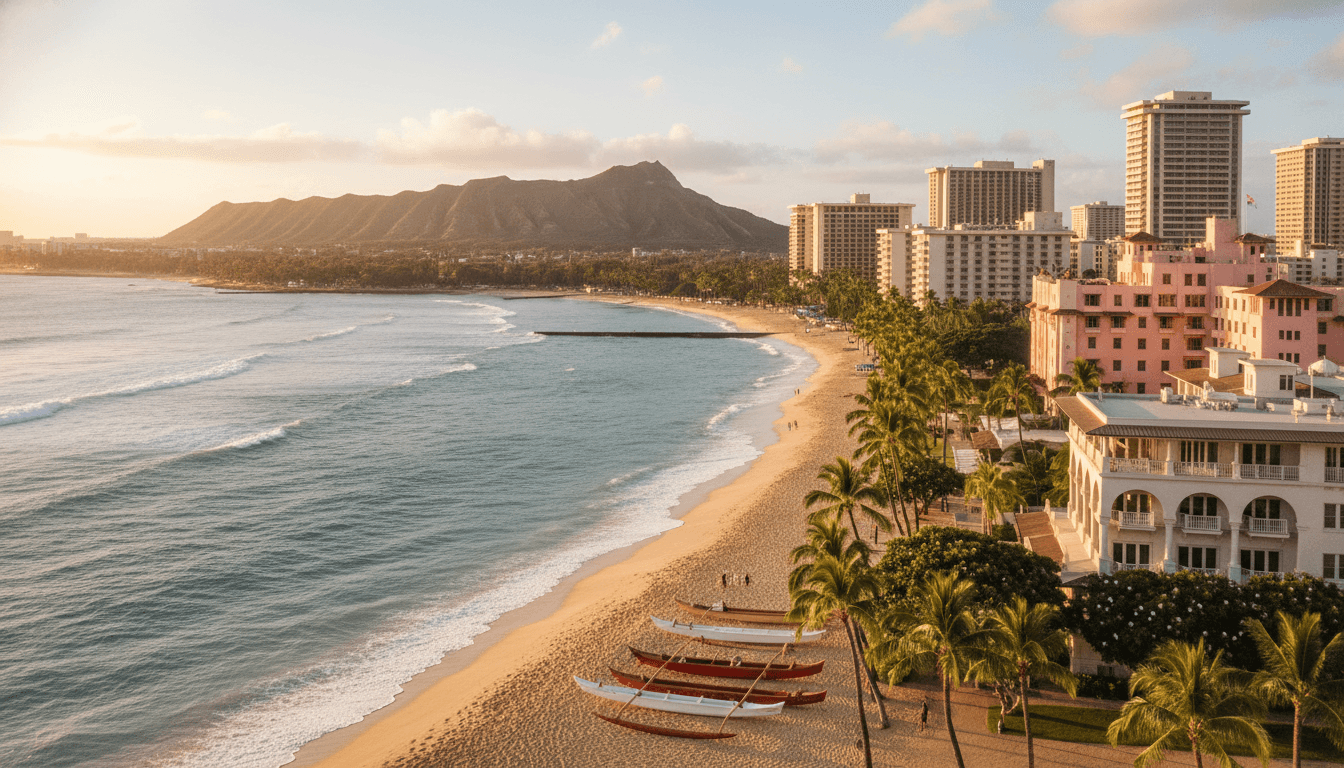
That home swap changed everything I thought I knew about visiting Hawaii. And I'm clearly not alone—over the past eighteen months, Honolulu has quietly become one of the most requested home exchange destinations on platforms like SwappaHome. Requests for Hawaiian home swaps have jumped significantly, with Honolulu leading the pack.
 aerial view of Waikiki Beach at golden hour with Diamond Head crater in the background, high-rise co
So what's behind this surge? And how do you actually score a home swap in Honolulu when thousands of other travelers have had the same idea?
I've done it three times now. Here's everything I've learned.
Why Home Swap in Honolulu Makes Financial Sense
Let's get the obvious out of the way: Hawaii is expensive. Genuinely, painfully expensive.
The average hotel room in Waikiki runs $350-$450 per night for something decent. Not luxury—just decent. A two-bedroom vacation rental? You're looking at $400-$600 nightly, plus cleaning fees that can hit $250-$400. For a two-week trip, accommodation alone can cost $6,000-$10,000.
With a home swap in Honolulu, that number drops to zero.
On SwappaHome, you'd use credits earned from hosting guests at your own place. Host someone for a night, earn a credit. Use that credit to stay anywhere—including that Kailua beach house you've been dreaming about. No money changes hands between members.
But here's what the financial calculation misses: the kitchen.
My first morning in that Lyon couple's condo, I walked to the Kaimuki farmer's market. Came back with fresh papaya, lilikoi, and eggs from a local farm. Made breakfast on the lanai while watching surfers catch early waves. Total cost: maybe $12. That same breakfast at a Waikiki hotel restaurant? $45 plus tip.
Over two weeks, cooking even half your meals saves another $1,500-$2,000. A home swap in Honolulu isn't just free accommodation—it's a completely different economic equation.
The Best Honolulu Neighborhoods for Home Exchange
Not all Honolulu home swaps are created equal. The neighborhood you choose shapes your entire experience, and I've learned this the hard way.
 quiet residential street in Kailua with modest beach bungalows, tropical gardens, and a glimpse of t
Waikiki: The Obvious Choice (That's Actually Not Obvious)
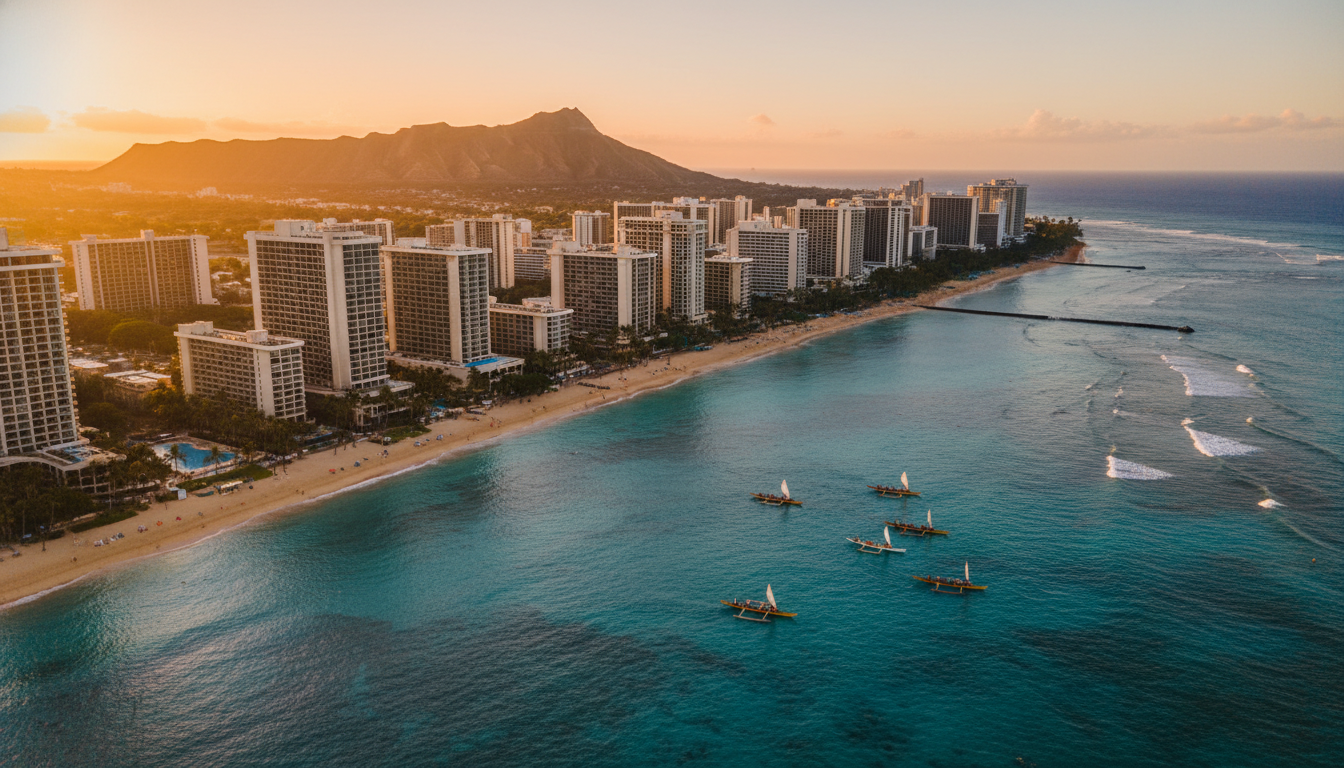
Yes, Waikiki is touristy. Yes, Kalakaua Avenue can feel like a mall exploded onto a beach. But here's what people get wrong: the residential parts of Waikiki are genuinely lovely.
The area around the Ala Wai Canal has older condo buildings where locals actually live. You'll find home swap listings here with full kitchens, parking (crucial in Honolulu), and that coveted lanai. The trade-off? You're a 10-minute walk from the beach instead of stumbling distance.
Waikiki home swaps work well for first-time Hawaii visitors, those without a car, and anyone who wants easy access to restaurants and nightlife.
Kailua: The Windward Side Secret
This is where I stayed on my second Honolulu home swap, and honestly? I'm not sure I can go back to Waikiki.
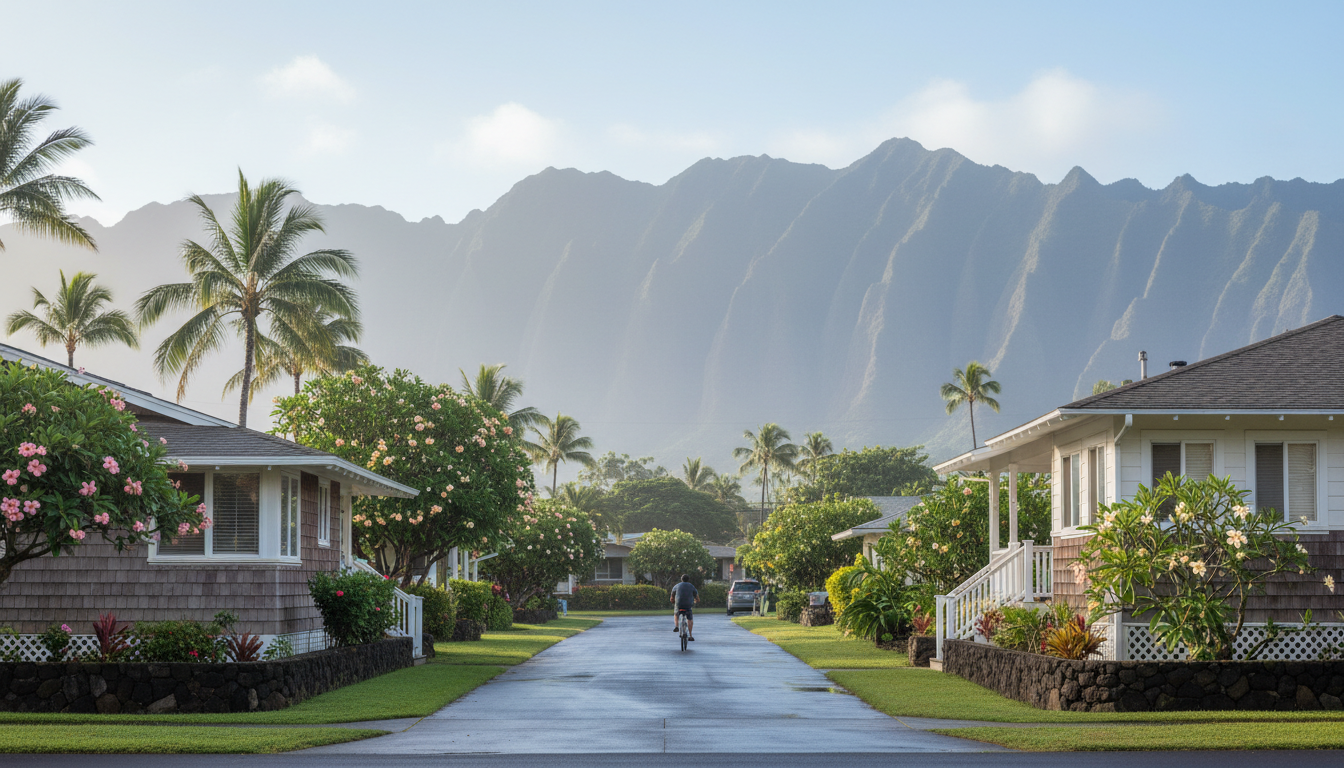
Kailua sits on Oahu's windward coast, about 25 minutes from Honolulu proper. The vibe is completely different—small-town Hawaii with excellent coffee shops, a genuine community feel, and Kailua Beach, which consistently ranks among America's best.
Home swap properties here tend to be actual houses rather than condos. The family I exchanged with had a three-bedroom place with a backyard mango tree. I ate mangoes for breakfast every single day. They just fell from the tree.
Kailua home swaps work best for families, anyone renting a car anyway, and travelers who want to escape the tourist bubble.
Manoa Valley: For the Nature Obsessed
Tucked into the mountains behind the University of Hawaii, Manoa is lush in a way that feels almost excessive. It rains here—frequently—which means everything is impossibly green.
The famous Manoa Falls trail starts here. So does some of the best hiking on Oahu. Home swap listings in Manoa tend to be older homes with character, often owned by professors or long-time residents.
Fair warning: it's a 20-minute drive to any beach, and the humidity is intense. But if you'd rather hike to a waterfall than lie on sand, Manoa might be your spot.
Hawaii Kai: Suburban Paradise
Out east, past Diamond Head, Hawaii Kai offers something rare in Honolulu: space. The homes are newer, often with garages and actual yards. Hanauma Bay—the famous snorkeling spot—is right there.
I haven't done a home swap in Hawaii Kai yet, but I've been eyeing listings. The area attracts families and retirees, which means the home exchange inventory tends toward comfortable, well-maintained properties.
How to Actually Find a Home Swap in Honolulu
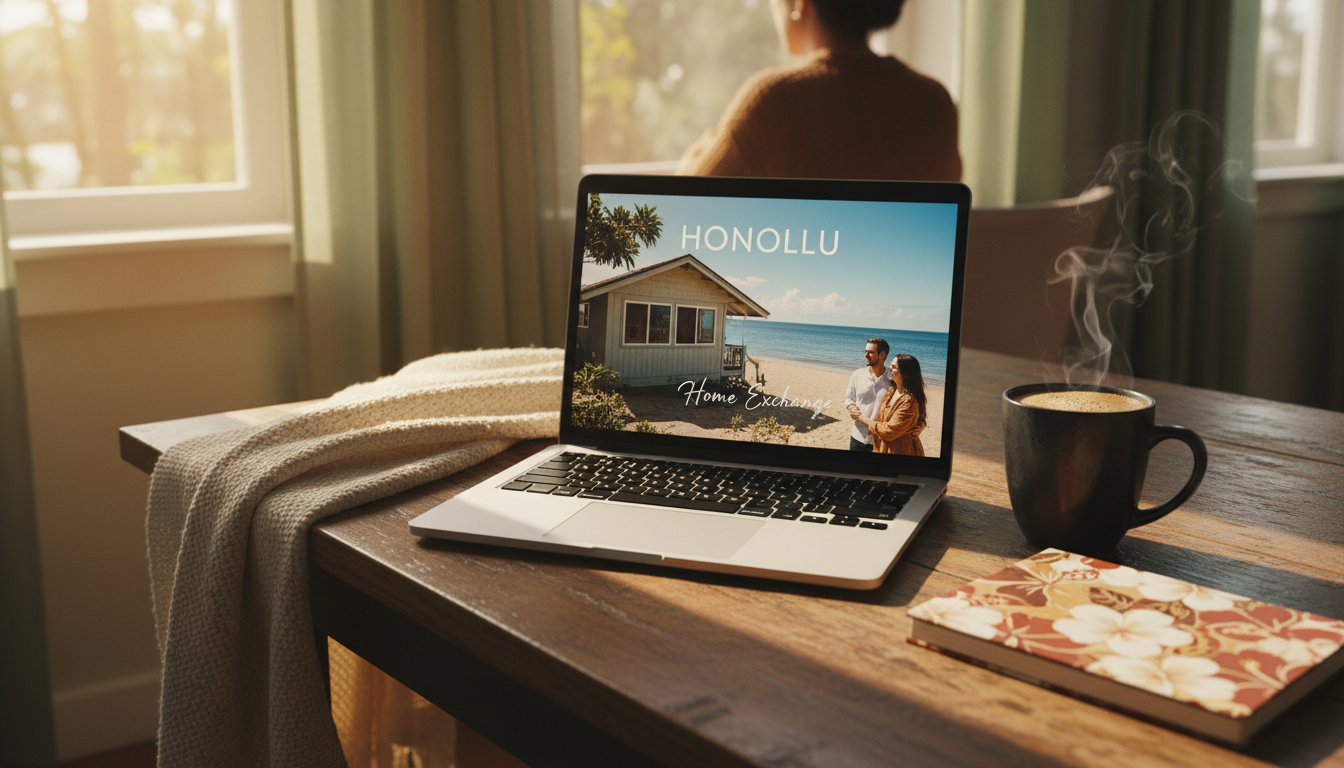
Here's where I get tactical, because Honolulu is competitive. You can't just post a request and expect offers to flood in.
 laptop open on a wooden table showing a home exchange listing, with a cup of Kona coffee and a Hawai
Start Early—Like, Really Early
I begin planning Honolulu swaps 6-8 months in advance. Peak season (December through April) requires even more lead time. The best properties get snapped up by members who've built relationships over years.
On SwappaHome, I set up alerts for new Honolulu listings. When one pops up that matches my criteria, I message within 24 hours. First impressions matter.
Make Your Own Listing Irresistible
This is the part people forget: a home swap is a two-way street. Why would a Honolulu homeowner choose YOUR place?
My San Francisco apartment does well because I've invested in the listing. Professional-ish photos (okay, iPhone but with good lighting). Detailed descriptions of the neighborhood—which coffee shops, which hiking trails, which hidden beaches are nearby. I mention that my place has parking, which is gold in SF.
I also keep my calendar updated religiously. Nothing kills a potential swap faster than "Sorry, those dates don't work" after a week of back-and-forth.
The Personal Message Strategy
Generic requests get ignored. When I reach out to Honolulu hosts, I write something specific:
"Hi! I noticed you mentioned loving farmer's markets in your listing—the KCC Saturday market is my favorite when I visit Oahu. I'm a travel writer based in San Francisco, looking for a quiet place to work on a book project in March. Your Kailua cottage looks perfect. Would you be interested in spending time in SF? The cherry blossoms in Golden Gate Park are incredible that time of year."
See the difference? I've shown I actually read their profile. I've given them a reason to be excited about MY location. I've established myself as a real human with a legitimate reason to visit.
Consider Shoulder Seasons
May, September, and October are Honolulu's shoulder seasons. The weather is still excellent (honestly, when is it not?), but competition for home swaps drops significantly. I've had my best luck during these months.
What to Expect from Your Honolulu Home Swap Host
The culture of home exchange in Hawaii has its own flavor. Locals take hospitality seriously—it's built into the concept of aloha—but they also have specific expectations.
 handwritten welcome note on a kitchen counter next to a bowl of fresh tropical fruit, a bottle of lo
The Welcome Ritual
Every Honolulu home swap I've done has included some version of a welcome package. Fresh fruit from someone's yard. A bottle of locally roasted coffee. Once, a detailed hand-drawn map of the neighborhood with the host's favorite spots marked.
This isn't required, but it's common. I always reciprocate when hosting—a bottle of good California wine, a list of my favorite SF spots, that kind of thing.
Communication Expectations
Hawaiian hosts, in my experience, prefer more communication than mainland swappers. A message when you arrive. A quick check-in mid-trip. A thank-you when you leave.
This isn't neediness—it's cultural. Relationships matter here. I've stayed in touch with two of my Honolulu hosts, and one has become a genuine friend.
Respecting the Space
This should go without saying, but Hawaiian homes often contain items with deep cultural significance. Koa wood bowls. Family quilts. Photos of ancestors.
Treat everything with extra care. Ask before using anything that seems special. And for the love of all things holy, never sit on someone's quilt.
Living Like a Local: How Home Swapping Changes the Hawaii Experience
The tourist version of Honolulu is fine. Beaches and luaus and shave ice. Nothing wrong with any of that.
But the home swap version? It's different.
 early morning at a local Honolulu fish auction, weathered fishermen sorting the catch, fluorescent l
My Actual Daily Routine During My Last Swap
6:00 AM: Wake up to roosters (yes, even in Honolulu proper—they're everywhere). Make coffee in the kitchen.
6:30 AM: Walk to Ala Moana Beach Park. Not Waikiki—Ala Moana. It's where locals swim laps before work. Join them.
8:00 AM: Stop at Liliha Bakery for coco puffs (a local pastry that's basically crack). Eat two. Regret nothing.
9:00 AM - 1:00 PM: Work from the condo. I'm a travel writer; I need to actually write sometimes. The lanai becomes my office.
1:00 PM: Lunch at a plate lunch spot. Rainbow Drive-In if I'm near Kapahulu. $12 for enough food to feed three people.
3:00 PM: Beach time, or maybe a hike if it's not too hot. Makapu'u Lighthouse trail is my go-to—stunning views, moderate difficulty.
6:00 PM: Cook dinner. The Whole Foods in Kailua has an excellent poke counter. I buy a pound, add rice, call it a meal.
8:00 PM: Watch the sunset from wherever I am. It never gets old.
This rhythm is impossible in a hotel. The kitchen, the neighborhood knowledge, the feeling of having a home base—it transforms everything.
The Money You'll Save (And How to Spend It)
Rough math for a two-week trip: accommodation savings of $5,000-$8,000, food savings of $1,500-$2,000. Total: $6,500-$10,000.
That's not nothing. That's a helicopter tour of the Na Pali Coast. That's a day trip to the Big Island to see volcanoes. That's upgrading your inter-island flights to first class because why not.
Or, honestly, that's just money you keep. Not every savings needs to be spent.
The Challenges of Home Swapping in Honolulu
I'd be doing you a disservice if I pretended this was all plumeria flowers and perfect sunsets.
The Competition Problem
Honolulu is hot right now for home exchange. You're competing against thousands of members who all had the same "Hawaii without the hotel bill" epiphany. The most desirable listings—beachfront, updated, great locations—get multiple requests.
My solution: be flexible on dates, be patient, and build your SwappaHome reputation through successful swaps in less competitive destinations first. A profile with 10+ positive reviews stands out.
The Car Situation
Unlike many destinations, Honolulu kind of requires a car if you want to explore beyond Waikiki. Home swap hosts can't include their vehicles (insurance reasons), so you'll need to rent.
Rental cars in Hawaii have gotten expensive—$80-$150/day depending on season. This eats into your savings, though you'd face the same issue staying in a hotel.
Pro tip: Turo often has better rates than traditional rentals. I've had good luck finding older Jeeps for $50-$60/day.
The Trust Factor
You're staying in someone's home. They're staying in yours. Things can go wrong.
I've been lucky—no disasters in 40+ swaps. But I take precautions. I remove or lock away anything truly irreplaceable before guests arrive. I get my own travel insurance that covers my belongings. I communicate clearly about house rules and expectations.
SwappaHome's review system helps here. Members with consistent positive feedback have earned that reputation through dozens of successful exchanges. I only swap with members who have established track records.
Making Your Honolulu Home Swap Listing Stand Out
If you're trying to attract Honolulu hosts to YOUR place, here's what works:
Photography Matters More Than You Think
Natural light. Clean surfaces. Wide angles. No clutter.
I spent an afternoon re-shooting my apartment listing last year. Requests increased noticeably. People make decisions based on photos—make yours count.
Highlight What Makes Your Location Special
Honolulu residents don't need another beach. What does YOUR city offer that they can't get at home?
For San Francisco, I emphasize the world-class food scene, wine country day trips, hiking in Marin, the cable cars. I paint a picture of what their trip could look like.
Be Specific About Amenities
Parking. Laundry. Air conditioning (surprisingly rare in older Honolulu buildings). Good wifi. These practical details matter.
The Future of Home Swapping in Hawaii
I think we're still in the early days of this trend.
Hawaii's housing costs have pushed many locals to consider home exchange as a way to travel affordably. Meanwhile, mainland travelers are increasingly priced out of traditional Hawaii vacations. Home swapping solves both problems.
I expect Honolulu home swap inventory to grow significantly over the next few years. More listings means more options, but also more competition. The members who build strong profiles and reputations now will have advantages later.
Your Next Move
Here's what I'd do if I were starting from scratch: Create a SwappaHome profile today with great photos and a compelling description. Do 2-3 local or easy swaps to build reviews—weekend trips count. Start browsing Honolulu listings 8-10 months before your target dates. Reach out to hosts with personalized messages. Be patient. When you land a swap, treat it like the gift it is.
That Lyon couple I mentioned at the beginning? They've become friends. We've swapped twice more since that first exchange. They visited SF last fall and we had dinner together—in my apartment, which felt like their apartment too by then.
That's the thing about home swapping that no hotel can replicate. You're not just booking accommodation. You're joining a community of people who believe travel should be about connection, not transactions.
Honolulu is waiting. Your home swap there is possible.
You just have to make the first move.
Frequently Asked Questions
Is home swapping in Honolulu safe?
Home swapping in Honolulu is generally safe when you use established platforms like SwappaHome with review systems. Members build reputations through verified exchanges, creating accountability. I recommend swapping only with members who have positive reviews, communicating clearly about expectations, and getting your own travel insurance for peace of mind.
How much can I save with a Honolulu home swap vs hotels?
A two-week Honolulu home swap typically saves $6,500-$10,000 compared to hotels. Average Waikiki hotel rooms cost $350-$450 nightly, while home swaps cost zero dollars—just credits earned by hosting. Add another $1,500-$2,000 in food savings from cooking, and the financial case becomes compelling.
When is the best time to find a home swap in Honolulu?
Shoulder seasons—May, September, and October—offer the best combination of good weather and less competition for Honolulu home swaps. Start searching 6-8 months in advance for any season. Peak season (December-April) requires even earlier planning, sometimes 10-12 months ahead for desirable properties.
Do I need a car for a Honolulu home swap?
You'll want a car for most Honolulu home swaps unless you're staying in Waikiki. Home swap hosts cannot include vehicles due to insurance restrictions. Expect to pay $80-$150 daily for traditional rentals, or check Turo for better rates around $50-$60 daily. Budget this into your trip planning.
How do I make my home attractive to Honolulu hosts?
Highlight what makes your location unique—Honolulu residents don't need beaches. Focus on excellent photography with natural light, specific neighborhood attractions, practical amenities (parking, laundry, wifi), and a compelling description of experiences they can't get in Hawaii. Building positive reviews through successful swaps also increases your appeal significantly.

Published by
SwappaHome
SwappaHome Editorial Team
Home Exchange & Slow Travel Editorial
The SwappaHome Editorial Team brings together travel research, home-exchange community insights, and platform data to produce practical guides for first-time and experienced home swappers. Every article cites real platforms, current market rates, and verifiable city-level facts so readers can make informed decisions without guessing.
Ready to try home swapping?
Join SwappaHome and start traveling by exchanging homes. Get 7 free credits when you sign up!
Related articles
Home Swap in Rome: Where to Find the Best Properties for Your Italian Exchange
Discover where to find the best home swap properties in Rome—from Trastevere's cobblestone charm to Testaccio's local authenticity. Real neighborhoods, real advice.

Home Swap in Bangkok: Where to Find the Best Properties for Free Stays
Discover where to find the best home swap properties in Bangkok—from riverside condos in Charoen Krung to family homes in Ari. Real neighborhoods, real savings.

Home Swap for Beach Lovers: 12 Coastal Destinations Ranked for 2026
Discover the best coastal destinations for home swapping in 2026. From Portugal's Algarve to Australia's Gold Coast, find your perfect beach exchange.