Home Swap in Kyoto: Your Complete Guide to Living Like a Local in Japan's Cultural Heart

SwappaHome Editorial Team
Home Exchange & Slow Travel Editorial
Discover how to experience authentic Kyoto through home swapping—from traditional machiya townhouses to modern apartments in the best neighborhoods.
The smell hit me first. Not incense from a temple, though there was plenty of that later. It was the earthy, slightly sweet scent of tatami mats warming in the afternoon sun. I was standing in a 100-year-old machiya townhouse in Kyoto's Nishijin district, my socks sinking into those fresh-grass-smelling floors, and I remember thinking: this is why I home swap.
That was three years ago, my first home swap in Kyoto, and I've been back twice since. Each time, I've stayed in a different neighborhood, each time I've discovered layers of the city that my hotel-staying friends never see. And here's what I've learned: Kyoto isn't just Japan's cultural capital—it's possibly the best city in the world for home exchange.
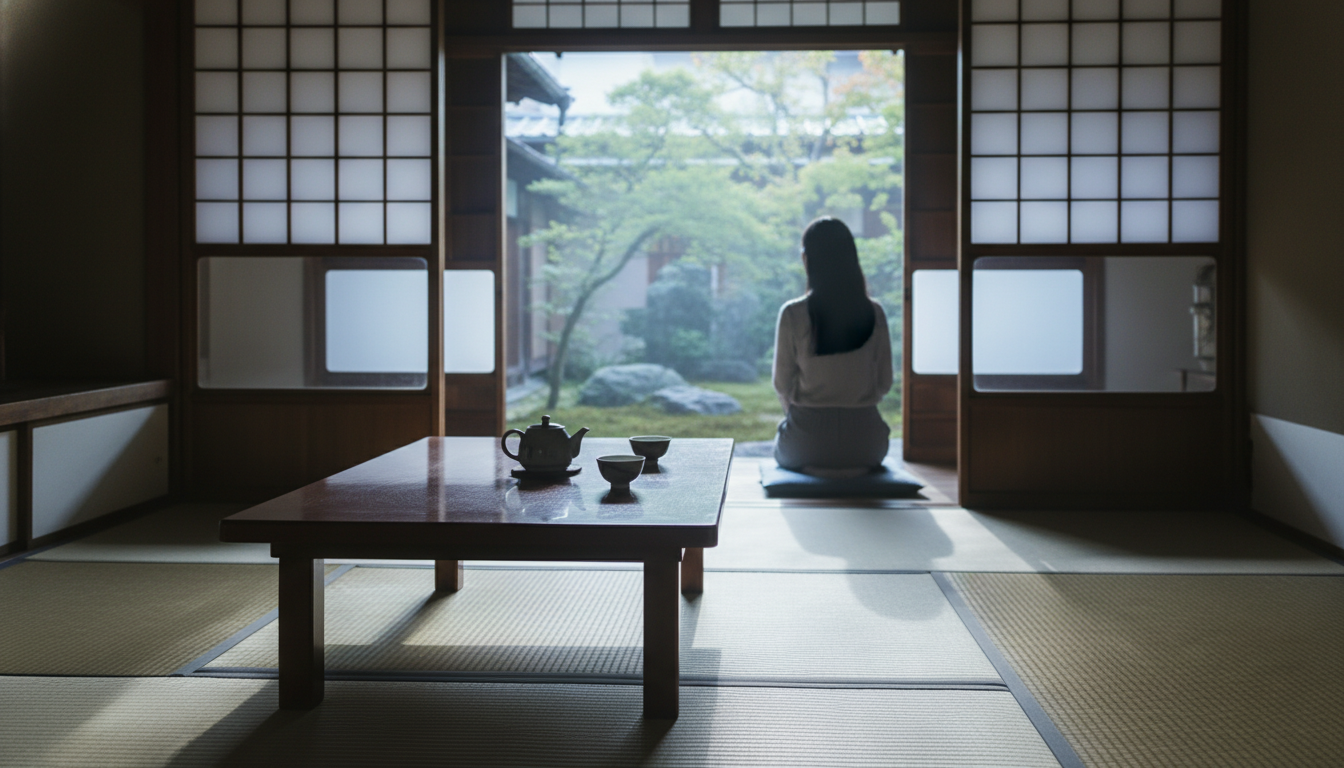 Morning light filtering through shoji screens in a traditional Kyoto machiya, tatami floors visible,
Why Home Swapping in Kyoto Changes Everything
Let me be honest with you. Kyoto hotels are expensive. Like, really expensive. During cherry blossom season (late March to early April) or autumn foliage (mid-November), you're looking at $300-500 per night for anything decent. A basic business hotel near Kyoto Station? Still $150+ during peak times.
But here's what bothers me more than the cost: staying in a hotel in Kyoto feels like watching a movie about Japan instead of actually living it. You wake up, eat a Western breakfast buffet, walk to temples with crowds, return to your generic room. Repeat.
A home swap in Kyoto gives you something hotels simply cannot: a neighborhood. A local coffee shop where the owner starts recognizing you by day three. A nearby sento (public bath) where you learn the unspoken rules of Japanese bathing etiquette. A kitchen where you can cook the vegetables you bought at Nishiki Market.
My host in Nishijin, a textile designer named Yuki, left me a handwritten guide to her neighborhood. Not the tourist version—the real one. Which bakery has the best shokupan (milk bread). Which temple is empty at sunrise. Where to find the vending machine that sells hot canned coffee for ¥120 ($0.80). That kind of knowledge doesn't exist on TripAdvisor.
Best Neighborhoods for Kyoto Home Exchange
Kyoto's layout is actually pretty simple once you understand it. The city was designed on a grid system modeled after ancient Chang'an (modern Xi'an), so navigation is straightforward. But each neighborhood has its own distinct personality, and choosing the right one can make or break your experience.
Higashiyama: Traditional Kyoto at Your Doorstep
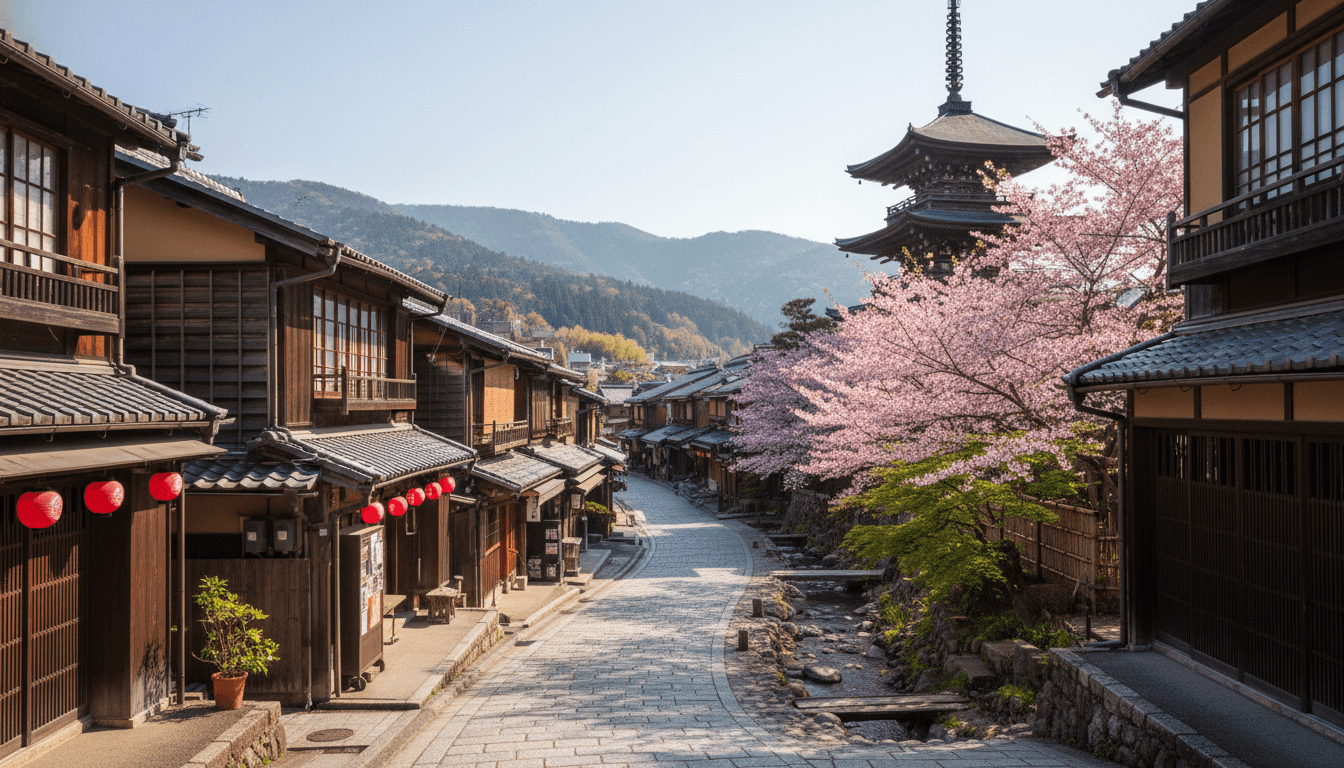
If this is your first time in Kyoto, Higashiyama is the obvious choice—and for good reason. This eastern district contains the city's highest concentration of temples, traditional streets, and Instagram-worthy scenes. Kiyomizu-dera, Yasaka Shrine, the stone-paved lanes of Ninenzaka and Sannenzaka—they're all here.
The trade-off? Tourist density. During peak hours, these streets get crowded. But here's the home swap advantage: you can visit these places at 6 AM before the tour buses arrive, or at dusk when everyone's heading back to their hotels. I once had the Philosopher's Path almost entirely to myself at 7 AM on a Tuesday in October.
Home swap properties in Higashiyama tend to be smaller (space is at a premium) but often beautifully renovated. Expect to pay—or rather, spend credits—for the location premium, though with SwappaHome's system, it's still just 1 credit per night regardless of the neighborhood.
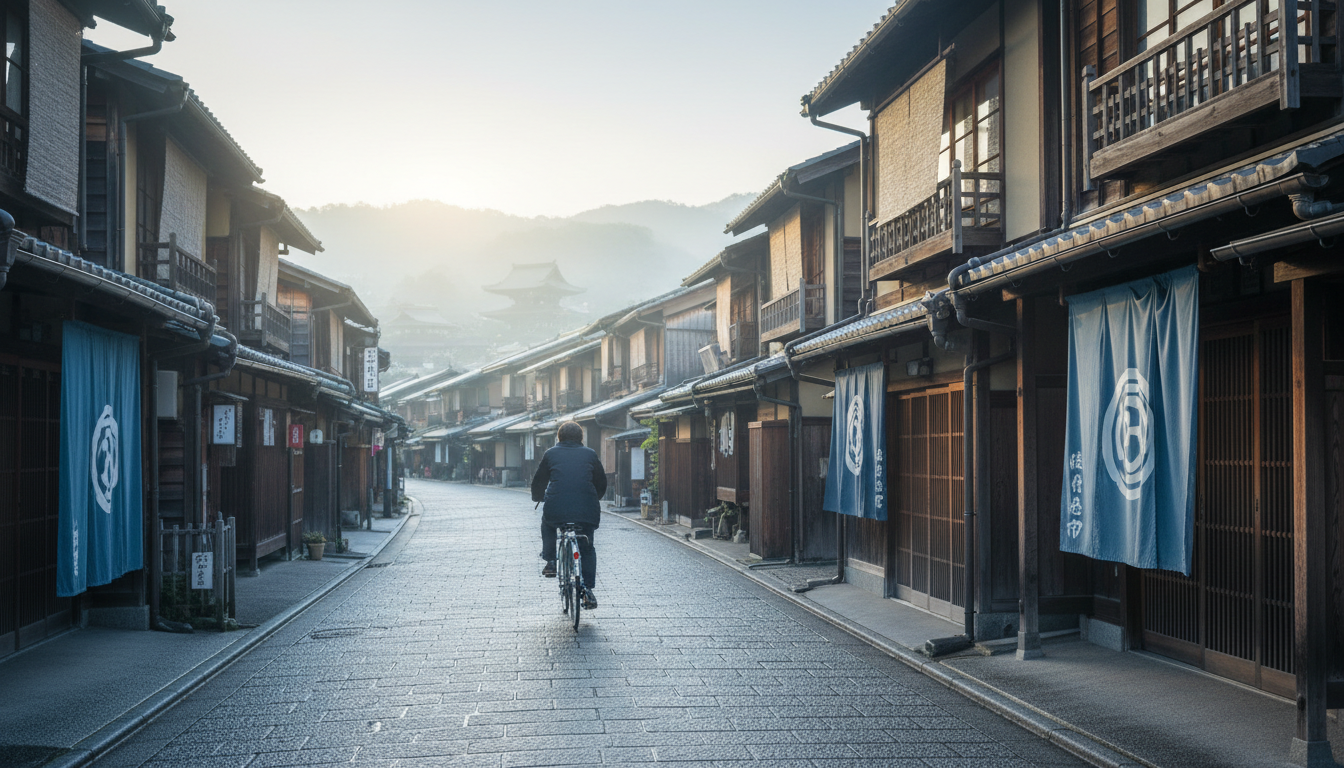 Early morning on a quiet Higashiyama street, traditional wooden buildings with noren curtains, a sin
Nishijin: Where Kyoto's Artisans Live
This is my personal favorite, and I'll tell you why. Nishijin is the historic textile district, famous for Nishijin-ori weaving that's been practiced here for over 500 years. It's residential, it's real, and tourists rarely venture here.
The architecture alone is worth it. Nishijin has one of the highest concentrations of preserved machiya townhouses in Kyoto. These narrow wooden buildings—typically two stories with a central courtyard garden—represent traditional Kyoto living. Many have been converted into homes that are now available for exchange.
What I love about Nishijin: the morning rhythm. Elderly women sweeping their storefronts. The clack-clack-clack of looms still operating in a few workshops. Tiny neighborhood shrines where locals stop to pray on their way to work. A home swap here means absorbing daily Kyoto life, not just visiting it.
Getting around is easy—it's about a 15-minute bike ride to central Kyoto, and most hosts provide bicycles. There's also a bus that runs to Kyoto Station every 10 minutes.
Gion: Geisha District Glamour
Gion is where you go if you want to spot geiko (Kyoto's term for geisha) and maiko (apprentice geisha) in their elaborate kimono, hurrying between teahouses at dusk. The atmosphere is undeniably magical—wooden ochaya teahouses, willow trees along the Shirakawa canal, the soft glow of paper lanterns.
But real talk: Gion is expensive, even by Kyoto standards. It's also increasingly touristy, with some streets now posting signs asking visitors not to photograph geisha. Home swap options here are limited and highly sought after.
That said, if you can find a home exchange in Gion or nearby Miyagawa-cho, take it. Waking up in this district, before the tourists arrive, is genuinely special. Early morning Gion belongs to the residents—shopkeepers hosing down the street, delivery trucks making their rounds, the occasional maiko returning home from an all-night engagement.
Arashiyama: Bamboo Groves and River Views
Arashiyama sits on Kyoto's western edge, about 25 minutes by train from the city center. It's famous for the towering bamboo grove, the scenic Katsura River, and a more relaxed pace than central Kyoto.
I'll be honest—Arashiyama can feel a bit isolated for a week-long stay. You'll need to commute to see most of Kyoto's major sights. But if you're looking for tranquility, river views, and the ability to visit that bamboo grove at sunrise before the crowds descend, it's an excellent choice.
Home swaps here often come with more space than central Kyoto properties. I know someone who swapped into a house with a private garden backing onto the mountains. She said she spent half her trip just sitting on the engawa (veranda) watching the light change.
Fushimi: Sake and Shrines Without the Crowds
Fushimi is Kyoto's sake-brewing district, located south of the main city center. It's where you'll find the famous Fushimi Inari shrine with its thousands of vermillion torii gates—but also traditional sake breweries, canal-side walks, and a distinctly local atmosphere.
Most tourists visit Fushimi Inari as a day trip and leave. But staying here means you can hike the mountain shrine at night (it's open 24 hours and beautifully lit) or early morning. The sake breweries offer tastings, and the canal district, Gekkeikan Okura, is genuinely peaceful.
Home swap options in Fushimi tend to be more modern apartments rather than traditional machiya, but the lower tourist density and easy access to both Kyoto and Nara make it worth considering.
 Sunset view over the Katsura River in Arashiyama, traditional wooden boats moored along the bank, mo
How to Find the Perfect Kyoto Home Swap
Alright, let's get practical. Finding a home exchange in Kyoto requires some strategy, especially during peak seasons.
Timing Your Search
Kyoto has three peak seasons when accommodations—including home swaps—get snapped up fast. Cherry blossom season runs late March to mid-April, and you'll want to book 4-6 months ahead. Same goes for autumn foliage in mid-November to early December. Golden Week in late April to early May needs about 3-4 months notice.
For off-peak times (January-February, June, September), you can often find options with just 4-6 weeks notice. January is actually my favorite time to visit—the temples are quiet, the air is crisp, and you might catch snow on the golden pavilion of Kinkaku-ji.
What to Look For in Listings
When browsing Kyoto home swaps on SwappaHome, pay attention to a few key details.
Location specifics: "Near Kyoto Station" can mean anything. Look for actual neighborhood names or cross-streets. A property "10 minutes from Kiyomizu-dera" is very different from one "10 minutes from Kyoto Station."
Futon vs. bed situation: Many traditional Kyoto homes use futons stored in closets during the day. If you have back problems or simply prefer Western beds, check the listing carefully. I actually love sleeping on futons now—there's something grounding about being close to those tatami floors—but it took some adjustment.
Air conditioning and heating: Kyoto summers are brutally humid (35°C/95°F with 80% humidity in August), and winters are colder than most people expect (sometimes below freezing in January). Make sure the property has adequate climate control.
Bicycle availability: This is huge. Kyoto is a cycling city, and having a bike transforms your experience. Many hosts include bicycles; if not, you can rent one for about ¥1,000-1,500 ($7-10) per day.
Crafting Your Request Message
Japanese hosts tend to appreciate detailed, thoughtful communication. When sending a swap request, include why you want to visit Kyoto specifically (shows genuine interest), a bit about yourself and your home exchange experience, your intended dates and any flexibility, and any questions about the property or neighborhood.
I always mention that I remove my shoes indoors without being asked—it signals cultural awareness that Japanese hosts appreciate.
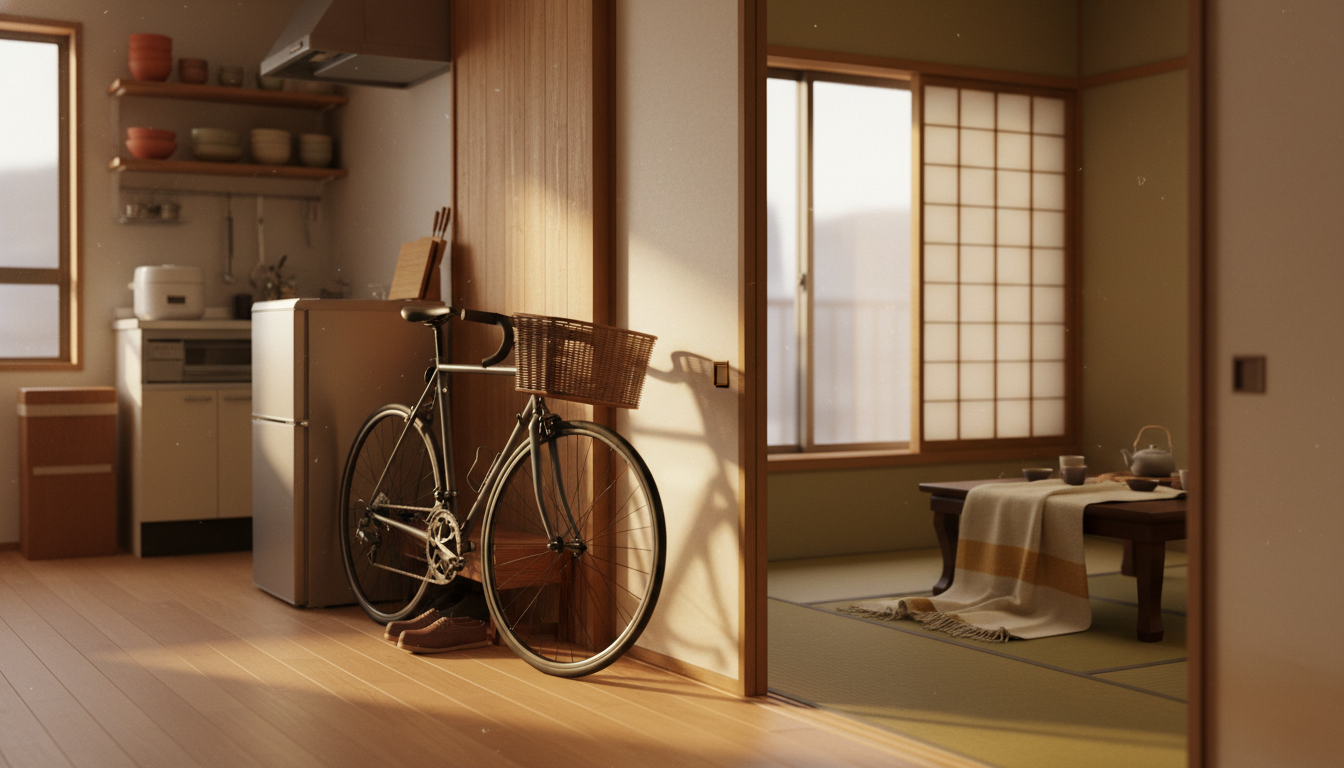 A cozy Kyoto apartment interior with a mix of traditional and modern elementstatami room visible thr
Living in Your Kyoto Home Swap: Practical Tips
Navigating Japanese Homes
Even if you've traveled to Japan before, staying in a Japanese home has its own learning curve. Here's what I wish someone had told me.
The genkan ritual: The genkan is the entryway where you remove shoes. This isn't optional or just for dirty shoes—it's a fundamental boundary between outside and inside. Step up from the genkan directly into slippers (usually provided). Never, ever step on the genkan floor in your indoor slippers.
Bathroom choreography: Japanese bathrooms are designed differently. The toilet is often in a separate room with its own slippers (yes, toilet-specific slippers—don't wear them elsewhere). The bathing area has a washing station outside the tub. You wash and rinse completely before entering the soaking tub, which is for relaxation only, not cleaning.
Garbage sorting: Japanese garbage separation is... intense. Most homes have multiple bins for burnable garbage, plastics, PET bottles, cans, glass, and paper. Your host should leave instructions. Take it seriously—improper sorting can result in your garbage being returned with a passive-aggressive note.
Quiet hours: Japanese residential neighborhoods are genuinely quiet, especially after 9 PM. Keep noise levels down, and don't run laundry machines late at night.
Stocking Your Kitchen
One of the joys of home swapping is cooking, and Kyoto offers incredible ingredients. Here's where to shop.
Nishiki Market is the "Kitchen of Kyoto," a 400-year-old covered market stretching five blocks. Come for fresh tofu, pickles, seasonal vegetables, and Kyoto specialties like yuba (tofu skin). It gets crowded by 11 AM, so come early.
Local supermarkets like Fresco, Life, and Izumiya are common chains. Prices are reasonable, and the prepared food sections (called sozai) are perfect for easy dinners. A bento box runs ¥400-700 ($3-5).
Convenience stores—don't underestimate konbini. 7-Eleven, Lawson, and FamilyMart have surprisingly good food. Onigiri rice balls run ¥120-180, there are fresh sandwiches, and hot oden in winter. Many have ATMs that accept foreign cards.
Depachika, or department store basement food halls, are a revelation. Takashimaya and Daimaru near Shijo Station have incredible selections of prepared foods, wagashi sweets, and premium ingredients. Prices are higher but quality is exceptional.
Experiencing Kyoto Like a Local
Morning Rituals
Kyoto mornings are sacred, and home swapping lets you experience them properly. Here's my routine from my last stay.
6:30 AM: Wake up, open the shoji screens to let in the light. Make coffee using the host's hand-drip setup (Japanese homes often have beautiful coffee equipment).
7:00 AM: Walk to a nearby shrine or temple. Most open at 6 or 7 AM, and you'll often be alone or sharing space with just a few elderly locals.
8:00 AM: Stop at a local kissaten (old-school coffee shop) for morning set—thick toast, hard-boiled egg, and coffee for around ¥500-700 ($3.50-5).
9:00 AM: Return home, plan the day, maybe do laundry (Japanese washing machines are fascinating and confusing in equal measure).
This rhythm—slow, intentional, integrated into the neighborhood—is impossible to replicate from a hotel.
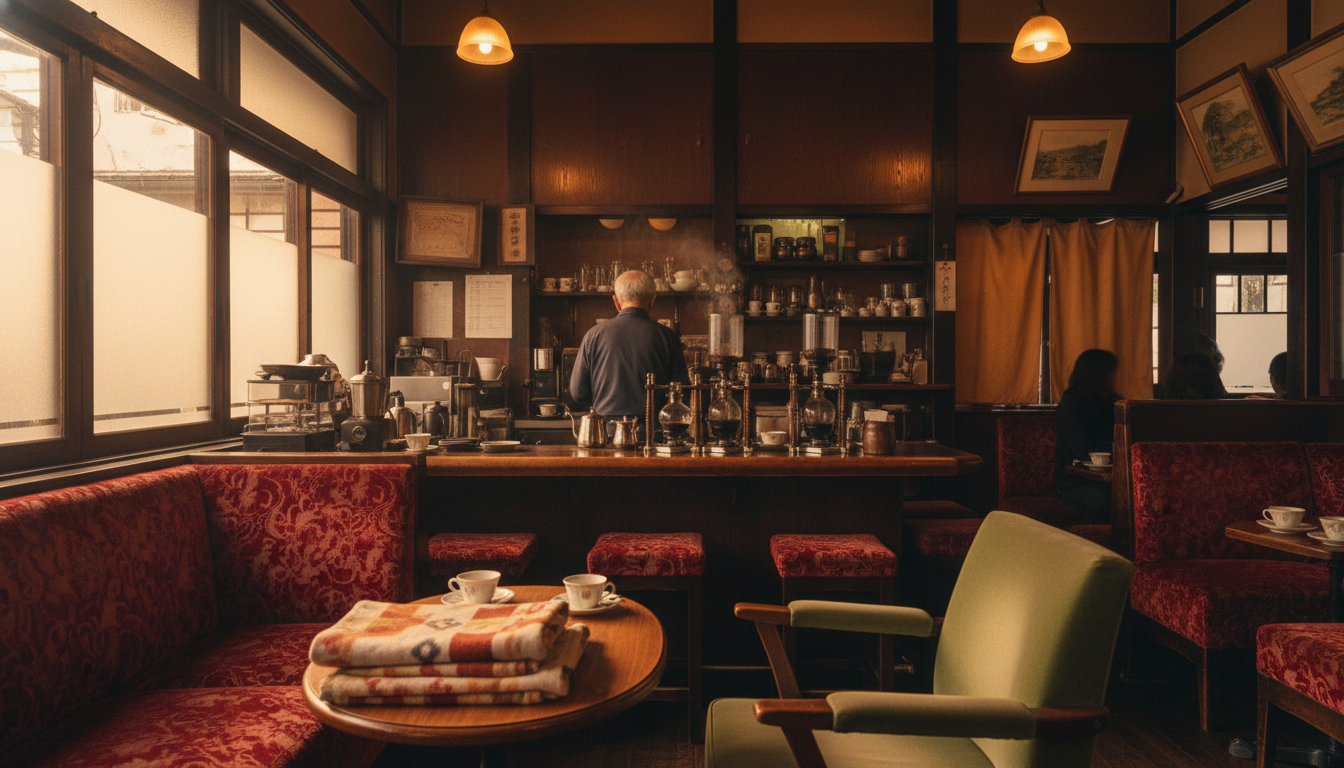 A traditional Kyoto kissaten interior, dark wood, red velvet seats, elderly owner behind counter wit
Hidden Kyoto: Local Secrets
After three extended stays and countless conversations with hosts and neighbors, here are my favorite under-the-radar Kyoto experiences.
Shosei-en Garden: This garden near Kyoto Station is owned by Higashi Honganji temple and receives a fraction of the visitors of famous gardens like Ryoan-ji. Entry is by donation (suggested ¥500). Go in late afternoon when the light turns golden.
Demachi Masugata Shotengai: A covered shopping arcade near Demachiyanagi Station that feels frozen in time. Family-run shops selling everything from handmade mochi to vintage kimono. The tofu shop at the north end makes fresh yudofu (hot tofu) that locals line up for.
Kamogawa River at dusk: Between May and September, restaurants along the Kamogawa set up outdoor platforms called yuka over the river. But you don't need to pay restaurant prices—buy some konbini snacks and sit on the riverbank with the locals. The stretch between Shijo and Sanjo bridges is perfect.
Toji Temple flea market: Held on the 21st of every month, this is Kyoto's best antique and flea market. Hundreds of vendors selling everything from Meiji-era pottery to vintage kimono fabric. Come early (it starts at 5 AM) for the best finds.
Philosopher's Path at night: Everyone knows this cherry-tree-lined canal path, but few visit after dark. In spring, the trees are illuminated, and you can walk in relative peace. In other seasons, it's simply quiet and beautiful.
Seasonal Considerations
Kyoto transforms dramatically with the seasons, and your home swap experience will vary accordingly.
Spring (March-May): Cherry blossom season is magical but mobbed. If you're coming for sakura, accept that you'll share the experience with crowds. The compensation: hanami (flower viewing) picnics in Maruyama Park, the ethereal beauty of petals falling like snow.
Summer (June-August): Hot, humid, and honestly challenging. But this is when Kyoto's summer festivals happen—Gion Matsuri in July is one of Japan's greatest festivals. If you can handle the heat, summer has its rewards.
Autumn (September-November): My favorite season. The momiji (autumn leaves) in November rival cherry blossoms for beauty. Temperatures are comfortable. The light is extraordinary. Book early.
Winter (December-February): Cold but magical. Fewer tourists, occasional snow, and the chance to experience traditional winter foods like hot yudofu and warming sake. Many temples offer special winter illuminations.
Home Swap Etiquette in Japan
Japanese culture has strong norms around hospitality and reciprocity. When you're a guest in someone's home—even through an exchange—these matter.
Before You Arrive
Send a message confirming your arrival time and any last-minute questions. Japanese hosts appreciate punctuality and clear communication. If your flight is delayed, let them know immediately.
During Your Stay
Treat the home with extra care. Japanese homes are often meticulously maintained, and your hosts will notice if you don't reciprocate. This means following all garbage sorting rules precisely, cleaning as you go (especially in the kitchen), not rearranging furniture or belongings, keeping noise levels appropriate for the neighborhood, and removing shoes at the genkan—always.
Leaving a Gift
This isn't strictly required, but it's deeply appreciated in Japanese culture. A small gift from your home country—nothing expensive, but thoughtful—goes a long way. I usually bring local chocolates or specialty food items from San Francisco. Leave it with a handwritten thank-you note.
The Review Exchange
On SwappaHome, reviews build trust within the community. Write a thoughtful, honest review of your experience. Japanese hosts often put significant effort into preparing their homes for guests, and acknowledging this matters.
What Kyoto Home Swapping Really Costs
Let's break down the actual economics, because I think this is where home exchange really shines.
Traditional approach (7 nights in Kyoto): A mid-range hotel runs about $200/night × 7 = $1,400. Add meals (eating out) at $50/day × 7 = $350. Total: approximately $1,750 for accommodation and food.
Home swap approach (7 nights): SwappaHome credits come to 7 credits (which you earned by hosting). Groceries and some meals out run about $25/day × 7 = $175. Total: approximately $175 for food.
The savings are dramatic, but honestly, that's not even the main benefit. The main benefit is the quality of experience. You're not saving money to get a worse trip—you're getting a fundamentally better trip that also happens to cost less.
With SwappaHome's credit system, you earn credits by hosting guests in your own home (1 credit per night, regardless of your home's size or location), then spend those credits on stays anywhere in the world. New members start with 7 free credits, which is enough for a solid Kyoto experience.
Planning Your Kyoto Home Swap Itinerary
I'm not going to give you a day-by-day itinerary—that's not how I travel, and it's not how home swapping works best. Instead, here's a framework.
Days 1-2: Settle into your neighborhood. Find the local konbini, the nearest shrine, the coffee shop you'll return to. Walk without a destination. Get lost. Let jet lag work itself out naturally.
Days 3-5: Hit the major sights, but strategically. Go to popular temples early morning or late afternoon. Spend midday in your neighborhood or exploring less-visited areas. Cook dinner at home using market ingredients.
Days 6-7: Go deeper. Take a day trip to Nara (45 minutes by train) or Uji (20 minutes). Revisit a place that captivated you. Spend an afternoon in a traditional kissaten, reading and people-watching.
The beauty of having a home base is that you don't need to maximize every moment. You can have slow days. You can return for a nap. You can decide at 4 PM that you'd rather cook dinner and watch the sunset from your window than fight crowds at another temple.
That's not lazy travel—that's sustainable travel. That's how you actually absorb a place.
Making It Happen: Your Next Steps
If Kyoto is calling to you—and if you've read this far, I suspect it is—here's how to move forward.
First, get your own home listed on SwappaHome if you haven't already. Take good photos, write an honest description, and start hosting guests. Every night you host earns you a credit toward your Kyoto adventure.
Second, start browsing Kyoto listings. Even if you're not ready to book, you'll get a sense of what's available, which neighborhoods appeal to you, and what kind of experience you want.
Third, pick your season. Cherry blossoms and autumn leaves are spectacular but crowded. Winter and early summer offer different magic with fewer tourists. There's no wrong answer—just different experiences.
I'll leave you with this: my third morning in that Nishijin machiya, I woke up to the sound of a shamisen being played somewhere in the neighborhood. I made tea, slid open the shoji screens, and sat in the small garden watching the light change. A cat appeared on the wall, regarded me with typical feline indifference, and disappeared.
No hotel could have given me that moment. No tour could have manufactured it. It happened because I was living in Kyoto, not just visiting.
That's what home swapping offers. That's what's waiting for you.
Frequently Asked Questions
Is home swapping in Kyoto safe for solo travelers?
Home swapping in Kyoto is generally very safe. Japan has one of the lowest crime rates globally, and SwappaHome's verification and review system helps build trust between members. Solo travelers should still exercise normal precautions and communicate clearly with hosts about arrival times and local emergency contacts.
How far in advance should I book a Kyoto home swap?
For cherry blossom season (late March-April) and autumn foliage (November), book 4-6 months ahead. Peak periods like Golden Week need 3-4 months notice. Off-peak seasons like January-February or June can often be arranged with just 4-6 weeks lead time through SwappaHome.
Can I find traditional machiya townhouses on SwappaHome?
Yes, traditional machiya townhouses are available for home exchange in Kyoto, particularly in neighborhoods like Nishijin, Higashiyama, and central Kyoto. These historic wooden homes offer authentic Japanese living experiences with tatami rooms, interior gardens, and traditional architecture.
How much money can I save with a Kyoto home swap versus hotels?
A week in mid-range Kyoto hotels costs approximately $1,400-2,000 during peak season. With SwappaHome's home exchange system, you spend credits earned from hosting (1 credit per night) instead of cash. Your main expenses become groceries and activities, typically saving $1,200-1,800 per week compared to traditional accommodation.
Do I need to speak Japanese for a Kyoto home swap?
Basic English is sufficient for most Kyoto home swaps. Many Japanese hosts on SwappaHome communicate in English, and they typically leave detailed house guides. Translation apps help with neighborhood interactions. Learning simple phrases like "arigatou gozaimasu" (thank you) shows cultural respect and enhances your experience.

Published by
SwappaHome
SwappaHome Editorial Team
Home Exchange & Slow Travel Editorial
The SwappaHome Editorial Team brings together travel research, home-exchange community insights, and platform data to produce practical guides for first-time and experienced home swappers. Every article cites real platforms, current market rates, and verifiable city-level facts so readers can make informed decisions without guessing.
Ready to try home swapping?
Join SwappaHome and start traveling by exchanging homes. Get 7 free credits when you sign up!
Related articles
How to Extend or Modify a Home Swap Mid-Stay: The Complete Flexibility Guide
Need to extend your home swap or change dates mid-trip? Here's exactly how to negotiate changes, handle credits, and keep both parties happy.

How to Visit Bali for Free with Home Exchange: The Complete 2026 Guide
Skip the $150/night villas. Home exchange in Bali lets you stay in Ubud rice field houses and Seminyak beach pads for zero accommodation cost. Here's exactly how.
How to Vet Home Swap Guests: 12 Red Flags Every Host Should Know
Learn how to vet home swap guests before handing over your keys. Spot the 12 red flags experienced hosts watch for—and protect your home with confidence.