
Home Swap in Rome: Your Complete Guide to Living Like a Local in the Eternal City

SwappaHome Editorial Team
Home Exchange & Slow Travel Editorial
Skip the tourist hotels and discover Rome through home swapping. From Trastevere trattorias to Testaccio markets, here's how to live like a Roman.
The espresso machine in my borrowed Trastevere apartment was older than me—one of those stovetop Bialetti Moka pots with a handle wrapped in electrical tape. The Italian woman I'd swapped homes with had left a note: "Three scoops, medium flame, remove when it sings." That morning ritual, standing in a stranger-turned-friend's kitchen while church bells echoed off terracotta rooftops, taught me more about Rome than any guidebook ever could.
Home swapping in Rome isn't just about free accommodation—though saving $200-400 per night on hotels certainly doesn't hurt. It's about waking up in a neighborhood where the barista knows your order by day three. Where the fruit vendor starts setting aside the good figs for you. Where you stop feeling like a tourist and start feeling like a temporary Roman.
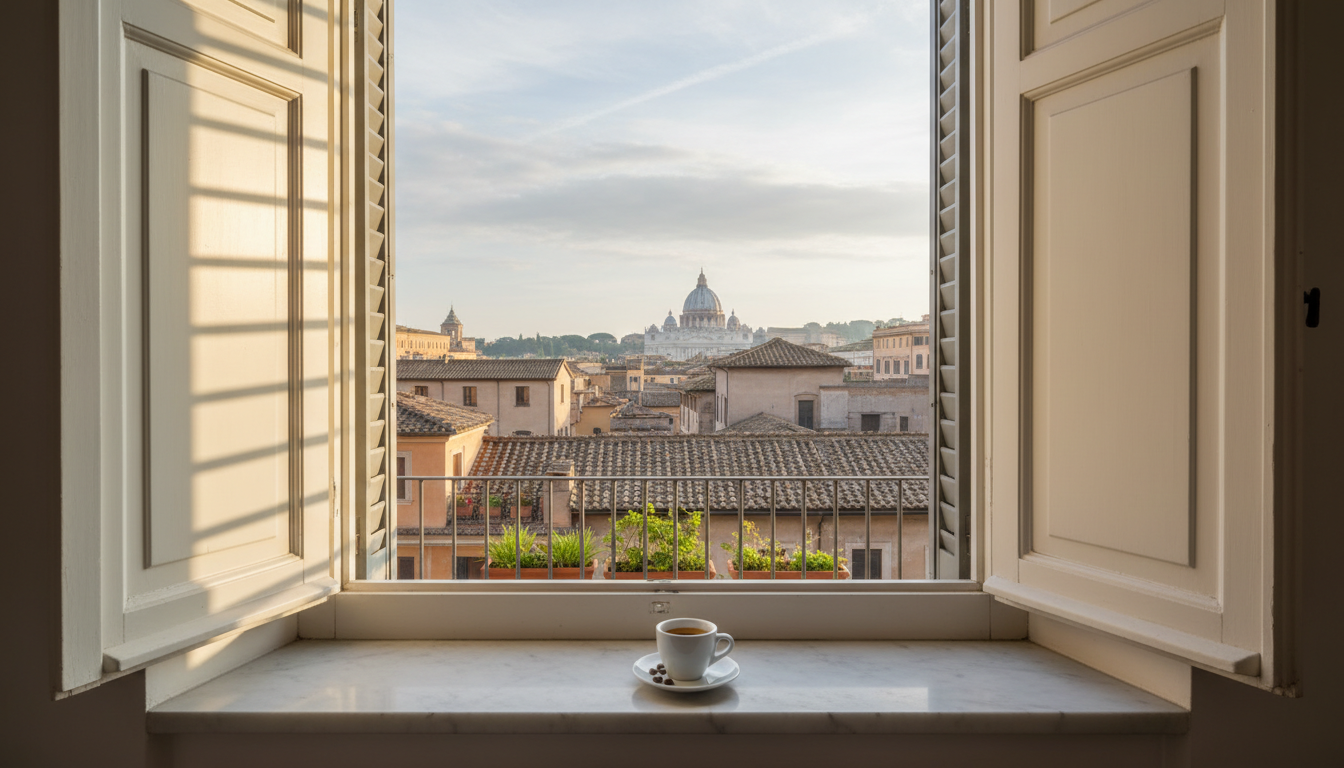 Morning light streaming through shuttered windows in a traditional Roman apartment, espresso cup on
I've done seven home exchanges in Rome over the past five years, and each one revealed a different city. The Rome you experience from a hotel near Termini station? Not the Rome you discover living above a bakery in Testaccio. Trust me on this.
Why Home Swapping in Rome Changes Everything
So here's the thing about Rome: it's not really one city. It's twenty-two rioni (historic districts), each with its own personality, its own rhythms, its own version of the perfect carbonara. Hotels cluster tourists in the centro storico, which is gorgeous but also exhausting—imagine living inside a snow globe that 15 million people shake every year.
When you do a home swap in Rome, you get an address. A real one. With a portiere (doorman) who nods at you, a neighborhood café that becomes your office, and a local market where you learn that Romans take their artichokes very, very seriously.
The economics are straightforward too. A decent hotel room in Rome's center runs €180-350 per night ($195-380 USD). A two-week trip? You're looking at $2,700-5,300 just for accommodation. With SwappaHome's credit system, you earn 1 credit for each night you host someone at your place, then spend 1 credit per night wherever you want to stay. Those 7 free credits new members get? That's 7 nights in Rome. In a real apartment. With a kitchen where you can make midnight pasta.
But honestly, the money is almost beside the point. What you're really getting is context. You're not visiting Rome—you're borrowing someone's life there for a while.
Best Neighborhoods for Home Exchange in Rome
Not all Roman neighborhoods are created equal for home swapping. Some are tourist-central (fine for a hotel, exhausting for daily life), others are too far from the action, and a few hit that Goldilocks zone of authentic-but-accessible.
Trastevere: The Classic Choice for First-Time Rome Home Swappers
Trastevere is where I did my first Rome home swap, and I get why it's the neighborhood most people picture when they imagine living in Rome. Cobblestone streets winding past ivy-covered buildings. Laundry hanging between windows. Nonnas yelling at grandchildren in rapid-fire Roman dialect.
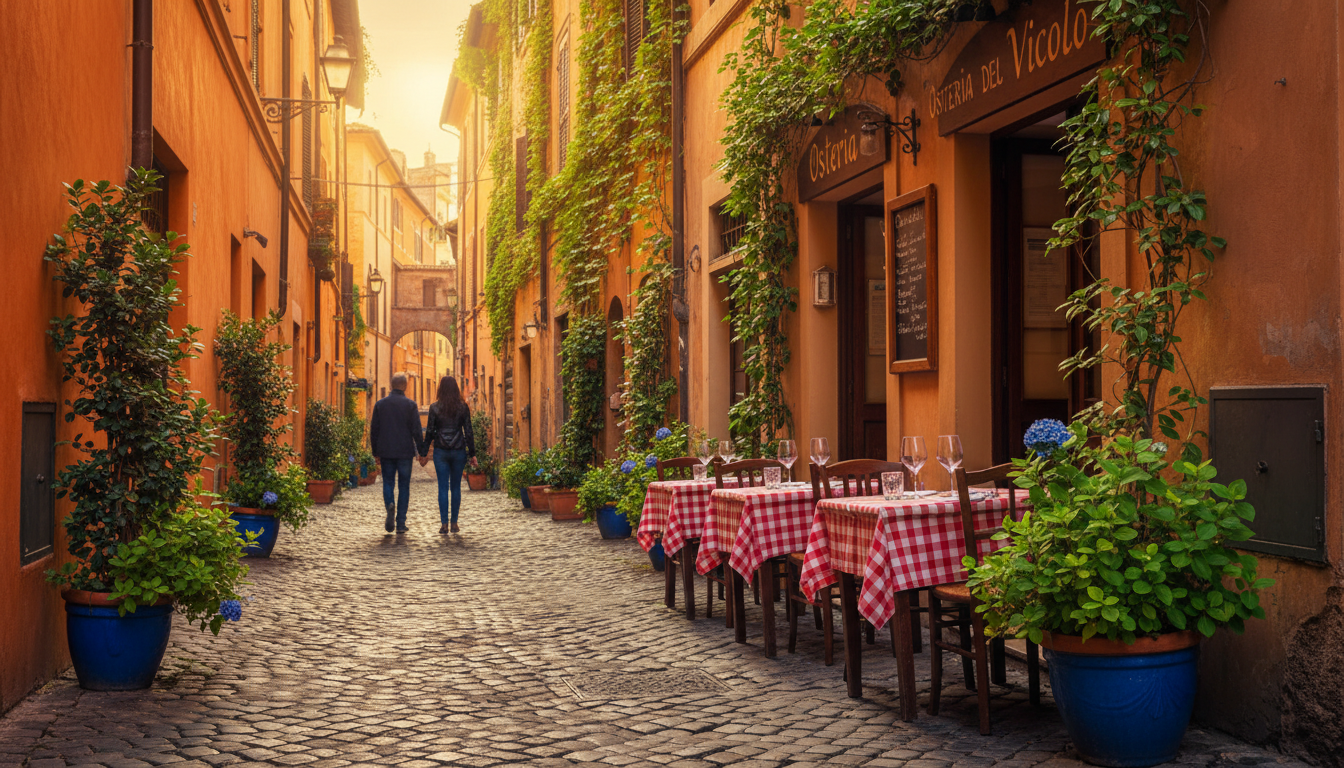 Narrow cobblestone street in Trastevere at golden hour, ivy climbing ochre walls, a small trattoria
The reality check: Trastevere has gotten touristy. Like, really touristy. The main piazza fills with pub crawls on weekends, and some of the restaurants have devolved into tourist traps with laminated menus. But here's the secret—go two blocks in any direction from Piazza di Santa Maria, and you're back in the real neighborhood.
Look for home swaps on Via della Scala or near Piazza San Cosimato. The daily market at San Cosimato is where actual Romans shop—you'll find porchetta sandwiches for €4 ($4.35 USD) and seasonal produce that puts your home supermarket to shame.
Best for: Romantics, first-timers, anyone who wants that postcard-perfect Roman experience with easy access to the centro storico.
Testaccio: Where Foodies Should Home Swap in Rome
Testaccio doesn't look like much at first glance. It's grittier than Trastevere, more working-class, with fewer photogenic piazzas. But this is where Romans actually eat.
The neighborhood grew up around the old slaughterhouse (now a contemporary art museum called MACRO Testaccio), and that history shaped its cuisine. This is the birthplace of coda alla vaccinara (oxtail stew), trippa alla romana (tripe), and the best cacio e pepe I've ever had at a place called Felice a Testaccio. Make a reservation—they don't care that you're a tourist, but they do care that you showed up without calling ahead.
The Testaccio Market (Mercato di Testaccio) is the real draw for home swappers. It's an indoor market with stalls selling everything from fresh mozzarella to trapizzino (pizza pocket things that will ruin all other street food for you). I spent €12 ($13 USD) on lunch there every day and ate better than any €50 restaurant meal.
Home swap tip: Look for apartments near Via Marmorata or Piazza Testaccio. You'll be a 15-minute walk from the Colosseum but a world away from the crowds.
Best for: Serious food lovers, repeat visitors to Rome, anyone who prioritizes eating over sightseeing.
Monti: The Neighborhood That Feels Like a Village
Monti is technically part of the centro storico—it's sandwiched between the Colosseum and Via Nazionale—but it feels like a small town that got accidentally trapped inside a major city. The main street, Via del Boschetto, is lined with vintage shops, wine bars, and artisan workshops that have been there for generations.
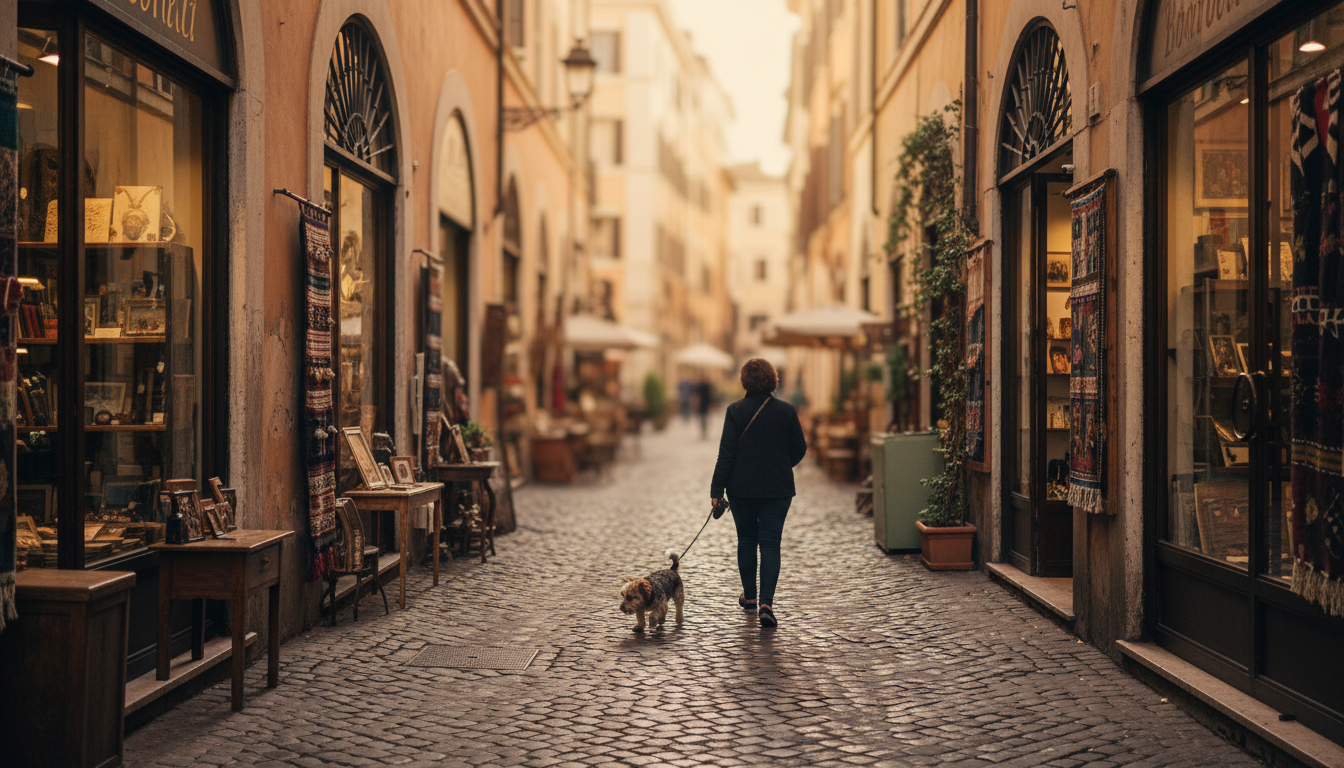 Via del Boschetto in Monti with vintage shop fronts, a local walking a small dog, afternoon light ca
This is my current favorite neighborhood for Rome home swaps. You can walk to the major sights in minutes, but your daily life happens in a community. The Saturday vintage market in Via Leonina is excellent for people-watching. Ai Tre Scalini on Via Panisperna does a €6 ($6.50 USD) aperitivo with free snacks that basically counts as dinner.
The downside: Monti is small, so home swap inventory can be limited. When a good listing pops up, grab it.
Best for: Anyone who wants to be central without feeling central, vintage shopping enthusiasts, people who like their neighborhoods walkable.
Pigneto: The Off-the-Radar Rome Home Swap Experience
I'll be honest—Pigneto isn't for everyone. It's east of Termini, past the train tracks, in a neighborhood that guidebooks barely mention. The buildings are rougher, the streets are tagged with graffiti, and you won't see many tourists.
But if you want to see where young Romans actually hang out? Pigneto is it. The main pedestrian street fills with aperitivo crowds every evening, spilling out of bars like Necci dal 1924 (where Pasolini used to drink) and into the street. Street art covers every surface. The vibe is Berlin-meets-Rome.
Practical consideration: You'll need to take the tram or metro to reach central Rome (about 20 minutes). For some people, that's a dealbreaker. For others, it's the whole point.
Best for: Younger travelers, creatives, anyone who's done Rome's center and wants something completely different.
How to Find the Perfect Rome Home Swap
Alright, let's get practical. Finding a home swap in Rome requires a bit of strategy—it's a popular destination, and the best listings get snapped up quickly.
Start your search at least 2-3 months before your trip. Rome home swaps in peak season (April-June, September-October) book up fast. If you're flexible on dates, you'll have way more options.
When browsing SwappaHome listings, pay attention to the photos. Not just the staged living room shots—look for pictures of the kitchen (is it actually functional?), the bathroom (Italian bathrooms can be... creative), and the view from the windows. A listing that shows the neighborhood context tells you the host actually wants you to understand what you're getting.
Read the reviews carefully. Look for mentions of specific details: "The host left us a list of local restaurants" or "The apartment was exactly as pictured." Generic five-star reviews tell you nothing. Specific reviews tell you everything.
Here's something I've learned: message potential hosts before requesting a booking. Introduce yourself, explain why you're visiting Rome, ask a question about the neighborhood. This isn't just polite—it's strategic. Hosts want to swap with real people, not faceless booking requests. A personal message dramatically increases your acceptance rate.
What to Expect from Your Roman Host
Roman hosts, in my experience, fall into two categories: the hands-off types who leave you keys and a quick note, and the enthusiastically helpful types who want to share their entire life with you.
Both are great. The hands-off hosts give you independence. The helpful hosts give you insider knowledge you'd never find otherwise.
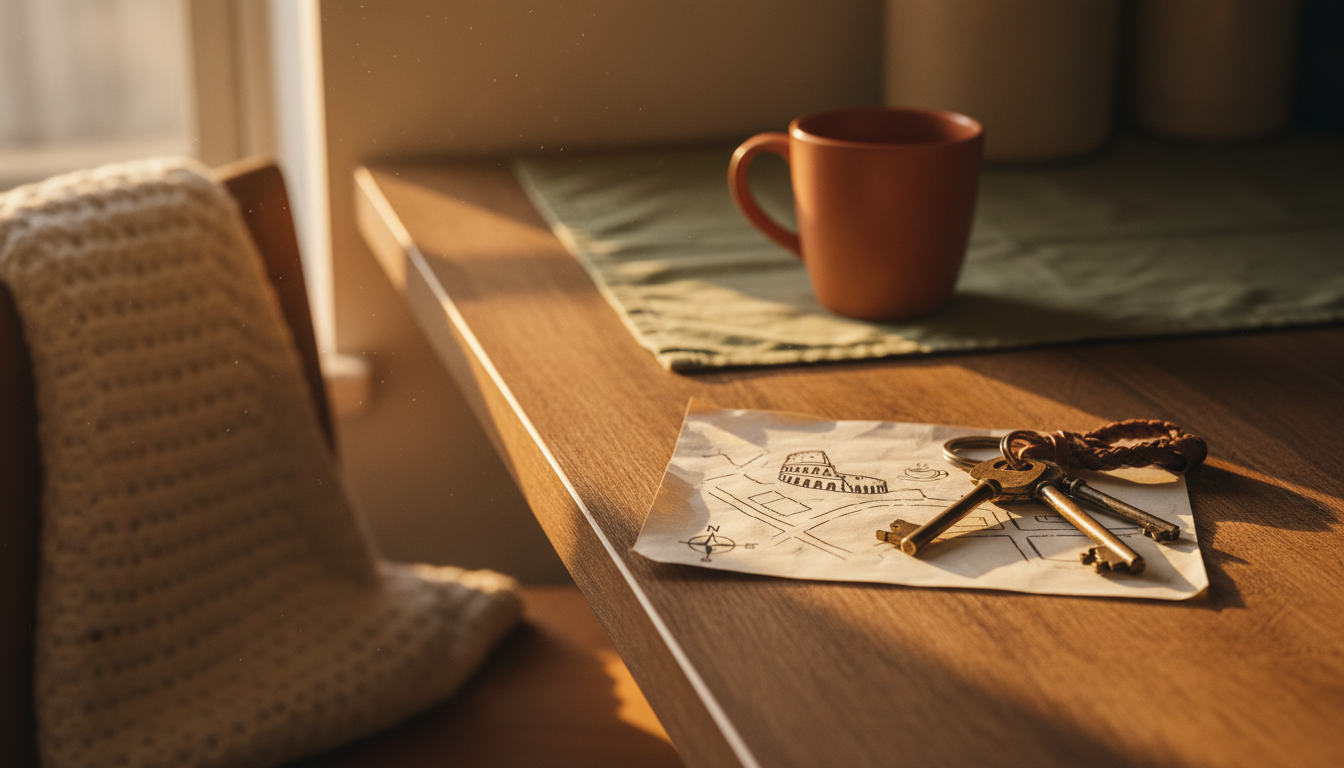 Handwritten note on a kitchen counter with local recommendations, a hand-drawn map, and a set of old
My best Rome home swap came with a host who left me a hand-drawn map of her neighborhood. Not the tourist sites—her neighborhood. The bakery where she gets cornetti on Sunday mornings. The enoteca with the grumpy owner who gives you free cheese if you buy two bottles. The exact bench in Villa Borghese where she reads on weekends. That map was worth more than any guidebook.
Expect your host to leave basics: linens, towels, maybe some coffee and olive oil. Don't expect hotel-level amenities. You're staying in someone's home, with all the quirks that implies. The shower might have weird pressure. The WiFi password might be taped inside a cabinet. The third light switch in the hallway might not do anything (this is universal in Italian apartments, I'm convinced).
Communication matters. Before you arrive, ask about trash sorting (Rome has strict recycling rules, and your neighbors will judge you), building entry codes and quirks, neighborhood parking if you're renting a car (don't rent a car in Rome, but if you must...), and any appliances that require special knowledge. See: the Bialetti incident.
Living Like a Roman: Daily Rhythms and Rituals
The best part of a Rome home swap is adapting to Roman time. This city does not operate on tourist schedules.
Mornings start with coffee—standing at the bar, not sitting at a table. A cappuccino and cornetto at the bar costs €2-3 ($2.15-3.25 USD). The same order at a table? €6-8 ($6.50-8.70 USD). Romans stand. You should too. It's not about saving money; it's about the ritual. You drink your coffee in three sips, exchange two words with the barista, and you're out. This is how Romans have started their days for generations.
Lunch is the big meal, traditionally. Many restaurants still close between 3-7pm, which catches tourists off guard. If you're home swapping, this is your siesta time. Go back to your apartment, close the shutters against the afternoon heat, and rest. I know it feels wasteful when you're traveling, but trust me—Rome in August at 3pm is not meant for walking around.
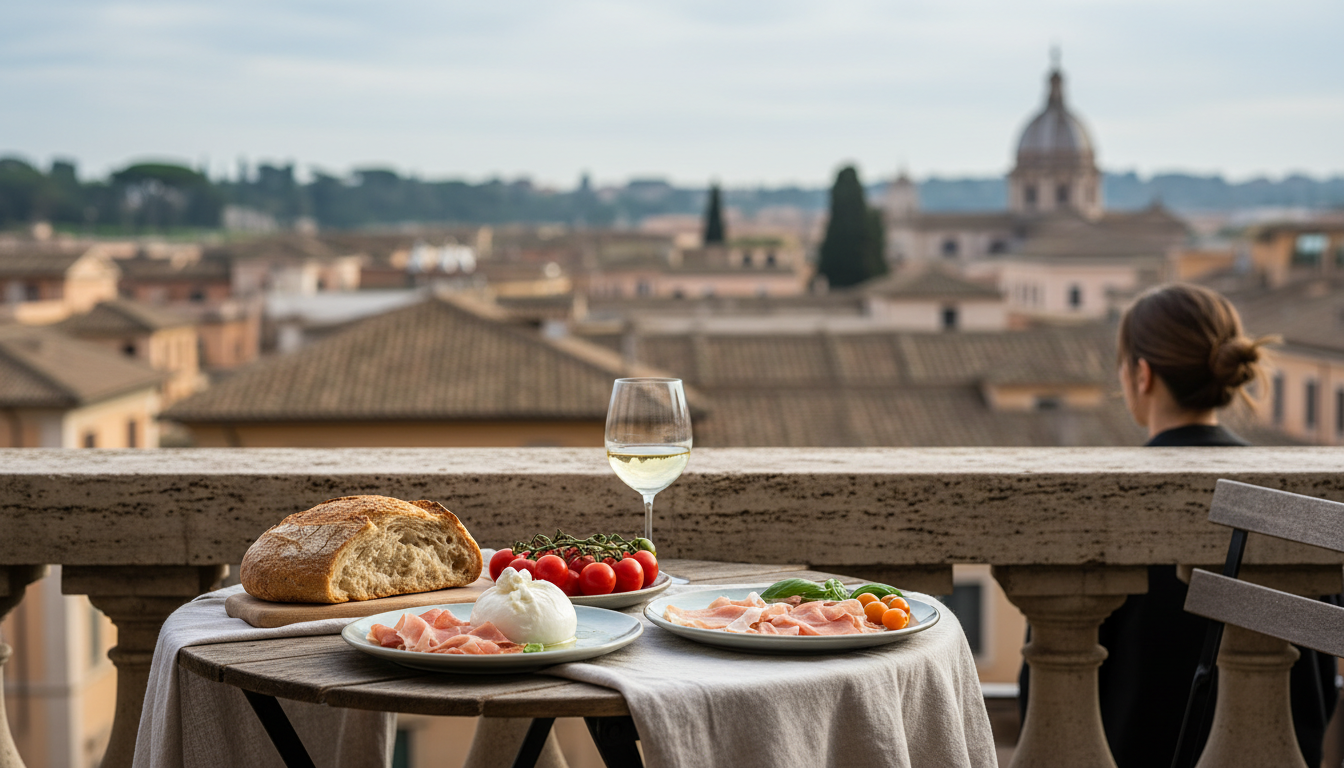 A simple Italian lunch spread on a small balcony table fresh bread, prosciutto, burrata, tomatoes, a
Dinner doesn't start until 8pm at the earliest. Most Romans sit down around 9pm. Restaurants that fill up at 7pm? Tourists. If you want to eat where locals eat, make reservations for 9pm and expect to be there until 11pm. Dinner is not a transaction in Rome. It's an event.
Sundays are sacred in a different way. Most shops close. Many restaurants close. The city empties out as Romans flee to the beach or the countryside. This is actually a perfect day for your home swap apartment—sleep in, make a long breakfast, read on your borrowed balcony. Let Rome be quiet for once.
Practical Tips for Your Rome Home Swap
Grocery shopping: Forget the big supermarkets. Go to the alimentari (small grocery shops) and the outdoor markets. You'll pay slightly more, but the quality is incomparable. Conad and Carrefour exist for basics, but your tomatoes should come from a market stall where someone yells at you in Italian.
Transportation: Get a rechargeable Metrebus card at any tabacchi (tobacco shop). A single ride is €1.50 ($1.60 USD), but the €24 ($26 USD) weekly pass is the move. It covers metro, buses, and trams. That said, Rome is walkable if you're in the right neighborhood—another argument for strategic home swap location.
Water: Roman tap water is excellent. Those big-nosed fountains (nasoni) all over the city dispense the same water that's been flowing from aqueducts for two thousand years. Bring a refillable bottle. Don't buy plastic water bottles. Romans will silently judge you.
Language: You don't need Italian, but learning five phrases will transform your experience. "Buongiorno" (good morning/day), "permesso" (excuse me, when squeezing past), "il conto" (the check), "un caffè" (an espresso—never say espresso), and "grazie mille" (thanks a lot). Romans appreciate the effort.
Safety note: Rome is generally safe, but petty theft happens, especially on crowded buses and around tourist sites. Keep your valuables in front pockets or a cross-body bag. This isn't unique to home swapping—it's just Rome.
Making Your Home Swap-Worthy for Italian Guests
Home swapping works both ways. If you want to stay in great Roman apartments, you need to offer something worth swapping for.
This doesn't mean you need a luxury home. I've swapped my modest San Francisco one-bedroom for stunning properties because I made my listing compelling. Good photos (natural light, tidy spaces, neighborhood context), honest descriptions, and—crucially—local recommendations.
Create a welcome guide for your guests. Where's the best coffee nearby? Which grocery store has the good produce? What's your favorite takeout spot? These details make your listing stand out and attract the kind of thoughtful hosts whose homes you'd want to stay in.
Respond to messages quickly. Complete your SwappaHome profile thoroughly. Get verified. Build reviews by hosting guests and being a great guest yourself. The home swap community runs on trust and reciprocity—invest in both.
The Rome Home Swap Experience: What Money Can't Buy
I want to end with a story.
On my third Rome home swap, I stayed in a tiny apartment in San Lorenzo, the university neighborhood. The host, a professor named Giulia, had left me a key to her building's rooftop terrace. "For sunsets," her note said. "Bring wine."
On my last evening, I climbed up there with a €7 bottle of Montepulciano and watched the sun turn Rome gold, then pink, then purple. The dome of St. Peter's caught the last light. Swallows wheeled overhead. Someone in the building below was cooking—garlic and rosemary drifting up.
No hotel offers that. No tour group schedules it. It's the kind of moment that only happens when you stop being a tourist and start, even temporarily, being a resident.
That's what home swapping in Rome is really about. Not the savings (though those are real). Not the kitchen (though making cacio e pepe at midnight is a revelation). It's about belonging somewhere, even briefly. It's about the barista who starts making your coffee when you walk in. It's about having a neighborhood, not just an itinerary.
SwappaHome makes the logistics simple—the credits system means you don't need to find a direct swap, just host when you can and travel when you want. But the magic? That's between you and Rome.
The Eternal City has been welcoming strangers for three thousand years. It knows how to make you feel at home.
Frequently Asked Questions
Is home swapping in Rome safe?
Home swapping in Rome is generally very safe. SwappaHome's verification system and review ratings help you connect with trustworthy hosts. You're staying in residential neighborhoods where locals live, which often feels safer than tourist-heavy hotel zones. Always read reviews carefully and communicate with hosts beforehand to ensure a comfortable experience.
How much can I save with a Rome home swap compared to hotels?
A Rome home swap can save you $150-350 per night compared to central hotels. Over a two-week trip, that's $2,100-4,900 in savings. With SwappaHome, you earn credits by hosting guests at your home (1 credit per night), then spend those credits on your Rome stay (1 credit per night). New members start with 7 free credits.
What's the best neighborhood for a first-time Rome home swap?
Trastevere and Monti are ideal for first-time Rome home swappers. Both neighborhoods offer authentic Roman atmosphere within walking distance of major attractions. Trastevere has charming cobblestone streets and excellent restaurants, while Monti feels like a village with easy access to the Colosseum and Roman Forum.
When should I book my Rome home swap?
Book your Rome home swap 2-3 months in advance, especially for peak season (April-June and September-October). Summer months are hot but less crowded, while winter offers the lowest prices and most availability. Start browsing SwappaHome listings early and message hosts promptly when you find a good match.
Do I need to speak Italian for a home swap in Rome?
You don't need to speak Italian for a Rome home swap, but basic phrases help enormously. Most hosts communicate in English through SwappaHome's messaging system. Learning "buongiorno," "grazie," and "il conto, per favore" will enhance your daily interactions with neighbors, shopkeepers, and restaurant staff who appreciate the effort.

Published by
SwappaHome
SwappaHome Editorial Team
Home Exchange & Slow Travel Editorial
The SwappaHome Editorial Team brings together travel research, home-exchange community insights, and platform data to produce practical guides for first-time and experienced home swappers. Every article cites real platforms, current market rates, and verifiable city-level facts so readers can make informed decisions without guessing.
Ready to try home swapping?
Join SwappaHome and start traveling by exchanging homes. Get 7 free credits when you sign up!
Related articles

Bachelor and Bachelorette Parties in Singapore: The Complete Home Swap Group Guide for 2026
Planning a bachelor or bachelorette party in Singapore? Discover how home swapping lets groups of 6-12 stay together in luxury condos, saving thousands while partying in Marina Bay.

Cycling in Lisbon: 7 Home Swap Bike Tour Itineraries for Every Rider
Discover the best cycling routes in Lisbon with these home swap bike tour itineraries—from waterfront paths to hilltop adventures, all starting from your borrowed home.

Graduation Trip to Barcelona: How Home Swapping Gives New Graduates the Ultimate Celebration
Planning a graduation trip to Barcelona? Discover how home swapping lets new graduates explore Spain's most vibrant city without the hostel crowds or hotel costs.