
Home Exchange in Granada: The First-Timer's Guide to Spain's Most Magical City

SwappaHome Editorial Team
Home Exchange & Slow Travel Editorial
Everything you need to know about home exchange in Granada—from choosing the right Albaicín apartment to navigating tapas culture like a local.
The first time I saw the Alhambra at sunset, I was standing on a rooftop terrace in the Albaicín, glass of tinto de verano in hand, wearing someone else's bathrobe.
That someone was María, a retired flamenco teacher whose Granada apartment I'd swapped for my San Francisco studio. She'd left me detailed notes about which bakery had the best piononos (a local pastry I'd never heard of), her neighbor's cat that might wander in, and the exact spot on her terrace where the Alhambra glows pink at 7:43 PM in September.
This is what home exchange in Granada gives you. Not a hotel room with blackout curtains and a minibar. A life. A neighborhood. A bathrobe that smells faintly of lavender and belongs to a woman who's currently discovering your favorite coffee shop in the Mission.
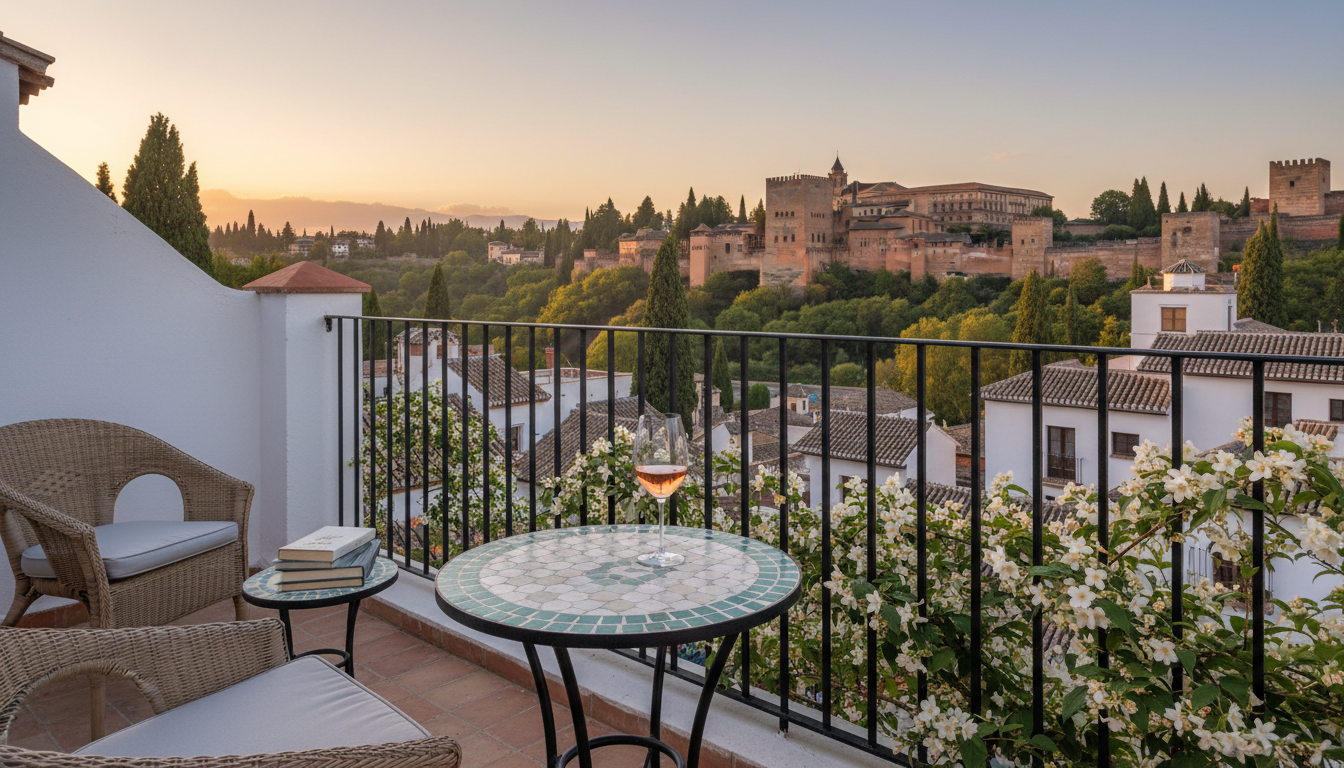 Golden hour view of the Alhambra from a whitewashed Albaicn terrace, wrought-iron railing draped wit
I've done home exchanges across 25 countries over seven years, and Granada remains one of my top recommendations for first-timers. The city is intimate enough to feel manageable, affordable enough that your credits stretch further, and so genuinely welcoming that you'll wonder why you ever booked a hotel anywhere.
But Granada has quirks. Rhythms that take a few days to understand. Neighborhoods that look charming on a map but might not suit your travel style. This guide is everything I wish someone had told me before that first swap—and everything I've learned in the four times I've returned since.
Why Granada Works So Well for First-Time Home Exchangers
Here's what I tell friends who are nervous about trying home exchange: start somewhere forgiving. Granada is forgiving.
Small enough that you won't feel lost, interesting enough that you won't get bored. The locals are used to visitors—it's a university town with a massive international student population—but not so tourism-saturated that you feel like a walking wallet. And the cost of living is low enough that any mistakes won't devastate your budget. A missed connection, a wrong turn, an accidentally expensive dinner? You'll survive.
A mid-range hotel here runs €80-120/night ($85-130 USD). A boutique hotel near the Alhambra? Easily €200+ ($215+ USD). Over two weeks, you're looking at €1,680-2,800 ($1,800-3,000 USD) just for accommodation.
With SwappaHome's credit system, you spend 1 credit per night regardless of the property. That converted carmen—Granada's traditional house with a walled garden—that would cost €250/night on Airbnb? One credit. The cozy studio in Realejo with the terrace? Also one credit. Your 14-night Granada adventure costs 14 credits total.
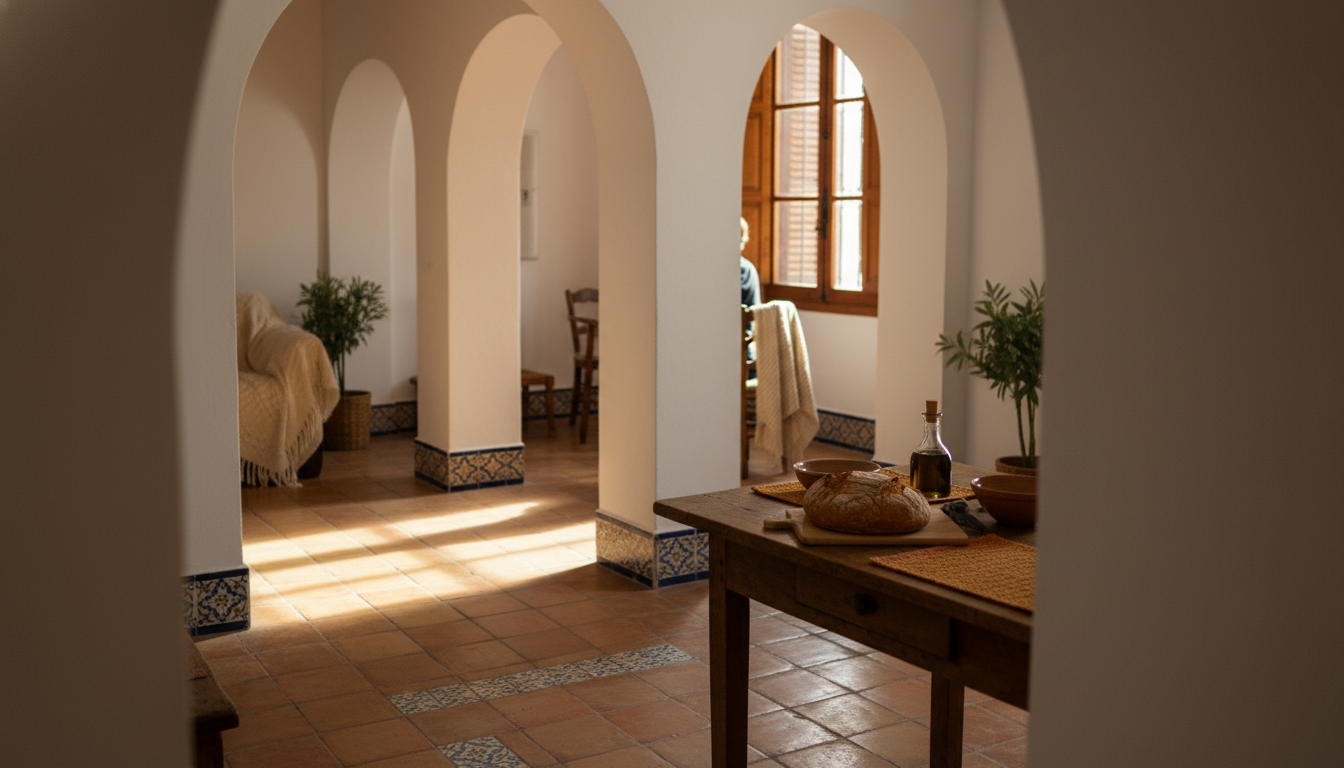 Bright, tile-floored Granada apartment interior with arched doorways, traditional azulejo tiles, and
But honestly, the real value isn't financial. It's experiential.
Staying in María's apartment, I shopped at her neighborhood frutería. The owner, Antonio, eventually stopped charging me for the extra handful of cherries he'd toss in my bag. I learned that the café on the corner served better coffee than the Instagram-famous place in Plaza Nueva. I discovered that her street got impossibly loud during the Thursday night botellón but was silent and perfect every other night.
You can't buy that at a hotel. You can only live it.
Picking Your Granada Neighborhood
Granada is a city of distinct barrios, each with its own personality. The neighborhood you choose will shape your entire experience—so let me be honest about your options, including the downsides nobody mentions in guidebooks.
Albaicín: The Romantic Choice
The Albaicín is what most people picture when they imagine Granada. Narrow cobblestone streets winding uphill past whitewashed houses. Hidden plazas with fountains. Carmen houses with secret gardens. Views of the Alhambra that make you understand why the Moors wept when they lost this city.
It's also steep. Really steep. Like, I-need-to-stop-and-catch-my-breath-and-I-run-marathons steep.
The streets aren't designed for rolling suitcases—many are stepped or uneven. And while the views are spectacular, you'll earn every single one with your calves.
That said, if you're reasonably mobile and don't mind the workout, the Albaicín is magical. Home exchange properties here tend to be traditional carmen houses or renovated apartments in historic buildings. Expect thick walls that stay cool in summer, interior courtyards, and terraces with those iconic views.
Best for: Couples, photographers, anyone who prioritizes atmosphere over convenience.
Realejo: The Sweet Spot
This is where I'd point most first-time home exchangers. Realejo is the old Jewish quarter, sitting between the city center and the Alhambra, and it hits that perfect balance: historic charm without the vertical challenges.
The streets here are still atmospheric—street art mingles with traditional architecture, and you'll find some of Granada's best tapas bars tucked into unassuming corners. But they're mostly flat or gently sloped. Walk to the Alhambra in 15 minutes, to the cathedral in 10, to the main tapas streets in 5.
Properties on SwappaHome tend to be apartments in traditional buildings, often with small balconies overlooking the street. They're typically more spacious than Albaicín places and better connected to modern amenities like laundromats and supermarkets.
Best for: First-time visitors, families, anyone who wants walkability without exhaustion.
Centro: The Convenient Choice
Granada's city center—around Plaza Nueva, Gran Vía, and the Cathedral—is where you'll find the most practical options. Modern apartments in 19th or 20th-century buildings, with reliable plumbing, elevators, and proximity to everything.
The trade-off is atmosphere. Centro feels more like a Spanish city and less like a Moorish dream. More traffic, more chain stores, less of that time-travel magic.
But here's the thing—if you're visiting in July or August when temperatures hit 40°C (104°F), a Centro apartment with air conditioning and an elevator might be exactly what you need. The Albaicín's charm fades quickly when you're hauling groceries uphill in a heat wave.
Best for: Summer visitors, those with mobility concerns, travelers who prioritize convenience.
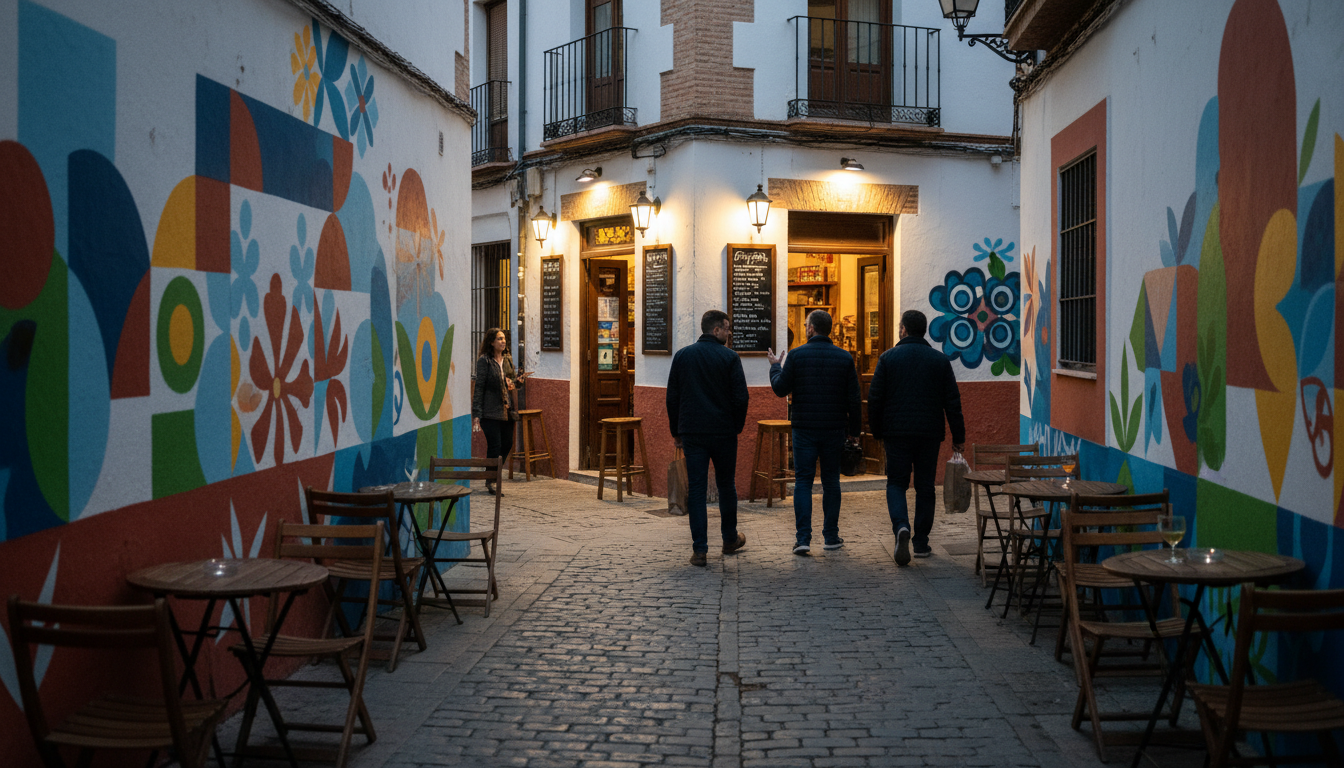 Narrow Realejo street at dusk with colorful street art on white walls, locals walking past a corner
Sacromonte: The Adventurous Choice
I have to mention Sacromonte because some listings here are genuinely extraordinary—traditional cave houses carved into the hillside, some of which have been homes for centuries.
But I'd only recommend it for experienced travelers or return visitors. It's the most remote neighborhood, the steepest, the most challenging to navigate. The cave houses can be damp, the wifi unreliable, and you'll need a taxi or a very long walk to reach most restaurants and shops.
If you're up for it, though? Sleeping in a whitewashed cave with views over the valley while flamenco drifts up from the zambras below is an experience you won't forget.
Best for: Return visitors, adventure seekers, those specifically interested in Roma culture and flamenco.
Finding Your Perfect Granada Exchange
Granada is popular on home exchange platforms—which means lots of options but also competition for the best properties. Here's how I approach it:
Timing Your Search
Granadian hosts tend to plan 2-4 months ahead, not 6-12 months like Northern Europeans or Americans. Reach out a year in advance and you might not get responses—people simply aren't thinking that far ahead yet.
My sweet spot is 10-12 weeks before travel. Early enough for good options, late enough that hosts are actually planning.
Writing Messages That Get Responses
Spanish hosts care more about personal connection than detailed itineraries. When I message potential exchanges, I mention why I'm drawn to Granada specifically (not just "we want to visit Spain"), a bit about my home and neighborhood, what kind of traveler I am, and something that shows I've actually read their listing.
"Hi! We'd like to stay at your place from June 1-14" gets ignored. "Your terrace view of the Alhambra took my breath away—I'm a travel writer who's been dreaming of Granada since reading Lorca in college" opens doors.
Looking Past the Photos
Some of the best properties I've stayed in had mediocre photos. One host, a retired professor, had listing images that looked like they were taken on a flip phone in 2008. But his apartment was extraordinary—filled with books, art, and a terrace garden he'd cultivated for 30 years.
Read descriptions carefully. Check reviews. Don't dismiss a listing just because the photography isn't professional.
Understanding the Seasons
Granada has distinct patterns that affect availability:
High demand (book early): Semana Santa (Easter week)—start looking 4+ months ahead. September-October brings perfect weather and everyone knows it. Christmas and New Year are popular for winter sun seekers.
Easier availability: July-August is brutally hot, so many locals leave and make their homes available. November-February (excluding holidays) is cooler and rainier but atmospheric. January's post-holiday lull offers great deals.
 Comparison infographic showing Granadas seasonal patternstemperature ranges, tourist crowds, and hom
What to Expect from Your Granada Host
Spanish hospitality is warm but operates differently than what Americans might expect.
Communication Quirks
Granadinos tend to be less obsessive about email than Germans or Americans. Don't panic if your host takes a few days to respond. It's not rudeness—it's just a different relationship with the inbox.
WhatsApp is king in Spain. Once you've confirmed an exchange, ask if your host prefers to communicate there. You'll get faster responses.
The Key Situation
Many Granada apartments are in historic buildings with complicated entry systems. I've encountered everything from ancient skeleton keys to modern smart locks to "ask the neighbor María, she has the spare."
Ask your host to send a video walkthrough of the entry process. Seriously. I once spent 45 minutes in a Granada doorway at midnight, exhausted from travel, trying to figure out which of three keys opened which of two locks in which order.
Welcome Gifts and Cleaning
It's common for Spanish hosts to leave a small welcome gift—a bottle of local wine, some olive oil, fresh bread. Not expected, but lovely. If you want to reciprocate, leave something from your home city when you depart.
Spanish standards for leaving a home tend toward "tidy and swept" rather than "professionally cleaned." Discuss expectations in advance. Most hosts don't expect you to wash sheets or deep clean, but they do expect dishes done, trash out, and the space respected.
Living Like a Local: Granada's Rhythms
The single biggest adjustment for most visitors isn't the language or the food—it's the schedule. Granada runs on a timeline that will initially feel impossible.
Meals
Lunch is the main event, served between 2:00-4:00 PM. Dinner doesn't really start until 9:00 PM, and many restaurants don't even open until 8:30. Show up at 7:00 PM and you'll either find a closed door or eat alone while staff give you pitying looks.
Adjust or suffer. I mean this kindly.
The good news: Granada is famous for its free tapas culture. Order a drink at most bars and you'll receive a free tapa—not a sad bowl of olives, but actual food. A plate of jamón, a portion of tortilla, fried fish, stewed beans. Order three drinks, get three tapas. You can eat dinner for €9 ($10 USD) while sampling half a dozen dishes.
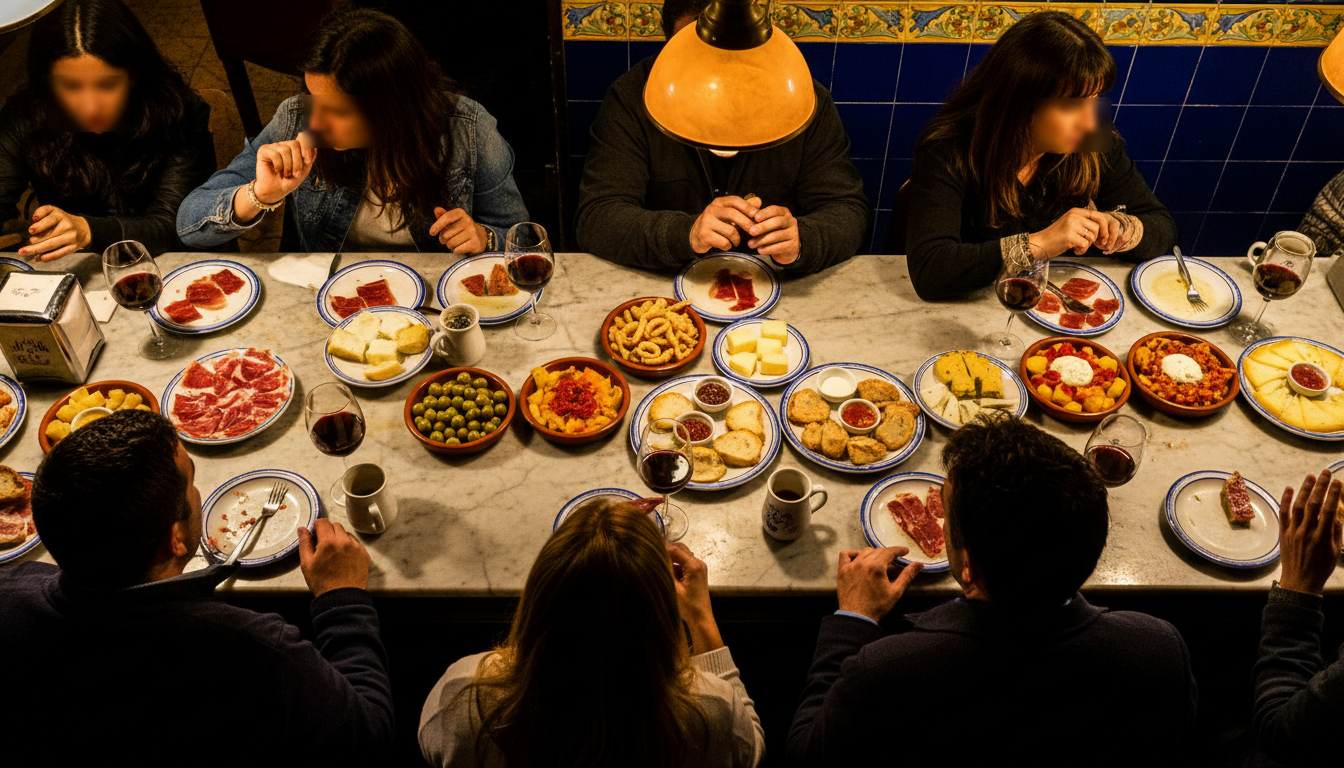 Overhead shot of a crowded Granada tapas bar at night, multiple small plates of food spread across a
Siesta
Many shops still close between 2:00-5:00 PM. Not every business—supermarkets and tourist shops stay open—but enough that you should plan around it. Don't try to run errands at 3:00 PM.
Use siesta time the way locals do: eat a long lunch, then rest, read, or nap. Your home exchange apartment is perfect for this. By 5:00 PM, the city wakes up again, and the evening paseo begins.
Sundays
Sunday in Granada is quiet. Really quiet. Most shops closed, many restaurants only open for lunch, streets empty after the midday meal.
This can be lovely—the Albaicín is peaceful, the Alhambra less crowded—or frustrating if you need groceries and everything is shuttered. Stock up on Saturday.
Practical Stuff You'll Want to Know
Alhambra Tickets
Book the moment your exchange is confirmed. I'm not exaggerating. The Alhambra limits daily visitors, and tickets sell out weeks in advance, especially for the Nasrid Palaces. The official website releases tickets 3 months ahead. Set a calendar reminder.
Miss the window? Try the ticket office at dawn for same-day tickets, or book a guided tour through an official provider—they often have access when general tickets are gone.
Getting Around
Granada's center is best explored on foot. The historic neighborhoods are largely pedestrianized, and parking is a nightmare.
For the Albaicín and Sacromonte, small minibuses (C31, C32, C34) wind through the narrow streets. They're cheap—€1.40 ($1.50 USD)—and save you from the worst climbs.
Taxis are reasonable. €8-12 ($9-13 USD) gets you most places within the city. Uber doesn't operate here, but the local app Pidetaxi works well.
Groceries
Your home exchange kitchen is one of the great luxuries of this travel style. Mercado San Agustín is central with excellent produce and meat. Carrefour Express handles basics with longer hours. Neighborhood fruterías have better quality than supermarkets.
Don't miss Granadino specialties to cook at home: habas con jamón, tortilla del Sacromonte (with brains and organ meat—trust me, better than it sounds), and anything with the local olive oil.
Weather
Granada sits at 738 meters elevation, which means it gets colder than you'd expect for southern Spain. Winter nights drop near freezing. Summer days are scorching but evenings cool down.
Ask your host about heating and cooling. Not all historic buildings have air conditioning, and some older places rely on space heaters in winter.
Beyond the Alhambra
Yes, you'll visit the Alhambra. Everyone does, and everyone should—it's genuinely one of the most beautiful places humans have ever built.
But Granada has so much more.
Albaicín Wanderings
Forget maps. Get lost. The Albaicín rewards aimless exploration. Find the Mirador de San Nicolás for sunset (arrive early, it gets crowded). Discover the hidden Placeta de San Miguel Bajo, where locals gather in the evening. Peek into carmen gardens through half-open doors.
Sacromonte at Night
The cave neighborhood comes alive after dark with zambras—intimate flamenco shows in actual caves. These range from tourist traps to transcendent. Ask your host for recommendations, or try Cueva de la Rocío or Venta El Gallo for more authentic experiences. Expect €25-35 ($27-38 USD) including a drink.
The Cathedral and Capilla Real
Granada's Renaissance cathedral is impressive, but the adjacent Capilla Real is the emotional punch. It holds the tombs of Ferdinand and Isabella—the monarchs who completed the Reconquista and sent Columbus west. Standing there, you feel the weight of history.
Day Trips
Your home exchange base makes these easy: Sierra Nevada is 45 minutes to Spain's highest peaks (ski in winter, hike in summer). The Alpujarras—white villages clinging to mountain slopes—are 1-1.5 hours south. Córdoba's Mezquita alone justifies the 2-hour train ride. The coast at Motril and Almuñécar is just 45 minutes away.
Leaving Well
How you leave matters—for your reputation on SwappaHome and for the broader community.
On my last morning, I strip the beds and leave linens in a pile (unless the host specified otherwise), run the dishwasher or hand-wash remaining dishes, empty the fridge of perishables, take out trash and recycling, do a quick sweep if needed, leave keys exactly where specified, and send a message confirming departure.
I also leave a handwritten note thanking my host, sometimes with a small gift from home. Not required, but it's the kind of gesture that builds community.
After you return home, write a thoughtful review. Be honest but kind. Mention specific positives. If there were issues, address them directly with your host before putting them in a public review.
The Granada That Stays With You
I've been home from my last Granada exchange for eight months now, and I still dream about it sometimes.
Not the Alhambra, though it was magnificent. Not the flamenco, though it moved me to tears. What I dream about is smaller. The way morning light hit the tiles in María's kitchen. The sound of church bells mixing with someone practicing guitar three terraces over. The taste of olive oil so fresh it burned the back of my throat.
This is what home exchange gives you. Not a vacation, but a temporary life. A chance to belong somewhere, even briefly.
Granada is particularly good at this. The city has a way of adopting you, of making space for you in its rhythms. By your third day, the barista knows your order. By your fifth, the frutería owner asks about your plans. By your seventh, you start to feel less like a tourist and more like a temporary resident.
If you're considering your first home exchange, Granada is where I'd send you.
Start browsing SwappaHome's Granada listings. Message a few hosts whose homes speak to you. Take the leap.
And when you're standing on a terrace at sunset, watching the Alhambra turn pink, send me a message. I want to hear about it.
Frequently Asked Questions
Is home exchange in Granada safe for first-time swappers?
Absolutely. Granada is one of Spain's safest cities, with low crime rates and a welcoming local culture. The home exchange community here is well-established, with many experienced hosts. SwappaHome's review system helps you choose verified members with positive track records. I'd recommend getting your own travel insurance for peace of mind, but I've never felt unsafe during any of my four Granada exchanges.
How much money can I save with home exchange vs hotels in Granada?
Significant savings. A decent Granada hotel costs €80-150/night ($85-160 USD), while boutique properties near the Alhambra run €200+ ($215+ USD). Over two weeks, you'd spend €1,680-2,800 ($1,800-3,000 USD) on accommodation alone. With SwappaHome, you spend 1 credit per night regardless of property type—14 credits total for two weeks, no cash exchanged between members.
What's the best neighborhood for home exchange in Granada?
For first-timers, I recommend Realejo. It offers the best balance of historic atmosphere, walkability, and convenience. The Albaicín is more romantic but extremely steep—great for couples without mobility concerns. Centro is most practical but less atmospheric. Sacromonte's cave houses are unique but best for experienced travelers.
When should I book my Granada home exchange?
Start reaching out 10-12 weeks before your trip. Spanish hosts typically plan 2-4 months ahead, not 6-12 months like Northern Europeans. For Semana Santa (Easter) or Christmas, begin 4+ months in advance. Summer (July-August) has good availability since many locals leave during the heat.
Do I need to speak Spanish for home exchange in Granada?
It helps but isn't essential. Many Granada hosts speak some English, especially younger members on SwappaHome. Basic Spanish phrases will enrich your experience enormously—locals appreciate the effort. Download Google Translate for backup, and don't be afraid to use gestures. Granadinos are patient with language learners.

Published by
SwappaHome
SwappaHome Editorial Team
Home Exchange & Slow Travel Editorial
The SwappaHome Editorial Team brings together travel research, home-exchange community insights, and platform data to produce practical guides for first-time and experienced home swappers. Every article cites real platforms, current market rates, and verifiable city-level facts so readers can make informed decisions without guessing.
Ready to try home swapping?
Join SwappaHome and start traveling by exchanging homes. Get 7 free credits when you sign up!
Related articles

Bachelor and Bachelorette Parties in Singapore: The Complete Home Swap Group Guide for 2026
Planning a bachelor or bachelorette party in Singapore? Discover how home swapping lets groups of 6-12 stay together in luxury condos, saving thousands while partying in Marina Bay.
Cycling in Lisbon: 7 Home Swap Bike Tour Itineraries for Every Rider
Discover the best cycling routes in Lisbon with these home swap bike tour itineraries—from waterfront paths to hilltop adventures, all starting from your borrowed home.
Graduation Trip to Barcelona: How Home Swapping Gives New Graduates the Ultimate Celebration
Planning a graduation trip to Barcelona? Discover how home swapping lets new graduates explore Spain's most vibrant city without the hostel crowds or hotel costs.