
Honeymoon in Bali: Why Home Swapping Beats Luxury Hotels Every Time
Maya Chen
Travel Writer & Home Exchange Expert
Planning a honeymoon in Bali? Discover why savvy couples are choosing home swapping over resorts—and saving thousands while getting authentic experiences.
The morning after our wedding, Jake and I were supposed to be sipping champagne at a five-star resort in Seminyak. Instead, we were standing in a private villa in Ubud, watching mist roll through rice terraces from our infinity pool, completely alone except for the sound of roosters and distant gamelan music.
I'm not exaggerating. Through home swapping, we spent three weeks in Bali—split between a traditional compound in Ubud and a beachfront house in Sanur—using credits we'd earned hosting travelers in San Francisco. While our friends dropped $8,000-$15,000 on resort honeymoons, we redirected that money toward private cooking classes, sunrise hikes up Mount Batur, and a spontaneous trip to the Gili Islands.
 Morning view from a private villa pool overlooking Ubuds emerald rice terraces, steam rising from co
Seven years of home swapping has taught me something: luxury isn't about thread counts and turndown service. It's about waking up in a place that feels like yours, in a neighborhood where you can actually live like a local. And for honeymooners? That intimacy changes everything.
Why a Honeymoon in Bali Deserves More Than a Resort Bubble
Let me paint you two pictures.
Picture one: You're at a luxury resort in Nusa Dua. Gorgeous—manicured gardens, attentive staff, breakfast buffets that could feed a village. But you're also surrounded by other tourists, eating the same international menu, and experiencing a version of Bali that's been carefully sanitized for Western comfort. Your "Balinese experience" is a 90-minute spa treatment and maybe a day trip to a temple.
Picture two: You wake up in a traditional Balinese compound in Penestanan, just outside Ubud's center. Your host's family lives in the adjacent buildings—you can hear children laughing and smell incense from the morning offerings. You walk five minutes to a warung where the owner, Wayan, remembers your coffee order. You spend the morning at a nearly empty waterfall because your host told you about the back entrance locals use. In the evening, you cook dinner in your own kitchen using ingredients from the market, then fall asleep to the sound of frogs and geckos.
Which sounds more like a honeymoon you'll actually remember?
The Real Cost Difference: Bali Home Swap vs. Luxury Hotels
I'm a numbers person, so let's break this down.
Luxury Resort Route: A 5-star resort in Seminyak or Ubud runs $350-600 per night—that's $4,900-$8,400 for two weeks. Resort restaurants (because you're captive) add another $100-150 daily. Spa treatments, organized tours with 30-50% markups... you're looking at $7,000-$12,000+ just for accommodation and food.
Home Swap Route: Accommodation costs 14 credits you've earned by hosting—essentially $0. Eating at local warungs runs $15-25 per day for two. Cooking at home with market ingredients? Maybe $10-15 daily. Total accommodation and food: $300-$500.
That's not a typo.
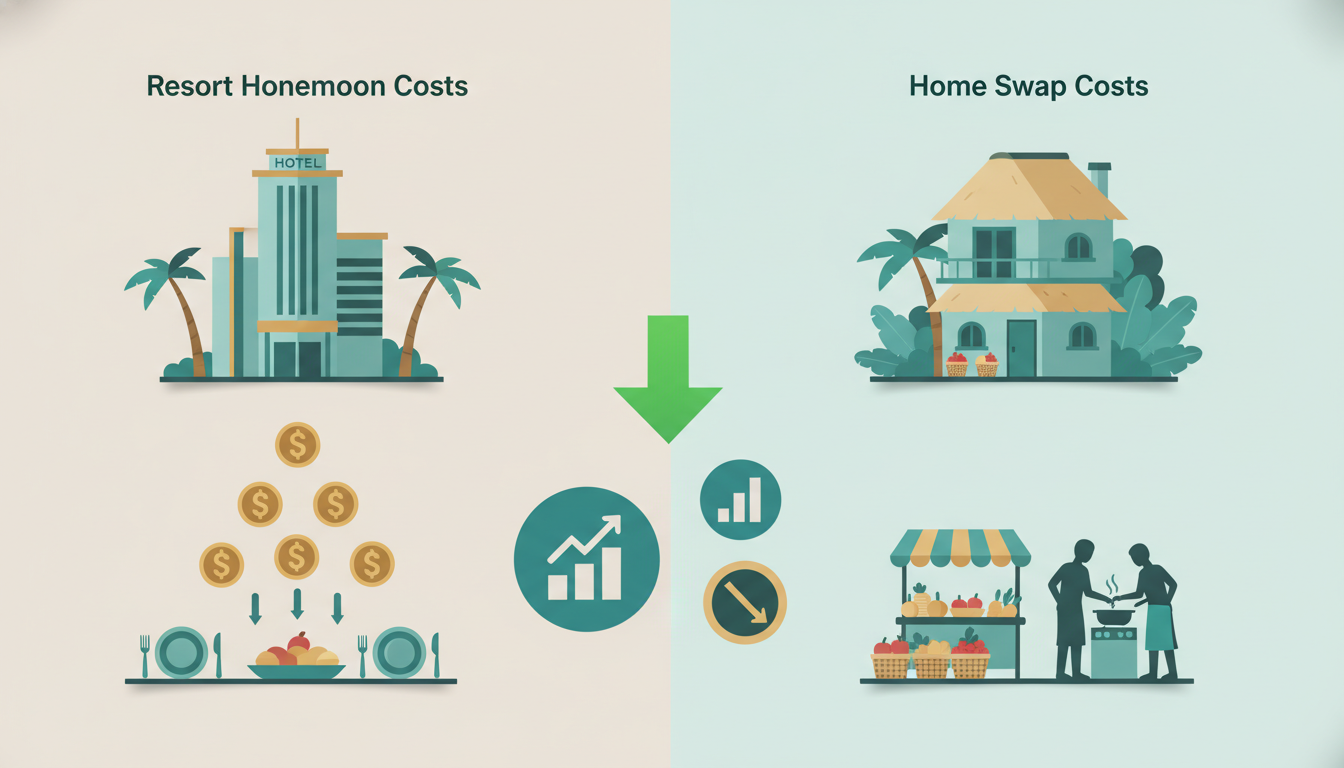 Split-scene infographic showing resort honeymoon costs on left hotel facade, dollar signs, buffet ve
I know what you're thinking: "But Maya, it's my honeymoon. Shouldn't I splurge?"
Absolutely. But here's the thing—splurge on experiences, not on a room you'll only sleep in. That $8,000 you saved? It could pay for a private sunrise hike up Mount Batur ($80 for two), a full-day Balinese cooking class in someone's family compound ($75 each), couples massage at Karsa Spa ($120 total), scooter rental for two weeks ($70), a day trip to Nusa Penida with private boat ($150), a traditional Balinese blessing ceremony at a water temple ($50), and a fancy dinner at Locavore, one of Asia's best restaurants ($200). You'd still have $7,000+ left over.
That's not budget travel. That's smart travel.
Best Bali Neighborhoods for Honeymoon Home Swaps
Not all of Bali is created equal for honeymooners. Here's my honest breakdown after multiple trips and countless conversations with other home swappers.
Ubud: The Romantic Heart of Bali
If you want the quintessential Bali honeymoon experience—rice terraces, yoga, spirituality, incredible food—Ubud is it. But skip the town center (too touristy, too much traffic) and look for home swaps in the surrounding areas.
Penestanan is my personal favorite. It's a 15-minute walk from central Ubud but feels like another world. Traditional compounds, working rice paddies, and some of the best sunset views on the island. Expect to climb some stairs—the neighborhood is built into a hillside—but your legs will thank you.
Sayan is where the serious luxury resorts are (Four Seasons, etc.), which means the home swaps here tend to be stunning. River valley views, absolute privacy, but you'll need a scooter or driver to get anywhere.
Tegallalang, north of Ubud, is famous for the UNESCO rice terraces. More rural, incredibly peaceful, but isolated. Perfect if you want to truly disconnect.
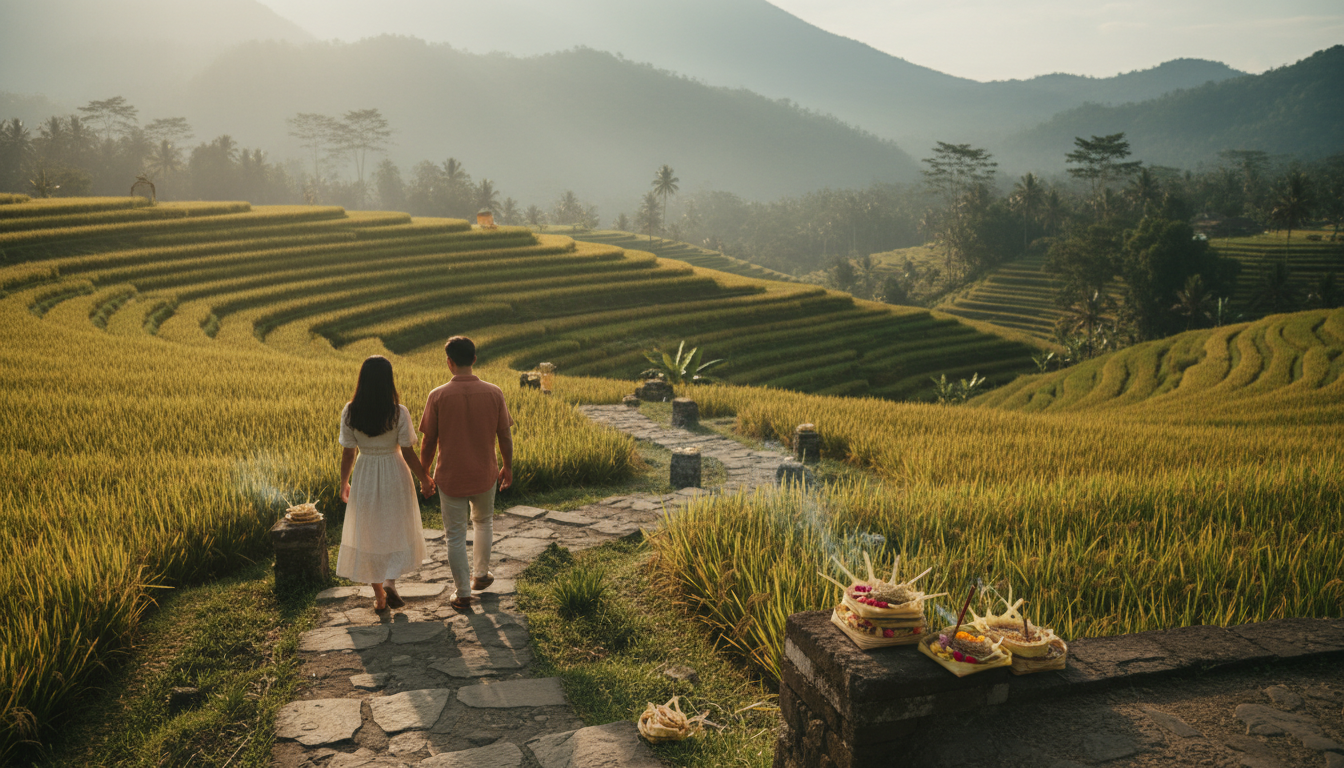 Couple walking hand-in-hand through golden-hour rice terraces in Tegallalang, traditional Balinese o
Sanur: Understated Elegance
Sanur is Bali's best-kept secret for couples who want beach access without the Seminyak chaos. It's where expats and older travelers go—which means it's quieter, more authentic, and has excellent home swap inventory.
The beachfront promenade is perfect for sunrise walks (the east coast means you get the good light). Restaurants are half the price of Seminyak. And the traditional fishing village vibe hasn't been completely bulldozed by development.
Our second Bali home swap was here—a 1960s beach house that had been in a Balinese-Australian family for three generations. We had our own garden, a five-minute walk to the beach, and the neighbor's grandmother brought us fresh coconuts every morning. Try getting that at a Marriott.
Canggu: For the Instagram Crowd (Proceed with Caution)
I'll be honest—Canggu isn't my scene. It's where the digital nomads and influencers congregate, which means excellent coffee shops and beach clubs, but also traffic jams, construction noise, and a vibe that feels more like a hipster theme park than Bali.
That said, if you and your partner are into surfing, nightlife, and the trendy café scene, you'll find plenty of gorgeous villas available for home swap. Just manage your expectations about "authentic Bali."
Amed: Off the Beaten Path
For adventurous honeymooners, Amed on the northeast coast is spectacular. Black sand beaches, world-class snorkeling and diving, Mount Agung looming in the background. It's a 2.5-hour drive from the airport, which keeps the crowds away.
Home swap options are more limited here, but what exists tends to be special—think converted fisherman's houses and eco-villas with zero light pollution. We met a couple from Berlin on SwappaHome who'd spent their entire three-week honeymoon in Amed and didn't regret a single day.
How to Find the Perfect Honeymoon Home Swap in Bali
Alright, practical advice time.
Start early—like, really early. Bali is one of the most popular home swap destinations worldwide. Planning a honeymoon for next year? Start browsing and reaching out 6-8 months in advance. The best properties get snapped up.
Look for hosts who've traveled themselves. On SwappaHome, you can see members' travel history. Someone who's done 10+ swaps understands what makes a great guest experience. They'll leave you detailed local recommendations, probably stock the fridge with basics, and know how to communicate clearly.
Read between the lines of descriptions. "Charming traditional house" might mean "no air conditioning and you'll share walls with chickens." That can be amazing or terrible depending on your expectations. Look for photos of the bedroom, bathroom, and kitchen specifically. Ask direct questions about WiFi reliability (if you need it), hot water situation, and whether there's a pool or AC.
Don't overlook smaller properties. Some of the most romantic swaps I've done were studios or one-bedrooms. You don't need a four-bedroom villa for a honeymoon—you need privacy, atmosphere, and a comfortable bed.
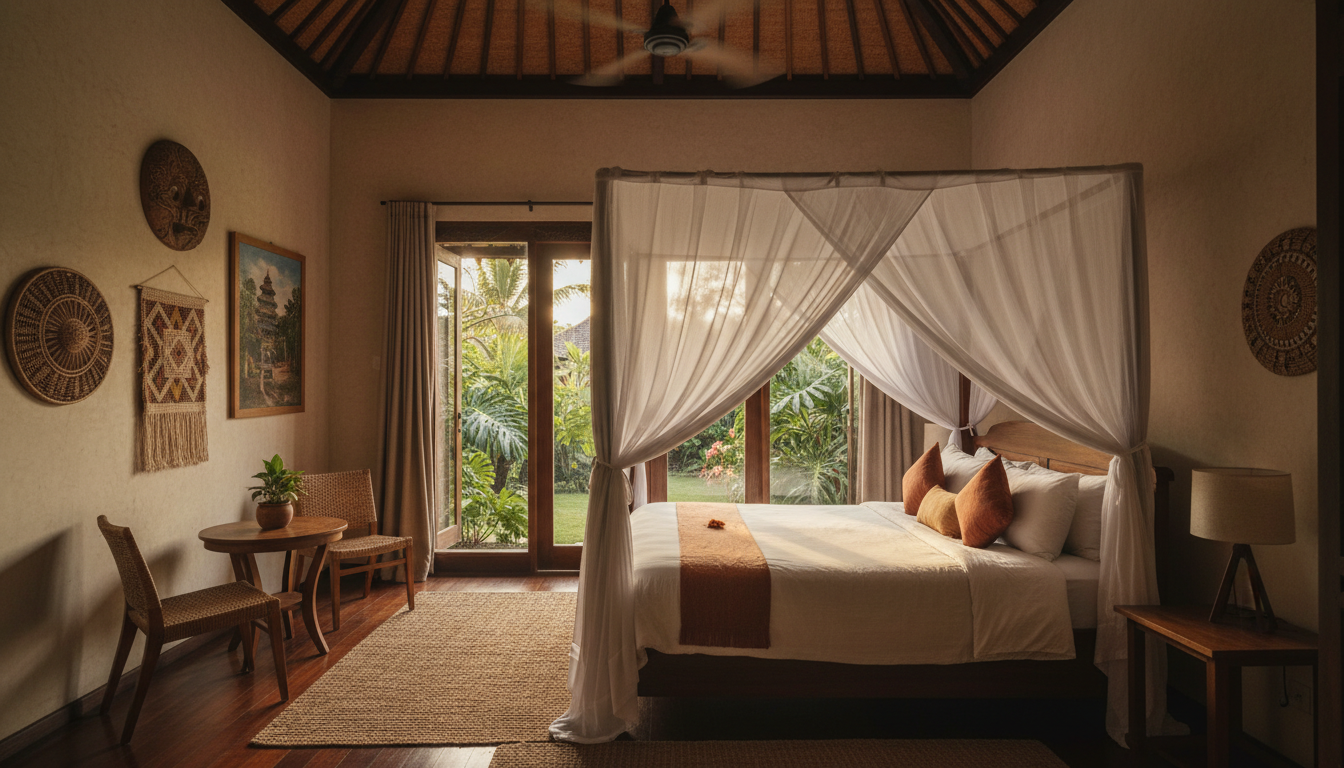 Cozy one-bedroom Balinese bungalow interior with canopy bed draped in white fabric, tropical garden
Message potential hosts personally. Don't just send a booking request. Write a real message introducing yourselves, mentioning it's your honeymoon, and asking about their favorite local spots. This builds rapport and helps you gauge whether their communication style matches yours.
What to Expect from Your Balinese Host
Balinese culture is incredibly hospitable, which translates into home swapping beautifully.
Every Balinese host I've had through SwappaHome has left extensive notes—not just "here's the WiFi password" but "the best bakso (meatball soup) is at Pak Made's cart, he sets up at 6pm on the corner by the temple."
In traditional compounds especially, your host might arrange for a neighbor or family member to check in on you. This isn't intrusive—it's genuine care. Embrace it. Some of my best Bali memories are from impromptu conversations with these informal guardians.
If you're staying in a family compound, you'll likely encounter daily offerings (small palm-leaf baskets with flowers, rice, and incense). Don't step on them. Your host will probably explain the basics of Balinese Hinduism and might even invite you to observe a ceremony if timing aligns.
And then there are the practical quirks. Balinese homes operate differently than Western ones. Power outages happen. Geckos are roommates, not pests (they eat mosquitoes—you want them). Water pressure can be... creative. Hot water might come from a solar heater that needs sun. Roll with it. It's part of the experience.
Making Your Bali Home Swap Honeymoon Actually Romantic
Here's where I get real with you: home swapping requires slightly more effort than checking into a resort. No one's going to scatter rose petals on your bed or arrange a candlelit dinner by the pool. But with minimal planning, you can create moments that feel far more personal.
Stock up on arrival. Hit a supermarket (Hardy's in Sanur is great, or Bintang in Ubud) and buy good coffee, wine if you drink it, fresh fruit, candles, and breakfast supplies. Having a stocked kitchen means lazy mornings in your own space instead of rushing to a restaurant.
Hire a private driver for one special day. This sounds counterintuitive to budget travel, but hear me out. For about $50-60, you can hire a driver for 10 hours who'll take you anywhere on the island. Use this for a sunrise-to-sunset adventure: Mount Batur at dawn, hidden waterfalls, lunch at a cliffside restaurant, temple visit, sunset at Tanah Lot. It's exhausting in the best way and creates a shared adventure.
 Couple silhouetted against orange sunset at Tanah Lot temple, waves crashing on rocks below, other t
Book one splurge experience. Just because you're saving on accommodation doesn't mean you can't treat yourselves. A sunrise hot air balloon ride over Ubud runs about $150 per person. Private dinner on the beach in Jimbaran? Around $100 total. Couples spa day at COMO Shambhala is $300 but worth it. A helicopter tour of the island costs $400 for 30 minutes if you're feeling extravagant.
Create rituals. This is the secret sauce of a memorable honeymoon. Maybe it's watching sunset from your villa every evening with a Bintang beer. Maybe it's morning yoga on the terrace. Maybe it's cooking dinner together every other night. These small repeated moments become the texture of your trip—and your marriage.
The Trust Factor: Is Home Swapping Safe for Honeymooners?
I get this question constantly, especially from couples whose parents are skeptical. "You're staying in a stranger's house? On your HONEYMOON?"
Here's my perspective after 40+ swaps: the home exchange community is remarkably trustworthy because the system is built on mutual vulnerability. When you're staying in someone's home while they stay in yours (or use credits from hosting others), everyone has skin in the game. Bad actors get reviewed and effectively banned from the community.
SwappaHome's verification system adds another layer—you can see if members have verified their identity, and the review system means you can read exactly what previous guests experienced. I've never had a single negative experience, and I've stayed in homes from Tokyo to Tuscany.
That said, I always recommend getting your own travel insurance. SwappaHome connects members but doesn't provide coverage for your belongings or trip interruptions. A good travel insurance policy costs $50-100 for two weeks and covers everything from lost luggage to medical emergencies. Companies like World Nomads or SafetyWing are popular with home swappers.
Communicate clearly before arrival. Exchange phone numbers with your host. Confirm arrival times. Ask about anything that seems unclear. Good communication prevents 99% of potential issues.
And trust your instincts. If a listing seems too good to be true or a host is evasive about questions, move on. There are thousands of options—you don't need to force a match that feels off.
Real Talk: When Home Swapping Isn't Right for Your Honeymoon
I'm a huge advocate for home swapping, but I'll be honest—it's not for everyone.
Consider a resort if you genuinely want to be pampered with zero effort, your partner is anxious about staying in strangers' homes, you have very specific accessibility needs that require hotel infrastructure, you're using the honeymoon to completely disconnect and don't want any logistical thinking, or you have limited time (under a week) and don't want to spend any of it figuring things out.
Home swapping shines when you value authenticity over polish, you're comfortable with some flexibility and minor problem-solving, you want to save money for experiences rather than accommodation, you enjoy cooking and eating like locals, you're planning a longer trip (2+ weeks) where the savings really add up, or you see your honeymoon as an adventure, not just a vacation.
Getting Started: Your First Steps Toward a Bali Home Swap Honeymoon
If you've read this far, you're probably at least curious. Here's how to actually make it happen.
Build your credits. If you don't have home swap credits yet, start hosting now. On SwappaHome, you earn 1 credit for every night you host a guest. Have a spare room? A vacation home you're not using? Even your own apartment while you're traveling for work? List it. Ten nights of hosting equals ten nights in Bali.
Create a compelling listing. Your home doesn't need to be fancy—it needs to be accurately described and well-photographed. Highlight what makes your place special: the neighborhood, the local coffee shop, the sunset view from the balcony. Travelers are looking for authentic experiences, not hotel perfection.
Start browsing Bali. Even if your honeymoon is months away, get familiar with what's available. Save listings that catch your eye. Notice patterns in what you're drawn to—do you want a pool? A rice paddy view? Walking distance to restaurants? This clarity helps when you start reaching out to hosts.
Send thoughtful messages. When you find a place you love, write a personal note to the host. Mention your honeymoon, your travel dates, what attracted you to their home, and a bit about yourselves. People want to host people they like—give them a reason to choose you.
Confirm details and prepare. Once you've secured your swap, nail down logistics: arrival time, key handoff (or lockbox code), emergency contacts, any quirks about the property. Then book your flights, arrange airport transfer, and start dreaming about rice terraces.
Jake and I have been married for four years now. We've done weekend getaways at boutique hotels, we've splurged on a few fancy resorts, and we've continued home swapping all over the world. But when we talk about our honeymoon—when we pull out photos and tell stories at dinner parties—it's always the home swaps that come up.
The morning we woke up to a temple ceremony happening in the courtyard next door. The night we got lost on our scooter and ended up at a local wedding, where strangers fed us and taught us traditional dances. The afternoon we spent learning to make babi guling from our host's grandmother, who spoke no English but communicated everything through smiles and hand gestures.
Those aren't resort experiences. Those are life experiences. And they started with a simple decision: to swap homes instead of booking hotels.
Your honeymoon in Bali can be whatever you want it to be. But if you want it to be unforgettable—really, genuinely, tell-your-grandchildren-about-it unforgettable—consider leaving the resort bubble behind.
The rice terraces are waiting. The geckos are ready to serenade you. And somewhere in Ubud or Sanur or Amed, there's a home with your name on it—you just have to reach out and ask.
Frequently Asked Questions
Is home swapping in Bali safe for honeymooners?
Home swapping in Bali is generally very safe, thanks to community-based trust systems and member reviews. On platforms like SwappaHome, you can verify host identities and read detailed feedback from previous guests. I recommend getting your own travel insurance for extra peace of mind, and always communicating clearly with your host before arrival. After 40+ swaps, I've never had a negative experience.
How much can you save on a Bali honeymoon with home swapping?
Most couples save $5,000-$10,000 on a two-week Bali honeymoon by home swapping instead of staying at luxury resorts. While resorts cost $350-600 per night, home swaps use credits you've earned by hosting—making accommodation essentially free. Add savings from cooking at home and eating at local warungs, and you can redirect thousands toward experiences like cooking classes, spa treatments, and island hopping.
How far in advance should I book a Bali home swap for my honeymoon?
Start searching and reaching out to hosts 6-8 months before your honeymoon. Bali is one of the most popular home swap destinations worldwide, and the best properties—especially in Ubud and Sanur—get booked quickly. Early planning also gives you time to earn hosting credits if you don't have enough yet.
What are the best areas in Bali for a honeymoon home swap?
Ubud (especially Penestanan and Sayan neighborhoods) offers the most romantic setting with rice terraces and spiritual atmosphere. Sanur provides quiet beaches and authentic village vibes without Seminyak's crowds. For adventurous couples, Amed on the northeast coast has stunning snorkeling and dramatic mountain views. Avoid Canggu if you want traditional Bali—it's become quite touristy and congested.
Do I need to swap homes directly, or can I use credits?
You don't need a direct swap. On SwappaHome, you earn credits by hosting guests in your home (1 credit per night hosted), then spend those credits to book stays anywhere in the world. This means you could host travelers from Japan in your apartment, then use those credits for your Bali honeymoon—no coordination with the same person required.
40+
Swaps
25
Countries
7
Years
About Maya Chen
Travel Writer & Home Exchange Expert
Maya is a travel writer with over 7 years of experience in the home swapping world. Originally from Vancouver and now based in San Francisco, she has completed more than 40 home exchanges across 25 countries. Her passion for "slow" and authentic travel led her to discover that true luxury lies in living like a local, not a tourist.
Ready to try home swapping?
Join SwappaHome and start traveling by exchanging homes. Get 10 free credits when you sign up!
Related articles

Lyon Home Exchange: Your Complete Guide to France's Hidden Gem for Home Swapping
Discover why Lyon home exchange is booming among savvy travelers. From Croix-Rousse to Presqu'île, find the best neighborhoods and insider tips for your swap.

Zurich Bucket List: 47 Unforgettable Experiences to Enjoy During Your Home Swap
Discover the ultimate Zurich bucket list for home swappers—from secret swimming spots to fondue rituals locals actually do. Save thousands while living like a true Zürcher.
Dublin Home Exchange Utilities Guide: WiFi, Heating & Everything Your Guests Need
Master Dublin home exchange utilities—from dodgy WiFi fixes to heating quirks. Practical tips from 7 years of swapping homes across Ireland.